
Reviewed · KYOTO TOURS
Hanakoushi cotton Scarf Class
The clever part of this Kyoto class is that you make a useful souvenir instead of simply buying one. You choose a color, fold the fabric, apply the dye, and watch a plain scarf turn into a patterned piece of Japanese craft. I like the private format, which keeps the lesson calm and easy to follow, and I like that the museum visit fills the drying time with real context. The one catch is that the hands-on work is simplified, so serious craft students may find it brief.
I also like the high-quality finished scarf and the friendly instruction, including help from staff such as Nina and Yokahama-san. The class can take about 30 to 60 minutes, and the museum itself is small, so you should book this for a focused craft experience rather than a full morning attraction.
Key points at a glance

- Make a 175-by-50-centimeter scarf: You leave with a practical Kyoto souvenir rather than a small trinket.
- Private class for your party: Individual attention makes the folding and dyeing steps easy to follow.
- Traditional shibori technique: The activity uses the sekka shibori method in the main description, while the class details also call it hanakoushi shibori.
- Drying time becomes museum time: Browse artworks, tools, fabric samples, and a historical video while your scarf sets.
- Simple enough for most people: The process has been adapted so you do not spend hours tying tiny sections of cloth.
- $43.35 buys more than a craft lesson: The fee covers the class and a handmade scarf, with museum viewing and a shop visit included in the experience.
Making a Kyoto souvenir with your own hands
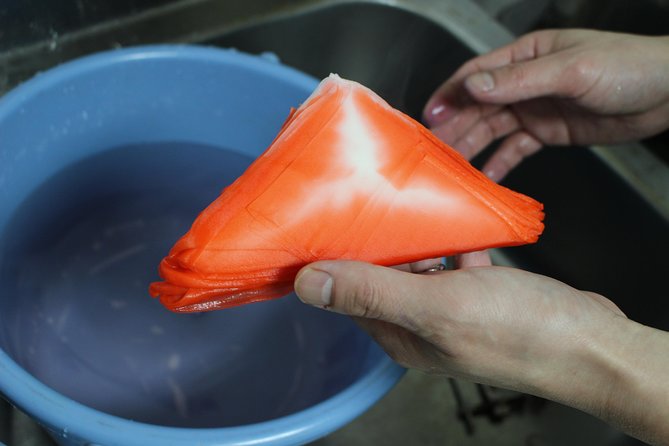
Shibori is Japan’s family of resist-dyeing techniques. You fold, compress, tie, or otherwise protect sections of cloth before adding dye. The covered areas resist the color, creating the pale shapes and repeating patterns that make each piece look handmade.
This class gives you a short, approachable version of that process. You are not expected to master every form of shibori in half an hour. Instead, an instructor shows you a particular fold, helps you select a color, and guides you through dyeing the scarf.
That balance is important. I would not book this expecting a long studio course or a detailed lesson in textile production. I would book it if you want to understand the basic idea of shibori and produce something attractive without giving up a large part of your Kyoto day.
The finished item is a substantial scarf, listed as 70 inches by 17 inches, or about 175 by 50 centimeters. That is large enough to wear, give as a present, or pack as a useful reminder of Japan. The supplied details describe the scarf as cotton, while several class accounts refer to silk scarves. If the fabric matters to you, confirm the material with the Kyoto Shibori Museum before booking.
More hands-on workshops in Kyoto:
- Kyoto: 45-Minute Tea Ceremony Lesson Experience
★ 4.3 · 2,378 reviews - Ramen Cooking Class at Ramen Factory in Kyoto
★ 5.0 · 1,937 reviews - Kyoto : Chopsticks Making Workshop in Gion with Engraving Option
★ 5.0 · 958 reviews
A private class with patient instruction
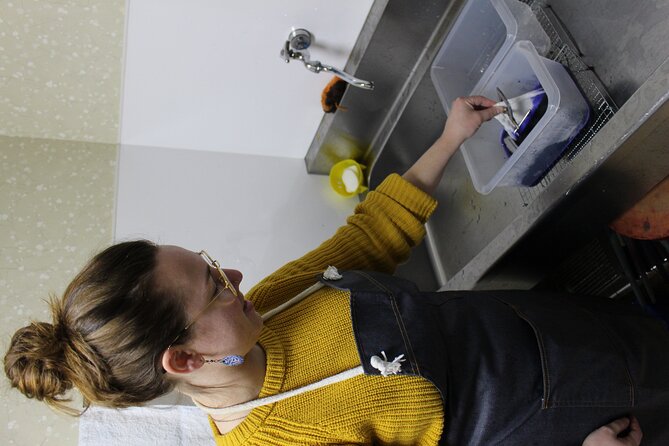
The class is private, meaning only your party takes part. That matters more here than it might at a standard sightseeing stop. Folding fabric can be confusing if you are trying to copy a teacher from the back of a crowded room. With a small group, the instructor can check your folds and help you correct mistakes before the dye goes on.
The teaching is designed to be accessible. English-speaking staff are mentioned, and the instructions are described as clear and easy to follow. Nina guided one solo participant through the process, while Yokahama-san and other staff helped a family group understand both the practical steps and the wider craft.
You choose your preferred color at the start. The information provided does not list a fixed color menu, so do not assume every shade will be available on every day. The main creative choice is followed by the folding method, then dyeing. Since the folding controls the final pattern, pay attention at this stage rather than rushing toward the dye bath.
This is hands-on, but not in the way a full craft apprenticeship is hands-on. The class has been modernized for visitors, with fewer tiny knots and less time spent preparing the cloth. That makes it a good match for families, couples, solo visitors, and anyone who wants a successful result without specialist skill.
One account judged the course too passive, saying there was not enough to do. That is the fair criticism to keep in mind. You will take part in the key choices and dyeing, but an instructor has simplified the harder work. The appeal is the finished scarf and the introduction to the technique, not complete control over every stage.
The pattern appears after the dye
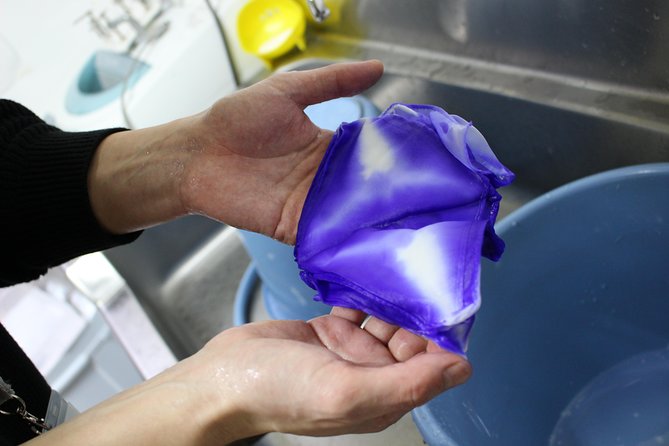
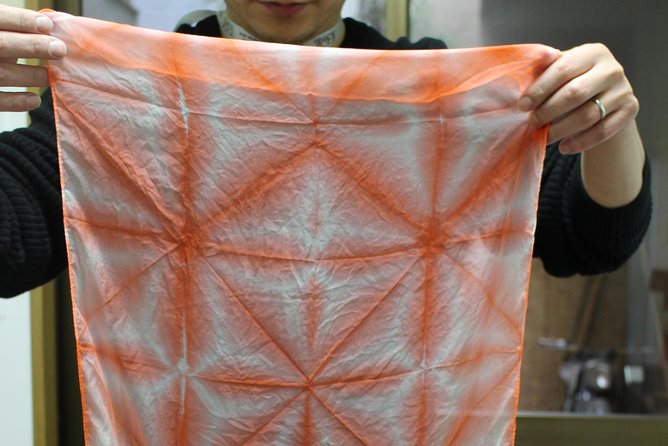
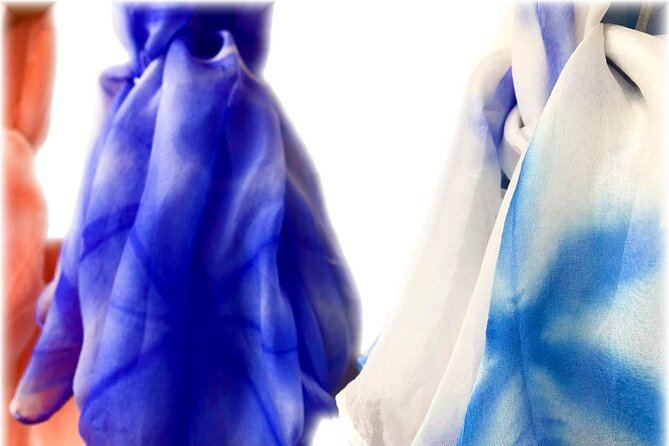
The fun comes from the reveal. Before dyeing, your folded scarf does not tell you much about the final design. After the color is applied and the cloth is opened, the protected areas create the pattern.
You should allow about 30 minutes for the fabric to dry. The class itself may take about 30 minutes, but some sessions run closer to an hour depending on the group and the pace of instruction. If you are planning a tight day around Kyoto sights, use the longer estimate.
The drying period is not wasted time. You can look at examples of shibori work, tools, and fabric samples in the museum. A historical video and explanatory displays help show how much patience and precision go into more elaborate pieces.
This is where the experience gains value. A quick craft class can otherwise feel like a paint-and-take souvenir stop. Here, you get to compare your scarf with more intricate examples and see how the same basic principles can produce both simple cloth and highly detailed artwork.
The museum is small, so set your expectations accordingly. You will not need half a day to see it, and that is useful if you have a packed Kyoto schedule. It works well as a short cultural stop before or after nearby sightseeing, particularly when you want a break from walking.
Why the museum matters
The Kyoto Shibori Museum gives the craft a setting beyond the worktable. Its displays include art pieces, tools, and samples that explain the range of shibori. The collection helps you see the difference between a quick visitor project and the painstaking work found in traditional textile art.
The museum also provides a historical video. Together with the displays and staff explanations, it gives you a better sense of why shibori is more than a decorative pattern. The craft depends on planning, repeated folds, careful handling, and control of the dye. Even a simple scarf reflects those basic decisions.
I would spend time looking closely at the examples before or after your class. Notice how small changes in folding or binding alter the final pattern. That makes your own scarf more interesting because you understand that the result is not entirely random.
The museum received especially strong praise for its beautiful artwork and helpful staff. The main weakness is size. If you want a major museum with many galleries, this is not that. If you want a concise introduction paired with a practical activity, the scale works in your favor.
A few more Kyoto half-days to weigh up
- PERFECT KYOTO 1-Day Bus Tour
★ 5.0 · 13,518 reviews - Kyoto: Fushimi Inari, Kinkakuji, Bamboo Grove 1 Day Bus Tour
★ 4.8 · 4,316 reviews - Kyoto: Tea Ceremony in a Traditional Tea House in Kiyomizu
★ 4.9 · 3,519 reviews - Kyoto Geisha Walking Tour: Gion District & Hidden Gems
★ 4.7 · 3,273 reviews
The shop adds another useful stop
The museum shop sells shibori fabrics, purses, clothing, souvenirs, and other handmade items. Several specific purchases mentioned include a purse and a samue, a traditional Japanese work garment. You do not need to shop, but the selection gives you a chance to see finished pieces that use more advanced forms of the craft.
This is also a good place to buy a gift if your own scarf is staying in your suitcase. The shop lets you compare colors, patterns, and types of fabric after learning how the dyeing process works.
Prices for the shop items are not provided, so I would not assume every item is inexpensive. The class fee itself is $43.35 per person, and that is a fair price if you value the scarf, instruction, museum access, and private setting together. It is less appealing if you only want a cheap souvenir or if you dislike structured craft activities.
The scarf gives the fee much of its value. A purchased textile may be more polished, but your finished piece carries the memory of making it. It also has a practical size, unlike many small souvenirs that end up stored in a drawer.
How much time to set aside in Kyoto
The class is advertised as approximately 30 minutes, with the wider class description allowing 30 to 60 minutes. Add the drying period of about 30 minutes, plus time to view the museum and shop.
For a relaxed visit, I would set aside roughly one to one and a half hours. That is not a guaranteed session length, but it gives you room to finish the scarf, wait for it to dry, look at the displays, and browse without hurrying.
The meeting point is the Kyoto Shibori Museum at 135-5 Shikiamichō, Nakagyo Ward, Kyoto, postal code 604-8261. The activity begins and ends there. It is near public transportation, which makes it practical to fit into a day of central Kyoto sightseeing.
Because the activity is booked on average 23 days ahead, reserve early if your dates are fixed. The private format may be particularly useful for families or couples who want to work at their own pace, but it also suits a solo participant. One session described in the supplied material had only one student, with Nina providing individual guidance.
The mobile ticket is handy for a phone-based booking, and confirmation is provided when you book. You can cancel for a full refund up to 24 hours before the local start time. Changes or cancellations inside that 24-hour window are not accepted for a refund.
Who will enjoy this class most
I would recommend the class to anyone who wants a souvenir with a personal story. It is especially suitable for:
- Couples who want to make matching or complementary scarves
- Families looking for a short, creative activity
- Solo visitors who appreciate individual instruction
- Adults and children who enjoy simple craft projects
- Shoppers who want to understand the handmade textiles sold in Kyoto
- Visitors with a limited schedule who cannot commit to a longer workshop
The class is also a good rainy-day option because the activity and museum are indoors, though the supplied details do not describe the building’s full accessibility arrangements. Most people can participate, but you should contact the provider directly if you have specific mobility or other access needs.
I would be more cautious about recommending it to an experienced textile artist. The simplified method leaves out the lengthy preparation that makes advanced shibori so demanding. You will learn the basic idea and create a pleasing result, but you will not receive a full technical education in the craft.
Practical strengths and possible drawbacks
The strongest feature is the combination of easy instruction and a good-looking result. You do not need artistic skill, and the staff help keep the process moving. The private setup reduces pressure, while the scarf gives you something useful to take home.
The museum is another strong point. It prevents the class from feeling like a stand-alone souvenir factory. You can see traditional examples, tools, and historical material, then visit the shop with a better understanding of what you are seeing.
The main drawback is the short and simplified nature of the workshop. If you want to tie, fold, and prepare every part yourself, you may feel that the instructors do too much. One less-positive account found the class lacking in hands-on work, and that concern is reasonable.
There is also a small naming and material detail to clarify. The experience is described with both sekka shibori and hanakoushi shibori, and the scarf is described as both cotton and silk in different parts of the supplied information. The practical experience appears consistent, but ask the museum if you want the exact technique or fiber confirmed before you pay.
Should you book the Hanakoushi cotton Scarf Class?
Book it if you want a short, private, hands-on Kyoto activity that leaves you with a full-size scarf. The class is friendly, manageable, and tied to a real Japanese craft rather than a generic souvenir project. The museum, video, displays, and shop add useful context, while the $43.35 price is reasonable for the lesson and finished item together.
Skip it if your main goal is an advanced textile course, a large museum, or complete control over every step of the dyeing process. The work is deliberately simplified, and the museum is compact.
For most visitors, I would place this on a flexible Kyoto day rather than build an entire day around it. Arrive ready to choose a color, follow the folds carefully, and accept a little surprise when the scarf opens. That is the charm of shibori: you make the decisions, but the final pattern still keeps something for itself.
FAQ
How long does the Hanakoushi cotton Scarf Class take?
The class lasts approximately 30 minutes, though individual sessions can take 30 to 60 minutes. The scarf then needs about 30 minutes to dry, during which you can explore the museum.
Where does the class begin and end?
The activity begins and ends at the Kyoto Shibori Museum, 135-5 Shikiamichō, Nakagyo Ward, Kyoto, 604-8261, Japan.
Is the class private?
Yes. Only your party participates, so the instructor can provide personal guidance during the folding and dyeing steps.
What will I make?
You will dye a scarf measuring about 175 by 50 centimeters, or 70 by 17 inches. The supplied details describe it as cotton, while some class accounts refer to silk, so confirm the exact material with the museum if that distinction matters to you.
Is the class suitable for most people?
Most people can participate, and the activity is near public transportation. The class uses a simplified process, making it suitable for people without previous shibori experience.
Can I cancel for a refund?
You can cancel up to 24 hours before the experience start time for a full refund. Cancellations or changes made less than 24 hours before the local start time are not accepted for a refund.
Just added around Kyoto
- Kyoto: Zen Meditation at a Private Temple with a Monk★ 5.0 · 25 reviews
- Kyoto: Gion Geisha District & Sake-in-Hand Walking Tour★ 5.0 · 37 reviews
- Private Pewter Sake Cup Experience with a Kyoto Artisan★ 5.0 · 31 reviews
- Your Private Vacation Photography Session In Kyoto★ 5.0 · 110 reviews
- Private Guided Traditional Buddhist Cooking in Japan★ 5.0 · 16 reviews
- Kyoto Wagashi(Japanese sweets) Cooking Class near Fushimiinari★ 5.0 · 60 reviews
- Traditional Japanese Music show & Experience Tour in Kyoto★ 5.0 · 57 reviews
- Kyoto:Family-Friendly Kimono & Yukata Experience at WARGO★ 5.0 · 147 reviews
Kyoto Tours, compared.


Fushimi Inari, Kinkakuji, Bamboo Grove 1 Day Bus Tour
Read our review →
Tea Ceremony in a Traditional Tea House in Kiyomizu
Read our review →
Kyoto Geisha Walking Tour: Gion District & Hidden Gems
Read our review →

Gion Magical Night Walking Tour with Geisha Trivia
Read our review →

Gion Geisha District Walking Tour – Stories of Geisha
Read our review →Browse the lists this tour appears in