
Reviewed · KYOTO TOURS
Highlights & Hidden Gems With Locals: Best of Kyoto Private Tour
Kyoto is easiest to appreciate when someone helps you read the quiet clues: a shrine custom, a narrow Gion lane, a temple detail, or the reason a local faith asks you to give up one wish for another. This private walk combines famous sights with less-used streets, giving you your own guide and a flexible pace rather than a fixed group march.
I like the choice of starting time, which is useful when jet lag, children, or a packed Kyoto schedule are in play. I also like the chance to shape the outing around your interests, with hosts such as Ted, Guia, Shohei, and David praised for warm conversation, good storytelling, family care, and local food suggestions.
The main caution is guide consistency. Several excellent outings were led by hosts with strong cultural insight, but some participants received a guide who was not Japanese, did not speak Japanese, or offered only brief facts. At $167.92 per person, that difference matters.
Key points to know before booking
- Private from start to finish: Only your party and the local guide participate, so you can ask questions and set the pace.
- A classic Kyoto route with local detours: The walk links Kiyomizu-dera, Gion, Yasaka Shrine, the Kamo River, and Nishiki Market.
- Flexible timing: You choose the start time, an advantage for families and tightly planned Kyoto visits.
- Three hours is the advertised length: Some experiences described by participants lasted six hours, so confirm the exact duration and plan before meeting.
- One local drink or tasting is included: Food and other drinks are not included, and one participant reported missing this part.
- Kiyomizu-dera admission is listed as included: Confirm this with your guide, since one participant said temple admission was paid separately.
A private introduction to Kyoto’s eastern neighborhoods
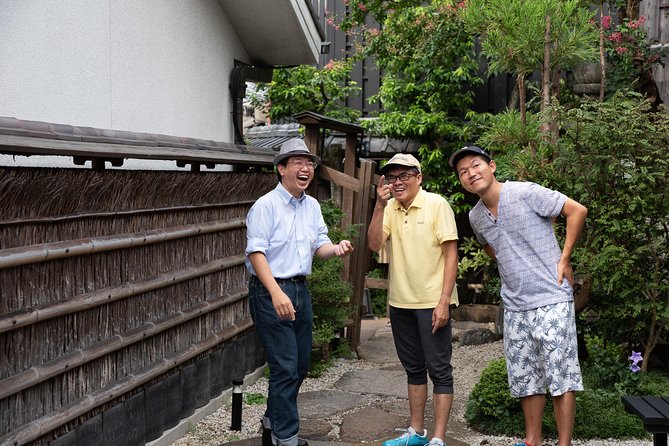
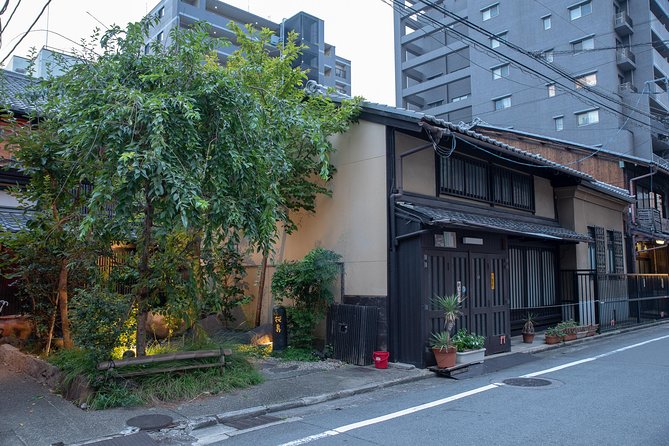
The meeting point is at 198 Nakanochō in Higashiyama Ward. From there, you move through one of Kyoto’s most atmospheric parts, where old wooden buildings, pottery shops, tea houses, shrines, and temples sit close together.
The route is designed to give you the major sights without treating them as a checklist. That is the appeal of a private host. You can pause for a question, spend more time on a temple, or ask to focus on religion, architecture, food, or daily life.
You should still keep your expectations sensible. Three hours is enough for an introduction, not a full study of Kyoto. The listed stops add up to a brisk walk, and several locations receive only about 20 or 30 minutes. If you want long temple visits, extended shopping, or a full meal, you will need to trim the route or arrange extra time.
More Hidden Gems Walks in Kyoto
- Kyoto Geisha Walking Tour: Gion District & Hidden Gems
★ 4.7 · 3,273 reviews - Private Kyoto Tour with a Local, Highlights & Hidden Gems, Personalised
★ 5.0 · 1,543 reviews - Arashiyama Bamboo Forest & Hidden Gems Bike Tour (Early Bird)
★ 5.0 · 613 reviews
Kyoto Municipal Zoo and the old streets nearby
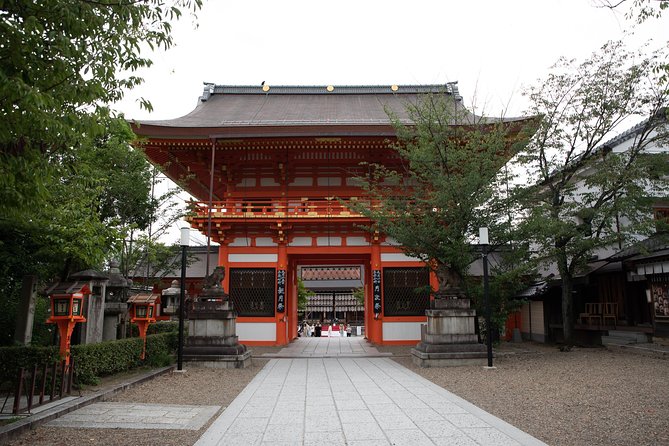
The first stop is a pass by Kyoto Municipal Zoo, with time to see the surrounding neighborhood. The real interest here is not the zoo admission, which is free for this stop, but the old-town feel nearby.
This area preserves narrow lanes and wood-built buildings, with pottery stores, tea houses, and small places to rest. A good host can help you notice how different this setting feels from the broad tourist routes. You may also get a useful first look at how Kyoto mixes an active modern city with older streets.
The stop is allotted 30 minutes. That is enough to get oriented and take photographs, but not enough for a detailed neighborhood walk and a zoo visit. Treat it as a gentle start rather than a main attraction.
Yasaka Shrine, Hokanji, and a confusing route detail
The next section includes Yasaka Shrine and a reference to Hokanji Temple, which was built in the Asuka period from 538 to 710. The route information appears to use Yasaka Shrine twice, so you should ask your host at the start exactly which sites are planned.
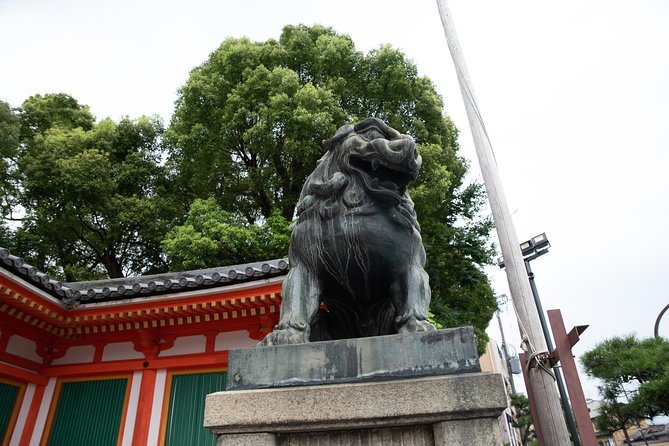
Yasaka Shrine itself is one of Kyoto’s best-known religious sites, founded more than 1,350 years ago. It is a strong place to ask about shrine customs, festivals, offerings, and the difference between Shinto and Buddhism. The listed visit is only 20 minutes, so expect a short orientation rather than a full tour of every feature.
The Hokanji reference likely points to the famous eastern Kyoto temple area, but the supplied details do not spell out a separate visit. Do not build your day around seeing every named location in depth. The private format gives you a chance to clarify the plan before the walking begins.
Kongoji Temple and the monkey-linked folk faith
Kongoji Temple brings a different kind of story. Here you learn about a folk belief that says a wish may be granted if you sacrifice one desire. The route description also points to a folk faith linked with monkeys, although one participant said this topic did not come up during the tour.
This is where guide quality becomes important. A date and a building name will not tell you much. You want the host to explain what the belief means, how it fits into local religious practice, and why the temple matters to people who come to it.
The stop is scheduled for 20 minutes. That makes it a quick cultural encounter, but the subject itself can add a welcome change from the better-known temple photographs. If this belief interests you, bring it up directly.
More off-the-list walks in Kyoto:
- Kyoto: Hidden Gems E-Bike Tour with Local Japanese Guide
★ 4.9 · 189 reviews - Kyoto: Gion Hidden Gems & Geisha Culture Tour
★ 4.9 · 126 reviews - Kyoto: Hidden Gems E-Bike Tour Through Backstreets & Temples
★ 4.9 · 54 reviews - KIYOTO’s Kyoto Private E-Cycling Tour: Highlights & Hidden Gems
★ 5.0 · 48 reviews
Kiyomizu-dera: the essential temple visit
Kiyomizu-dera is the centerpiece of the route. Founded more than 1,200 years ago, the temple sits halfway up Mt. Otowa in Kyoto’s Higashiyama range. Its setting gives you the classic eastern Kyoto combination of wooded hills, old lanes, and a major Buddhist temple reached through a busy historic district.
You have about 30 minutes here. That is enough to enter, hear the main story, take in the setting, and ask focused questions. It is not enough for a slow visit through every corner of the grounds, especially if the approach streets are crowded.
Admission to Kiyomizu-dera is listed as included. Because one participant reported paying cash for temple admission for both the guide and their own party, I would confirm this before the tour begins. It is a small point, but clear arrangements prevent an awkward moment at the gate.
For many people, this will be the most important stop. If you have already visited Kiyomizu-dera, tell the host. The private setup lets you spend more time elsewhere, perhaps in Gion, at Nishiki Market, or along the river.
Coffee and another look at Yasaka Shrine
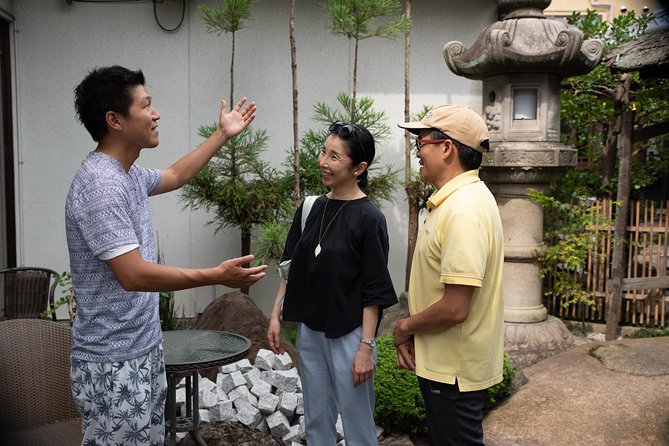
The schedule lists another 20-minute Yasaka Shrine stop, preceded by coffee. This appears to be a second visit or a duplicated entry, so ask whether the coffee break is included in the one local drink or tasting.
That detail matters because the inclusions promise one local drink or tasting, while food and other drinks are excluded. One participant said the promised drink was never provided, while another appreciated refreshments and treats offered by the guide. The safest approach is to confirm what is covered and what you will pay for yourself.
A short café pause can be useful on a walking tour. It gives you time to rest, talk with the host, and adjust the remaining route. With children or older family members, this break may make the three-hour outing more comfortable.
Gion beyond the main street
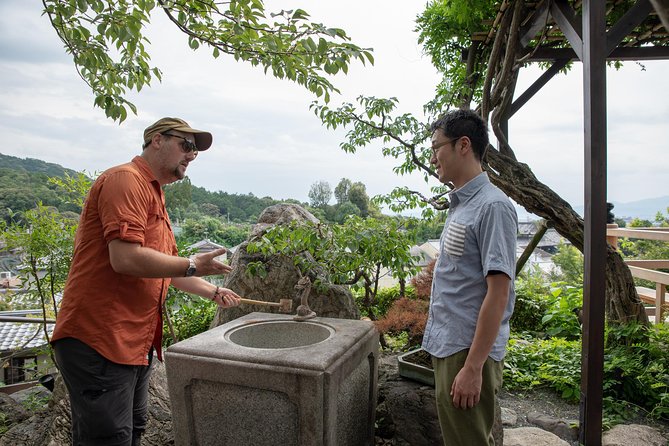
Gion is Kyoto’s best-known geisha district, and the route gives you about 20 minutes there. The value of a guide is not in spotting a geisha or treating the neighborhood like a stage set. It is in learning how to behave respectfully and understanding why the district looks and functions as it does.
The strongest part of the route may be the back streets. David was praised for taking a group through less-visited parts of Gion, and several hosts were credited with showing places that would be easy to miss alone. That is the kind of local help this tour promises at its best.
Do not expect a long visit. Twenty minutes passes quickly, and the district has enough lanes, shops, shrines, and traditional buildings to fill much more time. If Gion is your priority, tell the host before setting out and ask for a slower walk there.
The Kamo River and Kyoto’s everyday side
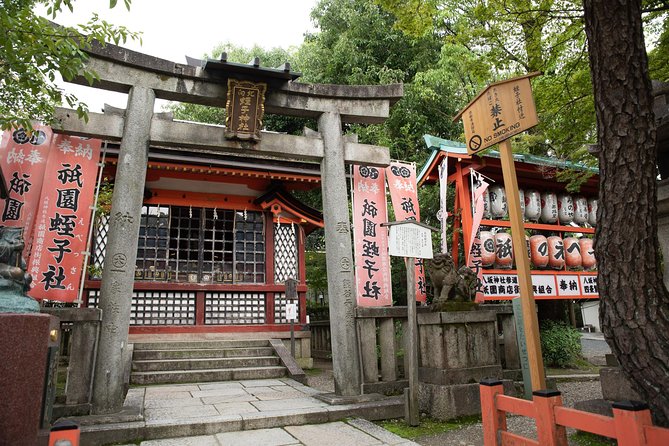
The Kamo River is one of Kyoto’s most familiar public spaces. The route allows 20 minutes beside the river, a welcome change from temple grounds and narrow lanes.
This stop is less about a single monument and more about seeing how Kyoto uses open space. You can pause, take photographs, and ask about the river’s role in the city. It is also a practical breather after the eastern temple district.
The river stop may feel brief if you want a long stroll. Still, it helps the tour avoid becoming a chain of religious buildings. A good host can connect the formal sights with ordinary city life, which is often what makes a short introduction feel more useful.
Nishiki Market and the one included tasting
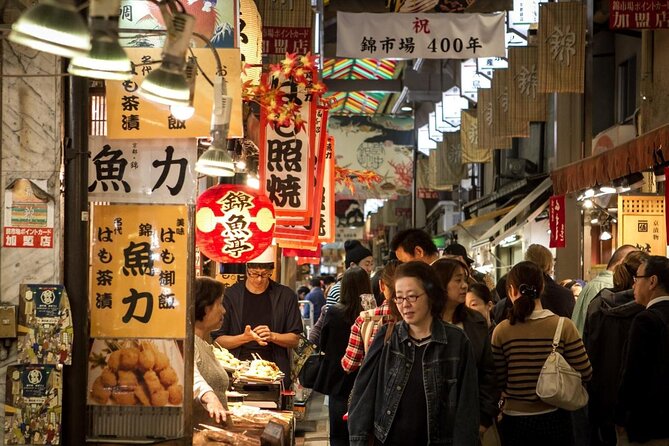
Nishiki Market is a 400-year-old shopping district where you can look at local Japanese foods, small goods, and souvenirs. The scheduled time is 20 minutes, so expect a sample of the market rather than a full food tour.
This is the clearest place to use the private format. Tell your host whether you care more about snacks, cooking ingredients, gifts, or simply seeing how the market works. The tour includes one local drink or tasting, but additional food and beverages are not included.
Several strong experiences involved guides suggesting food and helping families try things they would not have found alone. One guide, Ted, was specifically praised for adding food stops to a longer outing. That does not mean a full food tour is part of this three-hour booking, so arrange your expectations carefully.
What the guide can make or break
The best accounts of this experience center on the host. Ted was praised for connecting history, religion, and culture with stories that made the route easier to understand. Shohei was described as energetic, humorous, and good at answering many questions. Guia received praise for patience with children, cultural explanations, refreshments, and thoughtful attention to family needs. David was valued for taking people beyond the most obvious Gion streets.
That range shows what you can gain from a private walk. You are not just paying for directions. You are paying for interpretation, conversation, and the ability to change course.
But the weaker experiences also matter. Some participants found their host offered only dates and short facts, without context or storytelling. Others were disappointed because the guide was an expatriate, had lived in Japan for only a few years, or did not speak Japanese. An expatriate guide can still offer a useful view of life in Kyoto, but it is not the same as a Japanese local perspective.
When booking, check the guide profile if one is available. If you care about Japanese language ability, local family background, religious customs, or food, ask directly before the tour. Also confirm the planned length, the drink or tasting, and temple admission.
Is $167.92 per person a fair price?
At $167.92 per person, this is not a cheap orientation walk. The price makes the most sense for a private party that values flexibility and personal attention. If four people share the experience, the guide’s time and the ability to shape the route can make the cost easier to justify than four separate public tours.
The value is highest when the host does more than escort you from one site to the next. Ted, Guia, Shohei, and David represent the kind of host who can turn a short route into a useful introduction. You get questions answered, family needs accommodated, and less obvious streets added when time allows.
The value drops sharply if the guide gives only basic facts or if included items are unclear. Since the route covers many stops in about three hours, you are buying a framework and a personal introduction, not exhaustive sightseeing.
Group discounts are listed, which may improve the price for a larger party. The activity is also described as carbon neutral, with tour emissions offset. That is a positive extra, though it should not be the main reason to book.
Timing, walking, and practical planning
The activity is advertised at approximately three hours and ends back at the meeting point. It begins at a chosen start time, which is helpful if you want to avoid the middle of a packed day or fit the walk around another Kyoto visit.
The route is near public transportation, but hotel pickup and drop-off are not included. Plan to reach 198 Nakanochō on your own and allow time to find the meeting point in the Higashiyama area.
You will be walking between temples, shrines, shopping streets, and the river. The information says most people can participate, but it does not give a detailed distance or step count. Wear shoes you can use comfortably on a city walk, and tell the host early if your group needs a slower pace.
Free cancellation is available up to 24 hours before the start time. Changes or cancellations inside that window are not accepted for a refund.
Who should book this Kyoto walk?
I would consider this for a first visit when you want to see several central sights quickly and understand what you are looking at. It also suits families, since the private format lets the guide adjust explanations and pauses. The reports of Guia working especially well with children are encouraging, though no particular guide is guaranteed.
This is a good match for people who dislike large groups, want a chosen start time, or would rather ask constant questions than listen to a fixed speech. It can also help you get your bearings early in a Kyoto stay.
I would be more cautious if your top priority is a certified Japanese historian, fluent Japanese conversation, or a long temple-by-temple study. The guide pool appears mixed, and the short schedule limits detail. If you want a full food tour, a six-hour city walk, or a focused geisha-area visit, ask whether a longer or different tour is available.
Should you book it?
Book this tour if you want a private introduction to Kyoto with famous sights, old lanes, Gion, the river, and Nishiki Market in one flexible outing. The strongest hosts bring history and religion to life, remember the needs of families, and show you corners you might skip alone.
Before paying, confirm four things: who your guide is, whether the tour will last three hours or longer, which temple fees are included, and how the local drink or tasting will be handled. If those answers are clear, the tour can be a convenient and personal way to begin Kyoto. If the guide profile is vague and you want serious cultural depth, a specialist guide may offer better value.
FAQ
How long is the Best of Kyoto Private Tour?
The advertised duration is approximately three hours. Some descriptions of individual outings refer to six hours or a full day, so confirm the exact duration for your booking.
Is this a private tour?
Yes. Only your party and the local guide participate.
What sights are included?
The route includes Kyoto Municipal Zoo and its surrounding neighborhood, Yasaka Shrine, Kongoji Temple, Kiyomizu-dera, Gion, the Kamo River, and Nishiki Market. Yasaka Shrine appears twice in the schedule, so ask your host to clarify the final route.
Is Kiyomizu-dera admission included?
Tickets for Kiyomizu-dera are listed as included. One participant reported paying cash for temple admission, so confirm the arrangement before entering.
Is food included?
One local drink or tasting is included. Other food and beverages are not included.
Does the tour include hotel pickup?
No. Hotel pickup and drop-off are not included. You meet at 198 Nakanochō in Kyoto’s Higashiyama Ward, and the tour ends back at the meeting point.
Can I choose the start time?
Yes. The experience lets you choose a start time that suits your schedule.
What is the cancellation policy?
You can cancel at least 24 hours before the start time for a full refund. Cancellations or changes made less than 24 hours before the start time are not accepted for a refund.
Just added around Kyoto
- Kyoto: Zen Meditation at a Private Temple with a Monk★ 5.0 · 25 reviews
- Kyoto: Gion Geisha District & Sake-in-Hand Walking Tour★ 5.0 · 37 reviews
- Private Pewter Sake Cup Experience with a Kyoto Artisan★ 5.0 · 31 reviews
- Your Private Vacation Photography Session In Kyoto★ 5.0 · 110 reviews
- Private Guided Traditional Buddhist Cooking in Japan★ 5.0 · 16 reviews
- Kyoto Wagashi(Japanese sweets) Cooking Class near Fushimiinari★ 5.0 · 60 reviews
- Traditional Japanese Music show & Experience Tour in Kyoto★ 5.0 · 57 reviews
- Kyoto:Family-Friendly Kimono & Yukata Experience at WARGO★ 5.0 · 147 reviews
Kyoto Tours, compared.


Fushimi Inari, Kinkakuji, Bamboo Grove 1 Day Bus Tour
Read our review →
Tea Ceremony in a Traditional Tea House in Kiyomizu
Read our review →
Kyoto Geisha Walking Tour: Gion District & Hidden Gems
Read our review →

Gion Magical Night Walking Tour with Geisha Trivia
Read our review →

Gion Geisha District Walking Tour – Stories of Geisha
Read our review →Browse the lists this tour appears in