
Reviewed · KYOTO TOURS
Kyoto: Hidden Gems E-Bike Tour Through Backstreets & Temples
Kyoto’s best moments are often found between the famous sights, and this small-group e-bike tour is built around those quieter stretches. Starting in Gion, you ride through backstreets, temple grounds, shrine paths, and lower hills that are easy to miss on foot or by bus.
I like the way the electric assistance makes a wide sweep of Kyoto practical in four hours. I also like the local touch: guides such as Ben, Yuki, and Kenji explain customs, religion, and city history while leaving you time to look around and take photos. The main drawback is that cycling through narrow streets and hills still requires confidence on a bike, and the meeting point can be hard to spot.
Key points to know before booking
- Eight people maximum: The small group keeps the ride personal and lets the guide adjust the pace.
- A broad eastern Kyoto route: You visit Gion, Nanzenji, Heian Shrine, Philosopher’s Path, Shimogamo-jinja, and the Imperial Palace.
- Electric help for Kyoto’s hills: The e-bikes matter most around the lower hills on the city’s eastern side.
- A quieter alternative to standard sightseeing: The route favors peaceful temples, shrines, and side streets over the most crowded stops.
- Strong guiding is central to the experience: Ben, Yuki, Kenji, and Yukio are praised for local stories, patience, safety, and thoughtful pacing.
- Best for riders over 145 centimeters: Children under 10 are not suitable, and insurance is not included.
Why an e-bike is a smart way to see Kyoto
Kyoto is compact on a map, but its sights are spread across a broad area. Walking between Gion, Nanzenji, the Philosopher’s Path, Shimogamo-jinja, and the Imperial Palace would take much of your day. Buses can save your legs, but they place you on fixed routes and often leave you waiting in crowded areas.
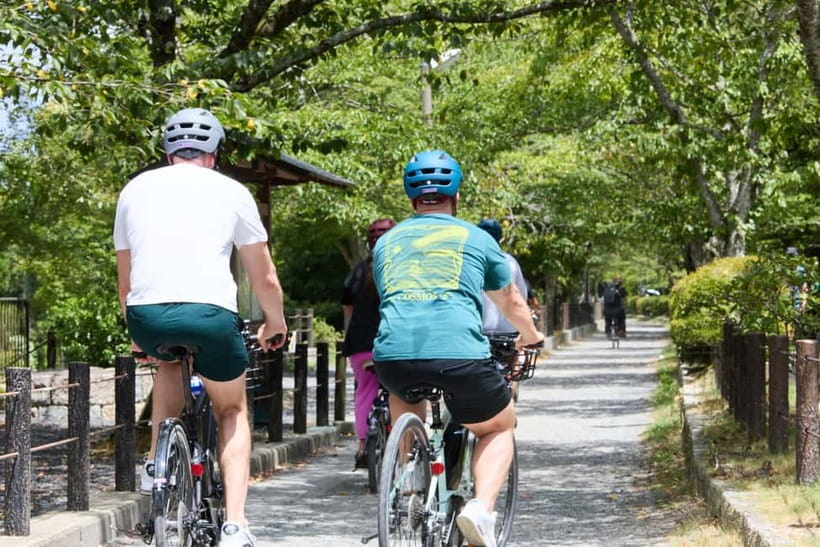
An e-bike gives you another option. You cover ground quickly, but you still move slowly enough to notice wooden homes, quiet lanes, stone walls, and small religious sites along the way. The electric motor also helps on the gentle hills east of central Kyoto, where ordinary cycling can become tiring.
This is not a high-speed ride. The experience works best when you treat it as a sightseeing tour on two wheels, not a workout. You will stop often, listen to explanations, and have time to explore selected places on foot.
The small group limit of eight is useful here. A guide can keep an eye on the group, answer questions, and adjust the pace to suit different riding abilities. Kenji is specifically praised for adapting the outing to a group’s skill level and interests, while Ben is repeatedly noted for patience and careful attention to safety.
More Hidden Gems Walks in Kyoto
- Kyoto Geisha Walking Tour: Gion District & Hidden Gems
★ 4.7 · 3,273 reviews - Private Kyoto Tour with a Local, Highlights & Hidden Gems, Personalised
★ 5.0 · 1,543 reviews - Arashiyama Bamboo Forest & Hidden Gems Bike Tour (Early Bird)
★ 5.0 · 613 reviews
Starting in Gion, where old Kyoto meets the modern city
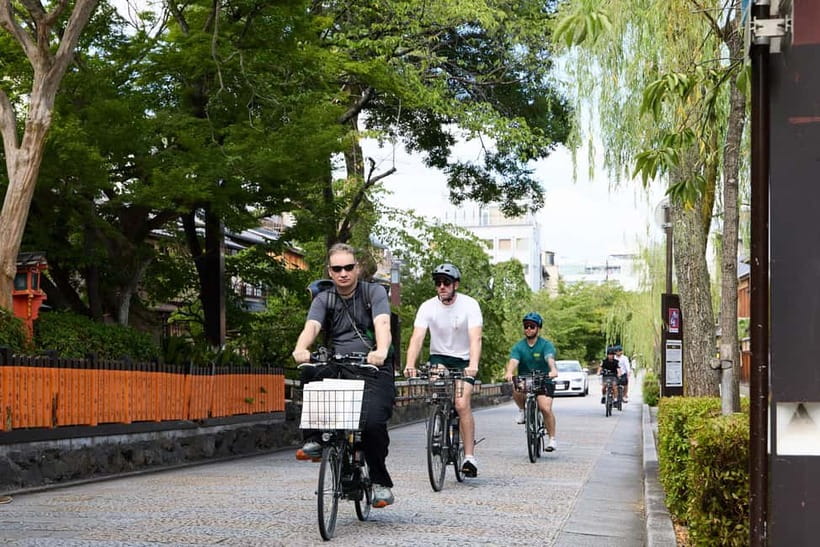
The meeting point is in front of Kyoto Tourist Lounge Gion on Yamatoooji Dori Street. You should check the exact position on Google Maps before setting out. One practical warning: the signage at the starting point may not be obvious, so allow a little extra time rather than arriving at the last minute.
Gion is a fitting place to begin. Its streets are tied to Kyoto’s geisha districts, traditional architecture, and evening dining culture, yet the area can become crowded around its best-known lanes. The tour uses Gion as a starting point rather than treating it as the whole show.
The first visit lasts about 20 minutes. That is enough for an introduction and a look at the district without spending the entire morning in one heavily visited area. Your guide may also help you understand how Gion fits into Kyoto’s wider history and daily life, rather than reducing it to a photo stop.
From here, you begin moving through the city. That transition is part of the value. You see how the polished streets around famous sights give way to ordinary neighborhoods and calmer routes.
Nanzenji Temple and the eastern hills
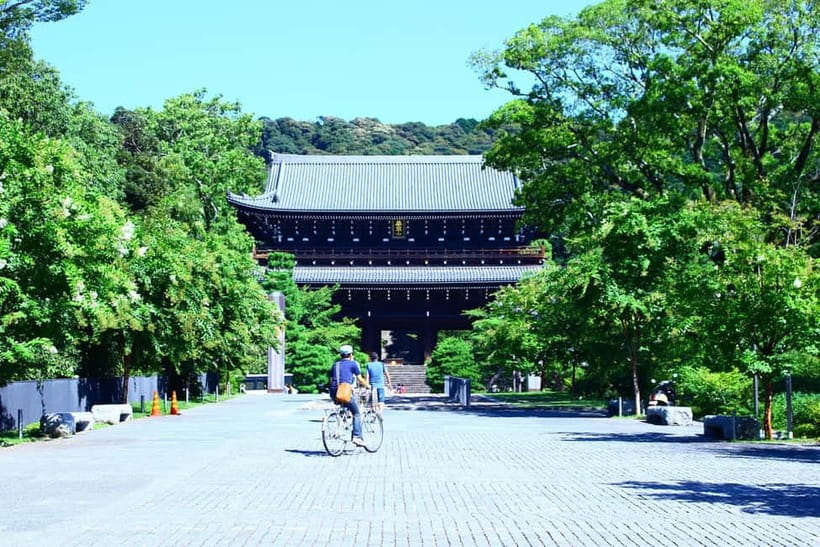
Nanzenji receives about 30 minutes. This is one of the tour’s more important temple stops, partly because it shows how Kyoto’s major religious sites can sit close to wooded hills and quieter lanes.
The eastern side of Kyoto has some of the route’s lower hills, which is where the electric bicycles prove their worth. You still need to pedal and steer, but the motor reduces the strain. If you have not used an e-bike before, ask the guide about the controls before setting off and take time to get comfortable with the assistance.
A half hour is enough for a focused visit, though not a full study of every building. That is typical of this tour. You are sampling several parts of Kyoto in one morning, so each stop gives you a clear sense of place rather than unlimited time.
The pace should appeal to people who want more than a string of quick photographs. Guides are praised for explaining religious traditions and local customs in a direct way, without filling every pause with talk. You should have some quiet time at each stop to notice details for yourself.
Heian Shrine and a broad change of scale

The next 30-minute stop is Heian Shrine. Its spacious grounds offer a sharp contrast to Gion’s narrower streets and Nanzenji’s temple setting. The shrine is known for its large-scale approach and bold architectural style, making it an easy place to appreciate how varied Kyoto’s religious spaces can be.
This is also a useful point in the route for photos. The tour includes photo opportunities, and Ben is praised for taking pictures at attractive spots along the way. If you want a particular group photo, ask clearly. The guides are described as willing to help, but the tour is not presented as a dedicated photography session.
Heian Shrine can draw people, especially at busy times, so do not expect every moment here to feel secluded. The tour’s strength is not that every stop is empty. It is that the guide connects the well-known places with quieter roads and less familiar corners.
More off-the-list walks in Kyoto:
- Kyoto: Hidden Gems E-Bike Tour with Local Japanese Guide
★ 4.9 · 189 reviews - Kyoto: Gion Hidden Gems & Geisha Culture Tour
★ 4.9 · 126 reviews - Highlights & Hidden Gems With Locals: Best of Kyoto Private Tour
★ 5.0 · 121 reviews - KIYOTO’s Kyoto Private E-Cycling Tour: Highlights & Hidden Gems
★ 5.0 · 48 reviews
Philosopher’s Path, with time to slow down
You spend about 30 minutes at the Philosopher’s Path. This pleasant route follows a canal and is one of Kyoto’s most recognizable walks. Its appeal changes with the season, but the canal-side setting gives you a calmer break from traffic and city streets.
The name suggests quiet reflection, and the path can offer that, though it is not guaranteed to be empty. At popular times, you may share it with walkers and other cyclists. Follow the guide’s instructions and keep your speed low around people.
This stop shows why the tour is better suited to someone who wants a blend of riding and conversation. You are not simply pedaling from one landmark to another. You pause beside a route that rewards looking closely, then continue by bike to places that would be less convenient to link on foot.
The ride also helps you form a mental map of Kyoto. Instead of seeing isolated attractions from a bus window, you connect neighborhoods, canals, temples, and shrines in one continuous outing.
Shimogamo-jinja, a quieter spiritual pause
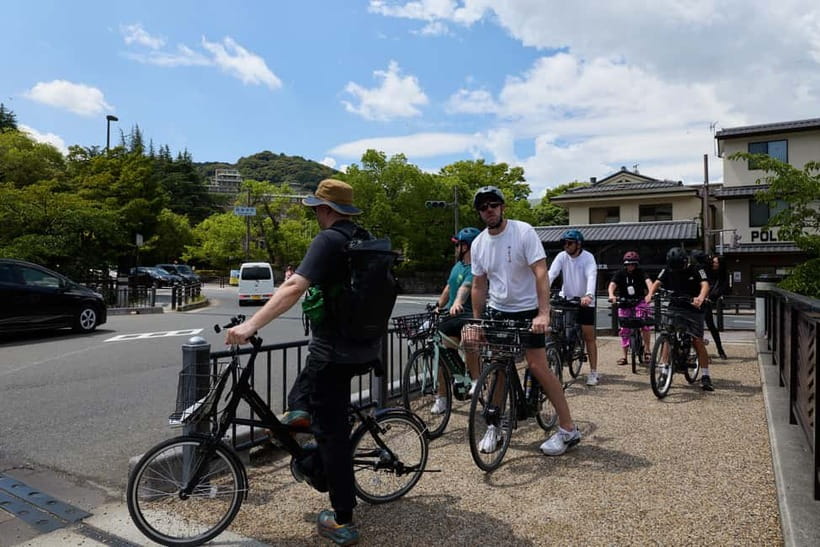
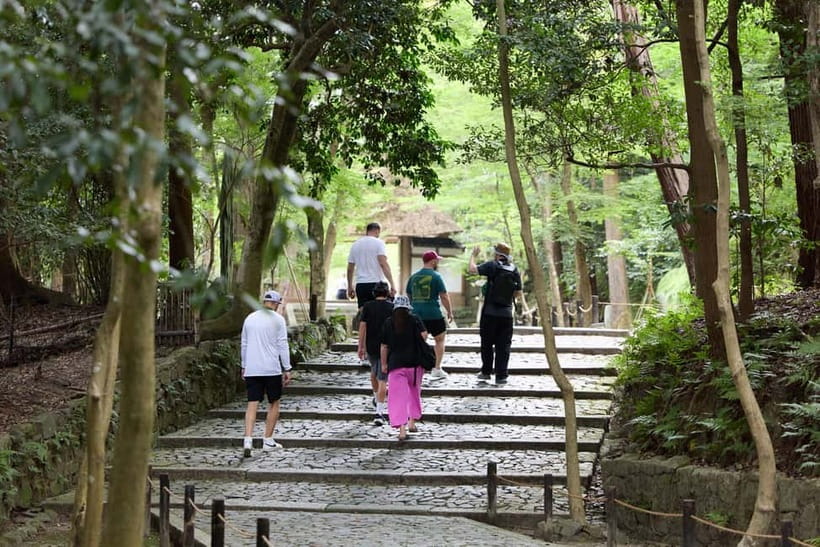
Shimogamo-jinja receives about 20 minutes. The shorter stop keeps the overall schedule moving, but it adds another important side of Kyoto’s religious life. Rather than seeing only large, heavily promoted attractions, you get a glimpse of a shrine setting that feels more removed from the main sightseeing circuit.
This is one of the places where a local guide adds real value. Shrine customs and religious symbols can be easy to overlook if you are exploring alone. English-speaking guides explain the meaning behind what you are seeing and can answer questions about traditions, ceremonies, and everyday practice.
You should not expect a long guided lecture at every site. The most appealing pattern described by the tour is a balance between short explanations and free time. Shannon’s experience, for example, included useful information followed by chances to explore independently.
That balance matters after several hours on a bicycle. You get context without having to remain in one place listening for too long.
Kyoto Imperial Palace closes the route with citywide context
The final major stop is Kyoto Imperial Palace, with about 30 minutes set aside. The palace grounds help explain Kyoto’s role as Japan’s imperial capital and provide a change from the smaller-scale temples and shrines earlier in the ride.
The stop is also practical. By this point, you have crossed several distinct parts of the city, and the Imperial Palace gives the morning a clear finishing point before the return to Gion. It is a broad, open setting after the tighter lanes and canal paths.
Thirty minutes will not cover every corner of the palace area. Think of this as an introduction, not a full palace visit. If the Imperial Palace is a personal priority, you may want to return separately with more time. The bike tour is designed to show range, and its strength is the connection between several areas rather than exhaustive time at one attraction.
Afterward, you cycle back to Kyoto Tourist Lounge Gion. The return completes a loop that would be awkward to manage efficiently by public transport.
What the guides add to the ride
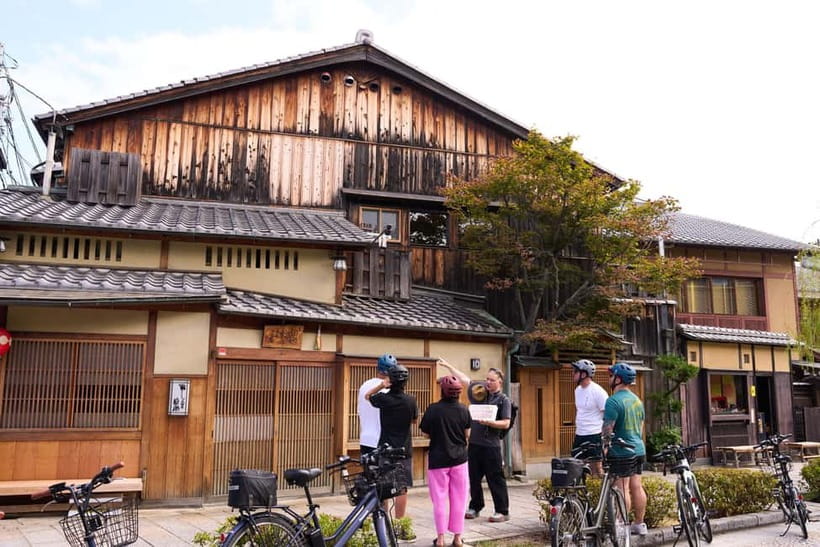
The guides are a major part of the experience. Ben is praised for clear historical explanations, humor, patience, and careful riding leadership. Yuki is described as a proud Kyoto local who brings a personal connection to the city, while Kenji is noted for shaping the route around a group’s interests and ability.
Yukio is also praised for strong English and for handling Kyoto’s narrow streets safely. These details matter because a cycling tour depends on more than facts about temples. You need someone who can choose sensible routes, keep the group together, and notice when a rider needs a slower pace.
The tour is conducted in English. With no more than eight participants, you have a better chance to ask about Japanese religion, local traditions, or places to visit later in your trip. Several guides also offer to take photos, which is helpful when you want a picture of the whole group rather than another solo shot.
The route can apparently be adjusted in small ways. One guide extended a tour to include a tranquil temple away from the main roads, and another accommodated a date change. Do not assume every booking includes a custom route, but the small-group format gives the guide more room to respond to the people in front of them.
The practical side of riding through Kyoto
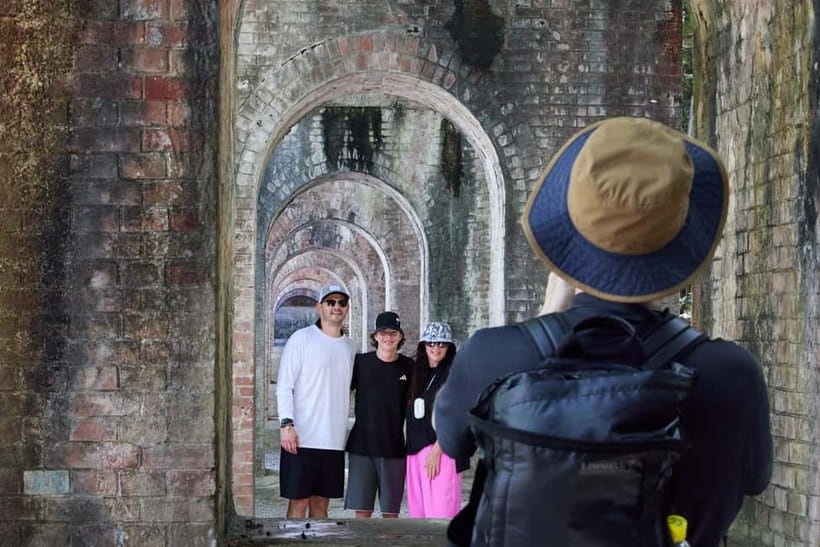
You need to be comfortable riding a bicycle. The e-bike reduces effort, but it does not remove the need to manage narrow streets, turns, pedestrians, and other traffic. The route includes lower hills on the eastern side, so use the electric assistance rather than trying to prove a point.
The minimum height is over 145 centimeters. Children under 10 are not suitable, and babies under one year are not allowed. This makes the outing a better fit for older children, teenagers, and adults who can ride independently.
Wear comfortable clothing and shoes that work for four hours of mixed riding and walking. In warmer months, insect repellent is a sensible extra, especially around greener paths and canal areas. A rain jacket may also be useful. One rider had an enjoyable tour in rainy weather, but wet conditions can make cycling less comfortable.
Insurance is not included, so check your own travel coverage before booking. Alcohol and drugs are not permitted.
The starting instructions deserve attention. The guide waits in front of Kyoto Tourist Lounge Gion, facing Yamatoooji Dori Street, but the exact meeting point may not be strongly marked. Save the map pin and arrive early enough to avoid searching while the group is preparing to leave.
Is $87 fair for four hours?
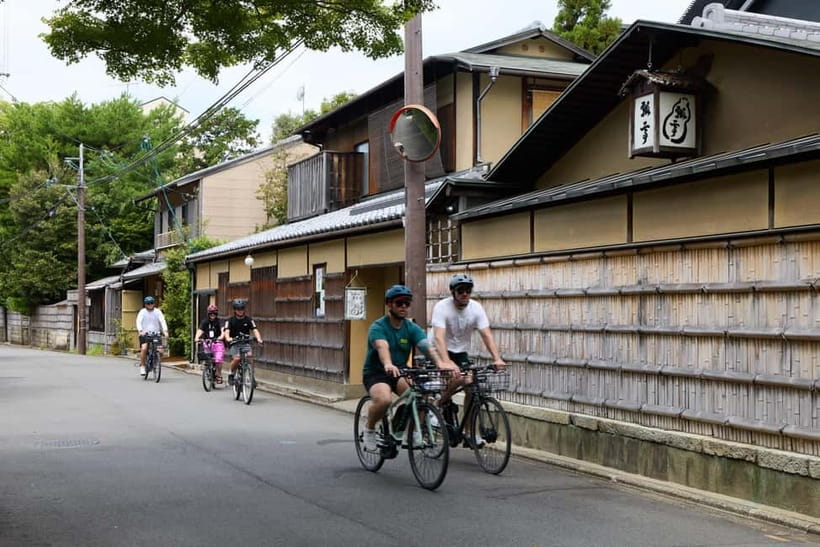
At $87 per person, this is not the cheapest way to see Kyoto, but the comparison should be with a private guide, bike rental, and transport between scattered sights, not with a short walk around one neighborhood.
The fee includes the e-bike, an English-speaking local guide, the planned stops, cultural commentary, and a small group capped at eight. You are paying for the route design as much as the bicycle. Linking Gion with the eastern temples, Philosopher’s Path, Shimogamo-jinja, and the Imperial Palace in four hours takes planning and local route knowledge.
The value is strongest if you have limited time in Kyoto or want an overview before exploring on your own. Elizabeth found the tour especially useful during a short stay because it covered far more ground than she could have managed alone. It can also help you decide which places deserve a longer return visit.
The value is weaker if you already know Kyoto well, dislike cycling, or want extended time inside each temple and shrine. This is a broad introduction, not a series of deep visits. You pay for movement, access to quieter roads, and useful local guidance.
Free cancellation up to 24 hours before the start and reserve-now, pay-later booking make it easier to fit into a changing schedule. Check the available starting times when you choose your date.
Who will enjoy this Kyoto bike tour most?
I would choose this for a first or second day in Kyoto, particularly if you want to get your bearings quickly. You see several districts and receive practical advice about when to visit more crowded attractions.
It suits active couples, friends, solo riders, and families with older children who meet the height requirement. It is also a good match for people who have already seen the standard major sights and now want a quieter view of the city.
You should think twice if you are uneasy on a bike or want a slow, temple-by-temple morning. The guide can adjust the pace, but this remains a four-hour cycling experience. The e-bike helps with effort, not balance or traffic awareness.
Rain does not automatically ruin the outing, but weather will affect comfort. Kyoto’s narrow roads and sightseeing paths also require courtesy. Keep space between riders, follow the guide, and accept that the route may feel more urban in some sections than the title suggests.
Should you book it?
Book this tour if you want efficient sightseeing with local context, especially when Kyoto time is short. The combination of e-bike assistance, an eight-person limit, quieter stops, and guides such as Ben or Yuki gives you a useful look at the city beyond its busiest lanes.
Skip it if your priority is long, unhurried visits inside a few major temples or if cycling is not your thing. For the right rider, $87 buys more than a rental bike. It buys a thoughtfully connected route and a guide who can show you how Kyoto’s famous sights fit together with its calmer, less obvious corners.
FAQ
Where does the Kyoto e-bike tour start?
The tour starts in front of Kyoto Tourist Lounge Gion on Yamatoooji Dori Street. The meeting point faces the street, and you should check the exact position on Google Maps before arriving.
How long does the tour last?
The tour lasts four hours. Starting times vary, so check availability for your chosen date.
Which places does the tour visit?
The route includes Gion, Nanzenji Temple, Heian Shrine, Philosopher’s Path, Shimogamo-jinja Shrine, and Kyoto Imperial Palace. The tour returns to Kyoto Tourist Lounge Gion.
Is the tour conducted in English?
Yes. The tour has a live English-speaking guide.
How large is the group?
The group is limited to eight participants. This allows for a more personal ride and makes it easier for the guide to answer questions or adjust the pace.
Are e-bikes included in the price?
Yes. A comfortable e-bike rental is included, along with the local guide and the planned visits.
Is the tour suitable for young children?
The rider’s height must be over 145 centimeters. Children under 10 are not suitable, and babies under one year are not allowed.
What happens if I need to cancel?
You can cancel up to 24 hours in advance for a full refund. You can also reserve your place and pay later, which keeps your plans flexible.
More E-Bike Rides in Kyoto
- E-Bike Tours of the highlights of Kyoto!!!
★ 5.0 · 291 reviews - Kyoto: City Secrets eBike Tour
★ 4.9 · 196 reviews - Pedal Adventure Kyoto’s iconic landmarks on an e-bike tour
★ 5.0 · 189 reviews - Arashiyama Bamboo Forest E-Biking Tour
★ 5.0 · 183 reviews
More Bike Tours in Kyoto
- Hidden Kyoto E-Biking tour
★ 5.0 · 1,843 reviews - Bike Tour Exploring North Kyoto plus Lunch
★ 5.0 · 1,087 reviews - 5 Top Highlights of Kyoto Full Day Bike Tour (E-bike option)
★ 5.0 · 511 reviews - Full Day Biking Tour Exploring the Best of Kyoto
★ 5.0 · 498 reviews
Just added around Kyoto
- Kyoto: Zen Meditation at a Private Temple with a Monk★ 5.0 · 25 reviews
- Kyoto: Gion Geisha District & Sake-in-Hand Walking Tour★ 5.0 · 37 reviews
- Private Pewter Sake Cup Experience with a Kyoto Artisan★ 5.0 · 31 reviews
- Your Private Vacation Photography Session In Kyoto★ 5.0 · 110 reviews
- Private Guided Traditional Buddhist Cooking in Japan★ 5.0 · 16 reviews
- Kyoto Wagashi(Japanese sweets) Cooking Class near Fushimiinari★ 5.0 · 60 reviews
- Traditional Japanese Music show & Experience Tour in Kyoto★ 5.0 · 57 reviews
- Kyoto:Family-Friendly Kimono & Yukata Experience at WARGO★ 5.0 · 147 reviews
Kyoto Tours, compared.


Fushimi Inari, Kinkakuji, Bamboo Grove 1 Day Bus Tour
Read our review →
Tea Ceremony in a Traditional Tea House in Kiyomizu
Read our review →
Kyoto Geisha Walking Tour: Gion District & Hidden Gems
Read our review →

Gion Magical Night Walking Tour with Geisha Trivia
Read our review →

Gion Geisha District Walking Tour – Stories of Geisha
Read our review →Browse the lists this tour appears in