
Reviewed · KYOTO TOURS
Kyoto: Calligraphy class at Buddhist temple in city center
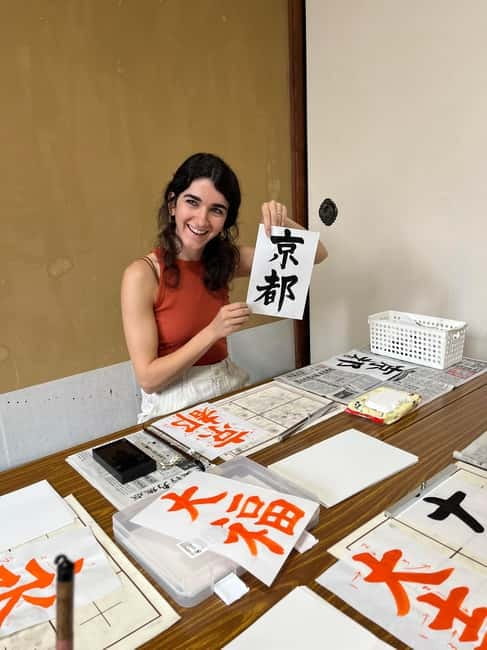
In a quiet room inside a central Kyoto Buddhist temple, you learn to write Japanese calligraphy rather than simply watch someone demonstrate it. Teacher Imai builds the lesson from basic brush strokes to one finished kanji on shikishi, a special square board you can take home.
I like the small class size, which gives you real help instead of a quick photo opportunity. I also like the setting: tatami flooring, sliding doors, a Great Buddha nearby, and a traditional room tucked into the busy Shinkyogoku shopping street. The main consideration is physical comfort, since most people sit on the floor with a zabuton cushion and only a few desks are available.
Key Points to Know Before Booking
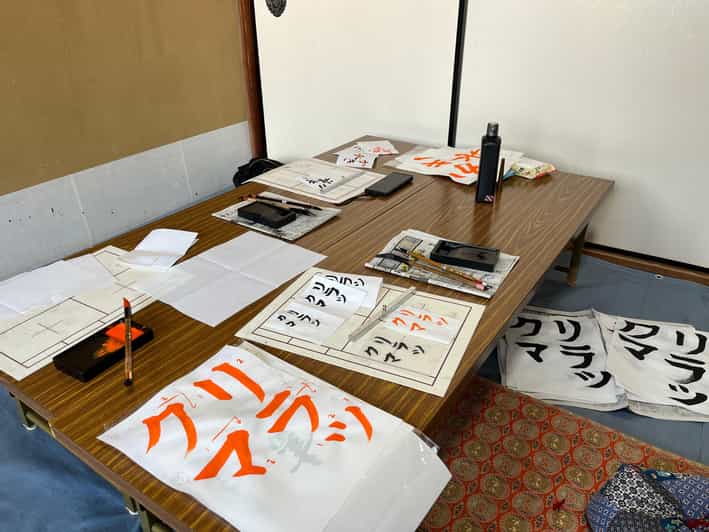
- A real hands-on lesson: You practice lines, brush pressure, and your selected kanji before making the final artwork.
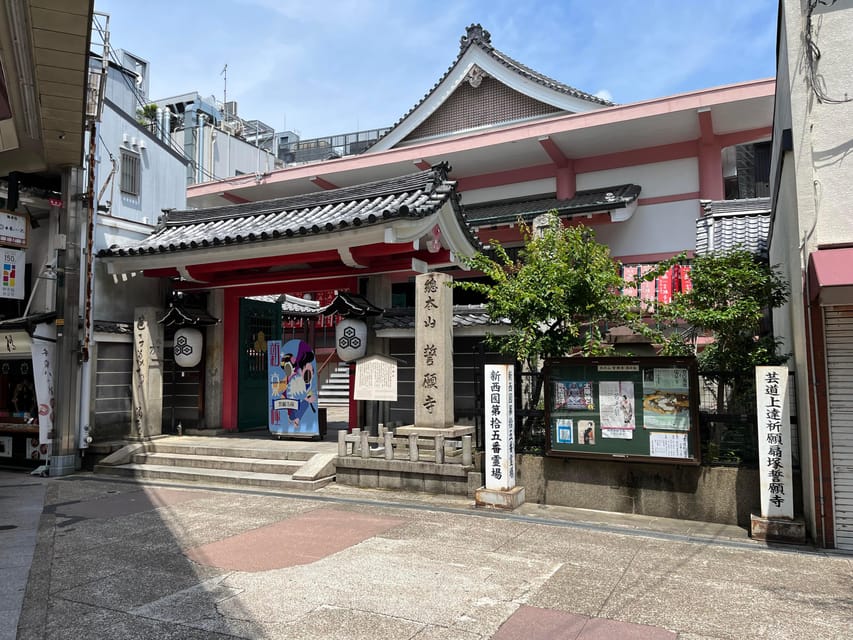
- A temple setting in central Kyoto: Meet at Seigan-ji Temple in the covered Shinkyogoku shopping street, close to major shopping and sightseeing areas.
- Small groups of up to six: The teacher and translator can offer individual corrections and encouragement.
- A personal souvenir: Take home your finished calligraphy on shikishi, plus a keychain made with your chosen character.
- English, Spanish, Japanese, and Dutch support: The Japanese teacher is assisted by a multilingual guide or translator.
- Plan your word early: Arrive with several kanji or words in mind, since choosing one is part of the class and the final piece takes time.
Meeting the Red Lantern at Seigan-ji Temple
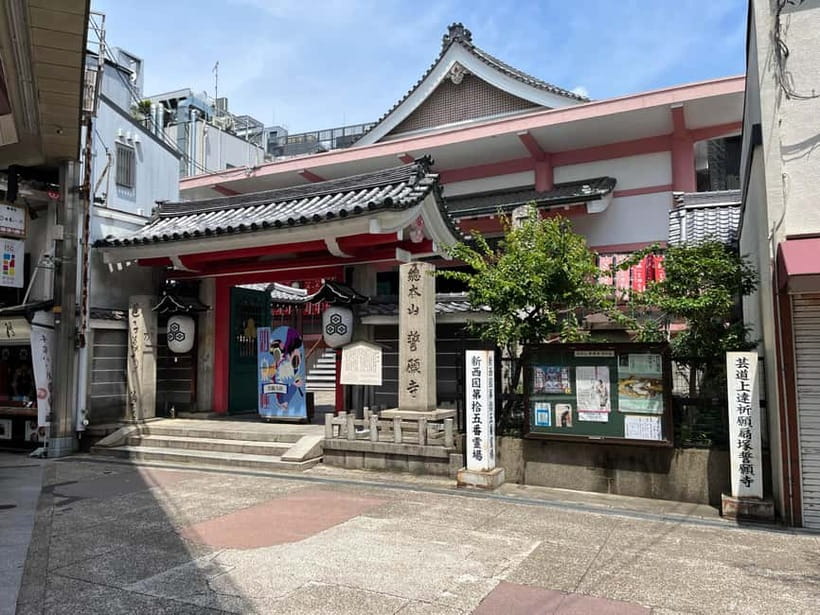
The meeting point is easy to miss if you are looking only for a large tour sign. Go to the front of Seigan-ji Temple in the covered Shinkyogoku shopping street and look for the person holding a red lantern on a stick beneath the roofed arcade.
This detail matters. You are asked not to climb the temple stairs looking for the workshop, and you should not interrupt monks or temple staff to ask if you are in the right place. Wait at the front for the red lantern holder. Read the voucher carefully after booking, since it contains the essential meeting instructions.
The location gives the class a useful Kyoto rhythm. You can spend the morning shopping or visiting nearby sights, then step into a quieter temple room without making a long trip across the city. Afterward, drinks are available from vending machines outside, but food and beverages are not part of the experience.
More hands-on workshops in Kyoto:
- Kyoto: 45-Minute Tea Ceremony Lesson Experience
★ 4.3 · 2,378 reviews - Ramen Cooking Class at Ramen Factory in Kyoto
★ 5.0 · 1,937 reviews - Kyoto : Chopsticks Making Workshop in Gion with Engraving Option
★ 5.0 · 958 reviews
A Traditional Room Above the Shopping Street
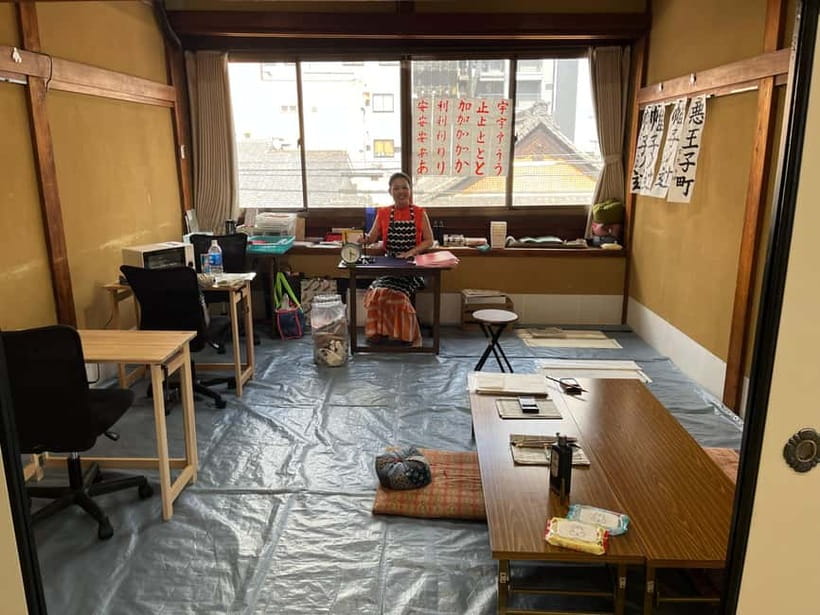
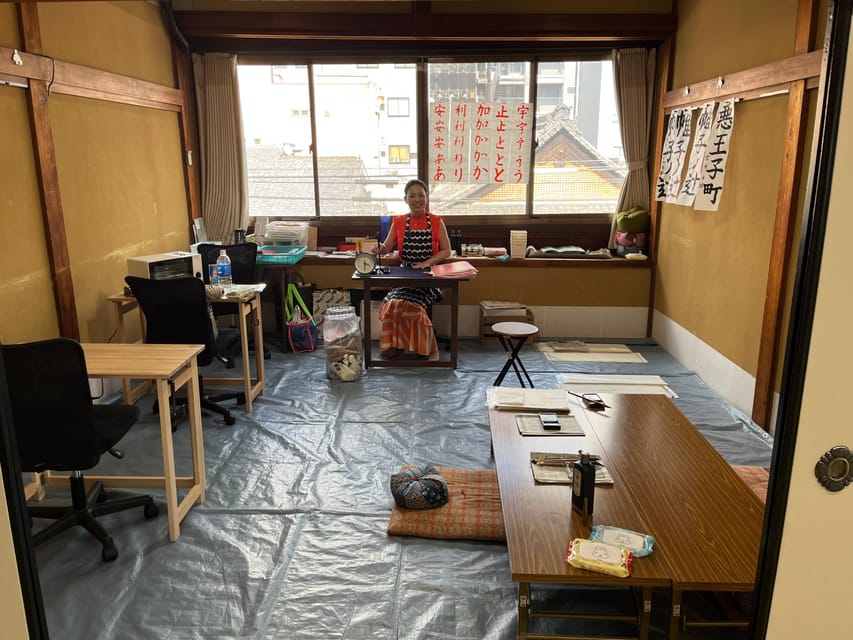
The class takes place in a washitsu, a Japanese-style room with tatami flooring. You remove your shoes, but bare feet are not allowed, so wear socks. This is a small practical point that is easy to overlook when packing for a warm day.
Most of the seating is on the floor, using a zabuton cushion. A limited number of desks are available, but you should not count on one. If kneeling or sitting with your legs folded is difficult, consider the physical setup carefully before booking. The experience is wheelchair accessible, but the floor-based arrangement may still require planning for individual mobility needs.
The room is not silent. Translators explain the lesson, people ask questions, and brushes move across paper. Still, the mood tends to become quiet as everyone concentrates on making clean, deliberate strokes. That calm focus is part of the appeal. It feels different from a sightseeing stop where you rush in, take a picture, and rush out.
The temple setting also adds something beyond decoration. You are working with a traditional art in a traditional Japanese room, near a Great Buddha in the center of Kyoto. The class does not promise a full temple tour, so you should not book it expecting an extended history lecture or broad access to the temple complex. Its value is the chance to use a private-feeling traditional space for a practical cultural lesson.
The 70-Minute Lesson, Step by Step
The session lasts about 70 minutes. That sounds brief, but the lesson is paced around practice rather than a long presentation. You are introduced to the teacher and translator first, then shown the materials and the basic logic of the activity.
The Japanese teacher has more than a decade of calligraphy experience. In some sessions, teacher Imai leads the class with a translator such as Jose or Saskia helping in English. Language support is built into the lesson, so you do not need to understand Japanese to follow the demonstrations or receive corrections.
Choosing Your Kanji
Early in the class, you choose the word or kanji you want to write. Examples are provided, but I strongly suggest arriving with a few ideas. A single character can carry a broad meaning, and you may want something connected to your name, family, a personal value, or your time in Japan.
Possible choices are not specified in advance, so do not assume the teacher will translate any sentence you invent on the spot. If you have a particular word in mind, write down its Japanese character before arriving or prepare several options. This saves valuable practice time.
The choice also makes the final board personal. You are not all copying an identical souvenir. Each person works toward a different finished character, with the teacher showing the strokes needed for that design.
A few more Kyoto half-days to weigh up
- PERFECT KYOTO 1-Day Bus Tour
★ 5.0 · 13,518 reviews - Kyoto: Fushimi Inari, Kinkakuji, Bamboo Grove 1 Day Bus Tour
★ 4.8 · 4,316 reviews - Kyoto: Tea Ceremony in a Traditional Tea House in Kiyomizu
★ 4.9 · 3,519 reviews - Kyoto Geisha Walking Tour: Gion District & Hidden Gems
★ 4.7 · 3,273 reviews
Learning the Brush and Paper
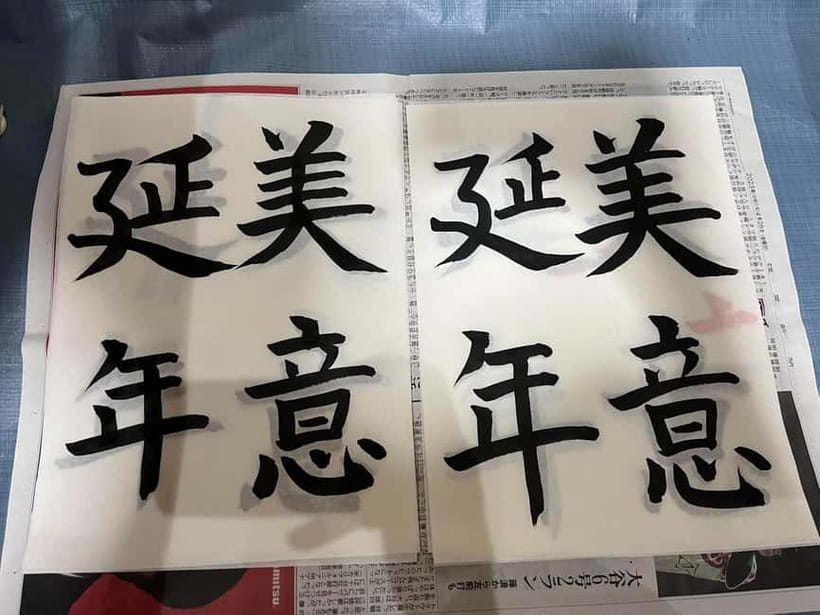
The materials are included: washi paper, a brush, ink, bunchin, and shitagami. The teacher explains how to use the traditional tools before you begin. Even if you have painted or drawn before, Japanese calligraphy uses a different kind of control.
You are learning to manage the brush, ink, angle, speed, and pressure. The goal is not to sketch a character repeatedly until it looks tidy. Each stroke has an order and direction, and the shape depends on how the brush begins, moves, and finishes.
The teacher demonstrates first. Then you copy basic lines and simple movements. This is where the class becomes more than a souvenir-making activity. You get a small lesson in how kanji are formed and why stroke order matters.
Practicing Without Exhausting Your Arm
The teacher encourages practice, but there is a useful warning: writing too much can tire your arm and hurt the final result. Calligraphy looks simple when an experienced hand makes it. For a beginner, repeated brush movements can become surprisingly demanding.
I would treat the practice sheets as experiments, not a test. Try the lines, notice the difference between a heavy and light stroke, and ask for help while the teacher or translator is nearby. Once you understand the movement, stop before your hand becomes tense.
Left-handed writers may find the activity more difficult because traditional brush handling is generally easier for right-handed writers. The relaxed instruction helps, and you may be shown ways to try the movements, but you should expect to make adjustments rather than assume the technique will feel natural at once.
Making the Final Shikishi Artwork
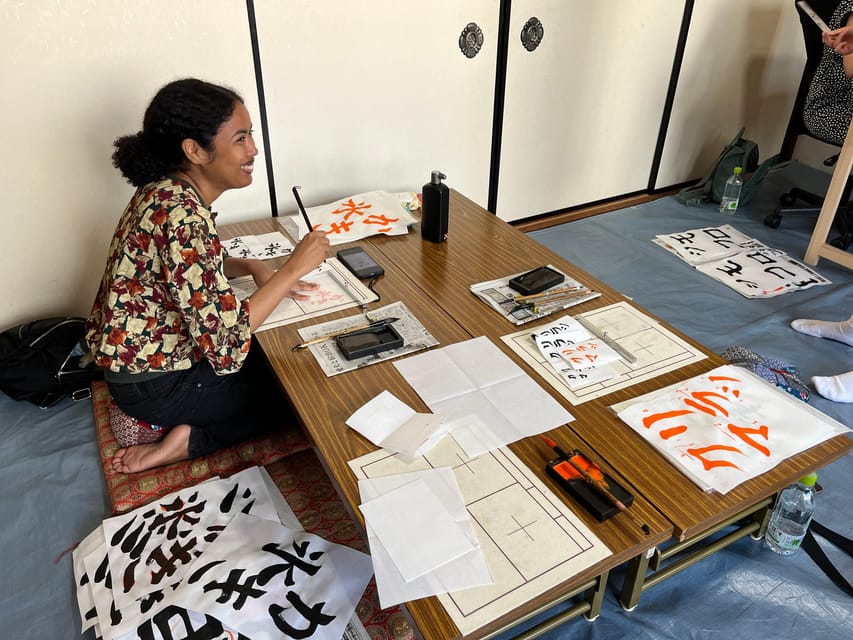
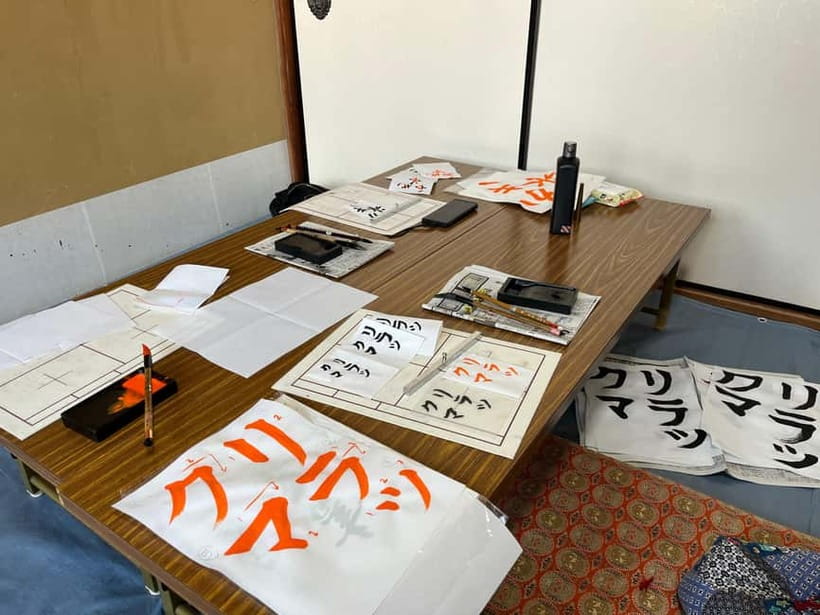
After practice, you write your chosen character on shikishi, a formal square cardboard board made for displaying calligraphy or artwork. This is the piece you take home.
The final stage has a nice balance of pressure and freedom. You have practiced enough to understand the structure, but the teacher does not turn you into a professional calligrapher in 70 minutes. Your finished piece will show your own hand. Small irregularities are part of its story.
The materials are supplied, and the final artwork is included in the $55 price. That makes the cost easier to justify than a class that charges for instruction and then sells the souvenir separately. You are paying for a small-group lesson, a traditional setting, the materials, translation, and a finished object that is personal rather than mass-produced.
The guide may also take photographs during the class. This is useful because your hands are occupied and you may not want to interrupt the exercise to take pictures. A small teacher-made keychain with your selected character is provided as an additional souvenir.
Pack the shikishi carefully for the rest of your trip. It is a board rather than a rolled sheet, and you will want to protect the inked surface in your luggage. The supplied information does not specify a protective case, so bring a folder or ask the guide how best to carry it if you are continuing to travel.
Why Calligraphy Works as a Kyoto Activity
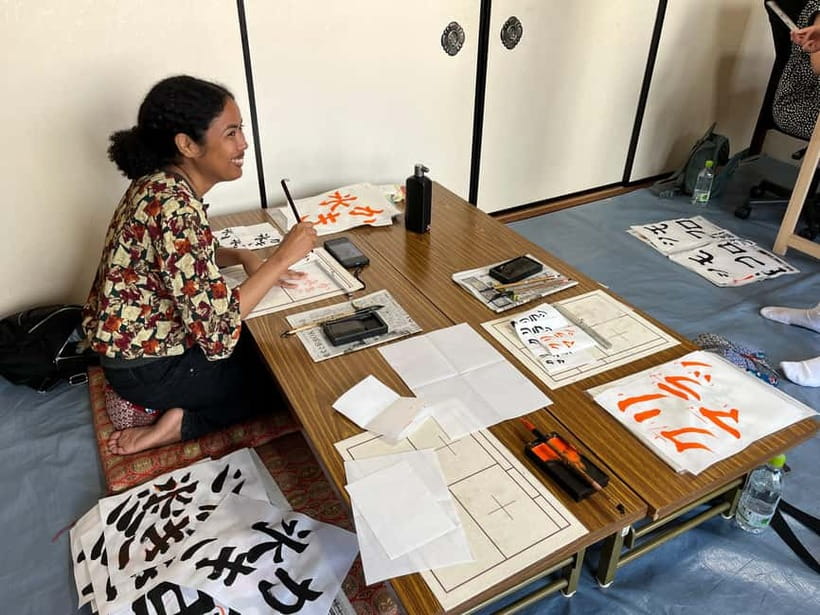
Kyoto offers temples, gardens, markets, and restaurants at every turn. The challenge is finding an activity that lets you participate instead of simply looking. This class gives you a direct way to use an art form that is part of Japanese education and daily culture.
Calligraphy also introduces ideas that a standard cultural talk can leave abstract. You learn how kanji are structured, how the tools work, and how a small change in pressure alters a line. The lesson connects language, movement, patience, and visual balance.
I especially like the way the activity leaves room for mistakes. You are not expected to produce museum-quality work. The teacher demonstrates with great control, then helps you make something you can display. That contrast can be encouraging: you see the level of the art while still being allowed to work as a beginner.
The atmosphere is peaceful, but it is not a meditation retreat. The lesson includes translation, instruction, practice, and conversation. If you want complete silence, this is not the right setting. If you want a calm activity with clear guidance, it fits well after a day of walking.
Group Size, Languages, and Personal Attention
The class is limited to six participants. That number matters because brush technique is hard to learn from across a crowded room. The teacher can look at your hand position and strokes, while the translator can explain a correction in a language you understand.
Support is offered in English, Spanish, Japanese, and Dutch. The Japanese teacher may rely on a translator for non-Japanese instruction, but that arrangement is part of the lesson rather than a problem. The demonstrations provide visual guidance, and the translator explains the steps and helps with individual questions.
The smaller group also suits families, couples, solo visitors, and people who do not normally take art classes. Families with behaving adolescents can make it a shared project. Very young children are not suitable, and the booking information lists children under five as excluded, along with babies under one. The activity is also not suitable for visually impaired people.
Because the class depends on concentration, it may not be ideal for a child who cannot sit quietly for much of an hour. There is no food or drink served, so handle snacks and vending machine purchases before or after the session rather than expecting refreshments in the room.
Is $55 a Fair Price?
At $55 per person, this is not the cheapest short activity in Kyoto. You can buy a brush or a souvenir for less. The comparison is not really with a shop purchase, though. It is with the cost of a guided cultural experience that gives you instruction, supplies, a temple setting, translation, and a finished piece.
The small group improves the value. A large demonstration might show you how calligraphy works, but it would not give you the same chance to practice and receive corrections. Here, the teacher helps you move from basic lines to one character you chose yourself.
The keychain is a nice extra, but I would not book the class for the free gift alone. The strongest value is the process and the shikishi board. You leave with something tied to your own effort, not just an item picked from a shelf.
Reserve now and pay later is available, and cancellation is free up to 24 hours before the activity for a full refund. Those terms are useful if you are arranging a busy Kyoto schedule. Starting times vary, so check availability before planning nearby reservations.
Who Should Book This Class?
I would recommend it to anyone who wants a manageable cultural activity with a tangible result. You do not need artistic training, Japanese-language ability, or previous calligraphy experience. The teacher begins with basic strokes and builds gradually.
It is particularly good for:
- Couples who want a shared souvenir with meaning
- Families with older children and patient adolescents
- Solo visitors looking for a social but focused activity
- First-time visitors who want more than temple photographs
- People interested in Japanese writing, design, or traditional tools
- Anyone who prefers a short activity that fits between sightseeing plans
You may want to skip it if floor seating is uncomfortable, if you dislike making art under time limits, or if you want a long temple history tour. It is also not a class for producing several finished boards. You practice widely, then focus your best effort on one final character.
Practical Tips for a Better Session
Think about your word before you arrive. Prepare three or four kanji options, since the teacher can help you choose from examples but the final selection is yours.
Wear socks and comfortable clothing that makes floor sitting easier. Avoid bare feet, smoking, vaping, alcohol, and drugs, all of which are prohibited.
Arrive at the temple front and wait for the red lantern. Do not go up the stairs to search for the class. Keep the voucher accessible, especially if you need to confirm the meeting instructions.
Try not to over-practice. The class warning about arm fatigue is practical, not ceremonial advice. Your final board will benefit more from a few thoughtful attempts than from filling every sheet of paper.
If you use a wheelchair or have limited mobility, contact the provider before booking even though the activity is listed as wheelchair accessible. The floor seating and limited desks are important details to discuss.
Should You Book the Kyoto Calligraphy Class?
Yes, if you want a personal souvenir and a genuine hands-on introduction to a Japanese art. The strongest parts are the patient teacher, the helpful multilingual guidance, the small group, and the chance to work inside a traditional temple room in central Kyoto.
Book with realistic expectations. You will not master shodo in 70 minutes, and the final piece may show a beginner’s hand. That is exactly why it works: you learn enough to understand the discipline, then take home proof that you tried it yourself.
For $55, I consider it good value for a compact Kyoto experience. Choose your kanji in advance, bring socks, prepare for floor seating, and follow the red lantern instructions carefully. If those details suit you, this is a memorable way to spend an hour away from the usual sightseeing circuit.
FAQ
How long does the Kyoto calligraphy class last?
The experience lasts about 70 minutes. It includes introductions, tool instruction, basic stroke practice, practice with your chosen kanji, and completion of your final artwork.
Where does the calligraphy class meet?
Meet in front of Seigan-ji Temple in the covered Shinkyogoku shopping street. Look for the person holding a red lantern on a stick under the roofed street.
How do I find the meeting point?
Wait at the front of the temple for the person with the red lantern. Do not climb the stairs to enter the temple looking for the class, and do not ask monks or other temple staff if you are in the right place.
What languages are available?
Instruction and translation are available in English, Spanish, Japanese, and Dutch.
What is included in the price?
The $55 price includes use of washi, a brush, ink, bunchin, shitagami, explanations, practice, kanji examples, your self-made souvenir, and your finished calligraphy artwork.
Do I take my calligraphy home?
Yes. After practicing, you write your selected character on shikishi, a special square cardboard board, and take the finished artwork home. You also receive a keychain with your chosen character made by the teacher.
Do I need to choose a kanji before arriving?
You should think of a word or kanji before the class and prepare several ideas if possible. Examples are also available during the experience.
Is the class wheelchair accessible?
The activity is listed as wheelchair accessible. Most seating is on the floor with a zabuton, and only a limited number of desks are available, so consider this arrangement when booking.
Are food and drinks provided?
No. Food and drinks are not included, and none are served during the class. Drinks can be purchased from vending machines outside the temple.
Just added around Kyoto
- Kyoto: Zen Meditation at a Private Temple with a Monk★ 5.0 · 25 reviews
- Kyoto: Gion Geisha District & Sake-in-Hand Walking Tour★ 5.0 · 37 reviews
- Private Pewter Sake Cup Experience with a Kyoto Artisan★ 5.0 · 31 reviews
- Your Private Vacation Photography Session In Kyoto★ 5.0 · 110 reviews
- Kyoto Wagashi(Japanese sweets) Cooking Class near Fushimiinari★ 5.0 · 60 reviews
- Private Guided Traditional Buddhist Cooking in Japan★ 5.0 · 16 reviews
- Traditional Japanese Music show & Experience Tour in Kyoto★ 5.0 · 57 reviews
- Kyoto:Family-Friendly Kimono & Yukata Experience at WARGO★ 5.0 · 147 reviews
Kyoto Tours, compared.


Fushimi Inari, Kinkakuji, Bamboo Grove 1 Day Bus Tour
Read our review →
Tea Ceremony in a Traditional Tea House in Kiyomizu
Read our review →
Kyoto Geisha Walking Tour: Gion District & Hidden Gems
Read our review →

Gion Magical Night Walking Tour with Geisha Trivia
Read our review →

Gion Geisha District Walking Tour – Stories of Geisha
Read our review →Browse the lists this tour appears in