
Reviewed · KYOTO TOURS
Kyoto: Gion and Geisha District Walking Tour
Gion is best understood on foot, one quiet lane and wooden townhouse at a time. This two-hour walk links Yasaka Shrine, old Higashiyama streets, and Hanamikoji Street while explaining the customs behind Kyoto’s geiko and maiko districts. Guides such as Sam, Amy, Maria, Tim, Shin, and Naoya have been praised for clear English, warm personalities, and lively storytelling.
I like the small group of no more than 10 people, which makes it easier to hear the guide and ask questions. I also like the route’s variety: shrine rituals, samurai stories, preserved streets, seasonal traditions, and practical tips on where you might spot geisha.
The main consideration is pace. You cover several locations in about two hours, with some walking on stone lanes and sloping streets. The tour gives you a useful introduction rather than a long, quiet look at every stop, and an actual geisha sighting is never guaranteed.
Key points to know before booking

- A compact route through six major sights: The walk covers Yasaka Shrine, Maruyama Park, Nene-no-Michi, Ninenzaka and Sannenzaka, Yasui-Konpiragu, and Hanamikoji Street.
- Geisha culture is explained with context: You learn about geiko, maiko, tea houses, traditional entertainment, and appropriate places to look for them.
- The group is capped at 10 people: This is small enough for personal questions and easier communication than a large coach tour.
- Several guides receive strong praise: Sam, Shin, Amy, Tim, Maria, and Naoya are singled out for friendly, clear, and engaging guiding.
- It works well as a first Kyoto activity: The route introduces shrines, old neighborhoods, traditional architecture, and local customs in one short outing.
- The price is modest for a guided introduction: At $22.55 per person, you are paying mainly for interpretation and local orientation, not admission tickets.
Why Gion makes a good walking tour
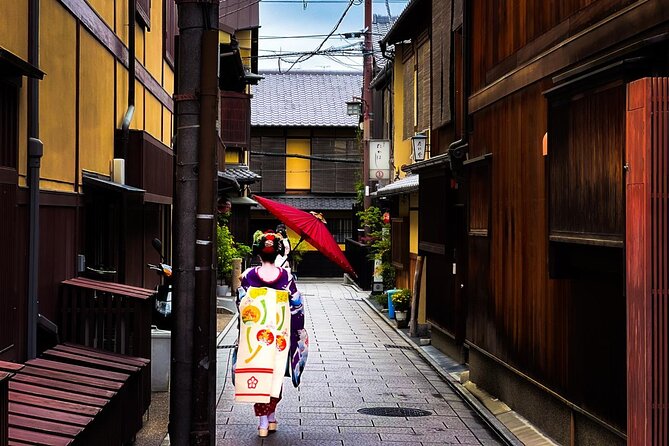
Gion can look simple at first glance: wooden buildings, lanterns, narrow streets, and plenty of people taking photographs. The meaning is easier to miss. A guide helps you notice which streets are linked with tea houses, how traditional entertainment districts function, and why certain customs matter.
This tour keeps its focus on Gion and nearby Higashiyama rather than trying to cover half of Kyoto. That is a smart choice. You get enough time to connect the sights instead of spending the whole outing on buses or rushing from one distant landmark to another.
The route also gives you a useful mix of public and quieter spaces. Yasaka Shrine and Ninenzaka can feel busy, while Nene-no-Michi and parts of Maruyama Park offer a calmer change of pace. Hanamikoji Street then brings you back to the heart of Gion.
The tour is conducted in English and uses a mobile ticket. Your meeting point is Starbucks Coffee at the Kyoto Gion Hotel, 555 Gionmachi Minamigawa, on the first floor. The walk ends back at the same point, which is helpful if you want to continue exploring nearby afterward.
More geisha-district evenings:
- Kyoto Geisha Walking Tour: Gion District & Hidden Gems
★ 4.7 · 3,273 reviews - Kyoto: Gion Magical Night Walking Tour with Geisha Trivia
★ 4.9 · 2,393 reviews - Kyoto: Gion Geisha District Walking Tour – Stories of Geisha
★ 4.7 · 2,187 reviews
Yasaka Shrine begins the cultural story
The walk starts at Yasaka Shrine, a centuries-old Shinto sanctuary between Gion and Higashiyama. You spend about 20 minutes here, and admission is free.
This is more than a quick photo stop. The shrine gives your guide a natural place to explain basic Shinto customs, shrine spaces, and the role of religious sites in Kyoto’s daily life. Its vermilion gate and lantern-lined paths also provide an immediate sense of place.
I like beginning here because it gives the rest of the walk a cultural frame. The later streets are not just attractive old buildings. They are part of a district shaped by worship, festivals, traditional arts, and entertainment.
Depending on the time of day, Yasaka Shrine may be active and crowded. Your guide can help you focus on the details rather than simply moving through the gates with the crowd.
Maruyama Park adds seasonal beauty
From Yasaka Shrine, the route continues to Maruyama Park for about 10 minutes. It is Kyoto’s oldest public park and is known for seasonal scenery, especially its famous weeping cherry tree.
This is a short stop, so do not expect a long park walk. Instead, think of it as a breath of open space between the shrine and the old lanes of Higashiyama. Your guide may connect the park’s trees and seasonal celebrations with wider Japanese traditions.
The stop is particularly appealing if you enjoy seeing how Kyoto balances built heritage with gardens and public spaces. It also gives you a chance to pause before the route turns into narrower streets.
The tradeoff is that ten minutes passes quickly. If you want extensive garden time or a relaxed cherry blossom visit, you would need to return on your own.
Nene-no-Michi shows quieter old Kyoto
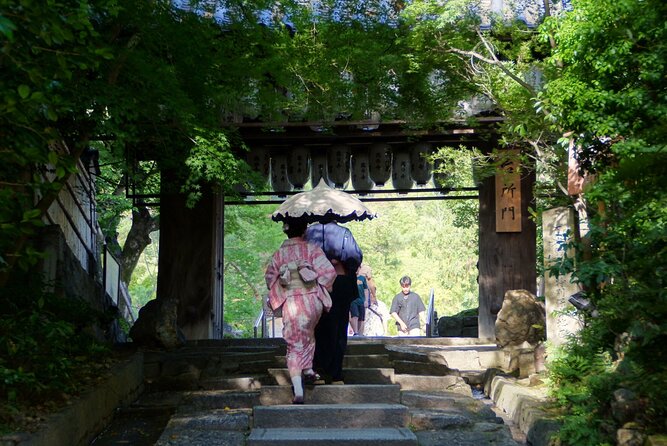
Nene-no-Michi is a picturesque lane named for Nene, the wife of samurai warlord Toyotomi Hideyoshi. The tour allows about 10 minutes here.
This lane is valued for its preserved architecture and smaller shops. It feels more intimate than a major shopping street, and the setting gives your guide room to discuss samurai connections, traditional homes, and the people associated with Kyoto’s past.
I especially like this part of the route because it can help you understand the scale of old Kyoto. The narrow streets and wooden buildings make the city’s past feel close at hand, without needing a museum display.
Photography is tempting, but the route continues at a steady pace. If a particular doorway or shop catches your eye, make a note of it and return later rather than holding up the group.
More walking tours in Kyoto:
- Night Walk in Gion: Kyoto’s Geisha District
★ 4.5 · 2,003 reviews - Kyoto Gion Geisha District Walking Tour – The Stories of Geisha
★ 5.0 · 1,441 reviews - Nishiki Market Brunch Walking Tour (7 Tastings + Brunch)
★ 5.0 · 1,355 reviews - Kyoto Arashiyama Walking Tour: Bamboo, Monkeys, Gardens & Secrets
★ 5.0 · 1,216 reviews
Ninenzaka and Sannenzaka bring the postcard view
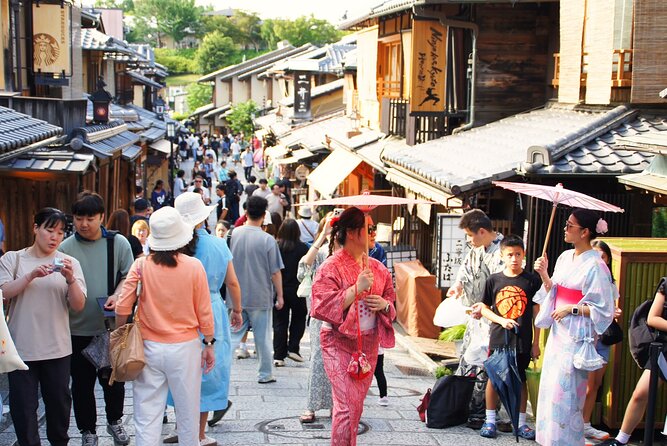
The walk then reaches the stone-paved slopes of Ninenzaka and Sannenzaka, with about 15 minutes at this section. These lanes are lined with old wooden buildings, artisan shops, and small food stops.
This is one of the most visually memorable parts of the outing. The sloping streets, tiled roofs, and traditional facades offer the classic old-Kyoto scene many people hope to see.
Your guide adds value by pointing out architectural details and explaining how the streets looked and functioned in earlier periods. Without that context, it is easy to see only a pretty shopping lane. With explanation, the buildings become part of a larger story about craft, commerce, pilgrimage, and neighborhood life.
This is also one of the busier portions of the route. The stone paving can be uneven, and the slopes require comfortable shoes. The tour information says most people can participate, but anyone who dislikes hills or extended walking should keep the route’s physical nature in mind.
Yasui-Konpiragu brings an unusual local custom
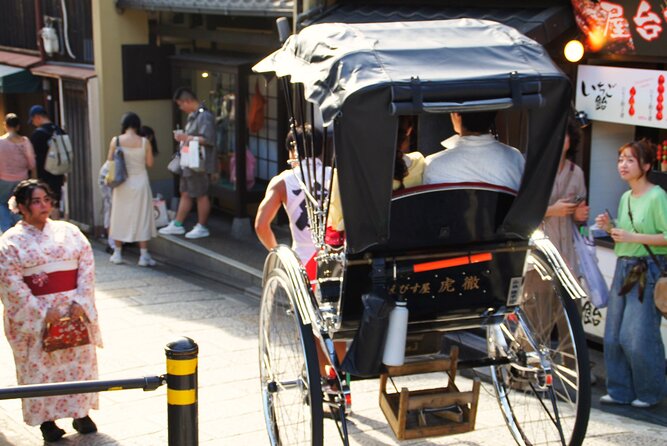
Yasui-Konpiragu receives about 10 minutes. The shrine is known for its Power Stone archway, a large stone associated with forming strong relationships or breaking ties with the past.
Visitors traditionally crawl through the opening while making a wish. It is an unusual custom, and your guide can explain how the practice fits into the shrine’s role and modern appeal.
This stop adds humor and human warmth to the walk. Not every Kyoto sight is grand or solemn. Some customs are personal, practical, and a little quirky, which makes them easier to remember.
The visit is brief, so you may not have much time for a long prayer or extended photography. Still, it is a useful stop because it shows a side of Kyoto’s religious life that you might miss if you only visit the city’s biggest temples and shrines.
Hanamikoji Street explains Gion’s geisha world
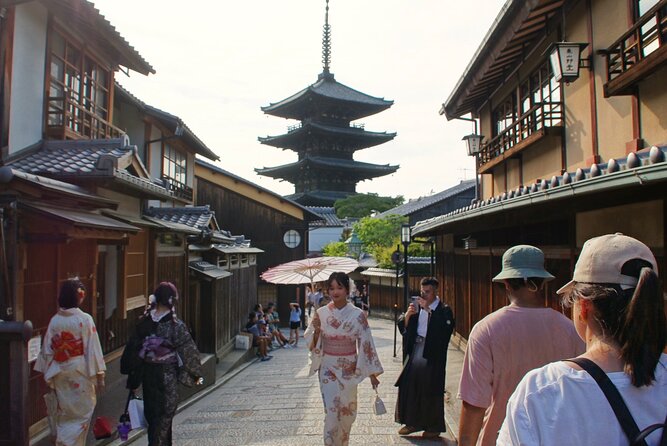
The final major stop is Hanamikoji Street, with about 15 minutes here. This is the central stretch of Gion, lined with preserved machiya townhouses, lantern-lit streets, teahouses, and traditional entertainment venues.
This is where the tour’s geisha focus becomes most direct. Your guide explains the world of geiko and maiko, traditional performance customs, and the places where you might have a chance of seeing them. The advice is useful, but keep your expectations realistic. The tour can suggest good areas and appropriate behavior, but it cannot promise a sighting.
The strongest part of a guide’s role here is explaining what you are looking at. A closed wooden door may belong to a private tea house. A lantern may mark a traditional venue. A woman in formal dress may be working, commuting, or posing for a scheduled photograph. Context helps you avoid treating Gion as a stage set.
Respect matters. Keep a reasonable distance, do not block entrances, and follow your guide’s instructions about photography. The walk is most valuable when it helps you appreciate the district as a living neighborhood, not just as a place to collect pictures.
Night tours can add a special mood to Hanamikoji Street, with lanterns and darker lanes changing the look of the wooden facades. The schedule details provided do not guarantee a night departure, so check your selected time before booking if evening scenery is important to you.
What the guides add to the walk
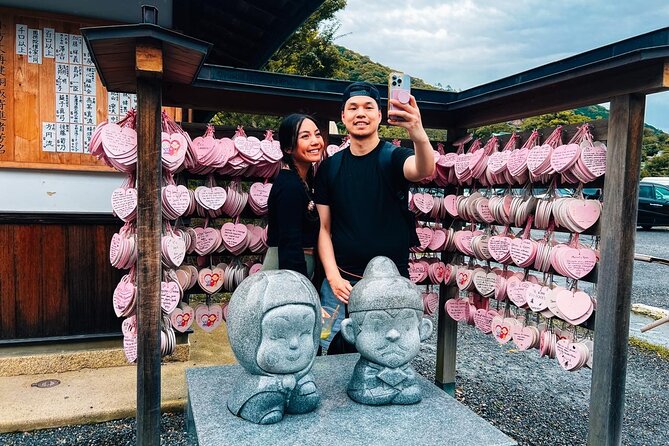
The route itself is easy to find on a map. The guide is the reason to pay for this experience.
Sam is praised for accommodating the group and speaking clear English. Shin is noted for giving a strong introduction to Gion. Amy receives especially warm praise for making history and culture easy to follow, while Tim is described as friendly and well informed.
Maria’s communication before the walk is another useful detail. She helped with organization and adjusted the route to keep the group in the shade during hot weather. That suggests the experience is not just a memorized speech. Guides may respond to conditions and the needs of the group.
Naoya is praised for making geisha stories feel personal and atmospheric. Across the different guiding styles, the common strength is storytelling. You hear about maiko training, tea ceremonies, shrine customs, samurai traditions, local legends, and seasonal celebrations.
Guide quality can vary in any walking tour because different people lead it. Still, the range of named guides and the consistently strong response to their clarity, friendliness, and passion is encouraging. If you enjoy asking questions, the group size gives you a better chance to do so.
Is $22.55 good value?
At $22.55 per person, this is an inexpensive guided introduction to one of Kyoto’s most famous districts. The main thing you are buying is interpretation, not entry to paid attractions. Every listed stop has free admission, and tips are optional.
That can still be good value. A self-guided walk costs nothing, but you would need to research the shrine customs, geisha districts, samurai connections, and street architecture yourself. You might also miss small details or misunderstand what you are seeing.
The two-hour length keeps the cost and commitment low. It works well for a first day in Kyoto, a free morning, or a short orientation before you return to Gion independently.
I would not book it if you want a full-day cultural program, long shrine visits, or an assured geisha encounter. I would book it if you want a clear introduction without spending much money or time.
Who should choose this Gion walk?
This tour suits first-time visitors who want to understand Gion before exploring it alone. It is also useful for anyone interested in traditional arts, local religious customs, historic architecture, or Japanese seasonal celebrations.
The small group makes it a good choice for people who dislike large organized tours. The English-speaking guide can answer questions, and the route ends where it begins, keeping the logistics simple.
Photography lovers will find many appealing streets, especially around Nene-no-Michi, Ninenzaka, Sannenzaka, and Hanamikoji. Just remember that the walk is guided, so you will not have unlimited time at each viewpoint.
Families and older visitors should consider the stone paving and slopes. The activity is described as suitable for most people, but the route involves walking through old streets rather than moving between sights by vehicle.
If your main goal is shopping, you may prefer to use the tour as an introduction and return later. If your main goal is cultural understanding, the guide’s explanations are likely to be the most valuable part.
Small practical details that matter
Wear shoes suited to stone paths and sloping streets. The route includes several short stops, but the total outing lasts about two hours, so you will be walking for much of that time.
The meeting point is Starbucks Coffee at the Kyoto Gion Hotel, 555 Gionmachi Minamigawa, 1st floor, in Higashiyama Ward. The tour ends back there, and it is near public transportation.
The maximum group size is 10 people. Confirmation arrives when you book, and you can use a mobile ticket. Tips are not included, but they are optional.
Free cancellation is available if you cancel at least 24 hours before the start time. Cancellations made within 24 hours are not refunded, and changes inside that period are not accepted.
Should you book the Gion and Geisha District Walking Tour?
Book this walk if you want a reasonably priced, two-hour introduction to Gion with a guide who can explain what you are seeing. The combination of Yasaka Shrine, old lanes, Power Stone traditions, and Hanamikoji Street gives you more range than a simple geisha-spotting walk.
I would especially recommend it early in a Kyoto visit. You can learn the basics with Sam, Amy, Maria, Tim, Shin, Naoya, or another assigned guide, then return later to the streets that interest you most.
Skip it if you prefer to wander alone, need a completely flat route, or expect a guaranteed geisha sighting. For everyone else, this is a focused and friendly way to get beyond Gion’s postcard image and understand the customs, buildings, and stories that give the district its character.
FAQ
How long is the Gion and Geisha District Walking Tour?
The tour lasts approximately two hours.
Where does the tour begin?
It begins at Starbucks Coffee at the Kyoto Gion Hotel, 555 Gionmachi Minamigawa, on the first floor.
Where does the tour end?
The activity ends back at the meeting point.
What places does the tour visit?
The route includes Yasaka Shrine, Maruyama Park, Nene-no-Michi, Ninenzaka and Sannenzaka, Yasui-Konpiragu, and Hanamikoji Street.
Is admission included?
The listed stops have free admission. Entry to Gion and Hanamikoji Street is included.
Is a guide included?
Yes. An English-speaking guide leads the walking tour.
How large is the group?
The activity has a maximum of 10 participants.
Can I use a mobile ticket?
Yes. The tour offers a mobile ticket.
Are tips included in the price?
Tips are not included, but they are optional.
What is the cancellation policy?
You can cancel at least 24 hours before the start time for a full refund. Cancellations or changes made within 24 hours are not accepted for a refund.
Is the tour near public transportation?
Yes. The meeting point is near public transportation.
Just added around Kyoto
- Kyoto: Zen Meditation at a Private Temple with a Monk★ 5.0 · 25 reviews
- Kyoto: Gion Geisha District & Sake-in-Hand Walking Tour★ 5.0 · 37 reviews
- Private Pewter Sake Cup Experience with a Kyoto Artisan★ 5.0 · 31 reviews
- Your Private Vacation Photography Session In Kyoto★ 5.0 · 110 reviews
- Private Guided Traditional Buddhist Cooking in Japan★ 5.0 · 16 reviews
- Kyoto Wagashi(Japanese sweets) Cooking Class near Fushimiinari★ 5.0 · 60 reviews
- Traditional Japanese Music show & Experience Tour in Kyoto★ 5.0 · 57 reviews
- Kyoto:Family-Friendly Kimono & Yukata Experience at WARGO★ 5.0 · 147 reviews
Kyoto Tours, compared.


Fushimi Inari, Kinkakuji, Bamboo Grove 1 Day Bus Tour
Read our review →
Tea Ceremony in a Traditional Tea House in Kiyomizu
Read our review →
Kyoto Geisha Walking Tour: Gion District & Hidden Gems
Read our review →

Gion Magical Night Walking Tour with Geisha Trivia
Read our review →

Gion Geisha District Walking Tour – Stories of Geisha
Read our review →Browse the lists this tour appears in