
Reviewed · KYOTO TOURS
Kyoto: Gion Walking Tour
Gion is not simply a place to hunt for a glimpse of a Geisha. This two-hour walk shows you the district’s working parts, old lanes, shrines, bridges, and three hanamachi, or traditional entertainment districts. Jose and Saskia bring maps, photographs, stories, and plenty of time for questions.
I like the six-person limit, which makes it easy to hear the guide and shape the walk around your interests. I also like the way the tour treats Gion as a living part of Kyoto, not a movie set, with useful explanations of Maiko and Geiko life alongside details about ordinary homes and streets.
The main point to know is that Hanamikoji-dori is not included, and seeing a Maiko or Geiko cannot be promised. The route covers about 3.3 kilometers, so comfortable shoes matter, especially in hot, rainy, or crowded weather.
Key points at a glance
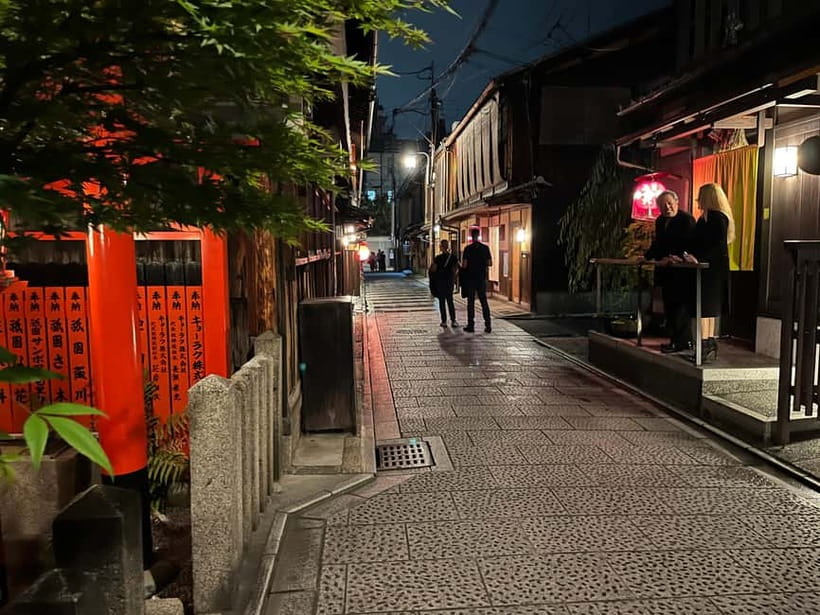
- Three hanamachi in two hours: Visit Pontocho, Gion-Kobu, and Gion-Higashi rather than seeing only the best-known Gion street.
- A small, personal group: No more than six participants means you can ask questions without shouting across a crowd.
- Jose and Saskia as guides: Both are praised for clear explanations, warmth, humor, and a strong interest in Kyoto and Japanese culture.
- More than Geisha spotting: Learn about Machiya houses, Maiko and Geiko routines, Kyoto’s past, and the story behind Yasaka Shrine.
- A useful walking introduction: The route helps you notice details you might otherwise pass without understanding.
- Seasonal adjustment: In late March and early April, the route may change to include cherry blossom views.
Why this Gion walk feels different
Many first visits to Gion follow a familiar pattern: take photographs of wooden buildings, look down a pretty lane, and hope a Maiko appears. That can be enjoyable, but it leaves much of the district unexplained.
This walk gives you a wider frame. You move through three of Kyoto’s five hanamachi, learning how these districts developed and how they function. The focus is not only on entertainers. You also hear about architecture, local customs, Kyoto’s place in Japanese history, and the everyday life of people who live in Japan now.
That broader approach is the tour’s best feature. I like experiences that teach you how to look at a city after the guide has gone. Here, a doorway, roofline, bridge, statue, or narrow lane can carry more meaning once you understand what you are seeing.
The guides also make space for personal questions. Jose and Saskia have lived in Japan for years and draw on their own experience of daily life there. You can ask about the places you pass, Japanese customs, the Geisha world, food suggestions, or details you have noticed elsewhere in the country.
Several bookings have been led by Jose, Saskia, or both together. The strongest praise centers on their energy, humor, preparation, and ability to explain things in clear English. Dutch speakers can request Saskia in Dutch, while Spanish and French are also offered.
More geisha-district evenings:
- Kyoto Geisha Walking Tour: Gion District & Hidden Gems
★ 4.7 · 3,273 reviews - Kyoto: Gion Magical Night Walking Tour with Geisha Trivia
★ 4.9 · 2,393 reviews - Kyoto: Gion Geisha District Walking Tour – Stories of Geisha
★ 4.7 · 2,187 reviews
Starting beside the Disney Store
The meeting point is in front of the Disney Store at Kyoto Shijo-Kawaramachi. The guide sits and waits with an iPad showing the Get Your Guide image and the tour time.
This is a useful meeting spot in central Kyoto, but do not simply wait outside looking for a large tour flag. Look for the seated guide with the iPad. Kyoto has only one Disney Store, which helps remove some confusion, though you should still allow a few minutes to locate the exact storefront.
The tour is offered at different start times, including morning and afternoon departures. The 9:45 and 12:30 tours can include a free visit to the Gion Gallery if you want to extend your time. Since the walk lasts two hours, an earlier start can leave you with plenty of afternoon sightseeing, while a later tour may work well with dinner plans afterward.
Bring water, sun protection, and an umbrella. No refreshments or other amenities are included, so prepare as you would for a normal city walk.
Pontocho Alley and the first look at Kyoto’s hanamachi
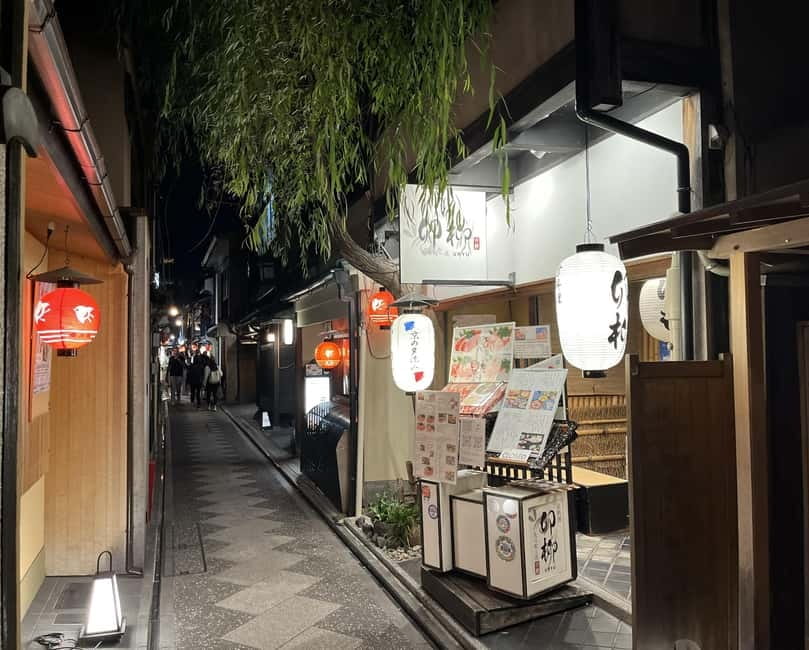
The route begins with Pontocho Alley, one of the city’s best-known traditional entertainment areas. Its narrow form and old wooden frontage give you an immediate sense of Kyoto’s historic townscape.
Pontocho is a good place to start because it introduces the link between architecture and the Geisha districts. The lane is not just attractive scenery. It forms part of a larger network of places where food, performance, hospitality, and traditional arts developed together.
You then visit Pontocho Kaburenjo. A Kaburenjo is connected with performances and the organization of a hanamachi. The stop helps explain that Maiko and Geiko culture involves training, schedules, performances, professional relationships, and established customs. It is a useful correction to the simple idea that Geisha are merely entertainers in traditional dress.
The guide may use an iPad to show maps, older photographs, and other visual material. This is especially handy in a city that has changed greatly over time. A map can make the relationship between the river, bridges, streets, and entertainment districts much easier to follow than a spoken explanation alone.
Kamogawa, statues, and Sanjo Ohashi
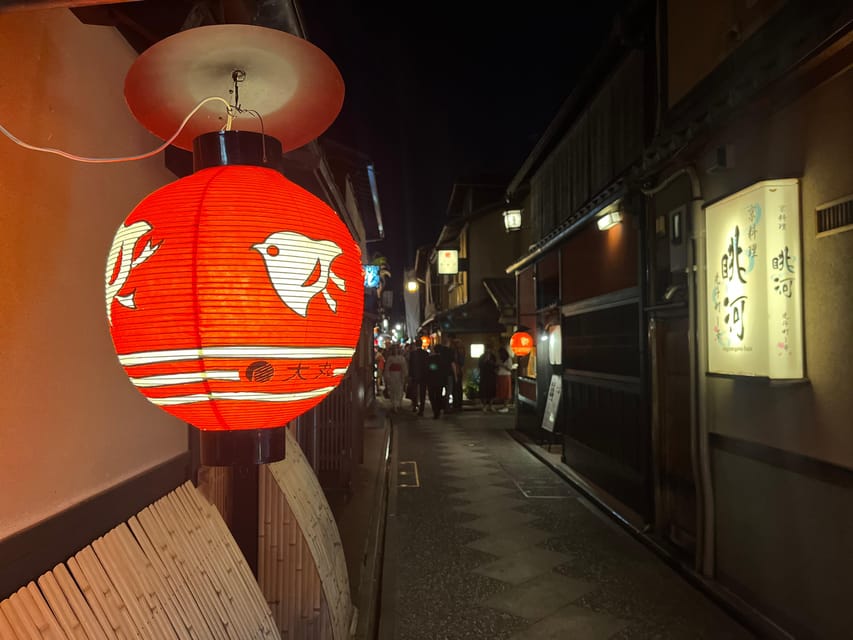
The walk continues along or near the Kamogawa, Kyoto’s central river. You see the Yagi-san and Kita-san statues before reaching Sanjo Ohashi, an important bridge and city landmark.
These stops add movement to the tour. You are not standing in one narrow lane for two hours, and the changing views help connect Gion with the wider downtown area. The river and bridge also provide a natural way to discuss how Kyoto’s neighborhoods developed around routes, crossings, and public spaces.
The guides often stop frequently for short talks rather than delivering one long speech. That pacing works well for a small group. You get a little information, look around, ask a question, and then move on.
The tradeoff is that this is still a walking tour, not a formal museum presentation. If you want a long, detailed lecture at each location, the frequent stops may feel light. If you prefer information broken into manageable pieces, the format should suit you.
More walking tours in Kyoto:
- Night Walk in Gion: Kyoto’s Geisha District
★ 4.5 · 2,003 reviews - Kyoto Gion Geisha District Walking Tour – The Stories of Geisha
★ 5.0 · 1,441 reviews - Nishiki Market Brunch Walking Tour (7 Tastings + Brunch)
★ 5.0 · 1,355 reviews - Kyoto Arashiyama Walking Tour: Bamboo, Monkeys, Gardens & Secrets
★ 5.0 · 1,216 reviews
Yamato Dori and Gion-Kobu
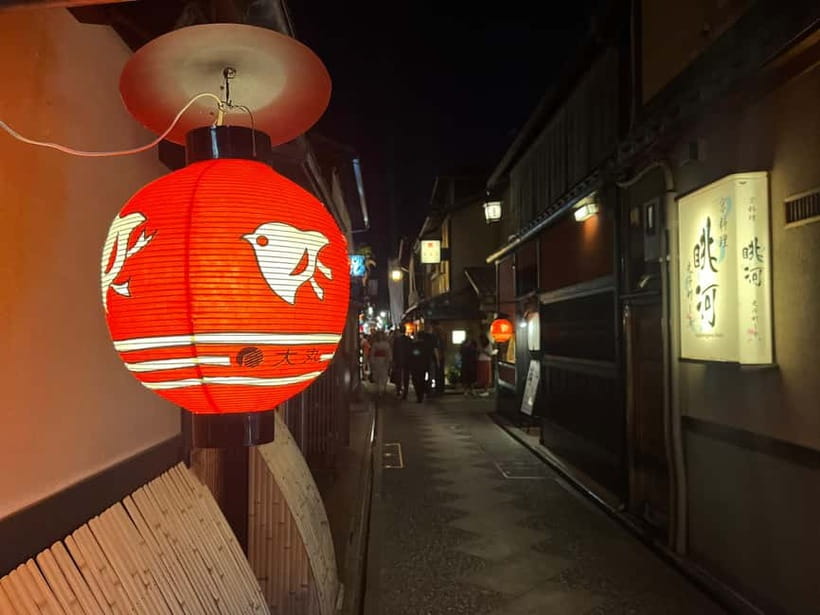
From Sanjo Ohashi, the route heads toward Yamato Dori and Gion-Kobu. This is where the walk begins to show the difference between simply photographing Gion and understanding its structure.
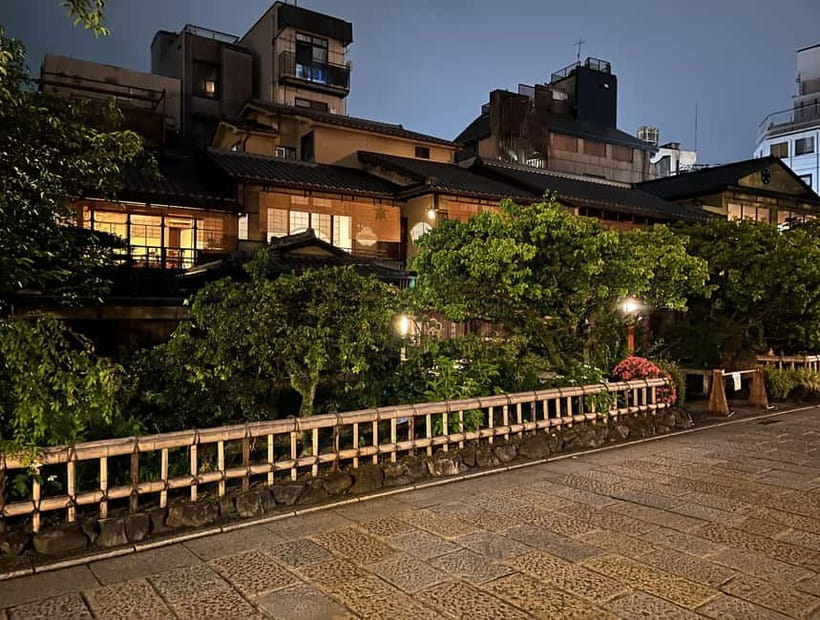
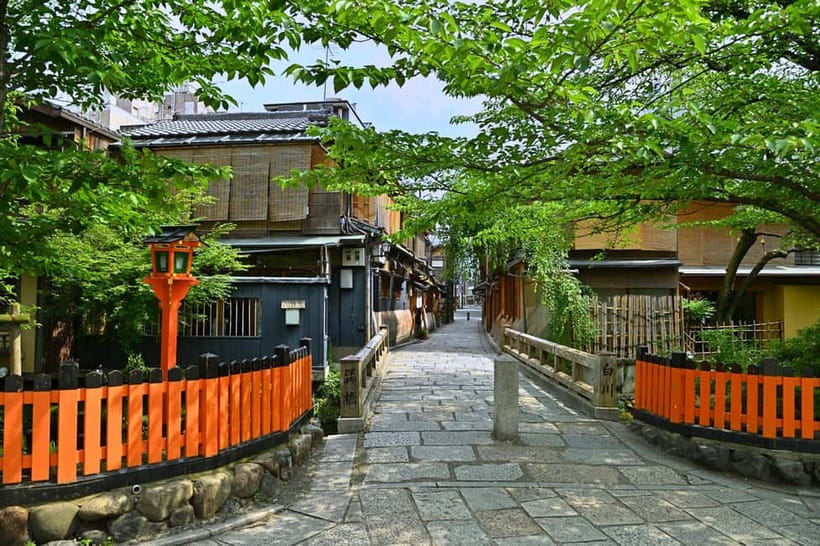
Gion-Kobu includes the Gion-Shinbashi area and Gion Shirakawa, with traditional buildings and preserved streets. The wooden Machiya houses are among the most appealing sights, but the guide explains what makes them more than attractive façades. You learn to notice how the buildings relate to the street and how the neighborhood’s appearance reflects its protected status.
The national historical preservation area is one of the tour’s strongest sections. It offers classic Kyoto scenery, but it also calls for good manners. These are streets with businesses and homes, not a theme park created for sightseeing. Keep voices low, avoid blocking narrow lanes, and do not treat people in the area as photographic props.
At Tatsumi Jinja, a small shrine, and Tatsumi Bridge, the guide points out details that are easy to miss when walking alone. The stop also adds a quieter note to the route. You get a chance to look closely rather than rushing from one famous photo point to another.
This is the part of the tour many people find most useful after the fact. Once someone has shown you the small markers of the neighborhood, you may notice similar details during the rest of your Kyoto stay.
Gion-Higashi and the Maiko and Geiko world
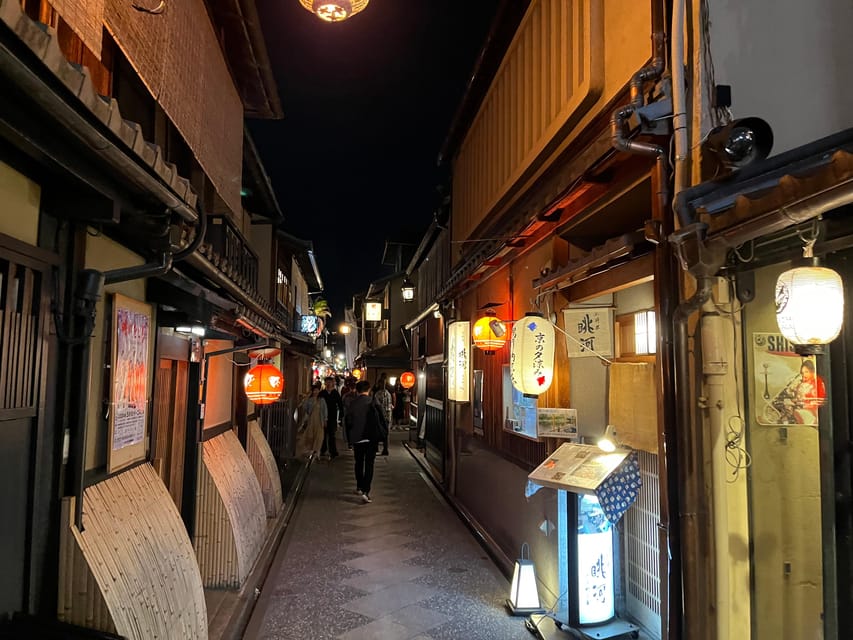
The route then reaches Gion-Higashi, another hanamachi. Visiting it after Gion-Kobu gives you a point of comparison. You can see that Gion is not one single district with one uniform identity. It is made up of separate communities with their own histories and institutions.
The guide explains the life of Maiko and Geiko, including their training, routines, work, and practices. The information is intended to give you a more realistic view of the profession, rather than reducing it to costumes and staged photographs.
This part is especially valuable if you arrive in Kyoto with only a general idea of what Geisha culture means. The terminology alone can be confusing. Learning the distinction between Maiko and Geiko, and hearing how their professional lives fit into the hanamachi system, gives you a much firmer base.
Do not book this walk solely to see one. A Maiko or Geiko sighting is not guaranteed, and the guide cannot manufacture one without being disrespectful to people going about their work. If you do happen to see one, your new understanding will help you behave appropriately and recognize what you are seeing.
The tour’s small size is important here. A group capped at six can pause without creating a large knot of people in a narrow street. That does not remove the need for courtesy, but it makes the experience less intrusive.
Yasaka Shrine and the origin of Gion
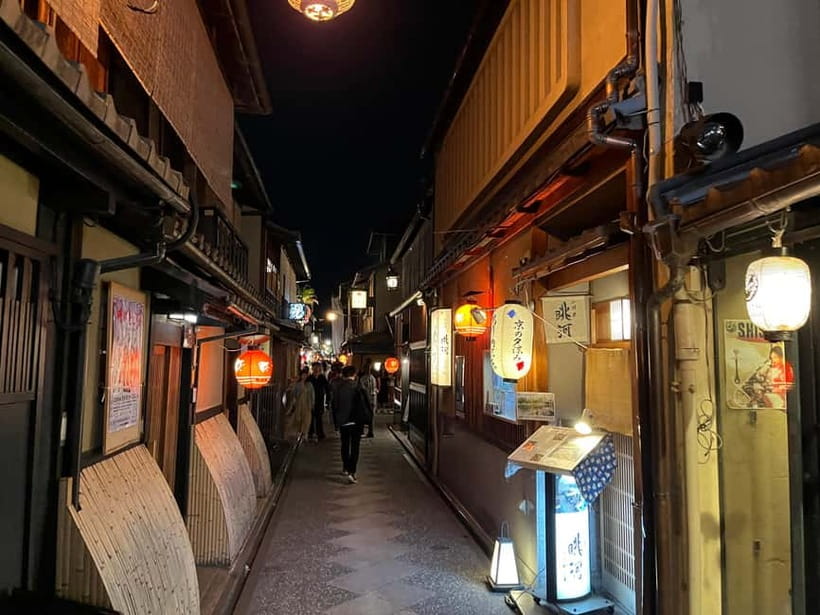
The final major stop is Yasaka Shrine, formerly called Gion Shrine. The district takes its name from the shrine, whose origins reach back more than 1,100 years.
This stop gives the tour a strong historical anchor. Gion is often presented as an entertainment district, but Yasaka Shrine shows the older religious roots behind its name and identity. If time allows, the guide also explains the Gion Festival, one of Japan’s three most famous and important festivals.
The shrine can feel especially atmospheric in the evening, when the setting takes on a different mood. The walk may also include explanations of smaller shrine areas, including places associated with beauty and love. Those details give you something practical to revisit later if you want a quieter shrine stop during your own time.
Timing matters, though. Yasaka Shrine is included in the route, while the Gion Festival itself is explained only if time allows. You should not expect to see the festival unless your visit coincides with its actual dates.
The route you will and will not walk
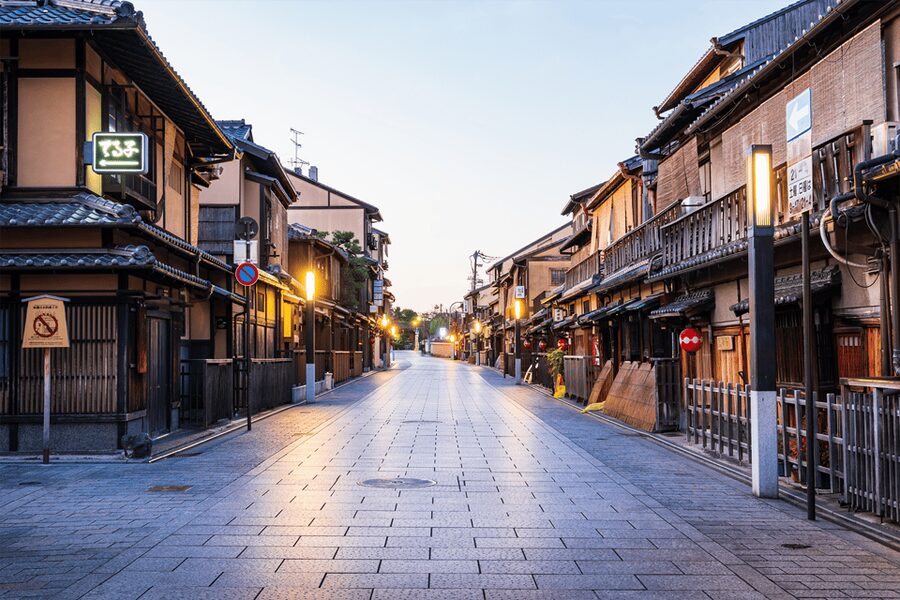
The published route covers:
- Pontocho Alley
- Pontocho Kaburenjo
- Kamogawa
- Yagi-san and Kita-san statues
- Sanjo Ohashi
- Yamato Dori
- Gion-Kobu
- Gion-Shinbashi Dori
- Gion Shirakawa
- Tatsumi Jinja
- Tatsumi Bridge
- Gion-Higashi
- Yasaka Shrine
The total distance is about 3.3 kilometers, or roughly two miles. That is manageable for most people who are comfortable walking, but Kyoto’s summer heat, rain, and seasonal crowds can make the route feel more demanding.
The tour does not include Hanamikoji-dori. That is an important detail because many people associate Gion with that street. You can visit it separately, but do not book this experience expecting a guided walk there.
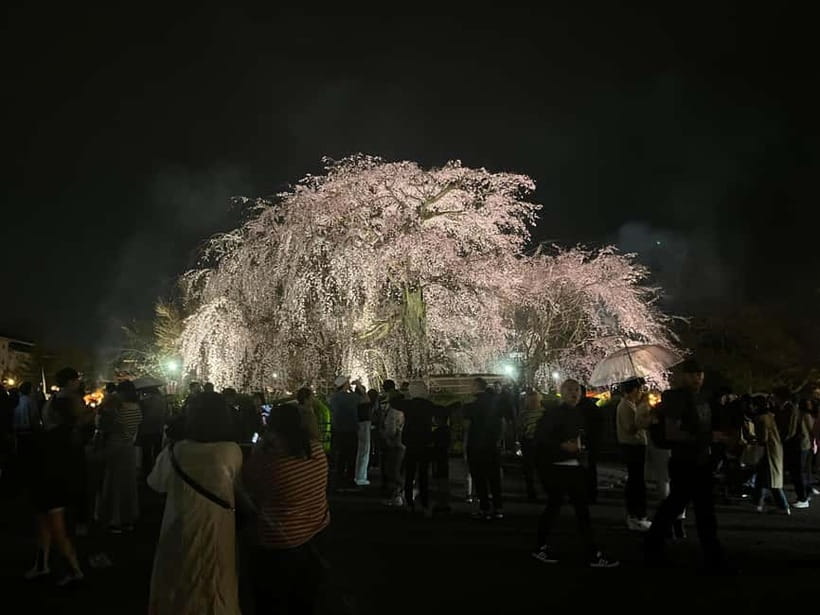
During the cherry blossom season, roughly late March through early April, the route may change to show flowering trees around Gion. The exact views depend on the season and conditions, so treat this as a possible bonus rather than a promise.
What the small group adds
The tour accepts up to six participants. If fewer people book, the walk can feel close to a private tour. One small group included only two participants, while another group of six found that the format still felt personal.
I value this size for three reasons. First, you can hear the guide in narrow or busy areas. Second, you do not spend much of the two hours waiting for people to catch up. Third, you can ask questions without turning the walk into a formal lecture.
The guides also adapt to the group. Jose is often praised for asking what interests people and using photographs, maps, and older images to make the points clear. Saskia is praised for her enthusiasm and for offering the tour in Dutch. If you have a family with children or teenagers, the question-friendly style may work better than a rigid history lesson.
The small group does not mean the route moves at your own private pace. It is still a scheduled two-hour walk, and the guide must cover several districts. If your group wants to stop for long meals, shopping, or extended photography, this is not the right format.
Is $35 a fair price?
At $35 per person, this is a good value if you want context rather than a quick orientation. You are paying for two hours, a maximum group of six, a multi-district route, and a guide who can answer questions about both historical Kyoto and present-day life in Japan.
The price looks especially fair for a first day in Kyoto. You see several central areas in one continuous walk, then have a better idea of where to return on your own. The tour can also save you from spending half a day wandering through Gion without understanding what you are seeing.
It is less compelling if you only want photographs of the most famous street or a guaranteed Maiko encounter. Hanamikoji-dori is excluded, and no sighting can be promised. You may prefer a self-guided walk if you already know Gion well and do not need explanations.
Free cancellation up to 24 hours before the start and reserve-now, pay-later booking make it easier to fit the walk into a changing Kyoto schedule. Those policies are useful during a trip with uncertain weather, but the practical value still depends on choosing a day when you can comfortably walk outdoors.
Who should book this walk?
I would recommend it to first-time Kyoto visitors who want a clear introduction to Gion without committing to a long day tour. It also suits repeat visitors who have walked through the district before but felt they were missing the meaning behind the buildings and lanes.
Families can benefit from the conversational approach, since children can ask questions and the guide can adjust examples to the group. Couples and solo visitors should also find the six-person limit comfortable.
Dutch speakers have a particularly useful option with Saskia. English, Spanish, French, and Dutch are available, but check the specific departure language when you reserve.
You should think twice if you dislike walking, need guaranteed access to a particular street, or want a food-focused experience. No amenities are provided, and this tour is centered on history, culture, architecture, and conversation.
Practical tips for a better two hours
Wear shoes you can walk in for at least 3.3 kilometers. Bring water, sunscreen, a hat, and an umbrella, since the tour runs outdoors and Kyoto weather can change quickly.
Arrive at the Disney Store meeting point with enough time to identify the guide and iPad. Keep your phone available for the booking details, but rely on the guide’s stated meeting description rather than looking for a large sign.
Come with questions. The best use of this tour is not only listening to prepared explanations. Ask about a feature you notice, a Japanese custom that has puzzled you, or something you have seen elsewhere in Japan.
Keep your expectations about Geisha sightings sensible. The real reward is learning how to understand the district and how to act respectfully within it. If you see a Maiko or Geiko, it will be an unexpected addition, not the measure of a successful walk.
Should you book the Gion Walking Tour?
Book it if you want a compact, personal introduction to Kyoto’s historic entertainment districts, with enough room to ask real questions. The combination of Pontocho, Gion-Kobu, Gion-Higashi, Yasaka Shrine, visual material, and personal stories gives you more than a standard photo walk.
I especially recommend it early in your Kyoto stay. After two hours with Jose or Saskia, you can return to Gion with sharper eyes and better manners, and you will understand why the district is more than its famous costumes and wooden streets.
Skip it if Hanamikoji-dori is essential to your plans or if you are booking mainly to see a Geisha. For most visitors who want history, local context, and a small-group pace at $35, this is a smart use of two hours.
FAQ
How long is the Gion Walking Tour?
The tour lasts two hours.
How far does the tour walk?
The route covers about 3.3 kilometers, or approximately two miles.
How many people can join the tour?
The group is limited to six participants.
Which areas of Kyoto does the tour visit?
The route visits Pontocho, Gion-Kobu, and Gion-Higashi, along with locations such as Kamogawa, Sanjo Ohashi, Tatsumi Jinja, Tatsumi Bridge, and Yasaka Shrine.
Is Hanamikoji-dori included?
No. Hanamikoji-dori is not included in the route.
Can I be sure of seeing a Maiko or Geiko?
No. A Maiko or Geiko sighting cannot be guaranteed.
Which languages are available?
The tour is available in English, Spanish, Dutch, and French.
What should I bring?
Bring comfortable shoes, water, a sun hat, sunscreen, and an umbrella. No amenities are provided during the tour.
Just added around Kyoto
- Kyoto: Zen Meditation at a Private Temple with a Monk★ 5.0 · 25 reviews
- Kyoto: Gion Geisha District & Sake-in-Hand Walking Tour★ 5.0 · 37 reviews
- Private Pewter Sake Cup Experience with a Kyoto Artisan★ 5.0 · 31 reviews
- Your Private Vacation Photography Session In Kyoto★ 5.0 · 110 reviews
- Private Guided Traditional Buddhist Cooking in Japan★ 5.0 · 16 reviews
- Kyoto Wagashi(Japanese sweets) Cooking Class near Fushimiinari★ 5.0 · 60 reviews
- Traditional Japanese Music show & Experience Tour in Kyoto★ 5.0 · 57 reviews
- Kyoto:Family-Friendly Kimono & Yukata Experience at WARGO★ 5.0 · 147 reviews
Kyoto Tours, compared.


Fushimi Inari, Kinkakuji, Bamboo Grove 1 Day Bus Tour
Read our review →
Tea Ceremony in a Traditional Tea House in Kiyomizu
Read our review →
Kyoto Geisha Walking Tour: Gion District & Hidden Gems
Read our review →

Gion Magical Night Walking Tour with Geisha Trivia
Read our review →

Gion Geisha District Walking Tour – Stories of Geisha
Read our review →Browse the lists this tour appears in