
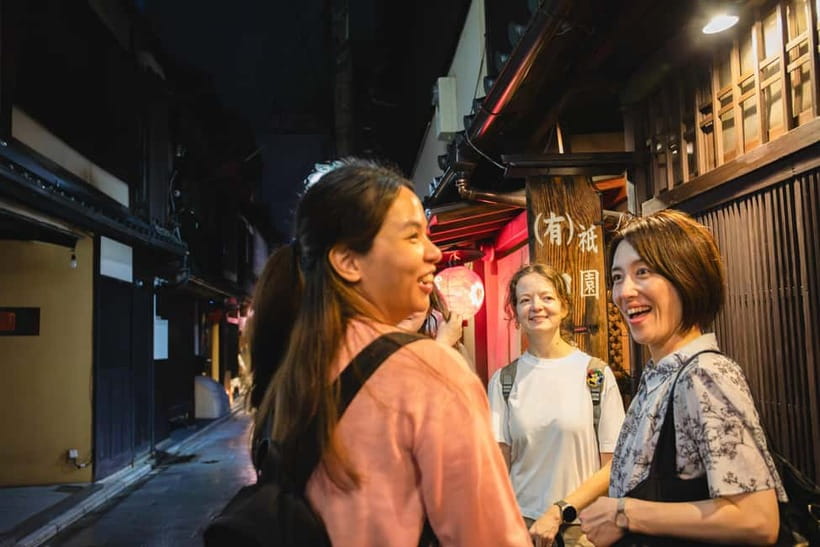
Reviewed · KYOTO TOURS
Kyoto: Gion World of the Geisha Guided Walking Tour
Gion is best understood on foot, where a quiet lane, wooden townhouse, or shrine gate can tell you more than a quick photo stop. This tour pairs Yasaka Shrine and Gion’s historic streets with clear stories about maiko, Kyoto’s apprentice geisha, and geiko, the name used for geisha in Kyoto.
I like the efficient route and the chance to see two geisha districts within Gion, rather than wandering without context. I also like the small-group format and the English-speaking local guides. Ito earned especially strong praise for his grasp of the area and friendly manner. The main drawback is practical: this is a walking tour with stairs, and the schedule can range from two hours to four and a half hours, so check the exact option before booking.
Key points to know before you book
- Yasaka Shrine gives the walk a strong starting point: You begin with one of Kyoto’s best-known religious sites before moving into Gion.
- The focus is real geiko and maiko culture: You learn how geiko and maiko fit into Kyoto’s traditional entertainment districts.
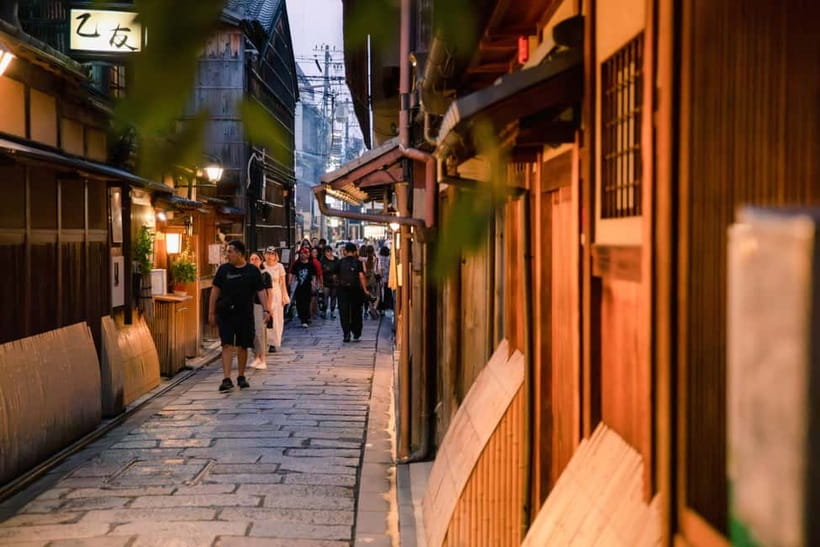
- The route includes Shirakawa Canal: This is one of Gion’s most attractive settings, with water, old buildings, and a quieter feel than the main streets.
- You may see geiko or maiko: An encounter is possible, but it is not promised. Your guide can also explain where to look for maiko in action.
- There are several meeting points: You may start near the Izumo-no-Okuni statue, a kimono rental shop, or the Kanji Museum, depending on the option you choose.
- It costs $29 per person: That is a fair price for a guided cultural walk, especially if you want background that is hard to pick up on your own.
Why Gion makes a good walking tour
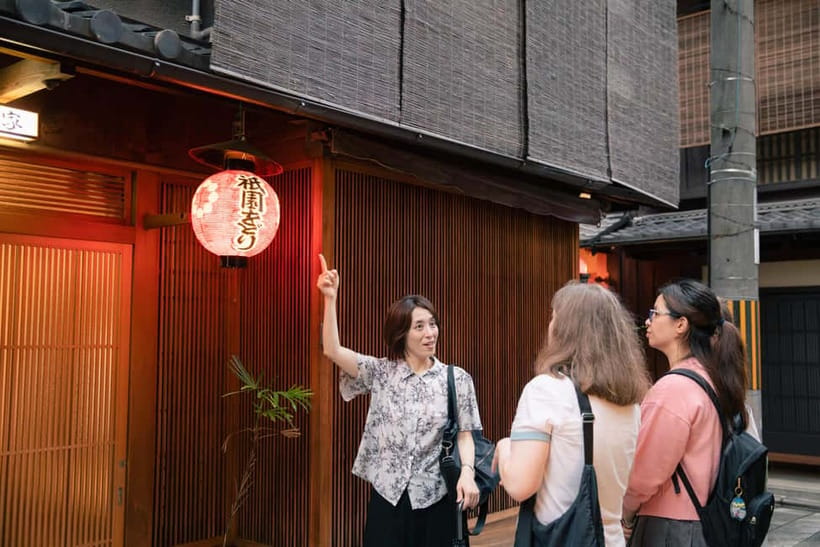
Gion can look simple at first: a few pretty lanes, dark wooden facades, shrine gates, and plenty of people holding cameras. The story is more layered than the scenery suggests. Gion is one of Kyoto’s historic kagai, or geisha districts, where traditional arts, hospitality, music, dance, and private teahouse culture have long been connected.
You will not simply be shown where geisha live. The useful part of the tour is the explanation of terms and customs. Your guide introduces the difference between a maiko and a geiko, explains the apprentice stage, and puts the district’s buildings and streets into context.
That matters because Gion is still a working neighborhood, not an open-air museum. Some doors belong to private establishments. Some narrow lanes are best viewed quietly from the edge. A guide helps you understand what you are seeing without encouraging the kind of intrusive behavior that can spoil the area for residents and performers.
The route is also designed for a first visit. Instead of spending your limited Kyoto time trying to work out which lane leads where, you move from major sights to smaller streets and more specialized stops. It is a good orientation walk early in your stay, though you may also enjoy it later if you have already seen Gion and want its stories explained.
More geisha-district evenings:
- Kyoto Geisha Walking Tour: Gion District & Hidden Gems
★ 4.7 · 3,273 reviews - Kyoto: Gion Magical Night Walking Tour with Geisha Trivia
★ 4.9 · 2,393 reviews - Kyoto: Gion Geisha District Walking Tour – Stories of Geisha
★ 4.7 · 2,187 reviews
Starting at Yasaka Shrine
The tour has three possible starting points: the Statue of Izumo-no-Okuni, the Wargo Kyoto Kimono Rental Kyoto Gion Store, or the Kanji Museum and Library. The exact meeting place depends on the option you book, so you need to read that detail carefully rather than heading automatically to Yasaka Shrine.
Once the group is together, Yasaka Shrine receives about 40 minutes of guided attention. This is a useful beginning because the shrine provides a clear sense of Kyoto’s religious and public life before the walk turns toward the more private world of Gion.
You can expect your guide to point out the shrine’s setting and explain why it matters to the district. The stop is not just a quick photograph. It gives you a fixed landmark, a chance to settle into the group, and a first lesson in the customs and traditions that shape the surrounding streets.
If you choose the kimono rental option, the arrangement requires extra care. You change into a kimono first, then make your own way to the Japan Kanji Museum and Library, where the guide waits. That transfer is not described as a guided group journey, so leave enough time and follow the meeting instructions closely.
A kimono can make the outing feel more special, but it also changes the practical side of the walk. Traditional clothing and narrow streets may not be as easy to manage as ordinary clothes and walking shoes. The tour specifically recommends comfortable footwear, and that advice still matters if you choose the kimono option.
Walking through Gion’s historic lanes
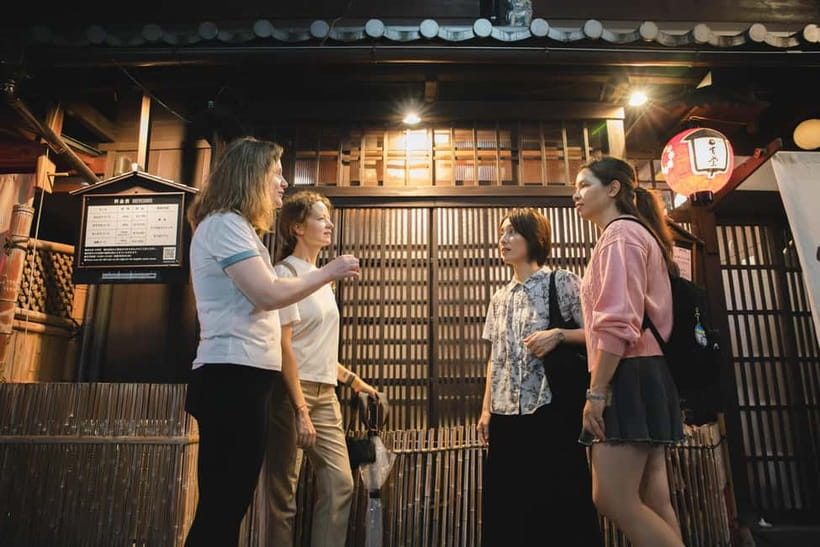
The main Gion portion lasts about 80 minutes. This is where the tour earns its price. You move through the old streets while your guide explains what makes the district different from an ordinary historic quarter.
Expect a mix of sightseeing and storytelling rather than a long list of formal monument stops. You see traditional architecture, shrines, lanes, and places that are easy to overlook if you are walking alone. Your guide knows the area well and can point out details that may not be obvious from the street.
The group also explores two geisha districts within Gion. That gives you a broader view of the kagai system and helps you understand that Gion is not one uniform block. Different areas can have different atmospheres, uses, and architectural details, even when they are close together.
The strongest part of this section is the cultural explanation. Geiko and maiko are often reduced to costumes and makeup in tourist pictures. This walk presents them as working professionals within a traditional system, with training, performance, and hospitality at its center.
You should listen closely when the guide explains appropriate behavior. If you happen to see a geiko or maiko, keep your distance and follow local etiquette. An encounter is a pleasant possibility, not the product being sold. The real value is learning how the district works even if no performer appears during your walk.
The tour route includes short guided and sightseeing sections, along with photo stops. That variety helps break up the walking, though the information provided does not specify the exact length of every transfer. You should plan for a continuous outdoor experience rather than a series of indoor visits.
Shirakawa Canal and the quieter side of Gion
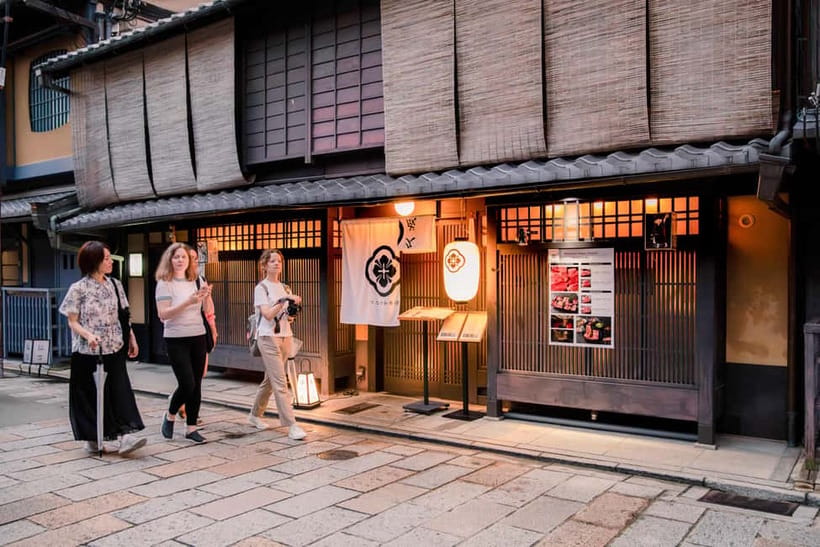
Shirakawa Canal adds a change of pace. After the busier parts of Gion, water and old buildings create a more settled setting for sightseeing and photographs. The canal is one of the places where Gion’s traditional appearance is especially easy to appreciate.
This stop works well for people who care about atmosphere and architecture. The canal gives you a chance to slow down while the guide continues explaining the area. It is also a useful place for photographs, although the tour does not promise a particular amount of free time for taking them.
The canal section is not a separate attraction with an admission ticket. Its value comes from seeing how the district’s streets, buildings, and waterway fit together. I would treat it as a scenic pause within the larger walk, not as a major standalone stop.
As with all of Gion, you need to be mindful of other people and private spaces. Stay with the group, avoid blocking narrow passages, and let the guide indicate where photographs are suitable. Small courtesies make a big difference in a neighborhood that receives heavy interest.
More walking tours in Kyoto:
- Night Walk in Gion: Kyoto’s Geisha District
★ 4.5 · 2,003 reviews - Kyoto Gion Geisha District Walking Tour – The Stories of Geisha
★ 5.0 · 1,441 reviews - Nishiki Market Brunch Walking Tour (7 Tastings + Brunch)
★ 5.0 · 1,355 reviews - Kyoto Arashiyama Walking Tour: Bamboo, Monkeys, Gardens & Secrets
★ 5.0 · 1,216 reviews
Gion Corner and the final sights
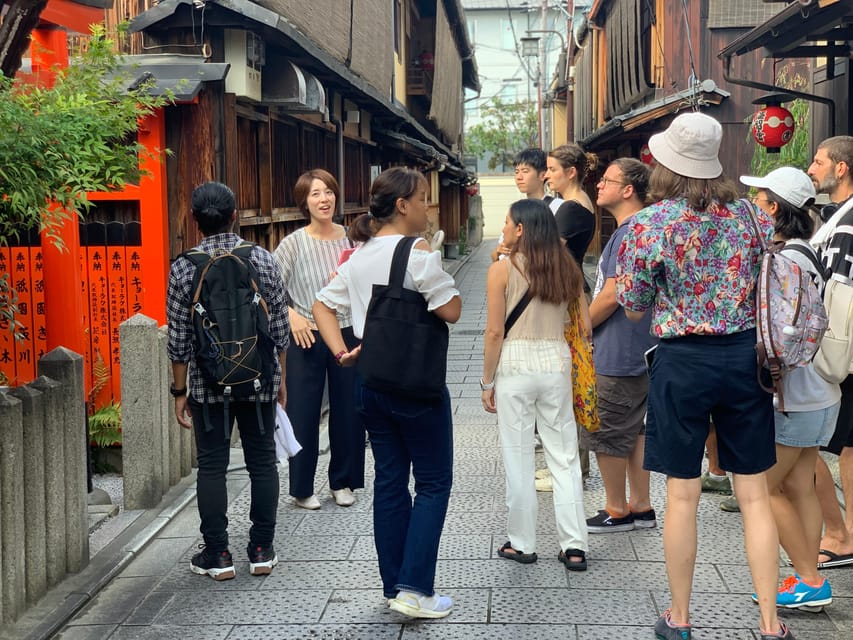
Gion Corner appears near the end of the route, along with further guided sightseeing and a short photo stop. The supplied information does not say that the tour includes a performance or admission to Gion Corner, so you should view this as an exterior or area visit unless your selected option states otherwise.
Even without a show, the stop fits the theme of the walk. Gion Corner is associated with traditional Kyoto arts, and its location helps connect the streets you have walked with the formal performance culture discussed by your guide.
The tour finishes at one of three drop-off locations at or near Gion Kōbu Kaburενjō, also written as Gion Kōbu Kaburenjō, at 605-0801 in Kyoto. Because the listed end points can vary, check where you will finish if you have a timed reservation afterward.
The short closing sections may seem less important than the central walk, but they help you orient yourself for the rest of your day. You can ask the guide for tips on where to see maiko in action, one of the specific benefits mentioned for this experience.
What the geiko and maiko explanation adds
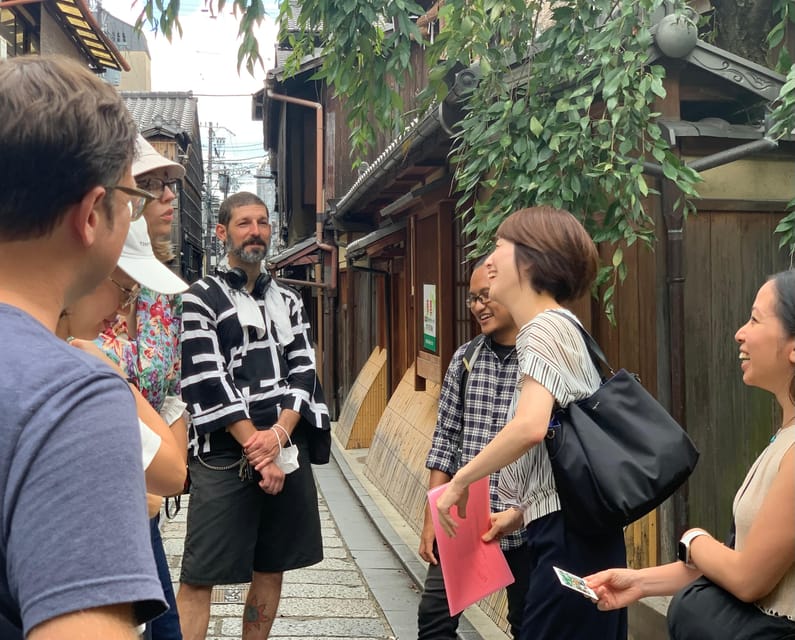
The cultural material is the reason to choose this tour over a self-guided stroll. Gion’s appearance is easy to photograph, but its customs are not always easy to interpret from a map or guidebook.
You learn that Kyoto uses the term geiko for geisha, while maiko refers to an apprentice geisha. That distinction gives you a better way to understand the people you may see in the district, and it avoids treating every traditional outfit as the same thing.
Your guide also discusses the lifestyle connected with the geisha districts. The experience is not presented as a costume show. Instead, the stories help you see the relationship between performance, training, local institutions, and the streets where these traditions continue.
This is also where a good guide matters most. The strongest feedback about the experience centers on the guide quality. One particularly praised guide was Ito, described as friendly and highly informed about Gion. Another booking received a top rating for the guide, group size, and route. Those details suggest that the tour succeeds or fails largely on how well the guide handles the stories and the group.
Guide assignments can change, so do not assume Ito will lead your departure. Still, the consistent value of a local English-speaking guide is clear: you get explanations at the moment you see each place, rather than trying to connect scattered facts later.
Group size, timing, and walking demands
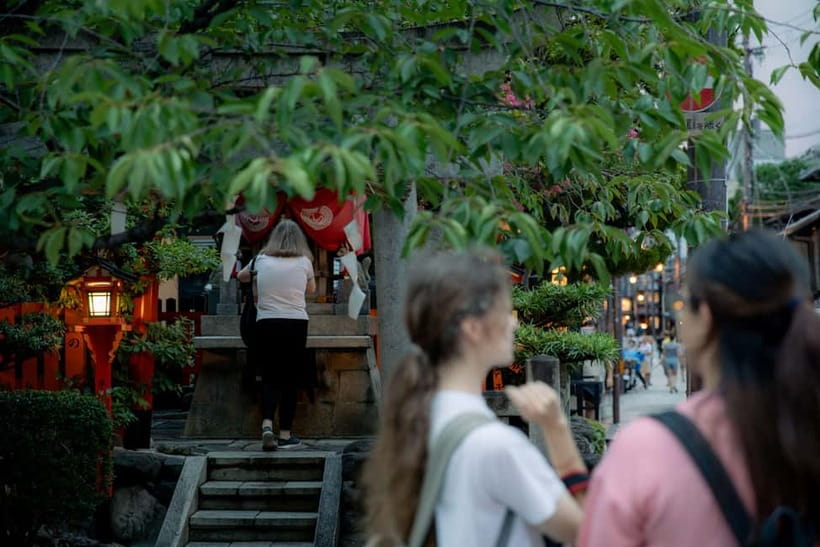
The activity is offered as a small-group experience. The exact group size is not given, so you should not expect a private tour, but a small group usually makes it easier to hear the guide and ask questions than a large city tour.
The listed duration ranges from two hours to 270 minutes, or four and a half hours. That is a wide difference. It likely reflects different booking choices, such as the kimono option, but you should check the available starting time and duration for your selected version before paying.
The standard sightseeing sequence includes roughly 40 minutes at Yasaka Shrine and 80 minutes in Gion, with shorter guided, sightseeing, and photo sections around Shirakawa Canal and Gion Corner. This suggests a steady walking pace with several stops, not an all-day excursion.
Comfortable walking shoes are essential. The activity is not suitable for wheelchair users or people who cannot manage stairs. Children must be accompanied by an adult. The tour operates in rain or shine, so bring suitable rain protection when the forecast looks uncertain.
There is no transport included because the experience is a guided walk. That keeps the cost low and puts you directly in the streets, but it also means you need to be ready for outdoor conditions from beginning to end.
Is $29 a fair price for this Gion walk?
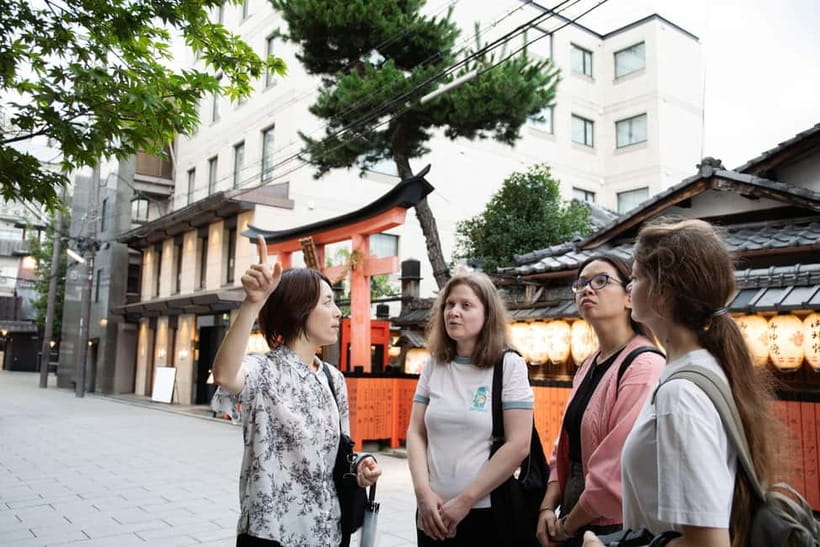
At $29 per person, this is priced as an accessible introduction rather than a luxury cultural program. You are paying for the guide fee and guided walk of Gion, not for meals, transport, shrine admission, or a guaranteed geiko or maiko encounter.
I consider that good value if you want context. A self-guided walk costs less, of course, but it may leave you wondering which buildings matter, how the geisha districts function, and where the lines between public streets and private workplaces lie.
The price is especially reasonable for a first visit to Kyoto. You cover major points such as Yasaka Shrine, Shirakawa Canal, and Gion Corner while receiving explanations about maiko and geiko. The small-group setting also gives the tour more personal value than a large group moving quickly through the district.
The calculation changes if you mainly want photographs. You can walk through parts of Gion without paying for a guide, and this tour does not guarantee special access or a performance. Book it for interpretation and orientation, not for a staged encounter.
Free cancellation is available up to 24 hours before the tour for a full refund, and you can reserve now and pay later. Those terms are useful when your Kyoto schedule is still shifting, but the exact duration and meeting point remain the details I would check first.
Who should book this experience?
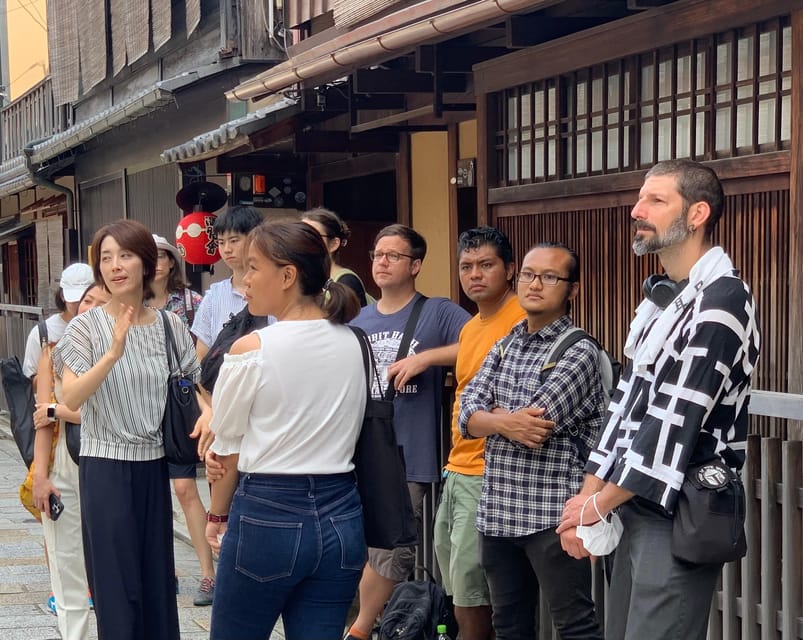
I would recommend it to first-time visitors who want a practical introduction to Gion without spending half a day on a formal museum program. It also suits anyone curious about geiko and maiko culture but unsure how to approach the subject respectfully.
It is a good match for solo visitors and couples who prefer local explanation to independent wandering. Families can book it too, provided children stay with an adult and can handle the walking and stairs.
The tour may also suit you if you want to wear a kimono during your Kyoto visit. Just remember that the kimono option has a special meeting arrangement: you change first, then go independently to the Kanji Museum and Library to meet the guide.
I would look elsewhere if you use a wheelchair, cannot manage stairs, or want a relaxed indoor activity. I would also skip it if you need a tightly fixed schedule and cannot accept the possibility of rain or a duration that varies by option.
Should you book the Gion World of the Geisha Guided Walking Tour?
Book this $29 experience if your goal is to understand Gion while you walk through it. The route covers the right mix of major landmarks, attractive streets, canal views, and geisha-district context, and the strongest praise goes to the local guides, including Ito.
Do not book it expecting guaranteed geiko or maiko sightings, private access, or a performance at Gion Corner. Choose the exact option carefully, confirm the meeting point, wear shoes you can walk in, and allow more time if you select the kimono version.
For a modest price, this is a sensible way to get your bearings in one of Kyoto’s most distinctive districts while learning to look past the costumes and postcard scenery.
FAQ
How long does the Gion walking tour last?
The available options range from two hours to 270 minutes, or four and a half hours. Check the exact duration and start time for the option you select.
What language is the tour conducted in?
The tour has a live English-speaking guide.
Where does the tour meet?
The meeting point varies by booking option. Possible starting locations include the Statue of Izumo-no-Okuni, Wargo Kyoto Kimono Rental Kyoto Gion Store, and the Japan Kanji Museum and Library.
What happens if I choose the kimono rental option?
After changing into a kimono, you must go to the Japan Kanji Museum and Library by yourself. The guide waits for you there.
Will I definitely see a geiko or maiko?
No. You might encounter geiko or maiko during the walk, but sightings are not guaranteed. The guide can share tips about places where you may see maiko in action.
Is the tour suitable for wheelchair users?
No. The tour is not suitable for wheelchair users or people with mobility impairments who cannot manage stairs. Children must be accompanied by an adult, and the walk operates in rain or shine.
Just added around Kyoto
- Kyoto: Zen Meditation at a Private Temple with a Monk★ 5.0 · 25 reviews
- Kyoto: Gion Geisha District & Sake-in-Hand Walking Tour★ 5.0 · 37 reviews
- Private Pewter Sake Cup Experience with a Kyoto Artisan★ 5.0 · 31 reviews
- Your Private Vacation Photography Session In Kyoto★ 5.0 · 110 reviews
- Private Guided Traditional Buddhist Cooking in Japan★ 5.0 · 16 reviews
- Kyoto Wagashi(Japanese sweets) Cooking Class near Fushimiinari★ 5.0 · 60 reviews
- Traditional Japanese Music show & Experience Tour in Kyoto★ 5.0 · 57 reviews
- Kyoto:Family-Friendly Kimono & Yukata Experience at WARGO★ 5.0 · 147 reviews
Kyoto Tours, compared.


Fushimi Inari, Kinkakuji, Bamboo Grove 1 Day Bus Tour
Read our review →
Tea Ceremony in a Traditional Tea House in Kiyomizu
Read our review →
Kyoto Geisha Walking Tour: Gion District & Hidden Gems
Read our review →

Gion Magical Night Walking Tour with Geisha Trivia
Read our review →

Gion Geisha District Walking Tour – Stories of Geisha
Read our review →Browse the lists this tour appears in