
Reviewed · KYOTO TOURS
Kyoto: Meet the Geisha Maiko with Gion Walking Tour
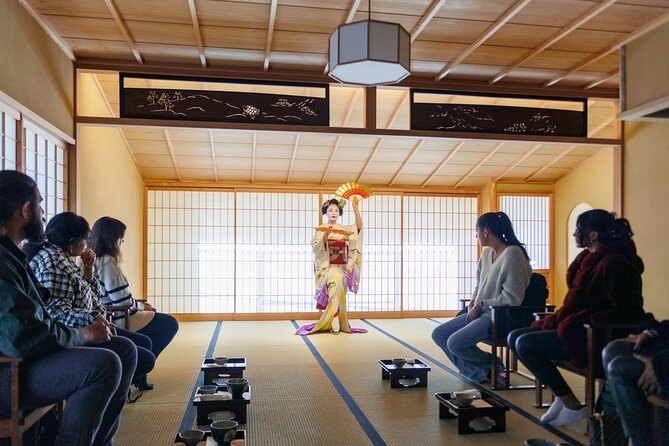
Kyoto’s most unusual cultural encounter happens upstairs in a private ochaya, where you meet a working maiko and a retired geiko instead of trying to spot one on the street. The visit includes a traditional dance, conversation, translated questions, and a photo session. It is a rare look at a living art form, not a costumed photo stop.
I especially like the chance to ask direct questions and the walk through Gion’s narrow lanes, where your guide explains what you are seeing instead of leaving you to guess. Guides such as Haruki, Naomi, Ayako, Miko, and Chiko have drawn praise for clear explanations and warm personalities. The main drawback is value: at $109.43, the walking portion can feel long if you mainly want the performance, and some people have had trouble hearing the translation.
Key points to know before booking
- The private ochaya visit is the heart of the experience: You enter a type of Kyoto teahouse usually closed to people without an introduction.
- You meet two generations of performers: A maiko in training and a retired geiko offer different views of the profession.
- The performance is followed by questions: Your guide translates as you speak with the performers and the teahouse host.
- The Gion walk provides cultural context: Gion Shirakawa, Tatsumi Bridge, Hanamikoji Street, and nearby temple grounds help explain where the artists work and live.
- Practical rules matter: You must wear socks, remove wet clothing before entering, and climb stairs to the second floor.
- The walking tour is best for adults and older children: Children under 10 cannot join, and you need a moderate level of fitness.
Why the ochaya visit matters
The word geisha can bring to mind makeup, elaborate kimono, and tourists chasing a glimpse along Gion’s streets. This tour gives you a better option. You meet artists in a private setting, where the focus is on their training, work, and place in Kyoto culture.
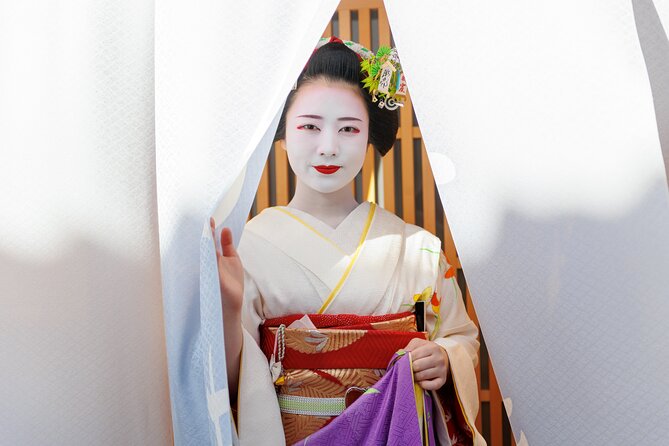
In Kyoto, geiko is the local term for a fully trained geisha. A maiko is an apprentice, usually still developing the dance, music, manners, and conversation skills needed for the profession. The distinction is more than a vocabulary lesson. The two people you meet represent different stages of a demanding artistic life.
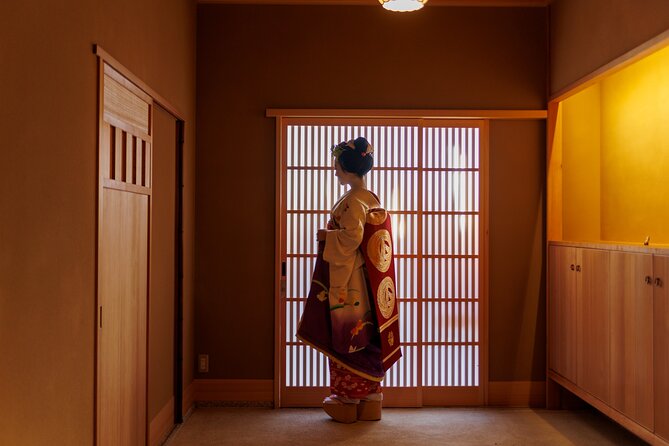
The private ochaya is not an ordinary café or a public tea ceremony room. It is a place traditionally used for entertainment by geiko and maiko, and access is closely controlled. Even many local people do not simply walk in from the street. That makes this part of the tour unusual, especially for a visitor who would otherwise see only the exterior of Gion’s wooden houses.
The visit at Miyagawasuji lasts about an hour and a half, making it the longest and most important part of the three-hour outing. You watch a formal performance, hear explanations of the customs involved, and then have time for questions. Your guide acts as translator, which allows you to ask about daily life and training without relying on a short scripted presentation.
The setting also encourages a more respectful encounter. You are not trying to stop a performer on her way to work, and you are not photographing someone who has not agreed to it. Photos and video are allowed only during the performance and photo session. If you plan to post an image online, ask the maiko for direct permission first.
More geisha-district evenings:
- Kyoto Geisha Walking Tour: Gion District & Hidden Gems
★ 4.7 · 3,273 reviews - Kyoto: Gion Magical Night Walking Tour with Geisha Trivia
★ 4.9 · 2,393 reviews - Kyoto: Gion Geisha District Walking Tour – Stories of Geisha
★ 4.7 · 2,187 reviews
Starting among the willows of Gion Shirakawa
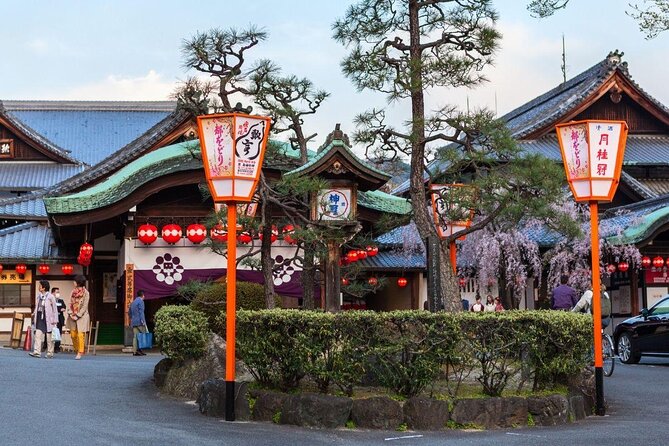
The walking section begins around Gion Shirakawa, one of the prettiest corners of the district. A small canal, traditional buildings, and quiet lanes give the area a graceful feel, but the real value is the explanation that comes with the scenery.
Your guide introduces the geiko and maiko tradition, including the way performers train and the type of work they do. This is where you begin to understand that Gion is not simply an old-fashioned stage set. It is a working neighborhood with houses, restaurants, teahouses, and entertainers following a strict professional routine.
The quality of this section depends heavily on the guide. Several guides have been praised for speaking good English and making the material easy to follow. Ayako, Naomi, Chiko, Takuma, Haruki, Miko, Mika, Yoko, Machiko, Ellie, and Tamuka have all been singled out for friendly or clear guidance at different times. Your guide may be someone else, but expect the guide’s ability to shape the experience.
Allow roughly 30 minutes here. Wear shoes that handle uneven pavement, and do not expect a fast sightseeing march. The pace is meant to leave room for stories and questions.
Tatsumi Daimyojin and Tatsumi Bridge
The walk continues to Tatsumi Daimyojin Shrine, a small Shinto shrine connected with protection, good fortune, and safety. Its roots reach back to the Heian period, from 794 to 1185. The stop is short, about five minutes, but it adds a useful reminder that Gion’s cultural life sits within a much older religious setting.
Nearby Tatsumi Bridge is one of those compact Kyoto spots that feels familiar from films and photographs. Traditional wooden machiya houses line the surrounding lanes, and the setting gives you a quick sense of why Gion is so visually appealing.
Still, keep your expectations measured. This is a photo and explanation stop, not a long temple visit or a major attraction with an interior tour. The guide points out the setting and explains its connection to Gion. If you want to linger for your own photos, you may feel the group moving on.
This part of the route also calls for good manners. Gion’s lanes lead past working homes and businesses. Listen when your guide explains local customs, and do not block doorways or photograph people who are simply going about their day.
Hanamikoji Street and the edge of Kenninji
Hanamikoji Street is one of Gion’s main thoroughfares. Its wooden machiya facades, restaurants, shops, and tea houses create the old Kyoto look most people hope to see. Your guide helps separate the visible architecture from the assumptions visitors often bring to the district.
You may pass the area associated with Gion Corner, a venue that presents several forms of traditional Japanese entertainment. This tour does not list a visit to a Gion Corner performance, so think of it as a point of reference rather than an included show.
The route also takes you through the grounds of Kenninji, described as Kyoto’s oldest Zen Buddhist temple. You do not enter the temple buildings. Instead, you walk through the precinct as local pedestrians do, taking in the quieter atmosphere beside the geiko district.
This combination works well. Gion can look like a collection of pretty facades unless you know how its entertainment quarter, shrines, homes, restaurants, and temples fit together. On the other hand, if your main goal is time with the performers, the route may feel repetitive. One criticism of the tour was that the walk circled back over familiar ground and spent too long pointing out buildings from the outside.
That is the key tradeoff. I would treat the walk as preparation for the ochaya visit, not as a full historical tour of Kyoto. It explains the world you are about to enter, but it is not designed to cover every period of the city’s past.
More walking tours in Kyoto:
- Night Walk in Gion: Kyoto’s Geisha District
★ 4.5 · 2,003 reviews - Kyoto Gion Geisha District Walking Tour – The Stories of Geisha
★ 5.0 · 1,441 reviews - Nishiki Market Brunch Walking Tour (7 Tastings + Brunch)
★ 5.0 · 1,355 reviews - Kyoto Arashiyama Walking Tour: Bamboo, Monkeys, Gardens & Secrets
★ 5.0 · 1,216 reviews
The performance in Miyagawasuji
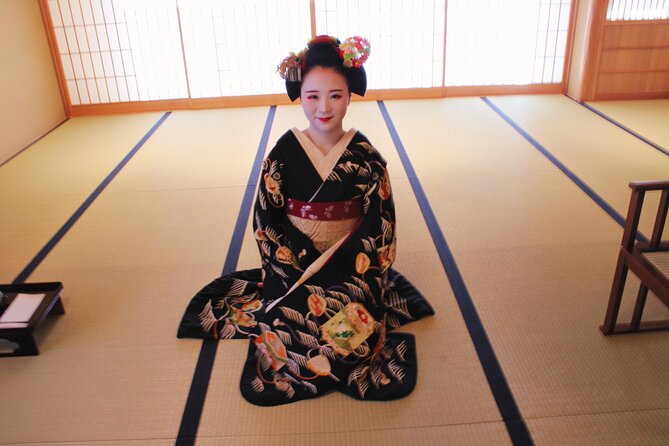
The tour returns to Miyagawasuji for the private-house visit. The performance takes place on the second floor, reached by stairs. You should be comfortable with that arrangement before booking, since there is no indication of an elevator.
Inside, you meet a maiko and a retired geiko. The contrast is especially useful. The maiko shows the tradition as a current profession, while the retired geiko can speak from a longer view of the work and its changes.
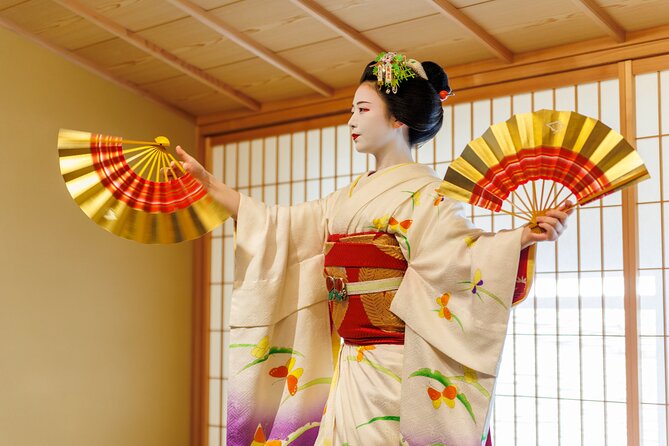
The performance is a formal traditional dance. One account also describes the teahouse mother playing shamisen, a three-stringed Japanese instrument, during the presentation. The exact program may vary, but you should expect a focused cultural performance rather than a large stage production.
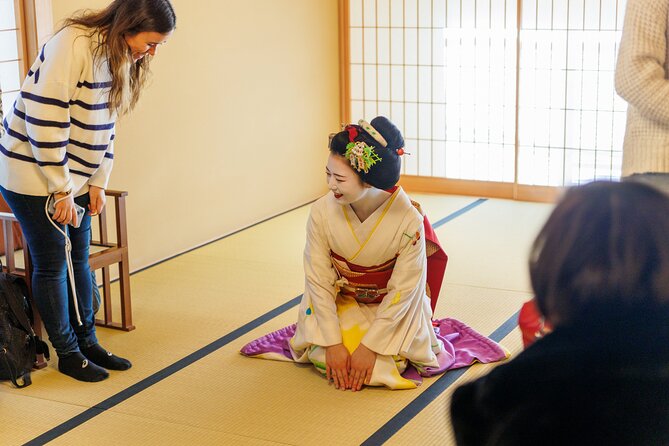
Afterward comes the conversation. This is the point where the tour feels most personal. You can ask about the performers’ training, customs, work, and daily experiences, while your guide translates between English and Japanese. Many people value this more than simply watching a dance because it gives the art form a human voice.
Translation is also the weak link to watch. One participant found the guides too soft-spoken and said parts of the exchange were difficult to hear. If you are seated far from the speakers, or if the group reaches its maximum of 30 people, sound may be a concern. The operator has acknowledged the need to improve audibility and guide training.
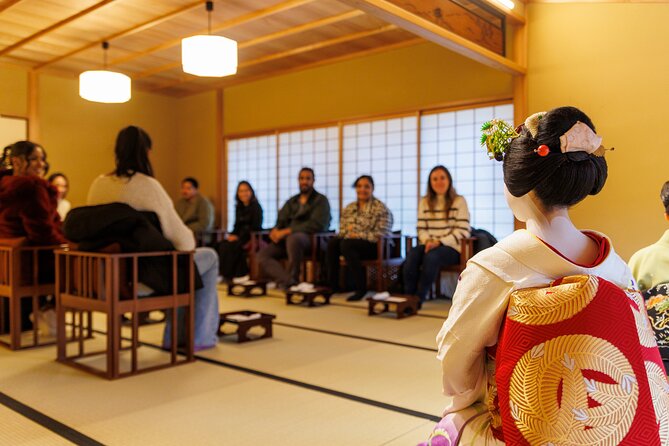
The official maximum is 30 people, though some sessions may feel smaller. One description placed the group at about 10 people, creating a more intimate setting. Group size can change the tone considerably, so do not assume every departure will feel like a private appointment.
The right way to approach the geiko tradition
This experience works best when you arrive with curiosity rather than a checklist of exotic images. The maiko and geiko are professional artists, not attractions to pursue through the neighborhood. The tour’s strongest idea is stated simply: meet them in an agreed setting instead of chasing them through Gion.
That distinction matters. Streets in the district can become crowded with people hoping to photograph maiko, sometimes without permission. The private meeting gives you a structured chance to watch, listen, and ask questions. It also reduces the pressure on performers who are traveling to appointments.
Follow the photography rules carefully. Take pictures and video only during the performance and designated photo session. Ask before posting photos on social media. These limits are not minor fine print. They are part of showing respect for people who are sharing their work and time with you.
The socks rule is equally practical. You must wear socks at the performance venue. On rainy days, do not arrive in wet socks or wet clothing. Use an umbrella during the walk and make sure you are dry before entering the traditional house.
Is $109.43 a fair price?
At $109.43 per person, this is not a cheap walk. You are paying for access, translation, the performers’ time, the private venue, and a small slice of a Kyoto tradition that is normally difficult to enter.
I see the price as reasonable for someone who specifically wants a direct meeting with a maiko and a retired geiko. Comparable sightseeing walks may cost less, but they are unlikely to include a private ochaya, a live performance, a translated conversation, and a photo session.
The value drops if you mainly want a quick dance show. The full experience lasts about three hours, and the walk can feel like too much setup before the performance. You also do not receive hotel pickup, transportation to the meeting point, extra food or drink, or personal expenses. Plan those costs separately.
The tour may run longer than three hours on some days. If you have a dinner reservation, train departure, or evening booking, leave extra time. I would not place a tight connection immediately afterward.
Who will enjoy this Kyoto experience?
I would recommend it most to adults and older children who want cultural explanation along with a memorable encounter. It suits first-time visitors who see Gion as beautiful but confusing, and it gives repeat visitors a different reason to return to the district.
It is also a good match for people who value conversation. The question period makes the event more than a performance, especially if your guide translates well and the room is easy to hear.
You may want to skip it if you dislike organized walking tours, have little interest in geiko and maiko culture, or expect a broad survey of Kyoto history. The route stays focused on the geisha districts, and several stops involve viewing buildings and streets from outside.
You should also reconsider if stairs are difficult, if you cannot walk comfortably for several hours, or if you are booking for a child under 10. The rain-or-shine policy means poor weather will not automatically shorten the outdoor portion.
Booking and practical details
The meeting and ending point are both in the Miyagawasuji area of Higashiyama, Kyoto. Since the starting location may not be a prominent landmark, check the map carefully and allow time to find it. The tour operates near public transportation, but getting to and from the meeting point is your responsibility.
Wear comfortable walking shoes and socks. Bring an umbrella if rain is possible, but do not enter the venue wet. The second-floor performance room is accessible only by stairs.
Confirmation is provided when you book. Free cancellation is available until 24 hours before the start time. Cancellations or changes made inside that window are not refunded, and the operator does not cover incidental hotel or bullet train costs if its schedule changes.
Should you book the Gion maiko tour?
Book it if the private ochaya visit is your main reason for coming. Meeting a working maiko and retired geiko, watching a traditional dance, and asking questions through a translator is a rare opportunity, and the tour handles it more respectfully than street photography ever could.
I would book with two cautions. First, the walking section may feel longer than necessary if you already know Gion. Second, translation quality and audibility can vary, so sit close and ask your guide to speak up if needed.
For the right person, $109.43 buys access to a side of Kyoto that is normally closed to casual sightseeing. If you want food, drinks, or a shorter show, look elsewhere. If you want context, conversation, and a careful introduction to geiko and maiko culture, this is one of the more distinctive ways to spend three hours in Gion.
FAQ
How long does the Kyoto maiko and Gion walking tour last?
The experience lasts about three hours, although it may run a little longer depending on the day.
Where does the tour start and finish?
The meeting and ending point are both in Miyagawasuji, in Kyoto’s Higashiyama Ward. The final venue is a special private house in the area.
Will I meet both a maiko and a geiko?
The experience includes a meeting with a maiko and a retired geiko. You can ask questions, with the tour guide translating.
Is photography allowed during the experience?
Photography and video are allowed only during the performance and photo session. Ask the maiko directly for permission before uploading photos to social media.
What should I wear or bring?
Wear comfortable walking shoes and socks. You must wear socks at the performance venue. On rainy days, use an umbrella during the walk and do not arrive with wet clothing or socks.
Can children join the tour?
Children under 10 years old are not allowed. Participants should also have a moderate level of physical fitness because the tour involves walking and stairs to the second-floor performance room.
Just added around Kyoto
- Kyoto: Zen Meditation at a Private Temple with a Monk★ 5.0 · 25 reviews
- Kyoto: Gion Geisha District & Sake-in-Hand Walking Tour★ 5.0 · 37 reviews
- Private Pewter Sake Cup Experience with a Kyoto Artisan★ 5.0 · 31 reviews
- Your Private Vacation Photography Session In Kyoto★ 5.0 · 110 reviews
- Private Guided Traditional Buddhist Cooking in Japan★ 5.0 · 16 reviews
- Kyoto Wagashi(Japanese sweets) Cooking Class near Fushimiinari★ 5.0 · 60 reviews
- Traditional Japanese Music show & Experience Tour in Kyoto★ 5.0 · 57 reviews
- Kyoto:Family-Friendly Kimono & Yukata Experience at WARGO★ 5.0 · 147 reviews
Kyoto Tours, compared.
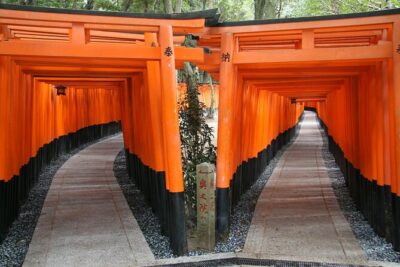
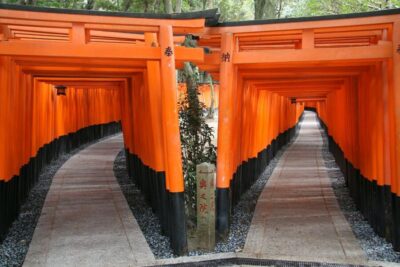
Fushimi Inari, Kinkakuji, Bamboo Grove 1 Day Bus Tour
Read our review →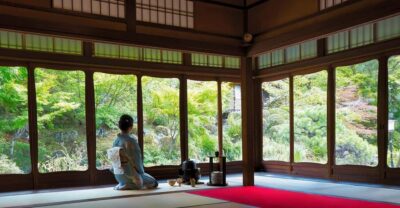
Tea Ceremony in a Traditional Tea House in Kiyomizu
Read our review →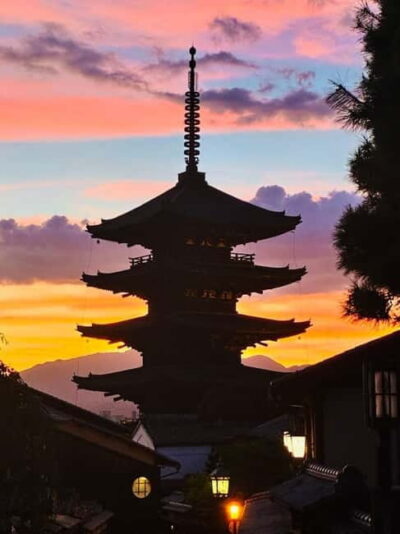
Kyoto Geisha Walking Tour: Gion District & Hidden Gems
Read our review →
Gion Magical Night Walking Tour with Geisha Trivia
Read our review →
Gion Geisha District Walking Tour – Stories of Geisha
Read our review →Browse the lists this tour appears in