
Reviewed · KYOTO TOURS
Kyoto Ramen Noodle Making Class
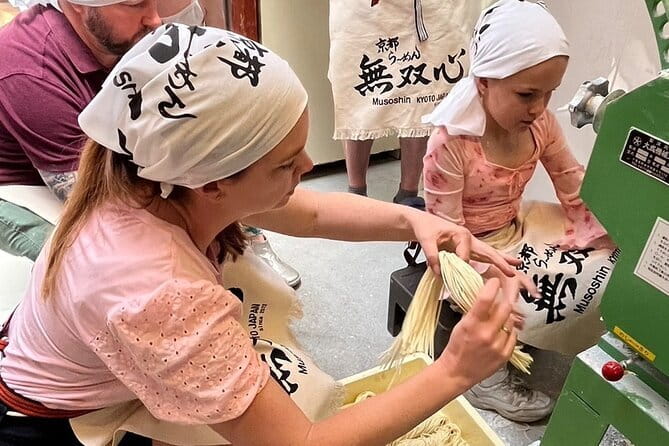
Kyoto’s Gion district is a fine place to learn ramen, but the real draw here is getting your hands on the noodles. At Musoshin’s restaurant, you pour the water, knead dough made with two types of wheat flour, then roll and cut it with a professional noodle machine. At the end, the chef cooks your reward: a hot bowl of ramen.
I like the small group of no more than six, which gives the instructor room to help each person. I also like the clear English guidance from instructors such as Kaz, Azu, and Amiru, plus the useful souvenir bandana. The main point to understand is that this is a noodle-making workshop, not a full ramen cooking class. You make the noodles, while the restaurant’s chef prepares the broth and final bowl.
Key points at a glance
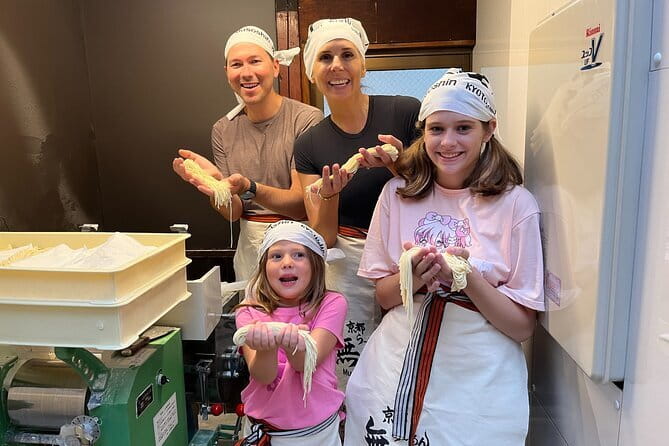
- Make noodles by hand and machine: Mix the water and flour, knead the dough, and roll and cut it into chewy ramen noodles.
- Learn at Musoshin Gion: The workshop takes place at the restaurant in central Kyoto, not at Musoshin Ramen Academy.
- Finish with a complete meal: Your booking includes a bowl of chef-prepared ramen and one soft drink.
- Suitable for a small group: The activity accepts a maximum of six people, making the instruction more personal.
- Vegetarian and vegan options are available: Tell the provider about dietary needs in advance.
- Take home a practical souvenir: The bandana worn during the workshop is yours to keep.
Making ramen in Kyoto’s Gion district
The class begins at Musoshin Gion, at 558-2 Komatsuchō in Higashiyama Ward. This puts you in central Kyoto, close to public transportation and within the wider Gion area, where traditional streets and restaurants make a fitting setting for a Japanese food experience.
The workshop is held at Musoshin’s Kyoto restaurant, not at Musoshin Ramen Academy. That distinction matters when you plan your route. Check the exact meeting address before setting out, especially if you see references elsewhere to the academy.
You receive a rental apron before the practical work begins. The bandana used during the workshop is yours to take home, a small but useful reminder of the experience. The apron keeps your own clothes protected, though you should still wear something comfortable for handling flour and dough.
The full activity lasts about one hour. That is short enough to fit into a busy Kyoto day, but long enough to give you a real hands-on role rather than simply watching a demonstration.
More hands-on workshops in Kyoto:
- Kyoto: 45-Minute Tea Ceremony Lesson Experience
★ 4.3 · 2,378 reviews - Ramen Cooking Class at Ramen Factory in Kyoto
★ 5.0 · 1,937 reviews - Kyoto : Chopsticks Making Workshop in Gion with Engraving Option
★ 5.0 · 958 reviews
From two flours to workable dough
The lesson focuses on the part of ramen that many diners rarely see: the noodle itself. The dough uses two types of wheat flour, and the instructor explains the process as you work through it.
You pour in the water, combine the ingredients, and knead the dough. This is the stage where the activity feels most like a cooking lesson. You are not just being shown a finished product. You take part in the steps that turn flour and water into a firm noodle dough.
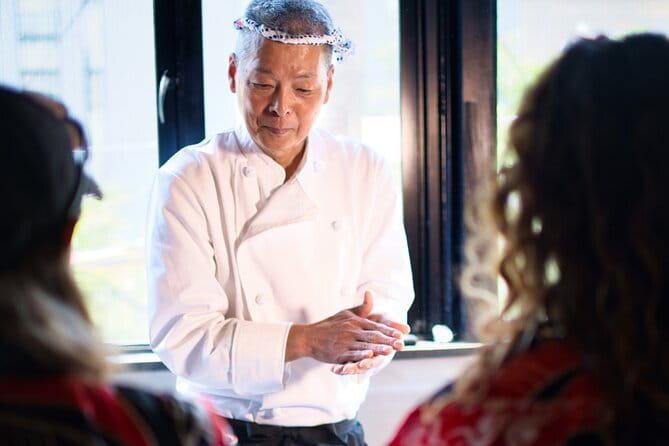
The English-speaking instructor guides the process and demonstrates what to do. The teaching style is friendly and hands-on, which helps if you have never made noodles before. Instructors named in the experience feedback include Kaz, Azu, and Amiru. The exact instructor can vary, so do not book solely on the expectation that one particular person will lead your session.
The small group limit is important here. With no more than six people, the instructor can watch your technique and help when the dough needs attention. That is more useful than a large demonstration where you might spend most of the time standing behind someone else.
Families can also take part together. The steps are clear and physical, and the activity gives everyone a job. Younger children may need help with the dough or machine, but the supplied information does not set a specific minimum age, so check before booking if that detail matters to your group.
Rolling and cutting noodles with a professional machine
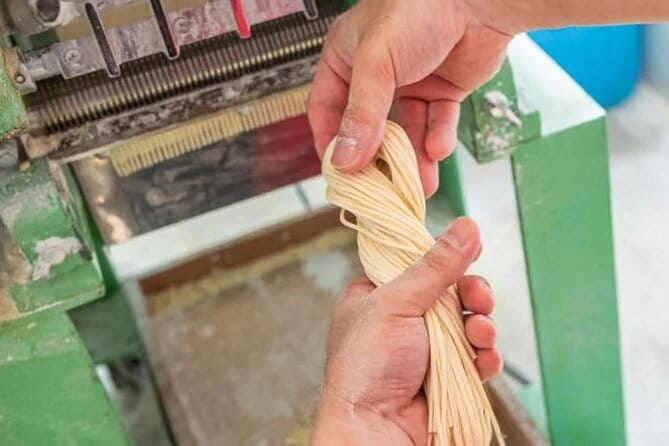
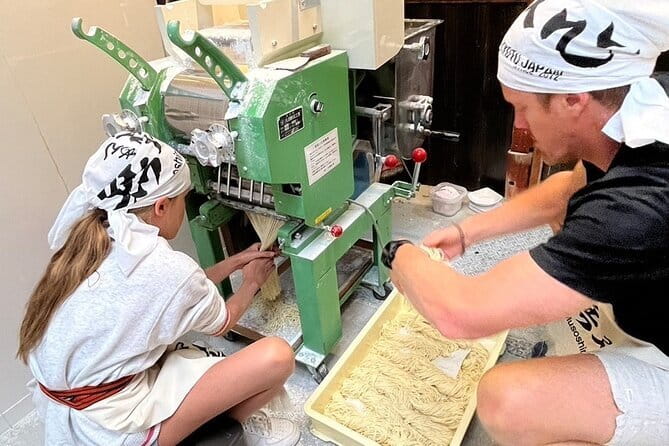
Once the dough is ready, you roll and cut it into noodles. The professional noodle-making machine is the unusual part of the class. It lets you see how a restaurant gets consistent strands while still giving you a direct role in the process.
The machine also helps explain why ramen noodles have a particular bite. Thickness and cutting affect texture, and the goal here is a pleasantly chewy noodle. You do not leave with a vague sense that ramen takes skill. You see the dough change under pressure and come out in a form ready for the bowl.
This portion is interactive, but it is worth keeping your expectations in check. You are learning the noodle-making process, not training as a ramen chef in one hour. The chef handles the broth and final preparation, so the experience gives you a focused look at one important part of ramen rather than covering every stage of the dish.
That focus is a strength for someone who wants a practical activity without committing half a day to cooking school. If you want to prepare broth, choose toppings, and cook the complete dish yourself, this class may feel limited.
The Musoshin bowl at the end
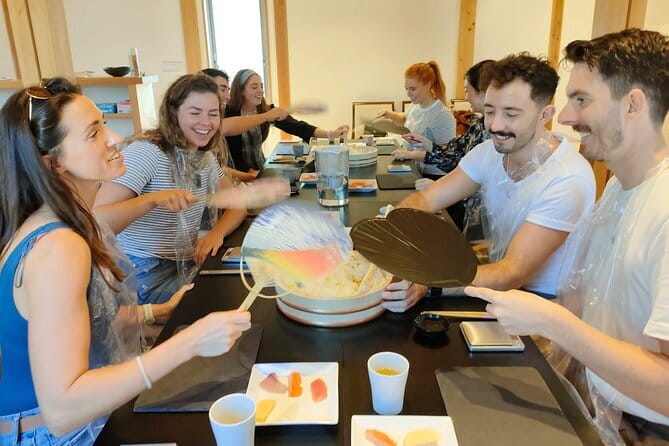
After your noodles are made, the restaurant’s chef prepares a bowl of ramen for you. The broth is made from a blend of vegetables, and the Kyoto location uses high-quality Kyotamba rice and condiments from local makers. These details give the meal a regional touch instead of making the class feel like a generic noodle demonstration.
The final bowl is the payoff. You have handled the dough, seen the cutting process, and then get to taste ramen prepared by the restaurant team. It is also a useful way to notice the difference between freshly made noodles and the packaged noodles you might use at home.
The meal includes one soft drink. Other personal expenses are not included, so allow for that if you want anything beyond the supplied meal and drink.
The broth is prepared by the chef rather than by you. Some people will see this as the best arrangement: you can concentrate on the noodle work, then sit down to a restaurant-quality bowl. Others may prefer a class where they cook every element. The right choice depends on what you want from the hour.
A few more Kyoto half-days to weigh up
- PERFECT KYOTO 1-Day Bus Tour
★ 5.0 · 13,518 reviews - Kyoto: Fushimi Inari, Kinkakuji, Bamboo Grove 1 Day Bus Tour
★ 4.8 · 4,316 reviews - Kyoto: Tea Ceremony in a Traditional Tea House in Kiyomizu
★ 4.9 · 3,519 reviews - Kyoto Geisha Walking Tour: Gion District & Hidden Gems
★ 4.7 · 3,273 reviews
Dietary choices and what the wheat flour means
The noodles are made from wheat flour. That makes the class unsuitable for anyone who must avoid wheat or gluten, and the supplied information does not list a gluten-free alternative.
For the tasting session, vegetarian, vegan, and pescetarian options are available. You need to tell the provider about dietary restrictions in advance. This is especially important because the noodle workshop and the final tasting are separate parts of the experience. The noodles still contain wheat, even when your bowl is prepared without meat or fish.
The information specifically confirms no meat or fish options for the tasting session. If you have allergies beyond the listed dietary categories, ask for confirmation before booking rather than assuming the kitchen can make substitutions.
What the $48.27 price gives you
At $48.27 per person, this is not simply a bowl of ramen with a quick explanation attached. The price includes an English-speaking instructor, ingredients, tools, apron rental, the noodle-making activity, a bowl of ramen, a soft drink, and the workshop bandana.
I see the value in the combination of a short practical lesson and a full meal. Kyoto has no shortage of places to eat ramen, but most meals do not show you how the noodles are made. Here, the food is both the subject of the activity and the reward at the end.
The one-hour duration also affects the value. You are paying for a compact experience rather than a long cooking course. That makes it easier to fit between sightseeing plans, though it also means the class cannot cover every part of ramen preparation.
The small group helps justify the cost. A maximum of six people allows for more direct help, and the English instruction removes much of the guesswork. If you want an inexpensive meal alone, this is not the cheapest way to eat ramen. If you want a food activity with instruction, participation, and a sit-down bowl afterward, the price is easier to defend.
Who will enjoy this one-hour class?
I would point this experience toward several types of visitors:
- First-time ramen makers: You get a clear introduction to dough, rolling, and cutting without needing kitchen experience.
- Families: The process is active and easy to share, and the small group size gives the instructor room to help.
- Food-focused visitors: You learn about an important part of ramen that is often hidden behind the restaurant counter.
- Short-stay visitors: The one-hour format leaves most of the day free for temples, markets, and other Kyoto plans.
- Vegetarian and vegan diners: The tasting can accommodate these diets when you provide notice in advance.
I would be more cautious if you are looking for a full cooking course. You do not prepare the vegetable broth, and the chef, not the participant, assembles the final bowl. The class teaches noodle making in detail, and that is the experience you should book.
Getting there and planning your visit
The meeting point is 558-2 Komatsuchō, Higashiyama Ward, Kyoto, postal code 605-0811. The venue is near public transportation, which makes it practical to reach from other parts of central Kyoto.
Because the activity takes place in Gion, allow time to find the correct restaurant entrance. The workshop is at Musoshin Gion, not the separate ramen academy. That is the most important location detail to keep in mind.
Your mobile ticket is accepted, and confirmation is sent within 48 hours of booking, subject to availability. If you are arranging a tightly timed day, wait for confirmation before treating the class as fixed in your schedule.
The group maximum is six. That is a useful reason to reserve ahead if your dates are limited, particularly if you need a vegetarian, vegan, or pescetarian tasting option.
Cancellation is free when you cancel at least 24 hours before the local start time. Cancellations made later are not refunded, and changes within that 24-hour period are not accepted. Keep the timing in mind when building a Kyoto day around the class.
What makes the teaching effective
The strongest feature is the practical instruction. You pour the water, knead the dough, and use the machine to roll and cut it. Each stage has a clear result, so you can follow the progress from raw flour to finished noodle.
The instructors work at the restaurant, which adds useful context. They can connect the workshop to the bowl you eat afterward, rather than teaching noodle making as an isolated craft. English is spoken, and the instruction is described as friendly and clear.
Names that appear in connection with the teaching include Kaz, Azu, and Amiru. Kaz is singled out for being a particularly good instructor, while Azu and Amiru are praised for detailed demonstrations and a welcoming manner. Since staff schedules can change, treat those names as examples of the team rather than a guarantee for your date.
The class also gets the balance right between explanation and action. You learn what is happening, but you are not left watching for most of the hour. That is why the experience works better for someone who wants to participate than for someone who only wants a restaurant meal.
Should you book the Kyoto ramen noodle class?
Book it if you want a compact, social food activity in central Kyoto and are curious about how ramen noodles get their texture. The English guidance, small group, professional machine, chef-prepared bowl, and souvenir bandana give the hour more substance than a simple tasting.
It is especially good for families, first-time noodle makers, and visitors who want something hands-on between major sightseeing stops. The vegetarian, vegan, and pescetarian tasting options make it easier to include different diets, provided you give advance notice.
Skip it if you need gluten-free noodles, want to cook the broth yourself, or prefer a long and detailed culinary course. For everyone else, $48.27 is a fair price for a focused lesson followed by a proper bowl of ramen at Musoshin Gion.
FAQ
Where does the ramen noodle-making class take place?
The activity takes place at Musoshin Gion, at 558-2 Komatsuchō, Higashiyama Ward, Kyoto, 605-0811, Japan.
Is the class held at Musoshin Ramen Academy?
No. The cooking venue is Musoshin Gion in central Kyoto, not Musoshin Ramen Academy.
How long does the experience last?
The activity lasts approximately one hour.
How many people can join the class?
The maximum group size is six people.
Is the instruction available in English?
Yes. An English-speaking noodle-making instructor leads the activity.
What will I make during the workshop?
You will make ramen noodles from scratch using dough made with two types of wheat flour. You pour the water, knead the dough, and roll and cut the noodles with a professional noodle-making machine.
Is a bowl of ramen included?
Yes. The booking includes one bowl of ramen prepared by the restaurant’s chef, along with one soft drink.
Are vegetarian or vegan options available?
Yes. Vegetarian, vegan, and pescetarian options are available for the tasting session. You should provide your dietary requirements in advance.
Are the ramen noodles gluten-free?
No. The noodles are made from wheat flour.
What is included besides the ramen?
The experience includes the English-speaking instructor, ingredients and tools, a rental apron, one soft drink, and the bandana used during the workshop as a souvenir.
Can I cancel for a full refund?
Yes. You can receive a full refund by canceling at least 24 hours before the experience’s local start time. Later cancellations and changes made within 24 hours are not accepted.
Just added around Kyoto
- Kyoto: Zen Meditation at a Private Temple with a Monk★ 5.0 · 25 reviews
- Kyoto: Gion Geisha District & Sake-in-Hand Walking Tour★ 5.0 · 37 reviews
- Private Pewter Sake Cup Experience with a Kyoto Artisan★ 5.0 · 31 reviews
- Your Private Vacation Photography Session In Kyoto★ 5.0 · 110 reviews
- Private Guided Traditional Buddhist Cooking in Japan★ 5.0 · 16 reviews
- Kyoto Wagashi(Japanese sweets) Cooking Class near Fushimiinari★ 5.0 · 60 reviews
- Traditional Japanese Music show & Experience Tour in Kyoto★ 5.0 · 57 reviews
- Kyoto:Family-Friendly Kimono & Yukata Experience at WARGO★ 5.0 · 147 reviews
Kyoto Tours, compared.


Fushimi Inari, Kinkakuji, Bamboo Grove 1 Day Bus Tour
Read our review →
Tea Ceremony in a Traditional Tea House in Kiyomizu
Read our review →
Kyoto Geisha Walking Tour: Gion District & Hidden Gems
Read our review →

Gion Magical Night Walking Tour with Geisha Trivia
Read our review →

Gion Geisha District Walking Tour – Stories of Geisha
Read our review →Browse the lists this tour appears in