
Reviewed · KYOTO TOURS
Kyoto: Traditional Mini Umbrella Making Workshop
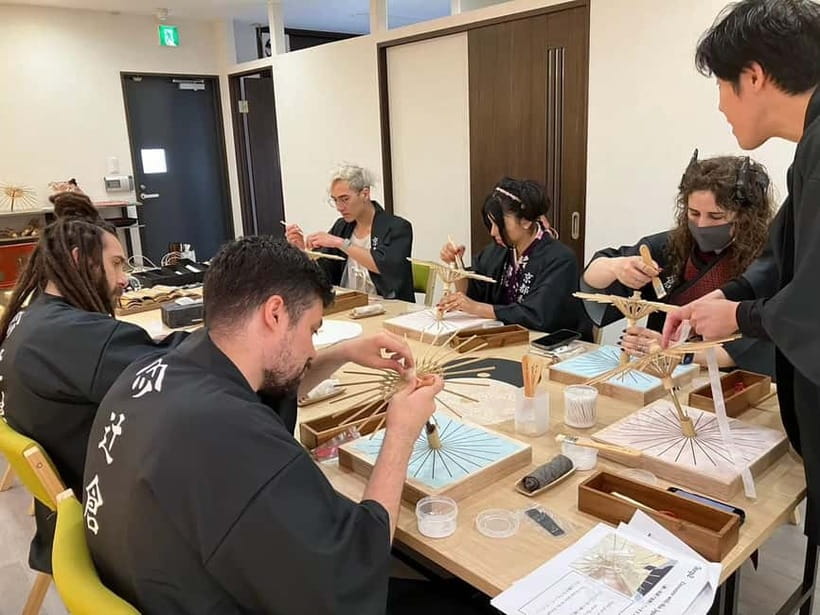
The best part of this Kyoto workshop is that you do not simply buy a pretty souvenir. You make a Hime Wagasa yourself, using genuine Japanese materials and techniques linked to one of Japan’s oldest umbrella shops. The room is decorated with traditional umbrellas and soft Japanese lighting, so the setting feels calm and focused from the moment you arrive.
I like two things right away: the finished umbrella comes with a bamboo display stand, and the 90-minute format fits neatly into a day of sightseeing near Shijo Kawaramachi. The main consideration is that this is a careful, hands-on craft rather than a quick craft session. You need patience and attention to detail, and children under six are not suitable for the activity.
Key points at a glance
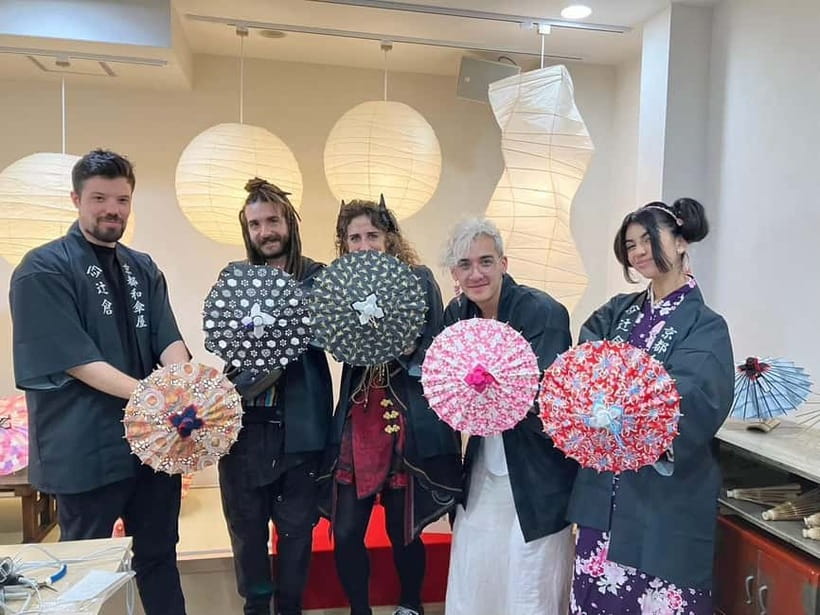
- Make your own Hime Wagasa: Assemble a miniature traditional Japanese umbrella from real Japanese materials.
- Learn at Tsujikura: The workshop is operated by Kyoto’s 京都和傘屋辻倉, described as Japan’s oldest umbrella shop.
- Meet near Shijo Kawaramachi: The studio is two minutes north of one of central Kyoto’s main shopping intersections.
- Leave with a display set: Your umbrella comes with a bamboo stand, decorative box, and carry bag.
- Work with patient instructors: Japanese and English are offered, and Ai Takenaka is among the instructors praised for friendly, helpful guidance.
- Allow time for precision: The work is relaxing but detailed, and a craftsman can add finishing touches for an extra fee.
Why a tiny Wagasa makes a memorable Kyoto souvenir
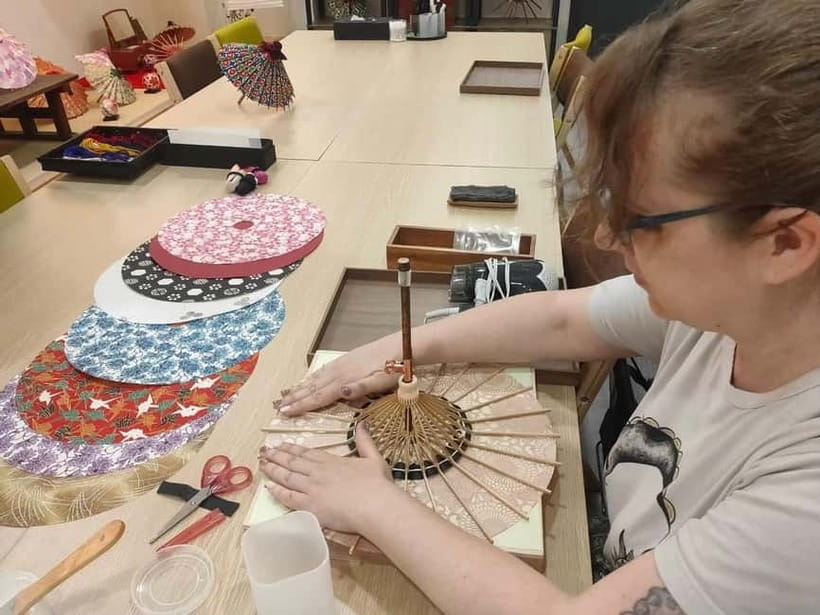
A Wagasa is more than an umbrella in the usual rain gear sense. Its shape, materials, and decorative finish reflect Japanese handwork, and the miniature version gives you a practical way to bring that tradition home without trying to pack a full-size umbrella into your suitcase.
The workshop focuses on a Hime Wagasa, a small decorative umbrella. You create a piece with your own choices and handiwork, so the result has a personal quality that a shop-bought souvenir cannot quite match. It may not be perfectly uniform, and that is part of its charm.
I especially like the idea of presenting the finished umbrella as a gift. The activity describes a Wagasa as a symbol of happiness, so this can work well for a wedding gift, a family keepsake, or a small reminder of a special Kyoto day. The included decorative box and carry bag make gifting easier.
The bamboo stand matters, too. Without it, a delicate miniature umbrella might spend the rest of its life in a drawer. With the stand, you can display it on a shelf or table as a small piece of Japanese-inspired decoration.
More hands-on workshops in Kyoto:
- Kyoto: 45-Minute Tea Ceremony Lesson Experience
★ 4.3 · 2,378 reviews - Ramen Cooking Class at Ramen Factory in Kyoto
★ 5.0 · 1,937 reviews - Kyoto : Chopsticks Making Workshop in Gion with Engraving Option
★ 5.0 · 958 reviews
Arriving two minutes from Shijo Kawaramachi
The workshop is in central Kyoto, two minutes’ walk north of the famous Shijo Kawaramachi intersection. This is a useful location for a half-day plan because you can combine the class with shopping, food, and other sights in the downtown area.
You do not need to build a separate transport adventure around the activity. The meeting point is close to one of Kyoto’s main shopping districts, which makes the workshop a convenient choice if you are already spending time around Shijo Kawaramachi.
The location also affects the mood of the day. You can move from central Kyoto’s busy streets into a room decorated with authentic Japanese umbrellas and traditional lighting. That change helps you slow down and pay attention to the work.
I would still arrive with enough time to find the meeting point without rushing. The activity lasts 90 minutes, and a hands-on class is more enjoyable when you are seated and ready rather than checking the clock after a hurried arrival.
Inside the umbrella shop
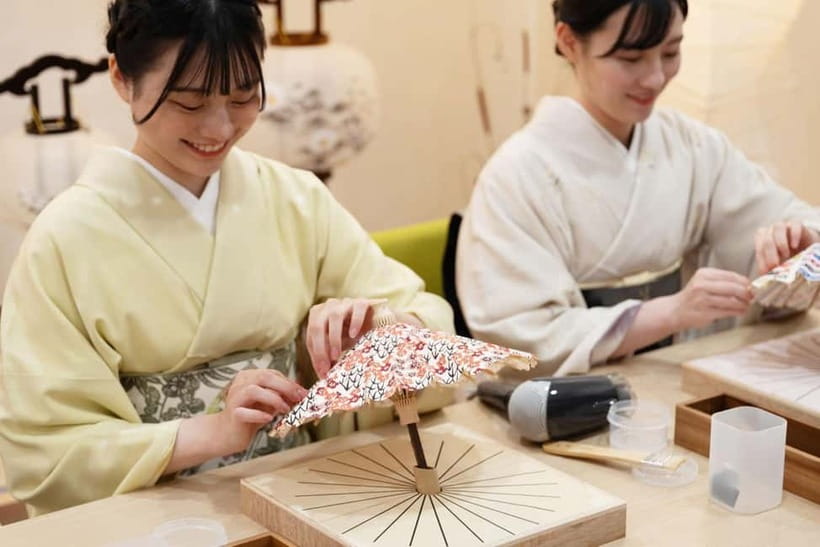
The workshop takes place in a setting designed around traditional umbrella making. Japanese umbrellas are used as decoration, and traditional lighting gives the room a quiet, craft-focused feel.
That setting is not just background decoration. It gives you a better sense of what you are making before you pick up the materials. You can see the umbrella as a finished object, then consider the small steps needed to produce its shape and character.
The class is taught in Japanese and English. That makes the activity accessible to international visitors, though the work itself still demands close attention. You will likely rely on demonstration, visual instructions, and hands-on correction as much as spoken explanation.
The instructors are a major part of the experience. Ai Takenaka is specifically praised for being friendly and helpful, while other instructors are described as patient, warm, and careful in their teaching. One instructor was noted for showing the best ways to handle the materials, which is useful when a small adjustment can affect the final result.
The 90-minute making process
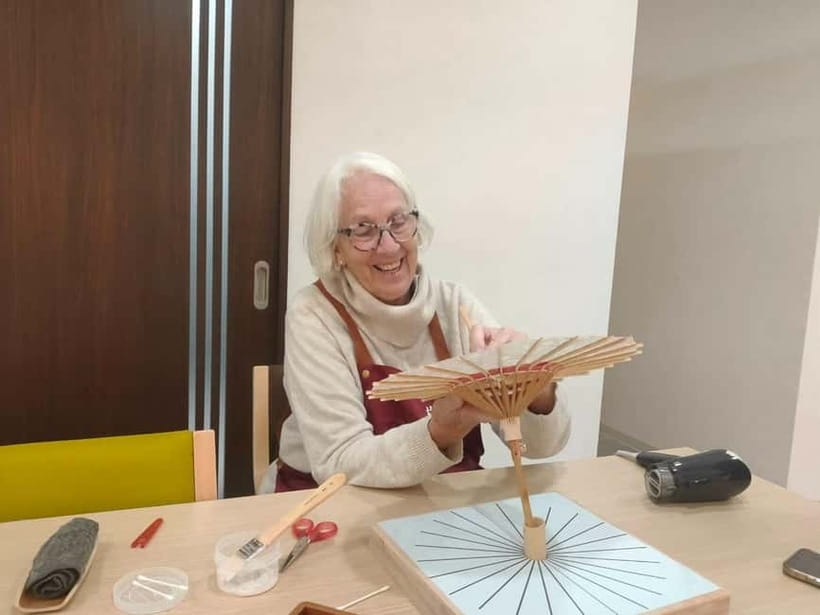
The supplied details do not give a minute-by-minute script, so I would think of the session in three broad stages: introduction, assembly, and finishing.
First, you get oriented to the craft and the materials. The instructor explains the traditional umbrella and shows you how the pieces fit together. This early guidance is important because a miniature object leaves little room for careless handling.
Next comes the main hands-on work. You shape and assemble the components of your Hime Wagasa, following the instructor’s demonstrations. The satisfaction comes from watching separate materials become a recognizable umbrella in your hands.
This is also the part that requires the most focus. One participant specifically pointed out that making a mini umbrella needs a lot of attention to detail. That is useful advice: do not expect to chat through the whole session while working on autopilot.
The instructors remain available as you go. Their patience is a strong point for beginners, since traditional craft techniques can feel unfamiliar at first. You are not expected to arrive with prior experience.
Finally, you inspect the finished piece and prepare it for carrying home. The standard package includes the umbrella, a bamboo stand, a decorative box, and a carry bag. If you want a more polished result, you can ask a craftsman to add finishing touches for an additional fee.
A few more Kyoto half-days to weigh up
- PERFECT KYOTO 1-Day Bus Tour
★ 5.0 · 13,518 reviews - Kyoto: Fushimi Inari, Kinkakuji, Bamboo Grove 1 Day Bus Tour
★ 4.8 · 4,316 reviews - Kyoto: Tea Ceremony in a Traditional Tea House in Kiyomizu
★ 4.9 · 3,519 reviews - Kyoto Geisha Walking Tour: Gion District & Hidden Gems
★ 4.7 · 3,273 reviews
What makes the craft worthwhile
Many Kyoto activities give you a cultural explanation, then send you on your way with a souvenir. This one links the explanation to a physical task. You learn by handling the materials, correcting small errors, and seeing how patience affects the final object.
That makes the class particularly useful for visitors who enjoy making things. You do not have to be an expert, but you should like the idea of concentrating on one careful project for an hour and a half.
The finished umbrella also carries a stronger personal connection than a standard purchase. You choose and assemble your own piece, so it becomes a record of your time in Kyoto. The process gives you something to remember besides a photograph or a receipt.
There is a nice balance between instruction and personal work. The artisan guides you, but you still do the making. The experience would lose much of its appeal if the craftsman completed everything for you.
Price and what you receive for $70
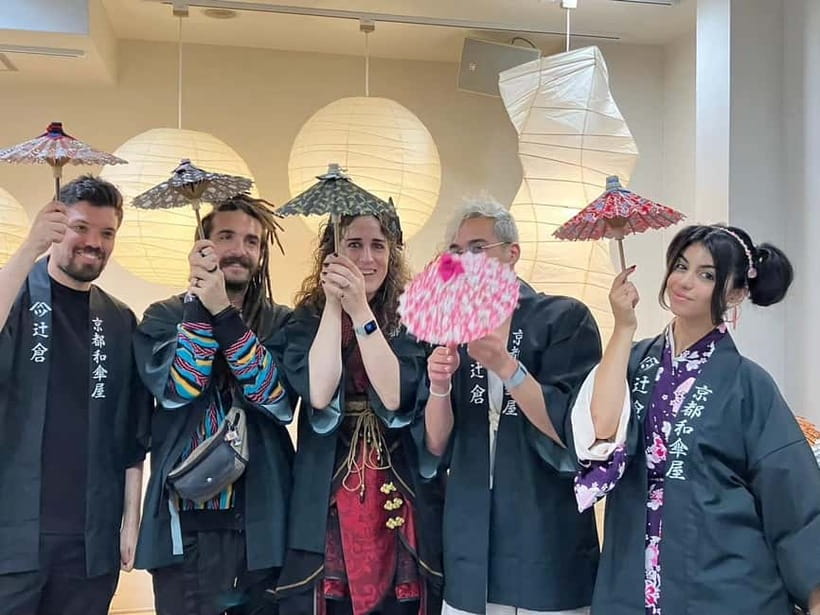
At $70 per person, this is not the cheapest souvenir activity in Kyoto. The price makes more sense when you consider what is included: all crafting materials, instruction, the completed Hime Wagasa, a bamboo stand, a decorative box, and a carry bag.
You are also paying for access to a specialist setting and for direct help with a traditional Japanese craft. The value is strongest if you want a meaningful object and a guided cultural experience, not simply the lowest-cost activity.
The bamboo stand improves the package because it turns the umbrella into a display piece. The box and bag also reduce the worry of carrying a fragile craft through the rest of your trip.
I would compare this with the price of a quality handmade souvenir, not with the cost of a museum ticket. If you enjoy crafts, Japanese design, or thoughtful gifts, the fee is easier to justify. If you prefer fast sightseeing and do not care much about taking home an object, you may find better value elsewhere.
Who will enjoy this class most
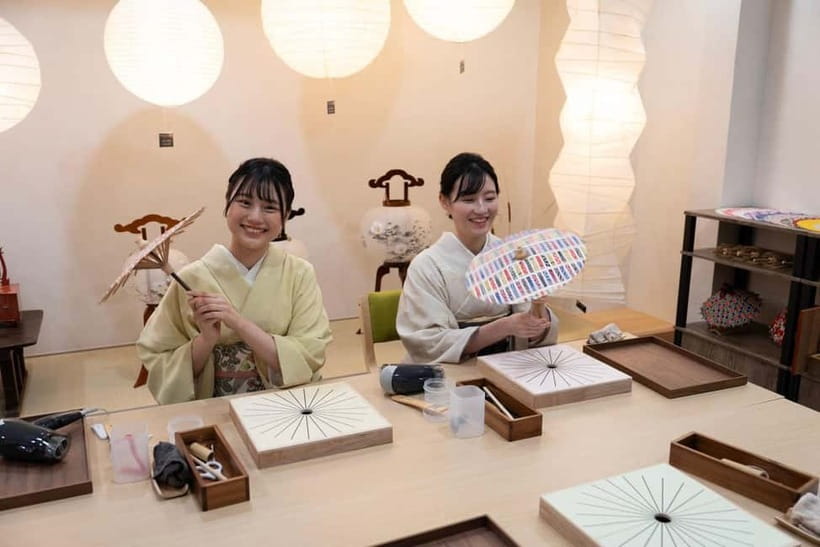
This workshop suits adults, couples, families with older children, and anyone who likes a quiet activity between temple visits and shopping. It is also a good option for a rainy afternoon, since the main work takes place indoors.
It can be especially appealing if you want to give someone a Kyoto souvenir with a story behind it. You make the umbrella, pack it in the supplied box, and can present it as a symbol of happiness.
The official guidance says children under six are not suitable. One account describes a group that included children from ages three to nine, but that does not change the stated age restriction. If you are visiting with young children, confirm suitability before booking rather than assuming a larger group can include everyone.
The activity is wheelchair accessible, which is useful for visitors who need step-free access. Japanese and English support is available, though the exact instructor may vary.
The small drawbacks to keep in mind
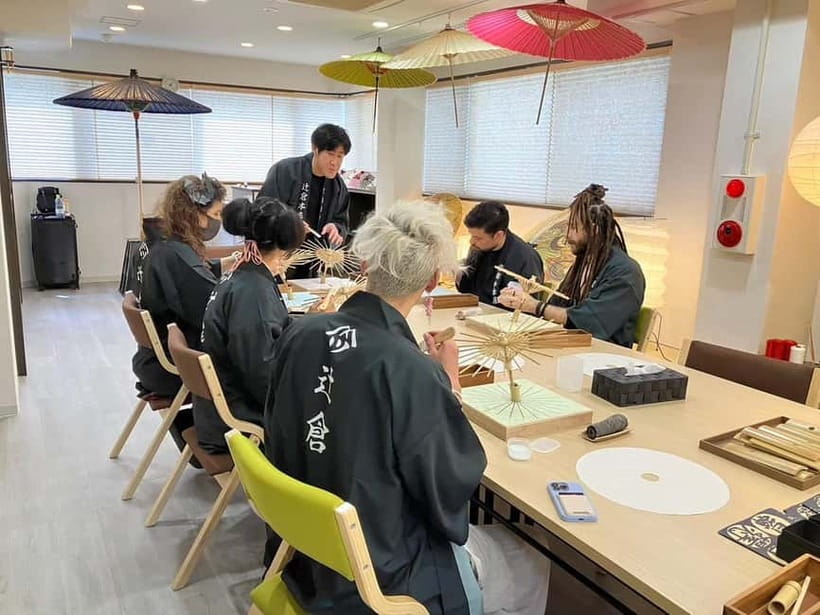
The main limitation is the narrow focus. This is a 90-minute umbrella-making workshop, not a broad lesson covering every part of Japanese paper crafts or Kyoto culture.
You also need to accept that your finished umbrella may show signs of being handmade. That is not a flaw, but anyone expecting a factory-perfect object may prefer to buy a finished product instead.
The small scale creates another challenge. Miniature work can be fiddly, and people with limited patience may find the detail tiring. I would avoid scheduling this immediately before a tight reservation or long transfer.
The optional craftsman finishing service is another cost to consider. The standard activity includes your own completed umbrella and the display items, but professional finishing requires an additional fee. Ask about that charge before agreeing to it.
Finally, the workshop has a perfect rating from 26 reviews, which is a strong signal of satisfaction, but ratings cannot tell you how much you will enjoy hands-on craft work. Your own interest in careful making matters more than the score.
How to fit it into a Kyoto day
The central location makes planning simple. Put the workshop near other plans around Shijo Kawaramachi, rather than treating it as a distant excursion.
You could schedule it before shopping and carry the boxed umbrella afterward, or place it later in the day so the finished piece becomes your final Kyoto purchase. The carry bag helps, but you should still handle the box with care.
The 90-minute length is long enough to produce something substantial without taking over your entire day. I like that balance. You get a real activity rather than a five-minute demonstration, but you still have plenty of time for downtown Kyoto.
Keep your schedule flexible around the start time. Availability and starting times should be checked when you book, and a slow craft class is best enjoyed without a race to the next appointment.
Should you book the Traditional Mini Umbrella Workshop?
Book it if you want a personal souvenir, enjoy careful handwork, and like learning through direct practice. The central location, English-language instruction, included display stand, and patient guidance make it a practical choice for many visitors.
I would especially recommend it for couples, families with children old enough to focus, and gift-minded shoppers who want something with a clear Kyoto connection. Ai Takenaka and the other instructors have been praised for warmth and patience, which is reassuring if you have never tried this kind of craft.
Skip it if you want a fast, passive activity or if you are mainly looking for a low-cost purchase. At $70, the value comes from the instruction and the making process as much as from the umbrella itself.
You can cancel up to 24 hours before the activity for a full refund, and the reserve-now, pay-later option keeps your plans flexible. For a hands-on Kyoto memory that is both decorative and personal, this is a well-focused choice.
FAQ
Where is the Traditional Mini Umbrella Workshop held?
The workshop is in central Kyoto, about a two-minute walk north of the Shijo Kawaramachi intersection.
How long does the workshop last?
The activity lasts 90 minutes.
How much does the workshop cost?
The listed price is $70 per person.
What will I make?
You will make a Hime Wagasa, a traditional Japanese mini umbrella, using genuine Japanese materials.
What is included in the price?
All crafting materials are included. You also receive a bamboo umbrella stand, a decorative box, and a carry bag for your finished umbrella.
Is the workshop offered in English?
Yes. Instruction is available in Japanese and English.
Can children take part?
Children under six are not considered suitable for this activity.
Can I cancel my booking?
Yes. You can cancel up to 24 hours in advance for a full refund. You can also reserve now and pay later.
Just added around Kyoto
- Kyoto: Zen Meditation at a Private Temple with a Monk★ 5.0 · 25 reviews
- Kyoto: Gion Geisha District & Sake-in-Hand Walking Tour★ 5.0 · 37 reviews
- Private Pewter Sake Cup Experience with a Kyoto Artisan★ 5.0 · 31 reviews
- Your Private Vacation Photography Session In Kyoto★ 5.0 · 110 reviews
- Private Guided Traditional Buddhist Cooking in Japan★ 5.0 · 16 reviews
- Kyoto Wagashi(Japanese sweets) Cooking Class near Fushimiinari★ 5.0 · 60 reviews
- Traditional Japanese Music show & Experience Tour in Kyoto★ 5.0 · 57 reviews
- Kyoto:Family-Friendly Kimono & Yukata Experience at WARGO★ 5.0 · 147 reviews
Kyoto Tours, compared.


Fushimi Inari, Kinkakuji, Bamboo Grove 1 Day Bus Tour
Read our review →
Tea Ceremony in a Traditional Tea House in Kiyomizu
Read our review →
Kyoto Geisha Walking Tour: Gion District & Hidden Gems
Read our review →

Gion Magical Night Walking Tour with Geisha Trivia
Read our review →

Gion Geisha District Walking Tour – Stories of Geisha
Read our review →Browse the lists this tour appears in