
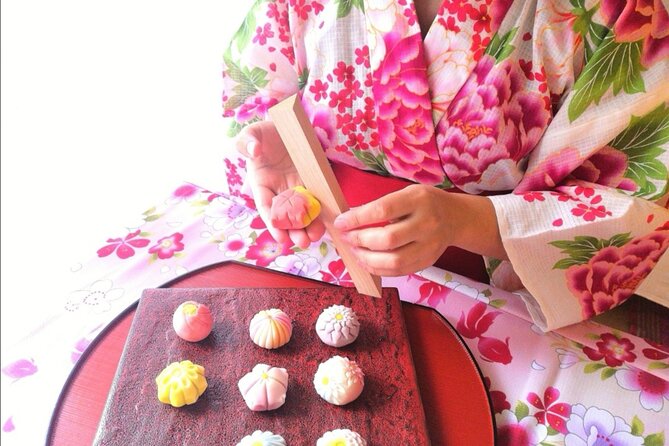
Reviewed · KYOTO TOURS
Nerikiri and Matcha Making Class in Kyoto
Kyoto’s nerikiri and matcha class gives you something more lasting than a quick tasting: you learn how these delicate tea sweets are shaped, then make five designs yourself. The instructor explains each step clearly, and the calm pace makes the work feel peaceful rather than rushed.
I like the hands-on format and the chance to take your finished nerikiri home in a provided container. I also like that you make matcha at the table and drink it with the sweets you shaped. The main drawback is that the dough is prepared before class, so you learn the shaping techniques rather than the full process from beans to finished dough.
Key points at a glance
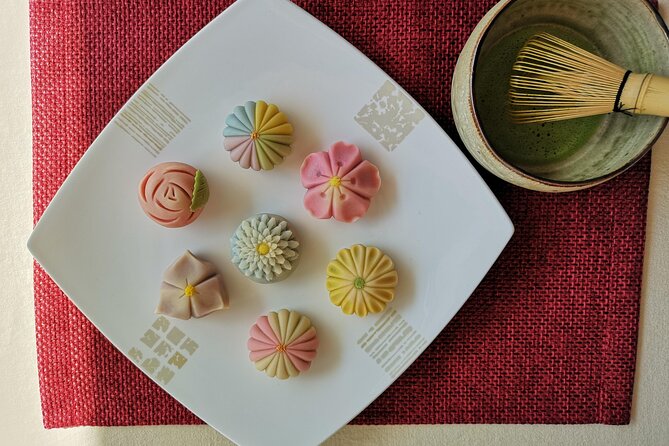
- Five nerikiri designs: Practice several shaping methods with different nerikiri tools.
- Table-style matcha: Make your own matcha and taste it with the sweets you create.
- Small group setting: The class accepts no more than eight participants.
- Dough recipes after class: Request two versions by providing your email address.
- Take-home treats: Keep the remaining nerikiri in a supplied container.
- Matsugasaki meeting point: Meet at Matsugasaki Station in northern Kyoto at 10:00 a.m.
Five Kyoto sweets, one quiet afternoon
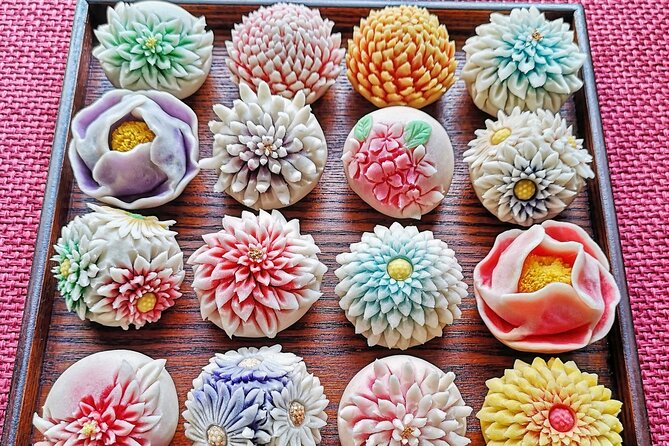
Nerikiri are Japanese confections traditionally served at a tea ceremony. They are made mainly from sweet white beans and shaped into graceful designs. Their appearance matters, but the making matters too. You slow down, handle the dough carefully, and pay attention to small changes in shape and texture.
This class is built around that process. You do not simply watch an instructor prepare one perfect sweet. You learn five designs, each using different techniques and tools. That makes the class useful for a first taste of Japanese confectionery and for anyone who wants skills to practice later at home.
The mood is likely to appeal to you if you prefer a calm cultural activity over a packed sightseeing schedule. It is not a loud cooking show or a race to finish. The work is delicate, but the instruction is meant to make it manageable. One of the strongest features is the balance between precision and comfort. You get careful guidance without needing previous nerikiri experience.
The activity lasts about two and a half hours. That is long enough to learn, practice, make matcha, and taste your sweets without turning the session into an all-day commitment.
More hands-on workshops in Kyoto:
- Kyoto: 45-Minute Tea Ceremony Lesson Experience
★ 4.3 · 2,378 reviews - Ramen Cooking Class at Ramen Factory in Kyoto
★ 5.0 · 1,937 reviews - Kyoto : Chopsticks Making Workshop in Gion with Engraving Option
★ 5.0 · 958 reviews
Meeting at Matsugasaki Station at 10 a.m.
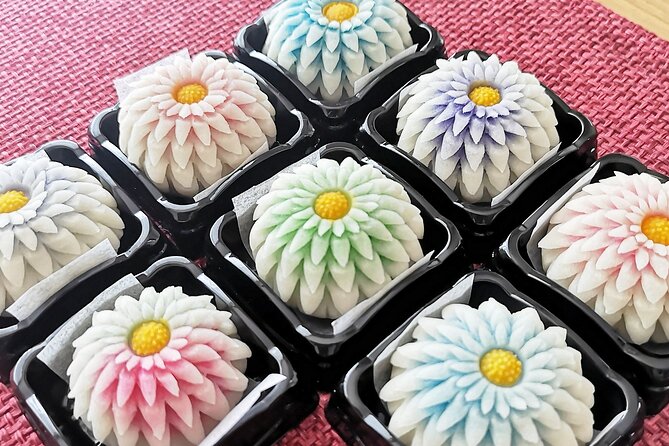
The class begins at Matsugasaki Station, at Matsugasaki Rokunotsubocho in Kyoto’s Sakyo Ward. The start time is 10:00 a.m., and the activity finishes back at the same meeting point.
This location is near public transportation, which makes the class easier to fit into a Kyoto day. You should allow enough time to reach Matsugasaki Station without rushing. The class has a fixed start time, and delicate food work is not a good place to arrive flustered.
The return to the meeting point is simple. There is no private transportation included, so you make your own way to and from the station. That keeps the experience focused on the class itself, but you need to handle your own local transport planning.
The group is limited to eight people. That small maximum matters here. Shaping nerikiri requires close attention to fingers, tools, pressure, and proportion. A small class gives the instructor a better chance to watch your technique and correct it before the design goes off track.
Only paying participants may enter the class. Companions who are not taking part cannot wait inside as spectators, because space is limited. Keep that rule in mind if you are arranging the activity for a family or group with mixed interests.
Starting with prepared nerikiri dough
The instructor begins by explaining how nerikiri dough is made. The dough itself is prepared before you arrive, so you do not spend the session cooking or mixing the base.
That choice has two sides. On the good side, it allows the class to concentrate on the artistic and practical part: dividing, shaping, detailing, and using the tools. You can make five designs within the two-and-a-half-hour schedule, which would be difficult if the dough preparation were done from scratch during the same visit.
On the other hand, you do not see the complete dough-making process in real time. If your goal is to recreate nerikiri from raw ingredients without further study, this class gives you a starting point rather than a full production lesson.
The instructor sends two versions of the nerikiri dough recipes by email after class. You need to provide an email address if you want them. This is a useful addition because it gives you a written reference once the hands-on lesson is over. Since the dough is the foundation of the sweets, having two recipe versions may help you compare methods when you practice later.
Five designs and several shaping techniques
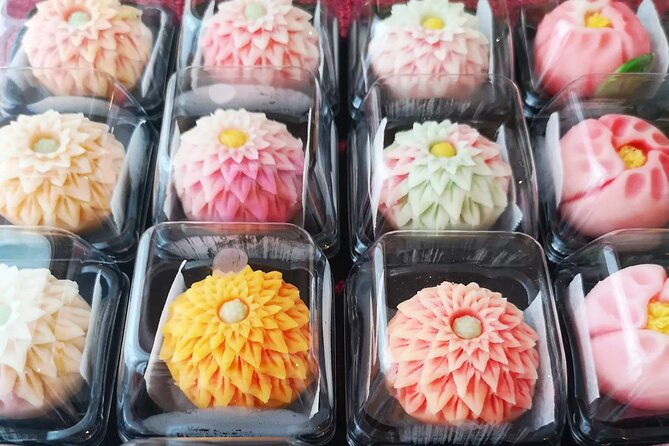
The center of the class is the making of five nerikiri. The instructor demonstrates each design step by step, then you work through the process yourself.
The value here is variety. You are not repeating one basic ball five times. The class uses different shaping techniques and various nerikiri tools, so each design introduces another way to handle the dough. You learn how small cuts, pinches, presses, and surface details can change a simple piece of bean paste into a decorative confection.
Expect the work to be delicate, but not impossible. The guidance is precise and organized, which helps when your first attempt does not look like the demonstration. Nerikiri rewards a light touch, and you may need to make small corrections as you go.
That is also where the small group helps. With no more than eight participants, the instructor can explain a tool or technique without the room feeling crowded. You should still expect to do the work yourself. This is not a demonstration where someone fixes every piece for you.
The five finished sweets also give you a clear sense of progress. Your first design may require the most concentration. By the fifth, you have had more practice with the dough and tools, and you can see how the techniques fit together.
A few more Kyoto half-days to weigh up
- PERFECT KYOTO 1-Day Bus Tour
★ 5.0 · 13,518 reviews - Kyoto: Fushimi Inari, Kinkakuji, Bamboo Grove 1 Day Bus Tour
★ 4.8 · 4,316 reviews - Kyoto: Tea Ceremony in a Traditional Tea House in Kiyomizu
★ 4.9 · 3,519 reviews - Kyoto Geisha Walking Tour: Gion District & Hidden Gems
★ 4.7 · 3,273 reviews
Making matcha at the table
After the nerikiri work, you prepare matcha tea in a table-style format. This is a practical introduction rather than a formal tea ceremony, and it fits the class well.
Matcha can taste quite strong on its own. Nerikiri are traditionally served with tea because their sweetness balances the tea’s bitterness. Making both parts of the pairing yourself helps you understand why these confections are shaped and served with such care.
The matcha portion also gives your hands a change of pace after the fine work of shaping sweets. You move from detailed confectionery techniques to preparing a warm drink, then sit down to enjoy what you made.
The class includes matcha and five nerikiri. You taste them together during the session, so the experience is not only about taking attractive food photographs. The finished sweets have a purpose at the table, and you get to see how their texture and sweetness work with the tea.
Taking the remaining sweets home
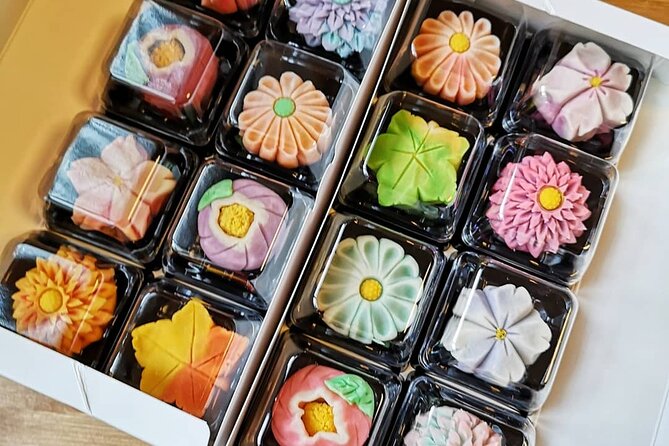
You can take the rest of your nerikiri home in a provided container. That is a small but practical benefit. You do not have to finish every sweet during the class, and you have something tangible to remember the experience.
The container also makes the class a better choice for people who enjoy making food but do not want a large meal. You can taste enough during the matcha portion and save the rest for later.
Keep in mind that the class information confirms the container, but does not give storage instructions or a shelf life. If you plan to carry the sweets around Kyoto for the rest of the day, you may want to ask the instructor how best to handle them.
The take-home portion adds value to the $84.92 price, but the real value is the instruction. You are paying for a small-group lesson, five designs, matcha, tools and guidance, plus the recipes sent afterward. If you only want to eat Japanese sweets, a shop or tea service will cost less. If you want to learn how the sweets are formed and leave with practice behind you, the price is easier to justify.
Who will get the most from this class
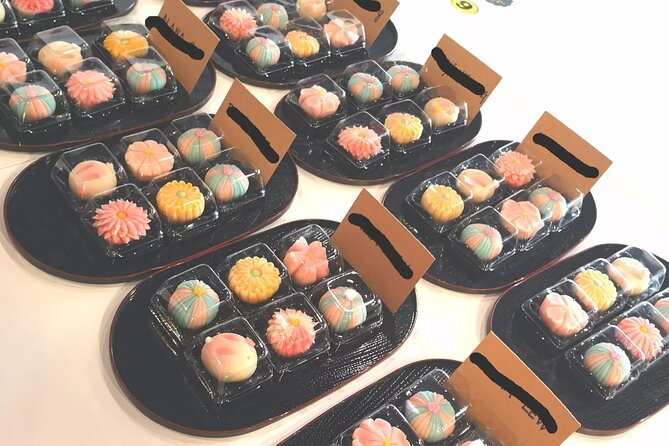
I would recommend this experience to you if you enjoy careful craft, Japanese food culture, or hands-on activities with a quiet pace. It suits a visitor who wants something more personal than a standard sightseeing stop.
It is also a good fit for someone who wants to keep learning after the trip. The instructor does not only show one design. You make five, use different tools, and receive two dough recipes afterward if you submit your email address.
Families should note the age rule. Participants must be older than 10. Children 10 or younger cannot join, and every person attending must be an active participant. The no-spectator rule means an adult cannot simply accompany a child without taking part.
The class may be less suitable if you want a full cooking lesson from raw ingredients. The dough is prepared in advance, so the session focuses on shaping and presentation. It may also feel too slow if you prefer fast-moving food tours or busy group entertainment.
What the experience does especially well
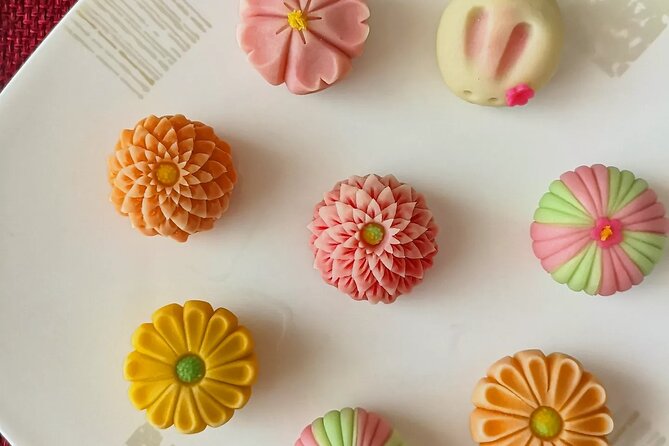
The best part is the way the class combines skill and calm. The shaping is exact, but the atmosphere is described as peaceful and therapeutic. You get a focused task without the pressure of a professional kitchen.
The instruction also appears to be a strong point. The demonstrations are step by step, and the organization helps make the delicate work doable. That matters because nerikiri can look intimidating when you see finished examples. Clear guidance turns it into a series of small actions.
The personal setting adds to the appeal. The class takes place through Nariko’s Kitchen, and the experience is held in an inviting home environment. You should understand that this is not a large commercial cooking studio with lots of spare space. The home setting helps create a more personal feel, but it also explains the strict limit of eight participants and the no-spectator policy.
You also get a useful mix of making and tasting. Some food classes leave you with a plate of food but little sense of how it connects to local tradition. Here, the sweets are tied to matcha and tea culture, and you prepare the pairing yourself.
Price, schedule, and booking details
The listed price is $84.92 per person. That is not the cheapest way to taste nerikiri in Kyoto, but it covers more than the food. You receive instruction in five designs, matcha, five nerikiri, a container for the remaining sweets, and the chance to request two dough recipes after class.
The small group improves the value for anyone who wants personal guidance. A cheaper, larger demonstration may show you what nerikiri looks like, but it may not give you as much time to shape your own designs.
The activity lasts about 2 hours and 30 minutes and begins at 10:00 a.m. Since it ends at the starting point, you can plan another Kyoto activity afterward without arranging a separate return transfer.
Confirmation is sent within 48 hours of booking, subject to availability. The activity is non-refundable and cannot be changed for any reason, so I would book only after your Kyoto schedule is firm. An average booking lead time of 29 days also suggests that you should not leave this until the last minute if the date matters to you.
My verdict: book it for the craft, not just the sweets
Book this class if you want to learn a traditional Japanese confectionery skill in a small, calm setting. The five designs, table-style matcha, take-home container, and follow-up recipes make it more useful than a simple tasting.
Skip it if you need a fully hands-on lesson that begins with preparing the dough, or if you prefer a short and inexpensive food stop. The $84.92 cost is best justified by the instruction and the chance to practice, not by the amount of food alone.
For the right person, this is a memorable Kyoto activity: focused, creative, and quiet enough to let you pay attention. You leave with sweets, recipes, and a better sense of how much care goes into a confection that may look effortless.
FAQ
Where does the nerikiri and matcha class meet?
The class meets at Matsugasaki Station, at Matsugasaki Rokunotsubocho, Sakyo Ward, Kyoto, 606-0915, Japan.
What time does the class start?
The class starts at 10:00 a.m.
How long does the activity last?
The activity lasts approximately 2 hours and 30 minutes.
Where does the class end?
The activity ends back at the meeting point at Matsugasaki Station.
How many nerikiri designs will I make?
You will learn and make five nerikiri designs using different shaping techniques and various nerikiri tools.
Is matcha included?
Yes. Matcha is included, and you will make it in a table-style format before tasting it with the nerikiri.
Is the nerikiri dough prepared during the class?
The instructor prepares the nerikiri dough before class. During the session, the instructor explains how the dough is made, and you focus on shaping the sweets.
Can I get the nerikiri dough recipes?
Yes. The instructor will send two versions of the nerikiri dough recipes by email after class. You need to provide your email address if you want them.
Can I take nerikiri home?
Yes. You can take the remaining nerikiri home, and a container is provided.
Is there an age requirement?
Yes. Participants must be older than 10.
Can someone attend as a spectator?
No. Only people participating in the class may attend because space is limited.
How many people can join the class?
The class has a maximum of eight participants.
Is transportation included?
Private transportation is not included. The meeting point is near public transportation.
What is included in the price?
The price includes five nerikiri, matcha, and a container to take the remaining sweets home.
Can I cancel and receive a refund?
No. The experience is non-refundable and cannot be changed for any reason.
Just added around Kyoto
- Kyoto: Zen Meditation at a Private Temple with a Monk★ 5.0 · 25 reviews
- Kyoto: Gion Geisha District & Sake-in-Hand Walking Tour★ 5.0 · 37 reviews
- Private Pewter Sake Cup Experience with a Kyoto Artisan★ 5.0 · 31 reviews
- Your Private Vacation Photography Session In Kyoto★ 5.0 · 110 reviews
- Private Guided Traditional Buddhist Cooking in Japan★ 5.0 · 16 reviews
- Kyoto Wagashi(Japanese sweets) Cooking Class near Fushimiinari★ 5.0 · 60 reviews
- Traditional Japanese Music show & Experience Tour in Kyoto★ 5.0 · 57 reviews
- Kyoto:Family-Friendly Kimono & Yukata Experience at WARGO★ 5.0 · 147 reviews
Kyoto Tours, compared.


Fushimi Inari, Kinkakuji, Bamboo Grove 1 Day Bus Tour
Read our review →
Tea Ceremony in a Traditional Tea House in Kiyomizu
Read our review →
Kyoto Geisha Walking Tour: Gion District & Hidden Gems
Read our review →

Gion Magical Night Walking Tour with Geisha Trivia
Read our review →

Gion Geisha District Walking Tour – Stories of Geisha
Read our review →Browse the lists this tour appears in