
Reviewed · KYOTO TOURS
No. 1 E-Bike Tour for Up to 5 Guests in Kyoto with a Local!
Kyoto’s best sights are spread across the city, and an electric bicycle lets you connect them without spending the day on buses. This four-hour ride moves from Nishi Honganji and the old Nintendo headquarters area to Gion, Heian Shrine, Nanzenji, and the Kamo River.
I especially like the tiny group size, capped at five people, and the chance to see Kyoto’s waterways and ordinary streets between the famous temples. The main consideration is that cycling still takes effort and attention, and the tour depends on good weather.
Key points at a glance
- A true small-group ride: The maximum is five people, so the guide can keep the pace relaxed and give more personal help.
- Kyoto’s famous sights in one route: You visit Nishi Honganji, Gion Shirakawa, Heian Shrine, Nanzenji, and the Kamo River.
- A local look at Nintendo: The route passes the former Nintendo headquarters in the Kagiyacho area.
- Waterways shape the ride: You follow the Lake Biwa Canal and finish beside the Kamo River.
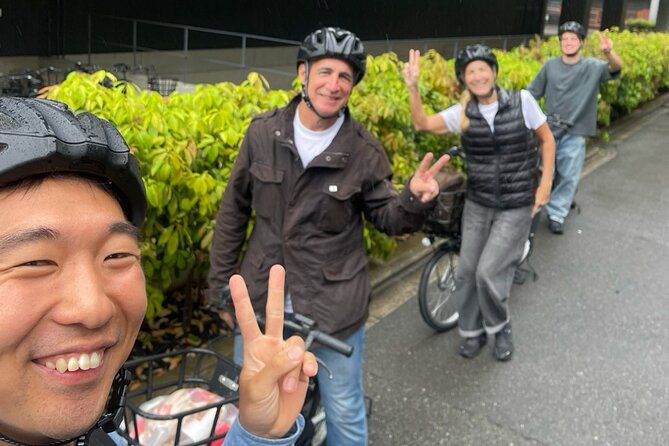
- Guide personality matters: The guide named Yuki has been praised for making the ride fun and for explaining many sites clearly.
- Good value for a four-hour outing: At $99.08 per person, the price includes the e-bike, helmet, and cycling guide.
Why an e-bike works well in Kyoto
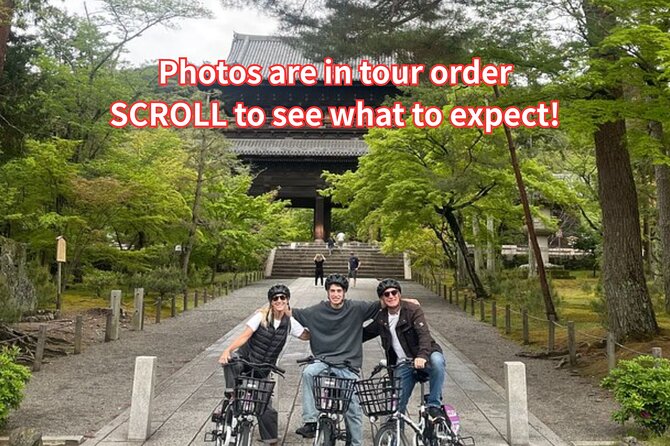
Kyoto is not a city you understand by checking off one isolated temple at a time. Its appeal comes from the links between old neighborhoods, waterways, shrines, quiet lanes, and major sights. A bicycle gives you those connections.
The electric assist matters because this is a four-hour outing with several stops. You still pedal, but the bike should make the route more manageable than a standard bicycle, especially when you are covering several parts of the city in one afternoon.
You begin at 1 p.m., which gives the tour a useful place in a day of sightseeing. You can spend the morning at another attraction, eat lunch, and then meet the guide for the ride. The timing also places the latter part of the outing around the Kamo River and eastern Kyoto, where a slower finish makes sense.
This is not a racing trip. The guide starts with a briefing on cycling hand signals and basic road manners. That opening is important in a city where you need to share space carefully and pay attention at intersections.
More bike days around Kyoto:
- Hidden Kyoto E-Biking tour
★ 5.0 · 1,843 reviews - Bike Tour Exploring North Kyoto plus Lunch
★ 5.0 · 1,087 reviews - Arashiyama Bamboo Forest & Hidden Gems Bike Tour (Early Bird)
★ 5.0 · 613 reviews
Meeting near Kyoto Station and getting ready
The meeting point is listed at Times Car Rental, 682 Higashishiokōjichō, in Kyoto’s Shimogyo Ward. The first stop description also refers to a Clew share-cycle port at 570 Higashishiokōjichō, in front of Seikouin Wagatazizou, behind a hotel.
Because those addresses are different, I would pay close attention to the guide’s message before leaving. The guide sends that message through Viator, and checking it is the simplest way to confirm the exact bicycle port and meeting instructions.
The tour includes the bicycle, an Incom-installed cycling helmet, and a cycling guide. Children under 10 can join only if they are at least 140 centimeters tall and can ride a bicycle. They pay the adult price, so this is not a budget activity for a small child.
The maximum group is five people. That limit is one of the strongest features here. A guide can keep an eye on a small group more easily, stop without causing a large traffic jam, and adjust explanations to the people on the ride.
Nishi Honganji gives the ride a strong opening
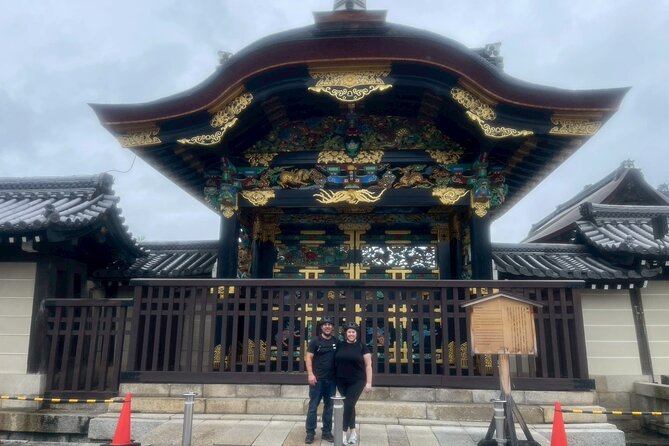
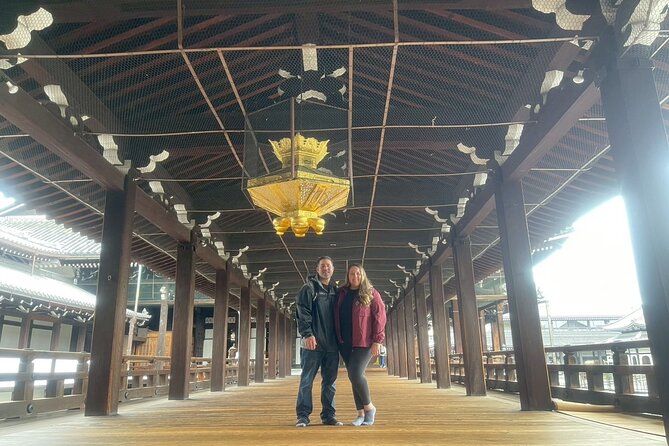
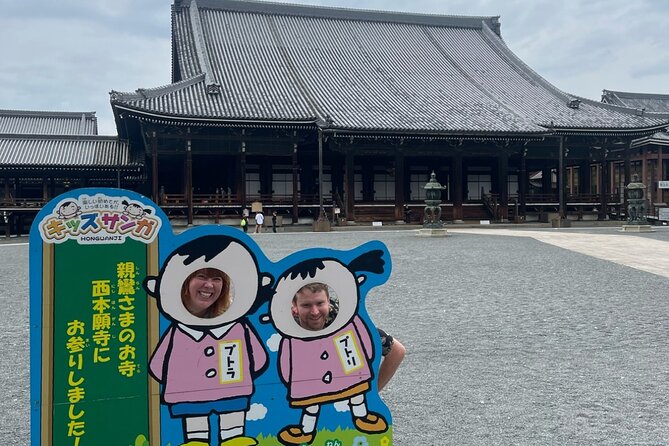
Nishi Honganji is the head temple of the Jodo Shinshu Hongwanji-ha sect and one of Kyoto’s major religious sites. You get about 30 minutes here, enough time to take in its grand buildings and hear why the temple matters.
Starting with Nishi Honganji gives the tour a clear sense of place. Kyoto is not only small lanes and wooden teahouses. It also has large religious complexes that show the scale and influence of its Buddhist institutions.
The stop is free, as are the other listed stops. Still, you should not expect a long private temple visit or a detailed tour of every building. The value comes from seeing the site as part of a wider route and from the guide’s explanation.
A local street and the old Nintendo headquarters
The ride then passes through Kagiyacho, an ordinary Kyoto area that adds a welcome change from formal sightseeing spots. The eye-catching building here is the old headquarters of Nintendo.
That detail gives the route some personality. Nintendo is now known around the world for games, but this stop points to the company’s older presence in Kyoto. You are not simply moving from one famous temple to another. You are also seeing a piece of the city’s commercial and modern identity.
The stop lasts about 20 minutes. The supplied details do not indicate an interior visit, so treat this as an exterior sight and a short local-area stop. It is especially useful if you enjoy connecting a familiar modern name with the city where the company began.
More e-bike rides in Kyoto:
- 5 Top Highlights of Kyoto Full Day Bike Tour (E-bike option)
★ 5.0 · 511 reviews - E-Bike Tours of the highlights of Kyoto!!!
★ 5.0 · 291 reviews - Kyoto: City Secrets eBike Tour
★ 4.9 · 196 reviews - Pedal Adventure Kyoto’s iconic landmarks on an e-bike tour
★ 5.0 · 189 reviews
Gion Shirakawa and Kyoto’s traditional side
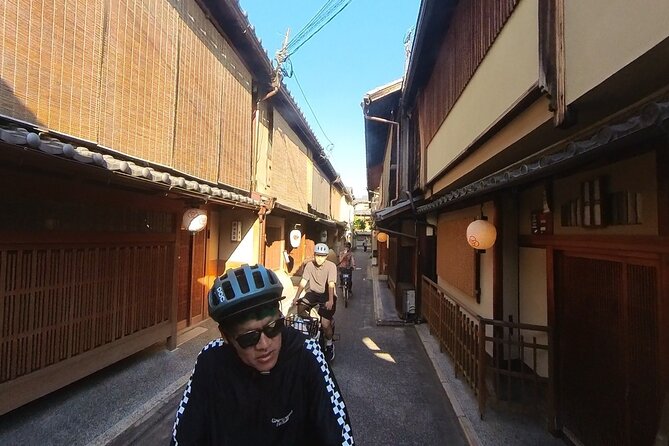
Gion Shirakawa is one of the prettiest parts of the route. The street follows a river and has old buildings, seasonal plants, and the atmosphere associated with Kyoto’s tea-house district.
You have about 30 minutes here. That is enough for a pause and photographs, but not so long that the tour becomes fixed in one neighborhood. The guide can provide context about the area while you take in the setting.
Gion is also a place where you need to behave thoughtfully. Keep your voice down, follow the guide’s direction, and remember that the old streets are part of a living neighborhood rather than a stage set. The bicycle format helps you pass through without spending the entire afternoon in one crowded pedestrian area, though you should expect to walk the bike in places if conditions require it.
The route’s Gion section is one of the clearest reasons to choose this experience over a simple bicycle rental. You get the freedom of two wheels, but you also get someone explaining what you are seeing and helping you move through the district sensibly.
Following the Lake Biwa Canal toward Nanzenji
One of the ride’s best transitions comes as you follow the Lake Biwa Canal. This waterway links Lake Biwa with Kyoto and helped supply water to the city. The canal also explains why this part of Kyoto feels so open and calm compared with the denser central streets.
One stop lasts about 20 minutes, followed by a longer 50-minute section in the Nanzenji area. That longer time suggests that the canal is more than a quick photo stop. You get room to ride, pause, and hear how the waterway helped shape Kyoto’s development.
I like this part because it adds physical movement to the sightseeing. Instead of standing in front of one building while listening to facts, you follow the route that connects places and gives the city a different rhythm.
The canal section may be less exciting for someone who wants nonstop landmark viewing. That is part of the trade-off. The tour is designed to show how Kyoto fits together, not just to deliver a rapid list of headline attractions.
Heian Shrine’s red torii and wide approach
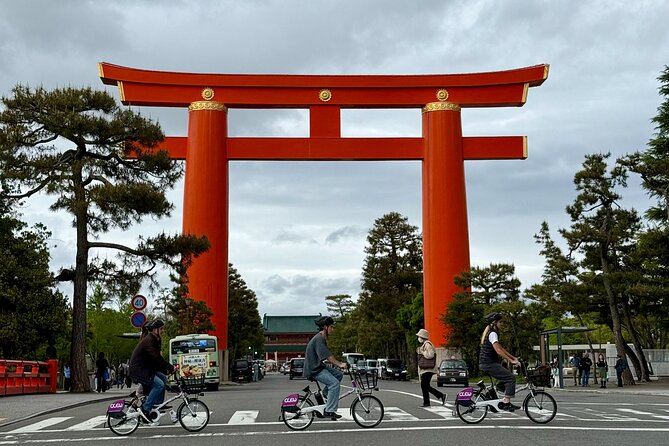
Heian Shrine commemorates the 1100th anniversary of Kyoto becoming the capital known as Heian-kyo. Emperor Kanmu, the 50th emperor, is enshrined there, and the large red torii is one of the area’s most recognizable sights.
The shrine appears between the canal section and Nanzenji in the route description, although it is not given a numbered stop. You should expect to see the torii and shrine area as part of the ride, with the exact amount of time shaped by the guide and the pace of the group.
The scale changes again here. After the close streets of Gion and the quiet canal, the broad red gate and spacious shrine grounds give you a more open view of eastern Kyoto. It is a useful contrast and a good place to understand the city’s ceremonial side.
Nanzenji Temple and the old canal aqueduct
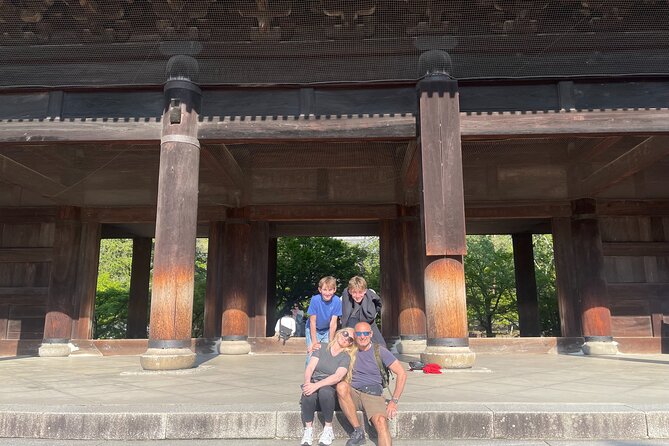
Nanzenji is regarded as especially important among Kyoto’s Five Mountains. The main temple and its gate have a commanding presence, while the grounds include a striking canal structure that has become one of the area’s familiar sights.
You have about 20 minutes at Nanzenji. That is enough for a focused introduction and a look around, but you will not explore every corner of the temple complex. If Nanzenji is high on your personal list, you may want to return later for a longer visit.
The short stop works well within this tour because the bicycle is doing the connecting work. You see Nanzenji as one part of eastern Kyoto, then move on rather than losing the rest of the afternoon inside a single temple precinct.
A cool finish beside the Kamo River
The final sightseeing stop is the Kamogawa, or Kamo River. You have about 10 minutes to relax along the riverbank, cycle beside the water, and, if conditions allow, put your feet in the river to cool down.
That ending is simple and well judged. After several hours on a bicycle, a quiet pause by the water is more appealing than another formal explanation. It also gives you a last chance to see Kyoto in an everyday setting, with local life continuing along the river.
The river stop is brief, so do not book this expecting a long picnic or swimming session. Think of it as a refreshing pause before returning the bicycles.
What $99.08 buys you
The price is $99.08 per person. That is not the cheapest way to see Kyoto, but the comparison should be with a private guide, bicycle rental, helmet rental, and the time needed to plan a safe route between several distant sights.
Here, the price covers the electric bicycle, helmet, guide, and roughly four hours of organized sightseeing. You also get a group capped at five, which is a meaningful difference from a large bus or walking group.
The value is strongest if you want to cover several areas in one afternoon and prefer stories and local context to navigating alone. It is weaker if you already know Kyoto well, dislike cycling, or plan to spend most of your time inside temples.
The tour is often booked about 18 days ahead. That pattern suggests you should not leave it until the last moment if your Kyoto dates are fixed, especially since the group size is so small.
The guide can make or break the experience
The guide named in the praise is Yuki, though you should confirm who will lead your particular departure. One especially useful detail is that a past rider accidentally called Yuki Suki, and the guide answered with good humor. That small exchange points to the friendly, relaxed tone you can expect from the named guide.
The strongest praise centers on two things: reaching many of the desired sights and learning interesting facts while having fun. That combination is exactly what this format needs. A bicycle alone gets you from place to place, but a good guide turns the ride into a city lesson.
Some guides can speak German, Dutch, Bangladeshi, Hindu, and Urdu, according to the supplied information. The wording is unusual, so if language is important to you, contact the provider before booking and state your preference clearly.
Who should book this Kyoto e-bike tour
I would choose this ride if you want a broad first look at Kyoto without spending four hours on foot. It suits couples, families with capable older children, and small groups of friends who want a shared activity rather than another passive sightseeing circuit.
It is also a good fit if you like both famous landmarks and less formal details, such as the canal, the old Nintendo headquarters area, and the riverbank. The route gives you a useful mix of temples, shrines, historic districts, modern city references, and water.
You should think twice if you are uncomfortable riding in city streets or if you want a slow, detailed visit inside each temple. Four hours is enough to see a lot, but the schedule naturally favors breadth over long stays.
The tour requires good weather. If poor weather cancels it, you are offered another date or a full refund. You can also cancel for a full refund up to 24 hours before the start time, but changes or cancellations inside that window are not accepted.
My call: book it for connection, not just checklists
I would book this tour if I had one afternoon in Kyoto and wanted to understand how the city’s major sights connect. The five-person limit, electric assistance, and local guide give it a personal feel without the cost of arranging a fully private day.
The best parts are the shifts in mood: Nishi Honganji’s scale, Gion’s old streets, the Lake Biwa Canal, Heian Shrine’s red torii, Nanzenji, and the cooling pause at the Kamo River. Yuki’s friendly style, if he leads your outing, adds another reason to expect an enjoyable ride.
I would skip it if rain is likely, if you want a deep temple visit, or if cycling is not comfortable for you. For most active visitors who want a well-connected introduction to Kyoto, the $99.08 cost is reasonable for four hours of transport, guidance, and sightseeing.
FAQ
How long is the Kyoto e-bike tour?
The tour lasts approximately four hours, including the cycling briefing, sightseeing stops, and bicycle return.
What time does the tour start?
The listed start time is 1 p.m.
Where does the tour meet?
The meeting information lists Times Car Rental at 682 Higashishiokōjichō, Shimogyo Ward, Kyoto. The first stop also refers to a Clew share-cycle port at 570 Higashishiokōjichō, so check the guide’s message through Viator before departure for the exact meeting instructions.
What is included in the price?
The price includes the electric bicycle, bicycle use, a cycling guide, and an Incom-installed cycling helmet.
How many people can join?
The activity has a maximum of five participants.
Can children take part?
Children under 10 may participate if they are at least 140 centimeters tall and able to ride a bicycle. They are charged the same fee as adults.
What happens if the weather is poor?
The experience requires good weather. If it is canceled because of poor weather, you can choose another date or receive a full refund.
Just added around Kyoto
- Kyoto: Zen Meditation at a Private Temple with a Monk★ 5.0 · 25 reviews
- Kyoto: Gion Geisha District & Sake-in-Hand Walking Tour★ 5.0 · 37 reviews
- Private Pewter Sake Cup Experience with a Kyoto Artisan★ 5.0 · 31 reviews
- Your Private Vacation Photography Session In Kyoto★ 5.0 · 110 reviews
- Private Guided Traditional Buddhist Cooking in Japan★ 5.0 · 16 reviews
- Kyoto Wagashi(Japanese sweets) Cooking Class near Fushimiinari★ 5.0 · 60 reviews
- Traditional Japanese Music show & Experience Tour in Kyoto★ 5.0 · 57 reviews
- Kyoto:Family-Friendly Kimono & Yukata Experience at WARGO★ 5.0 · 147 reviews
Kyoto Tours, compared.


Fushimi Inari, Kinkakuji, Bamboo Grove 1 Day Bus Tour
Read our review →
Tea Ceremony in a Traditional Tea House in Kiyomizu
Read our review →
Kyoto Geisha Walking Tour: Gion District & Hidden Gems
Read our review →

Gion Magical Night Walking Tour with Geisha Trivia
Read our review →

Gion Geisha District Walking Tour – Stories of Geisha
Read our review →Browse the lists this tour appears in