
Reviewed · OSAKA TOURS
Osaka: Gluten-Free Ramen and Gyoza Cooking Class
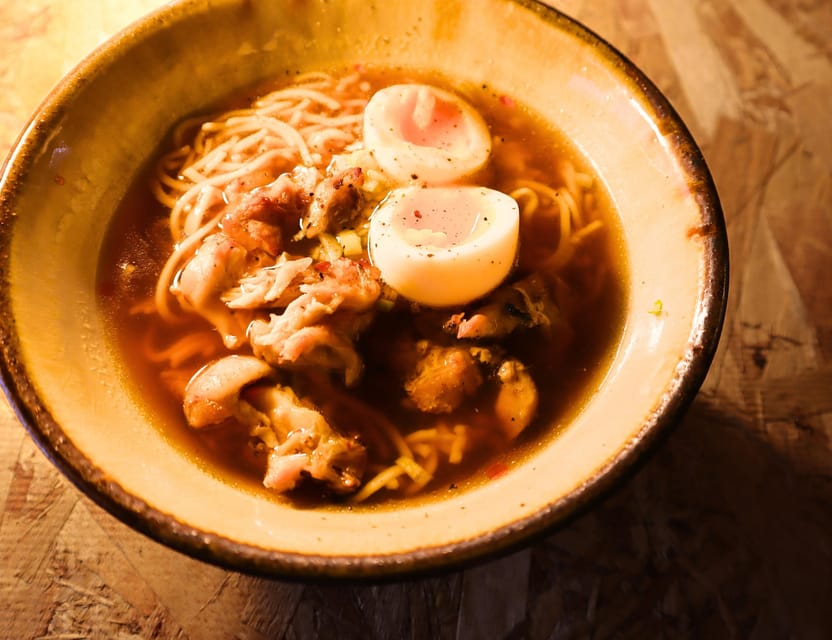
The unusual treat here is two kinds of gluten-free ramen made from scratch, followed by handmade gyoza. Chef Yuki teaches in her own Japanese-style home, so the setting feels personal rather than like a large tourist workshop.
I like the tiny group of four, which gives you time to ask questions and fix your noodle dough or dumpling folds. I also like that the recipes travel well: you leave with practical methods, not just a pleasant meal. The main consideration is the $103 price, which is fair for three hours and a full lunch, but high if you only want a quick cooking demonstration.
Key points
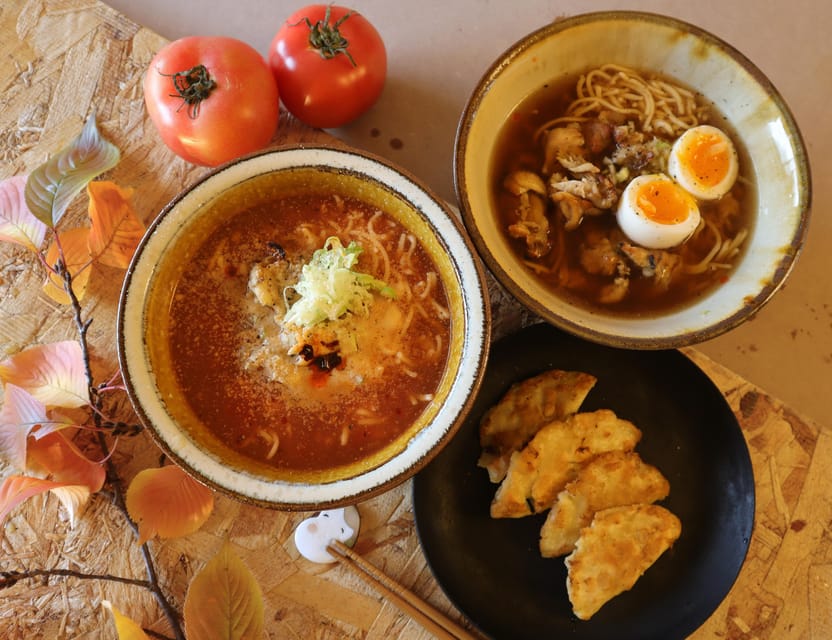
- Two ramen styles: Make chewy rice-flour noodles for savory soy sauce ramen and less common tomato ramen.
- Gyoza from the wrapper up: Mix rice-flour dough, prepare the filling, fold the dumplings, and pan-fry them until crisp.
- A four-person maximum: The small group lets Yuki give each cook close attention.
- A home kitchen setting: The class takes place at 4-19 Nukata-cho, about five minutes on foot from Nukata Station.
- Useful take-home skills: Recipes and cooking tips help you recreate the dishes after your Japan trip.
- Optional sake tasting: Add three 45 ml servings, including chilled Junmai, chilled Junmai Ginjo, and warm Junmai.
Why gluten-free ramen makes this Osaka class different
Osaka gives you no shortage of noodle shops and dumpling counters. The catch is that ordinary ramen noodles and gyoza wrappers are usually made with wheat. If you need gluten-free food, eating your way through Japan can require careful planning, and the familiar dishes may not be easy to order safely.
This class takes a different route. You do not simply sit down to a gluten-free bowl. You learn how rice flour can replace wheat in both ramen noodles and gyoza wrappers, then eat the results at the end.
That is the real value. Yuki has spent more than 10 years working as a professional chef and has developed recipes for Japanese dishes that traditionally depend on wheat. She teaches in English, with Japanese also available, and the class is designed for beginners as well as confident home cooks.
The food is important, but the class also gives you a look at how Japanese cooking balances texture, broth, filling, and presentation. Gluten-free cooking is not treated as a compromise. It becomes the reason for examining each step more closely.
More cooking classes in Osaka:
- Osaka: Ramen and Gyoza Cooking Class in Dotonbori
★ 5.0 · 378 reviews - Osaka Cooking Class: Okonomiyaki &Japanese cuisines experience
★ 5.0 · 261 reviews - Osaka Sake Tasting with Takoyaki Cooking
★ 5.0 · 156 reviews
A calm start in Yuki’s Osaka home
The meeting point is 4-19 Nukata-cho, in a quiet residential area roughly five minutes from Nukata Station. You receive detailed directions after booking, and a welcoming sign marks the entrance.
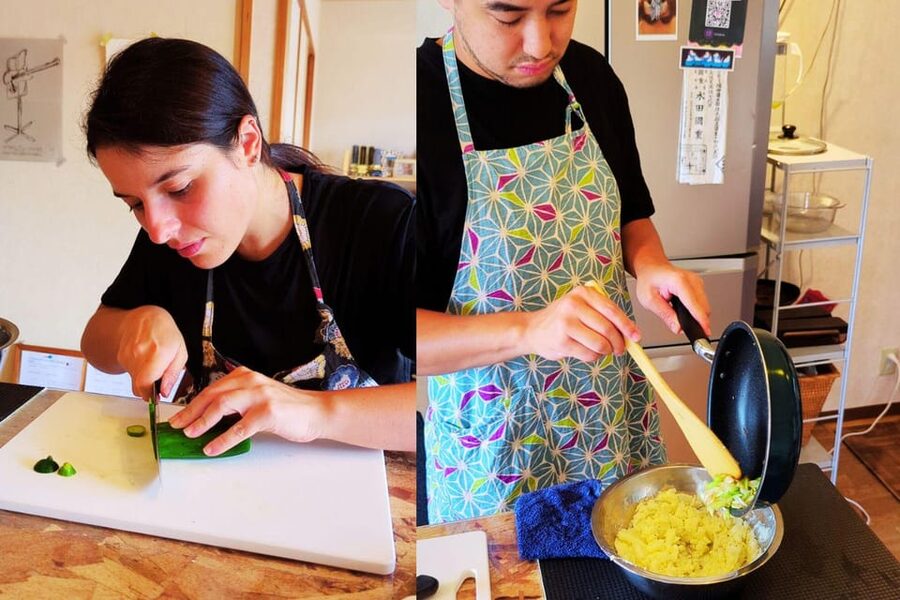
Do not expect a commercial cooking school with rows of workstations. You are entering a charming residential-style building and cooking in a cozy home setting. That can be a major advantage if you prefer conversation and personal instruction over a polished classroom.
The group is limited to four people. This matters when you are learning dough work. Ramen noodles and gyoza wrappers can be fussy, and small changes in texture often need quick correction. A four-person maximum gives Yuki room to watch what you are doing and explain the next move clearly.
The class begins with an introduction to the tools and ingredients. Yuki also explains the Japanese techniques behind the dishes and how she adapted them for gluten-free cooking. You need no prior experience, but you should wear comfortable clothes suitable for food preparation and arrive ready to eat.
Making rice-flour ramen noodles by hand
The first major task is making ramen noodles with rice flour. This is more than a simple mixing exercise. Wheat gives traditional noodles a familiar elasticity, so creating a pleasant chew without gluten requires a different approach.
Yuki leads you through the process step by step. You learn how the dough should feel, how to work it, and how to shape it into noodles with a satisfying texture. The hands-on nature is useful here. Watching someone make noodles is easy. Learning how to recognize workable dough is something you can use later in your own kitchen.
This portion should suit complete beginners because you are not expected to arrive with special skills. It also gives experienced cooks something to think about, especially if you have struggled with gluten-free dough at home.
The class is not just about avoiding wheat. It shows how a Japanese staple can be rebuilt with another flour while keeping the meal familiar. That makes the lesson useful beyond this one menu.
Soy sauce ramen brings the classic flavor
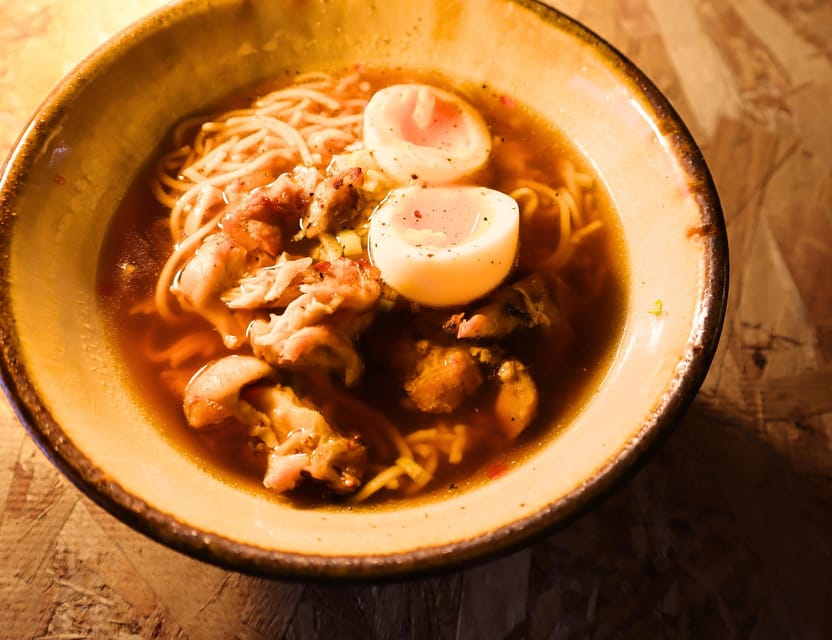
Once the noodles are ready, you prepare a savory soy-based broth. Soy sauce ramen gives the class its most recognizable Japanese flavor profile, with the broth providing the salty, rounded base for the fresh noodles.
The important lesson is how the broth and noodles work together. Handmade noodles are not an isolated project. Their texture changes how the soup feels, and the seasoning has to support rather than overpower them.
You will make the ramen yourself, then eat it as part of the final meal. Several people describe the class as both social and instructional, and this part helps explain why. You are busy with a real dish, but there is also time for Yuki to discuss Japanese flavoring and answer questions.
If your main goal is to learn a classic Japanese preparation in a form you can repeat at home, this is likely the strongest part of the class. You get a familiar dish, a gluten-free method, and a finished bowl rather than a small tasting portion.
More hands-on workshops in Osaka:
- Sushi Making Osaka Roll and Authentic Japanese Sushi Class
★ 5.0 · 1,220 reviews - Matcha Making Class in Osaka with Authentic Japanese Sweets Set
★ 5.0 · 509 reviews - Osaka Sushi Making Class – Hands-On Nigiri & Rolls (Same-Day OK)
★ 5.0 · 352 reviews - Osaka: Roll and Authentic Sushi Making Class in Dotonbori
★ 4.9 · 239 reviews
Tomato ramen adds a less familiar twist
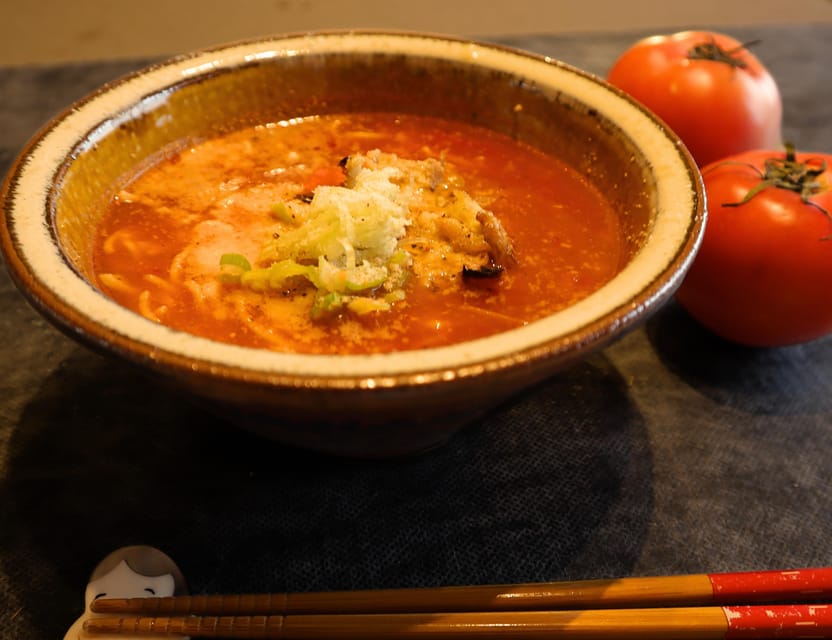
The second ramen is tomato ramen, a fresher and tangier variation that remains uncommon in Japan. It gives the menu some contrast and keeps the class from feeling like a single recipe repeated twice.
Tomato ramen is also a good reminder that Japanese cooking is not frozen in time. The soy version connects with a traditional ramen style, while the tomato version shows how a cook can borrow from another flavor family and create something new.
You prepare both types during the session, so the two bowls offer different lessons. The soy broth is savory and classic. The tomato broth is brighter and more modern. For anyone hoping to take home ideas rather than one fixed recipe, that contrast is valuable.
The second ramen does add to the workload. Three hours is enough time for a full menu, but this is an active class, not a slow afternoon with long breaks. Come prepared to participate from start to finish.
Rolling gyoza wrappers and shaping dumplings
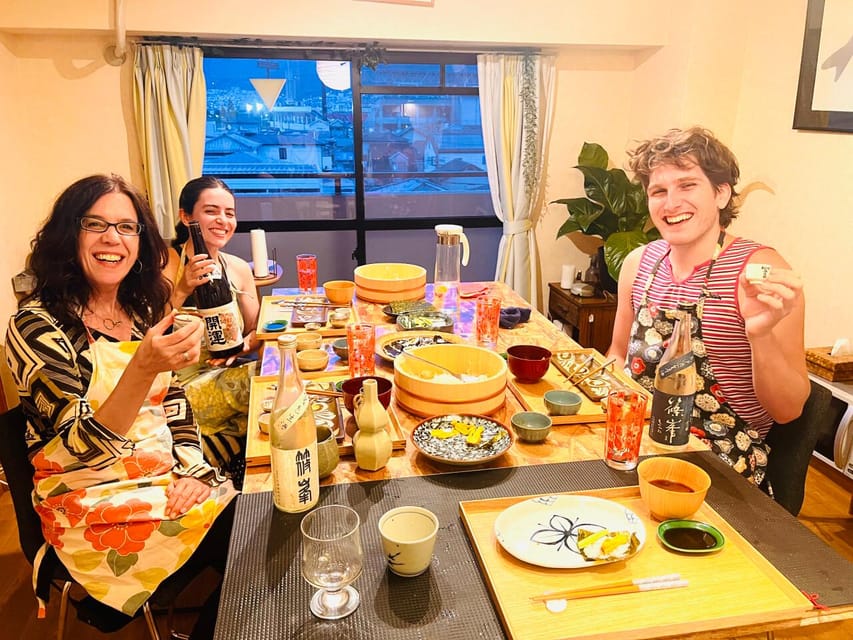
After the ramen work, you turn to gyoza. The wrappers are also made from rice flour, which lets you practice another gluten-free dough technique in the same class.
You prepare the dough, make the savory filling, and learn how to fold each dumpling. Gyoza folding looks simple until you try to produce a neat edge that holds during cooking. Yuki shows you how to shape the dumplings, and you get repeated practice rather than a single demonstration.
This is one of the class’s most useful skills for home cooks. A slightly uneven gyoza is still edible, and the process is forgiving once you understand how much filling to use and how to seal the wrapper. The goal is not factory-level uniformity. It is learning a reliable method you can repeat.
The finished dumplings are pan-fried for a crisp exterior and tender center. That texture is the payoff for careful folding. You will also see how the cooking method changes a soft wrapper into a golden, crunchy base.
The final meal is part of the lesson
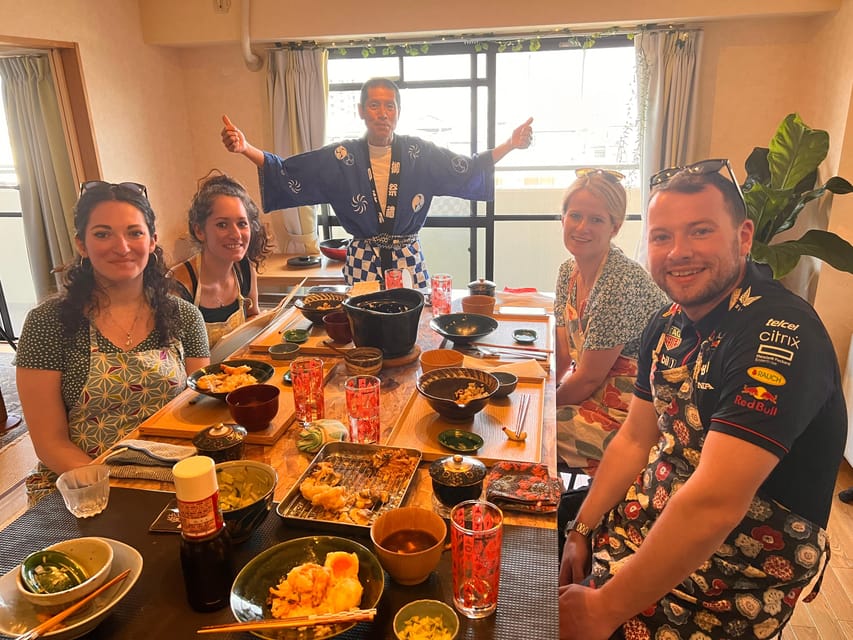
At the end, you sit down in the dining area and eat the ramen and gyoza you prepared. This is a full meal of your creations, not merely a taste of each dish.
I like this format because the cooking has a clear purpose. You are not making food that disappears into a kitchen while you watch. You can see the result of your own mixing, shaping, folding, and timing.
Yuki guides you through the flavors as you eat. If you choose the optional sake pairing, you receive three 45 ml servings: chilled Junmai, chilled Junmai Ginjo, and warm Junmai. The different temperatures and styles are selected to match the food, adding a small lesson in Japanese dining culture.
Sake is optional, so you can focus on the cooking and meal without adding alcohol. The class description does not state that the pairing is included in the $103 price, so check the current booking details if you want it.
What makes the small group worth the price
At $103 per person, this is not a budget meal. It is also not priced like a quick market snack or a short demonstration. You are paying for three hours, a personal instructor, several dishes, a full meal, recipes, and close attention in a group capped at four.
That price makes more sense if you need gluten-free options or want to learn techniques you can use at home. You are getting two ramen preparations and gyoza, all made from scratch, rather than one simple recipe.
The personal setting also changes the experience. Yuki is the sole instructor, so the class has a relaxed rhythm and one consistent teacher. Her approach is patient and friendly, with clear explanations for different levels of cooking ability.
The tradeoff is that the experience depends on enjoying hands-on work. If you want to eat ramen without spending time handling dough, this will feel expensive and too active. If you like learning by doing, the price is easier to justify.
Who should book this cooking class
I would recommend this class most strongly to:
- People who need or prefer gluten-free Japanese food.
- Couples looking for a shared activity in Osaka.
- Solo visitors who enjoy small, social classes.
- Beginner cooks who want patient instruction.
- Experienced home cooks interested in rice-flour dough.
- Anyone who values recipes they can recreate after returning home.
The class also works well for visitors who have already seen Osaka’s major sights and want a quieter local activity. Cooking in a home gives you a change of pace from stations, shopping streets, and crowded attractions.
You should think twice if you dislike group participation, cannot comfortably stand and cook for much of a three-hour session, or want a strictly traditional menu. Tomato ramen is intentionally a modern variation, and the gluten-free versions use creative adjustments rather than standard wheat-based methods.
For a serious allergy, contact the provider before booking and explain your needs clearly. The experience is designed around gluten-free cooking, but the supplied information does not specify separate kitchen equipment or a formal allergy protocol.
Getting there and preparing for the session
Nukata Station is the key landmark. The venue is about a five-minute walk away in a quiet neighborhood, and detailed directions arrive after booking. Allow enough time to find the residential-style entrance without rushing.
Wear comfortable clothing that is suitable for cooking. You do not need prior experience or special equipment. Come hungry, since you will prepare and eat a substantial meal.
The class lasts three hours, and starting times depend on availability. The small group can fill quickly, so check the schedule before building the rest of your Osaka day around it.
The activity offers free cancellation up to 24 hours before the start time for a full refund. You can also reserve and pay later, which helps if your Japan plans are still shifting.
Should you book the Osaka gluten-free ramen class?
Book it if you want more than a food tasting and the idea of making two ramen styles and gyoza appeals to you. The strongest reasons are the small group, Yuki’s patient teaching style, the rare gluten-free focus, and the recipes you can take home.
At $103, it is best viewed as a three-hour cooking lesson with lunch, not a cheap meal. For someone who needs gluten-free food, that combination is hard to find in a standard Osaka food tour. For everyone else, the class is worthwhile if you enjoy cooking and want a personal encounter with Japanese food culture.
Skip it if you prefer a passive food tour, have limited time near Nukata Station, or want only classic wheat-based ramen. For curious cooks, couples, and gluten-free diners, this is a strong pick with a practical payoff.
FAQ
How long does the Osaka gluten-free ramen and gyoza class last?
The class lasts three hours.
How much does the experience cost?
The listed price is $103 per person.
Where does the cooking class take place?
It takes place at 4-19 Nukata-cho, Osaka, in a Japanese-style home about a five-minute walk from Nukata Station.
How many people can join the class?
The group is limited to four participants.
Is the class suitable for beginners?
Yes. No previous cooking experience is required, and Yuki teaches the techniques step by step.
What dishes will I make?
You will make gluten-free ramen noodles from rice flour, soy sauce ramen, tomato ramen, gluten-free gyoza wrappers, gyoza filling, and pan-fried gyoza.
Is sake included?
Sake is an optional pairing with three 45 ml servings: chilled Junmai, chilled Junmai Ginjo, and warm Junmai. The supplied information does not state that it is included in the listed price.
What should I bring?
Wear comfortable clothes suitable for cooking. Transportation to the venue is not included.
Just added around Osaka
- Discover Real Osaka: A Cultural Walk with Food & Drink★ 5.0 · 13 reviews
- From Osaka/Kyoto: Kyoto & Nara Day Trip with Optional Lunch★ 4.5 · 79 reviews
- Osaka 6hr Private Walking Tour with Government Licensed Guide★ 5.0 · 174 reviews
- Private Airport transfer Kansai Intl. Airport(KIX) to OSAKA CITY★ 4.5 · 12 reviews
- Osaka: Namba Local Food Walking Tour (Taste 15 Dishes)★ 5.0 · 20 reviews
- Osaka Delights: Traditional Japanese Food Tour★ 4.5 · 33 reviews
- Badminton in Osaka & Kyoto with Locals!★ 5.0 · 15 reviews
- From Osaka or Kyoto: Kyoto and Nara 1-Day Bus Tour★ 3.5 · 141 reviews
Osaka Tours, compared.


Shinsekai Food Tour with 13-15 Dishes at 5 Eateries
Read our review →
Osaka Food Tour: 13 Dishes at 5 Local Eateries
Read our review →
Hungry Osaka Street Food Tour:15 Tastings & 3 Drinks with a Local
Read our review →



Hotspots & Hidden Gems Walking Tour Private or Group
Read our review →Browse the lists this tour appears in