
Reviewed · KYOTO TOURS
Private Art Sushi Roll Class in Kyoto
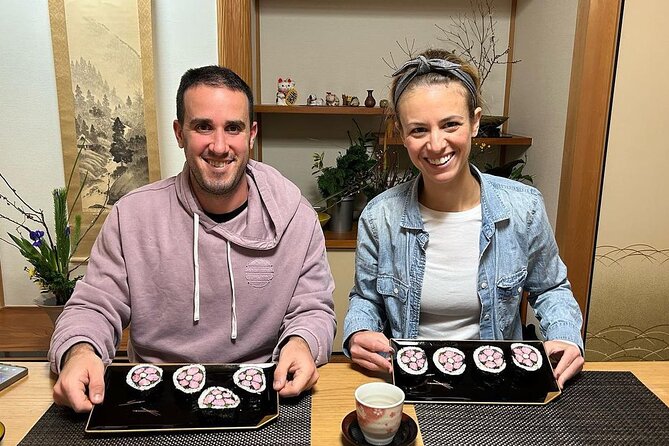
The clever part of this Kyoto class is that you do not simply roll sushi. You build a picture inside it, layering rice, seaweed, and naturally colored ingredients so a peach flower appears when you slice the finished roll. Aya Ito leads the private class in English, with help from her husband Manabu, in their traditional home near Nijo Castle.
I like the clear, hands-on format and the fact that you leave with a booklet, certificate, and a skill you can try at home. I also like the warm family setting, which gives the hour more personality than a standard cooking lesson. The main consideration is that the design work can be fiddly, and one past participant felt a little prior sushi-making knowledge would help.
Key points to know before booking
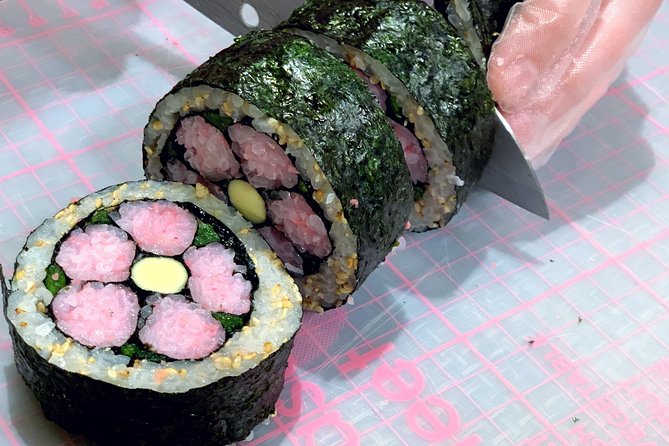
- A peach flower appears inside your roll: You assemble the sushi in sections, then reveal the picture by slicing it.
- Aya teaches in English: Her instructions are clear and patient, with Manabu helping with photographs and cleanup.
- The class is private: Only your own group takes part, making it a good choice for families or couples.
- Traditional clothing is included: Women receive a kimono, while men and children can wear other traditional garments.
- Natural colors and dietary choices are available: Plant-based food pigments, vegan options, and vegetarian options are part of the class.
- Socks are required: The lesson takes place on tatami, and you cannot enter the room barefoot.
Making a picture inside a sushi roll
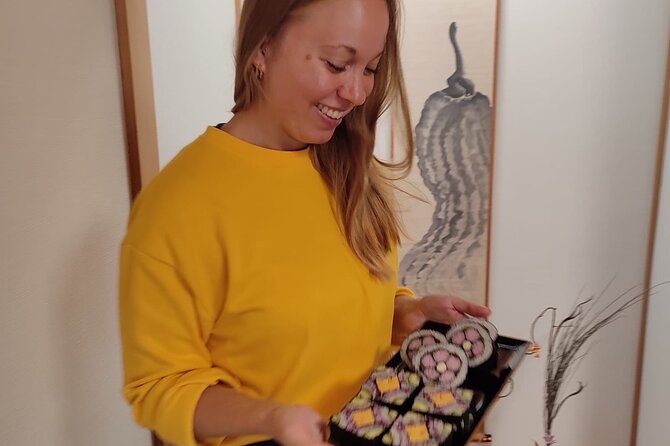
Kazarimaki means decorative or artistic sushi rolling. Instead of placing a few fillings in a single line, you construct a pattern from several small parts. When the roll is cut, those parts line up to create an image.
The planned design for this class is a peach flower. That gives you a clear goal, but it also explains why the lesson is more technical than a basic maki class. You need to measure and place the rice and fillings with care. A small shift can change the shape of the flower.
I like this type of cooking lesson because the result is both food and a souvenir. You are not just preparing lunch that disappears at the table. You are learning a Japanese presentation skill that you can demonstrate at home with family and friends.
The colors come from edible pigments extracted from plants. That detail matters if you want a more traditional approach rather than a class built around artificial food coloring. The finished roll is designed to look good when sliced, but it is still meant to be eaten.
More hands-on workshops in Kyoto:
- Kyoto: 45-Minute Tea Ceremony Lesson Experience
★ 4.3 · 2,378 reviews - Ramen Cooking Class at Ramen Factory in Kyoto
★ 5.0 · 1,937 reviews - Kyoto : Chopsticks Making Workshop in Gion with Engraving Option
★ 5.0 · 958 reviews
A private hour with Aya and Manabu
The activity begins at 4:30 pm at SAKURA Experience Japanese Culture Nijo Home, at 660 Izumicho in Nakagyo Ward. It lasts about one hour and ends at the same place.
Aya is the main instructor. She explains the process, demonstrates the steps, and helps you correct the shape as you work. Her husband, Manabu Ito, may assist with photographs, dishes, and cleanup. That division of work helps keep the lesson moving, especially when your hands are busy with rice and seaweed.
English is used during the class. The available information describes Aya’s English explanations as clear, and one participant specifically found the steps easy to follow. That is useful here because decorative sushi has more stages than an ordinary roll. You want instructions that tell you not only what to do, but also how much rice to use and where each piece should sit.
The private format is another real benefit. If you book as a family, you do not need to keep pace with strangers. You can ask for a repeat demonstration, pause for photographs, or let younger children watch from the tatami. Under-18 participants must come with a parent or guardian over 21.
Entering a traditional Kyoto home
The setting is part of the appeal. This is held in a home rather than a large commercial cooking studio. You sit on tatami, wear traditional clothing, and take part in an activity that feels connected to everyday Japanese customs.
You must bring socks. This is not a minor suggestion. Shoes come off before entering many traditional Japanese rooms, and the class does not allow bare feet on the tatami. Pack a clean pair in your day bag so you do not have to think about it at the last minute.
Women are provided with a kimono, while men and children can wear other traditional garments. The clothing adds a visual element to the activity and makes family photographs more special. It also means you should allow a little time for getting ready, even though the advertised class itself lasts only around 60 minutes.
Babies and toddlers can sit or sleep on the tatami. That makes the setting more workable for families than a formal restaurant lesson might be. Still, the class involves careful food preparation, so adults will need to keep an eye on very young children.
What happens during the 60-minute class
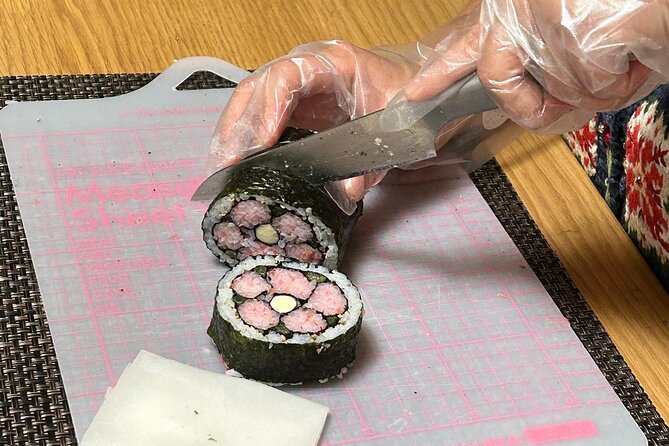
The class moves from explanation to assembly and then to the reveal. You first hear about kazarimaki and the ingredients. Aya explains how the design works and shows you how the edible colors create the flower pattern.
Next comes the practical work. You prepare the rice and arrange the colored sections that will become the petals and center of the peach flower. Seaweed and rice hold the design together. The key is even pressure. Roll too loosely and the picture may fall apart. Press too hard and the rice can lose its shape.
This is where patient teaching helps. The class is short, so you are not spending hours on complicated culinary theory. Instead, the focus stays on the one design you can complete during the visit. For a beginner, the process may feel exacting, but the instructor guides you through each stage.
Finally, you slice the roll. This is the satisfying moment. The flower only becomes clear when the cross-sections are cut. A finished roll can look quite plain from the outside, so the interior reveal gives the class its small piece of theater.
Tea or coffee and bottled water are included, along with all sushi ingredients. You do not need to shop for supplies or bring cooking equipment. The ingredient coverage also makes the listed price easier to judge, since the fee includes the lesson, food, refreshments, traditional clothing, and take-home materials.
A few more Kyoto half-days to weigh up
- PERFECT KYOTO 1-Day Bus Tour
★ 5.0 · 13,518 reviews - Kyoto: Fushimi Inari, Kinkakuji, Bamboo Grove 1 Day Bus Tour
★ 4.8 · 4,316 reviews - Kyoto: Tea Ceremony in a Traditional Tea House in Kiyomizu
★ 4.9 · 3,519 reviews - Kyoto Geisha Walking Tour: Gion District & Hidden Gems
★ 4.7 · 3,273 reviews
The value of the $93.32 price
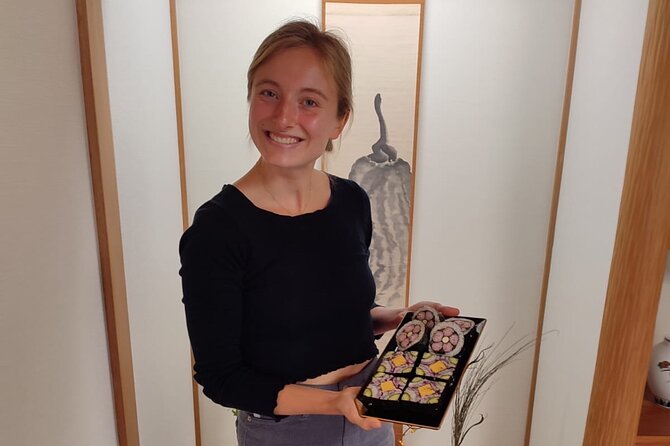
At $93.32 per person, this is not the cheapest food activity in Kyoto. You are paying for more than a plate of sushi. The price covers a private instructor, a private room, all ingredients, drinks, traditional clothing, a booklet, and a certificate.
The private format is the biggest factor in the value. If you are a couple, a family, or a small group of friends, you get direct attention rather than joining a large class. Group discounts are available, so the per-person cost may work better for a larger party.
You should book this for the teaching and cultural setting, not because it is a low-cost meal. The class lasts about an hour, so it is best viewed as a compact Kyoto activity that fits before dinner or after sightseeing. You make the sushi during the lesson, but the lasting value is the method and the memory of creating the design.
The certificate and booklet are modest items, yet they give the experience a useful finish. The booklet can help you repeat the process at home. The certificate is a fun keepsake, particularly for children and teens who enjoy collecting proof of new skills.
Why the home setting matters
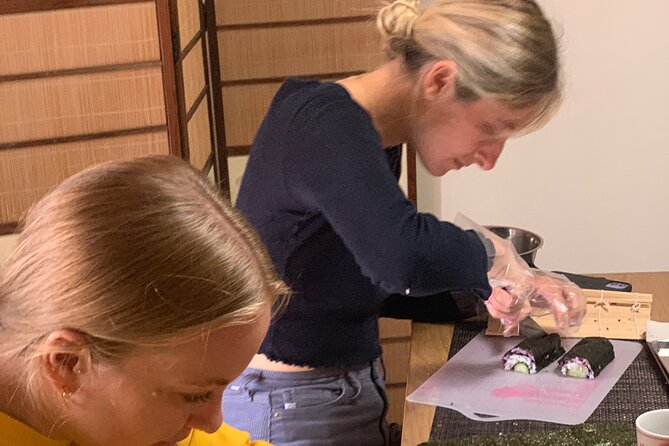
A private home changes the tone of the lesson. You are not simply moving through a commercial demonstration. You meet Aya and Manabu in a personal setting, and the clothing, tatami, and food preparation work together as one cultural activity.
The atmosphere may appeal most to people who want a social experience. One family group, including two teenage girls and grandparents, found that cooking together in a traditional home made the hour feel special. That combination of ages is worth noting. The activity can give grandparents, parents, and children one shared task rather than splitting up for separate interests.
The setting also has practical limits. A home class may feel less polished or less spacious than a purpose-built studio. One participant described the home as welcoming, while another suggested the class could suit people with some previous sushi experience better. You should be comfortable with a hands-on activity where precision matters and the instructor may expect you to follow several steps in order.
Vegan, vegetarian, and natural-color options
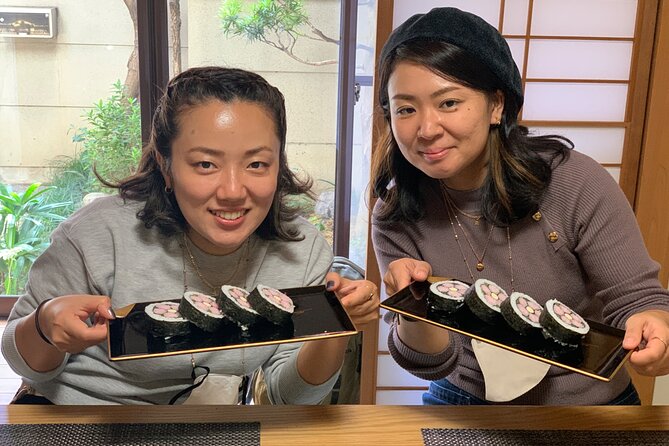
The class includes vegan and vegetarian options. That is important to confirm when booking if your group has different dietary needs, but the activity description specifically provides for both choices.
Natural plant-based pigments give the sushi its color. The purpose is not simply decoration. The color helps you see the separate parts of the picture as you assemble them. It also keeps the lesson tied to edible ingredients rather than craft materials.
You should remember that artistic sushi is still a food-preparation activity. The exact ingredients used in your particular roll are not listed, so anyone with allergies should ask the operator before attending. The supplied information confirms dietary options, but it does not provide a full allergen list.
Getting there and keeping the timing right
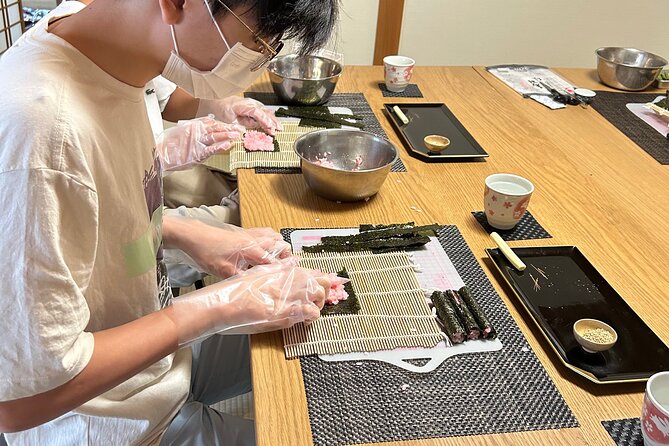
The meeting point is SAKURA Experience Japanese Culture Nijo Home at 660 Izumicho, Nakagyo Ward, Kyoto, postal code 604-0015. It is near public transportation, which makes it practical to combine with sightseeing elsewhere in central Kyoto.
The start time is 4:30 pm. Plan your route before the afternoon, and leave room for a wrong turn. If you arrive more than 15 minutes late, you cannot join the class. That rule is especially important for a private one-hour lesson because the instructor cannot easily repeat the entire opening while the rest of the group waits.
A mobile ticket is provided, and booking confirmation is sent at the time of booking. The activity ends back at the meeting point, so you can plan dinner or an evening walk from there without arranging a second pickup location.
Free cancellation is available if you cancel at least 24 hours before the local start time. Changes or cancellations made inside that 24-hour window are not accepted for a refund.
Who will enjoy this most
I would choose this class for families, couples, and small private groups who want to make something together. The private room and traditional clothing give it a shared-event feeling, and children can take part with an adult rather than simply watching a chef work.
It also suits creative people who enjoy crafts as much as food. The finished sushi is colorful and photograph-friendly, but the real activity is the careful construction. If you like precise tasks, the flower reveal should be rewarding.
This may be less suitable if you want a long cooking session or a broad tour of Japanese cuisine. You make one main design in about an hour, not a full multi-course meal. The class is also not ideal for anyone who dislikes fiddly work or wants to arrive casually after a full day of sightseeing.
Solo visitors can book, but the private pricing makes the value easier to see when shared with companions. Group discounts may help, and a small group can divide the cost while keeping the lesson personal.
Should you book the peach-flower sushi class?
Book it if you want a short, personal Kyoto activity with a clear result. You will learn a distinctive form of decorative sushi, work with natural food colors, wear traditional clothing, and take home a booklet and certificate. Aya’s patient English instruction and Manabu’s practical help add to the relaxed home setting.
Think twice if your priority is the lowest possible price or a full meal. At $93.32 per person, the class is priced as a private cultural experience rather than a quick cooking demonstration. Bring socks, arrive early, and expect the design to require attention.
For families with different ages, this is one of the better uses of an hour because everyone can work on the same project. For food lovers, it offers a skill that looks impressive without requiring a professional kitchen. If that mix of creativity, Japanese tradition, and private instruction fits your Kyoto plans, I would make the booking.
FAQ
How long does the sushi class last?
The class lasts approximately one hour, or about 60 minutes.
What time does the class start?
The listed start time is 4:30 pm.
Where does the class meet?
It meets at SAKURA Experience Japanese Culture Nijo Home, 660 Izumicho, Nakagyo Ward, Kyoto, 604-0015, Japan. The activity ends at the same meeting point.
Do I need to bring socks?
Yes. Socks are required because the class takes place in a tatami room, and bare feet are not permitted.
Can children attend the class?
Yes. Participants under 18 must come with a parent or guardian over 21. Babies and toddlers can sit or sleep on the tatami.
Is the class private, and are dietary options available?
Yes. Only your group participates in the private class. Vegan and vegetarian options are available, and the sushi uses natural food colors made from plants.
Just added around Kyoto
- Kyoto: Zen Meditation at a Private Temple with a Monk★ 5.0 · 25 reviews
- Kyoto: Gion Geisha District & Sake-in-Hand Walking Tour★ 5.0 · 37 reviews
- Private Pewter Sake Cup Experience with a Kyoto Artisan★ 5.0 · 31 reviews
- Your Private Vacation Photography Session In Kyoto★ 5.0 · 110 reviews
- Private Guided Traditional Buddhist Cooking in Japan★ 5.0 · 16 reviews
- Kyoto Wagashi(Japanese sweets) Cooking Class near Fushimiinari★ 5.0 · 60 reviews
- Traditional Japanese Music show & Experience Tour in Kyoto★ 5.0 · 57 reviews
- Kyoto:Family-Friendly Kimono & Yukata Experience at WARGO★ 5.0 · 147 reviews
Kyoto Tours, compared.


Fushimi Inari, Kinkakuji, Bamboo Grove 1 Day Bus Tour
Read our review →
Tea Ceremony in a Traditional Tea House in Kiyomizu
Read our review →
Kyoto Geisha Walking Tour: Gion District & Hidden Gems
Read our review →

Gion Magical Night Walking Tour with Geisha Trivia
Read our review →

Gion Geisha District Walking Tour – Stories of Geisha
Read our review →Browse the lists this tour appears in