

Reviewed · TOKYO TOURS
Sake & Food Pairing with Sake Professional
Sake can be far more varied than the hot, strong drink many visitors first encounter. This 150-minute class at Ushinobi Sake Bar lets you taste five different styles from across Japan, then pair them with Japanese snacks while an English-speaking sake professional explains what you are drinking.
I like the small group of no more than 10, which gives you room to ask questions and compare your reactions with other sake fans. I also like the tasting chart: it turns a pleasant afternoon into a useful lesson you can carry into your next restaurant or bottle shop.
The main drawback is simple: the food is only snacks, not a full meal. Eat beforehand, especially since you will taste five sakes over two and a half hours.
Key points at a glance
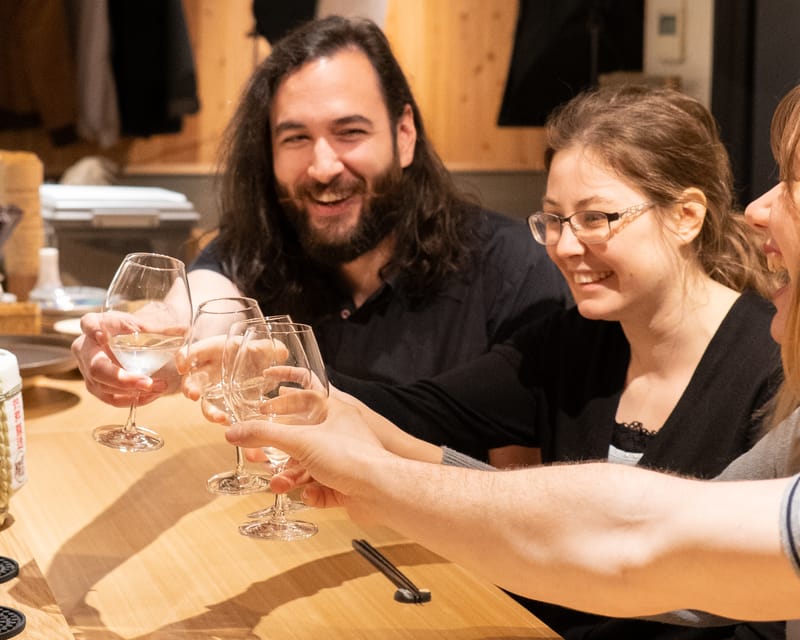
- Five sakes from across Japan: Compare different styles instead of judging sake from one familiar bottle.
- Your own tasting chart: Record what you notice and learn which flavors suit you.
- English-speaking sake professionals: Guides such as Tadashi, Max, Joe, and Andrea have led lively, accessible sessions.
- Japanese snack pairings: Small bites show how food can change the way a sake tastes.
- Ten-person maximum: The format allows questions and can feel quite personal when the group is small.
- Shinjuku meeting point: Ushinobi Sake Bar is on the second floor near Okubo Station, but the entrance takes a little care to find.
Why this sake class changes your first impression
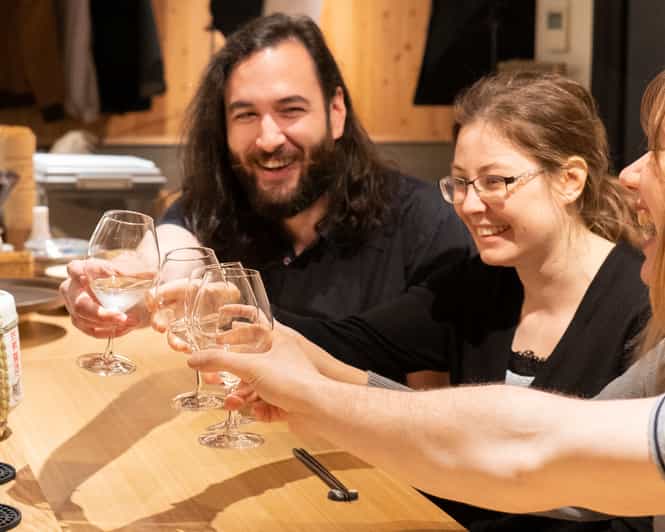
The smartest thing about this experience is its range. Many people arrive with a single idea of sake: clear, potent, and best served hot. Five carefully chosen examples can quickly replace that narrow picture with something more useful. You may find sake that is dry, fragrant, light, smooth, or fuller in flavor.
That matters because sake is not one fixed taste. Modern breweries are making varied styles, and younger family members are now taking over some long-established businesses. The class uses that changing sake scene to show you why a bottle from one brewery can taste completely different from another.
You are not simply handed five drinks and left to guess. The guide explains the breweries and helps you consider what is in the glass. You can note how each sake smells, tastes, and works with food, then build a personal reference chart.
I like this approach for a first lesson because it keeps the information practical. You do not need to memorize Japanese terms or pretend to detect flavors you cannot find. Instead, you can decide what you like and learn how to describe it well enough to order with confidence later.
More drinks-led nights in Tokyo:
- Tokyo Bar Hopping Tour in Shinjuku (All-You-Can-Drink + Dinner)
★ 5.0 · 3,587 reviews - Best of Shinjuku: Izakaya Food Tour (4 Stops, 14+ Tastings)
★ 5.0 · 1,863 reviews - Tokyo: Shinjuku Local Bar and Izakaya Guided Walking Tour
★ 4.9 · 1,794 reviews
Arriving at Ushinobi Sake Bar in Shinjuku
The meeting point is Ushinobi Sake Bar, on the second floor, near Okubo Station, station code JB09, at the South Exit. You enter the venue directly on the second floor, and transport to the meeting point is not included.
Give yourself time to locate the entrance. The access point is somewhat hidden, so checking the supplied venue directions before leaving your hotel is sensible. This is one of those small Tokyo details that can turn a relaxed start into a hurried one if you wait until the last minute.
The location also puts you in the Okubo and Shinjuku area, a useful part of Tokyo for an evening out. The experience itself does not include additional sightseeing or a transfer, so plan your route separately and do not treat the class as a wider city tour.
Once inside, the bar setting should suit the subject. You are there to taste and discuss, not sit through a formal lecture in a large room. The group limit is 10, though a smaller turnout can make the session feel almost private.
One previous session had only two people, creating a particularly personal lesson. You should not count on that exact group size, but the ten-person limit keeps the format more intimate than a large tasting event.
The opening lesson: sake beyond one familiar style
The session begins with an introduction to sake and the ideas you need for tasting. If your experience is limited, the guide will help you understand what to look for instead of assuming you already know the vocabulary.
This is where an enthusiastic host makes a real difference. Tadashi has been praised for clear English and strong sake expertise, while Max has been described as a friendly host with a firm grasp of the subject. Andrea has also led sessions that combine sake teaching with an affectionate view of Tokyo.
Guides can change, so those names are examples rather than a guarantee for your date. The important point is the teaching style: the session is designed to be accessible, lively, and useful for beginners, while still giving sake fans new comparisons to think about.
You will hear about individual breweries as you taste. That brewery background adds context without turning the class into a history seminar. You begin to see that sake reflects choices made by different producers, not just a single national recipe.
The guide also helps separate personal taste from quality. You may prefer a sake that is not the most complex one on the table, and that is fine. The value of the lesson is learning how to identify your own preference.
Five tastings from across Japan
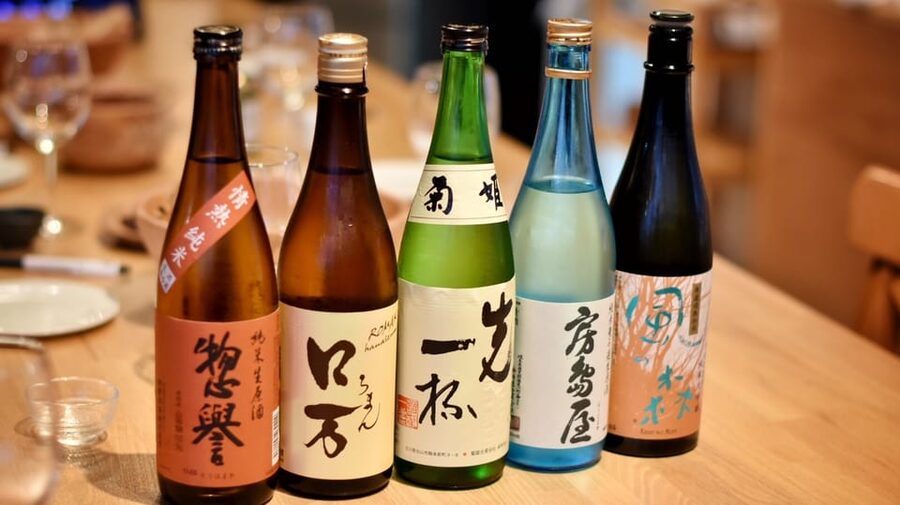
The core of the experience is the flight of five sakes. The precise brands and order are not specified in advance, so you should expect a selection rather than a fixed bottle list.
That flexibility can be useful. The guide can present different examples and respond to the group’s level, while you get a broader sense of how much variety exists across Japanese breweries. You are tasting enough samples to compare, but not so many that every glass becomes a blur.
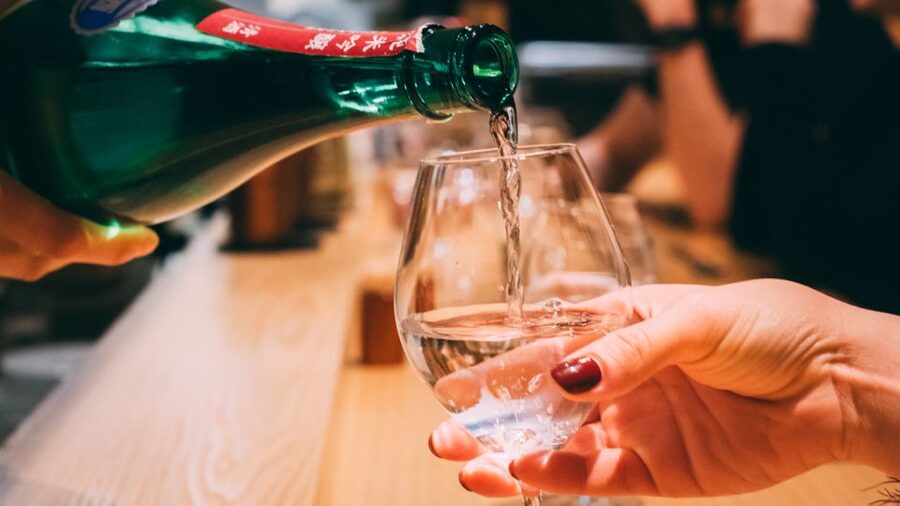
Take your time with each pour. Look at the appearance, notice the aroma, taste it on its own, and then try it with the accompanying snack. You do not need to be an expert. A simple note such as light, sweet, dry, fragrant, or not for me is enough to begin.
The tasting chart gives this process some structure. It can help you remember which sake you preferred and why. That is especially handy after the class, when you are standing in front of a restaurant menu or a shop shelf with many unfamiliar labels.
Five tastings also make this more useful than trying one sake at dinner. One glass can tell you what that glass tastes like. A set of five shows you how broad the category can be.
More food tours in Tokyo:
- Tokyo: Shinjuku Food Tour (13 Dishes at 4 Local Eateries)
★ 5.0 · 6,603 reviews - Tokyo Tsukiji Fish Market Food and Culture Walking Tour
★ 5.0 · 3,184 reviews - Tokyo: Shinjuku Food Tour (15 Dishes and 4 Eateries)
★ 4.9 · 2,033 reviews - Tokyo: Tsukiji Fish Market Food and Walking tour
★ 5.0 · 1,724 reviews
Pairing sake with Japanese snacks
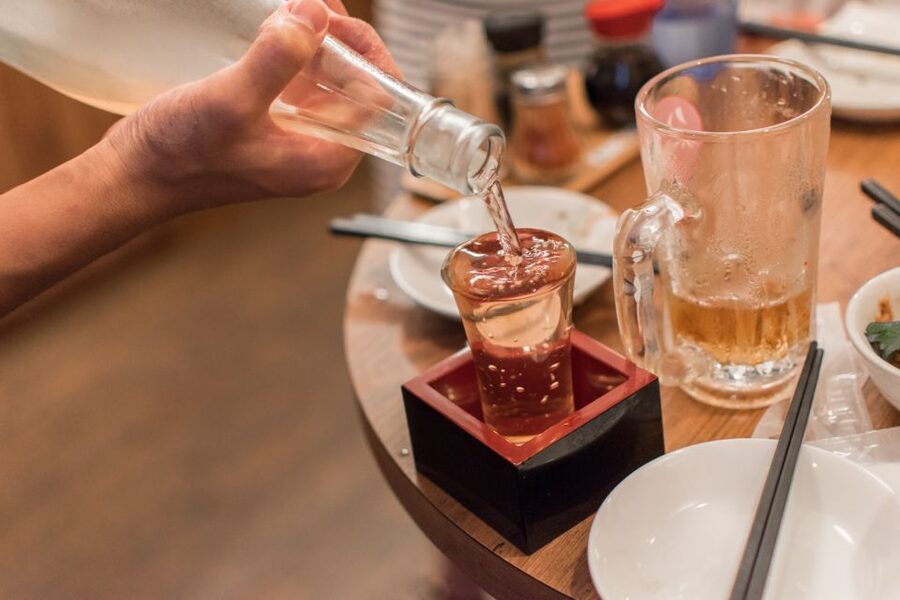
The food pairing is not a full meal. It consists of local Japanese snacks chosen to accompany the sake, so plan to eat before the class if you need substantial food.
Still, the snacks have an important job. Food changes the balance of a drink, and a sake that seems sharp or plain by itself may work better with a salty, savory, or otherwise complementary bite. The pairing lets you test that idea immediately rather than hearing it explained in theory.
I would approach the food as part of the lesson, not as lunch. Take a sip before the snack, taste the food, then try the sake again. Notice what changes. Does the drink seem softer, sweeter, drier, or simply more pleasant?
Dietary restrictions should be shared with the provider in advance. The available information does not promise a particular substitute, so early notice is the sensible choice.
The light food also has a practical purpose. Five sake samples can add up, and the right meal beforehand will help you focus on the flavors rather than the alcohol. One participant specifically advised eating before arriving, and that is good advice.
Building a tasting chart you can actually use
The tasting chart is one of the strongest features for anyone new to sake. It gives you a record of the session instead of leaving you with a vague memory that one drink was good and another was not.
Use it to mark simple impressions. You might record whether a sake feels dry or sweet, delicate or bold, aromatic or restrained, and whether you prefer it alone or with food.
Do not worry about finding the perfect words. The chart is not an exam. It is a tool for noticing patterns in your own taste.
The guide can also connect those impressions with the brewery behind each sample. That helps you move from personal reaction to practical selection. If you know you like a fragrant, lighter sake, you have a better starting point the next time you choose a bottle.
This makes the class useful beyond Tokyo. You are not only sampling Japanese drinks during a holiday. You are learning a method for comparing them later, at home or on a future visit to Japan.
The English-speaking guides and the tone of the class
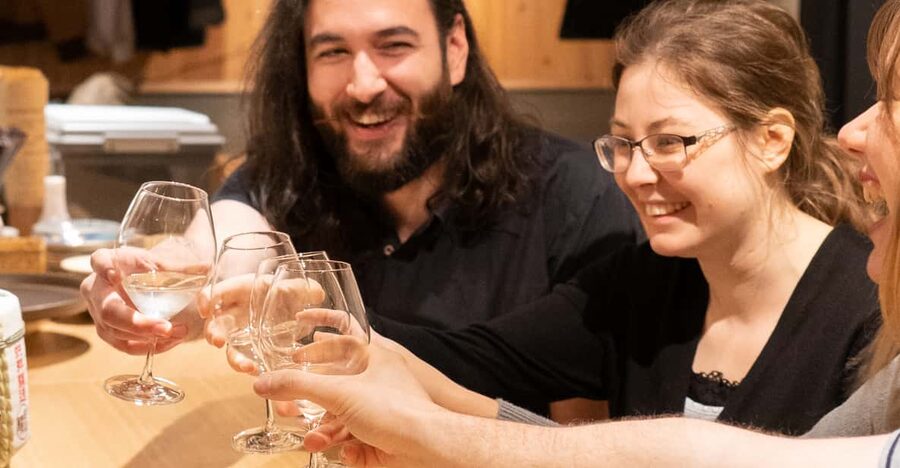
The activity is conducted in English, which is important for a subject where small differences in taste and production can otherwise be hard to follow. The strongest guide feedback focuses on clear explanations, energy, and an ability to make the class fun.
Tadashi has been singled out for both his English and sake knowledge. Joe helped one couple with local recommendations as well as the tasting, and Max was praised for creating a friendly session. Andrea has been described as bringing enthusiasm for both sake and Tokyo to the afternoon.
Again, your guide may be someone else. The host is not simply pouring drinks. You should expect questions, explanations, and conversation around the samples.
The small group helps here. A group of up to 10 is large enough for varied opinions but small enough for direct questions. If you are shy about asking what a term means, this is less intimidating than a formal class packed with people.
A private-feeling session is possible when attendance is low. If the group fills, you will have less individual attention, but the format remains limited rather than crowded.
Local tips beyond the tasting table
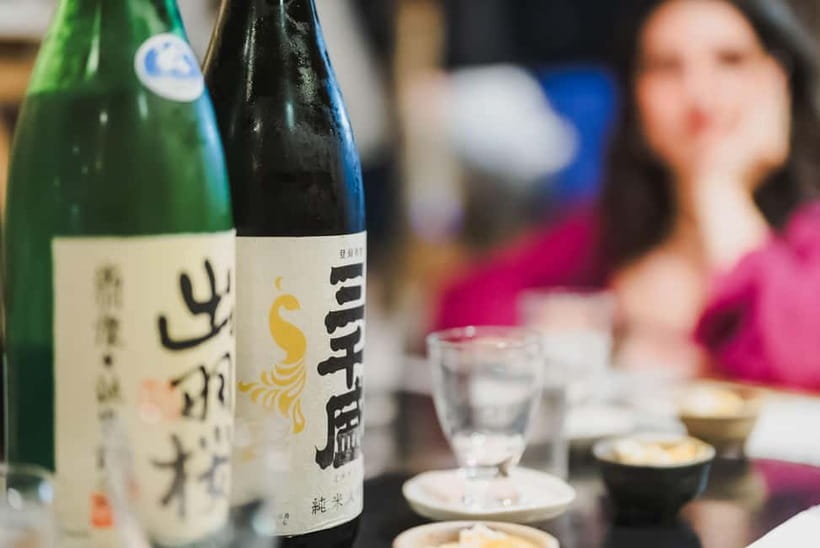
The experience also gives you a chance to meet Japanese sake lovers in Tokyo. That social element is easy to overlook when comparing prices, but it adds value if you want more than a quick tourist explanation.
Conversation can help you understand how sake fits into local eating and drinking habits. The available information does not promise a separate neighborhood walk or a detailed restaurant list, so keep expectations focused. You may receive useful Tokyo suggestions from the guide, as Joe provided to one couple, but this is chiefly a sake class.
I like the chance to ask direct questions while the subject is in front of you. You can ask how to choose a sake, what to look for on a menu, or which styles might suit your taste. The answers are more useful after you have tasted several examples yourself.
This is also a good activity for couples or friends with different levels of interest. A committed sake fan can compare fine distinctions, while a beginner can find an approachable style and discover that sake is not automatically harsh.
Is $69 a fair price?
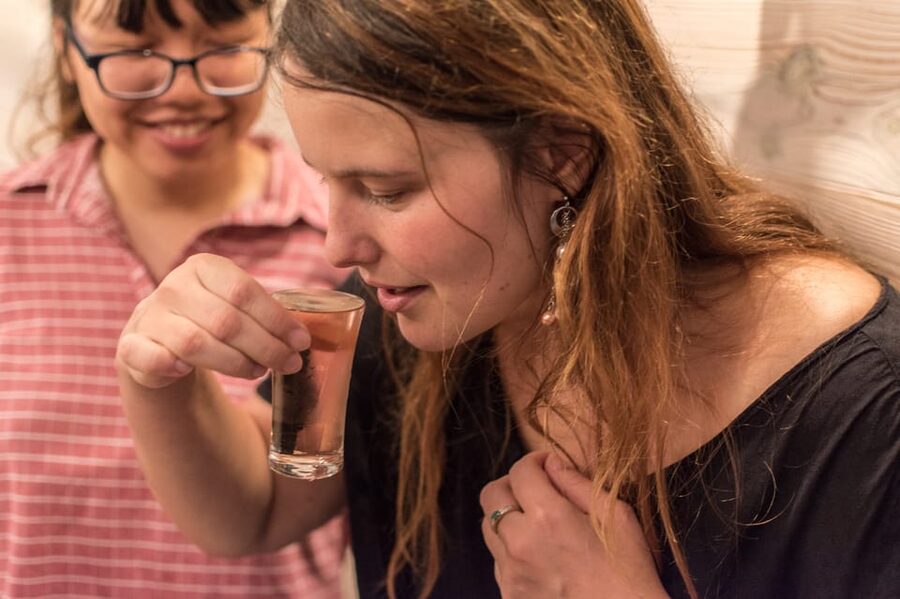
At $69 per person, the class sits above the cost of simply ordering one drink at a bar. You are paying for five tastings, Japanese snacks, an English-speaking guide, instruction, and two and a half hours in a small group.
The value depends on how much you want to learn. If you only want a single sake with dinner, this is more time and money than necessary. If you want to understand the category and make better choices during the rest of your trip, the tasting chart and guided comparisons make the price easier to justify.
The five samples are particularly important. You are not paying for quantity alone, but for contrast. Tasting different types side by side gives you information that a lone restaurant pour cannot provide.
The snacks add to the lesson, but they do not replace a meal. Budget for dinner or eat beforehand. That extra cost is worth planning for, especially if you are sensitive to alcohol or arrive hungry.
The class also offers something difficult to get from a guidebook: a chance to ask a sake professional about your own reactions. For many people, that personal exchange is where the price begins to make sense.
Timing, group size, and sensible planning
The activity lasts 150 minutes, so it takes a substantial part of an afternoon or evening. Check the available starting times when you book and avoid placing an important reservation too close afterward.
Transport is not included. Use the Okubo South Exit as your starting point, then allow extra time for the hidden entrance and the second-floor location.
The experience is not suitable for pregnant women. Everyone should also keep the alcohol content in mind. The purpose is tasting and learning, not rushing from one sample to the next.
Free cancellation is available up to 24 hours before the start for a full refund. You can also reserve now and pay later, which helps if your Tokyo schedule is still moving around.
Dietary restrictions should be sent to the provider in advance. Since the food is made up of Japanese snacks rather than a full meal, ask early if you need the pairing adjusted.
Who will enjoy this most?
This is a strong choice for a first sake class, especially if your experience at home is limited. The range of styles, clear English instruction, and tasting chart give you a firm starting point without requiring specialist knowledge.
It also suits a sake fan who wants to compare Japanese examples and hear about breweries from someone who works with the subject. The five samples may challenge your existing preferences, which is part of the fun.
Couples and small friend groups should find the format easy to enjoy. It can also work for someone who does not think they like sake, since the point is to try styles rather than accept one fixed idea of the drink.
It is less suitable if you want a full meal, a brewery visit, or a broad sightseeing tour of Tokyo. None of those are the purpose here. You come to Ushinobi Sake Bar, taste five sakes, learn how to compare them, and leave with a better sense of what to order next.
Should you book the Shinjuku sake pairing?
Book it if you want a focused, friendly introduction to Japanese sake and you value learning by comparison. The five samples, personal tasting chart, snack pairings, and English-speaking guide give you practical knowledge you can use well after the class.
Think twice if you are looking for dinner, a brewery tour, or a short activity that takes less than an hour. Eat first, allow time to find the second-floor entrance, and keep your evening schedule relaxed.
For most curious drinkers, $69 is a reasonable price for 150 minutes of guided tasting in a group capped at 10. The best reason to choose it is not simply the alcohol. It is the chance to replace a fuzzy first impression with a clear idea of what you actually like.
FAQ
Where does the sake tasting take place?
It takes place at Ushinobi Sake Bar in Shinjuku. The closest station is Okubo Station, JB09, South Exit. Enter the venue directly on the second floor.
How long does the experience last?
The session lasts 150 minutes.
How many types of sake will I taste?
You will taste five different types of sake from across Japan.
Is food included?
Japanese snacks are included, but they are not a full meal. Eating before the experience is recommended.
Is the activity held in English?
Yes. The live tour guide speaks English, and the activity language is English.
How large is the group?
The group is limited to 10 participants. Some sessions may be smaller.
Can I cancel or pay later?
You can cancel up to 24 hours in advance for a full refund. Reserve now and pay later is also available.
More Sake Tasting in Tokyo
- Ramen and Sushi Cooking Class with Sake Pairing Set in Tokyo
★ 5.0 · 291 reviews - Sake Tasting Masterclass in Shinjuku (8+ Varieties with a Pro)
★ 5.0 · 271 reviews - Sake Omakase in Tokyo: Guided Tasting by Certified Sommeliers
★ 5.0 · 239 reviews - Tokyo: Sushi and Ramen Cooking Class with Sake Pairing Set
★ 5.0 · 81 reviews
Just added around Tokyo
- Private Transfer from Narita Airport to Yokohama Port and City★ 4.5 · 17 reviews
- Private Arrival Transfer : Narita International Airport to Central Tokyo City★ 4.5 · 12 reviews
- Narita Airport(NRT): Private Transfer to Tokyo/Yokohama 1-9pax★ 5.0 · 47 reviews
- [Narita Airport Terminals 1, 2] 40-60km Sawara Itako Historic Bike Tour★ 5.0 · 13 reviews
- 3 Day Japan Highlights Tour: Tokyo, Mt.Fuji, Nara, Kyoto, Osaka★ 5.0 · 22 reviews
- Small Town in the Big City: Tasting Tokyo’s Kichijoji★ 5.0 · 195 reviews
- Small Town in the Big City: Tasting Tokyo’s Kichijoji★ 5.0 · 16 reviews
- The 10 Tastings of Tokyo With Locals: Private Street Food Tour★ 5.0 · 48 reviews
Tokyo Tours, compared.

Mt Fuji and Hakone 1-Day Bus Tour Return by Bullet Train
Read our review →

teamLab Planets TOKYO Digital Art Museum Entry Ticket
Read our review →
Mt Fuji & Hakone Cruise, Drum Show Bullet Train 1 Day from Tokyo
Read our review →
Sumo Show Experience with Chicken Hot Pot and a Photo
Read our review →
Shinjuku Food Tour (13 Dishes at 4 Local Eateries)
Read our review →
Tokyo Mt Fuji 5th St & Hakone Cruise Bus Tour w/Bullet Train
Read our review →
Flagship 2-Hours Official Street Go-Kart Tour – Tokyo Bay Shop
Read our review →Browse the lists this tour appears in