
Reviewed · TOKYO TOURS
Tokyo: Sushi and Ramen Cooking Class with Sake Pairing Set
In three hours, you learn two of Japan’s most beloved foods in one small Tokyo kitchen: nigiri sushi and ramen with chashu pork. The class mixes cooking, food history, sake tasting, and a sit-down meal, so it feels like more than a standard demonstration.
I like the four-person setting, which gives you room to ask questions and get hands-on help. I also like the practical take-home material: recipes, ingredient substitutions, and chopsticks you can use after Japan. The main consideration is that the class is not suitable for vegans or vegetarians, and some cooking steps may be prepared in advance to fit the three-hour schedule.
Key points before you book
- Make two Japanese staples in one class: Learn ramen broth, chashu pork, and hand-formed nigiri sushi rather than focusing on just one dish.
- Expect close instruction: The usual small-group limit is about eight, with some sessions limited to roughly four participants.
- Taste three sakes: A certified sake sommelier selects the pairings and explains the drinks as part of the meal.
- Get useful home-cooking help: The recipe booklet covers ramen, sushi, and gyoza, along with substitution tips for cooking outside Japan.
- Meet in easy-to-reach Tsukishima: The studio is a five-minute walk from Exit 4 of Tsukishima Station.
- Plan for a relaxed afternoon: You have time to cook, eat, talk, and sample sake without feeling pushed through the meal.
Why this class works so well in Tokyo
Tokyo offers endless chances to eat sushi and ramen. The point of this class is to show you what goes into the bowl and onto the plate. You handle ingredients, form sushi, learn the logic behind the dishes, and then sit down to eat the results.
That combination makes the class useful for first-time cooks and experienced home chefs alike. You do not need to arrive with knife skills or sushi-making confidence. The English-speaking instructors explain each step and help you correct your technique as you go.
The food also comes with cultural context. You learn about the origins of sushi and ramen, not just a list of ingredients. That background matters because these dishes are not fixed recipes with one correct version. The instructors can explain how traditional ideas fit with practical home cooking and which ingredients can be replaced overseas.
The mood is friendly rather than formal. Instructors named in class feedback include Sato, Haruko, Risa, Alex, Alisa, Misa, and Luna, though the exact team may vary by session. Their teaching style is described as warm, patient, and interactive, with occasional group activities such as a pop quiz.
More cooking classes in Tokyo:
- Ramen & Gyoza Cooking Class in Tokyo with Local Supermarket Visit
★ 5.0 · 823 reviews - Tokyo: Easy Ramen Cooking Experience in Kabukicho, Shinjuku
★ 4.6 · 321 reviews - Ramen and Sushi Cooking Class with Sake Pairing Set in Tokyo
★ 5.0 · 291 reviews
Arriving in Tsukishima
The class takes place on the second floor of HAUS Tsukishima at 2-13-5 Tsukuda, Chuo-ku. Tsukishima Station is the simplest public transport option: Exit 4 is about a five-minute walk away.
This location works nicely in a Tokyo itinerary because it is close to several central sights. By taxi, the studio is about six minutes from Tsukiji Fish Market, nine minutes from Ginza, and ten minutes from Tokyo Station. It is also about eleven minutes from teamLab Planets and thirty minutes from Shinjuku, though traffic can change those times.
I would arrive at least five minutes early. The class takes place in a private cooking venue rather than a large tourist facility, so giving yourself time to find the building makes the start less rushed. If you use a taxi, show the driver this Japanese address:
東京都中央区佃2-13-5 HAUS Tsukishima 2階
Wear clothes you do not mind getting a little dirty. Cooking ramen and sushi is not an outdoor adventure, but spills and splashes are possible.
Starting with ramen, broth, and chashu
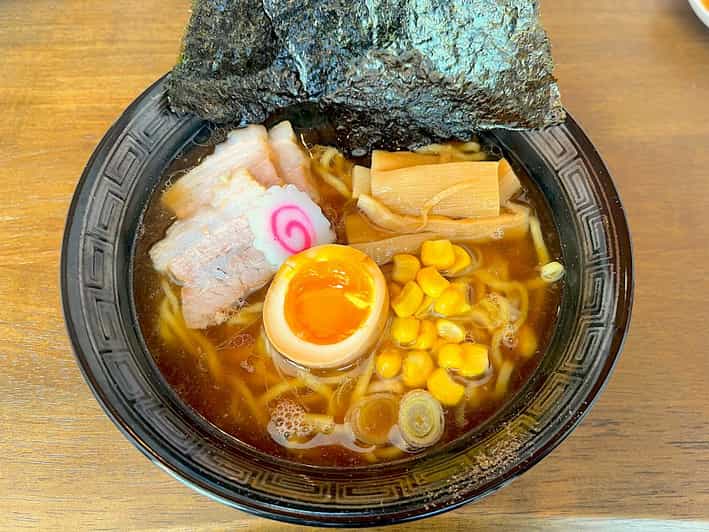
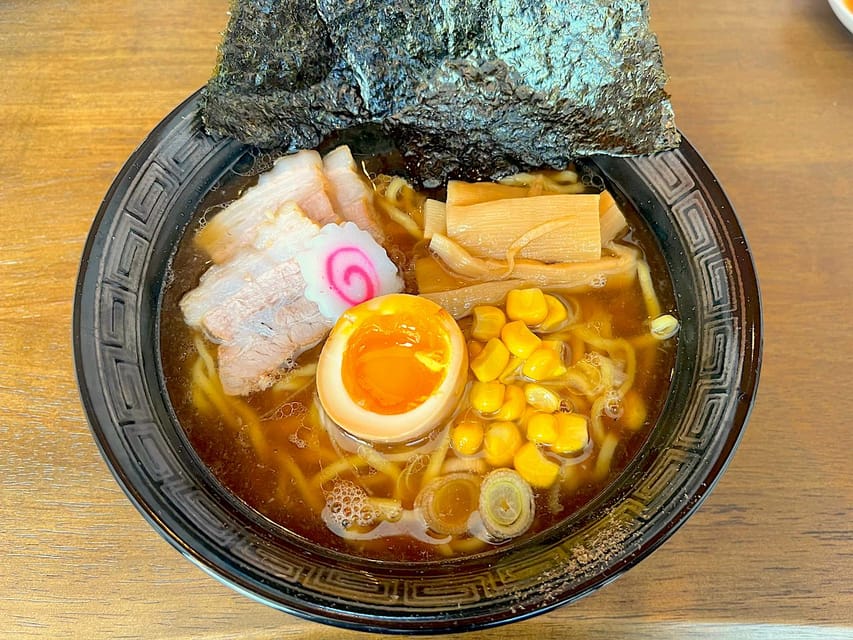
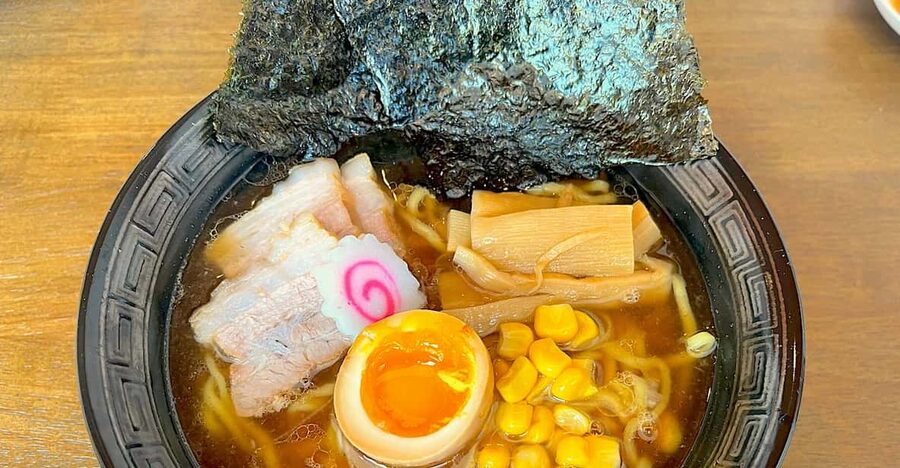
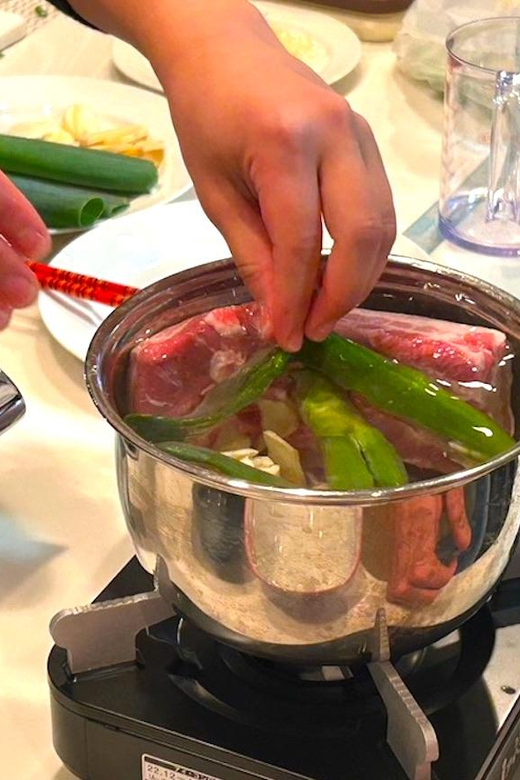
The ramen portion is the more involved half of the class. You learn how to build the soup and prepare chashu, the tender pork belly commonly served with ramen.
This is where the class earns much of its value. A bowl of ramen can look simple, but its character comes from several parts working together: broth, seasoning, noodles, pork, and toppings. Making those elements yourself helps you understand why restaurant ramen tastes so different from a packet at home.
Some preparation may be done ahead of time to keep the class within three hours. That is worth knowing if you expect to make every element from raw ingredients from start to finish. It does not mean the session is a mere demonstration. You still get hands-on practice and guidance, but the schedule is arranged so that you can also make sushi, taste sake, and enjoy a proper meal.
The chashu lesson is especially useful because pork belly takes time and care. You learn the basic method and how it fits into the finished bowl. The goal is not simply to watch an instructor produce a perfect dish. It is to leave with enough understanding to try the recipe in your own kitchen.
Fresh ingredients are an important part of the meal. The class has used produce and seafood sourced from Toyosu Market, Tokyo’s famous wholesale market, which helps explain the strong comments about ingredient quality. Exact ingredients can vary, but the emphasis is on a fresh, carefully prepared meal rather than a shortcut tasting plate.
Forming nigiri sushi by hand
The sushi lesson focuses on nigiri, the compact form made by placing a piece of fish or another topping over hand-shaped rice. You work with the supplied ingredients and tools, then practice forming pieces that hold together without becoming dense.
Nigiri looks easy until you try to shape it. Too much pressure makes the rice heavy. Too little leaves it loose. A small-group class is helpful here because the instructor can watch your hands and offer quick corrections.
You also hear about sushi’s origins and its place in Japanese food culture. That context gives the technique more meaning. You are not simply copying a restaurant chef. You are learning why rice, seasoning, shape, and topping need to work together.
The sushi and ramen sections are timed together so that the food is ready for the meal at a sensible point. You should expect a mix of instruction, practice, and preparation rather than three straight hours of cooking. That balance is good for a holiday activity, especially if you want to eat comfortably instead of racing from one recipe to the next.
More drinks-led nights in Tokyo:
- Tokyo Bar Hopping Tour in Shinjuku (All-You-Can-Drink + Dinner)
★ 5.0 · 3,587 reviews - Best of Shinjuku: Izakaya Food Tour (4 Stops, 14+ Tastings)
★ 5.0 · 1,863 reviews - Tokyo: Shinjuku Local Bar and Izakaya Guided Walking Tour
★ 4.9 · 1,794 reviews - Shibuya Meltdown Nightlife Tour: All-You-Can-Drink Bar Hopping
★ 5.0 · 1,058 reviews
Sake tasting with a sommelier
The sake pairing set includes three premium Japanese sakes selected by a certified sake sommelier. This is not just an extra drink poured alongside lunch. It gives you a chance to compare different styles and see how sake works with salty, savory foods.
The tasting adds a pleasant cultural layer to the class. The instructors can explain the drinks and help you notice differences that may be hard to identify on your own. One member of the teaching team comes from a sake-brewing family, adding a personal connection to the subject.
You should remember that this is a cooking class with sake, not a dedicated brewery tour or a full sake seminar. The emphasis stays on the food. Still, three selections make the tasting feel substantial, and the pairing is a good match for ramen and sushi.
Alcohol is not the only part of the social atmosphere. Some sessions have also offered beer and other drinks, but the clearly stated pairing is the three sakes. If you do not drink alcohol, check the available alternatives when booking.
Eating the meal you prepared
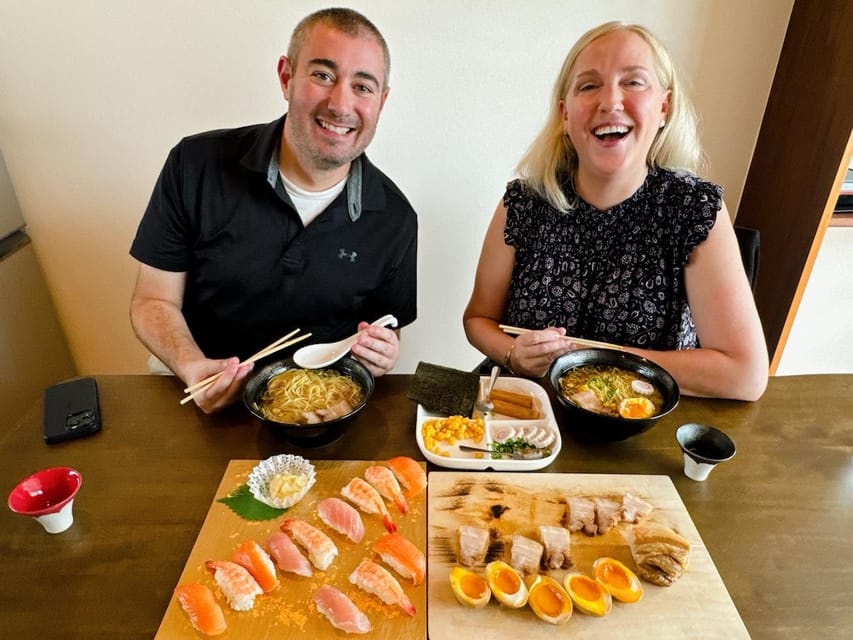
The best part comes after the active cooking: you sit down and eat your ramen and nigiri sushi. The meal is described as plentiful, and some portions may be more than you can finish, particularly when drinks and several dishes are included.
This finish gives the class a satisfying rhythm. You work with your hands, learn the background, and then get time to talk over the food. It does not feel like a rushed cooking demonstration where everyone takes one bite and leaves.
The meal is also a useful test of what you learned. You can compare your sushi shape, taste the broth, and ask final questions while the methods are still fresh in your mind. For couples, families, and solo participants, that shared meal is often the most social part of the afternoon.
The setting is cozy and clean rather than grand. That is a plus for anyone who prefers direct contact with the instructors, though it may feel compact if you are expecting a spacious culinary school. The small room is part of the appeal, but you should be comfortable working close to other participants.
Recipes and chopsticks for home
You receive a professionally prepared recipe booklet with instructions for ramen, sushi, and gyoza. The gyoza recipe is useful even though the main class focus is ramen and sushi. Ingredient substitution advice is another strong feature, since Japanese pantry items can be hard to find outside Japan.
This practical material makes the $129 price easier to justify. You are not paying only for the food you eat in Tokyo. You are also paying for guided instruction, ingredients, cultural explanation, sake tasting, and a reference you can use later.
The souvenir chopsticks are a small but welcome extra. They are more useful than a disposable keepsake, and they connect naturally to the meal you have just prepared. I would not book the class for the souvenir alone, but it rounds out the package.
Is $129 a fair price?

At $129 per person, this is not a bargain meal. Tokyo has excellent ramen and sushi for far less, and you could eat both dishes without spending anything close to this amount.
The comparison changes when you treat it as a three-hour activity. The price includes the sushi-making experience, ramen instruction, ingredients, an English-speaking teacher, three sake pairings, the recipe booklet, and chopsticks. You also get a meal and personal help rather than simply watching a chef work.
The small-group format is the key value. A class capped at eight is already more personal than a large food workshop, while a session with about four people can feel almost private. Some bookings may have only two participants, which creates an unusually high level of attention, but you should not assume every date will be that small.
I think the price is fair for people who want an activity, not just dinner. It is less compelling if your main goal is to eat the cheapest or most famous ramen in Tokyo. For a couple, a family, or a solo visitor looking for a social afternoon with a useful skill attached, the cost is easier to defend.
Who should take this class?
I would recommend it to first-time visitors who want a clear introduction to Japanese food culture. It suits people who love both sushi and ramen and do not want to choose between them.
Families can also do well here. The instructors are used to helping beginners, and the hands-on format gives children and adults something active to do together. Parents should still consider the three-hour length and the fact that the class is not designed for vegan or vegetarian diets.
Couples may find it a good anniversary or rainy-day activity. You get a shared task, a meal, and drinks without needing to plan each part separately. Solo visitors can fit in comfortably too, particularly when the group is small.
I would be more cautious if you have strict dietary restrictions beyond the stated vegetarian limitation. The available information does not spell out allergy procedures, substitutions, or every ingredient used, so contact the provider before booking if that matters to you.
This is also a good choice for home cooks who want technique rather than a sightseeing stop. The class will not turn you into a sushi chef in three hours, but it can give you a solid starting point and the confidence to try the recipes later.
Practical booking advice
The class lasts three hours, with starting times depending on availability. Build in time before and after if you are connecting it to another Tokyo activity. Tsukishima is well placed for Ginza, Tsukiji, Tokyo Station, and teamLab Planets, but do not rely too heavily on taxi estimates during busy traffic.
Hotel pickup and drop-off are not included. You make your own way to the studio, which is simple by station or taxi.
The booking terms are flexible: you can cancel up to twenty-four hours before the start for a full refund, and the reserve-now, pay-later option lets you hold a place without paying immediately. That is helpful when your Tokyo schedule is still changing.
Should you book it?
Book this class if you want to do more than take pictures of Japanese food. You will learn the basics of ramen broth, chashu, and nigiri sushi, taste three sakes, hear the stories behind the dishes, and leave with recipes you can actually try at home.
Skip it if you are vegan or vegetarian, dislike small cooking spaces, or would rather spend $129 on several restaurant meals. For everyone else, especially couples, families, and curious first-time cooks, this is a strong use of three hours in Tokyo. The intimate setting, generous meal, patient instruction, and useful take-home material make it a well-rounded food experience rather than a simple lunch with a lesson attached.
FAQ
How long does the Tokyo sushi and ramen class last?
The class lasts three hours.
Where does the cooking class take place?
It takes place on the second floor of HAUS Tsukishima, at 2-13-5 Tsukuda, Chuo-ku, Tokyo 104-0051.
How far is the venue from Tsukishima Station?
The venue is about a five-minute walk from Exit 4 of Tsukishima Station, station code Y21.
What foods do you learn to prepare?
You learn to make ramen, ramen soup, chashu pork, and nigiri sushi. The recipe booklet also includes instructions for gyoza.
Is the class taught in English?
Yes. The instructors speak English.
How many people are in the class?
The activity is a small-group class limited to eight participants. Some sessions may have about four people.
Is sake included?
Yes. The class includes three premium Japanese sakes selected by a certified sake sommelier.
Are hotel pickup and drop-off included?
No. You must make your own way to and from the cooking venue.
Can vegans or vegetarians take the class?
No. The class is not suitable for vegans or vegetarians.
More Workshops in Tokyo
- Sushi Making Tokyo Roll and Authentic Japanese Sushi Class
★ 5.0 · 3,971 reviews - Tokyo: Roll and Authentic Sushi Making Class in Asakusa
★ 4.9 · 1,957 reviews - Tokyo Shinjuku Chopsticks Making Class
★ 5.0 · 1,763 reviews - Tokyo: Sushi Making Class in a Happi Coat near a Famous Spot
★ 4.9 · 1,377 reviews
More Food Tours in Tokyo
- Tokyo: Shinjuku Food Tour (13 Dishes at 4 Local Eateries)
★ 5.0 · 6,603 reviews - Tokyo Tsukiji Fish Market Food and Culture Walking Tour
★ 5.0 · 3,184 reviews - Tokyo: Shinjuku Food Tour (15 Dishes and 4 Eateries)
★ 4.9 · 2,033 reviews - Tokyo: Tsukiji Fish Market Food and Walking tour
★ 5.0 · 1,724 reviews
Just added around Tokyo
- Private Arrival Transfer : Narita International Airport to Central Tokyo City★ 4.5 · 12 reviews
- Narita Airport(NRT): Private Transfer to Tokyo/Yokohama 1-9pax★ 5.0 · 47 reviews
- Private Transfer from Narita Airport to Yokohama Port and City★ 4.5 · 17 reviews
- [Narita Airport Terminals 1, 2] 40-60km Sawara Itako Historic Bike Tour★ 5.0 · 13 reviews
- 3 Day Japan Highlights Tour: Tokyo, Mt.Fuji, Nara, Kyoto, Osaka★ 5.0 · 22 reviews
- Small Town in the Big City: Tasting Tokyo’s Kichijoji★ 5.0 · 195 reviews
- Small Town in the Big City: Tasting Tokyo’s Kichijoji★ 5.0 · 16 reviews
- The 10 Tastings of Tokyo With Locals: Private Street Food Tour★ 5.0 · 48 reviews
Tokyo Tours, compared.

Mt Fuji and Hakone 1-Day Bus Tour Return by Bullet Train
Read our review →

teamLab Planets TOKYO Digital Art Museum Entry Ticket
Read our review →
Mt Fuji & Hakone Cruise, Drum Show Bullet Train 1 Day from Tokyo
Read our review →
Sumo Show Experience with Chicken Hot Pot and a Photo
Read our review →
Shinjuku Food Tour (13 Dishes at 4 Local Eateries)
Read our review →
Tokyo Mt Fuji 5th St & Hakone Cruise Bus Tour w/Bullet Train
Read our review →
Flagship 2-Hours Official Street Go-Kart Tour – Tokyo Bay Shop
Read our review →Browse the lists this tour appears in