
Reviewed · TOKYO TOURS
SAMURAI EXPERIENCE in Tokyo(Harajuku)【SAMURAI’ve】
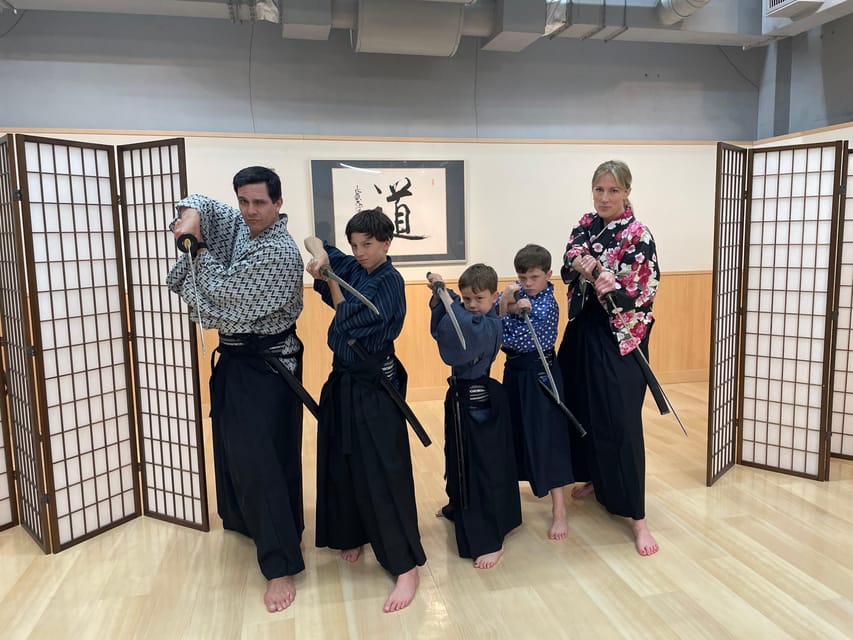
The best part of this Tokyo workshop is that you do more than hold a sword for a souvenir photo. You learn samurai etiquette, put on a kitsuke kimono, and practice stylized sword movements used in stage and video productions. It gives you a short, hands-on look at how samurai are portrayed, rather than a lecture about them.
I like the clear sequence: dress first, learn proper manners, then work through basic moves before trying tachimawari, the choreographed action seen in sword-fighting scenes. I also like the small group of no more than 10 people, which should give you room to follow the instructor without feeling lost in a crowd.
The main limitation is the one-hour length. This is an introductory workshop, not serious martial-arts training, and the meeting point in a basement studio can take a little care to find. Wear comfortable clothes, and allow time to locate the red door near Kitasandou or Harajuku.
Key points at a glance
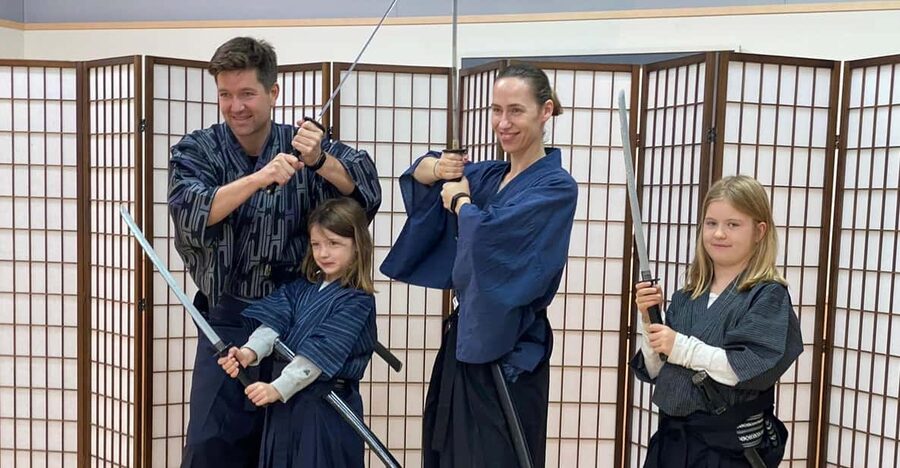
- Practice stage-style sword fighting: Learn basic movements and try tachimawari, the carefully controlled actions used in samurai scenes.
- Dress in a kitsuke kimono: The workshop includes the kimono, so you do not need to arrange a costume rental separately.
- Learn reigi sahou: The etiquette lesson adds manners, posture, and ceremony to the physical activity.
- Finish with sword photos: You can pose in your kimono while holding a sword, giving you a useful keepsake from Tokyo.
- Small, multilingual class: The group is limited to 10 people, with instruction offered in English, Japanese, and Chinese.
- Easy central access: The dojo is about five minutes from Kitasandou Station and eight minutes from Harajuku Station.
What this samurai workshop really offers
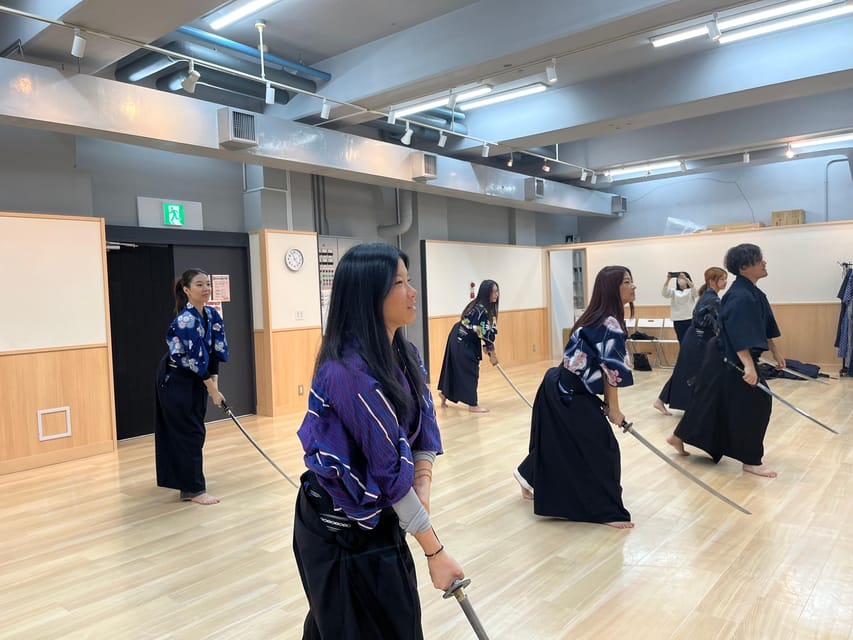
This is a compact cultural activity built around participation. In one hour, you will meet an instructor at a Tokyo dojo, change into a samurai kimono, learn the expected manners, and practice a set of basic sword movements. The session then shifts into tachimawari, a stylized form of movement designed for sword-fighting scenes.
That distinction matters. You are not signing up for a long martial-arts course or a historical weapons lesson. You are learning how samurai are presented through posture, controlled movement, etiquette, and costume. The instructor is active in video and stage productions, so the class has a direct connection to performance work.
I see this as a good fit for visitors who want an active Tokyo activity with a clear beginning and end. It works especially well for families with older children, couples, and friends who would rather do something together than spend another hour looking at displays.
The activity has earned a five-star overall rating from 25 posted ratings, with especially strong praise for friendly instruction, clear explanations, and the fun of taking part. Several participants specifically enjoyed it with children, while others valued it as a different kind of Tokyo activity.
More Samurai and Ninja Experiences in Tokyo
- Tokyo: Samurai Restaurant Show Ticket with 2 Drinks
★ 4.5 · 1,307 reviews - Tokyo: Samurai Ninja Museum Guided tour and Experience
★ 4.6 · 1,010 reviews - Tokyo: Samurai Sword & Archery Class from Samurai Descendant
★ 5.0 · 603 reviews
Finding the dojo near Harajuku
The meeting point is close to two useful train stations. Kitasandou Station is about a five-minute walk away, while Harajuku Station takes about eight minutes on foot. You enter through a red door and continue to the second-floor basement.
That wording is worth taking seriously. A basement dojo reached through a colored door is not the sort of place you should expect to spot instantly from a busy street. I would arrive a little early, read the meeting instructions carefully, and keep the location details open on your phone.
The area gives you plenty to pair with the class before or after your visit. Since the activity lasts only one hour, it can fit neatly into a Harajuku or Kitasandou outing. Still, transportation to the meeting point is not included, so train fare and your route remain your responsibility.
The location is in Tokyo on Honshu, and the short walk from either station makes this easier to add to an urban sightseeing day than an activity far outside the center. You do not need to set aside half a day.
Putting on the kitsuke kimono
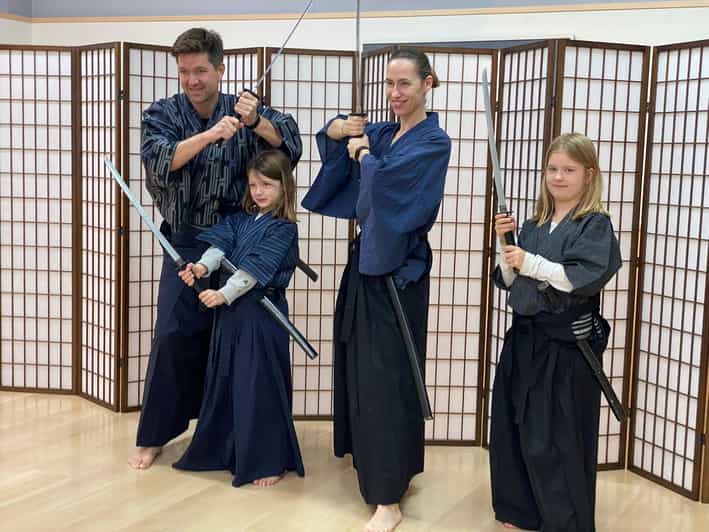
The session begins with help putting on a kitsuke kimono. This is more than a quick costume change. The clothing establishes the posture and appearance needed for the rest of the class, while also giving you the visual setting for the final photographs.
You should arrive in comfortable clothes. The provided information does not specify changing-room details or the exact clothing worn under the kimono, so simple, easy-to-manage clothing is the sensible choice. Avoid anything that makes movement awkward.
The kimono is included in the price, which improves the value of the activity. You do not have to arrange a separate rental, pay for another fitting, or carry a costume around Tokyo. The clothing is part of the lesson rather than a separate add-on.
This part may be especially appealing if you want photographs that feel connected to the activity. You are not simply handed a sword at the door. You first get dressed in the correct style, then learn the manners and movement that make the portrait more convincing.
Reigi sahou and the manners of a samurai
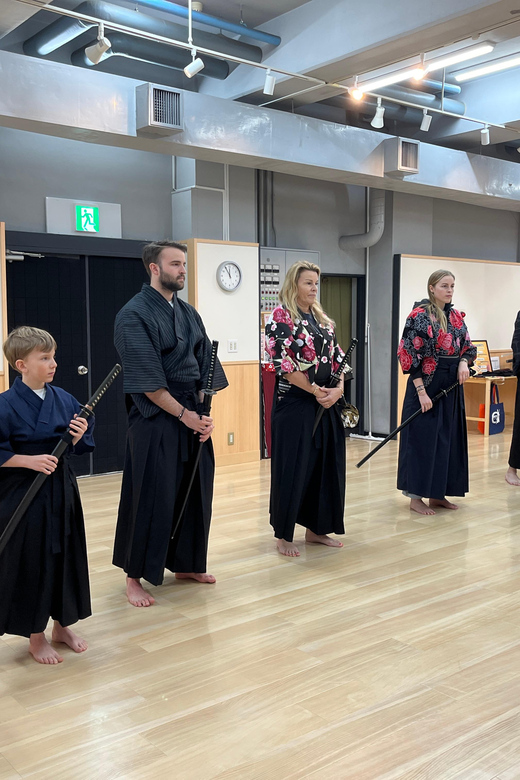
After dressing, the instructor introduces reigi sahou, the manners and etiquette expected of a samurai. The class treats behavior as part of the lesson, not as decoration around the sword work.
That is a useful feature because it adds context to the physical activity. A sword move without posture or discipline can become a quick party trick. The etiquette lesson gives you a better sense of why controlled stance, respectful behavior, and careful movement matter in a samurai setting.
The supplied information does not list each rule or ceremony taught, so you should not expect a detailed historical course. Instead, think of this as a practical introduction to the conduct and presentation associated with the role.
Instruction is available in English, Japanese, and Chinese. That makes the activity easier to follow for an international group, though the exact language arrangement may depend on the session. One French participant found the instruction interesting and effective even though it was conducted in English, while another praised the explanations of the movements.
More samurai and ninja sessions in Tokyo:
- Best Samurai Experience in Tokyo
★ 5.0 · 458 reviews - Ninja Experience (Family Friendly) at Samurai Ninja Museum TOKYO
★ 5.0 · 441 reviews - Tokyo: Samurai Entertainment Night Show in Kanda Shrine
★ 4.6 · 417 reviews - Tokyo Sword Experience – includes Museum Ticket/Ninja Experience
★ 5.0 · 314 reviews
Learning basic sword movements
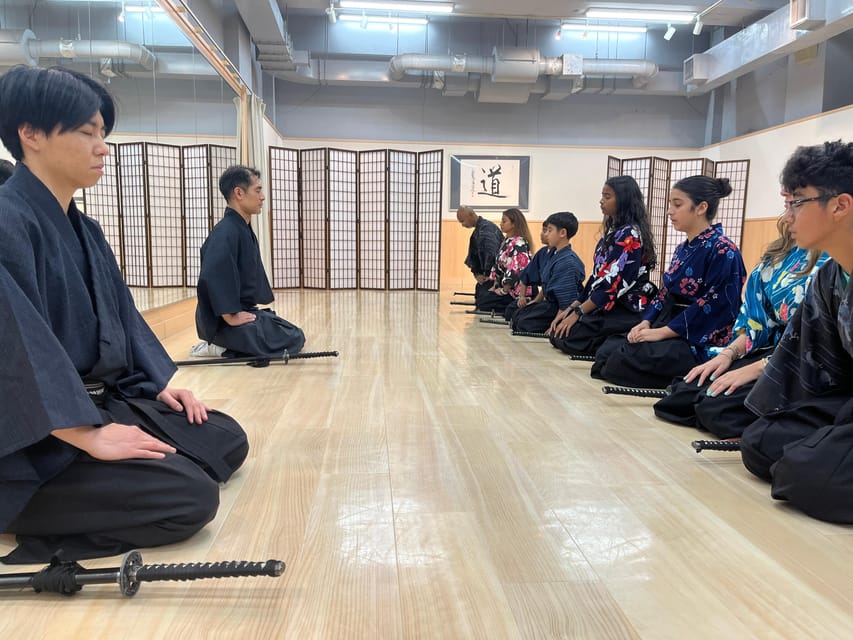
Once you are dressed and have covered the manners, the class moves to basic samurai sword-fighting techniques. The focus is on learning new movements and using them with control.
The description does not promise a particular school of swordsmanship, a named weapon, or advanced training. That is helpful to understand before booking. You are getting a guided introduction designed for visitors, not a qualification or a long-term practice program.
The instructor leads the movements, and the small group size should help you watch carefully and copy the sequence. With a maximum of 10 participants, the room may feel more manageable than a large commercial class. You still need to pay attention and follow directions, especially when handling a sword.
The instructor’s work in video and stage productions is a relevant detail here. The class includes movements meant for sword-fighting scenes, so the lesson is tied to performance as well as technique. You are learning how an action looks and flows, not simply how to swing a blade.
That makes this a good choice for someone who enjoys film, theater, cosplay, or playful physical activities. If you are seeking rigorous martial-arts practice, the short duration and introductory format may feel too limited.
Trying tachimawari, the stage-fighting sequence
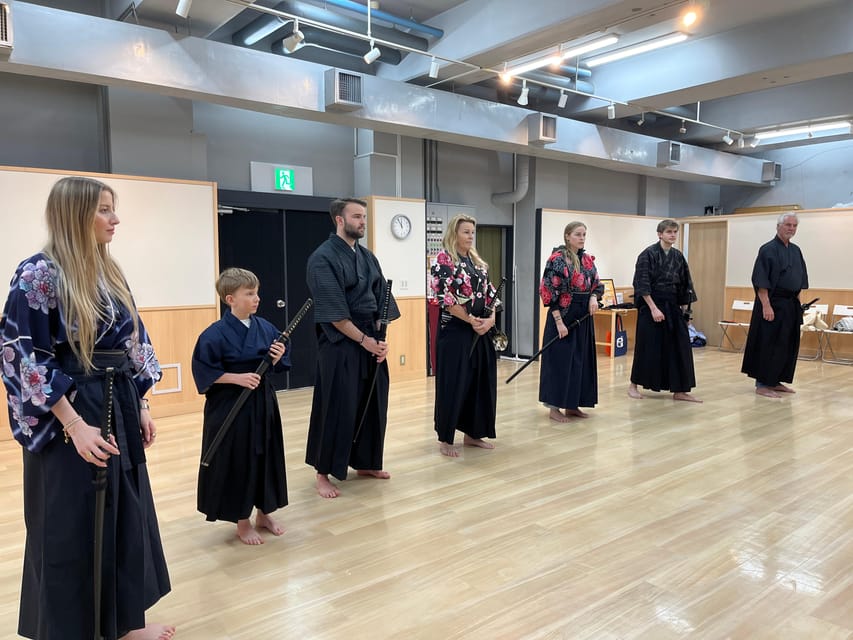
The most theatrical section is tachimawari. These are stylized movements used in sword-fighting scenes, where timing, shape, and presentation matter as much as force.
This is where the activity becomes more than a dress-up session. You get to put the basic movements together and feel how a choreographed sword scene works. The emphasis is on controlled action, so you should follow the instructor closely rather than treat the sword like a toy.
The wording describes this as a sword-fighting experience, but it does not state that participants fight one another in free-form combat. I would expect guided, choreographed movement rather than unscripted sparring. That is a benefit for a mixed-age group, since everyone can focus on learning the sequence.
Several participants praised the instructors for being friendly, smiling, and good at explaining the movements. That matters in a class where many people may be trying unfamiliar actions while also listening in a second language. A warm instructor can make the difference between feeling self-conscious and enjoying the activity.
Children can join from age five, provided they meet the activity requirements and can follow the class. The supplied information does not give a special children’s program, so parents should be ready to help younger children listen, wait their turn, and handle the activity seriously.
The final sword-and-kimono photo session
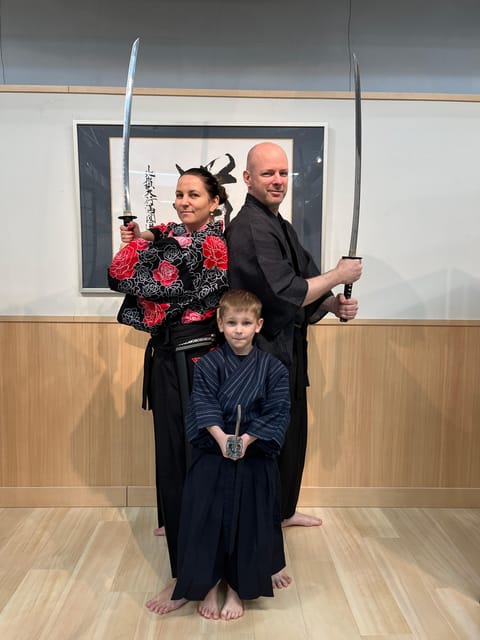
The workshop ends with photographs of you wearing the samurai kimono and holding a sword. This is the natural payoff after the etiquette and movement lessons, since you can pose with a little more understanding of the role.
The photoshoot is included, not sold as a separate extra. That helps justify the $70 per-person price, particularly if you value a planned activity and a souvenir image rather than a casual photo taken outside a shop.
You should think of the pictures as fun memories, not a formal portrait session. The information does not specify how many photos you receive, the delivery method, or whether every participant gets individual and group shots. If those details matter to you, ask the provider before booking.
I like that the camera comes at the end. You have already learned the posture, etiquette, and basic moves, so the photographs can reflect the whole session. For families, this also provides a clear closing moment. For friends, it gives you a shared image that is more distinctive than a standard Tokyo selfie.
Is $70 a fair price?
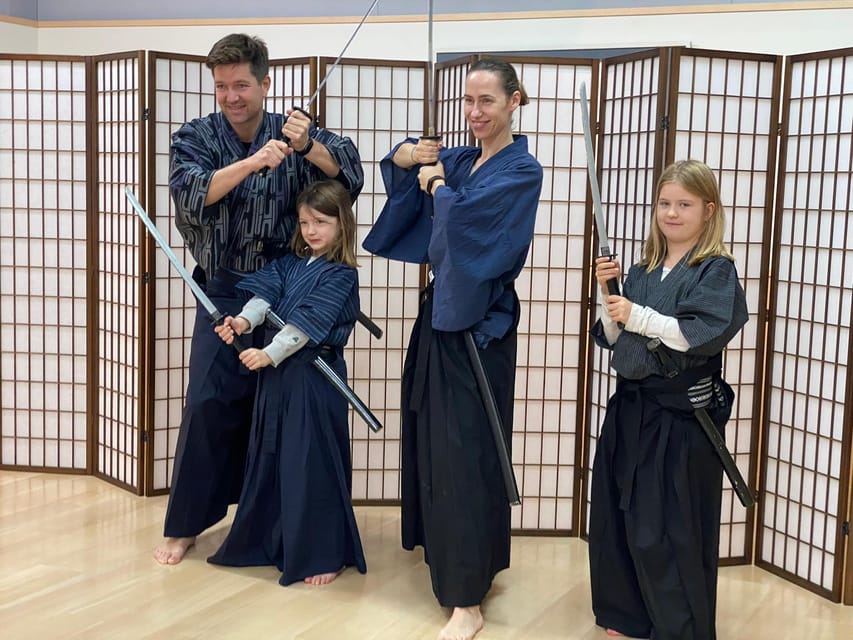
At $70 per person, this is not the cheapest one-hour activity in Tokyo. The value depends on how many parts you would otherwise book separately.
The fee includes an instructor, a samurai kimono, an etiquette lesson, sword-fighting instruction, tachimawari practice, and a photoshoot. You are paying for the setting, costume, teaching, and structured activity, not just access to a sword and a camera.
I consider the price reasonable if you want a compact, organized cultural activity near Harajuku. The one-hour format also limits the total cost in time. You can fit it between other plans rather than giving up a full morning or afternoon.
The calculation is less favorable if you only want a costume photo. In that case, the etiquette and movement lesson may not matter enough to justify the fee. It is also not the right purchase if your main goal is serious sword training, since the class is short and aimed at beginners.
Food and drinks are not included. That is easy to manage in this part of Tokyo, but you should budget separately for anything you want before or after the class.
Who will enjoy it most
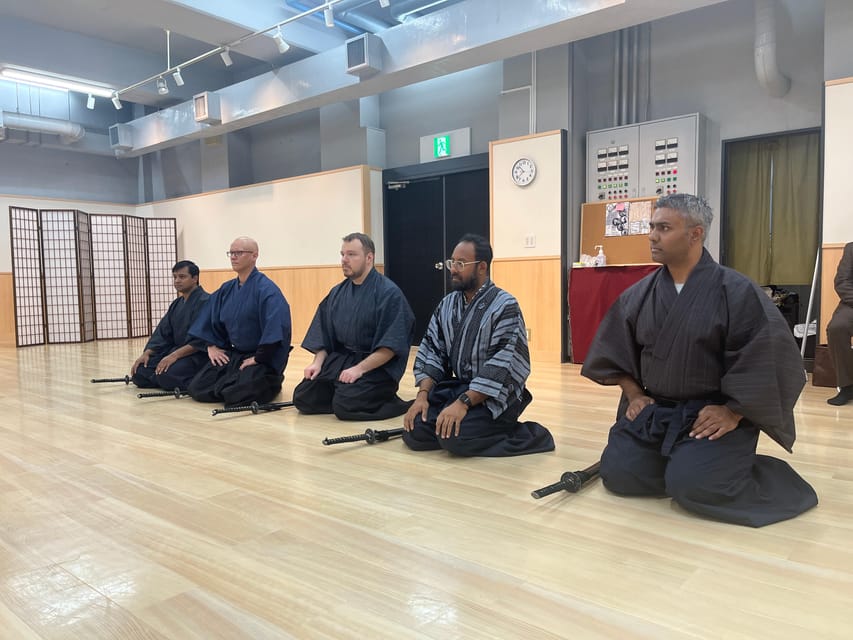
I would recommend this activity to:
- Families with children aged five and older who enjoy active, guided outings
- Couples looking for a memorable photograph and a shared activity
- Friends who want something more hands-on than sightseeing
- Visitors interested in stage combat, Japanese costume, or samurai presentation
- First-time participants who prefer a short introduction rather than a full martial-arts course
The class is open to people of any age and gender, as long as they have the samurai spirit. That broad welcome is useful for mixed groups, since nobody needs a particular background or identity to take part.
I would hesitate if you use a wheelchair, as the activity is not suitable for wheelchair users. I would also think twice about bringing a child under five, since younger children cannot join.
Comfortable clothes are the one clear packing tip. Since you will dress in a kimono and practice movement, practical clothing is better than a tight outfit or anything you would worry about during activity.
Language and group size
The instructor can teach in English, Japanese, or Chinese. This is one of the stronger practical features for international visitors, though you should select or confirm the language you need when arranging the session.
The group is limited to 10 people. That is small enough to keep the activity personal without making it a private lesson. A group of this size can also work well for families and friends who want to take part together.
The instructor is active in video and stage productions, which gives the lesson a performance angle. You will likely find the class most rewarding if you care about how sword movements appear on screen, not only how they feel in the hand.
Instruction quality matters here because the workshop moves through several steps in a short time. Participants have praised the friendly attitude and clear explanations, including the ability to demonstrate movements in an approachable way.
Timing, cancellation, and practical planning
The activity lasts one hour, with starting times available according to the date you choose. Because the duration is fixed and short, I would plan your nearby sightseeing with a little breathing room rather than rushing from another appointment.
You can cancel up to 24 hours in advance for a full refund. The reserve-now-and-pay-later option lets you hold a place without paying immediately, which is useful if your Tokyo schedule is still changing.
There is no transportation pickup, so you need to make your own way to the dojo. From Kitasandou Station, allow about five minutes to walk. From Harajuku Station, allow about eight minutes, plus extra time to locate the red entrance and basement studio.
The activity skips the ticket line, though that matters less here than it would at a major attraction. The real convenience is having a reserved place in a small class at a set time.
My booking verdict
Book this workshop if you want a short, social Tokyo activity that combines costume, manners, controlled sword movements, and photographs. The best value comes from taking part in every stage, rather than treating the class as a quick photo stop.
I especially like the link to stage and video work, the small group limit, and the clear progression from kimono dressing to reigi sahou, basic sword movements, tachimawari, and photos. Friendly, clear instruction has also been a repeated strength, which is important when the class may be taught in English.
Skip it if you want advanced swordsmanship, a long historical lecture, or a private portrait session with detailed photo packages. For most families, couples, and friends seeking a memorable hour near Harajuku, the $70 price is fair, provided you arrive comfortably dressed and ready to follow directions.
FAQ
Where is the samurai experience held?
It is held at a dojo in Tokyo on Honshu. Enter through the red door and go to the second-floor basement. The location is about five minutes from Kitasandou Station and eight minutes from Harajuku Station.
How long does the activity last?
The workshop lasts one hour.
What is included in the price?
The price includes the instructor, a samurai kimono to wear, a samurai etiquette lesson, the sword-fighting activity, and a photoshoot.
What languages are available?
Instruction is available in English, Japanese, and Chinese.
How many people can join the class?
The group is limited to 10 participants.
What should I wear or bring?
Bring comfortable clothes. Transportation, food, and drinks are not included.
Can children and wheelchair users take part?
Children under five cannot join, but participants of other ages and genders may take part as long as they have the samurai spirit. The activity is not suitable for wheelchair users.
Just added around Tokyo
- Private Arrival Transfer : Narita International Airport to Central Tokyo City★ 4.5 · 12 reviews
- Narita Airport(NRT): Private Transfer to Tokyo/Yokohama 1-9pax★ 5.0 · 47 reviews
- Private Transfer from Narita Airport to Yokohama Port and City★ 4.5 · 17 reviews
- [Narita Airport Terminals 1, 2] 40-60km Sawara Itako Historic Bike Tour★ 5.0 · 13 reviews
- 3 Day Japan Highlights Tour: Tokyo, Mt.Fuji, Nara, Kyoto, Osaka★ 5.0 · 22 reviews
- Small Town in the Big City: Tasting Tokyo’s Kichijoji★ 5.0 · 195 reviews
- Small Town in the Big City: Tasting Tokyo’s Kichijoji★ 5.0 · 16 reviews
- The 10 Tastings of Tokyo With Locals: Private Street Food Tour★ 5.0 · 48 reviews
Tokyo Tours, compared.

Mt Fuji and Hakone 1-Day Bus Tour Return by Bullet Train
Read our review →

teamLab Planets TOKYO Digital Art Museum Entry Ticket
Read our review →
Mt Fuji & Hakone Cruise, Drum Show Bullet Train 1 Day from Tokyo
Read our review →
Sumo Show Experience with Chicken Hot Pot and a Photo
Read our review →
Shinjuku Food Tour (13 Dishes at 4 Local Eateries)
Read our review →
Tokyo Mt Fuji 5th St & Hakone Cruise Bus Tour w/Bullet Train
Read our review →
Flagship 2-Hours Official Street Go-Kart Tour – Tokyo Bay Shop
Read our review →Browse the lists this tour appears in