
Reviewed · TOKYO TOURS
Tokyo: Best Samurai Experience
The best part of this Tokyo activity is that you do not just watch a samurai performance. You put on a kimono and hakama, take up a safe practice sword, and learn a short routine before facing the instructors in a choreographed fight. The teachers have appeared in major Japanese dramas and films, and they know how to make beginners look good.
I like the clear mix of instruction and play, and I like that an assistant can take photos and videos on your phone while you perform. The small groups, capped at 10 people, also give the session a personal feel. The main drawback is the short one-hour format: you will learn and perform a routine, but this is a lively introduction rather than serious martial-arts training.
Key points at a glance
- Costumes are part of the ticket: Choose a kimono and hakama, then change before handling the sword.
- You learn real terms and movements: The lesson covers sword parts, drawing, stance names, swings, attacks, defense, and safe retraction.
- The sword is not sharp: You use a fake sword designed for performance, not a cutting blade.
- The finale uses music and lighting: The final bad-guy sequence feels more like a stage show than a quiet classroom lesson.
- Your phone becomes the camera crew: Instructors and assistants help capture photos, poses, and action videos.
- Small groups keep it manageable: No more than 10 participants take part, and solo bookings are accepted.
What this one-hour samurai session really offers
This experience works because it gives you three things in a tight package: costume, basic technique, and performance. You are not being asked to sit through a long lecture about the samurai. Instead, you learn enough to move with purpose, then use those movements in a short staged fight.
That distinction matters. If you want a detailed study of Japanese swordsmanship, this will feel brief and theatrical. If you want an active cultural activity that gives you something to do, wear, and remember, the format makes good sense.
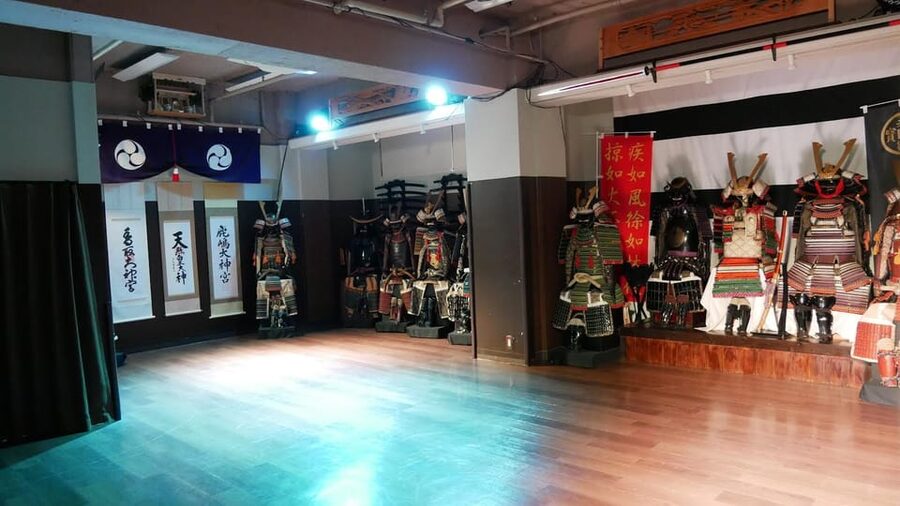
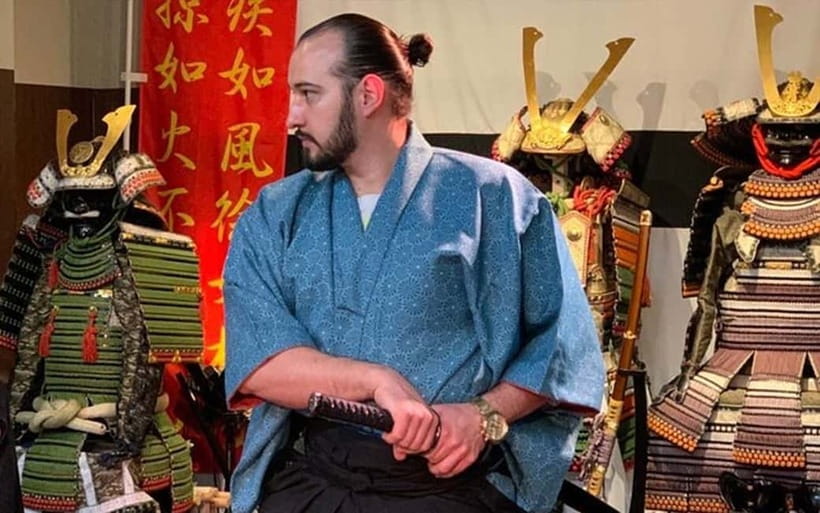
The session takes place at Samurai Theater Tokyo in Honshu. To find the meeting point, search Google Maps for Samurai Theater Tokyo. The space has swords, spears, and armor on display, creating a backdrop that feels far removed from an ordinary modern studio.
You should expect English and Japanese instruction. The teachers are described as authentic instructors with screen experience, so the emphasis is on stage-ready movement as well as basic sword handling. That helps explain why the activity moves quickly from demonstration to performance.
More Samurai and Ninja Experiences in Tokyo
- Tokyo: Samurai Restaurant Show Ticket with 2 Drinks
★ 4.5 · 1,307 reviews - Tokyo: Samurai Ninja Museum Guided tour and Experience
★ 4.6 · 1,010 reviews - Tokyo: Samurai Sword & Archery Class from Samurai Descendant
★ 5.0 · 603 reviews
Choosing your kimono and hakama
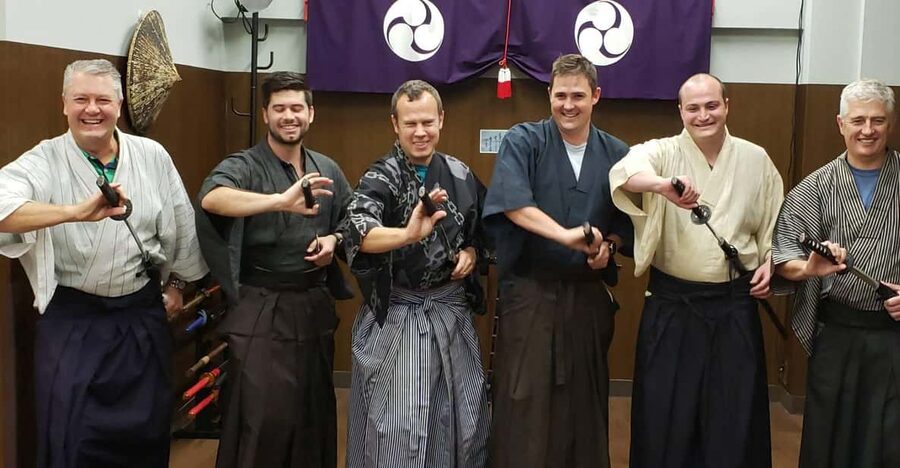
You begin by selecting a kimono and hakama, then changing into the costume. This is more than a quick photo prop. The clothing changes your posture and gives the sword lesson a sense of occasion.
The hakama, worn over the kimono, creates the familiar samurai silhouette. Once dressed, you are ready for photos with the instructors and for the movement lesson. If you enjoy dressing up, this part may be as appealing as the sword work itself.
You should allow the staff to help you with the costume. The session is only one hour, so the changing period needs to stay organized. The assistants are there to help you into the clothing and prepare you with a practice sword.
The displayed armor is separate. An optional fee is required if you want to wear it, so do not assume the armor display is included in the standard price. The kimono, hakama, practice sword, sword lesson, staged fight, and photo with a samurai are included.
Learning the sword before the fight
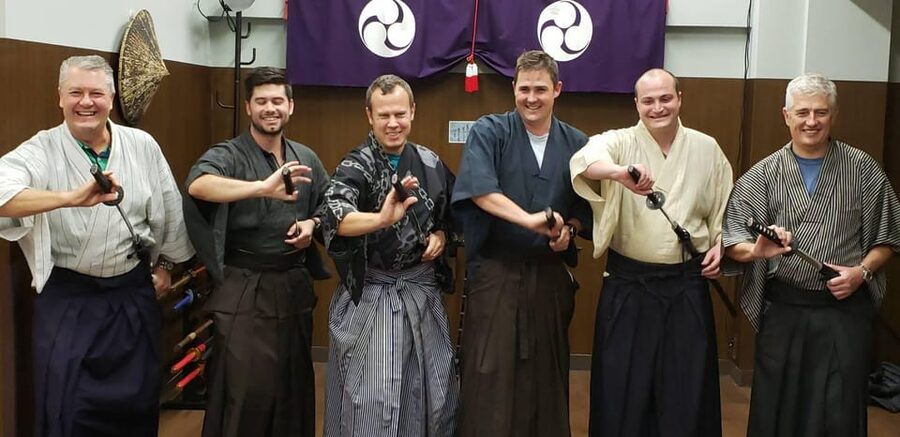
The instructor first explains the parts of the sword. You learn the Japanese terms for the blade and the basic stance names, then practice the essential movements.
The lesson covers:
- Drawing the sword
- Holding the sword
- Swinging the sword
- Retracting the sword
- Basic offensive movements
- Basic defensive movements
- Stance names and how to perform them
This is where the activity earns more than a simple costume-photo session. You are given a small vocabulary and a sequence of movements, so the final fight has structure. You are not simply waving a sword at a partner.
The sword is a fake practice weapon that cannot cut. That makes the activity suitable for a broad range of beginners, though it is still important to follow the instructor closely. The fight is choreographed, and the fun depends on keeping the timing and distance under control.
You may find the Japanese terms especially useful. Even if you do not remember every word afterward, hearing the names of stances and movements gives the lesson a stronger connection to Japanese performance traditions than a generic action class.
The choreographed chanbara fight
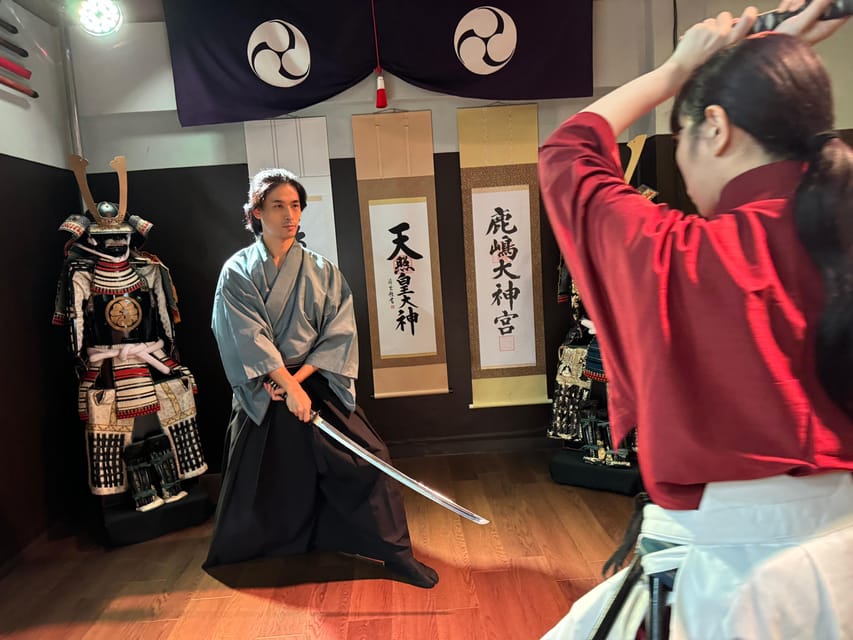
After the basic practice, you try a simple chanbara sword fight. Chanbara is staged sword combat, built around clear movements, timing, and dramatic action rather than actual contact.
The instructors demonstrate each movement and have you repeat it. You then link those actions into a short fight scene. The teaching style is energetic and patient, which matters for anyone who has never handled a sword before or feels shy about performing in front of other people.
The activity then shifts into a musical finale. You try to defeat the bad guys while the lighting and soundtrack add stage drama. This is the point where the experience becomes deliberately theatrical. You are not training for competition, and you are not expected to display advanced skill. You are playing a samurai role in a guided performance.
I like this setup because it gives nervous participants a clear path. You learn one move at a time, then perform a routine that has already been explained. The instructor supplies the energy, so you do not need to be naturally outgoing to take part.
The tradeoff is that the fight is controlled and artificial by design. If you want full-contact sparring or a longer technical lesson, this is not the right activity. If you want a safe, camera-friendly scene with enough instruction to make it feel earned, it fits well.
More samurai and ninja sessions in Tokyo:
- Best Samurai Experience in Tokyo
★ 5.0 · 458 reviews - Ninja Experience (Family Friendly) at Samurai Ninja Museum TOKYO
★ 5.0 · 441 reviews - Tokyo: Samurai Entertainment Night Show in Kanda Shrine
★ 4.6 · 417 reviews - Tokyo Sword Experience – includes Museum Ticket/Ninja Experience
★ 5.0 · 314 reviews
Photos and videos that capture the action
Bring a smartphone if you want your own record of the session. You can take photos with the samurai, pose in costume, and record the staged movements.
A particularly useful feature is the help from the instructors and assistants. They can record the action on your mobile phone, so you are not left trying to hold a camera while swinging a sword. That gives families and couples a better chance of getting usable footage of the full performance.
The photo opportunities are not limited to a formal portrait. You can capture poses, costume details, sword movements, and the final fight. The recording also helps preserve the parts that happen quickly, such as the lighting and music sequence.
I would treat the video as a bonus rather than the sole reason to book. The strongest part of the experience is taking part. Still, having an assistant handle the phone makes a practical difference, especially when everyone in your group wants to appear in the scene.
Why the group size matters
The group is limited to 10 participants. That is small enough for the instructor to demonstrate movements clearly and keep an eye on the routine.
A small group also makes the costume and photo sections easier to manage. You are less likely to spend the entire session waiting for a large crowd to finish the same pose or movement.
The activity accepts solo participants, so you do not need to organize a private group. Families can join together, and the experience has also suited older participants. One participant in their early sixties described having a great time with the family, which suggests the session is designed around enthusiasm and participation rather than athletic ability.
That said, the activity is not suitable for everyone. It excludes pregnant women, wheelchair users, visually impaired people, babies, very young children, people over 95, and children under 3 feet, or 90 centimeters. The age information lists children under 2, 3, and 4 as unsuitable, so families with young children should confirm the exact age rule before booking.
Is $63 a fair price?
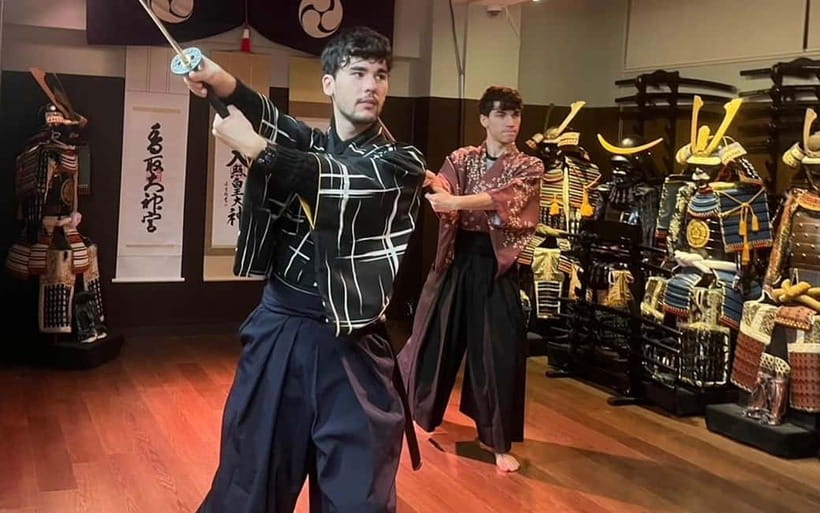
At $63 per person, this sits in the middle range for a short Tokyo cultural activity. The session lasts only one hour, so the price is not based on a long tour or a full-day program.
The value comes from the combination of included elements. You receive costume use, a sword lesson, a safe practice weapon, a staged fight, a photo with a samurai, and help recording the experience. If you booked this mainly as a quick photo opportunity, the price may feel high. If you value guided participation and a polished finale, it is easier to justify.
I would compare it with the cost of a standard performance or costume rental. Here, you get both a show and an activity. The instructor teaches you the movement, then places you inside the action. That makes the session more memorable than simply sitting in an audience.
The short duration can also be useful. Tokyo days fill quickly, and a one-hour booking can fit before or after another activity. Same-day reservations may be possible, and you can reserve now and pay later. Free cancellation is available up to 24 hours in advance for a full refund, which gives you some flexibility when arranging a packed schedule.
Who will enjoy this most?
I would recommend this for:
- Families wanting a shared activity rather than another museum visit
- Fans of samurai films, Japanese dramas, and martial arts
- Couples who want costume photos and action videos
- Solo visitors looking for an easy small-group activity
- First-time visitors who want a playful introduction to samurai culture
- Anyone who enjoys performing but does not want a demanding physical class
It is especially good for people who like a little structure. You are taught the movements, given a role, and guided through the final scene. You do not need to invent your own performance.
You should think twice if you dislike costumes, staged fighting, or being photographed. The activity is built around all three. It also may not satisfy someone seeking a serious lesson in historical swordsmanship.
Practical advice before you go
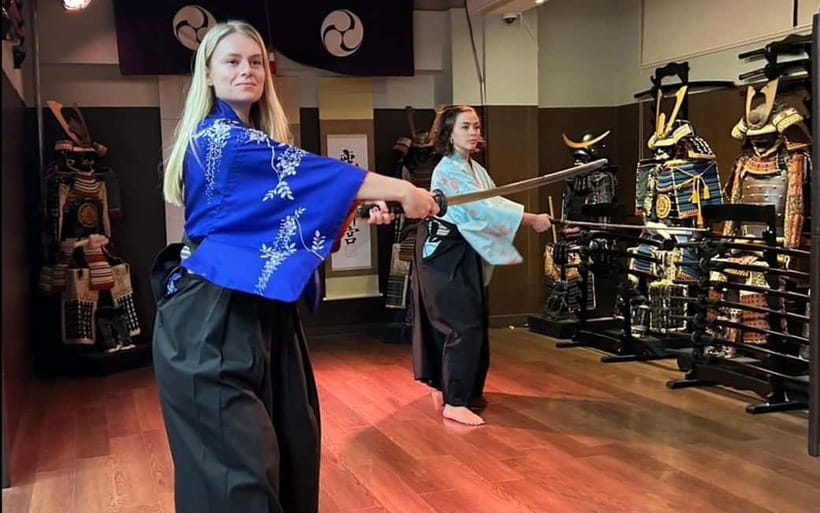
Search Google Maps for Samurai Theater Tokyo to locate the meeting point. Since the activity lasts one hour, arrive ready to change and take part without delay.
Wear something that allows you to change comfortably. The costume is provided as part of the session, but the supplied information does not specify what clothing is worn underneath or whether specific footwear is required. The staff will assist with the kimono and hakama.
Bring a smartphone if you want videos and photos. The instructors can help capture the action, but you should still make sure your phone has enough storage and battery.
Do not expect to use a sharp sword. The weapon is a non-cutting practice sword, and the fight is a controlled performance. Listen closely to the instructor, particularly during the drawing, swinging, and retraction exercises.
If you are traveling with children, check the height and age limits carefully. The activity is not suitable for children under 90 centimeters, and several very young age categories are excluded.
A good first taste of samurai culture
This is not a museum lesson or a formal martial-arts course. It is a short, polished performance workshop with enough cultural detail to give the fun some substance.
I like the balance. You learn sword parts and Japanese movement names, but you also get music, lighting, costumes, and a staged battle. The instructors bring the drama, while the small group keeps the lesson friendly and manageable.
The strongest feature is the personal involvement. You do not just watch a samurai swing a sword. You learn a routine, put on the costume, and take a place in the scene. That is why the experience works well for families and for people who want a strong travel memory without committing half a day.
Should you book it?
Book this if you want an active Tokyo experience with costumes, guided sword practice, and useful photos or videos at the end. The $63 price is reasonable when you value the full package and the one-hour length fits your schedule.
Skip it if you want serious sword training, historical depth, or an unstructured fight. For everyone else, this is a lively and approachable way to spend an hour, especially if samurai films already have a place in your imagination.
FAQ
Where does the samurai experience take place?
The meeting point is Samurai Theater Tokyo. Search Google Maps for Samurai Theater Tokyo to find it.
How long does the activity last?
The experience lasts one hour.
How much does it cost?
The listed price is $63 per person.
What languages are available?
Instruction is available in English and Japanese.
Is the group private?
No. It is a small-group activity limited to 10 participants. One person can also join.
Do I wear a costume?
Yes. Changing into a kimono and hakama is included.
Is the sword real?
You use a fake, non-cutting sword for practice and the staged fight.
Can I cancel for a refund?
You can cancel up to 24 hours in advance for a full refund. You can also reserve now and pay later.
Just added around Tokyo
- Private Arrival Transfer : Narita International Airport to Central Tokyo City★ 4.5 · 12 reviews
- Narita Airport(NRT): Private Transfer to Tokyo/Yokohama 1-9pax★ 5.0 · 47 reviews
- Private Transfer from Narita Airport to Yokohama Port and City★ 4.5 · 17 reviews
- [Narita Airport Terminals 1, 2] 40-60km Sawara Itako Historic Bike Tour★ 5.0 · 13 reviews
- 3 Day Japan Highlights Tour: Tokyo, Mt.Fuji, Nara, Kyoto, Osaka★ 5.0 · 22 reviews
- Small Town in the Big City: Tasting Tokyo’s Kichijoji★ 5.0 · 195 reviews
- Small Town in the Big City: Tasting Tokyo’s Kichijoji★ 5.0 · 16 reviews
- The 10 Tastings of Tokyo With Locals: Private Street Food Tour★ 5.0 · 48 reviews
Tokyo Tours, compared.

Mt Fuji and Hakone 1-Day Bus Tour Return by Bullet Train
Read our review →

teamLab Planets TOKYO Digital Art Museum Entry Ticket
Read our review →
Mt Fuji & Hakone Cruise, Drum Show Bullet Train 1 Day from Tokyo
Read our review →
Sumo Show Experience with Chicken Hot Pot and a Photo
Read our review →
Shinjuku Food Tour (13 Dishes at 4 Local Eateries)
Read our review →
Tokyo Mt Fuji 5th St & Hakone Cruise Bus Tour w/Bullet Train
Read our review →
Flagship 2-Hours Official Street Go-Kart Tour – Tokyo Bay Shop
Read our review →Browse the lists this tour appears in