
Reviewed · TOKYO TOURS
Tokyo: Samurai Adventure! Authentic Sword Experience
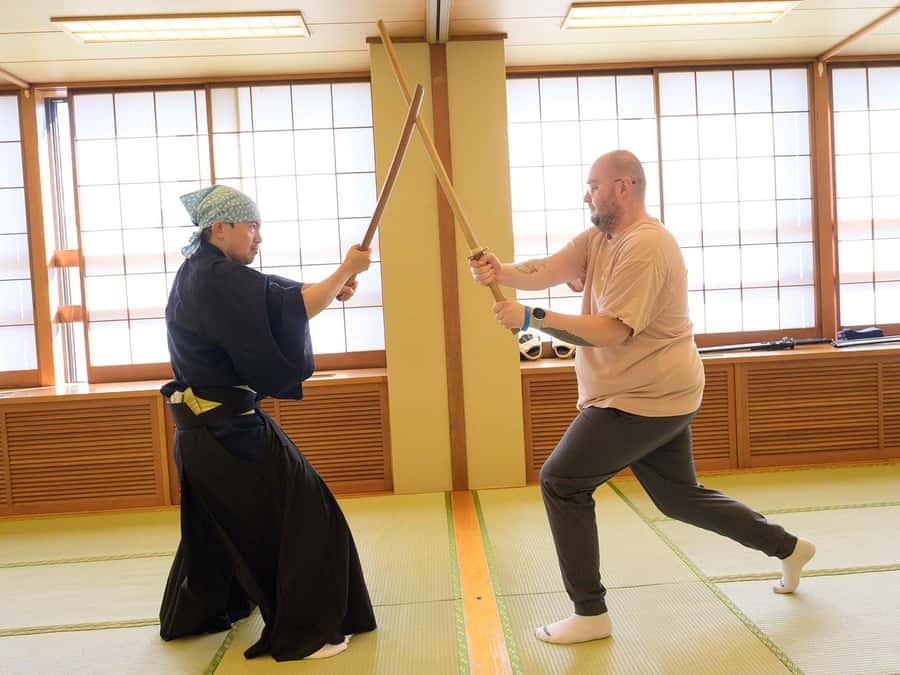
Tokyo’s samurai workshop is less about pretending to be a movie hero and more about learning how action actors build a sword scene. You watch Dai and Kume demonstrate Tate, the stylized sword movement used in film and stage combat, then practice the basics with a wooden sword.
I like the close-up demonstrations, and I like the friendly teaching style reported by visitors who worked with Dai and Kume. The $24 price is also easy to justify for a hands-on Tokyo activity. The catch is that this is a short introduction, not formal martial-arts training, and the lesson uses safe practice weapons rather than real swords.
Key points to know before you book
- Tate sword work: Learn the poses, grips, swings, and paired movements used in samurai action scenes.
- Dai and Kume: Expect patient instruction, corrections, demonstrations, and plenty of encouragement.
- Two class choices: Join a public lesson with Japanese acting students or book a private course tailored to your level.
- Wooden swords only: You will not take part in actual sword fighting, and safety is built into the lesson.
- Costume photos: Samurai clothing is available as an option, giving you a memorable souvenir photo at the studio.
A samurai lesson built around Tate, not combat
The heart of this activity is Tate, the choreographed sword movement used in Japanese action work. That distinction matters. You are not learning how to sharpen a blade, fight an opponent, or handle a historical katana. You are learning how the body moves in a controlled sword scene.
I find that a useful approach for a first visit to Japan. It gives you a physical connection to samurai culture without asking you to commit to a long martial-arts course. You learn where to place your feet, how to hold the practice sword, how to swing with control, and how to make a movement look clear and deliberate.
The instructors are professional action actors, so the class is designed for beginners. You will be shown each movement before trying it, and the work progresses from simple exercises to paired practice. The tone is active, but it is not a fight.
That makes this a good choice for families, couples, and curious first-timers. It also suits people who already practice martial arts and want a short introduction to Japanese stage combat. A private class is the better option if you want more attention or have a particular level or goal in mind.
More Samurai and Ninja Experiences in Tokyo
- Tokyo: Samurai Restaurant Show Ticket with 2 Drinks
★ 4.5 · 1,307 reviews - Tokyo: Samurai Ninja Museum Guided tour and Experience
★ 4.6 · 1,010 reviews - Tokyo: Samurai Sword & Archery Class from Samurai Descendant
★ 5.0 · 603 reviews
Arriving at Samurai Experience Photo Studio ICHI
The meeting point is listed on Google Maps as Samurai Experience Photo Studio ICHI. It is in central Tokyo, with access from the Tokyo Station, Ginza, and Tsukiji areas.
You should arrive 15 minutes early. That small buffer is worthwhile because the studio is the starting point, and the practical details of the visit may begin there. One visitor explained that the group dressed at the studio before walking to a nearby building for the dojo portion of the activity.
Transportation to and from the workshop is not included, so you will need to make your own way there. The activity ends back at the meeting point. Since the experience involves movement, wear comfortable clothes and closed-toe shoes that will not restrict your feet.
High heels are not allowed. The activity is also not suitable for wheelchair users, pregnant women, people with back problems, vertigo, or pre-existing medical conditions. Electric wheelchairs are specifically excluded, so check the physical requirements carefully before reserving.
Starting with history, warm-ups, and basic posture
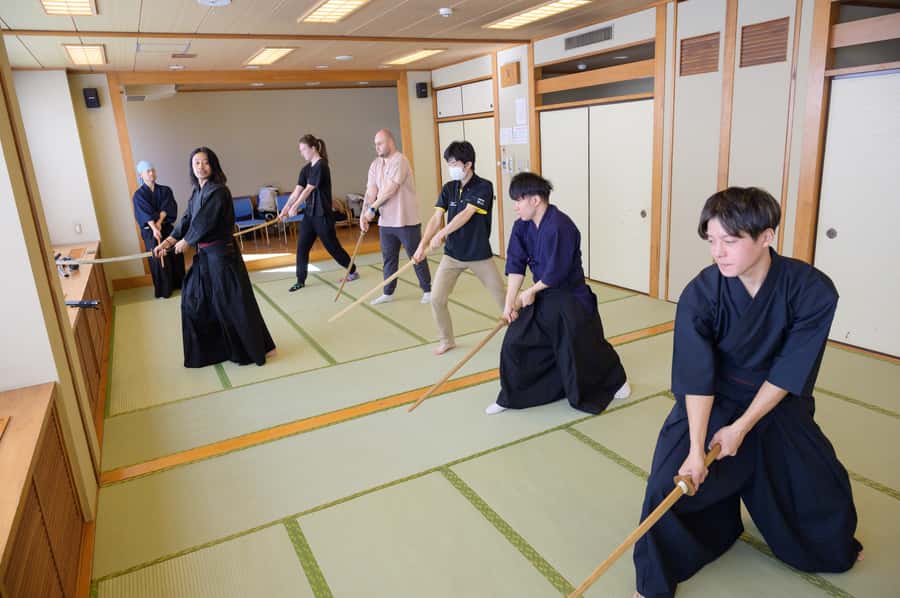
A private class begins with a brief introduction to samurai history and culture. The public course also brings you into the samurai action setting, though the supplied details place more emphasis on watching the class and then practicing alongside the Japanese students.
The warm-up comes next. This is not filler. Sword work depends on balance, leg position, shoulder control, and a steady grip. A short warm-up helps you understand that the sword is only part of the movement. Your whole body has to work together.
You then learn the basic rest position and fundamental samurai movements. These details can look simple when an experienced actor performs them. They feel less simple when you have to keep your feet, hands, shoulders, and gaze in the right place at the same time.
I like this gradual order. You are not handed a wooden sword and told to copy a fast action sequence. You build up to it. The instructors can correct your grip and stance before you add speed, which makes the class more useful and safer.
The workshop is offered in Japanese and English. That helps, but demonstrations are just as important here as spoken explanations. Watch carefully, then repeat the movement slowly before trying to make it look dramatic.
Holding the wooden sword and learning the first swings
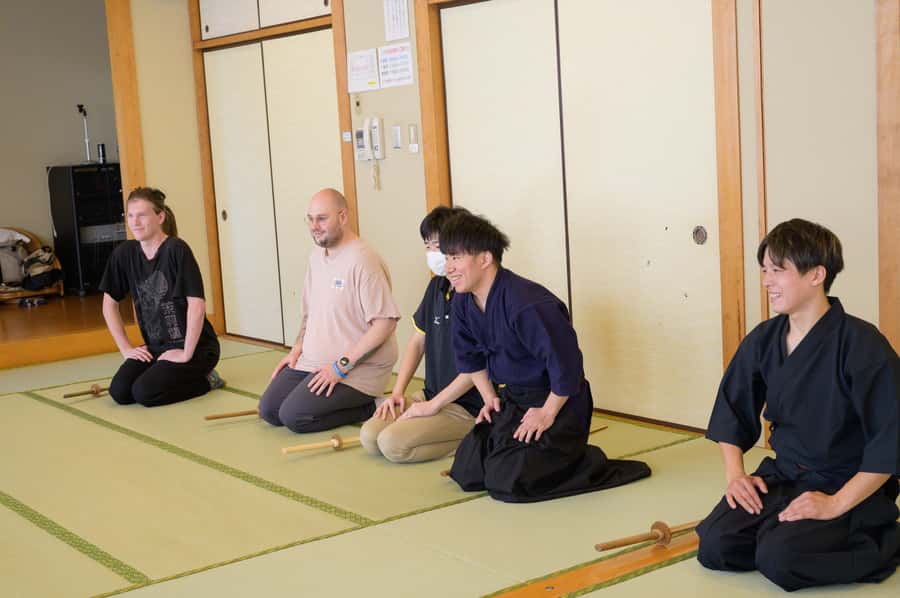
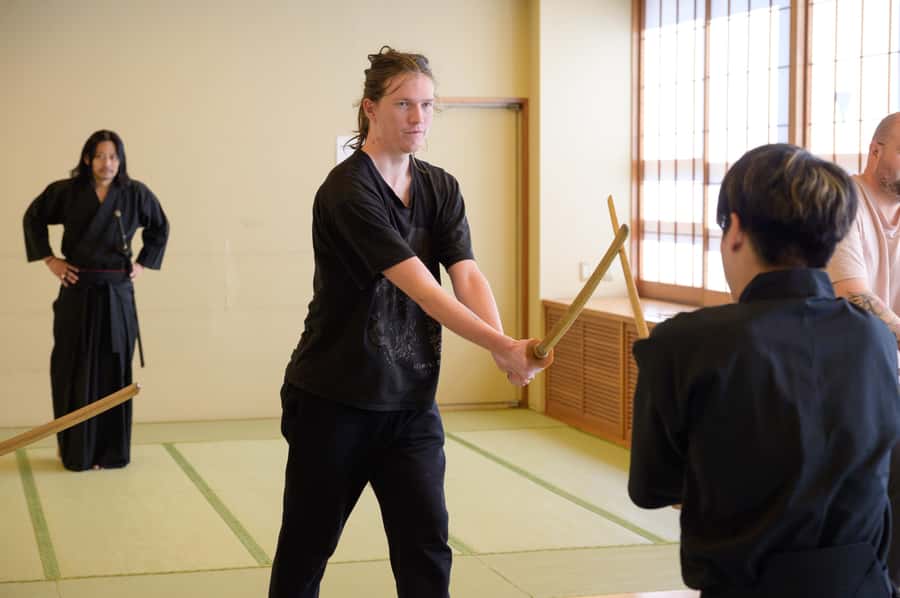
Practice swords are provided. You learn how to grip, hold, and swing the sword, along with basic strikes and defensive movements.
The wooden sword keeps the focus on form. You do not have to worry about handling a sharp blade, and the class can concentrate on clean movement and timing. The instructors make clear that you are practicing samurai actions safely, not engaging in actual sword fighting.
This is where expectations matter. If you want a serious study of kenjutsu or historical swordsmanship, one session will not be enough. The lesson is prepared for visitors and beginners, so it offers an accessible taste rather than a full technical course.
Still, there is real value in learning the mechanics behind an action scene. A sword swing is not simply a large arm movement. The position of the hands, the direction of the body, and the pause after the strike all affect how the action reads.
The class can also be fun precisely because you are learning something physical. You are not standing at a display or listening to a long lecture. You are trying the movement yourself, making small corrections, and gradually feeling more comfortable with the wooden sword.
More samurai and ninja sessions in Tokyo:
- Best Samurai Experience in Tokyo
★ 5.0 · 458 reviews - Ninja Experience (Family Friendly) at Samurai Ninja Museum TOKYO
★ 5.0 · 441 reviews - Tokyo: Samurai Entertainment Night Show in Kanda Shrine
★ 4.6 · 417 reviews - Tokyo Sword Experience – includes Museum Ticket/Ninja Experience
★ 5.0 · 314 reviews
Watching Dai and Kume perform the movements
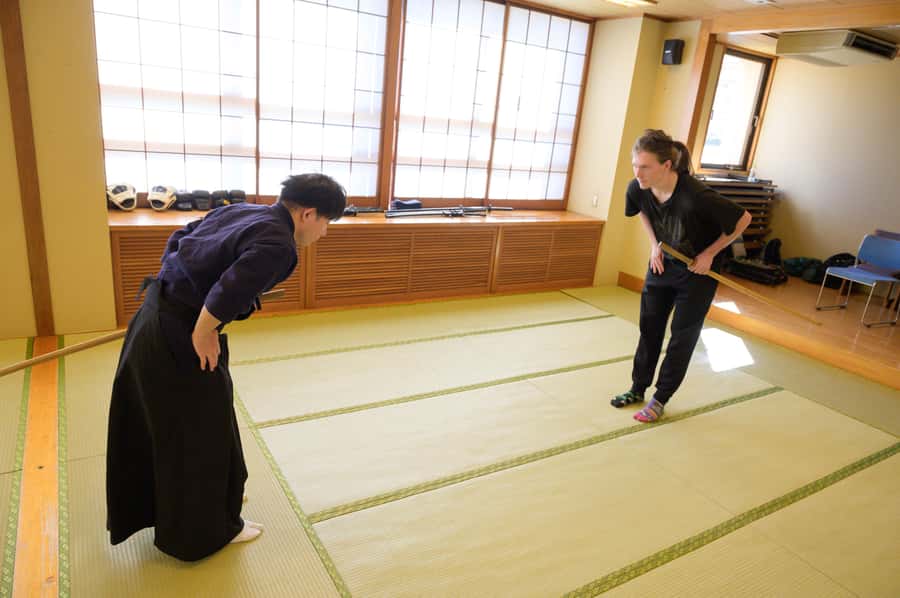
The demonstrations are a major part of the experience. Dai and Kume show the movements at close range, giving you a chance to see the timing and control before you attempt them.
Their role is important. An instructor can explain a stance, but a professional action actor can show how a sequence flows from one position to the next. The demonstration lets you see the difference between a basic exercise and a polished action movement.
The teaching style is described as kind, detailed, and encouraging. Dai is also referred to as Dai Sensei, while Kume assists with instruction and demonstrations. Their approach appears to suit people who are nervous about performing in front of others, including those with no previous experience.
You may also see the instructors perform a stronger demonstration once the lesson is underway. This gives you a better sense of what trained samurai action looks like. It is one thing to practice a controlled strike. It is another to watch a professional connect a series of movements with precision.
The public course adds a cultural exchange that a private lesson may not offer. You can train alongside aspiring Japanese actors who are learning samurai action themselves. That setting gives the class a more local, working-studio feel, even though the workshop is designed for international visitors too.
Paired practice with a professional samurai actor
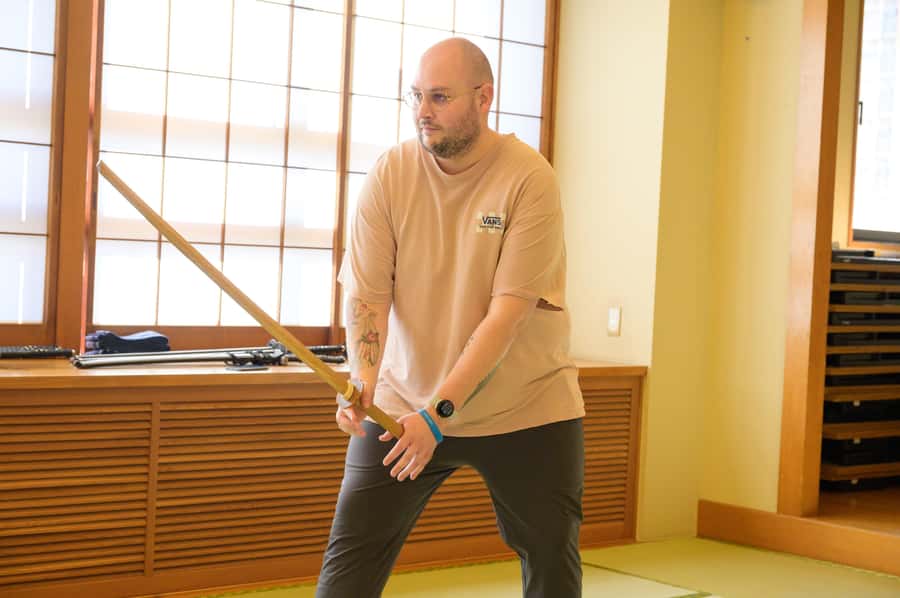
After the basic movements, you practice in pairs with a professional samurai actor. This is the point where the workshop begins to feel like a small action scene.
The practice remains controlled and uses wooden swords. You are learning where to move, when to pause, and how to respond to a partner. The emphasis is on choreography and safe execution, not on winning or making contact.
For many people, this will be the most memorable part. Solo practice lets you concentrate on your own hands and feet. Paired practice asks you to listen, watch, and keep time with another person.
It can also be the most demanding part for shy participants. You may need to perform a movement in front of the instructor or group. The available information suggests that the instructors keep the atmosphere relaxed, and the repeated praise for their friendly manner is a good sign for beginners.
If you prefer not to participate fully, observing is still allowed and can be enjoyable. That flexibility helps if you are traveling with someone who wants to practice while you would rather watch and take photos.
Samurai clothing and the final photo session
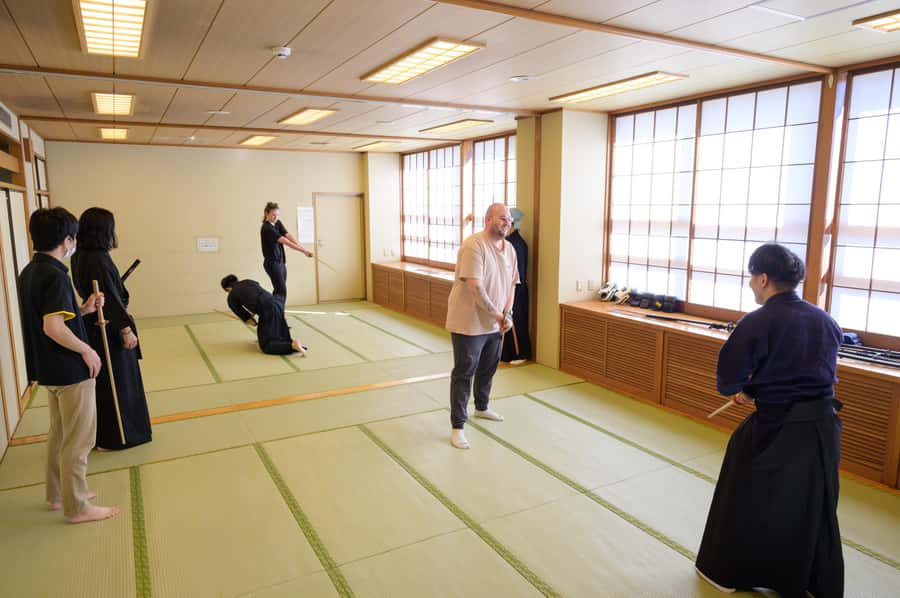
Samurai costume is not included in the base price, but it is available as an option. Some participants have worn samurai clothing or a kimono during the experience, so ask about the costume option when you book or arrive.
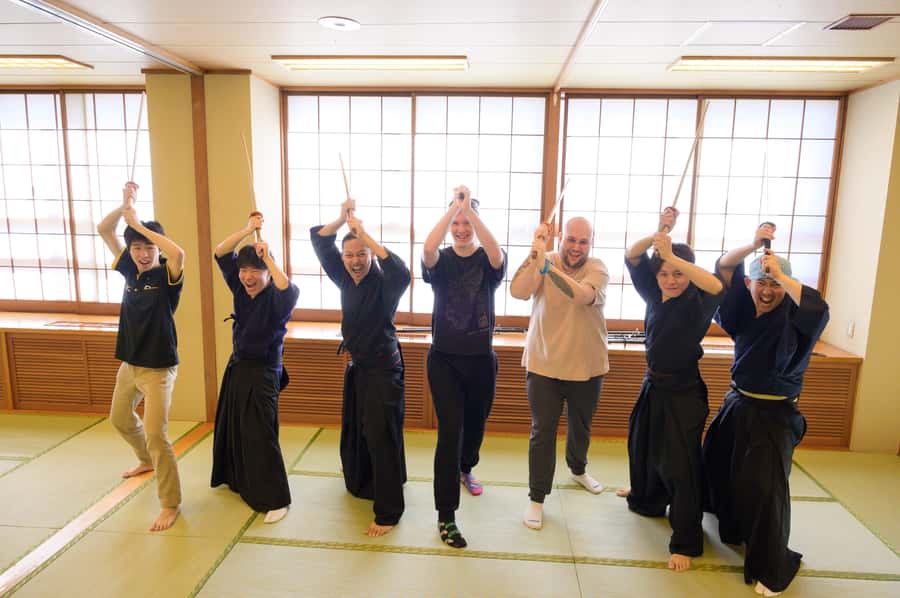
The photo session comes at the end. You can take pictures with the samurai instructors and keep a visual reminder of the activity. This is more than a quick snapshot if you choose the costume option, since the clothing helps create the full scene.
I see the photos as a useful extra, especially for families and couples. The sword lesson gives you the memory, while the picture gives you something easy to share after returning home. Just remember that the costume is an added expense, not part of the $24 starting price.
The studio setting also makes the photo portion convenient. You do not need to arrange a separate costume rental or find another location for the picture. The activity brings the teaching and keepsake together at the same meeting point.
Public or private course: which one fits you?
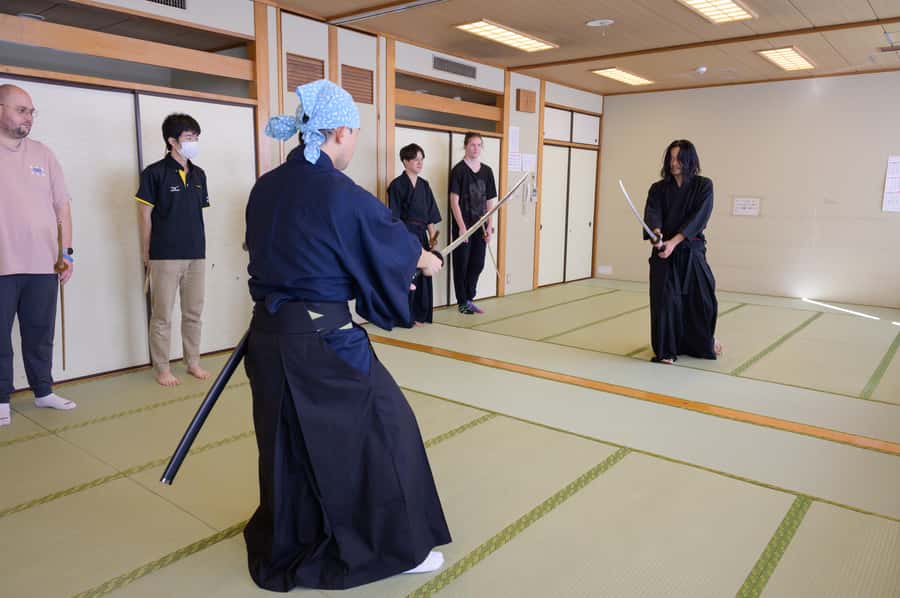
The public course is the better value if you want a social experience and are happy to learn with others. You may train alongside Japanese students who are aspiring actors, which adds a glimpse of how samurai action is practiced in Japan.
A busy public class can mean less one-on-one time. The exact group size is not provided, so you should not assume constant personal attention. Still, a public session may feel more lively, and you can learn by watching other students repeat the movements.
The private course begins with the cultural introduction, then the action actor adjusts the lesson to your ability and aims. I would choose private instruction if you practice martial arts, already know something about Japanese culture, or want to focus on technique rather than simply enjoy a novelty.
There is also a practical middle ground. One couple happened to have no other participants in their session and received a private-feeling lesson despite booking the public option. That cannot be guaranteed, but it shows how the atmosphere may vary with the day’s attendance.
Is $24 good value in Tokyo?
At $24 per person, the base price is modest for a central Tokyo activity that includes instruction, demonstrations, wooden practice swords, a cultural introduction, and a photo opportunity.
The value comes from participation. If you only want to watch a samurai performance, there may be more polished shows elsewhere. Here, you spend part of the time learning and repeating movements yourself, which makes the experience more personal.
The price is especially fair for a first-time visitor who wants something beyond temples, shopping, and food. It is also a low-risk choice for a family or group with mixed interests. One person can take part while another observes, although the activity is not suitable for wheelchair users or people with the listed medical restrictions.
You should budget separately for transportation and optional costume rental. Meals and beverages are not included either, though this is a short workshop rather than a full-day outing.
The cancellation terms are traveler-friendly: you can cancel up to 24 hours in advance for a full refund. You can also reserve now and pay later, which helps if your Tokyo schedule is still changing.
What to wear and how to prepare
Wear comfortable clothing that allows your arms and legs to move freely. Closed-toe shoes are required, and high heels are not allowed.
Do not arrive after the scheduled start if you can avoid it. The recommended 15-minute early arrival gives you time to find the studio, check in, and prepare before the lesson begins.
Do not bring drones, alcohol, drugs, or explosive substances. Smoking is not allowed. These rules are straightforward, but the physical restrictions deserve more attention, particularly if you have back trouble, vertigo, a medical condition, or limited mobility.
You do not need to bring a sword. Wooden practice swords are provided. If you are unsure about your ability to take part, ask before booking rather than treating the session as a passive show.
Who will enjoy this most?
I would recommend this for:
- First-time visitors who want a cultural activity with hands-on practice
- Families with older children who can follow movement instructions
- Couples looking for unusual photos and a shared activity
- Martial-arts practitioners seeking a short introduction to Tate
- Fans of Japanese film, stage combat, and samurai stories
- People who enjoy learning by doing rather than only watching
I would be more cautious if you want historical depth, formal martial-arts certification, or a full day of training. The workshop gives you an introduction to samurai action, and one lesson cannot replace long-term study.
It may also disappoint anyone expecting real combat or a sharp katana. The safe wooden swords are a strength for most beginners, but they also define the limits of the experience.
Should you book this samurai workshop?
Book it if you want an affordable, active Tokyo experience led by action actors rather than a simple costume photo stop. Dai and Kume provide the personal element, while the public course offers the unusual chance to practice alongside Japanese acting students.
Choose the private option if you want a lesson shaped around your experience or interests. Choose public if you like meeting others and want to keep the cost down. Add the costume if the photos matter to you.
I would skip it only if physical activity is a problem, you need wheelchair access, or you are looking for serious sword training. For everyone else, the combination of demonstrations, basic Tate practice, paired work, and photos makes this a sound $24 choice near central Tokyo.
FAQ
Where does the samurai experience meet?
The meeting point is registered as Samurai Experience Photo Studio ICHI on Google Maps. Search for that exact name to find it.
Where does the activity end?
The workshop ends back at the meeting point.
How much does the experience cost?
The listed price is $24 per person.
Are wooden swords provided?
Yes. Practice wooden swords are provided for the lesson.
Will I use a real sword?
No. You will not take part in actual sword fighting. The lesson teaches samurai movements safely with practice swords.
Can I choose between a public and private class?
Yes. You can choose a public course with other students or a private course tailored to your level and goals.
Is a samurai costume included?
No. Samurai costume is not included in the base experience, but it is available as an option.
What should I wear?
Wear comfortable clothing and closed-toe shoes suitable for physical activity. High heels are not allowed.
Is the activity suitable for people with mobility or medical concerns?
It is not suitable for pregnant women, wheelchair users, people with back problems, people with vertigo, or people with pre-existing medical conditions.
Just added around Tokyo
- Private Arrival Transfer : Narita International Airport to Central Tokyo City★ 4.5 · 12 reviews
- Narita Airport(NRT): Private Transfer to Tokyo/Yokohama 1-9pax★ 5.0 · 47 reviews
- Private Transfer from Narita Airport to Yokohama Port and City★ 4.5 · 17 reviews
- [Narita Airport Terminals 1, 2] 40-60km Sawara Itako Historic Bike Tour★ 5.0 · 13 reviews
- 3 Day Japan Highlights Tour: Tokyo, Mt.Fuji, Nara, Kyoto, Osaka★ 5.0 · 22 reviews
- Small Town in the Big City: Tasting Tokyo’s Kichijoji★ 5.0 · 195 reviews
- Small Town in the Big City: Tasting Tokyo’s Kichijoji★ 5.0 · 16 reviews
- The 10 Tastings of Tokyo With Locals: Private Street Food Tour★ 5.0 · 48 reviews
Tokyo Tours, compared.

Mt Fuji and Hakone 1-Day Bus Tour Return by Bullet Train
Read our review →

teamLab Planets TOKYO Digital Art Museum Entry Ticket
Read our review →
Mt Fuji & Hakone Cruise, Drum Show Bullet Train 1 Day from Tokyo
Read our review →
Sumo Show Experience with Chicken Hot Pot and a Photo
Read our review →
Shinjuku Food Tour (13 Dishes at 4 Local Eateries)
Read our review →
Tokyo Mt Fuji 5th St & Hakone Cruise Bus Tour w/Bullet Train
Read our review →
Flagship 2-Hours Official Street Go-Kart Tour – Tokyo Bay Shop
Read our review →Browse the lists this tour appears in