
Reviewed · TOKYO TOURS
Tokyo Samurai Experience: Kyudo (Archery) and Swordsmanship
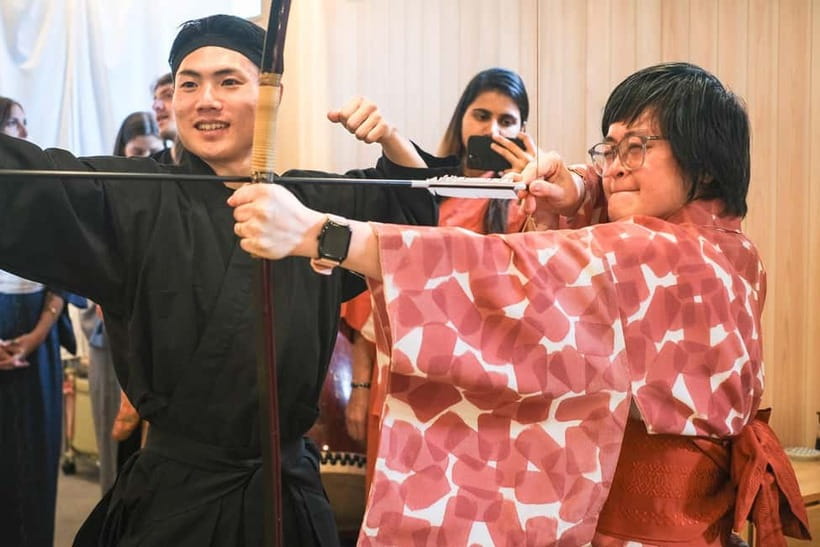
The best part of this Asakusa activity is the quick change from sightseer to samurai in hakama. You learn how to hold a katana, test a traditional bow, and play a small rank game before the real training begins. It is light on ceremony and heavy on hands-on fun.
I like the mix of kyudo and swordsmanship, since Japanese archery feels quite different from the western style many people know. I also like the practical touches: several clothing sizes, simple English instruction, Japanese snacks, and staff who help you take photos.
The main limitation is time. One hour moves quickly, so you will get an entertaining introduction rather than a full martial-arts course. The $96 price makes most sense if you want a polished cultural activity with costumes and pictures, not just a short archery lesson.
Key points to know before you book
- Kyudo is not western archery: The Japanese bow and its handling give this short lesson a distinct character.
- You wear a hakama outfit: Different heights and sizes are available, so the costume is part of the activity, not just a quick photo prop.
- The rank game comes first: A playful introduction to samurai traditions leads into training and a contest for the shogun position.
- Katana technique is about form: You practice the pose and grip of a single-edged sword rather than taking part in combat.
- Mori and Joe are named instructors: English-speaking coaches guide the session in a friendly, patient way, with explanations adjusted to your level.
- Asakusa location is easy to pair with sightseeing: The activity takes place at 2 Chome 6-11 in Taito-ku, inside the Heiwa Building on the fifth floor.
Changing into a samurai in Asakusa
Your hour begins at BUB Activity Center, in Tokyo’s Taito-ku district. The address is Tokyo, Taito-ku, Asakusa, 2 Chome 6-11, Heiwa Building. Take the elevator to the fifth floor, and arrive about 10 minutes early so you are not hunting for the entrance as the lesson begins.
The costume change gives the activity its first spark. You put on a traditional hakama set, the pleated trousers associated with formal Japanese dress and martial arts. The center has different heights and sizes, which matters because a loose costume can make movement awkward and a poor fit spoils the pictures.
Wear comfortable clothes underneath and comfortable shoes. You are not asked to arrive in special gear. Alcohol and drugs are not allowed, and the activity is family-friendly, with no prior experience needed.
This is not a museum display where you stand behind a rope. The clothing helps you understand posture, movement, and the visual discipline of samurai culture. It also makes the photographs more memorable than a standard snapshot outside a Tokyo temple.
More Samurai and Ninja Experiences in Tokyo
- Tokyo: Samurai Restaurant Show Ticket with 2 Drinks
★ 4.5 · 1,307 reviews - Tokyo: Samurai Ninja Museum Guided tour and Experience
★ 4.6 · 1,010 reviews - Tokyo: Samurai Sword & Archery Class from Samurai Descendant
★ 5.0 · 603 reviews
A playful samurai rank game before training
After you change, the instructor gives a short introduction to samurai history and traditions. The session then uses a fun mini-game to assign samurai ranks. The idea is simple: you may begin with a low rank, but losing is not a problem because the proper training is still ahead.
That game is a smart way to break the ice. A first-time participant may feel unsure about the bow, the sword, or even how to pose in the outfit. A short contest turns that nervous energy into something playful. It also gives families and friends a reason to interact instead of standing quietly while one person receives instruction.
The activity presents samurai philosophy in an accessible way. You should not expect a long lecture on feudal Japan. Instead, the history is used to frame the physical lessons and give the rank challenge a purpose.
I appreciate that balance. An hour is too short for a serious academic treatment, but a few clear ideas make the costumes and movements feel less like dress-up. The instructors keep the language simple in English, and the lesson can be adjusted to your level of understanding.
Learning kyudo with a traditional Japanese bow
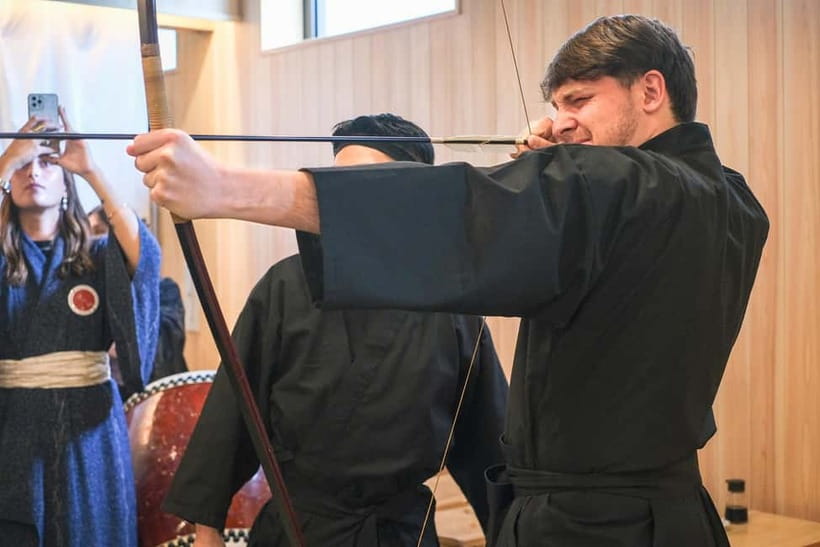
The archery portion introduces kyudo, the Japanese martial art of bow shooting. Even in a short class, the point is not simply to pull a string and hit a target. The posture, hand position, and controlled movement are part of the lesson.
This is where the activity differs from a typical western archery stop. The bow itself and the way you handle it create a different rhythm. You may be surprised by how unfamiliar the motions feel, even if you have tried archery before.
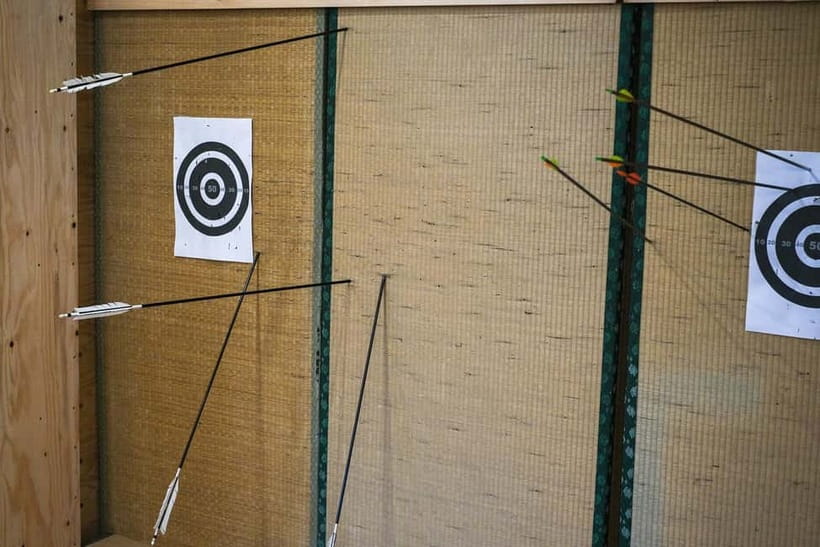
You then compete with friends for the shogun position. The contest gives the lesson a clear goal, but do not confuse it with a serious tournament. This is a beginner-friendly way to practice what you have just learned and add a little friendly pressure.
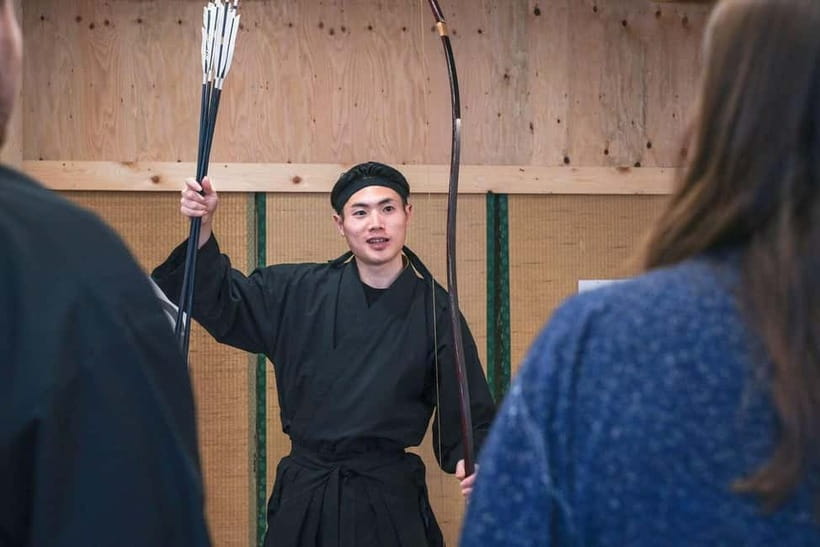
The staff guide you through the process rather than leaving you to guess. English is the working language, and the explanations are designed to be easy to follow. That is especially useful for children, families, and anyone who feels uncertain about technical instructions.
I like this section because it offers a real taste of a Japanese discipline without demanding prior training. You will not leave as a kyudo expert, but you should come away knowing that Japanese archery is about far more than aiming at a target.
Practicing the katana pose and grip
The second physical lesson focuses on a single-edged sword, the katana. You learn the pose and the correct way to hold the sword, with the aim of becoming the strongest samurai in Asakusa.
This wording is playful, but the instruction has a useful point. A katana looks dramatic in photographs, yet the effect depends on posture. The position of your feet, arms, shoulders, and hands changes the whole image. The instructor helps you find a convincing pose instead of simply handing you a sword and saying smile.
The session is about technique and presentation, not fighting. You are not promised a sword battle, cutting practice, or advanced martial-arts instruction. That is worth knowing before booking. The experience introduces the visual language of samurai swordsmanship in a controlled, approachable format.
Staff help take plenty of pictures, so you can focus on the lesson rather than trying to manage a phone while holding the sword. For many people, those photos will be a major part of the value. You get a record of the costume, the archery practice, and the sword pose, not just a generic portrait.
Coach Mori is described as patient and friendly, while instructor Joe is noted for clear and encouraging instruction. The activity also has a dynamic team behind it, with staff willing to offer tips about other experiences and shopping in the area.
More samurai and ninja sessions in Tokyo:
- Best Samurai Experience in Tokyo
★ 5.0 · 458 reviews - Ninja Experience (Family Friendly) at Samurai Ninja Museum TOKYO
★ 5.0 · 441 reviews - Tokyo: Samurai Entertainment Night Show in Kanda Shrine
★ 4.6 · 417 reviews - Tokyo Sword Experience – includes Museum Ticket/Ninja Experience
★ 5.0 · 314 reviews
Japanese snacks and the value of the $96 price
At $96 per person, this is not the cheapest one-hour activity in Tokyo. The price is easier to assess when you separate the parts: traditional clothing, use of a Japanese bow and katana, bilingual staff, Japanese snacks, coaching, a mini-game, and help with photographs.
If you only want to hold a sword for a few minutes, the cost may feel high. If you want a compact cultural activity that combines costume, instruction, competition, and pictures, the package makes more sense.
The snacks are a small detail, but they help the session feel complete. You get a taste of Japan alongside the physical activities, rather than moving straight from costume change to photo line. Do not book this expecting a full meal. The snacks are a light included extra.
The strongest value comes for groups. Friends can compete for the shogun title, compare their archery attempts, and take pictures together. Parents can join children in a structured activity that does not require anyone to know Japanese martial arts beforehand.
Solo participants can enjoy it too, though the competitive and photographic elements may feel more natural with a companion. The available information does not specify group size, so you should check the booking details if the size of the class matters to you.
Who will enjoy this one-hour format
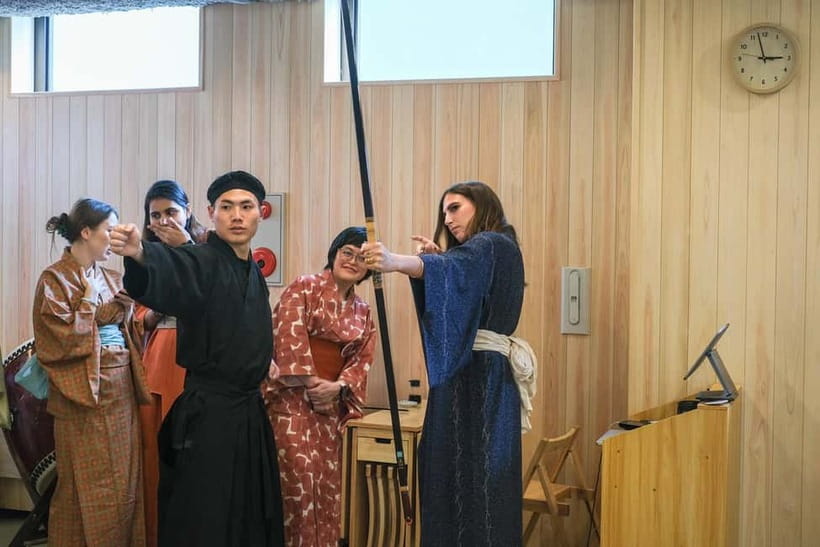
This experience suits first-time visitors who want something more active than a standard sightseeing stop. It also works well for families, young adults, and friends looking for a shared activity in Asakusa.
Children and young adults are specifically suited to the format because it uses a game, simple instruction, and costume play without requiring previous skill. Adults who take samurai culture seriously should keep expectations realistic. This is an introduction with entertainment built in, not a formal training course.
I would also recommend it to anyone interested in Japanese photography. The hakama outfit, katana pose, and bow practice give you several different images in a short period. Staff assistance means you can take part in the activity instead of spending the hour setting timers and asking strangers to hold your phone.
The experience is wheelchair accessible. Still, the supplied details do not explain the precise arrangement of the changing area or movement between activity stations. If you need a particular accommodation, contact BUB Activity Center before booking.
English instruction is available throughout. That makes the session practical for international visitors, and the staff can adapt explanations to different levels of English knowledge. The named coaches, Mori and Joe, have received particular praise for patience, friendliness, and clear teaching.
Fitting it into an Asakusa day
The center is in Asakusa, so this activity can fit neatly into a day spent in the district. Plan your arrival with the building instructions in mind: use the elevator to the fifth floor of the Heiwa Building and allow 10 minutes before the start.
The one-hour length is both an advantage and a limit. It is short enough to place between other plans, meals, or shopping. You do not need to give up half a day of Tokyo sightseeing.
At the same time, the quick schedule means transitions matter. Costume changing, the history introduction, the rank game, kyudo, sword practice, snacks, and photographs all share the same hour. You should expect an energetic sequence, not long quiet periods for reflection.
That pace will suit you if you like variety. If you want slow instruction, repeated practice, or detailed historical explanation, you may find the session too brief. The best approach is to treat it as a lively cultural sampler.
Practical booking details that affect your choice
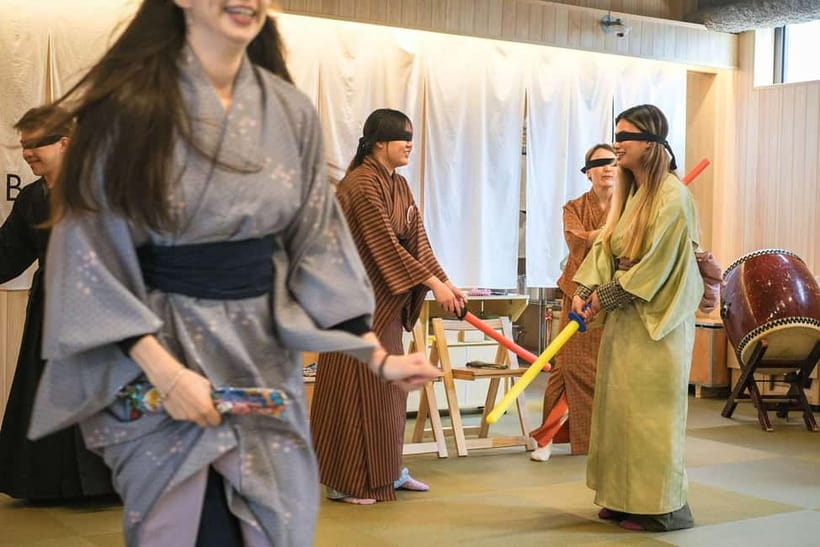
You can cancel up to 24 hours before the activity for a full refund, and a reserve-now, pay-later option is available. Those terms help if your Tokyo schedule is still shifting.
No prior experience is needed. Bring comfortable shoes and comfortable clothing, and arrive 10 minutes early. Do not bring alcohol or drugs into the activity.
The instructor language is English. Traditional clothes, Japanese snacks, use of the bow and katana, and bilingual staff are included in the stated price.
The activity takes place in Honshu, at the Asakusa address above. Check the available start times when selecting a date, since the duration is fixed at one hour but the starting schedule can vary.
Should you book the samurai experience?
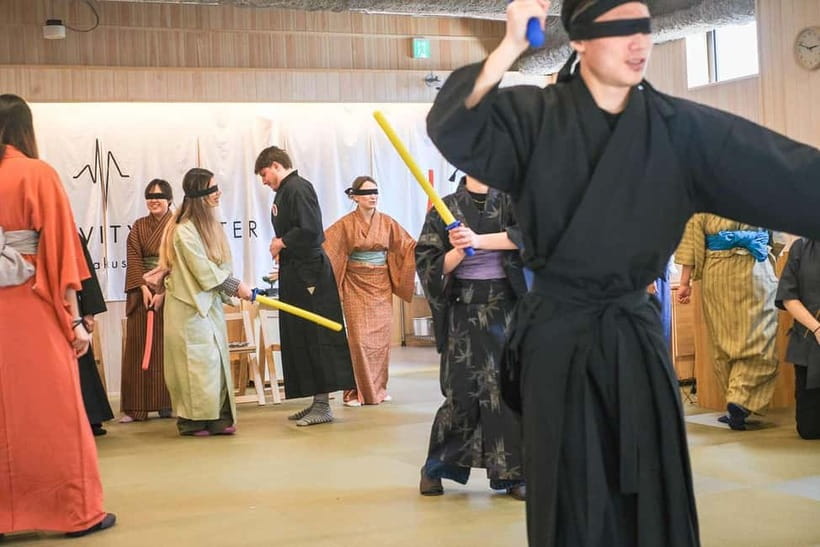
Book it if you want a short, active Tokyo experience with costumes, clear English instruction, friendly coaching, and plenty of photo opportunities. The combination of kyudo and katana practice gives you more variety than a simple dress-up session, while the rank game keeps the mood relaxed.
I would be more cautious if your main goal is serious martial-arts study. One hour cannot cover the full discipline of kyudo or swordsmanship. The $96 cost is best justified by the complete package: outfit, activities, snacks, coaching, competition, and photographs.
For families and friends in Asakusa, this is an easy choice. For solo visitors, it depends on how much you value the photos and interactive setting. If that sounds like your kind of afternoon, BUB Activity Center offers a compact and enjoyable way to try samurai traditions without needing any previous skill.
FAQ
Where does the Tokyo Samurai Experience take place?
It takes place at BUB Activity Center, Tokyo, Taito-ku, Asakusa, 2 Chome 6-11, Heiwa Building. Take the elevator to the fifth floor.
How long does the activity last?
The experience lasts one hour.
How much does it cost?
The listed price is $96 per person.
Is prior experience required?
No. You do not need previous experience with kyudo, archery, or swordsmanship.
What is included?
The activity includes use of a traditional Japanese bow and katana, traditional clothes, Japanese snacks, and bilingual staff.
Is the activity available in English?
Yes. English instruction is provided, and explanations can be adjusted to your level of English knowledge.
What should I wear or bring?
Bring comfortable shoes and comfortable clothes. Traditional clothing is provided for the activity.
Is the activity suitable for families and wheelchair users?
The experience is family-friendly and wheelchair accessible.
Just added around Tokyo
- Private Arrival Transfer : Narita International Airport to Central Tokyo City★ 4.5 · 12 reviews
- Narita Airport(NRT): Private Transfer to Tokyo/Yokohama 1-9pax★ 5.0 · 47 reviews
- Private Transfer from Narita Airport to Yokohama Port and City★ 4.5 · 17 reviews
- 3 Day Japan Highlights Tour: Tokyo, Mt.Fuji, Nara, Kyoto, Osaka★ 5.0 · 22 reviews
- [Narita Airport Terminals 1, 2] 40-60km Sawara Itako Historic Bike Tour★ 5.0 · 13 reviews
- Small Town in the Big City: Tasting Tokyo’s Kichijoji★ 5.0 · 195 reviews
- Small Town in the Big City: Tasting Tokyo’s Kichijoji★ 5.0 · 16 reviews
- The 10 Tastings of Tokyo With Locals: Private Street Food Tour★ 5.0 · 48 reviews
Tokyo Tours, compared.

Mt Fuji and Hakone 1-Day Bus Tour Return by Bullet Train
Read our review →

teamLab Planets TOKYO Digital Art Museum Entry Ticket
Read our review →
Mt Fuji & Hakone Cruise, Drum Show Bullet Train 1 Day from Tokyo
Read our review →
Sumo Show Experience with Chicken Hot Pot and a Photo
Read our review →
Shinjuku Food Tour (13 Dishes at 4 Local Eateries)
Read our review →
Tokyo Mt Fuji 5th St & Hakone Cruise Bus Tour w/Bullet Train
Read our review →
Flagship 2-Hours Official Street Go-Kart Tour – Tokyo Bay Shop
Read our review →Browse the lists this tour appears in