
Reviewed · TOKYO TOURS
Tokyo: Secret Food Walking Tour
Tokyo’s best food experiences often begin in places that look ordinary from the outside. This Ueno walking tour starts with fresh sushi near JR Ueno Station, then leads you through small local stops for gyoza, yakitori, sweets, matcha ice cream, and a final secret dish. It is a generous introduction to Japanese food without asking you to decode a menu alone.
I like the wide range of dishes, from minced-meat dumplings to skewered chicken and sweets. I also like the social feel of stopping at a stand-up restaurant for yakitori with draft beer or a flavored sawa. Guides such as Shonan, Kaho, Kyoko, and Natsumi have been praised for friendly English and for taking people to places they might not find on their own.
The main consideration is that the food takes center stage, while the local history and area commentary may be lighter than you expect from a dedicated sightseeing tour. If your priority is detailed historical context, this may feel a little food-heavy.
Key points to know before you book
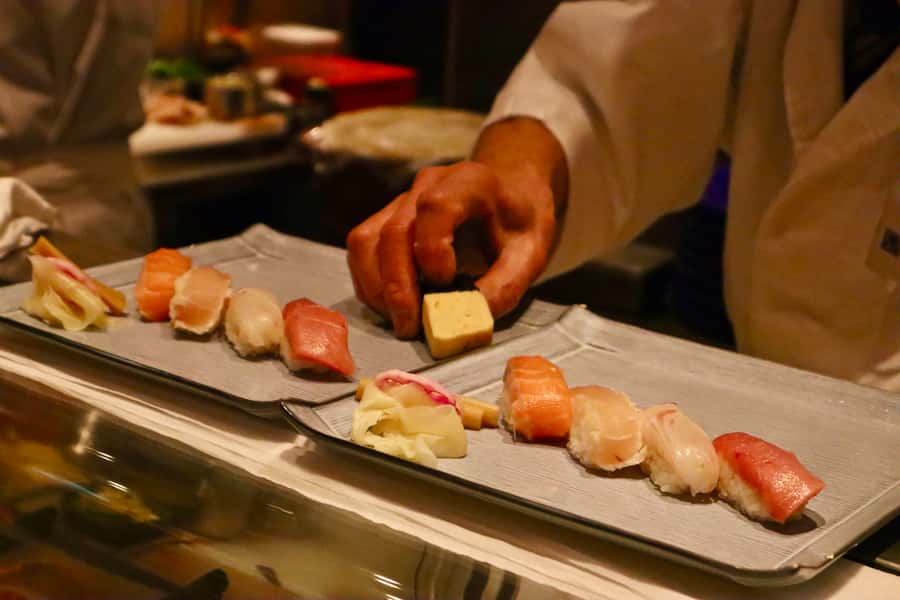
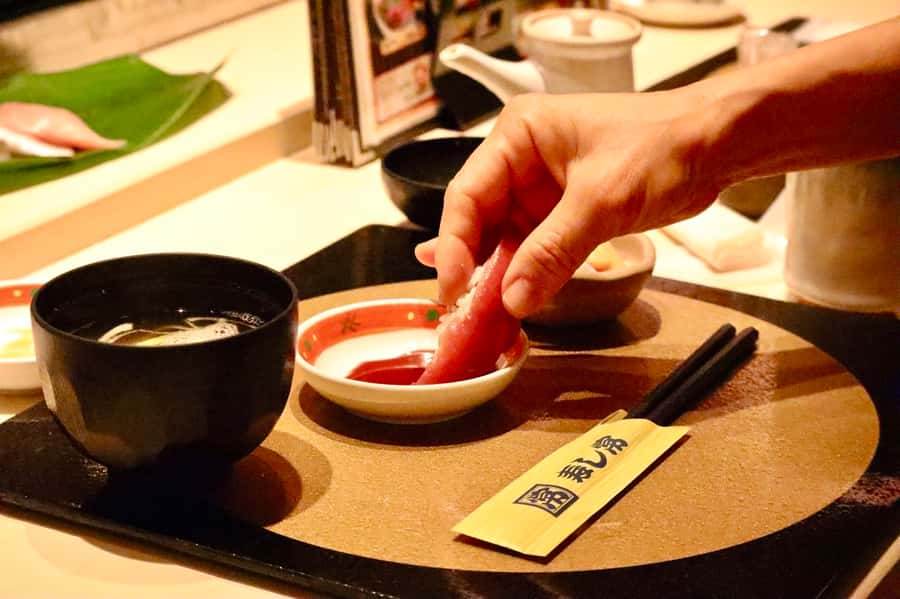
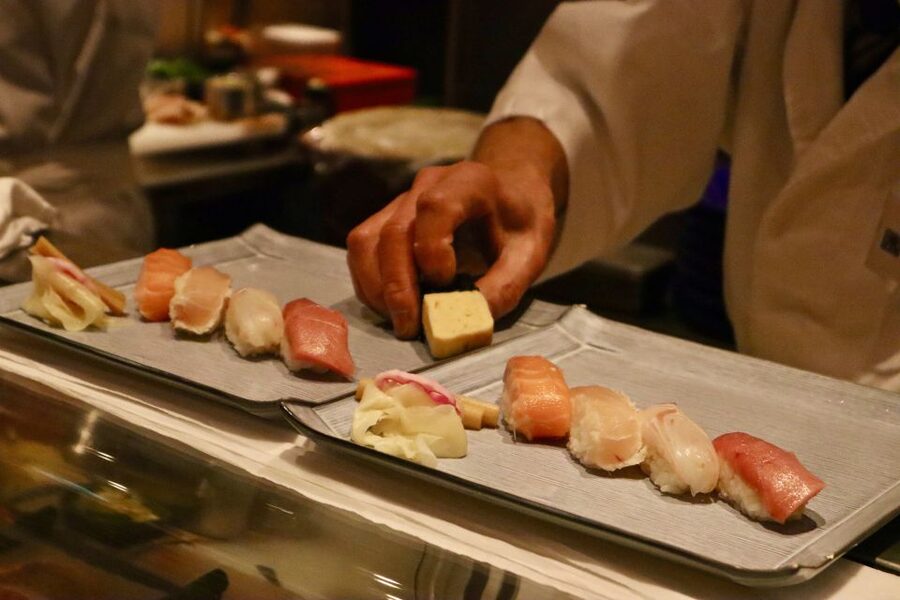
- Start with sushi near JR Ueno Station: Freshly made sushi gives you an easy first taste before the walk begins.
- Expect a full meal, not a few samples: The stops include sushi, gyoza, yakitori, a drink, sweets, matcha ice cream, and a secret dish.
- The stand-up yakitori stop adds local character: You’ll eat skewered chicken in a tachinomiya, a casual place built for standing, eating, and drinking.
- Come very hungry: The portions and number of stops can leave you stuffed by the end.
- A good first-day introduction: The tour suits first-time visitors, families, and experienced Japan eaters who want help finding local food.
- Wear comfortable shoes: You’ll spend three to three and a half hours walking between food stops.
Starting at JR Ueno Station with sushi
The meeting point is inside the JR Ueno Station building, outside the JR Central Gate, near the entrance to Hard Rock Cafe. This detail matters because the station has several entrances to the cafe. Look for the entrance on the other side of the bakery named Andersen, and watch for the guide holding a Secret Tours orange umbrella.
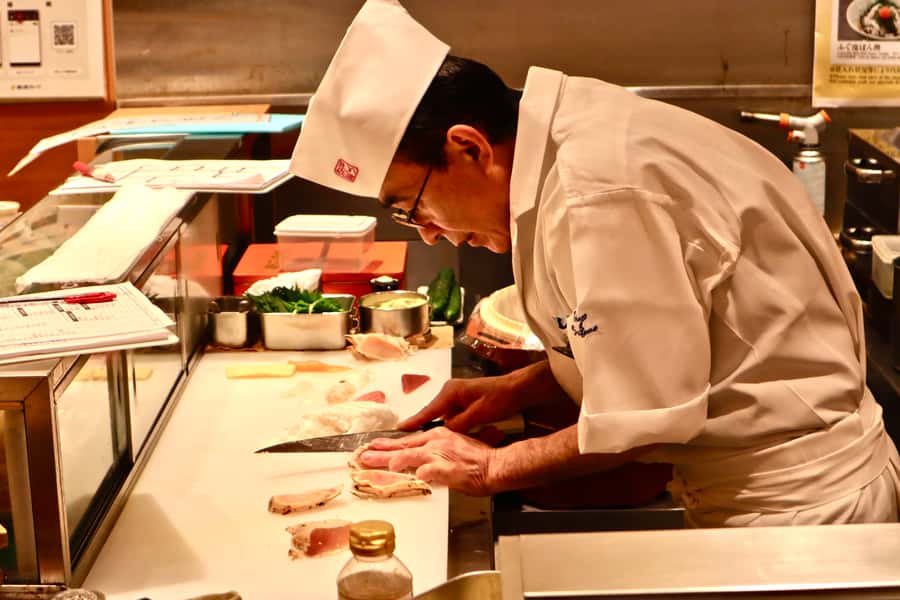
Once everyone meets, the tour begins at one of the area’s popular sushi shops. You can expect freshly made sushi rather than a long lesson in sushi technique. The value here is simple: your guide helps you order, explains what you are eating, and gets the group moving without the usual first-meal guesswork.
I like sushi as the opening course because it sets a clear tone. You start with a familiar Japanese staple, then move into foods that feel more casual and local. It also keeps the first stop from becoming too intimidating for anyone who has never ordered sushi in Japan.
The tour is conducted in English, and the guide’s role is important. Shonan, Kaho, Kyoko, Natsumi, and other guides have been described as warm, easy to talk to, and fluent in English. Your assigned guide may be different, but you can expect the tour to be led by a local food enthusiast who explains the dishes as you go.
More food tours in Tokyo:
- Tokyo: Shinjuku Food Tour (13 Dishes at 4 Local Eateries)
★ 5.0 · 6,603 reviews - Tokyo Tsukiji Fish Market Food and Culture Walking Tour
★ 5.0 · 3,184 reviews - Tokyo: Shinjuku Food Tour (15 Dishes and 4 Eateries)
★ 4.9 · 2,033 reviews
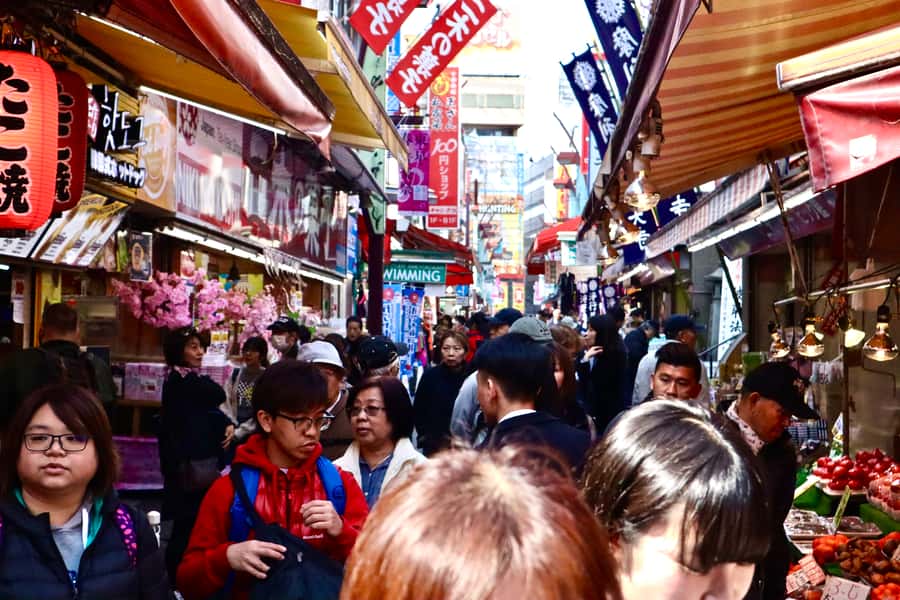
Walking from the station into Ueno’s food streets
After sushi, you walk away from the main station area toward the downtown district. The walk gives the tour some shape instead of making it a string of unrelated restaurant visits. You see how the food scene changes as you leave the major transport hub and head into streets used by local shops and casual eateries.
The walking also helps pace the meal. You are not sitting in one restaurant for three hours. Instead, you eat a course, walk a little, and arrive at a different kind of place. Wear shoes that can handle several hours on your feet, and avoid booking this immediately after another long walking tour.
The guide also shares stories about Tokyo’s food, customs, and local life. I would keep your expectations measured here. The tour includes background about the area and Japanese cuisine, and one past tour included a shrine visit, but the amount of history can depend on the guide and the group.
One useful way to think about this tour is as a food orientation. You will learn enough to recognize several everyday dishes and understand where they fit in Japanese eating culture. You should not book it expecting a detailed history lecture about Ueno.
Gyoza: familiar dumplings with a Japanese point of view
The next major stop is gyoza, served fried or steamed. These dumplings usually contain minced meat and vegetables, and they offer a very different texture from the sushi you have just eaten. Fried gyoza brings a crisp base, while steamed versions are softer and lighter.
This is one of the tour’s better features for mixed groups. If one person is cautious about raw fish, gyoza provides a cooked, approachable dish. If you already know gyoza from restaurants at home, the guide can add useful context about how the dish fits into Japanese food culture.
The stop also shows why a food walk can be more helpful than simply searching for a highly rated restaurant. You get a dish, a setting, and an explanation of how to eat it. You also avoid spending your first evening in Tokyo comparing menus on your phone.
The tour includes food, but the details of every serving can vary. The stated route promises gyoza, though the exact preparation may be fried or steamed. If you have a strong preference, ask the guide what is being served that day.
Yakitori and a drink at a tachinomiya
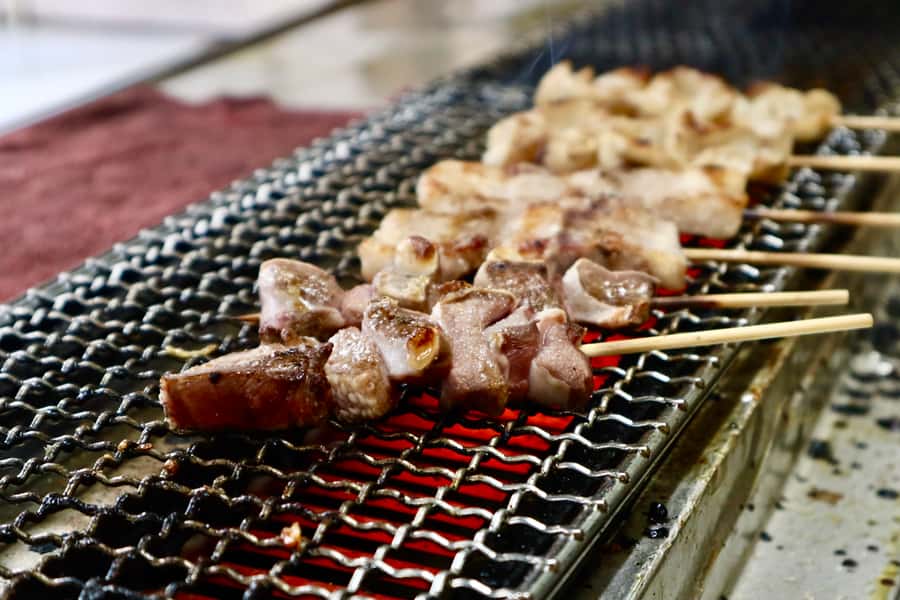
The tour then makes a short hop to yakitori, one of Japan’s classic casual foods. These are skewered pieces of chicken, usually cooked over heat and served with seasoning or sauce. The experience is as much about the setting as the food.
You eat at a tachinomiya, a stand-up restaurant where people gather for quick food and drinks. This is not a formal dinner room. You can expect a busy, casual stop with a draft beer or a flavored sawa alongside the yakitori.
I especially like this part because it introduces a type of Japanese dining that can be hard to understand from the street. A stand-up restaurant may look easy to enter, but a visitor still has to know how to order, where to stand, and what kind of food makes sense there. Having a guide removes that friction.
A drink upgrade is available, and one participant specifically found that the extra drink made the food combinations work better. The basic tour includes food, but transportation and pick-up are not included. Confirm the drink details when booking if you want to know exactly what is covered.
If you do not drink alcohol, ask your guide about the available choice before ordering. The listed drink options include draft beer or a flavored sawa, but the tour details do not specify nonalcoholic alternatives.
Same base, a completely different sort of day:
- Mt Fuji and Hakone 1-Day Bus Tour Return by Bullet Train
★ 5.0 · 26,383 reviews - 1-Day Tokyo Bus Tour
★ 5.0 · 14,250 reviews - Tokyo: TOKYO SKYTREE® Admission ticket
★ 4.5 · 11,192 reviews - Tokyo: teamLab Planets TOKYO Digital Art Museum Entry Ticket
★ 4.6 · 9,779 reviews
A sweet turn with manju, fruit, and matcha ice cream
After several savory stops, the tour shifts to sweets. Depending on the season, you may have manju or freshly cut fruit. Manju is a Japanese confection often associated with a soft outer layer and a sweet filling, though the exact style can vary.
The seasonal option is a sensible touch. It means this portion of the tour is not locked to one identical item all year. You should not expect the same fruit or sweet on every departure, but you can expect the guide to make a choice suited to the time of year.
Next comes matcha ice cream. This gives you a familiar dessert format with a distinct Japanese flavor. Matcha can taste pleasantly bitter and grassy compared with standard vanilla or chocolate ice cream, so it is a useful introduction if you have not tried it before.
By this point, the order of the meal works well. Sushi, gyoza, yakitori, and a drink make up the savory core. Manju or fruit and matcha ice cream provide a clean break from the heavier foods. The challenge is portion control. You may want to pace yourself early because the sweets are not the end.
The secret dish in a cozy setting
Every Secret Food Tours route includes a final secret dish, served in a cozy environment. The exact item is not disclosed in advance, so you need to be comfortable with a small element of surprise.
I see the secret dish as a useful finishing course rather than a gimmick. It gives the guide room to show you something that does not fit neatly into the public itinerary. It may also be the item you remember most, simply because you did not arrive with a fixed expectation.
The food stops are chosen to show variety, not just to repeat one category. You move from sushi to dumplings, chicken skewers, drinks, sweets, ice cream, and the unknown final course. That spread is the tour’s strongest selling point.
Still, food preferences matter. The supplied details mention gyoza with minced meat and vegetables, yakitori, sushi, and other dishes, but they do not provide a full allergy or dietary menu. If you have allergies, religious dietary rules, or strict vegetarian needs, contact the provider before booking rather than assuming substitutions are available.
How much food do you get for $150?
At $150 per person, this is not a cheap way to grab lunch. You are paying for several food stops, an English-speaking guide, local ordering help, cultural explanation, and the time spent moving between venues.
The price makes more sense if you are new to Tokyo or nervous about entering small restaurants. A guide can save you from ordering a dish you do not want, missing a local specialty, or wasting time in the wrong part of the neighborhood. You are also paying for a meal large enough to replace lunch for most people.
Come hungry. The amount of food is one of the most consistent strengths of the tour, and it is easy to underestimate how filling sushi, dumplings, chicken, dessert, and a secret dish can be. One strong piece of advice is not to eat beforehand, even if you normally have a large appetite.
The value is weaker if you already know Ueno well and are comfortable choosing restaurants on your own. In that case, you may be paying mostly for company, structure, and access to places you could eventually find yourself.
What the tour does well, and where it is lighter
The best part is the variety. You are not asked to spend three hours comparing versions of one dish. You sample several important parts of Japanese casual food, and each stop has a different mood.
The guides also receive strong praise for their friendliness and English. That matters more than it might sound. A food tour succeeds when you can ask questions, understand what is on the plate, and feel relaxed in unfamiliar places.
Families can make this work, too. An eight-year-old enjoyed the tour, and the mix of sushi, dumplings, chicken, fruit, and ice cream gives younger eaters several entry points. The walk and the amount of food may be tiring for small children, so plan your day around this rather than squeezing it between other major activities.
The weaker point is historical depth. The tour does include information about Tokyo, food, and culture, but one assessment found that it offered less history and area context than expected. If you want a detailed account of Ueno’s past, pair this with a separate neighborhood or museum visit.
Timing may also deserve attention. One stop opens at 11 a.m., which has led to a suggestion that the tour begin at 10:45 a.m. Ask about the departure time when booking, especially if you are arranging a morning train or another timed activity.
Meeting point, walking, and booking details
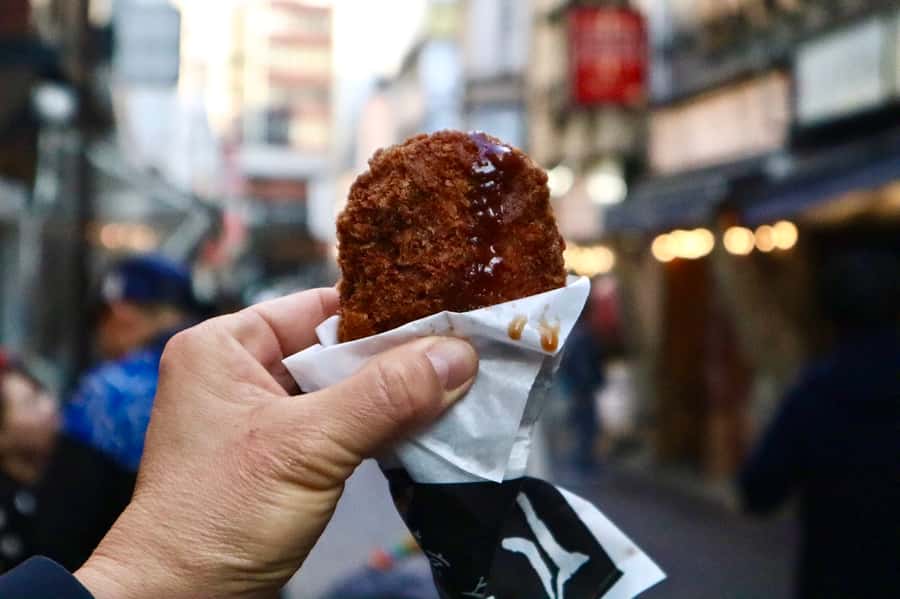
The tour lasts three to three and a half hours and finishes back at the meeting point. That return makes planning easier, especially if you are using Ueno as your base for the afternoon.
You arrange your own transportation to JR Ueno Station and back. Pick-up and drop-off are not included. The Japanese meeting-point text is JR上野駅 中央改札外のハードロックカフェ入口付近, which you can show to a local person if you cannot locate the correct Hard Rock Cafe entrance.
The orange umbrella should make the guide easier to spot, but allow extra time inside the station. Ueno has several exits and corridors, and arriving at the last minute can turn the first course into a stressful search.
You can reserve now and pay later, which helps if your schedule is still changing. Cancellation is allowed up to 24 hours before the tour for a full refund. Those policies are useful, but the bigger practical issue is simply protecting enough time for a long meal and walk.
Who should book this Ueno food walk?
I would choose this tour for a first or second day in Tokyo. It gives you a quick working knowledge of foods you are likely to see again, and it can point you toward the kind of casual places you might return to later.
It also suits people who want local guidance without committing to a full sightseeing day. You will not spend the entire time in a bus or formal restaurant. You will walk, snack, ask questions, and see several ways people eat in the neighborhood.
Families and adventurous eaters should do well, provided everyone can manage the walking and broad menu. The tour is also a good match for repeat Japan visitors who have already covered the major sights but want help finding food beyond the obvious tourist choices.
I would hesitate if you need a strict dietary plan, dislike surprises, or want a serious history tour. I would also think twice if $150 feels high for a meal, since the value depends heavily on how much you appreciate the guide’s access and local help.
Should you book the Tokyo Secret Food Walking Tour?
Book it if you want a large, varied meal and a friendly English-speaking guide to lead you through Ueno’s casual food scene. The sushi, gyoza, yakitori, drink, sweets, matcha ice cream, and secret dish make this feel like a full food outing rather than a few token bites.
Go in with the right expectations. This is primarily a food tour with cultural context, not a detailed history walk. Arrive hungry, wear comfortable shoes, leave room in your schedule, and ask about drink and dietary needs before paying. For many first-time visitors, that combination of guidance and variety is worth the $150.
FAQ
How long is the Tokyo Secret Food Walking Tour?
The guided food tour lasts three to three and a half hours.
Where does the tour start?
It starts inside JR Ueno Station, outside the JR Central Gate, near the Hard Rock Cafe entrance on the other side of the Andersen bakery.
How will I recognize the guide?
The guide will be waiting with a Secret Tours orange umbrella.
What food is included?
The tour includes sushi, gyoza, yakitori, a drink with the yakitori, manju or seasonal fruit, matcha ice cream, and a secret dish. The exact secret dish and some seasonal items are not specified in advance.
Is the tour conducted in English?
Yes. English is the listed tour language.
Does the tour include transportation or hotel pick-up?
No. Transportation, pick-up, and drop-off are not included. The tour ends back at the meeting point.
What should I bring, and can I cancel?
Bring comfortable shoes. You can cancel up to 24 hours before the tour for a full refund, and the reserve-and-pay-later option lets you hold a place without paying today.
More Walking Tours in Tokyo
- Tokyo: Imperial Palace and Shogun Historical Walking Tour
★ 5.0 · 2,251 reviews - Tokyo: Shinjuku Local Bar and Izakaya Guided Walking Tour
★ 4.9 · 1,794 reviews - Tokyo: Tsukiji Fish Market Food and Walking tour
★ 5.0 · 1,724 reviews - Tokyo: Asakusa Walking Tour with Sensoji Temple Visit
★ 4.8 · 1,583 reviews
Just added around Tokyo
- Private Arrival Transfer : Narita International Airport to Central Tokyo City★ 4.5 · 12 reviews
- Narita Airport(NRT): Private Transfer to Tokyo/Yokohama 1-9pax★ 5.0 · 47 reviews
- Private Transfer from Narita Airport to Yokohama Port and City★ 4.5 · 17 reviews
- [Narita Airport Terminals 1, 2] 40-60km Sawara Itako Historic Bike Tour★ 5.0 · 13 reviews
- 3 Day Japan Highlights Tour: Tokyo, Mt.Fuji, Nara, Kyoto, Osaka★ 5.0 · 22 reviews
- Small Town in the Big City: Tasting Tokyo’s Kichijoji★ 5.0 · 195 reviews
- Small Town in the Big City: Tasting Tokyo’s Kichijoji★ 5.0 · 16 reviews
- The 10 Tastings of Tokyo With Locals: Private Street Food Tour★ 5.0 · 48 reviews
Tokyo Tours, compared.

Mt Fuji and Hakone 1-Day Bus Tour Return by Bullet Train
Read our review →

teamLab Planets TOKYO Digital Art Museum Entry Ticket
Read our review →
Mt Fuji & Hakone Cruise, Drum Show Bullet Train 1 Day from Tokyo
Read our review →
Sumo Show Experience with Chicken Hot Pot and a Photo
Read our review →
Shinjuku Food Tour (13 Dishes at 4 Local Eateries)
Read our review →
Tokyo Mt Fuji 5th St & Hakone Cruise Bus Tour w/Bullet Train
Read our review →
Flagship 2-Hours Official Street Go-Kart Tour – Tokyo Bay Shop
Read our review →Browse the lists this tour appears in