
Reviewed · KYOTO TOURS
Traditional Japanese Washi Papermaking- Kyoto morning
The best part of this Kyoto morning class is that you do not simply watch a craft demonstration. You make washi paper from raw materials, arrange cherry blossoms, maple leaves, grasses, and paper shapes, then leave with something you designed yourself. Hiro and Junko guide the work in Japanese and English, patiently and clearly.
I like the small maximum of four people, which gives you plenty of help without the feel of a large group lesson. I also like the calm setting in a traditional Japanese-style house, a welcome change after a morning around Kyoto’s crowded sights. The main consideration is time: one hour passes quickly, especially if you choose a more involved item such as a lampshade.
Key points to know before booking
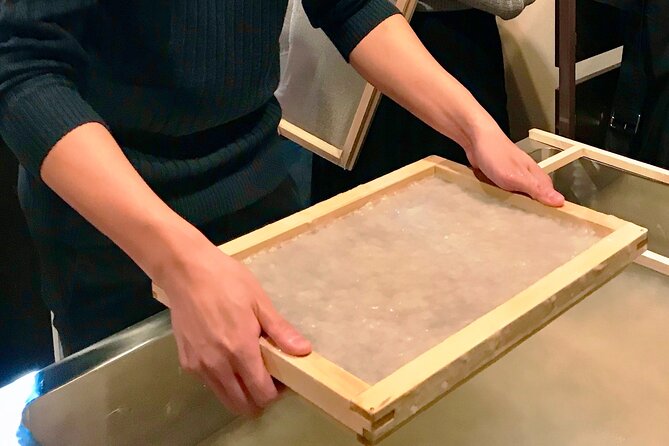
- Make paper from the beginning: You handle the washi-making process instead of only decorating a finished sheet.
- Choose your own design: Seasonal flowers, leaves, and paper cut-outs let you create a personal pattern.
- Small, friendly class: The activity accepts a maximum of four people, with Japanese and English instruction.
- Several finished items: The standard choice includes postcards, while table mats, lampshades, and wall panels may involve an extra charge.
- Easy central location: The studio is a six-minute walk from Karasuma Oike Station and nine minutes from Shijo or Karasuma Station.
- Useful rainy-day plan: This is an indoor cultural activity that fits neatly into a Kyoto morning.
Making washi at 紙TO和 in central Kyoto
Your class takes place at 紙TO和, located at 345 Sanjōchō in Nakagyo Ward. You make your own way there, and the activity ends at the same address. The studio is close to public transport, with the shortest walk from exit 6 of Karasuma Oike Station on the Kyoto Metro Karasuma Line.
You can also reach it in about nine minutes from exit 24 of Shijo Station on the Karasuma Line or from Karasuma Station on the Hankyu Line. That makes this an easy addition to a day around central Kyoto, the Nishiki Market area, or nearby shopping streets.
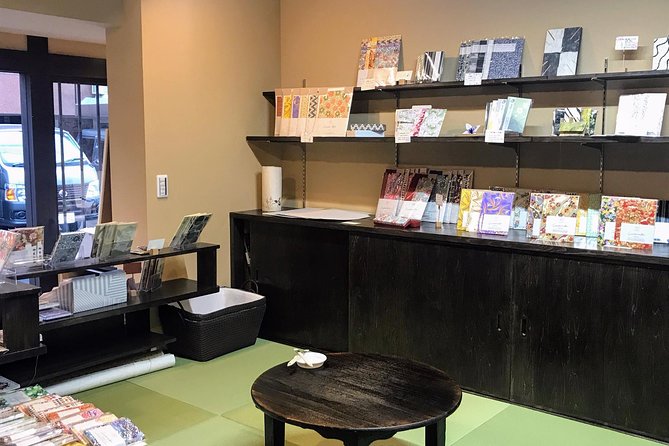
The setting matters. Instead of a large commercial classroom, you enter a small traditional Japanese-style house and shop. The modest scale helps the class feel personal, though it also means space is limited. With a maximum of four participants, you should expect close instruction rather than a room full of people working at different speeds.
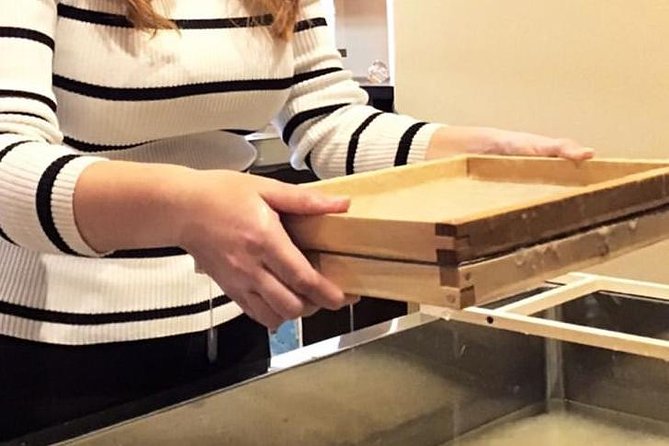
After introductions, Hiro, Junko, or another bilingual instructor explains the process. The teaching is in Japanese and English, and the class is designed for hands-on participation. You do not need prior craft experience. The instructions are broken into simple steps, and the staff assist as you work.
More early starts in Kyoto:
- Kyoto Early Morning Tour with English-Speaking Guide
★ 5.0 · 1,427 reviews - Kyoto: Early Morning Tour with English-Speaking Guide
★ 4.9 · 1,128 reviews - From Kyoto: Nara Guided Morning Tour
★ 4.6 · 335 reviews
A short lesson in an old Japanese craft
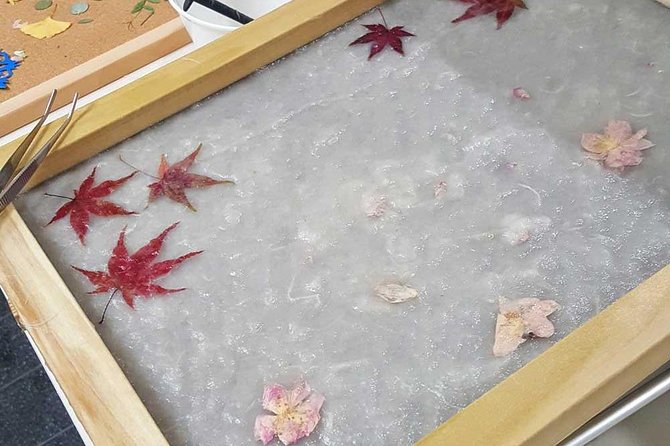
Washi is traditional Japanese paper, but this class is not just a quick paper-decorating session. You learn how the paper is formed from raw materials and get a basic sense of the many careful stages behind a finished sheet.
A short educational video may be shown while your paper dries. It covers the papermaking process and gives useful background on the craft. This is a good touch because the actual making is compact, while the video helps explain the wider method and why hand-produced paper takes such care.
The class keeps the process manageable. One part of the appeal is seeing how a complicated craft can be organized into steps that you can complete in about an hour. You gain enough understanding to respect the work without signing up for a full-day technical course.
That balance suits a first introduction. If you want an advanced study of Japanese papermaking, this is too brief. If you want a genuine cultural activity with something useful to take home, the format works well.
Designing paper with blossoms, leaves, and cut-outs
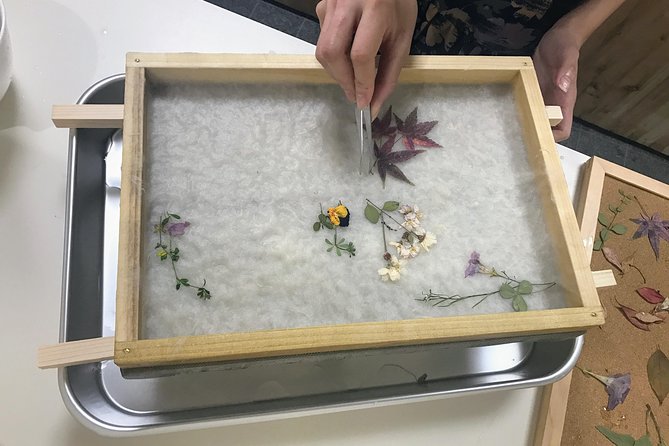
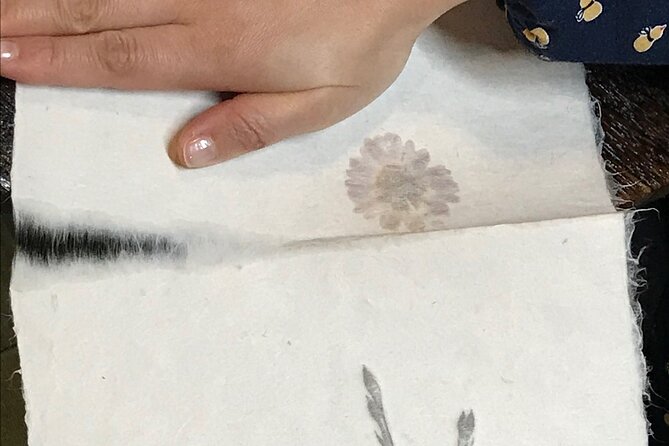
Once you begin making your sheet, the creative part takes over. You can use seasonal materials such as cherry blossoms and maple leaves, along with other pressed flowers, grasses, and paper cut-outs. The design is yours, so the final result can be simple, colorful, delicate, or pleasantly uneven.
I like that the decoration is part of the paper itself rather than a separate souvenir added afterward. You are making a sheet and shaping its appearance at the same time. That gives the finished piece a personal connection to the morning.
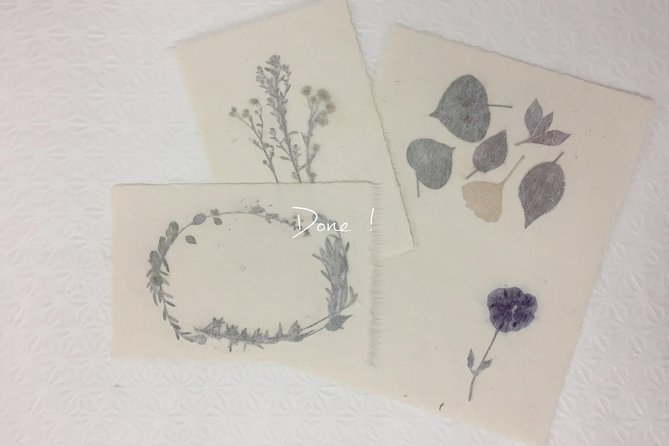
You can choose from several projects. The basic option includes a set of four regular postcards, according to the class details. You may also select a table mat, a wraparound lampshade, or a wall panel. Some of these choices require an additional fee, so ask about the cost before you begin if you have your heart set on a larger item.
The lampshade is especially appealing if you want a decorative object rather than stationery. It takes more design thought and may feel more rewarding, but it also uses more of your limited class time. If you want a quick, low-pressure result, postcards are the practical choice.
A table mat offers a middle ground. It gives you more room for arranging flowers and leaves, while still being easier to carry than a larger panel. Families or couples may prefer choosing different items so each person leaves with a distinct souvenir.
Why the one-hour format works, and where it feels rushed
The advertised duration is approximately one hour. That is enough time to learn the main steps, create your design, and finish a small paper item, but it is not a leisurely studio session.
The short format is useful for a Kyoto itinerary. You can fit it into a morning before lunch, a visit to Nishiki Market, or an afternoon of temples and museums. It also works well when you want a cultural activity without giving up half a day.
The trade-off is that you will need to make choices fairly quickly. If you spend a long time comparing every flower and paper shape, the hour can disappear. I suggest deciding in advance whether you want postcards, a mat, or a lamp so you can concentrate on the design once you arrive.
You can pay for an additional hour of unlimited papermaking if you want to make more gifts. That option is useful for a family group or anyone planning to produce several souvenirs, but it is an extra expense and should be treated as an add-on, not part of the basic price.
A few more Kyoto half-days to weigh up
- PERFECT KYOTO 1-Day Bus Tour
★ 5.0 · 13,518 reviews - Kyoto: Fushimi Inari, Kinkakuji, Bamboo Grove 1 Day Bus Tour
★ 4.8 · 4,316 reviews - Kyoto: Tea Ceremony in a Traditional Tea House in Kiyomizu
★ 4.9 · 3,519 reviews - Kyoto Geisha Walking Tour: Gion District & Hidden Gems
★ 4.7 · 3,273 reviews
What you take home
The strongest reason to book this class is the finished object. You do not leave with a mass-produced charm that could have come from any shop in Kyoto. You take home paper you helped make and decorate.
Postcards are easy to pack and share. They also make sense if you are visiting several cities and do not want to carry a fragile object. A table mat or wall panel gives you more surface for flowers and patterns, while a lampshade becomes a small piece of home decoration.
The staff package finished products carefully, which helps when you need to carry them for the rest of your trip. Still, the paper is handmade. You should keep it protected and avoid folding or crushing it in an overfilled day bag.
The shop also sells local paper goods and other handmade items. You can browse after class, but there is no pressure to buy. That makes the shop visit a useful extra rather than a sales stop. If your own paper turns out well and you want matching stationery or another small item, you have that option.
A good fit for children and teens
This activity suits families unusually well. Children must be accompanied by an adult, but the process has enough movement and choice to hold the attention of school-age children and teenagers. The class has also worked well for children as young as seven, with older children able to follow the steps more independently.
The instructors are patient and willing to help. That matters because small hands may need assistance with some stages, while younger children may want to move quickly to the decorating. Adults can enjoy the cultural background while children focus on arranging the flowers and shapes.
For a teenager, the class offers more than a standard craft table. You learn about a traditional Japanese art and get an attractive object at the end. It is also a calmer change of pace from shopping and sightseeing.
I would not choose this for someone who dislikes making things by hand or wants a fast, passive attraction. The class asks you to pay attention and participate. That is its strength, but it may not suit every member of a mixed-interest group.
The value of $33.03
At $33.03 per person, the price is reasonable for a one-hour guided craft activity in central Kyoto, particularly because taxes, fees, and handling charges are included. You are paying for instruction, materials, studio time, and a handmade souvenir rather than admission to a place you simply look at.
The value improves if you care about the process. A postcard set from a shop could cost less, but it would not carry the memory of making the paper yourself. The price is less compelling if you only want inexpensive stationery or if you are unlikely to use the finished item.
Keep the optional charges in mind. Lampshades, mats, wall panels, and an extra hour may cost more than the base booking. The basic activity remains short and affordable, but your final bill depends on which project and extensions you select.
For a family, the cost adds up quickly, so decide whether everyone needs a larger item. One person might make a lamp while others choose postcards. That keeps the activity varied without requiring every participant to pay for the most expensive option.
What makes the teaching effective
The instructors focus on practical guidance, but the class also gives you cultural context. Hiro and Junko explain the history and process in a friendly way, and the educational video fills in details that cannot fit into the hands-on portion.
The bilingual format is important. You can ask questions and receive directions in English, while still hearing the Japanese names and vocabulary connected with the craft. The instruction is not presented as a lecture. You learn while handling the materials.
The small group size gives you a better chance to receive individual help. That is particularly useful during the paper-making stages, when a small mistake could affect the final sheet. The staff are also accommodating when families or groups need extra support.
One practical strength is the personal approach. If you accidentally leave something behind, the studio staff can help when you return. That kind of care is not guaranteed everywhere, but it fits the intimate nature of this workshop.
Location, timing, and practical planning
This is a self-guided arrival activity, so transportation to and from the studio is not included. The central location makes public transport the sensible choice, and the six- to nine-minute walks from nearby stations are short enough to combine with other plans.
Give yourself a little extra time to find the address. The class is in a traditional house rather than a major tourist facility, and arriving calmly is better than rushing in just as the lesson starts.
A morning booking is a smart choice. You can make the paper before the day becomes crowded, then continue toward lunch or sightseeing. The class also provides a good indoor option in rainy weather, when a long outdoor temple route may be less appealing.
The activity returns to the meeting point, so you do not need to plan a separate pickup. Confirmation is provided when you book. Free cancellation is available if you cancel at least 24 hours before the local start time. Changes or cancellations inside that window are not refunded.
Who should book this Kyoto workshop?
I would recommend this experience to you if you like crafts, want a personal souvenir, or need a quiet break from busy sightseeing. It is especially suitable for couples, small families, creative teenagers, and anyone curious about how traditional Japanese paper is made.
It also suits repeat visitors who have already seen the major temples and want a more participatory activity. You are not only looking at Japanese culture through a museum display. You are using your hands and making a small part of it.
I would be more cautious if your schedule is extremely tight. The class lasts about an hour, but the walk from the station, arrival, design choices, and carrying the finished paper all need to fit your plans. You should also budget extra if you want a lampshade, a larger project, or more making time.
Should you book it?
Yes, if you want an affordable, small-group Kyoto activity with a real handmade result. The strongest features are the patient bilingual teaching, the four-person maximum, the choice of seasonal decorations, and the chance to make something from raw materials rather than simply purchase it.
Book the basic postcard option if you want an easy souvenir that packs well. Pay for a larger project or an extra hour only if you enjoy craft work and have room in your itinerary. For a calm morning, a rainy-day plan, or a family activity with more substance than a quick photo stop, 紙TO和 is a smart pick.
FAQ
Where does the washi papermaking class take place?
The class takes place at 紙TO和, at 345 Sanjōchō, Nakagyo Ward, Kyoto, 604-8205, Japan.
How long does the activity last?
The workshop lasts approximately one hour. You can pay for an additional hour of unlimited papermaking if you want to continue.
How many people can join the class?
The activity has a maximum of four participants.
Is the class taught in English?
Yes. The instructors speak Japanese and English, and the experience is operated by a multilingual guide.
What can I make during the workshop?
You can make a set of postcards, a table mat, a wraparound lampshade, or a wall panel using washi paper that you make and decorate.
What materials can I use for decoration?
The class provides seasonal pressed flowers and leaves, including cherry blossoms and maple leaves, as well as paper cut-outs.
Is transportation included?
No. You make your own way to the workshop, and transportation to and from the location is not included.
Can children take part?
Yes, children can participate, but they must be accompanied by an adult.
What is the cancellation policy?
You can cancel up to 24 hours before the experience start time for a full refund. Cancellations or changes made less than 24 hours before the start time are not accepted for a refund.
Just added around Kyoto
- Kyoto: Zen Meditation at a Private Temple with a Monk★ 5.0 · 25 reviews
- Kyoto: Gion Geisha District & Sake-in-Hand Walking Tour★ 5.0 · 37 reviews
- Private Pewter Sake Cup Experience with a Kyoto Artisan★ 5.0 · 31 reviews
- Your Private Vacation Photography Session In Kyoto★ 5.0 · 110 reviews
- Private Guided Traditional Buddhist Cooking in Japan★ 5.0 · 16 reviews
- Kyoto Wagashi(Japanese sweets) Cooking Class near Fushimiinari★ 5.0 · 60 reviews
- Traditional Japanese Music show & Experience Tour in Kyoto★ 5.0 · 57 reviews
- Kyoto:Family-Friendly Kimono & Yukata Experience at WARGO★ 5.0 · 147 reviews
Kyoto Tours, compared.


Fushimi Inari, Kinkakuji, Bamboo Grove 1 Day Bus Tour
Read our review →
Tea Ceremony in a Traditional Tea House in Kiyomizu
Read our review →
Kyoto Geisha Walking Tour: Gion District & Hidden Gems
Read our review →

Gion Magical Night Walking Tour with Geisha Trivia
Read our review →
