
Reviewed · KYOTO TOURS
Traditional Tea Ceremony with Matcha and Sweets in Kyoto
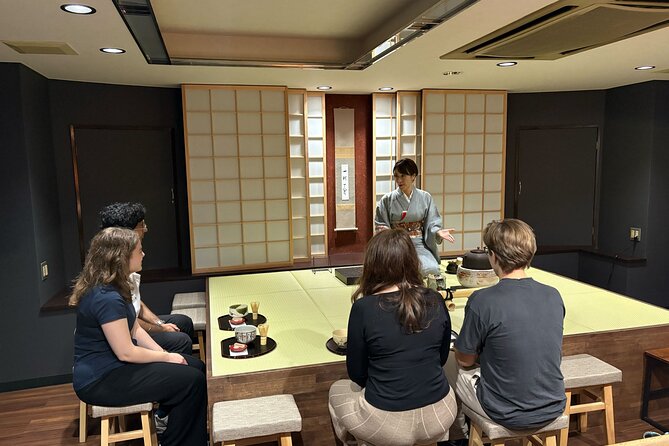
Kyoto’s tea ceremony can look formal from the outside, but this one-hour experience makes it easy to take part. You sit on chairs in Gion, watch a tea master demonstrate the graceful movements, then prepare your own bowl of matcha with tea from a family-run farm. I especially like the hands-on whisking and the chance to taste sweets made by long-established artisans. I also like that the session explains Zen and hospitality instead of treating the ceremony as a string of mysterious gestures.
The main trade-off is its short length. You get a clear, friendly introduction rather than a full study of tea culture. At $22.86 per person, that compact format is a good value, but anyone seeking a highly formal ceremony or a long quiet ritual may find it brief.
Key points at a glance
- Chairs instead of floor seating: You can take part without sitting in the traditional seiza position.
- A hands-on matcha lesson: You whisk your own bowl using premium tea from a family-run farm.
- Traditional Kyoto sweets: The sweets come from long-established artisans and are served during the second half.
- Tea masters with a personal connection: Instructors named Mitsune and Yuki have guided sessions, with Yuki especially noted for her connection to tea philosophy.
- Gion setting: The meeting point is in Kyoto’s historic Higashiyama Ward, near public transportation.
- Small-group format: The maximum group size is 13 people, large enough for a social feel but still manageable.
What this Kyoto tea ceremony really offers
This is a practical introduction to chanoyu, the Japanese tea ceremony. You are not simply watching someone make matcha while standing at a distance. The experience explains the ideas behind the ritual, shows the technique up close, and gives you a turn with the whisk.
That combination matters. Matcha preparation has a series of careful movements, but the meaning can be hard to grasp if you only see the finished bowl. Here, the demonstration gives you a model to follow, while the explanation connects the actions to Zen philosophy and omotenashi, the Japanese idea of thoughtful hospitality.
The setting is designed to feel welcoming rather than stern. You sit on chairs, so you do not need to kneel on the floor or worry about whether your legs can handle a long period in seiza. That makes the experience suitable for people with limited mobility and for anyone who feels unsure about taking part in a formal cultural activity.
The tone also helps first-time visitors. You can ask questions, see the tools used at close range, and try the process yourself without needing prior knowledge. The aim is not to test you. It is to give you a starting point for understanding tea in Japan.
More Tea Ceremonies in Kyoto
- Kyoto: Tea Ceremony in a Traditional Tea House in Kiyomizu
★ 4.9 · 3,519 reviews - Kyoto: Tea Ceremony Ju-An at Jotokuji Temple
★ 4.9 · 3,207 reviews - Kyoto: 45-Minute Tea Ceremony Lesson Experience
★ 4.3 · 2,378 reviews
Arriving in Gion at the Yamatocho meeting point
The activity begins at 1 Gion Tanakaya Building, Yamatocho, in Kyoto’s Higashiyama Ward, postal code 605-0802. The meeting point is in the Gion area, one of Kyoto’s best-known traditional districts, and it is near public transportation.
You will need to pay attention to the exact building and address when arranging your route. Gion has narrow streets and many points of interest close together, so allowing a little extra time is sensible. The mobile ticket is useful for keeping the booking details on your phone, especially if you are moving around Kyoto without printed paperwork.
The activity ends back at the same meeting point. That makes planning easier. You do not need to arrange a second pickup or figure out where the session leaves you. You can continue exploring Gion afterward, though the ceremony itself lasts about one hour.
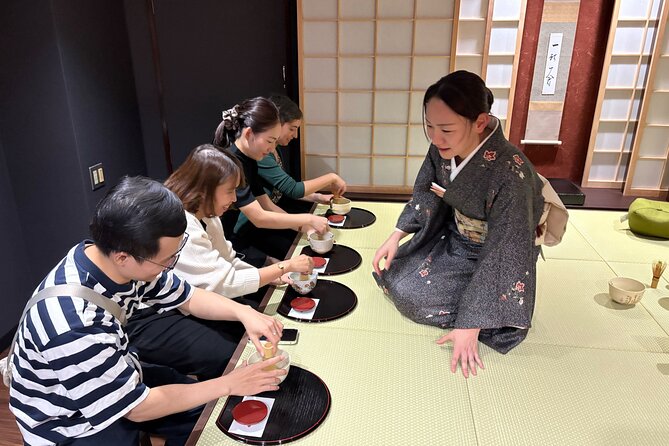
The group can include up to 13 people. That is not a private lesson, but it is still a modest group size for a cultural demonstration. You should have a reasonable chance to see the tea master’s movements and follow the instructions during your own preparation.
Watching the tea master’s graceful preparation
The first part centers on demonstration and explanation. A tea master performs the ceremony close enough for you to observe the controlled movements, the order of preparation, and the calm pace of the process.
The value here is not only visual. Tea ceremony is built around attention: attention to the tools, the tea, the guest, the room, and the moment itself. The guide explains how Zen thought shaped this approach, giving you a way to read the ceremony beyond its polished appearance.
You will also hear about the history of tea in Japan and the spirit of omotenashi. This helps explain why the ceremony places such weight on preparation and care. The host is not rushing to produce a drink. The preparation is part of the welcome.
Guides named Mitsune and Yuki have led this experience. The teaching style can vary slightly with the instructor, but the essential format remains the same: explanation, demonstration, personal preparation, tasting, and questions. Yuki has been especially praised for connecting the movements to the philosophy behind the ceremony. That is useful if you want more than a recipe for making matcha.
The session is presented as a shortened version, which is both its strength and its limit. You can fit it neatly into a day of sightseeing, but you will not receive every detail of tea practice. Think of it as a well-shaped introduction rather than formal training.
Tasting sweets from established Kyoto artisans
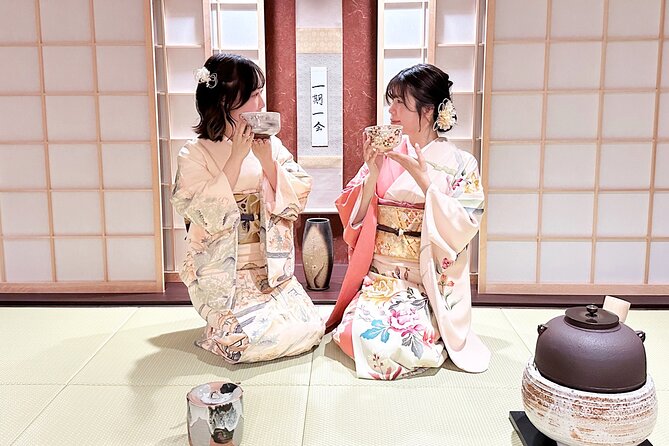
In the second half, you taste carefully selected traditional sweets. These are not just a small snack added to the booking. In a tea setting, sweets balance matcha’s strong, grassy bitterness and prepare your palate for the tea.
The sweets are sourced from long-established artisans. That detail gives the tasting a stronger connection to Kyoto food culture than a generic packaged treat would provide. It also shows how tea ceremony brings several crafts together: tea growing, confectionery, ceramics, hospitality, and precise preparation.
The information provided does not specify the exact types or flavors of sweets served on a particular day. You should therefore expect a traditional sweet selection without assuming a certain confection. The main point is the pairing. The sweetness makes the matcha easier to appreciate, especially if this is your first time drinking it.
This portion also breaks up the formality. After watching the tea master, you have time to taste and absorb what you have learned before taking the whisk yourself. It gives the experience a pleasant rhythm rather than asking you to concentrate on technique for the full hour.
Same base, a completely different sort of day:
- PERFECT KYOTO 1-Day Bus Tour
★ 5.0 · 13,518 reviews - Kyoto: Fushimi Inari, Kinkakuji, Bamboo Grove 1 Day Bus Tour
★ 4.8 · 4,316 reviews - Kyoto Geisha Walking Tour: Gion District & Hidden Gems
★ 4.7 · 3,273 reviews - Kyoto: Gion Magical Night Walking Tour with Geisha Trivia
★ 4.9 · 2,393 reviews
Whisking your own bowl of matcha
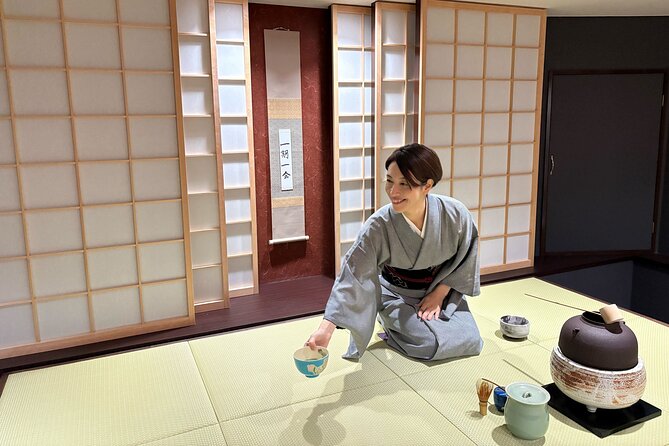
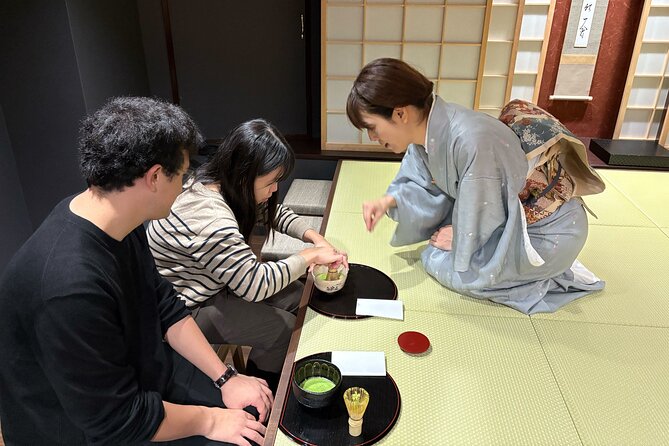
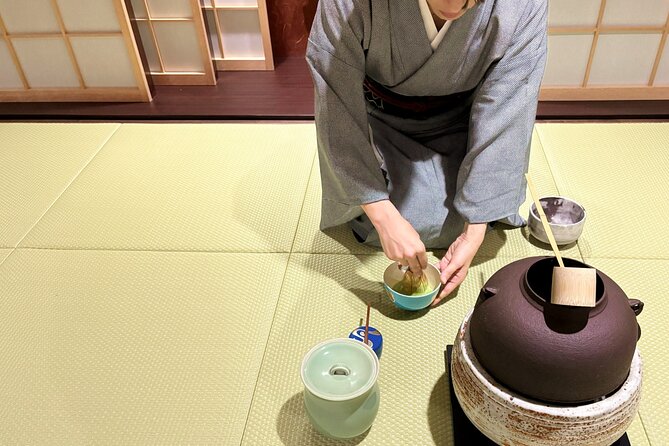
The hands-on portion is the heart of the activity for many people. You prepare your own bowl of matcha using premium tea sourced from a family-run farm.
You will learn how to whisk the tea rather than simply being handed a finished drink. The process gives you a better sense of what makes matcha different from ordinary steeped tea. You are working with powdered leaves, so the texture, color, and movement of the whisk all matter.
Do not expect your first bowl to look exactly like the tea master’s. That is part of the fun. The demonstration gives you a guide, but the experience is designed for beginners. You can focus on following the method, noticing the aroma and taste, and understanding the care that goes into the drink.
The farm source is another worthwhile detail. It places the tea in a real chain of production, from a family-run grower to the bowl in front of you. The experience does not merely present matcha as a fashionable Kyoto souvenir. It gives you a closer look at the ingredient itself and the work behind it.
The matcha has been described as delicious by people who took part, but taste is personal. Matcha can be earthy, bitter, grassy, or creamy depending on preparation and preference. The traditional sweet helps soften the stronger notes.
Why the chair seating matters
Many visitors picture a tea ceremony with everyone kneeling on tatami for a long time. That is not what this experience offers. You sit on chairs throughout the session, making it easier for people who are unfamiliar with floor seating or have limited mobility.
This is more than a minor comfort feature. Physical discomfort can distract you from the ceremony, particularly when you are trying to follow unfamiliar movements. Chair seating lets you concentrate on the explanations, the demonstration, and the taste of the tea.
The arrangement may also make the activity less intimidating. If you worry about making a mistake in a formal Japanese setting, a more approachable room can help you relax. You can still learn about the ceremony’s etiquette and spirit without feeling that you must already know the rules.
The limitation is that chair seating may feel less traditional to someone seeking the atmosphere of a formal tatami tea room. The ceremony remains rooted in Japanese tea practice, but this format is deliberately adapted for access and comfort.
A compact lesson on Zen and hospitality
The explanations about Zen and omotenashi give the ceremony its wider meaning. Without them, you might remember only that matcha is whisked in a particular way. With them, you can begin to understand why the host’s movements are measured and why the encounter values calm attention.
The idea of hospitality is especially important. In tea ceremony, the host prepares the setting and tea with the person in front of them in mind. That care is expressed through actions, not just words. A simple bowl of tea becomes a focused exchange between host and guest.
The Zen connection is introduced rather than studied at length. You will not leave with a complete course in Zen thought, and the one-hour schedule does not allow for that. You will, however, gain useful context for the quiet rhythm and deliberate gestures you see.
I like this balance. The explanation keeps the session from becoming a photo opportunity with a whisk. At the same time, it does not turn a short cultural activity into a lecture. The host’s enthusiasm and personal connection to the subject are central to making the ideas understandable.
The final questions and answers
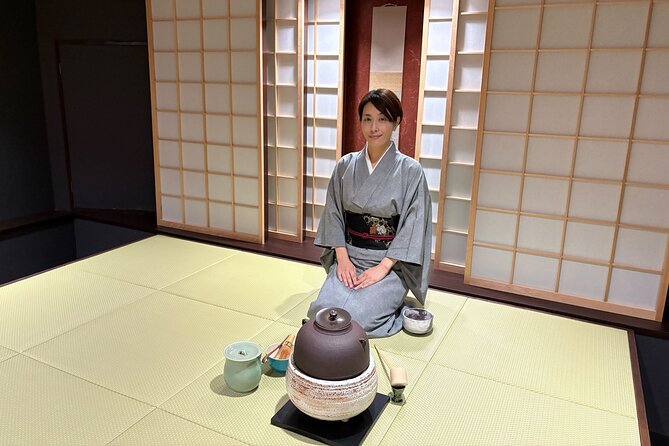
The ceremony ends with a Q&A session. This is a small but valuable part of the hour because it gives you a chance to ask about details that may not be obvious during the demonstration.
You might want to clarify the proper way to drink matcha, ask about the tools, or return to something the tea master said about Zen or hospitality. The exact questions will depend on the group, but the format lets you take the conversation in a direction that suits your interests.
A Q&A also helps separate this activity from a passive show. You are encouraged to think about what you have seen and connect it to Japanese culture. If you have visited another tea house or plan to attend a more formal ceremony later, this is a good place to ask how the experiences differ.
Because the group maximum is 13, the available question time may depend on how many people want to speak. If you have something specific to ask, keep it in mind during the session so you do not forget it at the end.
Is $22.86 a good value?
At $22.86 per person, the price is reasonable for a one-hour cultural activity in central Kyoto. You receive instruction from a tea master, a demonstration, traditional sweets, premium matcha, and the chance to prepare your own bowl.
The strongest value comes from participation. If you only watched a ceremony, the price might feel less compelling after an hour. Here, you get to practice the key action yourself and finish with a clearer understanding of what you observed.
The short duration also makes the cost easier to fit into a busy Kyoto schedule. You can pair it with time in Gion rather than giving up half a day. The trade-off is depth. You are paying for an accessible introduction, not an extended study of tea ceremony or a private appointment.
Free cancellation is available when you cancel at least 24 hours before the start time. Changes or cancellations made within 24 hours are not accepted for a refund, and the cut-off follows Kyoto local time. Keep that rule in mind if your plans are still shifting.
Who should book this experience?
I would recommend it most strongly to first-time visitors who want a clear way into Japanese tea culture. You do not need previous experience, and the guide explains both the practical steps and the ideas behind them.
It is also a good choice for anyone who wants a hands-on cultural activity rather than another sightseeing stop. Making matcha yourself gives you something to remember and a skill you can recognize when you encounter tea elsewhere in Japan.
The chair seating makes it a sensible option for people who cannot comfortably sit on the floor. Families and mixed-age groups may also appreciate the approachable format, though the supplied information does not specify a minimum age or child policy, so check those details before booking for young children.
You may want a different experience if your main goal is a long, highly formal ceremony in a traditional floor-seating setting. This is shorter, friendlier, and more instructional. Its purpose is to help you understand and try tea ceremony, not to recreate every part of an extended formal occasion.
Should you book the Kyoto tea ceremony?
Book it if you want an affordable, well-paced introduction to matcha in the heart of Gion. The chair seating, small maximum group, traditional sweets, family-farm tea, and hands-on whisking make it more useful than a ceremony that only asks you to watch.
The strongest reason to choose it is the teaching. Instructors such as Mitsune and Yuki bring attention to the philosophy behind the movements, and the final questions give you room to explore what you have seen. Just remember that one hour means an introduction, not the whole story of Japanese tea.
For $22.86, I think it is a smart Kyoto addition, especially before or after exploring Higashiyama. Book it when you want culture you can take part in. Skip it only if you are seeking a longer, more formal ceremony with traditional floor seating.
FAQ
How long does the tea ceremony experience last?
The activity lasts approximately one hour.
Where does the experience begin?
It begins at Japan, 605-0802 Kyoto, Higashiyama Ward, Yamatocho, 1 Gion Tanakaya Building.
Where does the activity end?
The experience ends back at the meeting point.
Is the activity suitable for someone who cannot sit on the floor?
Yes. Participants sit on chairs, so you do not need to use traditional floor seating. This makes the activity easier for people unfamiliar with seiza or with limited mobility.
Will I make my own matcha?
Yes. After watching the tea master and learning about tea culture, you will prepare your own bowl of matcha using premium tea sourced from a family-run farm.
How many people can join the activity?
The group has a maximum of 13 travelers.
Can I cancel for a full refund?
Yes, if you cancel at least 24 hours before the experience start time. Cancellations or changes made less than 24 hours before the start time are not accepted for a refund.
More Dessert Tours in Kyoto
- Kyoto: Japanese Traditional Sweets Making and Tea Ceremony
★ 4.4 · 314 reviews - Kyoto Wagashi(Japanese sweets) Cooking Class near Fushimiinari
★ 5.0 · 60 reviews - Kyoto: Wagashi (Japanese sweets) Cooking near Fushimiinari
★ 5.0 · 40 reviews - Kyoto: Traditional Tea Ceremony with Matcha & Sweets in Gion
★ 4.9 · 27 reviews
Just added around Kyoto
- Kyoto: Zen Meditation at a Private Temple with a Monk★ 5.0 · 25 reviews
- Kyoto: Gion Geisha District & Sake-in-Hand Walking Tour★ 5.0 · 37 reviews
- Private Pewter Sake Cup Experience with a Kyoto Artisan★ 5.0 · 31 reviews
- Your Private Vacation Photography Session In Kyoto★ 5.0 · 110 reviews
- Private Guided Traditional Buddhist Cooking in Japan★ 5.0 · 16 reviews
- Kyoto Wagashi(Japanese sweets) Cooking Class near Fushimiinari★ 5.0 · 60 reviews
- Traditional Japanese Music show & Experience Tour in Kyoto★ 5.0 · 57 reviews
- Kyoto:Family-Friendly Kimono & Yukata Experience at WARGO★ 5.0 · 147 reviews
Kyoto Tours, compared.


Fushimi Inari, Kinkakuji, Bamboo Grove 1 Day Bus Tour
Read our review →
Tea Ceremony in a Traditional Tea House in Kiyomizu
Read our review →
Kyoto Geisha Walking Tour: Gion District & Hidden Gems
Read our review →

Gion Magical Night Walking Tour with Geisha Trivia
Read our review →

Gion Geisha District Walking Tour – Stories of Geisha
Read our review →Browse the lists this tour appears in