
Reviewed · NARA TOURS
Nara: Bike Tour in Ancient Capital UNESCO World Heritage
The best thing about this Nara bike tour is that it takes you far beyond the usual deer-and-temple circuit. You pedal across the wide grounds of Heijo Palace, the former capital of Japan, stopping at grand gates, quiet water, archaeological remains, gardens, and reconstructed palace buildings.
I like two things in particular: the bike makes a huge site manageable in just two hours, and guide Kay brings the Nara period to life in clear English. The ride around the pond is especially calm, while the costume stop adds a cheerful, hands-on touch. The main consideration is that the site is partly reconstructed, so visitors mainly interested in original buildings may find some displays modest.
Key points before you book
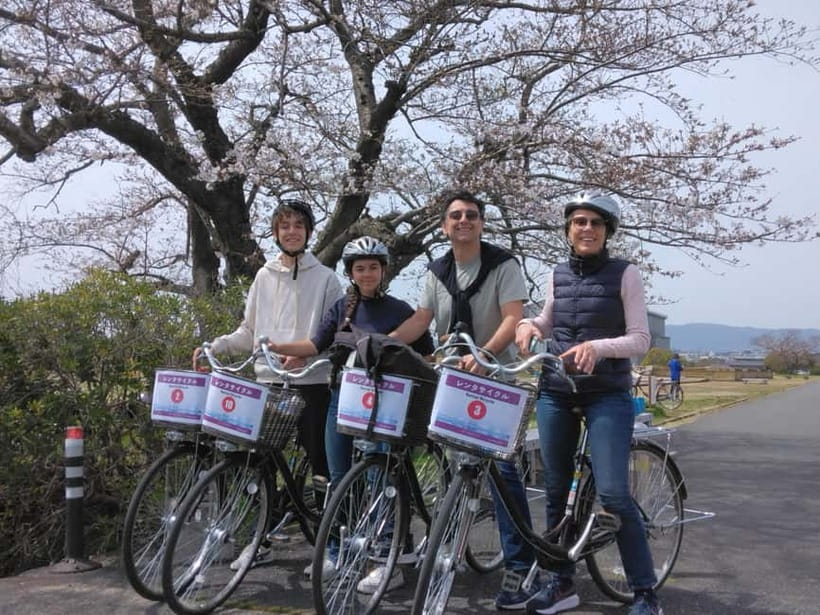
- Cover a huge palace site by bike: Cycling lets you see far more than you could comfortably reach on foot in two hours.
- Guide Kay leads the English tours: She is praised for her patience, clear explanations, and warm manner with families and first-time visitors.
- See a quieter side of Nara: The palace grounds offer open space, birds, water, and fewer crowds than Nara Park.
- Mix history with archaeology: You’ll visit museums, an excavation hall, an ancient tomb, palace gates, and a Japanese garden.
- Traditional clothing is included: You can wear Tenpyo-style Nara period clothing and take photos.
- The price is unusually low: At $22 per person, the bike, helmet, guide, admissions, and costume experience are included.
Why Heijo Palace works so well by bike
Heijo Palace was the center of Nara when the city served as Japan’s capital during the Nara period. Today, the site is broad and open, with major structures spread across a large area. Walking between them would take time and energy. A bicycle gives you a practical way to connect the pieces.
This is not a fast cycling tour. The pace is easy, with frequent stops for photos and explanations. You’ll ride around the palace grounds, pause at important buildings, and then continue on paths near the water and greenery. That makes the tour suitable for families who can ride comfortably, as well as adults who want an introduction to Nara’s political and cultural past.
The group is limited to eight people. That matters here. A small group can stop without creating a traffic jam, and you can ask Kay questions at each site. Her patient approach has been particularly useful for families with young children, including a six-year-old who enjoyed collecting stamps during one tour.
You meet at the rental bike reception counter at Miharashi-Kan in Suzaku Gate Square. Arrive 10 minutes before departure. The tour includes the bicycle and helmet, but bike insurance is not included, so check the booking conditions carefully.
More bike days around Nara:
- E-Bike Nara Highlights – Todaiji, Knives, Deer, Shrine
★ 4.8 · 186 reviews - Nara – Highlights Bike Tour
★ 4.5 · 89 reviews - E-Bike Nara Highlights – Todaiji, Knives, Deer, Shrine, and Gems
★ 4.5 · 34 reviews
Suzaku Gate: beginning with the scale of ancient Nara
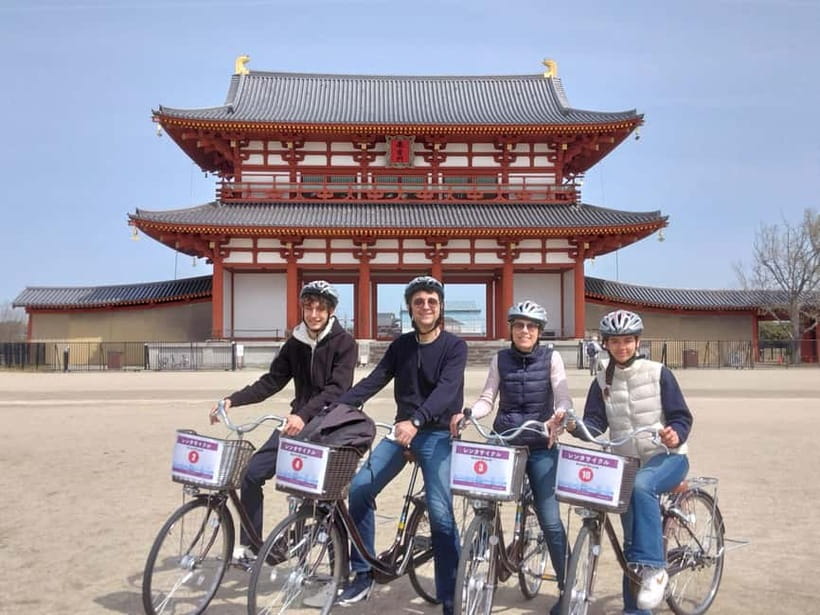
Suzaku Gate is the main entrance to Heijo Palace and the natural starting point for understanding the site. The gate is large, formal, and easy to photograph, but its real value is the view beyond it. You begin to see how much open ground once belonged to the imperial capital.
Kay explains the role of Nara as Japan’s capital and sets up the rest of the ride. This opening stop lasts about 15 minutes, giving you time to listen, take pictures, and get comfortable with the bike.
The broad setting also helps explain why cycling makes sense. The palace site does not feel like a compact temple complex. It has distance between its main features, and the open grounds can make individual buildings seem isolated if you do not know how they fit together. The guide supplies that missing connection.
Toin Garden and the beginnings of Japanese garden design
Toin Garden, also called the East Palace Garden, is a short but worthwhile stop. The garden shows how formal Japanese garden design took shape, with bridges, buildings, water, and carefully placed rocks arranged for both beauty and ceremony.
You’ll hear about the garden’s role as a state guest house. It was not simply a pleasant park. Its layout reflected court life and the public duties of the palace.
The stop lasts about 10 minutes, so do not expect an extended garden visit. Still, it provides a useful change of pace after the large Suzaku Gate. Instead of focusing on political power and grand entrances, you get a glimpse of how the imperial court received guests and shaped formal space.
Excavation Site Exhibition Hall: archaeology left in place
The Excavation Site Exhibition Hall is one of the more unusual parts of the tour. Rather than displaying only objects in cases, it preserves archaeological remains in the same condition in which they were found.
That makes the visit valuable even if you do not have a strong background in Japanese history. You can see how researchers work with traces left in the ground and how a former capital is pieced together from fragments.
The Nara Palace Site Museum and the Excavation Site Exhibition Hall are listed together in the itinerary, with about 10 minutes for this portion. The timing is brief, so Kay’s explanation is important. Without context, an excavation can look like little more than holes and exposed earth. With a guide, those remains become evidence of roads, buildings, and daily life in the ancient capital.
More history-led days in Nara:
- World Heritage Kyoto & Nara Uji Authentic Matcha Experience
★ 5.0 · 1,573 reviews - Nara World Heritage PRIVATE TOUR
★ 4.5 · 15 reviews - World Heritage Shirakawa-go and Experience Tours from Kanazawa
★ 5.0 · 4,049 reviews - Tokyo: Imperial Palace and Shogun Historical Walking Tour
★ 5.0 · 2,251 reviews
Mizukami Pond: a quiet ride between history stops
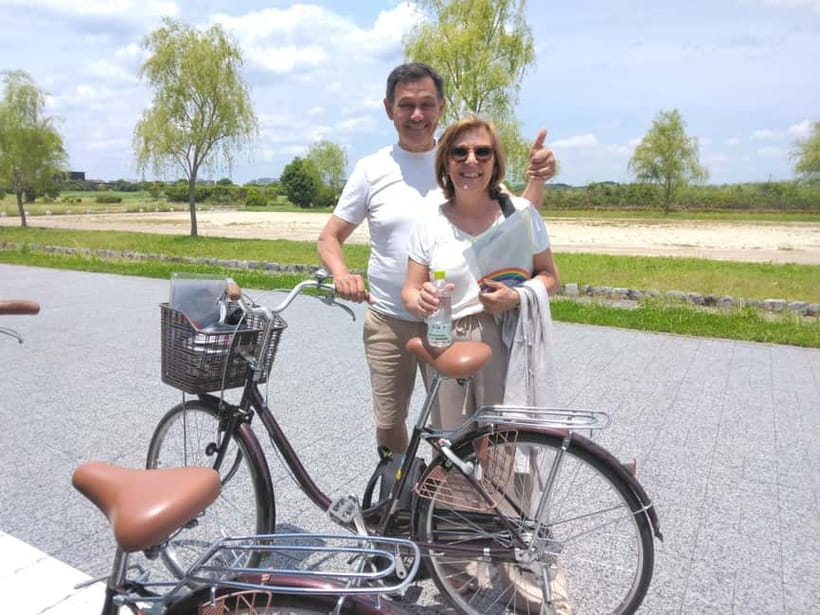
The ride around Mizukami Pond is the most peaceful part of the outing. You’ll feel the breeze, hear birds, and may see ducks and turtles. It is a simple stretch of the tour, but it gives you a needed pause between museums and reconstructed structures.
This is also where the bike feels most rewarding. You are not just being moved from one stop to the next. You are riding through the grounds at an easy pace, with open views and natural sounds around you.
If you visit during a mild season, this section may be the highlight. Spring brings the possibility of seeing local people enjoying hanami, or flower viewing, and the quiet setting offers a glimpse of ordinary weekend life away from Nara’s busiest streets.
Summer needs more care. One visitor found the August heat very intense, even though the ride itself was enjoyable. The tour is only two hours, but the site is open and exposed. Consider the weather before choosing a midday departure, and bring water even though food and drinks are not included.
Hishiage Kofun and the evidence of an older past
Hishiage Kofun is an ancient tomb, visited for about 10 minutes. The stop adds another layer to the tour. Heijo Palace tells the story of the Nara period capital, while the tomb reaches back to an earlier era of Japanese history.
You’ll also see grave goods connected with the burial site. These objects help show how status, ritual, and belief were expressed long before the palace buildings you see elsewhere on the route.
Do not expect a grand interior visit. The value is in seeing the tomb as part of the wider historical setting and understanding that Nara’s importance did not begin when it became the capital.
Daiichiji Daigokuden: the palace’s grand ceremonial heart
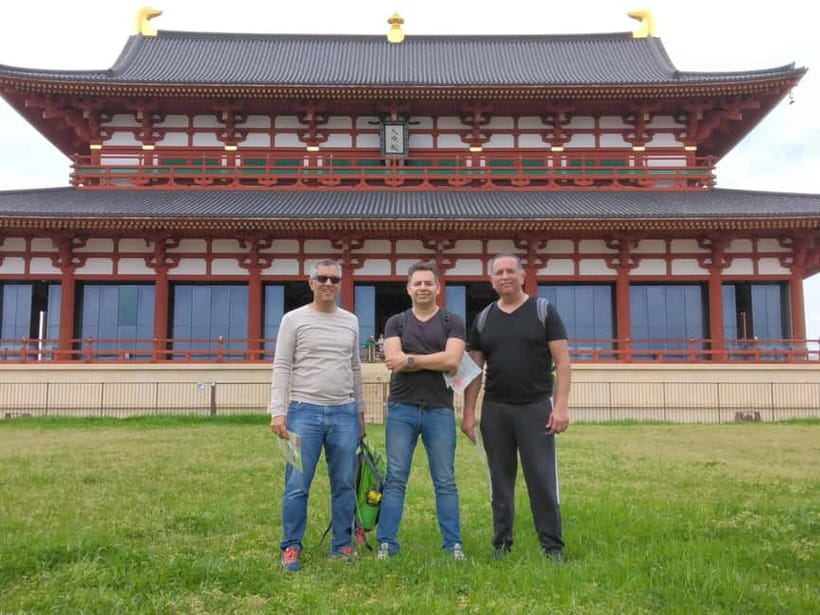
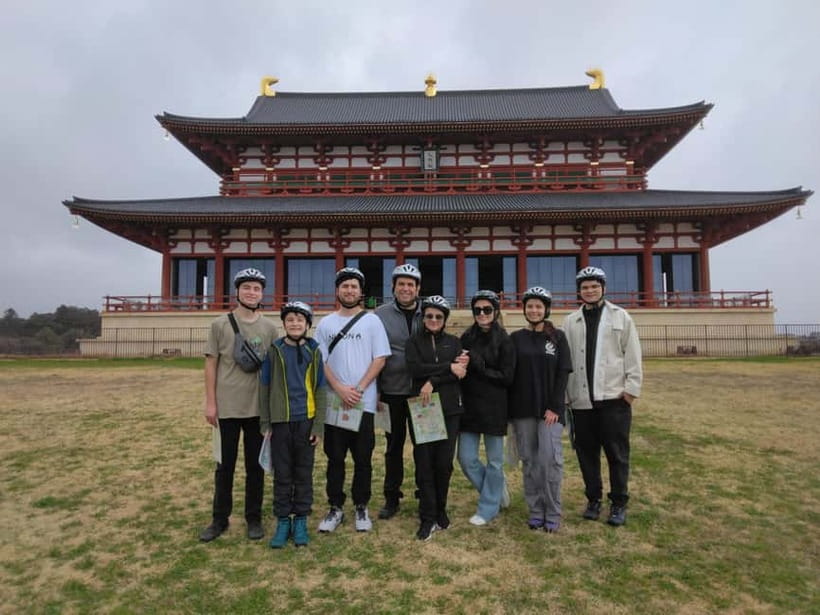
The First Imperial Audience Hall, or Daiichiji Daigokuden, is the most imposing architectural stop. This reconstructed building was used for special ceremonies, making it a place of formal display rather than everyday administration.
Inside, you can see paintings, ornaments, and exhibits connected with the building. The reconstructed interior helps you picture the court’s ceremonial world, where rank and ritual mattered at every turn.
The building also gives you a broad view across the palace grounds. That viewpoint is useful because you can finally connect the separate gates, gardens, museums, and open spaces into one planned complex.
A fair warning: the buildings at Heijo Palace are reconstructions, not untouched survivors from the Nara period. If you expect an original wooden palace preserved intact, this is not that kind of visit. The benefit is visual clarity. The reconstructions help you imagine the scale and purpose of the capital, while the excavation museum shows what remains beneath the surface.
The southern gate and the oldest palace museum
The tour continues to the southern gate of the First Imperial Audience Hall complex, known as Daiichiji Daigokudenin Daigokumon. This is a quick five-minute stop, mainly for a photo and a short explanation.
After that, you visit the Heijo Palace Site Museum, described as the oldest museum on the palace grounds. Its displays include ancient roof tiles, wooden tablets, and models. These objects are small compared with the great gates, but they often give you a better sense of everyday administration and construction.
A roof tile can reveal building practice. A wooden tablet can hint at records and official work. A model can show how the palace was arranged when the full site is too large to grasp from ground level.
The museum visit lasts about 10 minutes. That is enough for an overview, though anyone fascinated by archaeology may wish the tour allowed more time inside.
Tenpyo costume photos add a lighter finish
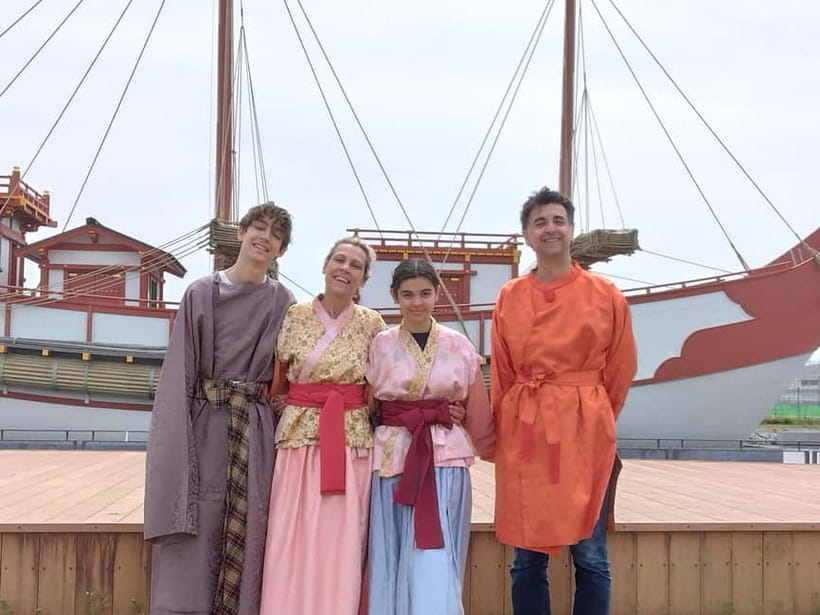
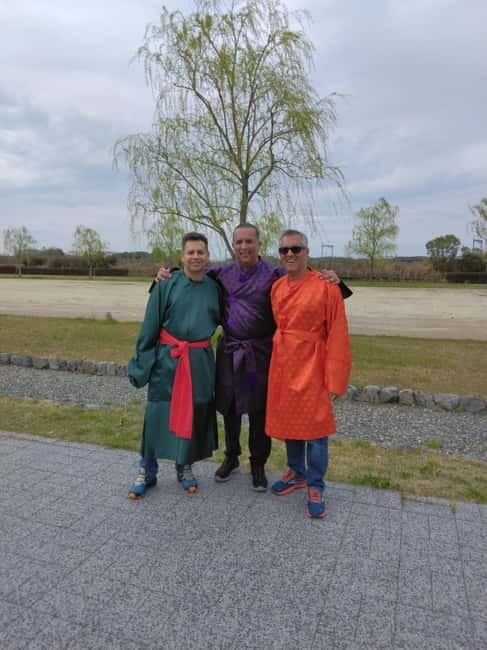
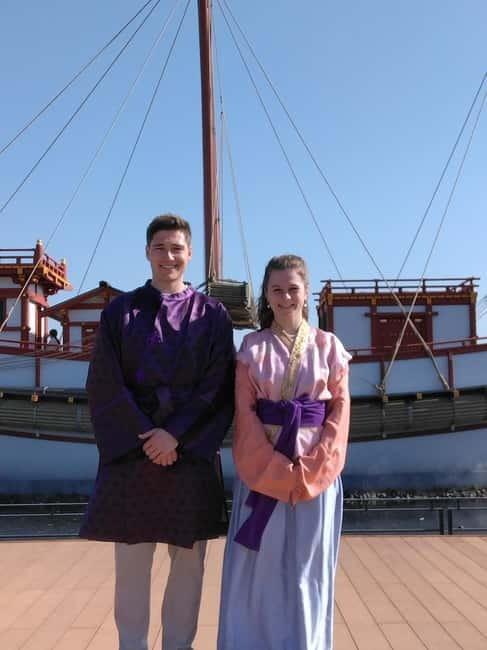
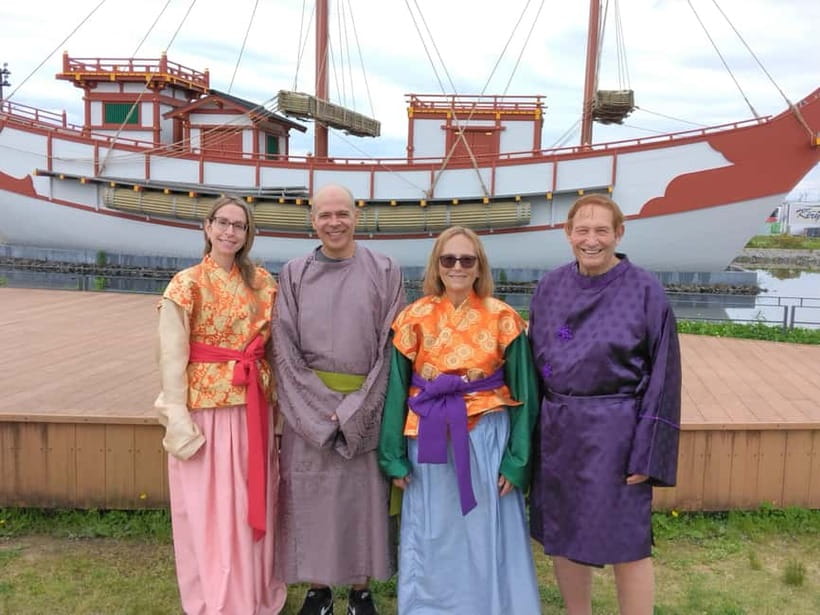
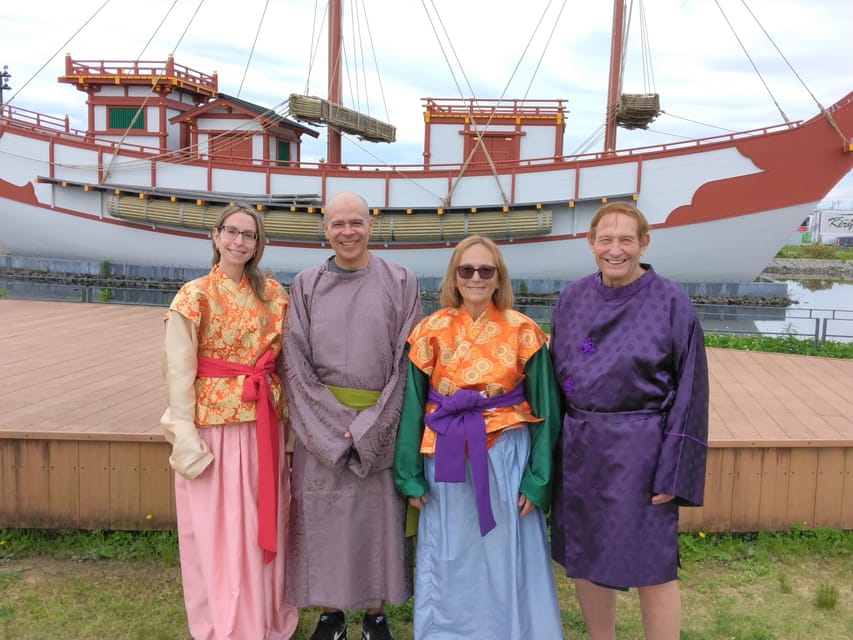
The traditional costume experience lets you wear clothing inspired by the Tenpyo, or Nara period, era. You can take memorable photos in the historic setting, which makes this more than a standard sightseeing ride.
The costume stop is especially useful for families and anyone who enjoys a visual souvenir. It also breaks up the more serious museum and palace material. You are not expected to spend the whole tour listening to dates and names. The clothing gives you a playful way to connect with the period.
The available information does not specify how long the costume portion lasts or how many outfit choices are offered. Treat it as a short included activity rather than a full costume rental session.
How much value do you get for $22?
At $22 per person, this is a strong-value outing. You receive a rental bike, helmet, guide, admission fees, and the traditional clothing activity. Many short sightseeing tours charge a similar amount for guiding alone, so the included equipment and admissions make this easy to justify.
The value depends on your interests. If you want original temples, deer, and lively streets, spend your money elsewhere in Nara. If you want to understand the former capital and see a quieter UNESCO site, the price is excellent.
You also gain efficiency. Covering the palace grounds on foot in two hours would mean cutting out stops or rushing between them. The bicycle gives you access to more of the site without turning the visit into a tiring march.
The group limit of eight adds value as well. You get a more personal tour without paying the price of a private guide.
Getting there and planning the morning
The meeting point is the rental bike reception counter at Miharashi-Kan in Suzaku Gate Square. From Kintetsu Nara Station, take the Nara Kotsu bus to Suzakumon Hiroba Mae. The bus ride takes about 16 minutes, followed by a five-minute walk north.
From Kintetsu Yamato-Saidaiji Station, the bus takes about 10 minutes to the same stop, followed by the five-minute walk. From JR Nara Station’s West Exit, the listed bus ride is about 10 minutes, again followed by a five-minute walk.
You can also walk about 20 minutes from the South Exit of Kintetsu Yamato-Saidaiji Station or about 20 minutes from Shin-Omiya Station. Do not cut the timing close. Missing the tour is nonrefundable, and you are asked to arrive 10 minutes early.
The tour is offered in English or Japanese. It lasts two hours and returns to the rental bike reception counter. Afterward, you can continue toward central Nara. Kay has even helped arrange a taxi for visitors heading into town for lunch, though hotel pickup is not included.
Free cancellation is available up to 24 hours before departure, with a full refund. The supplier may cancel in heavy rain, storms, or other bad weather, in which case the tour is fully refunded.
Who will enjoy this ride most?
This tour suits you if you:
- Want Nara’s political and archaeological story, not only its famous deer
- Prefer a small group and an English-speaking guide
- Like gentle outdoor activity
- Are visiting Nara for the first time and want a clear orientation
- Are traveling with children who can ride a bike
- Want a quieter alternative to Nara Park
- Enjoy gardens, museums, ancient tombs, and reconstructed architecture
It is not suitable for pregnant women, people who cannot ride a bicycle, wheelchair users, or people with visual impairments. The tour also may not suit you if intense summer heat makes outdoor cycling uncomfortable.
The ride is accessible in spirit, but it is still a bicycle tour. You need to control a bike and keep moving between stops. If you are unsure about cycling, choose a walking or vehicle-based tour instead.
Should you book the Heijo-Kyo Bike Tour?
Book it if you want a low-cost, well-paced introduction to ancient Nara and do not mind reconstructed buildings. The combination of cycling, archaeology, gardens, palace halls, and costume photos gives you much more variety than the price suggests.
I would especially recommend it for families, first-time visitors, and anyone who has already seen Nara Park and wants a different side of the city. Kay’s patient guiding, the small group, and the peaceful pond ride are major advantages.
Skip it if you are looking only for surviving ancient architecture or if you dislike cycling in warm weather. For everyone else, $22 buys an efficient and enjoyable way to make sense of a very large historic site.
FAQ
How long does the Nara bike tour last?
The tour lasts two hours and returns to the rental bike reception counter.
What is included in the price?
The price includes the bike, helmet, guide, all admission fees, and the traditional Tenpyo costume experience.
Who guides the tour?
The tour is led by a national government licensed guide. English tours are led by Kay, who also speaks Japanese.
Where does the tour meet?
Meet at the rental bike reception counter at Miharashi-Kan in Suzaku Gate Square. The coordinates are 34.68628944048124, 135.7926401146025.
How do I reach the meeting point?
You can take a Nara Kotsu bus to Suzakumon Hiroba Mae and walk five minutes north. The meeting point is also about 20 minutes on foot from Kintetsu Yamato-Saidaiji Station’s South Exit or Shin-Omiya Station.
Is the tour suitable for children?
Children who can ride a bicycle can join. The easy pace has worked well for families, including one with a six-year-old. The supplied information does not state a minimum age.
What happens if the weather is bad?
The supplier may cancel the tour because of heavy rain, storms, or other severe weather. A supplier cancellation receives a full refund. You can cancel yourself up to 24 hours in advance for a full refund.
Just added around Nara
- All must-sees in 3 hours – Nara Park Classic Tour! From JR Nara!★ 5.0 · 108 reviews
- Private Nara Tour and Sake Tasting (Departing from Kyoto/Nara)★ 5.0 · 40 reviews
- Hammer a Pattern on Your Ring Workshop★ 5.0 · 57 reviews
- Nara World Heritage PRIVATE TOUR★ 4.5 · 15 reviews
- Nara Sake Tasting Tour at Local Brewerie(tasting fee included)★ 5.0 · 12 reviews
- Nara Private Tour: Flexible Pickup from Kyoto, Osaka, or Nara★ 5.0 · 17 reviews
- Nara – Heart of Nature Cross Bike Tour★ 5.0 · 19 reviews
- Nara Highlight Walking Tour with Furoshiki Experience with Lunch★ 5.0 · 73 reviews
Nara Tours, compared.
World Heritage Kyoto & Nara Uji Authentic Matcha Experience
Read our review →
Nara Half Day Trip Walking Tour (Private Option Available)
Read our review →
Nara Early Morning Tour (Kyoto or Osaka Departure Available)
Read our review →
Nara and Uji Day Trip with Deer Park and Hot Spring
Read our review →
Kyoto/Osaka: Kinkakuji, Bamboo Forest, and Nara Deer Park
Read our review →
Nara 6hr Private Tour with Government-Licensed Guide
Read our review →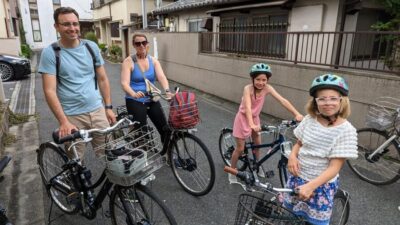
E-Bike Nara Highlights – Todaiji, Knives, Deer, Shrine
Read our review →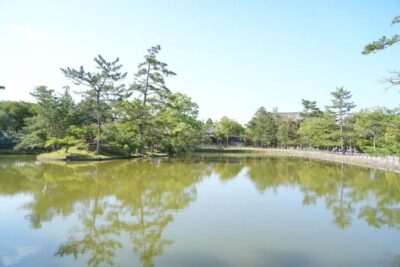
Nara Early Bird Tour (Kyoto Departure Option Available)
Read our review →Browse the lists this tour appears in