
Reviewed · OSAKA TOURS
Osaka: Cooking Class & Sake Tasting with Local Market Visit
Osaka’s food culture makes the most sense when you cook it yourself. This four-hour class takes you from a neighborhood supermarket to a small cooking studio, where you prepare niku-sui, okonomiyaki, and gyoza with an English-speaking local guide. I like the market stop and the fact that the recipes use ordinary ingredients you can find at home. I also like the small group of no more than seven, which leaves room for questions, conversation, and a few drinks while you cook.
The main limitation is dietary. Vegetarian and vegan guests can join with advance notice, but gluten-free meals are not available, and the kitchen cannot promise allergy-free food. You also need to arrive on time at the meeting point near Minami Morimachi Station, since late arrivals cannot join or receive a refund.
Key points at a glance
- Three Osaka dishes in one class: Make niku-sui beef soup, savory okonomiyaki, and handmade gyoza.
- A real supermarket visit: Shop for the ingredients and see the everyday products Osaka residents buy.
- Friendly named guides: Chie, Eri, Emi, Akko, and Linda have each led classes praised for their warmth and clear instruction.
- Drinks with your lunch: Three canned drinks are included, with sake, beer, or soft drinks available.
- Recipes and photos afterward: Recreate the meal at home and receive tour photos by email.
- A useful four-hour format: Long enough for cooking and conversation, but still easy to fit into an Osaka stay.
From Minami Morimachi Station to the supermarket
The meeting point is in front of FamilyMart, about a one-minute walk from Exit 4B of Minami Morimachi Station. That precise location matters in Osaka, where station exits can put you on very different streets. Give yourself extra time and arrive before the stated start, not just at it. The class begins on time, and a late arrival means losing the whole activity.
Your guide then takes you to a local supermarket to buy the ingredients for lunch. This is not just a quick shopping chore. It gives you a look at the products, packaging, and food choices that shape ordinary home cooking in Japan.
I like this start because it adds context before the recipes begin. You see the ingredients in their normal setting rather than meeting them already measured in bowls. Guides have also used this walk to answer questions about Japanese food, regional products, Osaka, and even nearby Kobe.
The exact route and supermarket details are not fixed in the information provided, so you should think of this as a neighborhood food stop rather than a major market tour. If you want a famous fish market or a long street-food crawl, this is not that kind of experience. The value is in seeing a regular shopping trip and then using those ingredients yourself.
More sake tastings around Osaka:
- Osaka Sake Tasting with Takoyaki Cooking
★ 5.0 · 156 reviews - 3-Hour Kyoto Insider Sake Brewery Tour with Tastings & Pairings
★ 5.0 · 917 reviews - Arashiyama Bamboo, Temple, Monkeys, or Secret Sake Brewery
★ 4.8 · 886 reviews
Niku-sui, Osaka’s beef soup
Back at the MagicalTrip Original Cooking Studio, the group begins preparing lunch. The first dish is niku-sui, a beef soup that is especially associated with Osaka. It is less famous outside Japan than okonomiyaki, which is part of the appeal. You get to try a local comfort food that many visitors might miss if they only follow the usual restaurant list.
The guide walks you through the recipe step by step. That makes the dish suitable for beginners, and you do not need prior cooking experience. The instructions focus on methods you can repeat at home rather than on difficult restaurant techniques.
Niku-sui also gives the class a calmer opening. Soup preparation lets the group settle in, ask questions, and learn how the flavors fit together before moving to the more hands-on dumpling work. The ingredients are described as simple, so you should not need a specialist Japanese grocery store to make it again.
The beef soup is one reason this activity feels more useful than a meal with a cooking demonstration. You do not only taste a dish. You learn a recipe with a clear connection to Osaka and take away a practical idea for a home dinner.
Building your own Osaka-style okonomiyaki
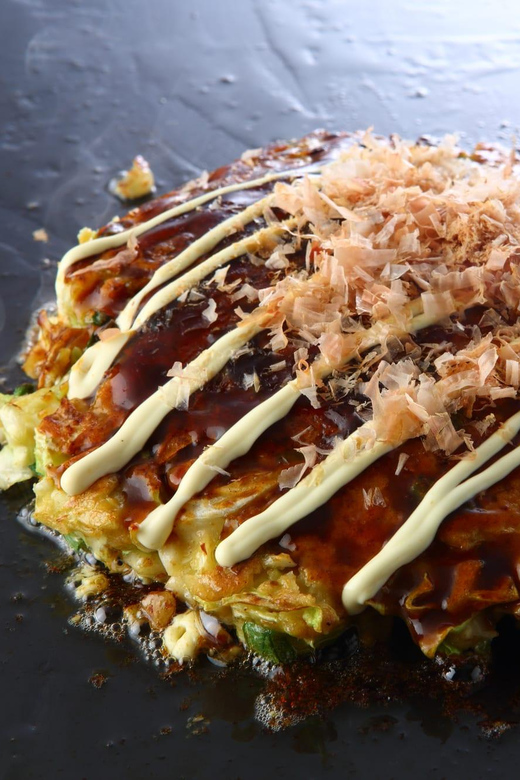
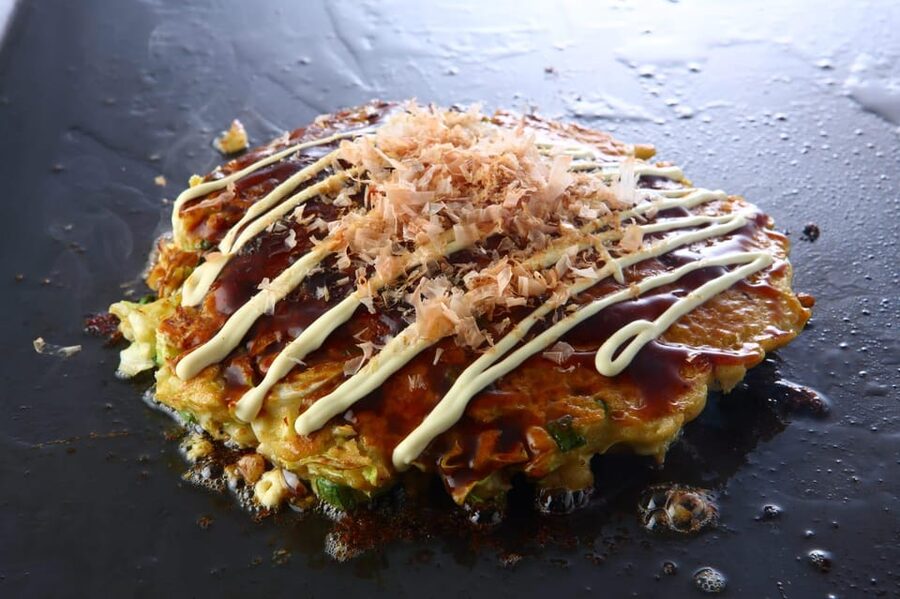
Okonomiyaki is the class’s most recognizable dish. Osaka’s version is a savory pancake built around a batter and additional ingredients, with plenty of room for personal choices. The class presents it as a local favorite that people take pride in, so your guide can explain not only how to prepare it but also why it matters in Osaka food culture.
The appeal here is participation. You are not watching a chef do everything while you wait for lunch. You help prepare the food and see how a few basic ingredients become a substantial meal.
I would not book this class expecting a formal lesson in every regional variation of okonomiyaki. The focus is on making an approachable Osaka dish in a relaxed setting. That is a good match for you if you want a recipe you can attempt after returning home.
The guide also provides a useful cultural connection. Chie, one of the frequently praised instructors, has explained Japanese regions and food products while teaching. Eri has answered questions about Osaka and local culture during the cooking. These conversations are a strong part of the class because they turn lunch preparation into a chance to understand what you are eating.
Folding gyoza with the whole group
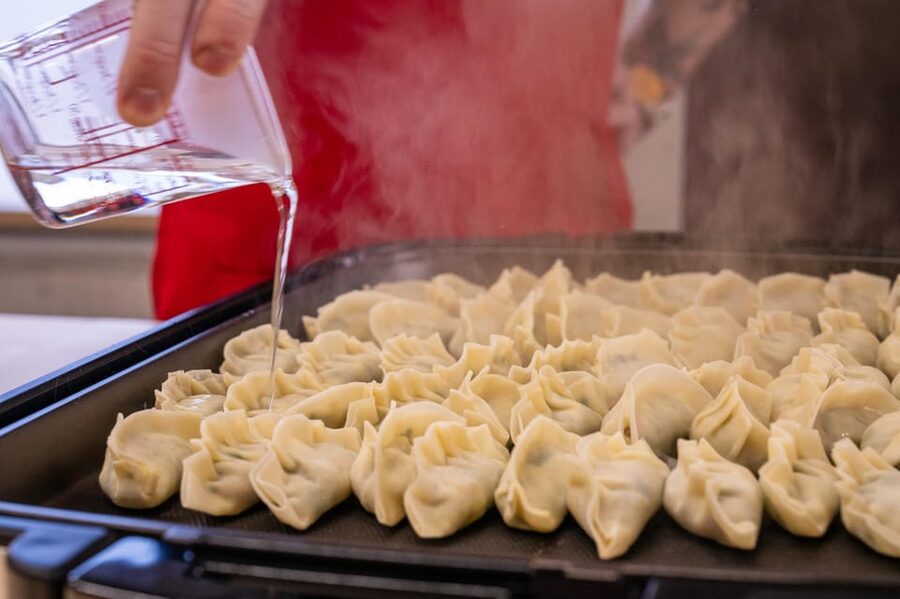
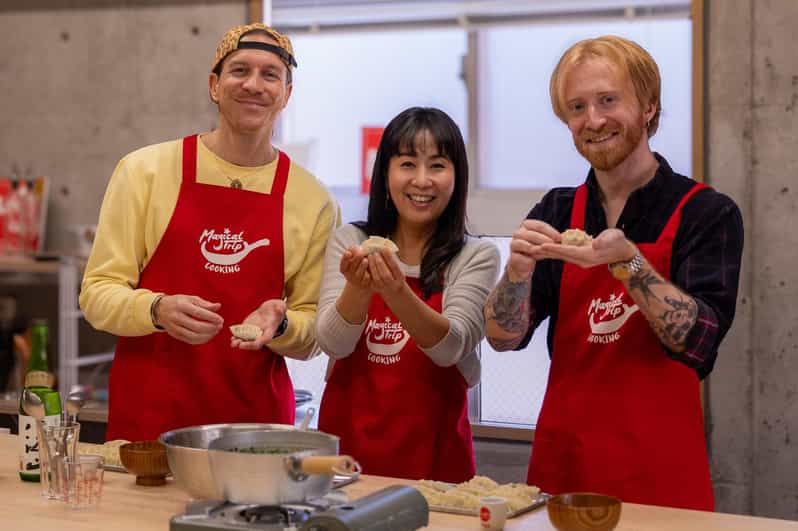
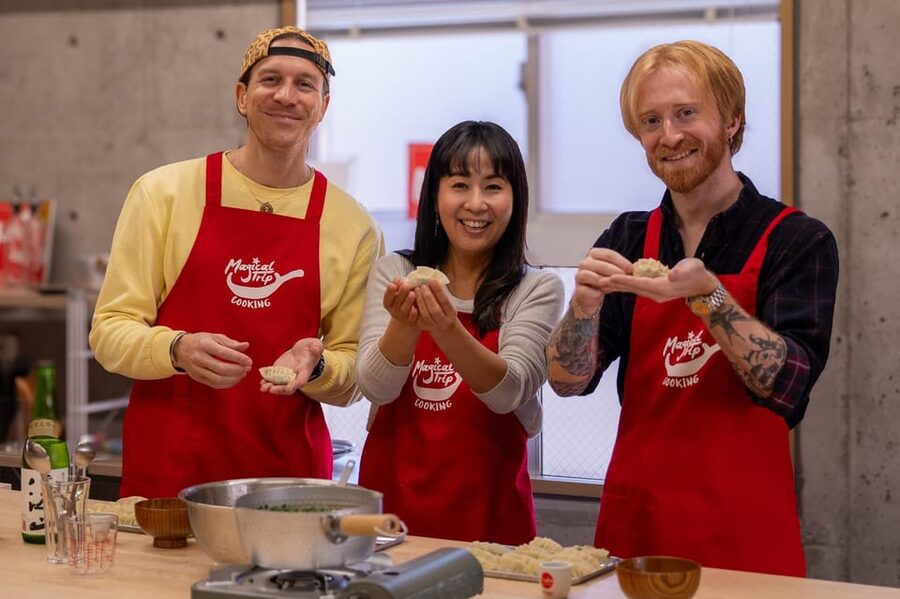
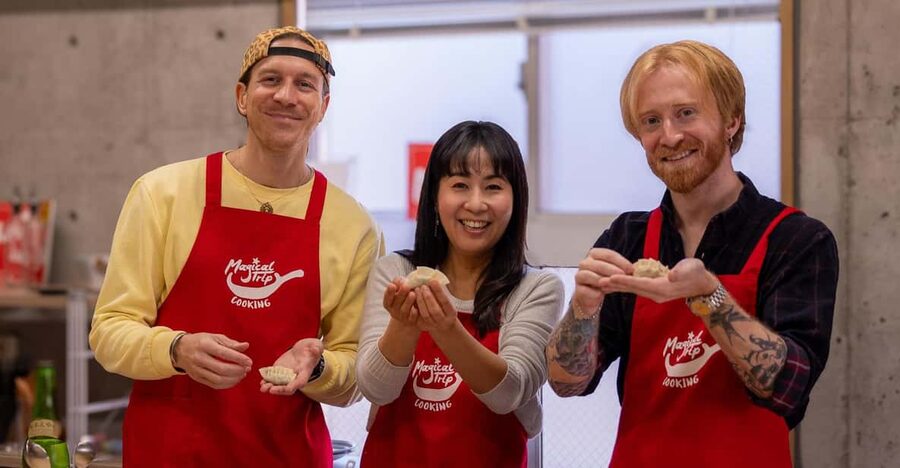
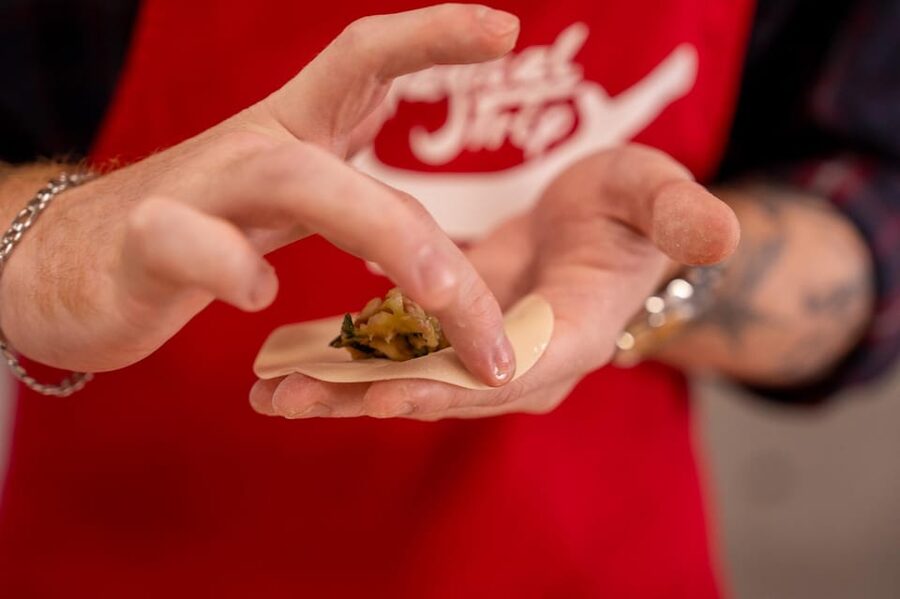
Gyoza is the most social part of the cooking session. You fold the dumplings yourself, which gives the group a shared task and usually creates more conversation than a simple chopping exercise. The goal is not perfect restaurant-style pleats. It is to learn the basic process, make something tasty, and enjoy the slightly messy fun of working together.
This is a good activity for couples, families with older children, friends, and solo visitors who want an easy way to meet people. Participants must be over 12 because the class involves knives and heat. That age rule is worth noting if you are arranging a family activity.
The class is limited to seven people, so you should get more direct help than you would in a large workshop. That small size also leaves space for questions about technique, ingredients, and Japanese food customs. The kitchen atmosphere is described as relaxed, and one guide even let the group choose the background music.
Gyoza also brings a useful lesson in texture. You prepare dumplings that should be crisp outside and juicy inside, then eat them as part of the same lunch. The recipes are sent afterward, so you can try folding them again when the class is no longer there to rescue the odd-shaped ones.
More cooking classes in Osaka:
- Osaka: Ramen and Gyoza Cooking Class in Dotonbori
★ 5.0 · 378 reviews - Osaka Cooking Class: Okonomiyaki &Japanese cuisines experience
★ 5.0 · 261 reviews - Osaka: Cooking Class Ramen & Gyoza Course in Nanba
★ 4.9 · 86 reviews - Osaka: Gluten-Free Ramen and Gyoza Cooking Class
★ 5.0 · 42 reviews
Three drinks, tea, and a generous lunch
The price is $90 per person. That includes the four-hour class, supermarket ingredient costs, lunch, tea, three canned drinks, and an English-speaking guide. The drinks can be alcoholic or non-alcoholic, and the selection includes local sake, beer, and soft drinks.
The drink service changes the feel of the activity. You can cook, sit down, and chat over the meal instead of treating the class as a quick lesson. It also gives you a gentle introduction to Japanese drinks without requiring a separate sake tasting appointment.
Still, this is not a specialist sake seminar. You should book it for the combination of cooking, food culture, and casual tasting, not for detailed instruction on brewing methods or regional sake classifications. If you do not drink alcohol, the non-alcoholic choice means you can take part without missing the social side.
The meal itself is substantial. You prepare three dishes rather than one small sample, and the ingredients are included. That makes the price reasonable for Osaka, particularly when you count the guide’s time, the supermarket visit, the food, and the recipes. It is less attractive if you mainly want the cheapest possible lunch or already plan to take several other cooking classes.
Guides who make the class work
A cooking class depends heavily on the instructor, and the named guides have different strengths. Chie is described as fun, clear, and well informed about Japanese food, products, and regional customs. She also took time to answer questions and made the recipes easy to follow.
Eri has been praised for a calm, friendly style. She explained each stage of the recipes, helped with questions about Osaka and Japanese culture, and gave the class a relaxed rhythm. Akko received similar praise for making the cooking and conversation comfortable.
Emi has taken guests through the supermarket, explained the correct way to prepare all three dishes, and handled general questions about the city. Linda made a special effort with the room during a Christmas class and helped guests find sake afterward.
You cannot select a particular guide unless the booking system specifically allows it. That is the one variable to keep in mind. The consistent pattern is a personal class led in English, with guides who treat conversation and local questions as part of the experience rather than an interruption.
What you take home besides recipes
The practical benefit is clear: you receive the recipes afterward and can use them for a dinner party or a simple Japanese meal at home. The dishes are intended to be authentic but manageable, which is the right balance for most home cooks.
You also leave with a better sense of how Osaka food fits into daily life. The supermarket shows the ingredients before preparation, and the class explains how those ingredients become familiar local dishes. That connection is more useful than simply being told that Osaka is a food city.
Tour photos are taken by the guide and sent by email after the class. They are a pleasant extra, especially for a small group activity where everyone is busy cooking and may not take many pictures. Check that you provide the correct email address when booking or attending.
The recipes are not a substitute for a full Japanese cooking course. If you want advanced knife skills, extensive regional theory, or a long list of dishes, you may find the four-hour format limited. For a first introduction, though, three recognizable recipes give you plenty to do.
Dietary needs, mobility, and timing
Vegans and vegetarians are welcome, but you must report dietary needs or allergies at least one day in advance. Same-day changes cannot be accommodated, and substitutions may not always be possible.
The kitchen cannot guarantee allergy-free meals because food is prepared in external kitchens. If you have a serious allergy, contact the provider before booking and decide carefully if the risk is acceptable. Gluten-free options are not offered.
The route and cooking space may include places that are difficult for wheelchairs or strollers. The activity is not recommended if you have mobility problems, and a private tour is suggested for people who need more flexibility.
Dress for the season. Osaka can reach about 40 degrees Celsius in summer and fall to around minus 5 degrees Celsius in winter. The supermarket walk is short in concept but still takes place outdoors, so comfortable clothing and sensible shoes are useful.
Who should book this Osaka class?
I would choose this for you if you want to understand Osaka through food rather than only eat in restaurants. It works especially well during the first few days of a visit, when you still have questions about ingredients, local dishes, and what to order elsewhere.
It is also a good fit for solo visitors. A seven-person limit and shared cooking tasks make conversation easy without forcing you into a large tour group. Couples and friends get a relaxed lunch with something to do, while families with children over 12 can enjoy the hands-on work.
You should skip it if you need a gluten-free meal, cannot manage knives and hot cooking equipment, or want a polished restaurant-style tasting menu. It is also not the best pick for someone seeking a dedicated sake education.
The free cancellation policy allows a full refund when you cancel at least 24 hours ahead, and you can reserve now and pay later. Those terms help if your Osaka schedule is still changing, but they do not protect a late arrival on the day.
Should you book it?
Book this class if you value hands-on food culture, a small group, and recipes you can actually make again. The supermarket visit, three-dish lunch, drinks, photos, and recipe handout give the $90 price real substance.
I would make the booking after checking your dietary needs and route to Minami Morimachi Station. Arrive early, bring an appetite, and expect a friendly lesson rather than a formal culinary school. For most visitors who want a warm, practical introduction to Osaka cooking, this is a very good use of four hours.
FAQ
Where does the cooking class meet?
Meet in front of FamilyMart, about a one-minute walk from Exit 4B of Minami Morimachi Station in Osaka.
How long does the experience last?
The activity lasts four hours, including the supermarket visit, cooking, lunch, and drinks.
What dishes will I make?
You will prepare niku-sui beef soup, Osaka-style okonomiyaki, and gyoza.
Is lunch included?
Yes. The cooking experience and the meal you prepare are included in the price.
Are drinks included?
Yes. You receive three canned drinks, which can be alcoholic or non-alcoholic. Tea is also served during the experience.
Is the class taught in English?
Yes. The experience includes an English-speaking local guide.
How many people can join?
The class is limited to seven participants.
Do I need cooking experience?
No. The guide explains each recipe step by step, and the class is designed for people without prior cooking experience.
Can vegetarians and vegans join?
Yes, vegetarians and vegans can join if they report their dietary needs at least one day ahead. Gluten-free options are not available.
What happens if I arrive late?
The class starts on time. Late arrivals cannot join, reschedule, or receive a refund.
Are recipes and photos provided afterward?
Yes. Recipes can be downloaded after the tour, and the guide sends tour photos by email.
More Food Tours in Osaka
- Osaka: Shinsekai Food Tour with 13-15 Dishes at 5 Eateries
★ 4.8 · 2,204 reviews - Osaka Food Tour: 13 Dishes at 5 Local Eateries
★ 5.0 · 2,149 reviews - Hungry Osaka Street Food Tour:15 Tastings & 3 Drinks with a Local
★ 5.0 · 1,727 reviews - Hungry Osaka Street Food Tour: 15 Dishes & 3 Drinks
★ 4.9 · 694 reviews
More Drinks-Led Nights in Osaka
- Osaka Bar Hopping Night Walking Tour in Namba (3 bars, 6 tastes)
★ 5.0 · 958 reviews - Osaka: Namba Pub Bar Crawl with a Local Guide
★ 4.9 · 424 reviews - Osaka: Izakaya Bars Guided Walking Tour
★ 4.9 · 385 reviews - Osaka: Guided Pub Crawl
★ 4.4 · 331 reviews
Just added around Osaka
- Discover Real Osaka: A Cultural Walk with Food & Drink★ 5.0 · 13 reviews
- From Osaka/Kyoto: Kyoto & Nara Day Trip with Optional Lunch★ 4.5 · 79 reviews
- Osaka 6hr Private Walking Tour with Government Licensed Guide★ 5.0 · 174 reviews
- Private Airport transfer Kansai Intl. Airport(KIX) to OSAKA CITY★ 4.5 · 12 reviews
- Osaka: Namba Local Food Walking Tour (Taste 15 Dishes)★ 5.0 · 20 reviews
- Osaka Delights: Traditional Japanese Food Tour★ 4.5 · 33 reviews
- Badminton in Osaka & Kyoto with Locals!★ 5.0 · 15 reviews
- From Osaka or Kyoto: Kyoto and Nara 1-Day Bus Tour★ 3.5 · 141 reviews
Osaka Tours, compared.


Shinsekai Food Tour with 13-15 Dishes at 5 Eateries
Read our review →
Osaka Food Tour: 13 Dishes at 5 Local Eateries
Read our review →
Hungry Osaka Street Food Tour:15 Tastings & 3 Drinks with a Local
Read our review →



Hotspots & Hidden Gems Walking Tour Private or Group
Read our review →Browse the lists this tour appears in