
Reviewed · TOKYO TOURS
Tokyo: Hidden Gems Guided Bike Tour with Lunch
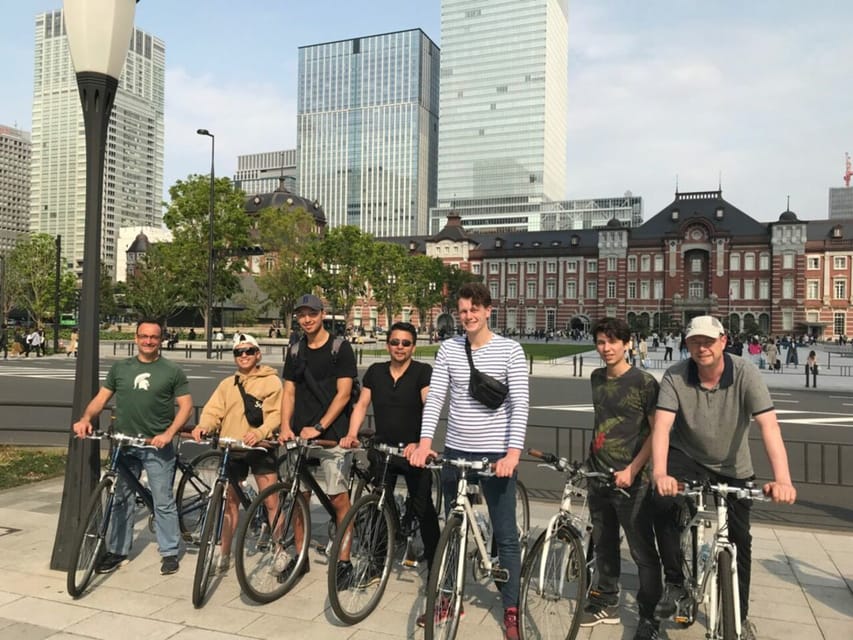
Tokyo’s best stories are not all found along the main tourist routes. This five-hour ride moves from Asakusa’s famous gates to quieter eastern neighborhoods, using a bicycle to connect temples, riverside views, sumo landmarks, and an Edo-era museum. I especially like the stop at Bandai’s headquarters, where you can pose with giant Dragon Ball and Doraemon figures, and the chance to see Tokyo’s old daily life rather than only its grand sights.
The tour also makes good use of its $96 price. Your bike, English-speaking guide, lunch, museum admission, and insurance are included, and the group is limited to five people. The main catch is that you need to be comfortable riding in city traffic, and vegetarian lunch choices are limited.
Key points at a glance
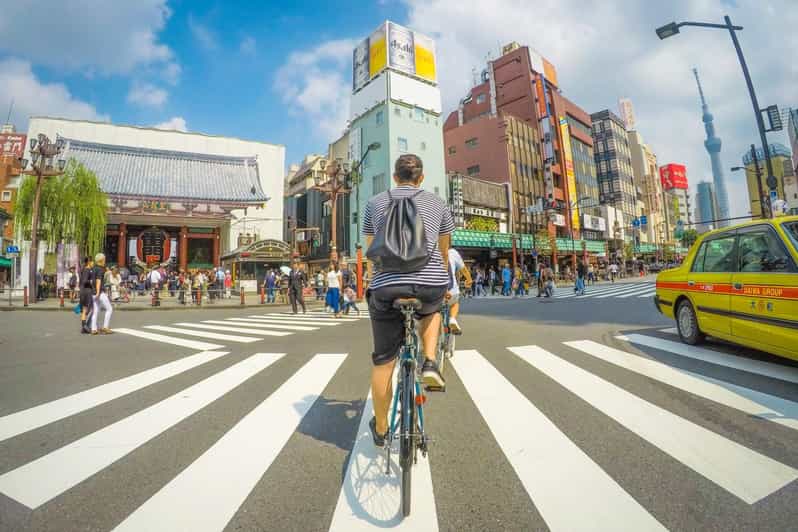
- Bandai’s giant anime figures: Start with a playful photo stop featuring Dragon Ball, Doraemon, and other well-known characters.
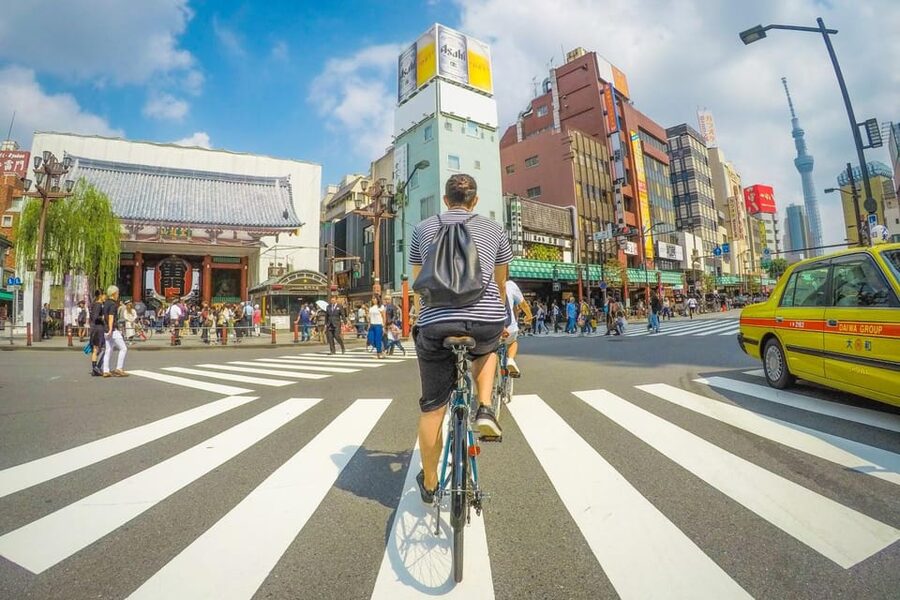
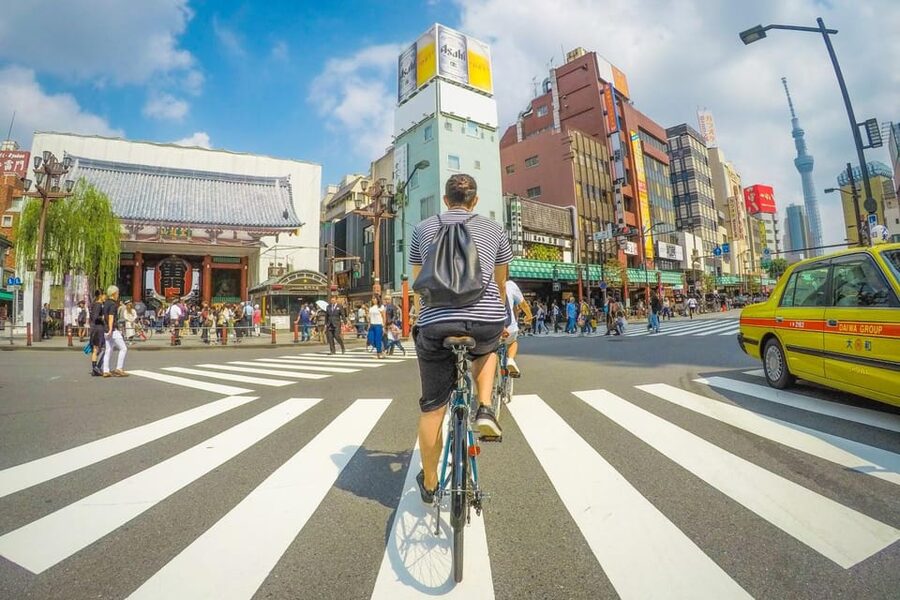
- Asakusa beyond one photograph: See Kaminarimon Gate and Senso-ji, then move away from the thickest crowds by bike.
- Sumida River and Tokyo Skytree: Cross a scenic bridge and ride beside the river toward Ryogoku, Tokyo’s sumo district.
- A local-style lunch: Pause for 45 minutes at a restaurant in Ryogoku, with food included in the tour price.
- Edo life in miniature: Visit Fukagawa Fudo-son Temple and the Fukagawa Edo Museum, where old streets and homes show how people lived.
- Small-group pacing: With no more than five participants, the guide can keep the ride friendly and manageable.
Why this ride works well for eastern Tokyo
Many first visits to Tokyo focus on Shibuya, Shinjuku, and the packed lanes around Asakusa. This tour takes a different route. It still includes the major Asakusa sights, but the bicycle lets you link them with Ryogoku and Fukagawa without spending the day changing trains.
I like that the experience has a clear historical thread. You begin in Asakusa, an area popular since the Edo period, then pass through the old sumo quarter before reaching a Buddhist temple and a museum devoted to Edo life. You are not just ticking off separate attractions. The route gives you a simple way to see how eastern Tokyo changed from an old river and temple district into the modern city around it.
The English-speaking guide handles the route and gives a short lesson on Japanese traffic rules before you set off. That briefing matters. Tokyo streets can feel orderly, but bicycles still share space with cars, pedestrians, and other cyclists. Follow the guide closely, and do not treat the ride like a freewheeling solo outing.
The group limit is five participants. That is small enough for the guide to keep an eye on everyone and explain sights without shouting. It also means the tour may feel less private if the maximum group joins, but it should still be more personal than a large bus excursion.
More Hidden Gems Walks in Tokyo
- 3h Tokyo E-Bike Tour: Hidden Gems, and Local Life with guide
★ 5.0 · 670 reviews - Tokyo: Custom Hidden Gems & Highlights Tour with Local Guide
★ 4.7 · 272 reviews - Tokyo: 3-hour Guided E-Bike Tour of the City’s Hidden Gems
★ 4.8 · 251 reviews
Meeting at Asakusabashi and getting ready to ride
You meet outside Exit A3 at Asakusabashi Station on the Toei Asakusa Line. Look for the guide waiting outside the exit. The tour returns to this same meeting point, so you do not need to arrange a separate way back from Fukagawa.
Arrive early. The tour starts on time, and you cannot join later if you miss the group. That rule is especially important here because the first part includes bike fitting, traffic guidance, and the move into Asakusa.
Wear comfortable shoes and clothing that lets you pedal easily. You must be over 150 centimeters tall, or about 4 feet 11 inches, to join. Children under 15 are not allowed. The tour does not provide a place for luggage at the bike office, so use station lockers before meeting the guide rather than bringing a suitcase.
Before riding, you receive a short explanation of traffic rules in Japan. This is useful even if you cycle regularly at home. The guide sets the pace, and the tour welcomes riders of all levels, but you should still feel comfortable balancing, braking, and riding for several hours with stops along the way.
Bandai, Kaminarimon, and Senso-ji
The first ride heads toward Asakusa, one of the city’s best places for a glimpse of older Tokyo. The opening stop is the Bandai headquarters, where large figures of characters such as Dragon Ball and Doraemon create an easy, fun photo opportunity.
This stop adds a bit of modern Japanese pop culture to a route otherwise centered on temples and Edo history. It also gives you a quick reminder that Tokyo’s past and present sit close together. You will spend about 20 minutes here, enough for photographs without letting the stop take over the morning.
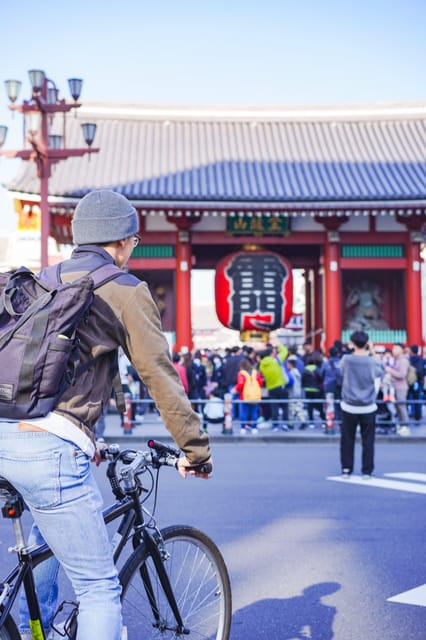
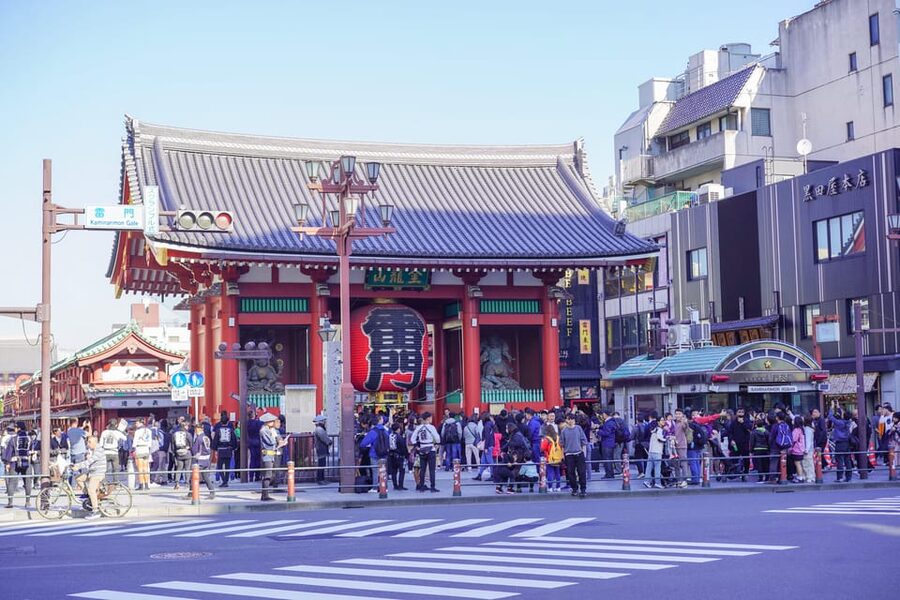
Next comes Kaminarimon, the great entrance gate to Asakusa. Its giant lantern is one of Tokyo’s most familiar sights, and the ten-minute visit is mainly for a close look and photographs. Expect this area to be busy. The point is not to avoid every popular sight, but to see it efficiently before moving on.
The tour then allows about 30 minutes at Senso-ji Temple. This is a major Buddhist temple complex and one of Asakusa’s essential stops. Your guide can explain how Japanese worship works and help you read the setting beyond its famous entrance.
You should not expect a long, quiet temple visit. Senso-ji is a major draw, and the approach can be crowded. Still, the bicycle route gives the visit a useful shape: you see the well-known face of Asakusa, then leave the heaviest foot traffic behind.
Crossing the Sumida River toward Ryogoku
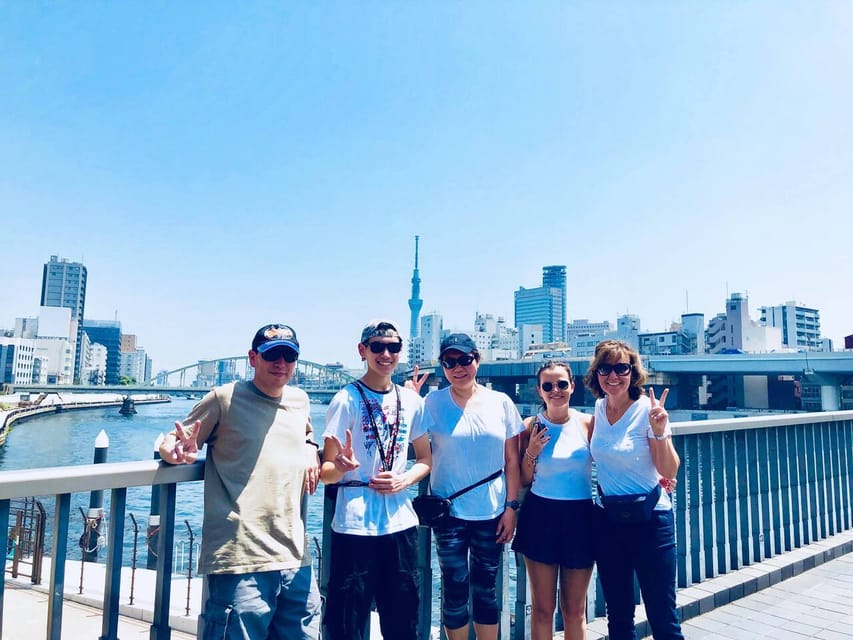
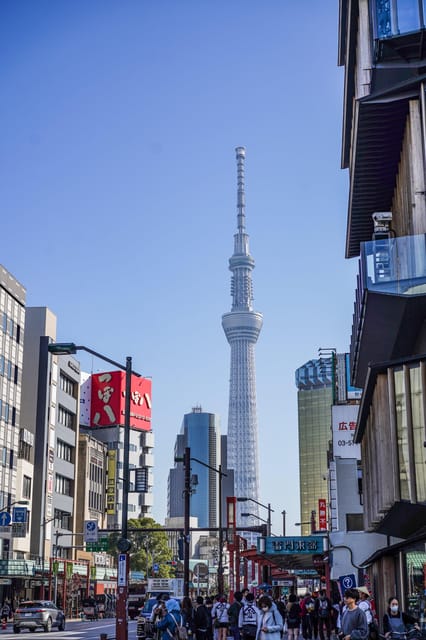
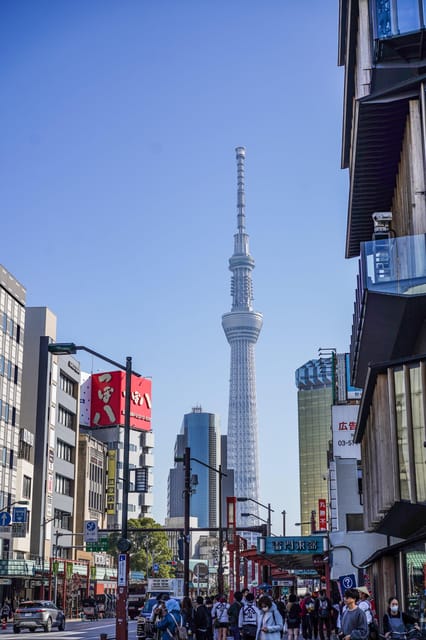
After Asakusa, the ride crosses a bridge with views of the Sumida River and Tokyo Skytree. At 634 meters, Skytree is a striking marker in the eastern part of the city. The view works best as part of the ride, because you see the tower from street level and from beside the river rather than only from an observation deck.
Cycling beside the Sumida River is one of the tour’s most appealing changes of pace. The route lets you cover ground while still taking in the water, bridges, and city views. You are not locked behind a vehicle window, and you can pause briefly when the guide points out something worth seeing.
The route continues to Ryogoku, known as Tokyo’s sumo town. The tour includes a short walk around the area to learn about sumo and its place in local culture. This is a good stop for anyone curious about Japan’s national sport, even if you are not attending a tournament.
Keep your expectations measured. The tour offers an introduction to the area, not a sumo match or a long museum visit devoted only to wrestling. Its value comes from placing Ryogoku within the wider route and showing how a district can keep its identity while the city around it grows.
More off-the-list walks in Tokyo:
- Private Mt Fuji Tour from Tokyo: Scenic BBQ and Hidden Gems
★ 5.0 · 146 reviews - Shibuya & Harajuku: Hidden Gems & Highlights Private Tour
★ 4.7 · 139 reviews - Tokyo: 3-Hour Bike or E-Bike Tour of City’s Hidden Gems
★ 4.7 · 81 reviews - Tokyo: Full Course Tour: Explore 10 Must-Sees & Hidden Gems
★ 5.0 · 35 reviews
Lunch in a local Ryogoku restaurant
Lunch lasts about 45 minutes at a local restaurant in Ryogoku. It is included, which makes the $96 price easier to assess. You do not have to stop the ride to find food, read a menu, or decide how much extra time to spend eating.
The exact restaurant and meal are not specified, so you should think of this as a practical local lunch rather than a fixed culinary experience. One useful detail from the tour is that vegetarian choices are limited because many Japanese restaurants are not fully set up for vegetarian menus. If you do not eat meat or fish, contact the provider before booking and be prepared for fewer choices.
A past tour experience specifically praised the lunch and the lack of a hard-sell warehouse stop. That matters because some sightseeing outings quietly build shopping pitches into the day. Here, the time is used for food and the route, with no stated sales stop.
Fukagawa Fudo-son and everyday Buddhist practice
After lunch, you cycle toward Fukagawa and visit Naritasan Fukagawa Fudo-do, also called Fukagawa Fudo-son Temple. The stop lasts about 35 minutes.
This is a Buddhist temple, offering a useful contrast with the Shinto shrine experience mentioned in the tour’s overview. The guide explains how people worship in daily life, so the visit is not only about architecture or photographs. You get a chance to see a living place of worship and learn how ordinary religious customs fit into Japanese routines.
The temple visit also helps balance the major sights earlier in the day. Kaminarimon and Senso-ji are famous and crowded. Fukagawa Fudo-son gives you a different scale and mood, with more attention on practice and local meaning.
As with any active religious site, follow the guide’s instructions and behave respectfully. The tour is designed for sightseeing, but it takes place in a functioning temple rather than a set built only for visitors.
Seeing Edo streets at the Fukagawa Edo Museum
The Fukagawa Edo Museum is the tour’s strongest history stop. You spend about 45 minutes inside, looking at how people lived roughly 150 years ago. The focus is on streets and homes, so the museum can make the Edo period easier to picture than a row of dates in a guidebook.
You can expect reconstructed scenes that show the feel of daily life in old Tokyo, including the way streets were arranged and how homes fit into the neighborhood. The supplied information does not list every exhibit, so the guide’s explanation will shape how much detail you take away.
This museum is valuable because it shifts your attention from rulers and famous events to ordinary people. After seeing temples, sumo landmarks, and modern Skytree views, you get a grounded look at the city’s earlier residents and their routines.
The order of stops can change because of traffic, weather, or operating conditions. If a place closes, the provider may use an alternate location. That flexibility is sensible for a bicycle tour, though it means you should not treat the published order as guaranteed.
A short café pause and the ride back
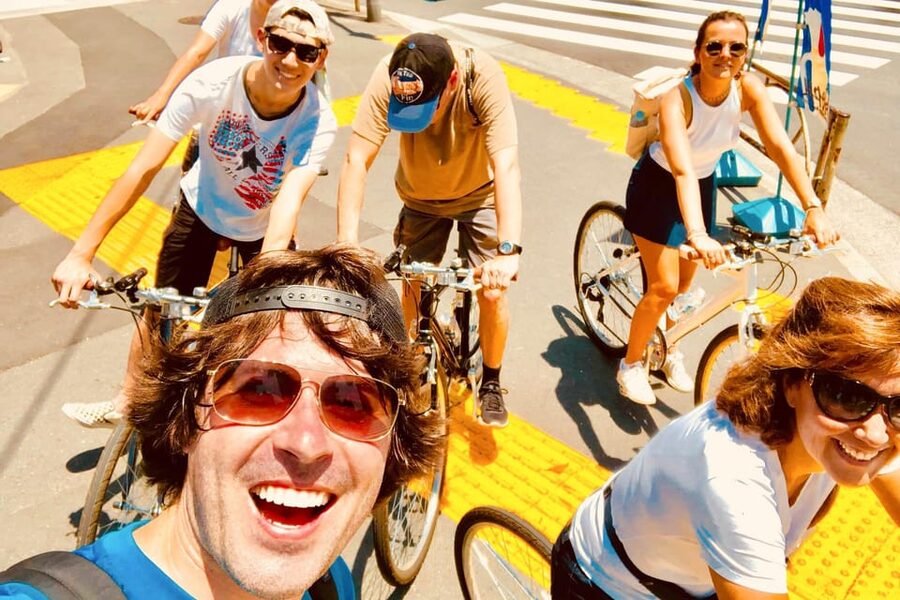
The route includes about 15 minutes at a local café before returning to Asakusabashi Station. It is a brief break, not a second full meal, and additional food or drinks are extra.
This pause is welcome after several hours on a bike. It gives you time to sit down, ask the guide about places you passed, and gather yourself before the final ride. The tour then returns to the original meeting point, keeping the end of the day simple.
The full experience lasts five hours. That includes cycling, sightseeing, lunch, the museum, and breaks, so you should not expect five hours of continuous riding. The pace is active but structured, with stops spaced through the day.
What the $96 price really includes
At $96 per person, this is not the cheapest way to see Asakusa. You can visit Senso-ji and Kaminarimon on your own for little or no admission cost. The value appears when you add up the parts that are harder to arrange smoothly:
- A rental bicycle
- An English-speaking guide
- A 45-minute lunch
- Admission to the Fukagawa Edo Museum
- Insurance
- A planned route linking four eastern Tokyo areas
The guide is the key part of that package. A bicycle alone will not explain the meaning of the temple rituals, point out the sumo connections in Ryogoku, or connect modern Tokyo with Edo life. The small group also gives you a better chance to ask questions and keep the pace comfortable.
This tour is strongest for someone who wants orientation and context without spending the day in a large group. It is less suitable if you prefer to linger at one temple, shop extensively, or choose every meal and stop independently.
One guide praised by name in the available tour information is Shogun. If he is leading your departure, you can expect a guide who keeps the ride moving and gives the route a strong historical focus. Guide assignments can vary, so do not assume he will lead every date.
Weather, food, and practical limits
The tour can be cancelled for unsuitable weather because cycling safety comes first. The itinerary may also change due to traffic, weather, or the opening status of a stop. Check the forecast and keep your plans flexible around the booking.
All cycling levels are welcome, but that does not remove the need for basic confidence on a bike. You will ride through Tokyo streets for much of the day. Comfortable shoes are required, and cycling clothing is not included.
Vegetarian food choices are limited. Additional food and drinks are also not included, so bring money for anything beyond the provided lunch and café stop.
Cancellation is free up to 24 hours before the start for a full refund. You can also reserve now and pay later, which helps if your Tokyo schedule is still changing. The provider recommends arranging your own travel insurance, even though insurance for the activity itself is included.
Who should book this Tokyo bike tour?
I would choose this ride if you want to see eastern Tokyo through several lenses in one day: pop culture, Buddhism, sumo, river views, and Edo-era daily life. It suits active visitors who like moving between sights and prefer a guide to explain what they are seeing.
It is also a good choice early in a Tokyo visit. The route gives you a working sense of Asakusa, Ryogoku, and Fukagawa, and you can return later to any area that deserves more time.
I would think twice if you dislike cycling in city traffic, need a strict vegetarian meal, are under 15, or want a slow temple-focused outing. You should also avoid booking it on a day when heavy rain or poor weather would make riding unpleasant.
For most visitors who want more than the standard Asakusa photograph, this is a well-balanced five-hour outing. Book it for the connected route and local context, not simply for the individual sights. The combination of bike rental, lunch, museum entry, insurance, and a small English-speaking group makes the price fair, especially if you value a guide who keeps the day organized.
FAQ
Where does the Tokyo bike tour start and finish?
It starts outside Exit A3 at Asakusabashi Station on the Toei Asakusa Line. The tour ends back at the same meeting point.
How long does the tour last?
The activity lasts five hours. Check availability for the specific starting time.
What is included in the price?
Bike rental, an English-speaking guide, lunch, Fukagawa Edo Museum admission, and insurance are included.
Is the tour suitable for beginners?
All cycling levels are welcome, but participants must be over 150 centimeters tall. You should be comfortable riding a bicycle in city traffic.
Are vegetarian meals available?
Vegetarian choices are limited because many Japanese restaurants are not fully prepared to provide vegetarian menus.
What should I bring?
Bring comfortable shoes. Do not bring luggage, since it cannot be stored at the rental bike office. Use lockers before meeting the guide.
More Lunch Stops in Tokyo
- Tokyo: Mt.Fuji & Lake Kawaguchiko 1-Day Bus Tour w/Optional Lunch
★ 4.5 · 839 reviews - Tokyo: Sumo Experience and Chanko Nabe Lunch
★ 4.8 · 257 reviews - Tokyo: 1 Day Bus Tour with Meiji-Jingu,Odaiba,lunch&Skytree
★ 4.6 · 156 reviews - Tokyo: Family Sumo Workshop & Live Wrestling Show with Lunch
★ 4.9 · 99 reviews
More Bike Tours in Tokyo
- Tokyo Guided Small-Group Biking Tour
★ 5.0 · 1,250 reviews - Tokyo Great Cycling Tour
★ 5.0 · 811 reviews - Tokyo Top Highlights 3h Guided E-bike Tour
★ 5.0 · 714 reviews - Tokyo: 3-Hour Bike or E-Bike City Highlights Tour
★ 4.8 · 435 reviews
Just added around Tokyo
- Private Arrival Transfer : Narita International Airport to Central Tokyo City★ 4.5 · 12 reviews
- Narita Airport(NRT): Private Transfer to Tokyo/Yokohama 1-9pax★ 5.0 · 47 reviews
- Private Transfer from Narita Airport to Yokohama Port and City★ 4.5 · 17 reviews
- [Narita Airport Terminals 1, 2] 40-60km Sawara Itako Historic Bike Tour★ 5.0 · 13 reviews
- 3 Day Japan Highlights Tour: Tokyo, Mt.Fuji, Nara, Kyoto, Osaka★ 5.0 · 22 reviews
- Small Town in the Big City: Tasting Tokyo’s Kichijoji★ 5.0 · 195 reviews
- Small Town in the Big City: Tasting Tokyo’s Kichijoji★ 5.0 · 16 reviews
- The 10 Tastings of Tokyo With Locals: Private Street Food Tour★ 5.0 · 48 reviews
Tokyo Tours, compared.

Mt Fuji and Hakone 1-Day Bus Tour Return by Bullet Train
Read our review →

teamLab Planets TOKYO Digital Art Museum Entry Ticket
Read our review →
Mt Fuji & Hakone Cruise, Drum Show Bullet Train 1 Day from Tokyo
Read our review →
Sumo Show Experience with Chicken Hot Pot and a Photo
Read our review →
Shinjuku Food Tour (13 Dishes at 4 Local Eateries)
Read our review →
Tokyo Mt Fuji 5th St & Hakone Cruise Bus Tour w/Bullet Train
Read our review →
Flagship 2-Hours Official Street Go-Kart Tour – Tokyo Bay Shop
Read our review →Browse the lists this tour appears in