
Reviewed · TOKYO TOURS
Tokyo: Family Sumo Workshop & Live Wrestling Show with Lunch
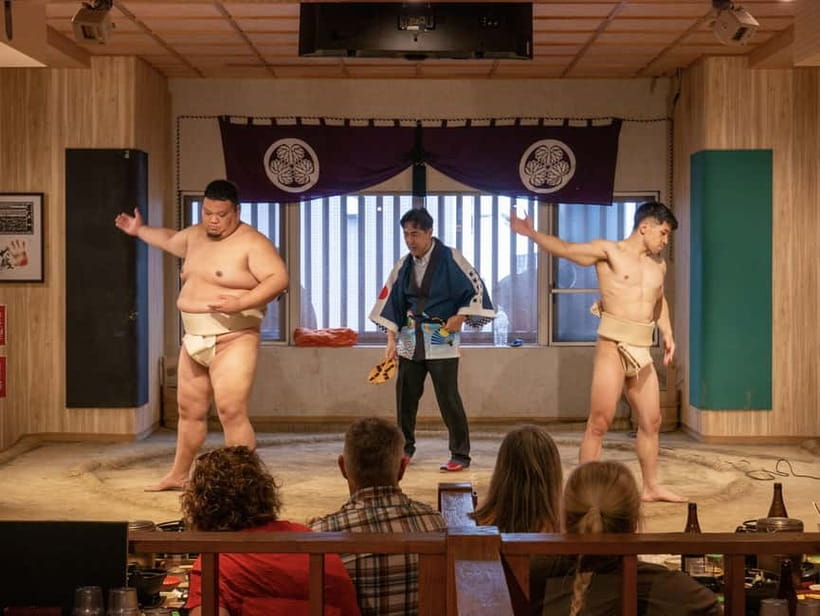
The best part of this Ryogoku experience is simple: you do not watch sumo from the far end of a giant stadium. You sit close to former professional wrestlers, step onto the clay dohyo, and feel the force of the sport at arm’s length. The exhibition bouts are theatrical and funny, but the drills also show you how much balance, ritual, and hard work sit behind each thunderous collision.
I like the hands-on format, especially the chance to learn shiko, teppo, and suri-ashi before trying a padded challenge. I also like the generous chanko lunch, with vegan, vegetarian, pork-free, and allergy-friendly arrangements possible in advance. The main caution is that strict halal diners should ask detailed questions: there is no official Halal certification, and the kitchen cannot promise protection from cross-contamination.
Key points to know before booking
- Former pros, not actors: Meet wrestlers who trained and competed professionally, with English and Japanese commentary from the host.
- Three real sumo drills: Practice the leg stomp, pushing drill, and sliding footwork before the show turns into audience participation.
- A safe comic challenge: Step into a padded suit and try to push a much larger wrestler out of the ring, or stay seated and film.
- Lunch is part of the experience: A steaming mini chanko hotpot gives context to the food that supports a wrestler’s huge physical demands.
- A strong family choice: Children and adults can watch, ask questions, train, or simply cheer from the side.
- Good value at $60: In 105 minutes, you get admission, ring access, a show, instruction, photos, and lunch without paying for a full tournament ticket.
Why Ryogoku is the right place for sumo
Ryogoku is Tokyo’s sumo district, and that setting matters. This is not a generic cultural performance placed anywhere in the city. You meet the wrestlers in the neighborhood most closely tied to Japan’s national sport, where sumo traditions still shape the local identity.
The format brings you close to the ring. You remove your shoes before entering, so wear loose clothing and clean, comfortable socks. The ring is treated as a sacred space, and the host explains why certain movements and gestures matter instead of presenting them as random warmups.
The meeting point is in front of the face-in-hole photo board at the shop. Look for the person holding a phone displaying AlvaJapan. If you arrive early, wait outside and do not enter before 10:00 AM. Starting times can vary, so check the selected time when booking and allow enough time to find the shop in Ryogoku.
The experience is conducted in English. Hosts have included Alisa, Alyssa, Rio, Ko, Yo, and others, so your particular presenter may differ. The best hosts keep the tone light while explaining rules, customs, and the daily demands of a sumo wrestler.
More Sumo Experiences in Tokyo
- Tokyo: Sumo Show Experience with Chicken Hot Pot and a Photo
★ 4.8 · 6,678 reviews - Tokyo: Sumo Show and Dining Experience
★ 4.8 · 2,742 reviews - the SUMO show
★ 5.0 · 1,960 reviews
The first hour: rituals, drills, and wrestler power
The opening section introduces you to the former professional wrestlers and the basic shape of a sumo bout. You hear about the sport’s long religious and cultural background, then see how those ideas appear in small movements.
The salt toss is one of the easiest rituals to recognize. The wrestlers also demonstrate shiko, the famous leg lift and stomp. It looks simple when performed by a strong athlete, but it requires control and balance. The stomp is traditionally linked with driving away evil spirits, giving the movement a purpose beyond physical training.
You then learn three core drills:
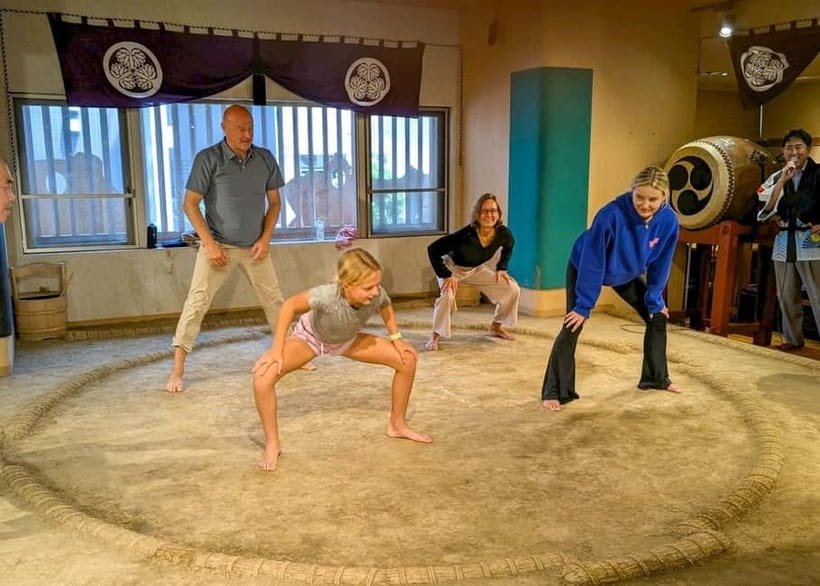
- Shiko: Lift and stamp one leg while keeping control of your body.
- Teppo: Practice pushing against a post or training target, building force through the hands and upper body.
- Suri-ashi: Slide your feet across the floor while keeping a low, stable position.
These exercises are valuable because they make sumo feel less like a distant spectacle. You quickly discover that the sport is not only about body size. Foot placement, timing, posture, and the ability to stay balanced all count.
The host translates the action and points out what is allowed during a bout. Questions are welcome, and the explanations are aimed at both adults and children. You will not become a sumo expert in one session, but you will understand far more when you later see a tournament match on television or at a stadium.
The exhibition bout has real force and plenty of humor
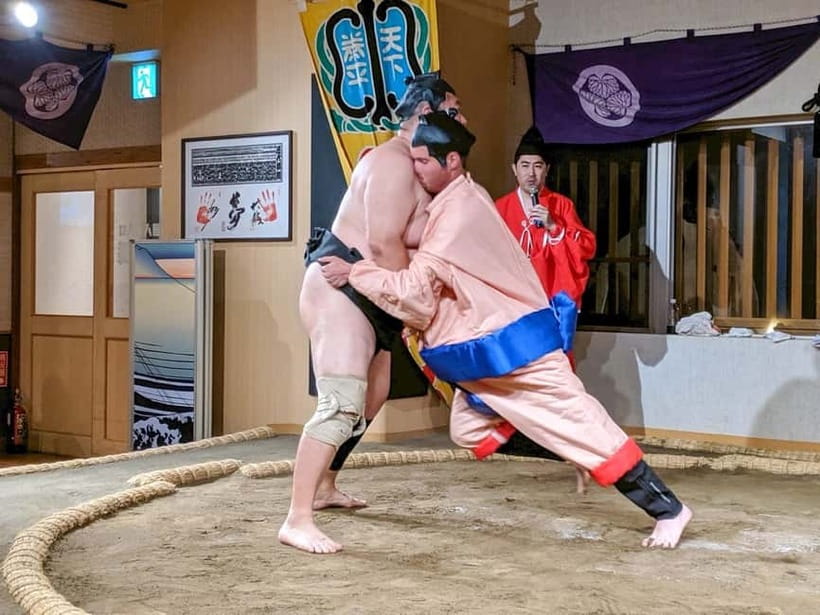
After the drills, the wrestlers perform a full-speed exhibition match. The collision is loud. Even in this controlled setting, the slap of the hands and the impact of bodies against the ring make the sport feel physical in a way that videos cannot quite convey.
The bout also has a strong comic side. The wrestlers play to the room, react to the audience, and make the rules easy to follow. This balance is important for families. Younger children may not care about a long explanation of sumo rankings, but they will understand two huge wrestlers trying to force each other over the edge.
The show is not a professional tournament, and you should not book it expecting the formal scale or silence of a major match. Its strength is access. You can see the wrestlers’ expressions, hear the host explain what is happening, and ask questions close to the action.
Your turn in the dohyo is optional
The audience challenge is the part many people remember most. Volunteers can put on a padded sumo suit and face a former wrestler. The goal is usually to push the wrestler out of the ring, though the size difference makes the result rather predictable.
That is part of the fun. You may get a few seconds of real effort before the wrestler gently sends you backward. The experience is designed to be safe and funny, but anyone who volunteers should be in good health. If you have concerns about balance, joints, or exertion, stay seated and enjoy the show.
You do not have to wrestle. Spectators may remain in their seats, take photos, or film the action. Parents can also join, and children can watch or take part when appropriate. The padded suit makes the challenge more approachable, though you should still wear clothing that allows easy movement.
The ring surface is not a place for street shoes. You remove footwear before stepping inside, so avoid restrictive outfits and plan for bare feet or socks. Loose sportswear is the practical choice.
More sumo mornings and shows:
- Tokyo Shinjuku Sumo Show & Experience with Photo
★ 5.0 · 1,750 reviews - Tokyo: Sumo Show and Experience in Shinjuku
★ 4.8 · 1,001 reviews - Tokyo: Sumo Tournament Tour with Chair Seat Tickets
★ 4.6 · 753 reviews - Tokyo:Luxury Sumo Show Experience & Japanese cuisine & Drink
★ 4.7 · 577 reviews
Photo time makes the experience feel personal
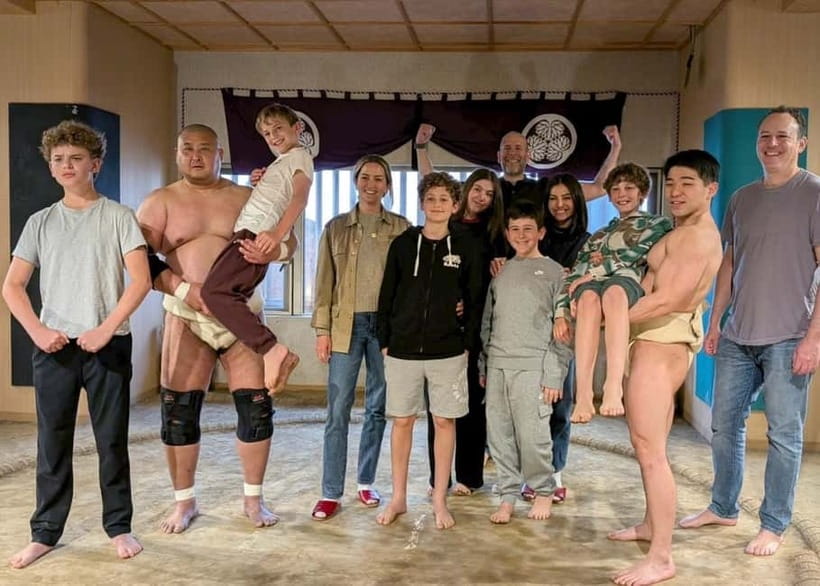
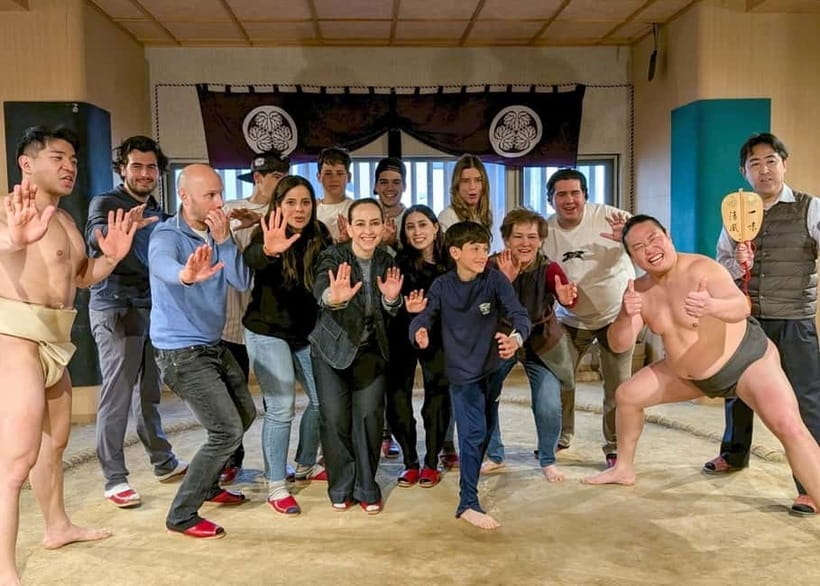
After the bouts and challenges, you get time for photographs with the wrestlers. You can use your own phone or camera, which keeps the process simple and lets families take group shots without paying a separate photography fee.
This is a useful part of the session for children. The wrestlers are friendly and playful, and the photos capture more than a standard posed cultural attraction. You have already seen them train, compete, and joke with the audience, so the picture feels connected to the experience.
If you are traveling alone, do not assume you will be left out. The format allows solo participants to join the shared laughter and take part in the ring if they wish. The group setting is social without requiring you to arrive with a large party.
Chanko nabe turns lunch into a lesson
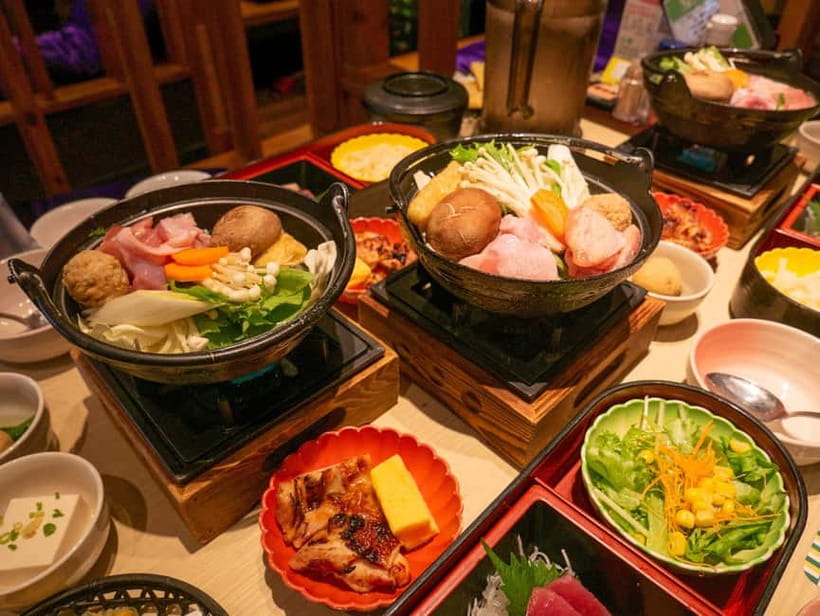
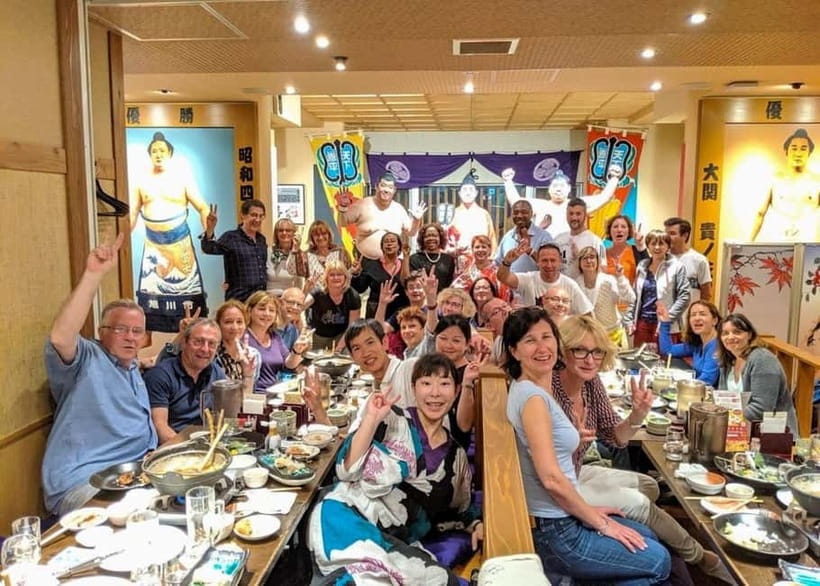
The meal follows the wrestling portion and gives you a second way to understand sumo. Chanko nabe is a hotpot associated with the wrestlers’ diet, usually built around protein, vegetables, and a warming broth.
Here you receive a mini chanko hotpot, but the portion is still substantial. Several people found it more filling than expected, so do not arrive after a large breakfast if you want to finish the meal. The hotpot is served warm and works well after the physical demonstrations, especially on a cool Tokyo morning.
The host explains why this kind of meal suits sumo life. It is hearty, communal, and packed with the sort of ingredients needed to support demanding training. You are not simply eating a Japanese lunch after a show. You are tasting a food tied directly to the athletes you have just watched.
The kitchen can arrange vegetarian, vegan, and other allergy-friendly options if you provide the request at least 48 hours ahead. Pork-free and alcohol-free preparation can be arranged, but the provider does not hold official Halal certification. If you require strict separation from cross-contamination, this meal may not be suitable.
Alcohol and additional menu items cost extra. The included lunch is enough for the core experience, so most people will not need to add anything unless they want a drink or another dish.
Is $60 a fair price?
At $60 per person, this is a solid value if you want participation rather than a formal tournament seat. The fee covers admission, ring access, former professional wrestlers, the demonstrations, the padded challenge equipment, photo time, and lunch.
A sumo tournament ticket gives you a different experience, with more matches and the atmosphere of a major sporting event. It may also require more planning and does not put you in the ring. This workshop is shorter and more staged, but you get personal contact and a clear explanation of what you are seeing.
The 105-minute length also fits neatly into a Tokyo day. You can spend the morning in Ryogoku and still have much of the afternoon available. The only timing issue is the split between the wrestling program and lunch. The schedule describes roughly an hour for the ring program and another lunch period, while the total activity time is 105 minutes, so expect a compact experience rather than a long restaurant sitting.
The main value comes from the mix. If you paid separately for a cultural demonstration, a meal, a photo opportunity, and a hands-on class, you could easily spend more while getting less connection between the parts.
Who will enjoy this most?
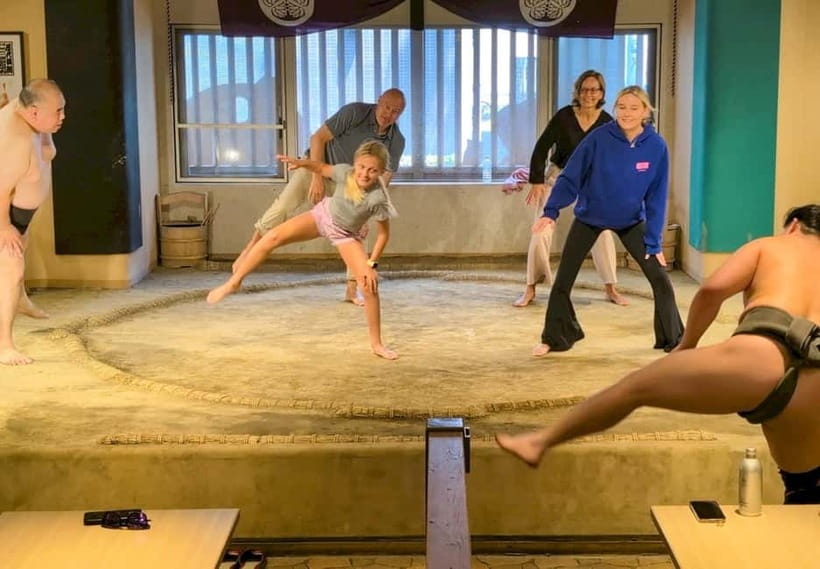
I would put this near the top of the list for families with school-age children. The rules are easy to grasp, the wrestlers are entertaining, and the children can take part without needing to sit through a long lecture. Toddlers can attend, and the hosts have welcomed families with very young children, but meal rules matter.
Children under 5 do not receive a meal under the child rate. If a child under 5 needs lunch, book that child at the adult rate. Children aged 6 and older cannot be booked at the child rate, so check the age categories carefully before paying.
Adults who want to learn something will enjoy it too. The Q&A, training movements, ritual explanations, and food context give the event more substance than a simple photo stop. It also suits solo participants because the activities are shared with the full group.
This is less suitable if you want an unedited look at professional sumo competition. The bouts are exhibitions, and audience participation is guided for safety and humor. It is also not ideal for someone with strict halal requirements unless the meal can be confirmed to meet their needs.
Practical details that can make the morning smoother
Book the dietary request early. Forty-eight hours is the stated lead time for vegan and allergy arrangements, and last-minute requests may not be possible.
Wear loose clothes. You may train, crouch, slide your feet, or enter the ring in a padded suit. Shoes come off at the dohyo, so practical footwear and comfortable socks will make the changeover easier.
Arrive at the marked meeting point and wait outside if you are early. The instructions specifically ask you not to enter before 10:00 AM. If you lose your way, WhatsApp contact is available for help.
The activity is wheelchair accessible, but ring drills remain optional. Accessibility needs can vary depending on the exact movement you hope to try, so tell the provider what assistance you need before arrival.
The booking allows cancellation up to 24 hours ahead for a full refund, and you can reserve now and pay later. The event may not run if the minimum number of participants is not reached. If holding the event is essential to your plans, the private reservation option is the safer choice.
Should you book this Ryogoku sumo workshop?
Book it if you want an active, friendly introduction to sumo that works for adults, children, and solo visitors. The strongest parts are the close contact with former pros, the clear training lesson, the optional padded challenge, and the filling chanko lunch.
Skip it if your main goal is to watch official tournament bouts, or if strict cross-contamination rules make the meal unsuitable. For most people, though, $60 buys a well-packed 105 minutes and a rare chance to move from the audience into the ring. Bring a curious attitude, loose clothes, and an appetite.
FAQ
Where does the sumo workshop take place?
It takes place in Ryogoku on Honshu, Tokyo’s main sumo district.
How do I find the meeting point?
Meet in front of the face-in-hole photo board at the shop. Look for the guide holding a smartphone displaying AlvaJapan. If you get lost, you can contact the guide on WhatsApp.
How long does the activity last?
The complete experience lasts 105 minutes. The ring program takes about 60 minutes, followed by the chanko lunch portion.
Do I have to wrestle?
No. Ring drills and the audience challenge are optional. You can remain seated, watch, and film the demonstrations.
What should I wear?
Loose sportswear is recommended. You remove your shoes before entering the ring, so comfortable socks are useful.
Can dietary needs be accommodated?
Vegetarian, vegan, and allergy-friendly meals can be arranged with at least 48 hours’ notice. Pork-free and alcohol-free preparation is possible, but the provider does not have official Halal certification and cannot guarantee protection from cross-contamination.
Is the activity suitable for children and wheelchair users?
The experience is designed to work for families and is wheelchair accessible. Children under 5 do not receive meals under the child rate, so book them at the adult rate if they need lunch. Children aged 6 and older cannot use the child rate.
More Workshops in Tokyo
- Sushi Making Tokyo Roll and Authentic Japanese Sushi Class
★ 5.0 · 3,971 reviews - Tokyo: Roll and Authentic Sushi Making Class in Asakusa
★ 4.9 · 1,957 reviews - Tokyo Shinjuku Chopsticks Making Class
★ 5.0 · 1,763 reviews - Tokyo: Sushi Making Class in a Happi Coat near a Famous Spot
★ 4.9 · 1,377 reviews
More Lunch Stops in Tokyo
- Tokyo: Mt.Fuji & Lake Kawaguchiko 1-Day Bus Tour w/Optional Lunch
★ 4.5 · 839 reviews - Tokyo: Sumo Experience and Chanko Nabe Lunch
★ 4.8 · 257 reviews - Tokyo: 1 Day Bus Tour with Meiji-Jingu,Odaiba,lunch&Skytree
★ 4.6 · 156 reviews - From Tokyo: Nikko Toshogu Day tour with Traditional Lunch
★ 3.9 · 72 reviews
Just added around Tokyo
- Private Arrival Transfer : Narita International Airport to Central Tokyo City★ 4.5 · 12 reviews
- Narita Airport(NRT): Private Transfer to Tokyo/Yokohama 1-9pax★ 5.0 · 47 reviews
- Private Transfer from Narita Airport to Yokohama Port and City★ 4.5 · 17 reviews
- [Narita Airport Terminals 1, 2] 40-60km Sawara Itako Historic Bike Tour★ 5.0 · 13 reviews
- 3 Day Japan Highlights Tour: Tokyo, Mt.Fuji, Nara, Kyoto, Osaka★ 5.0 · 22 reviews
- Small Town in the Big City: Tasting Tokyo’s Kichijoji★ 5.0 · 195 reviews
- Small Town in the Big City: Tasting Tokyo’s Kichijoji★ 5.0 · 16 reviews
- The 10 Tastings of Tokyo With Locals: Private Street Food Tour★ 5.0 · 48 reviews
Tokyo Tours, compared.

Mt Fuji and Hakone 1-Day Bus Tour Return by Bullet Train
Read our review →

teamLab Planets TOKYO Digital Art Museum Entry Ticket
Read our review →
Mt Fuji & Hakone Cruise, Drum Show Bullet Train 1 Day from Tokyo
Read our review →
Sumo Show Experience with Chicken Hot Pot and a Photo
Read our review →
Shinjuku Food Tour (13 Dishes at 4 Local Eateries)
Read our review →
Tokyo Mt Fuji 5th St & Hakone Cruise Bus Tour w/Bullet Train
Read our review →
Flagship 2-Hours Official Street Go-Kart Tour – Tokyo Bay Shop
Read our review →Browse the lists this tour appears in