
Reviewed · LICENSED GUIDE PRIVATE TOURS
Aomori Full-Day Private Trip with Government-Licensed Guide
Aomori’s biggest surprise is how much character fits into one northern Japanese city. In six hours, a private guide can connect the giant lantern floats at Nebuta Museum Wa Rasse with the ancient settlement at Sannai-Maruyama, then shape the rest of your day around art, local food, temples, or neighborhood life. Guides such as Kaz, Rocky, Tomi, and Tomohiko Kudo have led these outings, and the experience is private to your party.
I like two things especially: the freedom to adjust the day and the chance to ask real questions while standing in front of the objects, buildings, and ruins that make Aomori distinct. I also like the human touch. Guides have helped visitors taste local apples, find inexpensive used kimonos, arrange accessible festival seating, and discover places they might have missed alone.
The catch is that this is a walking tour, not a chauffeured sightseeing day. Transportation, admission tickets, lunch, and personal expenses are extra, and six hours is enough for only three or four main stops. You also cannot include Hirosaki on this tour, despite some past outings apparently stretching in that direction.
Key points to know before booking
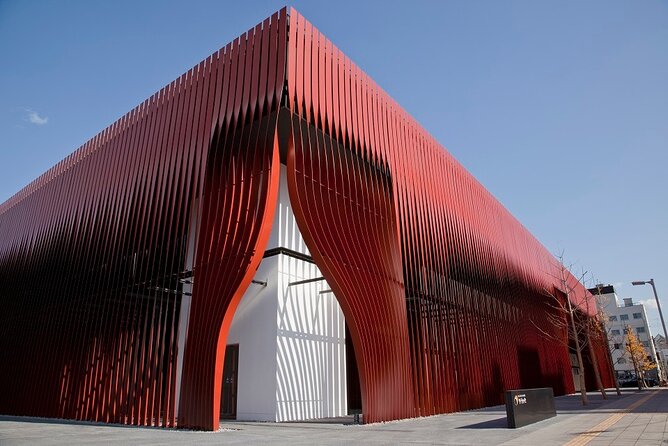
- Nebuta floats up close: Wa Rasse displays five enormous floats from the previous festival, with film, sound, and photographs that explain their design and performance.
- A private six-hour plan: You choose three or four sites with your guide instead of following a fixed group schedule.
- A strong Jomon focus: Sannai-Maruyama gives you reconstructed foundations and a clear look at one of Japan’s oldest settlement periods.
- Art in several forms: You can compare Tadao Ando’s Aomori Contemporary Art Center, Jun Aoki’s Aomori Museum of Art, and Munakata Shiko’s woodblock prints.
- Walking affects the value: Meet your guide on foot in the designated Aomori area, and pay your own transport and entrance costs.
- Guide quality matters: The published score is 4.8 out of 5 from 33 ratings, with 94 percent recommending the experience, but one serious guide-matching failure shows why clear communication is important.
Why a private guide works well in Aomori
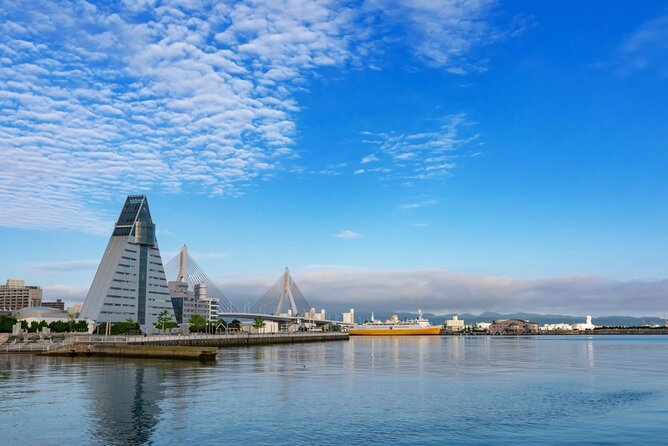
Aomori is not a city where every important story sits on one compact tourist street. The city retains an Edo-period grid pattern, but much of its older building stock disappeared during World War II. Many major sights today are newer museums, cultural centers, and carefully preserved archaeological sites.
That mix can be hard to read without context. A guide helps connect the Nebuta Festival to local identity, explains why Jomon remains matter, and shows how Aomori’s modern architecture frames its past. You are not just checking off buildings. You can ask why a museum is here, what a festival float means, or how northern Japan differs from the better-known Tokyo and Kyoto routes.
A private format also helps if your group has different interests. One person can focus on archaeology, another on contemporary art, and someone else on food or temples. You still need to agree on a practical plan, since the six-hour limit does not allow every listed stop.
The experience includes a licensed local English-speaking guide. Past guides have included Kaz, Rocky Tanaka, Tomi, and Tomohiko Kudo. Communication style and local knowledge may differ from one guide to another, so I would send your top interests before the day and confirm the planned meeting point.
More licensed-guide days in Japan:
- Tokyo 6hr Private Tour with Government-Licensed Guide
★ 5.0 · 3,902 reviews - Tokyo 4hr Private Tour with Government-Licensed Guide
★ 5.0 · 1,394 reviews - Kyoto 6hr Private Tour with Government-Licensed Guide
★ 5.0 · 1,369 reviews
Wa Rasse: Aomori’s festival in giant red, blue, and gold
If you choose only one cultural stop, Wa Rasse is a sensible pick. The center is devoted to Aomori’s Nebuta Festival, held from August 2 through 7. Inside, five floats from the previous festival give you a sense of the scale that photographs rarely capture.
These are not small parade props. They are huge illuminated structures built around dramatic figures, often with fierce faces and strong movement. Video installations, sound, and photographs help explain how the floats are used and how the festival feels when they move through the city.
This stop works especially well with a guide because the display can otherwise seem like a collection of spectacular objects without a clear story. Ask your guide to explain the festival’s background, the float-building process, and the role of music and dancing.
Allow about an hour. Admission is not included for you, so budget separately. If your visit falls during the August festival, tell the guide in advance. The festival itself may change the best plan for the day, and seating, road closures, and crowd conditions can affect timing.
One practical warning: do not assume that a guide’s personal explanation is automatically correct. One past complaint described confusion about Nebuta’s meaning and festival scheduling. I would confirm the day’s parade information with the official festival sources or the museum, especially if seeing the floats outdoors is a main reason for your visit.
Sannai-Maruyama: The stop that rewards patient explanation
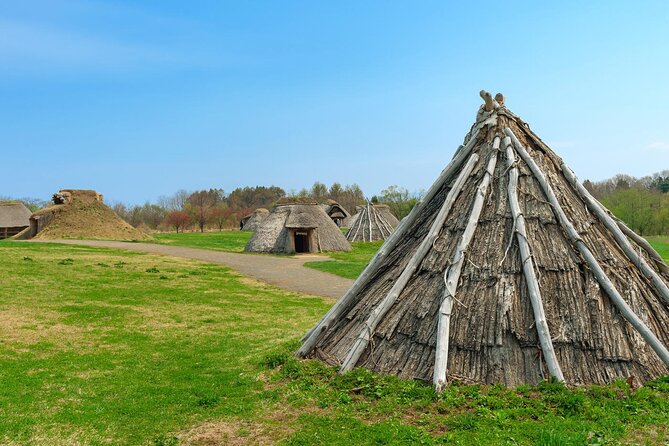
Sannai-Maruyama is the archaeological anchor of the tour. The site reveals the reconstructed foundations of a Jomon-period settlement, and it was first discovered in 1992. It later became a special national historic landmark.
The Jomon period reaches far back into Japanese prehistory, long before the temples, castles, and samurai most visitors associate with Japan. At Sannai-Maruyama, the foundations and reconstructed elements help you picture organized community life rather than treating early Japan as a blank stretch of time.
I would give this stop priority if you enjoy archaeology or want a stronger sense of northern Japan beyond modern museums. A guide can point out what has been reconstructed, what was found during excavation, and how the settlement fits into the wider story of the region.
One guide, Kaz, has been singled out for his skill at explaining Sannai-Maruyama’s excavation, culture, and historical setting. That kind of focused guidance can make the difference between a quick look at old foundations and a meaningful visit.
Allow about an hour, with your admission ticket extra. Since this site is near the Aomori Museum of Art, combining the two can make good use of your time. You should still ask how long the journey takes from your meeting point, since the tour price does not include private transportation.
Aomori’s art triangle: contemporary design, woodblocks, and white concrete
The art choices give this tour a different flavor from a standard city walk. You can choose one, or perhaps two if your group moves quickly, but fitting all three into a six-hour day would leave little room for meals, transport, or conversation.
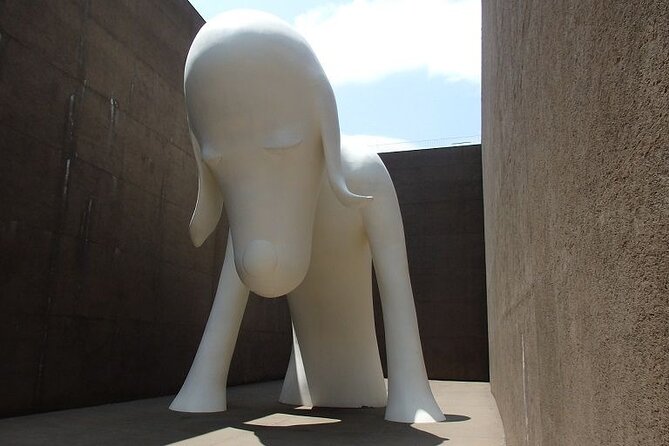
The Aomori Contemporary Art Center sits on the grounds of Aomori Public College. Architect Tadao Ando designed it, and the building uses a water feature to link the architecture with its setting. This is a good choice if you care as much about the building as the works inside. The center feels planned as an artistic environment rather than a simple box filled with paintings.
The Aomori Museum of Art is close to Sannai-Maruyama. Jun Aoki designed its white cubic structure to work with the archaeological surroundings. That pairing is useful: you can move from ancient settlement remains to modern Japanese art and architecture in the same broad area.
The Munakata Shiko Memorial Museum of Art honors Aomori-born artist Munakata Shiko, who lived from 1903 to 1975. The museum displays his woodblock prints, including Ten Great Disciples. Choose this stop if you want a more personal connection to Aomori through a local artist rather than a large national collection.
Each museum lists admission separately, and each deserves roughly an hour in the suggested plan. If your party has mixed interests, tell the guide which art form matters most. A private guide can keep the art discussion at your level instead of giving everyone the same hurried explanation.
A few more Japan half-days to weigh up
- From Tokyo: Mount Fuji Full-Day Sightseeing Trip
★ 4.5 · 4,970 reviews - Mount Fuji Full-Day Private Tour from Tokyo (Customizable)
★ 4.9 · 1,470 reviews - Hiroshima / Miyajima Full-day Private Tour with Government Licensed Guide
★ 5.0 · 1,298 reviews - Tokyo Private Full-Day Tour by Car or Van
★ 5.0 · 684 reviews
Aomori Prefectural Kyodokan and the city’s older threads
The Aomori Prefectural Kyodokan, also described as the Aomori Prefectural Folk Museum, offers another route into the region’s past. Its collection includes Jomon pottery, miniature reconstructions of Jomon huts, and tools from the period.
This stop may appeal more to history-minded visitors than to anyone seeking a quick visual hit. Pottery and tools require a little patience, but they can make Sannai-Maruyama easier to understand. If your schedule allows only one Jomon-related stop, ask your guide to compare the museum with the archaeological site before you decide.
The city itself retains an Edo-period street grid, even though wartime bombing changed much of its built environment. That contrast is worth noticing during the walking portions. A guide can help you read the streets as a surviving pattern rather than expecting a continuous old town.
The suggested visit time is about an hour, with admission extra. Because the tour is not a fixed route, you can trade this museum for art, food, or a religious site if your group has already had enough indoor exhibits.
Local food, apples, temples, and useful detours
The formal plan centers on six main attractions, but the private format allows room for smaller requests. Past guides have included local apples during harvest season, meals at the fish market, temple visits, and a used-kimono shopping stop.
These additions are where the tour can feel personal rather than packaged. Aomori apples are a natural local specialty, and one guide even helped visitors taste them. Another guide found a shop selling used kimonos at a bargain price. These are modest experiences, but they often become the details you remember.
Lunch is not included. A fish market meal with fresh sashimi has been part of a successful day, but you should discuss timing before setting your heart on it. A long line can eat into museum time, and a six-hour tour cannot absorb every delay.
Temples and shrines may also fit, but they are not guaranteed stops in the stated three-to-four-site plan. Ask specifically for places such as Utoh Shrine or Seiryuji Temple if they matter to you, and understand that adding them means removing something else.
One useful strength of the private format is assistance with special needs. A guide has helped a visitor with limited mobility obtain accessible front-row seating for the Nebuta Festival. That does not turn the tour into a fully accessible service, however. Tell the operator and guide about mobility concerns before booking, since the basic format is walking and pickup is on foot.
Six hours, three or four sights, and the real cost
The listed price is $154.84 per person. That is not a cheap walking tour, especially because admission, transportation, lunch, and other personal costs are not included. The value depends on how much you use the guide’s planning and local interpretation.
For a couple or small family with clear interests, the price can make sense. You are buying private attention, not a seat in a large group. A guide can adjust the pace, answer questions, help with translation, and change the plan when weather or personal energy gets in the way.
For a larger party, group discounts may improve the calculation. The activity remains private to your own group, but separate tour groups cannot be combined. Ask about the discount before paying, and add museum admissions and local transport to your budget.
The most important cost is time. Six hours sounds generous, but the plan suggests about one hour at each stop and allows only three or four sites. Travel between locations, meals, ticket lines, and unexpected delays all reduce sightseeing time.
That is why I would not try to force in Wa Rasse, Kyodokan, the Contemporary Art Center, Munakata Shiko Museum, the Aomori Museum of Art, and Sannai-Maruyama in one day. Pick a theme. For example:
- Nebuta, Jomon, and Aomori Museum of Art
- Sannai-Maruyama, Contemporary Art Center, and local food
- Wa Rasse, Kyodokan, and a temple or market stop
- Munakata Shiko, Wa Rasse, and a relaxed lunch
This approach gives you time to talk with the guide instead of racing from one ticket counter to the next.
What the guide experience can be like
The strongest guide accounts describe warmth, flexibility, and pride in Aomori. Kaz has been praised for using WhatsApp before the tour to shape the day around time, interests, and last-minute requests. He has also been described as an effective teacher who uses both spoken explanations and pictures.
Tomohiko Kudo has worked in city government marketing and has long ties to the area. Tomi has been remembered for adding a playful touch, including meeting cruise passengers in costume. Rocky Tanaka has led carefully prepared walking days and shared local food and apple experiences.
These details suggest a guide-led day can be much more than basic directions. You might learn why a festival matters, taste something local, or get help handling a practical problem. Still, your experience depends heavily on the individual assigned to you.
There was also a serious failed-meeting incident involving a guide’s medical emergency and delayed agency communication. The agency later processed a refund. Another complaint described poor pacing, missed stops, incorrect information, and rushed meals. These are not minor concerns, particularly if you are visiting Aomori from a cruise ship and have only one day.
I would protect yourself with a short written plan. Send your arrival time, mobility needs, must-see stop, desired lunch style, and latest return time. On the morning of the tour, confirm the route, ticket costs, and how many sites are realistic. A good guide should welcome that clarity.
Who should book this Aomori day
I would choose this tour if you want personal attention and do not enjoy sorting out a new city alone. It suits families, couples, first-time visitors to Aomori, cruise passengers with a fixed port day, and anyone who wants to mix museums with local food or temples.
It is particularly useful for visitors who want Sannai-Maruyama explained properly, or who want to understand Nebuta beyond taking pictures of large floats. Art lovers can also shape the day around architecture and regional artists.
I would hesitate if you want a fully escorted vehicle, a guaranteed visit to every attraction, or a low-cost introduction to downtown Aomori. The tour provides no private transportation, and the published plan does not include Hirosaki. Some past day plans included Hirosaki Castle, but the current terms specifically say you cannot visit Hirosaki, so do not book this expecting that detour.
The walking format also deserves attention. Most travelers can participate, and service animals are allowed, but you should be comfortable spending much of the day on foot. If you need a slower pace, say so before the itinerary is finalized.
Should you book it?
Book this Aomori tour if your priority is flexible, private interpretation, especially at Wa Rasse or Sannai-Maruyama. The best version of the day gives you three well-chosen stops, a guide who communicates before meeting, and enough time for a local meal or small detour.
Skip it if you prefer independent museum visits, need a car included, or want Hirosaki. At $154.84 per person before tickets and transport, this is a personal-guiding service rather than an all-inclusive sightseeing deal.
For the strongest value, choose three main sights, name your top priority in advance, and ask your guide to build the route around it. That simple preparation should help you get the thoughtful, local day this experience is designed to provide.
FAQ
How long is the Aomori private tour?
The tour lasts approximately six hours.
How many sites can I visit?
The included plan is customizable and covers three to four sites from the listed attractions. Six hours is not enough for a relaxed visit to every listed stop.
Is transportation included?
No. This is a walking tour, and you meet the guide on foot within the designated area of Aomori city. Transportation fees and private transportation are not included.
Are entrance tickets included?
No. Your admission tickets are not included. The activity information states that guide entry fees are covered only for sights listed under the expected stops.
Can I visit Hirosaki on this tour?
No. The tour terms specifically state that Hirosaki cannot be included.
Can I cancel for a full refund?
Yes. You can cancel up to 24 hours before the experience start time for a full refund. Cancellations or changes made less than 24 hours before the start time are not accepted for a refund.
Just added around Japan
- Private Arrival Transfer : Narita International Airport to Central Tokyo City★ 4.5 · 12 reviews
- Narita Airport(NRT): Private Transfer to Tokyo/Yokohama 1-9pax★ 5.0 · 47 reviews
- Private Transfer from Narita Airport to Yokohama Port and City★ 4.5 · 17 reviews
- [Narita Airport Terminals 1, 2] 40-60km Sawara Itako Historic Bike Tour★ 5.0 · 13 reviews
- 3 Day Japan Highlights Tour: Tokyo, Mt.Fuji, Nara, Kyoto, Osaka★ 5.0 · 22 reviews
- Hammer a Pattern on Your Ring Workshop★ 5.0 · 57 reviews
- All must-sees in 3 hours – Nara Park Classic Tour! From JR Nara!★ 5.0 · 108 reviews
- Private Nara Tour and Sake Tasting (Departing from Kyoto/Nara)★ 5.0 · 40 reviews
Licensed Guide Private Tours, compared.

Tokyo 6hr Private Tour with Government-Licensed Guide
Read our review →
Tokyo 4hr Private Tour with Government-Licensed Guide
Read our review →
Kyoto 6hr Private Tour with Government-Licensed Guide
Read our review →
Kyoto 4hr Private Tour with Government-Licensed Guide
Read our review →

Hiroshima City 4hr Private Walking Tour with Licensed Guide
Read our review →
Private Kyoto Tour with Licensed Guide & Vehicle (Max 15 persons)
Read our review →
Osaka 4hr Private Tour with Government-Licensed Guide
Read our review →Browse the lists this tour appears in