
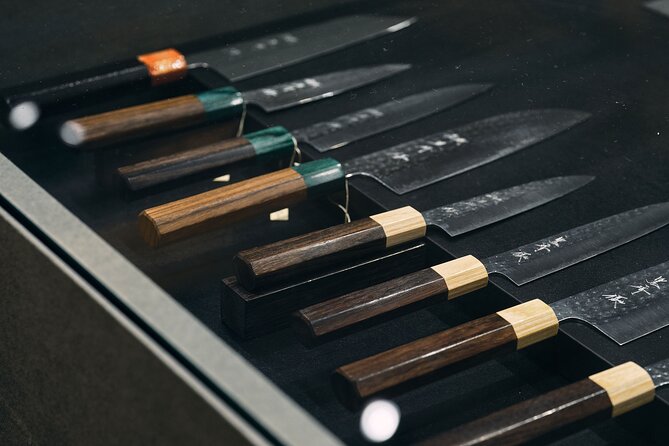
Reviewed · WALKING TOURS
Private Echizen Knife Making Factory and walking Tour
Echizen knife making is not a staged museum display. You visit two working factories, smell fresh wood at Yamaken Woodworks, then watch blacksmiths make blades at Ryusen Hamono. The best part is the direct contact with the craftspeople, plus a chance to try part of the process yourself.
I like the small private format, since your group is the only group taking part. I also like the clear split between handle making and blade making. The main consideration is location: this is an out-of-the-way stop, and the tour does not include an English guide unless you pay an additional ¥10,000 per person.
Key points to know
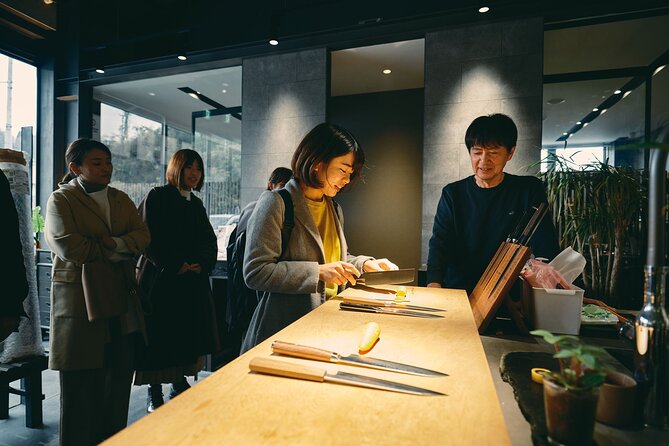
- Two working factories: See knife handles at Yamaken Woodworks and blades at Ryusen Hamono.
- Meet the makers: Speak directly with craftspeople who spend their working lives on Echizen knives.
- Try part of the craft: The visit includes a hands-on section of the knife-making process.
- Private experience: Only your own group takes part, making questions and conversation easier.
- Allow 2.5 hours: The factory visits take about one hour and one hour 10 minutes, with a little time for moving between them.
- Plan your transport: The meeting point is in Ikenokamichō, near public transportation, but driving is likely the simplest way to arrive.
Why Echizen knife making is worth the side trip
Echizen is one of Japan’s best-known knife-making areas, and this experience puts you close to the work rather than only showing you finished products. You see how two separate skills come together: the wooden handle and the forged blade.
That matters because a high-quality kitchen knife is not simply a sharp piece of metal. Its handle affects balance, grip, and comfort. Its blade depends on careful shaping and finishing. At these factories, you can see those jobs as distinct crafts, then understand how they meet in the finished knife.
I especially like the chance to speak with the people doing the work. A shop full of beautiful knives can tell you what is for sale, but a conversation with a craftsperson can explain why the handles look different, how the blade is formed, or what makes one knife suitable for a particular use.
The visit is also a good match for anyone who prefers working places to polished attractions. You should expect the atmosphere of factories and workshops, not a large visitor center with a broad menu of activities. That is part of the appeal, but it also means the experience depends on your interest in the craft.
The tour costs $163.30 per person. That is not a small amount for two and a half hours, especially since food and drinks are not included and an English guide costs another ¥10,000 per person. Still, the price can make sense if you value a private visit, personal contact with makers, and access to places that are not part of a standard Fukui sightseeing route.
More walking tours in Japan:
- Kyoto Geisha Walking Tour: Gion District & Hidden Gems
★ 4.7 · 3,273 reviews - Tokyo Tsukiji Fish Market Food and Culture Walking Tour
★ 5.0 · 3,184 reviews - Kyoto: Gion Magical Night Walking Tour with Geisha Trivia
★ 4.9 · 2,393 reviews
Yamaken Woodworks and the scent of fresh timber

The first stop is Yamaken Woodworks at 46-1-10 Ikenokamichō. This factory makes wooden knife handles, and the strongest sensory detail here is the aroma of wood as you enter the working space.
You can see the care that goes into shaping a handle and ask the craftspeople about their work. The conversation is the point. A handle may look simple once it is attached to a blade, but the factory visit helps you notice the material, form, and handwork that usually disappear into the finished object.
The factory has a shop next door where the handles made on site are sold. This gives you a chance to look at the work as an object in its own right, not just as a supporting piece of a kitchen knife.
I would give this stop your full attention even if you came mainly for blades. The handle work provides a useful change of pace, and it makes the second factory easier to understand. You begin with the part you hold, then move on to the part that cuts.
The listed time here is one hour. That is long enough for an explanation, a look at the workshop, conversation with the makers, and time in the shop without making the visit feel rushed.
Ryusen Hamono, where the blades take shape
The second stop is Ryusen Hamono, described as both a knife factory and a shop filled with high-quality products. Here you meet actual knife-making blacksmiths and learn how the blades are made.
This is likely to be the main attraction for serious knife fans. The factory lets you see the work behind the polished knives in the store. You can ask about the making process, observe the blacksmiths, and take part in one section of the work yourself.
The hands-on part is important, but keep your expectations measured. The experience gives you a taste of the process, not a full apprenticeship or a knife you make from beginning to end. The value is in feeling some connection between the raw work and the finished tool.
After the factory portion, you can browse the shop’s assortment of knives. This is a useful moment to compare shapes and finishes after you have seen how the products are made. If you are considering a purchase, the factory setting gives the knives more meaning than they would have in an ordinary retail store.
The listed time at Ryusen Hamono is one hour 10 minutes. That makes it the longer of the two stops, which fits the amount of material here: blacksmithing, questions, the practical activity, and the shop.
What the private format changes
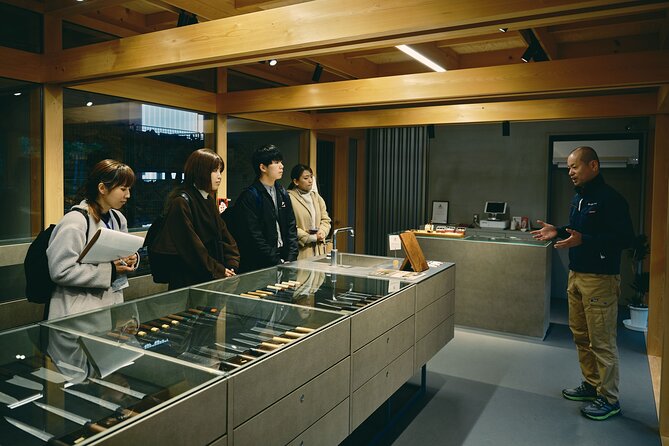
This is a private activity, so only your group takes part. I see that as one of the strongest features for anyone who wants to ask questions or take the hands-on part at a comfortable pace.
In a large group, a workshop visit can turn into standing at the back while somebody else talks. Here, the format should give you more room to focus on the craftspeople and the work in front of you. It is also a better setup for people with a specific interest in Japanese knives, woodworking, sharpening, or traditional manufacturing.
The private format does not guarantee an English-speaking guide. The information specifically lists an English guide at an extra ¥10,000 per person. If you need detailed explanations in English, budget for that addition before you book. Without it, you should confirm how communication will work for your group.
The activity includes a factory tour, a shop tour, and an experience. It does not include food or drinks, so plan those separately. At two and a half hours, the tour fits well into a day built around Fukui or Echizen, but you should leave enough time for transport and any shopping.
A few more Japan half-days to weigh up
- Tokyo 6hr Private Tour with Government-Licensed Guide
★ 5.0 · 3,902 reviews - Private Tour to Mt. Fuji and Hakone (Fully Licenced Operator)
★ 5.0 · 1,910 reviews - Fushimi Inari Hidden Hiking Tour (Private Option Available)
★ 5.0 · 1,750 reviews - Private Kyoto Tour with a Local, Highlights & Hidden Gems, Personalised
★ 5.0 · 1,543 reviews
Getting to the meeting point in Ikenokamichō
The starting point is 48-6-1 Ikenokamichō, Echizen, Fukui 915-0873, Japan. The activity ends back at the meeting point, which keeps the transport plan simple once you arrive.
The area is near public transportation, but it is not necessarily the easiest place to reach by train alone. One account describes a roughly 35-minute walk from Oshio Station through rice fields. That walk can be pleasant in good weather, but it is still a walk, and conditions matter.
Strong winds made the return walk difficult on one occasion. That is a useful warning for planning. Check the weather, wear practical shoes, and think carefully before choosing the station walk if you have luggage, young children, or limited mobility.
Driving is described as the easiest way to arrive. If you are using a rental car, this tour becomes a more straightforward addition to a Fukui itinerary. If you rely on trains, confirm the route and walking time before setting out.
The experience requires good weather. If poor weather causes a cancellation, you are offered another date or a full refund. That policy is helpful, but it also tells you to treat the walk from the station as a weather-dependent option rather than a guaranteed part of the day.
Is the $163.30 price fair?
The price needs to be judged against what you are buying. You are not paying for a long sightseeing route or a meal. You are paying for access to two specialist factories, direct contact with makers, a private group setting, and a hands-on section of knife making.
For a casual shopper, that may feel expensive. You can see knives in many Japanese cities without spending this much. The price becomes easier to justify if you are already interested in Japanese kitchen knives or want a more personal experience than a shop visit.
The extra English guide fee is the biggest cost issue. At ¥10,000 per person, it can change the total considerably, particularly for a couple or family. If your group does not speak Japanese, ask about the language arrangement before committing, since the core price does not include that guide.
The tour’s small size also affects the value. A private activity can be worth more to you if you like asking questions, want a quieter visit, or have a focused interest. If you prefer a low-cost, broad introduction to Fukui, this probably is not the best use of your budget.
Who will enjoy this most?
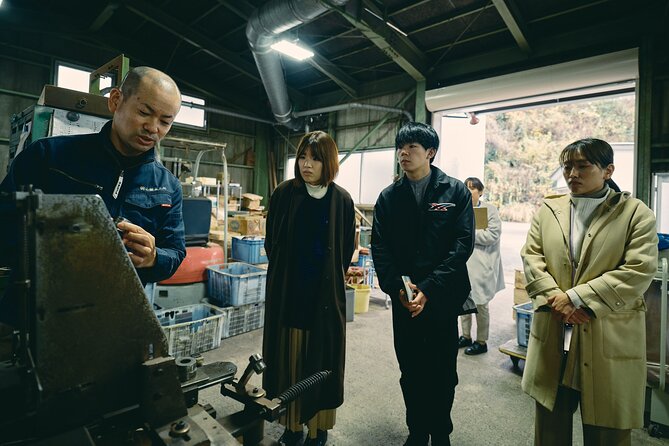
I would recommend this experience first to people who already appreciate Japanese knives, handmade tools, woodworking, or traditional craft. You do not need to be a professional cook, but curiosity will make the two and a half hours much more rewarding.
It also suits shoppers who want to buy a knife with a better understanding of its origin. The shops at both factories let you browse finished products, and the factory visits give you useful context before you decide what interests you.
Couples and small private groups are a good fit. You can share the experience without being folded into a large party, and the format should make it easier to ask questions that match your own interests.
I would be more cautious about recommending it to someone who has only a passing interest in knives. Much of the value comes from watching and discussing specialized work. If you want a fast sightseeing stop, the factory setting may feel too focused.
The walk from Oshio Station also makes this less suitable for anyone who needs easy door-to-door access. Most people can take part, but the route and weather deserve attention if walking is part of your plan.
How to get the most from the visit
Before you go, decide what you want to learn. You might focus on handle materials, blade making, the difference between knife styles, or how the craftsmen balance practical use with appearance. A few clear questions can turn a good visit into a much better one.
Wear comfortable shoes and clothing suitable for a working factory. The available information does not specify protective equipment or the exact hands-on task, so follow the staff’s instructions and avoid planning the visit around delicate clothing.
Keep your schedule flexible around transport. The official activity lasts about two hours 30 minutes, but the station walk, driving, parking, or weather can add time. Since the tour returns to the meeting point, you do not need to arrange a separate end point.
If you hope to buy a knife, allow enough time at the shops. The factory visits are not only demonstrations. The stores are part of the experience, and you may want to compare the handles and blades you have just seen being made.
Book ahead if your dates are fixed. The experience is booked on average 28 days in advance, and confirmation can take up to 48 hours for bookings made within seven days of travel, subject to availability.
Booking, weather, and cancellation details
You receive a mobile ticket, and confirmation normally arrives at booking. A booking made within seven days of the date may require up to 48 hours for confirmation.
Free cancellation is available up to 24 hours before the start time for a full refund. Changes or cancellations inside that 24-hour period are not accepted for a refund.
The activity needs a minimum number of participants. If that minimum is not reached, you are offered another date or experience, or a full refund. Poor weather can also lead to a new date or full refund.
These rules are fairly practical, but do not leave the booking until the last minute if your Japan schedule is tight. The factories are in a specific area, and replacing the visit at short notice may be difficult.
My call: book it for the craft, not just the shopping
I would book this tour if Echizen knives are a real interest for you. The two-factory structure is strong: Yamaken Woodworks shows the care behind the handle, while Ryusen Hamono explains the blade and lets you try part of the work. Meeting the craftspeople is the feature that gives the visit its value.
I would skip it if you want a cheap, general introduction to Fukui or if reaching Ikenokamichō will create more stress than enjoyment. The added English guide fee, possible station walk, and $163.30 price make this a focused purchase.
For the right person, though, it is a rare chance to see Japanese knife making in the place where it happens. Plan the transport carefully, allow for the weather, and go ready to ask questions. You will get far more from the visit than simply choosing a knife from a shelf.
FAQ
Where does the Echizen knife-making tour start?
It starts at 48-6-1 Ikenokamichō, Echizen, Fukui 915-0873, Japan.
Where does the activity end?
The activity ends back at the meeting point.
How long does the tour take?
The tour lasts approximately two hours 30 minutes. Yamaken Woodworks takes about one hour, and Ryusen Hamono takes about one hour 10 minutes.
What factories are included?
The experience includes Yamaken Woodworks, which makes wooden knife handles, and Ryusen Hamono, a knife factory and shop.
Is an English guide included?
No. An English guide is available for an additional ¥10,000 per person.
Is the activity private?
Yes. Only your own group participates in this private activity.
What happens if the weather is poor?
If poor weather causes the activity to be canceled, you are offered another date or a full refund.
Just added around Japan
- Private Arrival Transfer : Narita International Airport to Central Tokyo City★ 4.5 · 12 reviews
- Narita Airport(NRT): Private Transfer to Tokyo/Yokohama 1-9pax★ 5.0 · 47 reviews
- Private Transfer from Narita Airport to Yokohama Port and City★ 4.5 · 17 reviews
- [Narita Airport Terminals 1, 2] 40-60km Sawara Itako Historic Bike Tour★ 5.0 · 13 reviews
- 3 Day Japan Highlights Tour: Tokyo, Mt.Fuji, Nara, Kyoto, Osaka★ 5.0 · 22 reviews
- All must-sees in 3 hours – Nara Park Classic Tour! From JR Nara!★ 5.0 · 108 reviews
- Private Nara Tour and Sake Tasting (Departing from Kyoto/Nara)★ 5.0 · 40 reviews
- Hammer a Pattern on Your Ring Workshop★ 5.0 · 57 reviews
Walking Tours, compared.

Kyoto Geisha Walking Tour: Gion District & Hidden Gems
Read our review →
Tokyo Tsukiji Fish Market Food and Culture Walking Tour
Read our review →
Gion Magical Night Walking Tour with Geisha Trivia
Read our review →
Imperial Palace and Shogun Historical Walking Tour
Read our review →
Gion Geisha District Walking Tour – Stories of Geisha
Read our review →

Shinjuku Local Bar and Izakaya Guided Walking Tour
Read our review →
Browse the lists this tour appears in