
Reviewed · TOKYO TOURS
Little EDO Sushi Making workshop in Kawagoe
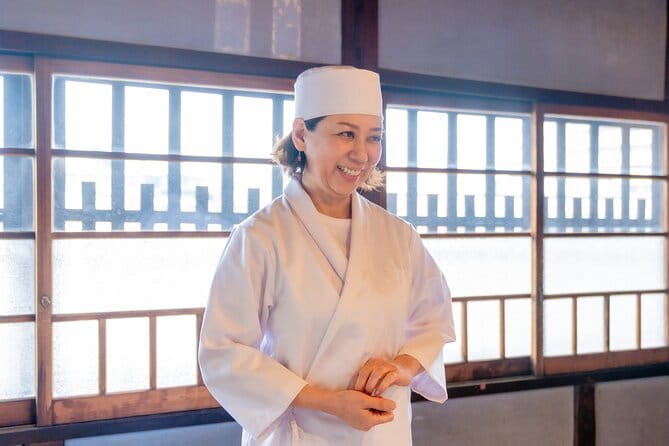
The most memorable part of this Kawagoe class is the setting: you make sushi inside a 140-year-old former rice shop, now a local cafe called MUSUBIYA. Old staircase cabinets and broad ceiling beams give the lesson a sense of place that a modern cooking studio cannot match.
I like the hands-on format, since you make both nigiri and maki instead of only watching a demonstration. I also like the practical focus on sushi rice, the part you can repeat at home long after your day in Kawagoe. The main drawback is the short schedule and limited Monday availability, so you need to plan around the class times.
Key points at a glance
- Historic Kawagoe setting: Make sushi in a former rice wholesale shop with 140-year-old architectural details.
- Two sushi styles: Learn hand-formed nigiri and rolled maki sushi during the same class.
- Useful home skill: The chef explains how to prepare sushi rice, the base of good sushi.
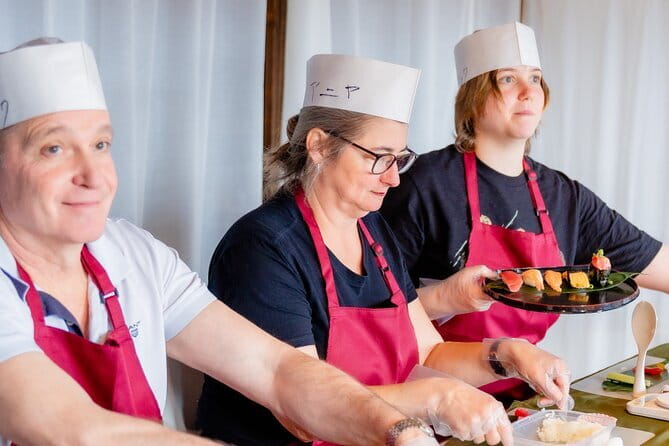
- Small class size: The maximum is six people, allowing close guidance from the English-speaking chef.
- Dietary requests: Vegan, vegetarian, gluten-free, and halal menus can be arranged in advance.
- Easy old-town add-on: MUSUBIYA is about a three-minute walk from Kashiya Yokocho, Kawagoe’s famous Candy Alley.
Making sushi inside an old Kawagoe rice shop
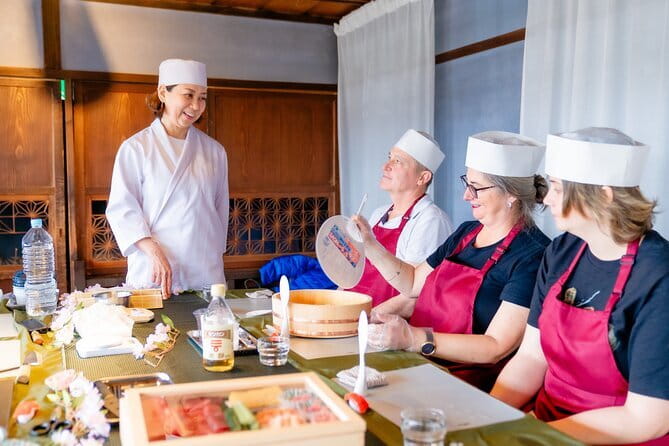
This class begins at MUSUBIYA, at 1-6-7 Ishiharacho in Kawagoe. The building once served as a rice wholesale shop, and its age is part of the experience. You’ll see staircase cabinets, an unusual built-in storage feature, along with exposed ceiling beams that recall the building’s earlier working life.
That setting matters. Sushi is not presented here as a trendy food with no connection to place. You are preparing a classic Japanese dish in a building tied to rice, one of the key foods in Japanese cooking. The surroundings help explain why the lesson feels like more than a standard cooking appointment.
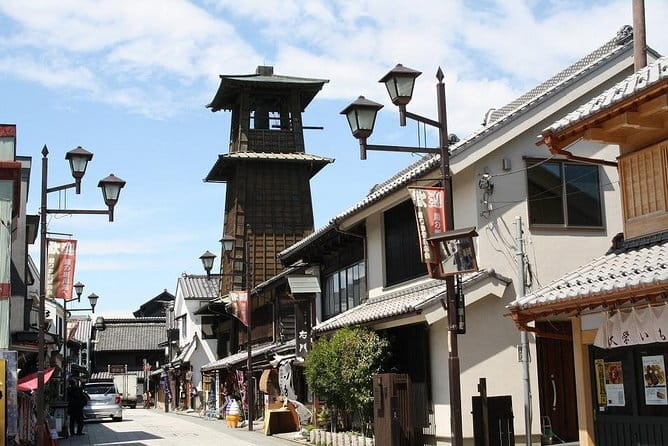
MUSUBIYA is about three minutes from Kashiya Yokocho, also known as Candy Alley. That makes the class easy to pair with a walk through Kawagoe’s old streets. You can visit the candy shops before the lesson, make lunch or an afternoon meal at MUSUBIYA, then continue exploring nearby.
The meeting point is the same as the ending point. There is no hotel pickup, so you need to make your own way to the address. The venue is near public transportation, but the provided information does not specify a particular station or walking route. I would allow a little extra time to find the building, especially if you are navigating Kawagoe for the first time.
More Sushi Making Classes in Tokyo
- Sushi Making Tokyo Roll and Authentic Japanese Sushi Class
★ 5.0 · 3,971 reviews - Tokyo: Roll and Authentic Sushi Making Class in Asakusa
★ 4.9 · 1,957 reviews - Tokyo: Sushi Making Class in a Happi Coat near a Famous Spot
★ 4.9 · 1,377 reviews
What the 90-minute lesson covers
The class is described as lasting about one hour and 30 minutes, although the activity details also refer to it as a two-hour class. Plan for roughly 90 minutes, and leave some flexibility if you have a tight sightseeing schedule. The session includes the cooking ingredients and the meal you make.
Your chef is a Japanese woman who teaches in English and has international experience. Her role is practical rather than theatrical. She guides your hand movements, explains the methods, and helps you shape the sushi yourself. You are not simply watching a chef prepare a plate while you sit at the counter.
The lesson begins with sushi basics, including the story of nigiri. Hand-formed nigiri sushi was created in Japan around 300 years ago. That short historical note gives context to the food in front of you: nigiri was designed as a compact, convenient form of sushi, with rice and topping shaped together by hand.
The class also covers how to prepare sushi rice. This is one of the most useful parts for a home cook. The topping may depend on what you can buy, but properly seasoned rice is the foundation of both nigiri and maki. You’ll learn a method you can try again in your own kitchen.
The chef also demonstrates how to cut neta, the fish or other topping used for sushi. Cutting is not a minor detail. The size and shape of the topping affect how it sits on the rice and how easy it is to eat. The available class information does not specify the exact fish or fillings used, so do not book expecting a particular ingredient unless the provider confirms it.
Nigiri and maki, two different skills
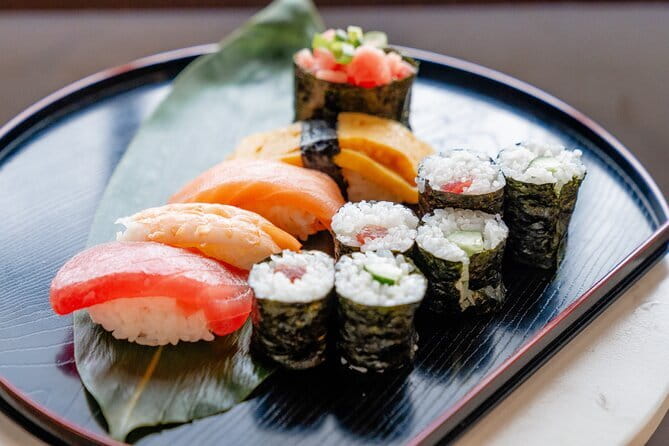
Nigiri is the more delicate task. You form a small portion of rice by hand and place the topping on it. The chef shows you the hand movements needed to keep the rice together without crushing it. The goal is not to copy a professional perfectly on the first try. It is to understand the light touch and basic shape.
Maki sushi gives you a different challenge. You add fillings, place them with care, and roll the sushi into a firm cylinder. The rolling process looks simple until you try to keep the filling centered and the roll tight. Making both styles in one session gives you a useful comparison between hand-shaped and rolled sushi.
You then eat the sushi you prepared. That meal is included in the price, while drinks are not. Bring a little money or a payment method for a beverage if you want one with your food. The class is therefore both a lesson and a meal, but it is not an all-inclusive dining experience.
One published comment about the class points to the range of skills covered: sushi history, rice preparation, cutting neta, and forming nigiri. It also mentions taking part in an Ehomaki period, suggesting that the class can connect sushi making with seasonal or cultural traditions. The exact Ehomaki content is not guaranteed for every session, so treat that as a possible feature rather than a fixed part of the itinerary.
Why the small group size helps
The class accepts a maximum of six people. That is a useful limit for a skill-based activity. Sushi shaping depends on seeing the chef’s hands and getting quick corrections. In a large group, you might spend much of the time trying to watch from behind someone else. Here, the chef should be able to give each person more direct help.
A small group also makes the setting feel more like a shared kitchen lesson than a formal lecture. You can ask questions in English as you work. The chef’s international experience should help with clear explanations, though the provided information does not give her name.
The class suits first-time sushi makers, couples, families, and small groups of friends. It also works for solo visitors who want a structured activity in Kawagoe. You do not need to arrive with professional cooking skills. The point is to learn the basic movements and understand the ingredients.
The format may be less appealing if you want a long culinary workshop with several dishes. This experience focuses on sushi, and the schedule is short. You will learn two sushi types, but you should not expect a full restaurant apprenticeship or a broad survey of Japanese cooking.
More sushi classes in Tokyo:
- Tokyo Sushi Making Class in Tsukiji with Professional Chef
★ 5.0 · 1,177 reviews - Tsukiji Fish Market Guided Tour and Sushi Making with Pro Chef
★ 5.0 · 775 reviews - Tokyo: Tsukiji Fish Market Sushi Making Class with Pro Chef
★ 4.9 · 506 reviews - Tokyo Tsukiji Fish Market Tour and Sushi Making Lesson
★ 5.0 · 390 reviews
The value of $84.08 per person
At $84.08 per person, this is not a cheap meal. The value comes from the combination of instruction, food, a historic building, and a small group. You are paying for a guided activity with an English-speaking chef, not just for the sushi you eat.
I think the price makes the most sense for visitors who already plan to spend time in Kawagoe and want an activity tied to the town. The three-minute walk from Kashiya Yokocho helps. You can combine the class with sightseeing rather than making a separate trip only for a 90-minute lesson.
The value is also stronger if you will use the rice-making method at home. A restaurant meal disappears quickly. A basic sushi skill can become a repeatable memory, especially if you enjoy cooking and can find suitable ingredients after returning home.
For a family, the price can add up fast, and younger children may need close help with shaping and rolling. The supplied details do not state a minimum age, so check before booking if children are in your group. For adults who want a short cultural activity, the combination of food and instruction is easier to justify.
This class is booked an average of 19 days ahead. That is a useful planning clue. It does not mean every date sells out, but it suggests you should reserve early if your Kawagoe visit is fixed.
Timing your visit around Kawagoe
The listed operating schedule runs from September 5, 2025, through November 2, 2027. Classes are offered on Mondays at 12:00 p.m. to 1:30 p.m. and 3:00 p.m. to 4:30 p.m.
The lunchtime session fits well between morning sightseeing and an afternoon walk. After eating your handmade sushi, you can continue through Kawagoe’s historic center. The later session leaves the morning open, but you will need to plan your meal around the class rather than treating it as lunch.
The Monday-only schedule is the biggest practical limitation. If your Kawagoe visit falls on another day, this experience will not fit without changing your plans. Confirm the available date at booking, since operating times can matter more than the class content for a short visit.
The class requires good weather, and the provider may cancel if conditions are poor. If that happens, you are offered another date or a full refund. The same applies if the minimum number of participants is not reached.
For your own cancellation, you can receive a full refund if you cancel at least 24 hours before the start time. Changes or cancellations inside that 24-hour window are not accepted for a refund. Use local Kawagoe time when calculating the cut-off.
Dietary planning before you arrive

The kitchen can accommodate vegan, vegetarian, gluten-free, and halal menus. Allergies can also be discussed, with exclusions listed for meat, nuts, fruits, and dairy. You must request menu changes when booking.
This is important: the chef cannot make a last-minute adjustment on the day of the class. If you have a serious allergy or follow a strict diet, write the details clearly in advance and wait for confirmation. Do not assume that a general dietary label covers every ingredient or preparation method.
The menu may be changed for an individual need, but the exact substitute ingredients are not stated. Ask the provider what will be served if a particular fish, sauce, or seasoning is a concern. Drinks are not included, and the class information does not list beverage options.
Stairs, access, and what to bring
There are stairs to reach the venue. If you prefer to avoid stairs, contact the provider before the class. Alternative arrangements may be possible, but they cannot be assumed on the day.
Service animals are allowed, and the location is near public transportation. Hotel transfers are not included, so you need to arrange both your arrival and departure. The activity ends back at MUSUBIYA.
A mobile ticket is provided, which is convenient for a day of sightseeing. Keep the booking available on your phone and arrive at the stated address rather than going to Kashiya Yokocho itself. The nearby Candy Alley is a helpful landmark, but it is not the meeting point.
Wear something comfortable for a hands-on food lesson. The supplied information does not list a dress code or equipment requirements. Since the session includes preparing and eating sushi, you should also tell the chef about any food concerns before you begin.
Who should book this sushi class?
I would recommend it to you if you want a short, local activity that combines food with a historic setting. It is especially suitable if you are already visiting Kawagoe, enjoy Japanese cuisine, or want an experience that gives you something to do rather than another place to photograph.
It is a good choice for people who prefer instruction in English and want to take part directly. The small group limit is helpful for beginners, and the rice lesson gives the class a practical purpose beyond making one meal.
You may want to skip it if your schedule does not include Monday, if you dislike stairs, or if you want a full-length cooking course. The price is also high for anyone judging the experience only by the amount of food served.
Should you book Little EDO Sushi Making?
Book this class if the setting, personal instruction, and chance to make your own sushi matter more to you than getting the lowest-cost meal. The combination of a former rice shop, English-speaking Japanese chef, two sushi styles, and a maximum of six participants gives the experience a clear identity.
Before paying, check the Monday time, ask about your exact dietary needs, and allow room in your schedule for the stated 90-minute lesson. If those details work, this is a smart addition to a Kawagoe day, especially when paired with Kashiya Yokocho. If you need a flexible, inexpensive, or stair-free activity, choose something else.
FAQ
How long does the sushi-making class last?
The tour summary gives an approximate duration of one hour and 30 minutes. The detailed description also refers to a two-hour class, so allow some extra time around the scheduled session.
Where does the class take place?
The class takes place at MUSUBIYA, 1-6-7 Ishiharacho, Kawagoe City, Saitama, Japan. The building is about a three-minute walk from Kashiya Yokocho.
What sushi will I learn to make?
You will learn to make nigiri sushi, which is formed by hand, and maki sushi, which is rolled with fillings. The class also covers sushi rice and cutting neta.
Are dietary menus available?
Yes. Vegan, vegetarian, gluten-free, and halal menus can be arranged. Allergy requests are also possible, except for meat, nuts, fruits, and dairy. You must request changes when booking, since same-day changes are not accepted.
Is transportation included?
No. Hotel pickup and drop-off are not included. The class begins and ends at MUSUBIYA, which is near public transportation.
Can I cancel for a refund?
You can cancel at least 24 hours before the start time for a full refund. Cancellations or changes made less than 24 hours before the class are not refunded or accepted.
More Workshops in Tokyo
- Tokyo Shinjuku Chopsticks Making Class
★ 5.0 · 1,763 reviews - Chopstick Making Workshop in Ginza
★ 4.8 · 1,366 reviews - Ramen & Gyoza Cooking Class in Tokyo with Local Supermarket Visit
★ 5.0 · 823 reviews - Matcha Making Class in Tokyo with Authentic Japanese Sweets Set
★ 5.0 · 744 reviews
Just added around Tokyo
- Private Arrival Transfer : Narita International Airport to Central Tokyo City★ 4.5 · 12 reviews
- Narita Airport(NRT): Private Transfer to Tokyo/Yokohama 1-9pax★ 5.0 · 47 reviews
- Private Transfer from Narita Airport to Yokohama Port and City★ 4.5 · 17 reviews
- [Narita Airport Terminals 1, 2] 40-60km Sawara Itako Historic Bike Tour★ 5.0 · 13 reviews
- 3 Day Japan Highlights Tour: Tokyo, Mt.Fuji, Nara, Kyoto, Osaka★ 5.0 · 22 reviews
- Small Town in the Big City: Tasting Tokyo’s Kichijoji★ 5.0 · 195 reviews
- Small Town in the Big City: Tasting Tokyo’s Kichijoji★ 5.0 · 16 reviews
- The 10 Tastings of Tokyo With Locals: Private Street Food Tour★ 5.0 · 48 reviews
Tokyo Tours, compared.

Mt Fuji and Hakone 1-Day Bus Tour Return by Bullet Train
Read our review →

teamLab Planets TOKYO Digital Art Museum Entry Ticket
Read our review →
Mt Fuji & Hakone Cruise, Drum Show Bullet Train 1 Day from Tokyo
Read our review →
Sumo Show Experience with Chicken Hot Pot and a Photo
Read our review →
Shinjuku Food Tour (13 Dishes at 4 Local Eateries)
Read our review →
Tokyo Mt Fuji 5th St & Hakone Cruise Bus Tour w/Bullet Train
Read our review →
Flagship 2-Hours Official Street Go-Kart Tour – Tokyo Bay Shop
Read our review →Browse the lists this tour appears in