
Reviewed · BAMBOO GROVE TOURS
Half Day Kyoto Sagano Bamboo Grove & Arashiyama Walking Tour
The best part of this Kyoto tour is the way it links Arashiyama’s famous sights into one tidy morning. You walk through the Sagano bamboo grove, visit two very different temples, and finish beside the Hozu River, with a short boat ride offering welcome rest. I love the thoughtful route and the licensed English guides, including guides such as Sachiko, Donna, June, and Michiharu, who have helped turn a simple sightseeing walk into something more personal.
I also like that the tour includes admission fees and public transport, so you do not have to puzzle out the train, temple entrances, and winding paths on your own. The main caution is the group size, which can reach 25 people. Arashiyama gets crowded, and keeping a large group together may mean waiting instead of wandering at your own pace.
Key points at a glance
- Three classic Arashiyama sights in four hours: The route covers Jojakko-ji, Tenryu-ji, Sagano Bamboo Grove, and Togetsukyo Bridge.
- A licensed English guide adds context: Guides explain Zen traditions, local stories, and practical details while helping with trains and navigation.
- The 3-kilometer walk is manageable but not flat: Expect temple paths, stairs, and time on your feet.
- A yakatabune boat ride breaks up the walking: You get river views of Togetsukyo Bridge and Arashiyama while sitting down for a spell.
- Summer changes the plan: From July through September 22, the tour starts earlier and usually visits Okochi Sanso Villa Garden instead of Jojakko-ji.
- You can continue exploring afterward: The official tour ends at Kyoto Station, but some guides can point you toward the monkey park, food, or other Kyoto sights.
Why this half-day route works
Arashiyama is easy to reach from central Kyoto, but the district spreads along a river and into wooded hills. On your own, you can certainly find the bamboo grove and Tenryu-ji. The value here comes from having someone guide you between the major stops, explain what you are seeing, and keep the morning moving.
The tour begins at the JTB Sunrise Tours Desk in the basement of Kyoto’s Avanti building, near Kyoto Station. From there, you take public transport to Saga-Arashiyama Station using non-reserved seats. During busy periods, you may need to stand. That is not glamorous, but it is normal for Kyoto’s local trains and worth knowing before you book.
The walk covers about 3 kilometers, though the day feels longer because you are stopping at temples, crossing town paths, and handling stairs. You need comfortable shoes. Sandals or stiff footwear will make the temple sections less pleasant, especially at Jojakko-ji.
The tour takes about four hours and ends at Kyoto Station. That makes it easy to pair with an afternoon in central Kyoto, Nishiki Market, Gion, or another planned stop. It also gives you the option of staying in Arashiyama after the guided portion if you want a slower afternoon.
More Arashiyama and bamboo walks:
- Kyoto: Fushimi Inari, Kinkakuji, Bamboo Grove 1 Day Bus Tour
★ 4.8 · 4,316 reviews - Osaka/Kyoto:Kinkakuji,Arashiyama,FushimiInariShrine,NaraPark
★ 4.1 · 1,596 reviews - Kyoto/Osaka: Nara, Fushimi Inari Taisha, Arashiyama Bus Tour
★ 4.7 · 1,275 reviews
Sagano Bamboo Grove: beautiful, busy, and worth seeing
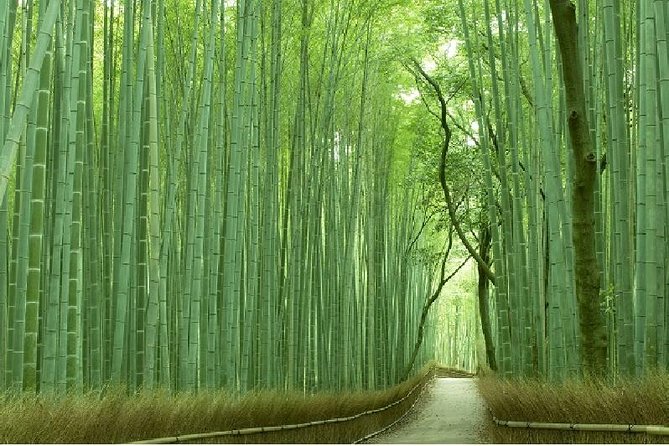
The bamboo grove is the image most people associate with Arashiyama. Tall green stalks rise on both sides of the path, filtering the light and giving the area a cool, sheltered feel. The route through Sagano covers about 2 miles, or roughly 3 kilometers, according to the full tour description, although the walking schedule also lists about 3 kilometers overall. In practice, expect a substantial stroll rather than a quick photo stop.
The grove is often described as tranquil, but timing matters. Arashiyama is one of Kyoto’s most popular areas, and the paths can fill quickly, particularly during cherry blossom season and autumn color. An early start helps, and the summer schedule moves earlier to avoid the worst heat.
A guide is useful here because the bamboo itself needs little explanation, but the surrounding area does. You may pass small shrines, temple grounds, and residential corners that are easy to overlook when you are focused on getting the perfect photograph. Guides have also helped people understand where they are going next and how to return to Kyoto.
Do not expect a long period of solitude. If your main goal is to stand alone in a silent bamboo forest, this group outing may disappoint. If you want a practical introduction that combines the grove with Arashiyama’s temples and river, it makes better sense.
Jojakko-ji and the hillside views
Jojakko-ji Temple comes either first or near the beginning of the route, depending on the day’s order. The temple sits on the wooded slope of Mt. Ogura, and its higher paths open to broad views across Sagano and Kyoto. In autumn, maple leaves cover the hillside in reds, oranges, and yellows. The setting feels more intimate than the broad, busy approach to Tenryu-ji.
You have about 30 minutes here, with admission included in the regular itinerary. That is enough for the key paths, the temple’s statue of Jizo, and the pagoda tucked among the trees. It is not enough for a long, unhurried exploration of every corner.
Jojakko-ji also carries a literary connection. The temple is linked with the Tale of the Heike and the story of Empress Dowager Kenrei-mon-in. It was originally built as a nunnery, and the guide can give this story a place in the larger history of medieval Japan rather than leaving you with only a scenic photograph.
There is an important seasonal exception. From July through September 22, the itinerary changes. The tour starts earlier, and Okochi Sanso Villa Garden replaces Jojakko-ji. The information provided also says Jojakko-ji admission is not included during July and September, so check the exact seasonal plan when booking.
Tenryu-ji: the garden is the real prize
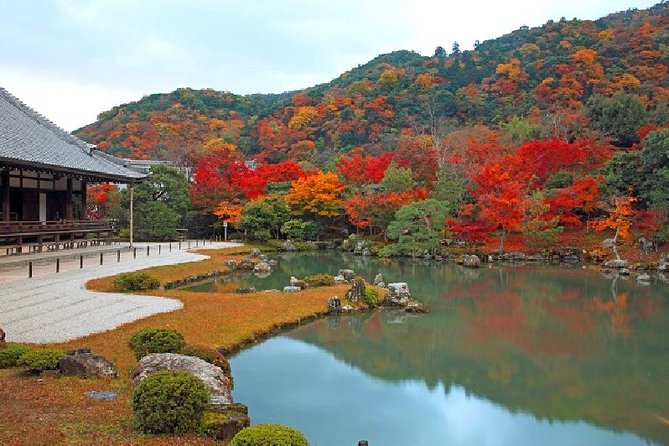
Tenryu-ji dates to 1339 and belongs to the Rinzai Zen school. It is a World Heritage site and one of the central sights in Arashiyama. The temple’s most memorable feature is its garden, designed to work with the mountains and pond beyond it.
You get about 30 minutes at Tenryu-ji, and admission is included. That keeps the morning simple, but it also limits your time. The visit focuses heavily on the garden, and some people may find the temple portion shorter than expected. If you want to inspect every hall, read every sign, or sit quietly by the pond, you will likely want to return on your own.
The garden rewards patience. Look beyond the pond and notice how the wooded mountains form a natural backdrop. This is one of the clearest examples in Kyoto of how Japanese garden design uses what lies beyond the garden walls. The guide can also explain the temple’s place in Zen Buddhism and its connection with the Ashikaga Shogunate.
I would treat Tenryu-ji as a guided introduction, not a complete visit. If you have extra time after the tour, returning here at a slower pace is a good use of your afternoon.
More walking tours in Kyoto:
- Kyoto Geisha Walking Tour: Gion District & Hidden Gems
★ 4.7 · 3,273 reviews - Kyoto: Gion Magical Night Walking Tour with Geisha Trivia
★ 4.9 · 2,393 reviews - Kyoto: Gion Geisha District Walking Tour – Stories of Geisha
★ 4.7 · 2,187 reviews - Night Walk in Gion: Kyoto’s Geisha District
★ 4.5 · 2,003 reviews
The boat ride and Togetsukyo Bridge
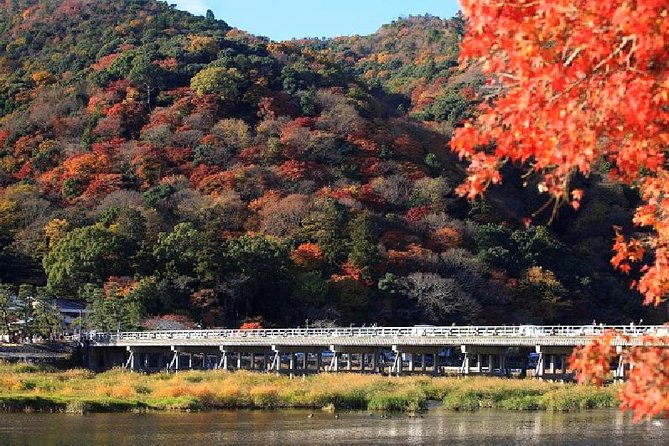
The final major stop is Togetsukyo Bridge, the 250-meter Crossing Moon Bridge over the Hozu River. The current bridge is a 1934 reconstruction, but the setting remains one of Arashiyama’s signature views. Forested hills rise beyond the water, and the bridge area is especially appealing during spring blossoms and autumn foliage.
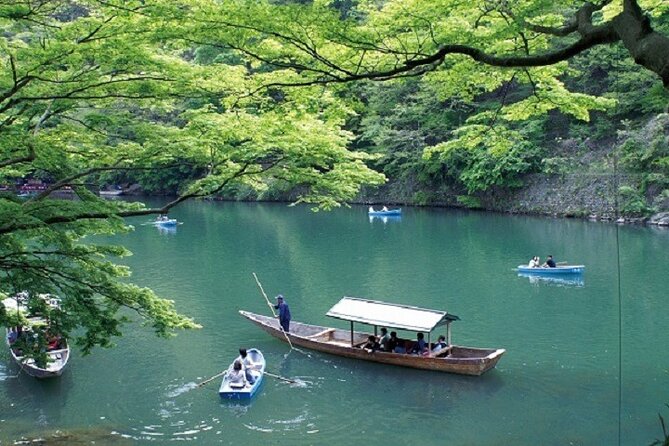
The tour includes time to enjoy the scenery from a yakatabune, a traditional-style pleasure boat. This is one of the most useful design choices in the itinerary. After walking through the grove and temples, sitting on the water gives your feet a break and lets you see the riverfront from a different angle.
The boat segment is not a long river expedition. Think of it as a short scenic pause attached to the Togetsukyo visit. Weather, congestion, and local conditions may change the order or timing of the stops. On a rainy day, the river views will be moodier, but you should bring suitable clothing and protect your phone or camera.
The bridge itself is also a good place to separate from the group if you have plans afterward. The official route returns to Kyoto Station, but the tour format may allow you to continue in Arashiyama, provided you confirm the arrangements with your guide.
What the guides add
The guide is the main reason to choose this tour instead of simply taking the train and walking around independently. A strong guide makes the train transfer easy, sets a sensible pace, and gives meaning to the temples. Guides such as Sachiko have been praised for combining clear explanations with personal stories. Donna has been described as friendly while still giving people room to explore.
Michiharu, another named guide, has helped guests with suggestions beyond Arashiyama, including directions to the Budo Centre. Other guides have offered directions to the monkey park and lunch ideas after the tour. These small moments are useful because Arashiyama offers more than the standard bamboo photo stop.
The experience is not always a private conversation with the guide. Some groups have had around 12 people, while the maximum is 25. With a smaller group, you can ask more questions and move through the temples at a relaxed pace. With a full group, the guide may need to count heads and wait for people who fall behind.
One caution concerns commentary equipment. At least one account described limited explanation through the headsets while the group was moving. If you care strongly about detailed commentary, stay close to the guide and ask questions during the quieter walking stretches.
Price and value at $79.26
At $79.26 per person, this is not the cheapest way to see Arashiyama. You can reach the district by train, pay individual temple fees, and walk the main route without a guide. Independent visitors also gain the freedom to stop for food, spend longer in the bamboo grove, or visit the monkey park without watching the clock.
The tour earns its price through convenience and structure. Your licensed English guide handles the route, public transport costs, and entrance fees. You also receive cultural background that you may not get from simply following the crowds. For a first morning in Kyoto, that can be a fair trade.
The boat ride strengthens the value because it adds something beyond a standard walking route. So does the return to Kyoto Station, which gives you a clean endpoint for the rest of the day.
I would book it if you have limited time, prefer guidance at temples, or feel uneasy managing Kyoto’s trains and crowded sightseeing areas. I would skip it if you already know Arashiyama, want a quiet solo walk, or plan to spend a full day in the district.
Crowds, weather, and seasonal timing
Arashiyama changes sharply with the season. Cherry blossom week can bring packed trains and crowded paths. Autumn color makes Jojakko-ji and the bridge especially attractive, but it also brings heavy demand. The bamboo grove rarely feels private during peak hours.
Summer has its own challenge: heat and humidity. The earlier July through September 22 schedule is a practical adjustment, and replacing Jojakko-ji with Okochi Sanso Villa Garden may make the morning more comfortable. You should still wear breathable clothing, carry what you need for a warm walk, and bring rain protection if the forecast looks uncertain.
Rain does not erase the beauty of Arashiyama, but it can slow the group and make temple steps slippery. The guide may spend extra time keeping the group together, so build some flexibility into your afternoon plans.
Who should book this tour?
This experience suits first-time Kyoto visitors who want to see the major Arashiyama sights without spending a whole day planning the route. It is also a good match for people who enjoy moderate walking but prefer a guide to handle transport, tickets, and orientation.
Families can consider it, but children need to manage the walking and temple stairs. Children aged 0 to 5 are free if they do not need separate seats. Anyone under 18 needs written parental permission, and children under 15, or those not yet in middle school, must join with a parent or guardian.
The tour is less suitable for anyone with limited walking ability, since the route includes approximately 3 kilometers and stairs. It is also not ideal for people seeking a small private experience unless the date happens to have a very small group.
Book ahead if your dates are fixed. This experience is often reserved about 35 days in advance, and it can be canceled if at least two adults have not booked by four days before departure. Free cancellation is available until 24 hours before the start time, which gives you some protection while finalizing your Kyoto plans.
Should you book the Arashiyama walking tour?
I would book this tour for a first visit to Kyoto, especially if you have only one morning for Arashiyama. The combination of bamboo, Tenryu-ji’s garden, Jojakko-ji’s hillside views, Togetsukyo Bridge, and the yakatabune ride gives you a well-shaped introduction with little logistical fuss.
The decision is less clear if you want to linger. The temple visits are short, the group may be large, and the bamboo grove can feel crowded. In that case, use the tour as a starting point, then stay in Arashiyama afterward or return independently for a longer visit.
At $79.26, you are paying for guidance and an efficient route rather than rare access. For many first-time visitors, that is useful value. For confident independent explorers, the same morning can cost less and move at your own pace.
FAQ
How long does the Kyoto Arashiyama tour last?
The tour lasts approximately four hours and ends at Kyoto Station.
Where does the tour begin?
It begins at the JTB Sunrise Tours Desk in the basement of Kyoto Avanti, near Kyoto Station.
How do you travel from Kyoto Station to Arashiyama?
The group uses public transport to Saga-Arashiyama Station with non-reserved seats. Seating is not guaranteed, and you may need to stand during busy periods.
How much walking is involved?
The tour involves approximately 3 kilometers of walking. Comfortable shoes and clothing suitable for walking are recommended.
Which temples are visited?
The regular itinerary includes Jojakko-ji Temple and Tenryu-ji Temple. From July through September 22, Okochi Sanso Villa Garden replaces Jojakko-ji.
Are entrance fees included?
Yes. The listed temple admission fees, transportation costs, and the licensed English guide interpreter fee are included. Jojakko-ji admission is not included during July and September.
Is the boat ride included?
The itinerary includes a yakatabune boat experience with views of Togetsukyo Bridge and Arashiyama.
How large can the group be?
The maximum group size is 25 people. The actual number may be smaller on a particular date.
Can children join the tour?
Children aged 0 to 5 can join free if they do not occupy separate seats. Written parental permission is required for participants under 18. Anyone under 15, or not yet enrolled in middle school, must be accompanied by a parent or guardian.
Just added around Kyoto
- Kyoto: Zen Meditation at a Private Temple with a Monk★ 5.0 · 25 reviews
- Kyoto: Gion Geisha District & Sake-in-Hand Walking Tour★ 5.0 · 37 reviews
- Private Pewter Sake Cup Experience with a Kyoto Artisan★ 5.0 · 31 reviews
- Your Private Vacation Photography Session In Kyoto★ 5.0 · 110 reviews
- Private Guided Traditional Buddhist Cooking in Japan★ 5.0 · 16 reviews
- Kyoto Wagashi(Japanese sweets) Cooking Class near Fushimiinari★ 5.0 · 60 reviews
- Traditional Japanese Music show & Experience Tour in Kyoto★ 5.0 · 57 reviews
- Kyoto:Family-Friendly Kimono & Yukata Experience at WARGO★ 5.0 · 147 reviews
Bamboo Grove Tours, compared.

Fushimi Inari, Kinkakuji, Bamboo Grove 1 Day Bus Tour
Read our review →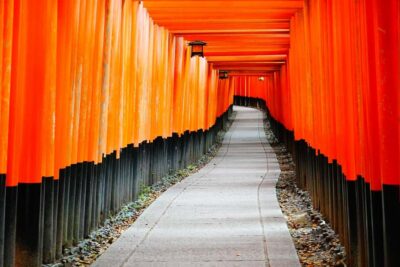
Osaka/Kyoto:Kinkakuji,Arashiyama,FushimiInariShrine,NaraPark
Read our review →
Kyoto/Osaka: Nara, Fushimi Inari Taisha, Arashiyama Bus Tour
Read our review →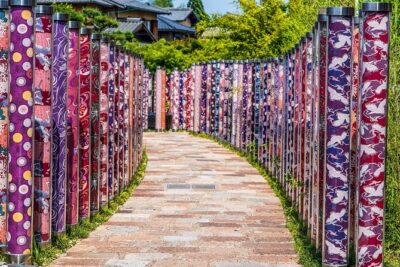
Kyoto Arashiyama Walking Tour: Bamboo, Monkeys, Gardens & Secrets
Read our review →
Arashiyama Bamboo, Temple, Monkeys, or Secret Sake Brewery
Read our review →
Arashiyama Bamboo Forest, Monkeys, Matcha & Temple Tour
Read our review →
Osaka/Kyoto: Arashiyama, Nara & Fushimi Inari Shrine w/Lunch
Read our review →
Nijo, Kinkaku-ji, Arashiyama, Kiyomizu & Fushimi Inari
Read our review →Browse the lists this tour appears in