
Reviewed · KYOTO TOURS
Kyoto Highlights & Hidden Gems in Nature (Private Van Eng-Guide)
Kyoto’s best feature is its variety, and this private van tour packs a surprising amount into six hours. You move from the Golden Pavilion and Fushimi Inari to mossy temples, mountain viewpoints, old cedar trees, and rural Kyoto roads without losing time to long bus rides.
I like the private door-to-door transport, especially for families or anyone with only one day in Kyoto. I also like the way the route reaches places such as Otagi Nenbutsu-ji, Mount Ogura, and the Kitayama giant cedars, spots that are hard to connect by public transport. The tradeoff is a brisk schedule, with some stops lasting only five to fifteen minutes.
Key points to know before booking
- Daiki guides in fluent English, combining driving with explanations of Buddhism, Shinto, Kyoto, and local customs.
- The private van crosses much of Kyoto, saving time between northern, western, southern, and mountain sights.
- The route mixes famous stops with quieter places, including mountain shrines, moss gardens, viewpoints, and enormous cedar trees.
- You can see Arashiyama from a different angle, including Gio-ji, Otagi Nenbutsu-ji, and the Arashiyama-Takao Parkway.
- The six-hour afternoon schedule begins at 1:00 p.m., making a later visit to Fushimi Inari possible.
- Admission costs about ¥1,400 per person extra, while fuel, tolls, parking, pickup, and drop-off are included.
Why a private van makes sense in Kyoto
Kyoto’s famous sights are spread across the city. Kinkakuji is in the north, Arashiyama sits to the west, Fushimi Inari is in the south, and the cedar country lies beyond the northern hills. Public transport can connect these places, but not quickly in one afternoon.
This tour solves that problem with a private Japanese minivan and pickup anywhere in Kyoto City. You spend the travel time seated in an air-conditioned vehicle rather than changing buses, studying route maps, or waiting in crowded traffic stops. Daiki also walks around the sights with you, rather than simply dropping you at the entrance.
The experience is private, so the pace can respond to your interests and physical needs. If stairs are a problem, ask Daiki about avoiding them. The tour includes walking at several temples, but the exact amount can change with the route and season.
The displayed price is $230.61 per group, with the booking information showing up to one person. At the same time, the private vehicle format and tour details make this worth checking carefully for your party size before paying. A family of four has used the vehicle format and found it good value, since the charge is tied to the vehicle rather than a separate ticket for every passenger. Confirm the current group rules when booking.
More Hidden Gems Walks in Kyoto
- Kyoto Geisha Walking Tour: Gion District & Hidden Gems
★ 4.7 · 3,273 reviews - Private Kyoto Tour with a Local, Highlights & Hidden Gems, Personalised
★ 5.0 · 1,543 reviews - Arashiyama Bamboo Forest & Hidden Gems Bike Tour (Early Bird)
★ 5.0 · 613 reviews
Kinkakuji at the start of the route
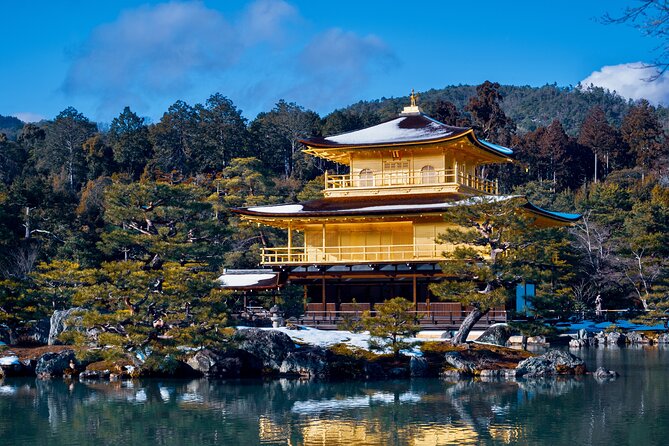
The Golden Pavilion, or Kinkakuji, is the tour’s most familiar stop. Its gold-covered upper stories reflect in the pond, making it one of Kyoto’s most instantly recognizable sights.
You get about 45 minutes here. That is enough to follow the main viewing path and take photographs, though not enough for a slow visit to every part of the temple grounds. Admission is not included, and the total entry fees for the full outing are listed at roughly ¥1,400 per person.
Expect Kinkakuji to be one of the busier parts of the day. The private van gets you close without the long public bus trip from central Kyoto, but it cannot remove the crowds at the pavilion itself. I would treat this as the essential postcard stop, then save your attention for the quieter temples later.
Arashiyama beyond the main bamboo path
The Arashiyama portion is more interesting than a simple bamboo-forest visit. The schedule includes Gio-ji, the famous bamboo path, and Otagi Nenbutsu-ji, with short drives between them.
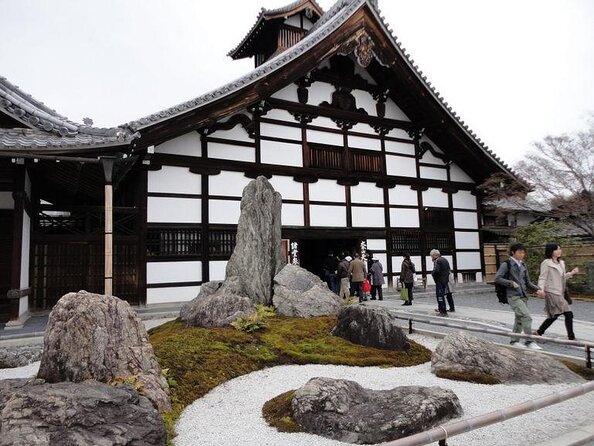
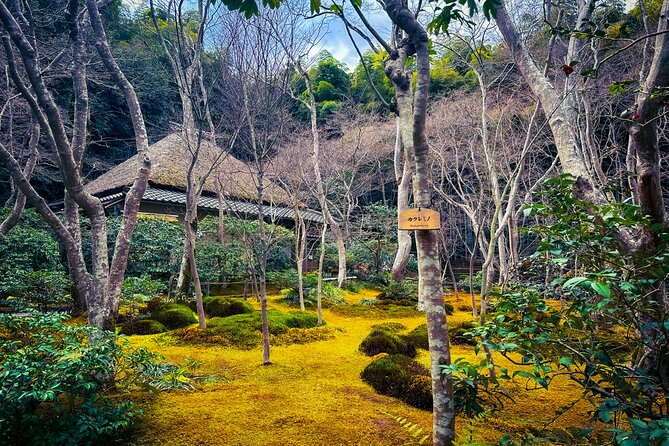
Gio-ji is small and quiet, with a moss-covered garden, a thatched building, and bamboo around the grounds. Fifteen minutes is brief, but the place does not need a full morning. It gives you a compact view of old Kyoto scenery without the scale and noise of the district’s main temples.
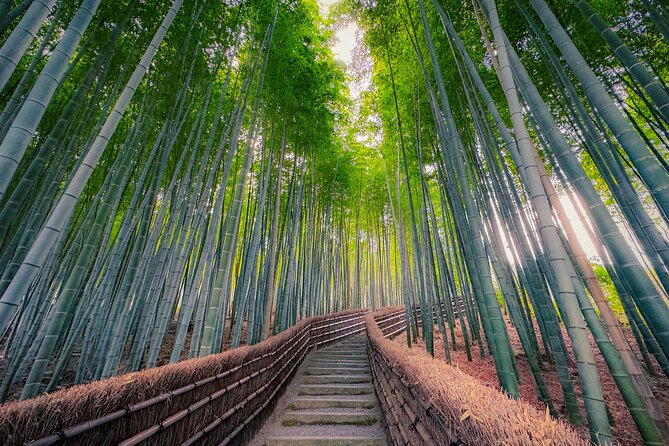
The bamboo forest stop also lasts about 15 minutes. You walk the iconic path and hear an explanation of Japanese bamboo, including its connection to Thomas Edison’s early electric light experiments. The path is short enough for a quick look, but it can be crowded. One useful feature of a private guide is flexibility: if the grove is too packed, the schedule can shift toward quieter parts of Arashiyama.
Otagi Nenbutsu-ji is one of the strongest stops for visitors who want something beyond the standard Kyoto checklist. It sits in the northern part of the Arashiyama historic district, an area with old-style streets and fewer people than the central bamboo route. The temple is known for its many expressive stone figures, though the provided schedule allows only 15 minutes, so your visit will be a quick taste rather than a detailed temple study.
Admission fees apply at some of these temples. Bring yen or be ready to pay the local entrance charges. The exact stop order can change with opening times, weather, traffic, and the season.
Mountain roads and the Arashiyama-Takao Parkway
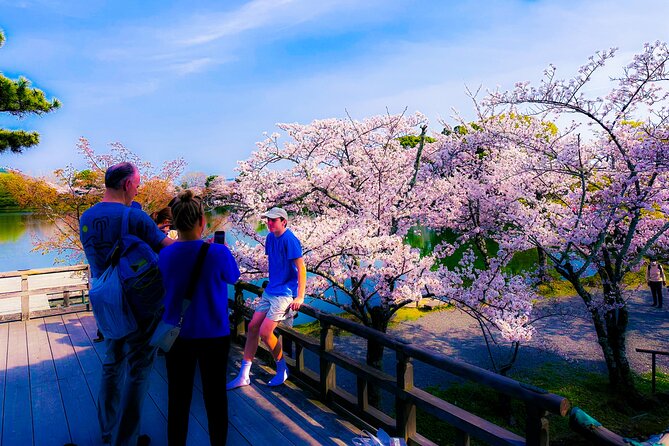
The Arashiyama-Takao Parkway changes the mood of the tour. Instead of moving from one temple gate to another, you drive through the hills on a toll road lined with roughly 2,000 cherry trees in April and maple trees in November.
The road itself is included, along with toll fees and parking. A 45-minute segment gives you time to enjoy the changing views rather than simply passing through. In spring, the trees bring blossom color. In autumn, the maples provide the stronger display. Outside those seasons, the value is the mountain air, wooded roads, and break from Kyoto’s city streets.
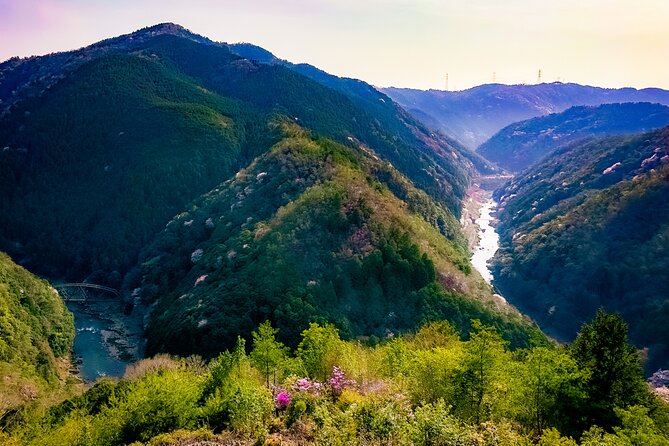
The route includes two short lookouts. Mount Ogura Observatory gives you a view across Kyoto from the hills, while Hozukyo Observatory looks toward the Hozu Gorge, known for its traditional fast-water boat rafting. Each viewpoint receives only about five minutes, so think of these as photo stops, not long walks or hikes.
That short timing can work well if you want a broad overview of Kyoto. It will feel rushed if you prefer to sit quietly, sketch, or wait for changing light. Tell Daiki early if a viewpoint matters more to you than another scheduled stop.
More off-the-list walks in Kyoto:
- Kyoto: Hidden Gems E-Bike Tour with Local Japanese Guide
★ 4.9 · 189 reviews - Kyoto: Gion Hidden Gems & Geisha Culture Tour
★ 4.9 · 126 reviews - Highlights & Hidden Gems With Locals: Best of Kyoto Private Tour
★ 5.0 · 121 reviews - Kyoto: Hidden Gems E-Bike Tour Through Backstreets & Temples
★ 4.9 · 54 reviews
Giant cedars and a local Shinto shrine
The northern countryside section is the tour’s most unusual part. At Nakagawa Hachimangu Shrine, you see a local place of worship built as a guardian for the surrounding area. Its oldest Japanese cedar is treated as a sacred lord by local Shinto worshippers.
The visit lasts about five minutes. You can touch the tree and take in the idea of a living object honored over generations. This is a different kind of Kyoto experience from photographing a famous temple building. It gives you a small window into everyday religious practice and the relationship between forests and Shinto belief.
The Kitayama Big Daisugi stop goes farther into the northern hills. The narrow cliff road leads to giant platform cedars, a sight that is difficult to reach without a private vehicle. The stop lasts about ten minutes, enough to see the trees and understand why the area feels far removed from central Kyoto.
Road conditions and seasonal changes matter here. The route can be updated because of weather or other local circumstances, and the tour description specifically notes that parts of the plan may change. That is sensible for a mountain drive. You should see the cedar section as a special possibility within the route, not as something to demand regardless of conditions.
A quick ride through Kyoto’s geisha district
The tour also passes along a 600-year-old street associated with geishas. You can see the area from the van and take photographs from the vehicle, which avoids walking through crowded lanes.
This is useful for a quick orientation, but it is not a substitute for a slow visit to Gion. The main value is seeing another part of historic Kyoto while staying on schedule. Be careful with photography. If you see a geisha, you must ask permission before taking a picture.
That small point matters. Historic streets are living neighborhoods, not a stage set. A private guide can help you understand what you are seeing, but you still need to respect local rules and personal space.
Heian Jingu’s giant torii
The red torii at Heian Jingu is a five-minute photo stop. At 24.4 meters, or about 80 feet, it is one of Kyoto’s largest shrine gates.
You do not get a long visit to the shrine complex itself. Instead, the stop gives you a look at the scale of the entrance and helps connect the city’s imperial past with its Shinto traditions. It works best as a quick visual pause between the western and southern parts of the route.
If Heian Jingu is high on your list, tell the guide before the tour. The published schedule focuses on the torii, not an extended shrine visit.
Ending at Fushimi Inari’s red gates
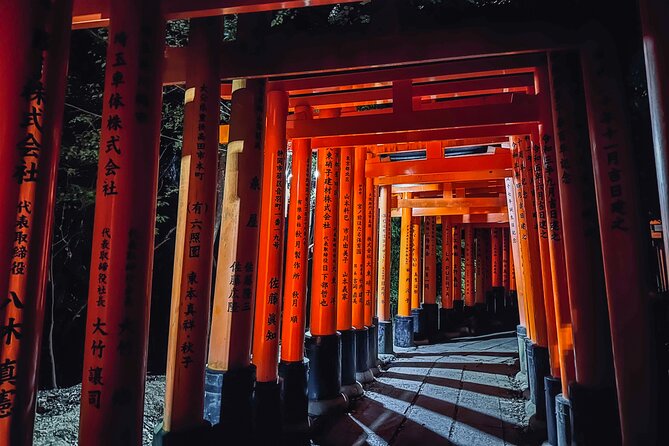
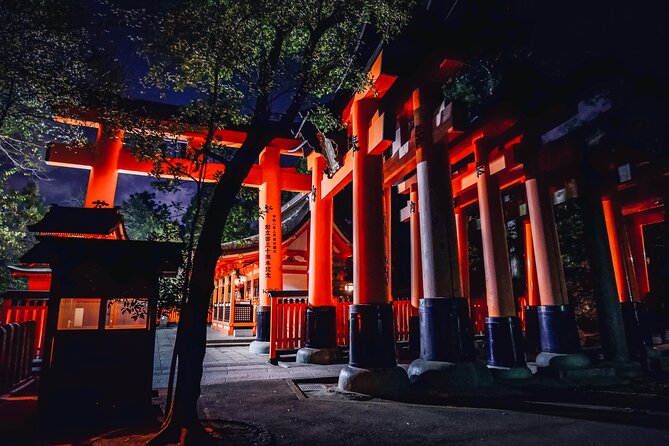
Fushimi Inari-taisha is the grand finale, and the timing can be especially appealing. Its famous Senbon Torii path contains more than 10,000 donated gates, climbing through the wooded slopes behind the shrine.
The scheduled visit lasts about 40 minutes. That is enough to enter the shrine grounds and walk through part of the torii route, but not enough to reach the mountain summit. The gates become more spread out as you continue uphill, so you will need to choose between a short taste of the tunnel and a longer walk with fewer gates.
Several people have found the shrine especially good later in the day or at night, when it can feel less packed than during the busiest hours. Since this tour starts at 1:00 p.m. and finishes after visiting several other areas, the afternoon timing may give you a more comfortable look than an early daytime stop. Still, opening crowds and seasonal traffic can affect the experience.
Wear shoes suitable for stairs and uneven temple paths. If you prefer to avoid steep walking, ask Daiki to keep the visit near the lower shrine area.
How the timing really feels
The tour lasts about six hours and includes more than ten named stops, plus the historic geisha street. That is a lot of ground. You will see many parts of Kyoto, but you will not have a full, unhurried visit at every location.
The schedule works best for first-time visitors who want a broad introduction, people with limited time, and families who need a vehicle between stops. It is less suitable if you want to spend half a day at Kinkakuji, hike deeply into Fushimi Inari, or study one temple in detail.
The short five-minute viewpoints and shrine stops are not flaws by themselves. They let the tour cover territory that would otherwise take several days. The key is to set your expectations correctly: this is a fast, scenic survey with several meaningful stops, not a slow temple-and-garden walk.
Rain does not necessarily cancel the experience. Daiki has adjusted routes for wet weather and tailored visits to particular interests and needs. Even so, mountain viewpoints and forest roads are weather-dependent, so the day may feel different from the advertised order.
Guide style and vehicle comfort
Daiki Fukashi is the guide named in the tour information. He drives, explains the sights in English, and joins you on foot at the stops. His background in Buddhism and Japanese history adds useful context, especially when the route moves quickly between temples, shrines, forests, and city districts.
The van is described as comfortable and air-conditioned. That matters in Kyoto’s humid summer and during long cross-city transfers. You also avoid the stress of navigating unfamiliar narrow roads, finding parking, and working out bus connections.
The guiding style appears friendly and flexible. The route can be adjusted for interests, weather, crowd levels, and mobility needs, within the limits of a six-hour schedule. One practical point is worth noting: a pickup was reported as about ten minutes late on one occasion. That is not a pattern you can predict, but I would keep a little breathing room around the start of the tour.
What the price includes and leaves out
The $230.61 group price includes the private van, pickup and drop-off anywhere in Kyoto City, an English-speaking guide, fuel, tolls, and parking. You are paying for time saved as much as for transportation.
Entry fees are extra, with total admissions estimated at about ¥1,400 per person. Since this is a private tour, the value improves when shared by a small group, but you should confirm how your group is counted because the displayed booking information says up to one person.
Compared with piecing together taxis, local trains, buses, and separate guides, the price can make sense for a busy sightseeing day. It is less attractive if you are happy using public transport and prefer to choose just two or three sights at your own pace.
Free cancellation is available up to 24 hours before the 1:00 p.m. start time. Changes or cancellations inside that window are not accepted for a refund.
Who should choose this Kyoto tour?
I would choose this experience if you want to see famous Kyoto landmarks and quieter mountain places in one outing. It is particularly useful for families, small private groups, visitors staying in Kyoto City, and anyone who finds city buses tiring or confusing.
You should also consider it if you have already seen the central temples and want a broader look at Kyoto’s wooded northern edge. The giant cedars, Hozukyo view, local shrine, and Arashiyama back roads give the day a different feel from a standard Golden Pavilion and bamboo forest package.
I would hesitate if your main goal is a deep visit to one temple, a long Fushimi Inari hike, or a relaxed photography day. The schedule moves quickly, and admission fees are separate.
Should you book it?
Book this tour if your priority is coverage, comfort, and local context. Daiki’s private van links Kyoto’s headline sights with mountain roads and quiet religious sites that are difficult to combine on your own. The strongest part is the mix: Kinkakuji and Fushimi Inari give you the famous Kyoto images, while Otagi Nenbutsu-ji, the cedar country, and the viewpoints add something less predictable.
Before booking, confirm your group size, ask about the likely route for your season, and decide which two or three stops matter most to you. If you accept a brisk pace and want one efficient afternoon across Kyoto, this is a strong choice. If you want slow temple time, choose a smaller-area tour instead.
FAQ
Where does the tour start?
Pickup is offered anywhere in Kyoto City. The scheduled start time is 1:00 p.m.
How long does the experience last?
The tour lasts approximately six hours.
Is the tour private?
Yes. Only your group participates in the activity.
Is an English-speaking guide included?
Yes. The tour includes a fluent English-speaking local Japanese guide. Daiki Fukashi is the guide named in the tour information.
What transportation is used?
You travel in a private Japanese minivan. The vehicle, fuel, toll fees, parking fees, pickup, and drop-off are included.
Are temple admission fees included?
No. Admission fees are separate. The total entry cost is estimated at approximately ¥1,400 per person.
Does the tour include Fushimi Inari?
Yes. The visit to Fushimi Inari-taisha is scheduled for about 40 minutes.
Is the bamboo forest included?
Yes. The tour includes a walk through the Arashiyama Bamboo Forest, scheduled for about 15 minutes.
Can the itinerary change?
Yes. Parts of the route may change by season or because of weather and other circumstances. Some temple visits also involve walking and stairs, so ask the guide if you need to avoid them.
Just added around Kyoto
- Kyoto: Zen Meditation at a Private Temple with a Monk★ 5.0 · 25 reviews
- Kyoto: Gion Geisha District & Sake-in-Hand Walking Tour★ 5.0 · 37 reviews
- Private Pewter Sake Cup Experience with a Kyoto Artisan★ 5.0 · 31 reviews
- Your Private Vacation Photography Session In Kyoto★ 5.0 · 110 reviews
- Kyoto Wagashi(Japanese sweets) Cooking Class near Fushimiinari★ 5.0 · 60 reviews
- Private Guided Traditional Buddhist Cooking in Japan★ 5.0 · 16 reviews
- Traditional Japanese Music show & Experience Tour in Kyoto★ 5.0 · 57 reviews
- Kyoto:Family-Friendly Kimono & Yukata Experience at WARGO★ 5.0 · 147 reviews
Kyoto Tours, compared.


Fushimi Inari, Kinkakuji, Bamboo Grove 1 Day Bus Tour
Read our review →
Tea Ceremony in a Traditional Tea House in Kiyomizu
Read our review →
Kyoto Geisha Walking Tour: Gion District & Hidden Gems
Read our review →

Gion Magical Night Walking Tour with Geisha Trivia
Read our review →

Gion Geisha District Walking Tour – Stories of Geisha
Read our review →Browse the lists this tour appears in