
Reviewed · KYOTO TOURS
Kyoto Full Course Tour: Explore 10 Must-See Sights & Hidden Gems
Kyoto’s big sights are spread across the city, and this tour tackles them in one ambitious sweep. You’ll walk through Arashiyama’s bamboo, watch the red gates of Fushimi Inari climb away, see the Golden Pavilion, and finish among Gion’s old streets. It is less a leisurely temple visit than a full-day orientation course in Kyoto.
I like two things right away: the small maximum group of 10, and the help of local guides such as Masako, Megumi, and Masa. I also like that you learn how to use Kyoto’s buses and trains while moving between sights. The catch is serious: expect more than 20,000 steps, repeated public transport rides, and only about 30 minutes at each major stop.
Key points to know before you book
- Ten major Kyoto areas in one day: Arashiyama, Ryoan-ji, Kinkaku-ji, Fushimi Inari, Kiyomizu-dera, Sanneizaka, Yasaka Pagoda, and Gion are all part of the route, along with the Randen tram and lunch.
- A fast, local way to get around: You walk and use public transport rather than sitting on a sightseeing bus, so you see how Kyoto works day to day.
- Expect a workout: The walking can exceed 20,000 steps, with slopes, temple approaches, and city streets.
- Budget extra money: Transportation, food, and entrance fees add about $27.80 to $35 per person beyond the $98.83 tour fee.
- Guides are a major strength: Masako, Megumi, and Masa are repeatedly singled out for warmth, patience, humor, and clear explanations.
- Strict timing matters: The tour does not wait for late arrivals, and the supplied details give both 8:30 and 8:50 as the start time, so confirm the exact meeting time before the day.
What this Kyoto day is really designed to do
This is for you if your Kyoto stay is short and you want a broad first look without building a complicated route yourself. The tour covers the city from northwest Kyoto to the eastern temple district, using trains, buses, and walking paths to link places that are awkward to combine on your own.
The value is not deep time at every temple. You get a quick visit, a clear introduction, and practical help with transport. A guide can explain local etiquette, public transit, everyday customs, and the basic story behind each place while keeping the group moving.
That pace also creates the main limitation. Thirty minutes is enough for a first impression and photographs, but not enough to study every garden, explore every shrine path, or linger over a favorite view. If you have two or three full days in Kyoto, you may prefer to use this as your first-day map, then return later to the places that deserve more time.
The guides make a noticeable difference. Masako is praised for humor, care, and strong knowledge of Kyoto. Megumi is described as thoughtful, polite, and good at helping first-time visitors find their way. Masa is also noted for taking care of the group and offering useful ideas for the following day. Guide quality can vary from departure to departure, but the strongest feature of this experience is clearly the human guidance.
More Hidden Gems Walks in Kyoto
- Kyoto Geisha Walking Tour: Gion District & Hidden Gems
★ 4.7 · 3,273 reviews - Private Kyoto Tour with a Local, Highlights & Hidden Gems, Personalised
★ 5.0 · 1,543 reviews - Arashiyama Bamboo Forest & Hidden Gems Bike Tour (Early Bird)
★ 5.0 · 613 reviews
Arashiyama bamboo and the Randen tram
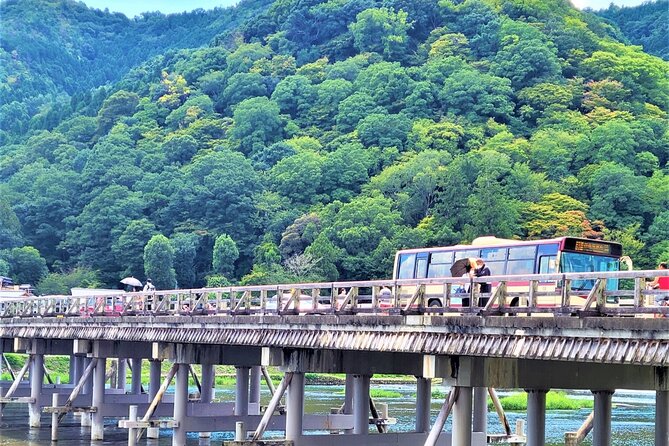
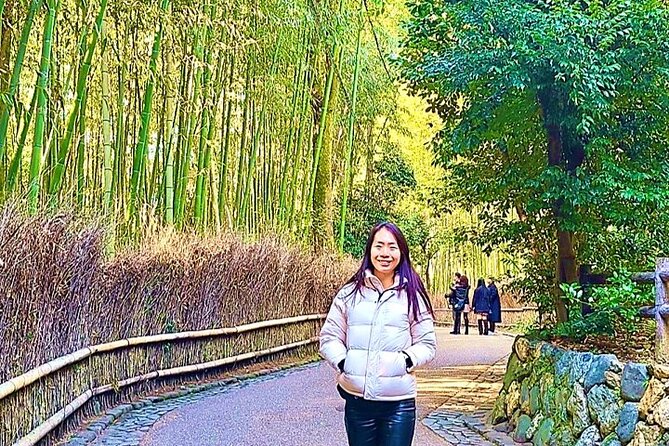
Meet at Saga-Arashiyama Station in the morning, then begin in Arashiyama. The bamboo forest is the headline attraction, with tall green stalks creating a striking walk through one of Kyoto’s most recognizable settings. Forested hills add a calm frame around the area, though the short visit means you will mainly see the famous section rather than wander widely.
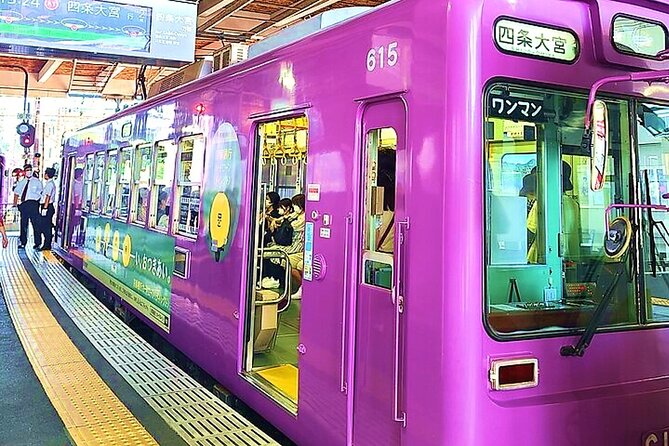
Arashiyama is a smart starting point because it gives you an immediate sense of Kyoto’s scenic side before the day turns toward temples and busy streets. The area is also a useful introduction to the city’s rail system. You will ride the Randen tram line, a small local railway that helps connect this part of Kyoto with the next stops.
This is one reason I prefer the tour to a standard bus excursion. You are not simply delivered from one attraction to the next. You learn, by doing, how Kyoto’s transport network fits together. Keep your IC card, such as Suica or PASMO, ready, and have cash available in case you need it.
Ryoan-ji’s famous stone garden
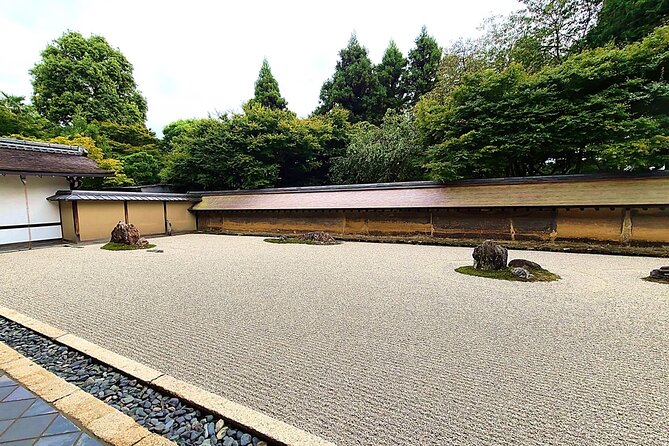
Ryoan-ji is the quieter and more thoughtful stop on the route. Its stone garden became widely known after Queen Elizabeth praised it during her visit, and it remains one of Kyoto’s best places to consider Japanese garden design.
You should expect a brief visit of about 30 minutes. That is enough to sit or pause in front of the garden, hear its basic meaning, and appreciate its spare layout. It is not enough for a slow architectural study or a long walk around the temple grounds.
The quick format may actually suit you if you are visiting Kyoto for the first time. The guide gives context, then you can decide if Ryoan-ji deserves a longer return visit. If quiet gardens are your main interest, this tour will probably leave you wanting more rather than fully satisfied.
Kinkaku-ji, Kyoto’s Golden Pavilion
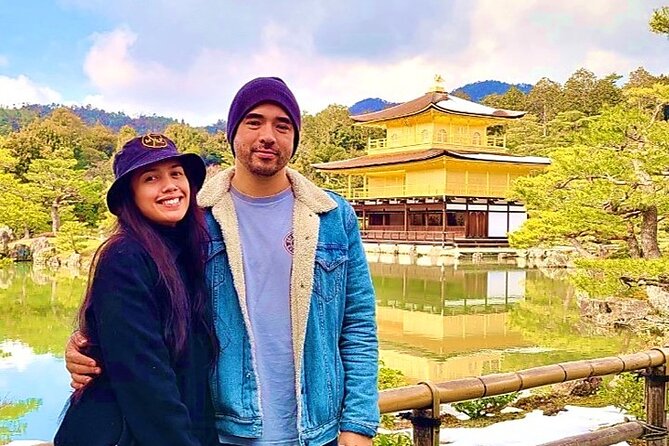
Kinkaku-ji is the visual showstopper. The famous Golden Pavilion reflects across its pond, making it one of the easiest Kyoto sights to recognize from a photograph. You will follow the established viewing route and have time to take in the building and its setting.
The tour allows about 30 minutes here, and admission is not included. Budget for the separate temple entrance fee, which is part of the total entrance cost listed for the day.
Kinkaku-ji is spectacular, but it is also a place where the tour’s speed is most obvious. You will see the main view rather than explore every corner of the grounds. I would treat this stop as a polished introduction, not a complete visit. Stay close to the guide, since the day depends on keeping the group together and moving on time.
More off-the-list walks in Kyoto:
- Kyoto: Hidden Gems E-Bike Tour with Local Japanese Guide
★ 4.9 · 189 reviews - Kyoto: Gion Hidden Gems & Geisha Culture Tour
★ 4.9 · 126 reviews - Highlights & Hidden Gems With Locals: Best of Kyoto Private Tour
★ 5.0 · 121 reviews - Kyoto: Hidden Gems E-Bike Tour Through Backstreets & Temples
★ 4.9 · 54 reviews
Conveyor-belt sushi for a practical lunch
Lunch is at a conveyor-belt sushi restaurant, an efficient choice for a packed itinerary. Plates arrive along the belt, and the menu includes sushi, vegetable sushi, ramen, kara-age, beer, and mochi. Food costs extra, generally about $6.80 to $14 per person depending on what you order.
This meal gives you a taste of a familiar Japanese dining style without taking up too much of the day. It also lets you choose your own amount and type of food, which is useful after a morning of walking.
Vegetarians should pay close attention here. The available menu is not presented as a dedicated vegetarian meal, and only some items may work for you. If you need a carefully planned vegetarian lunch, this is a point to consider before booking. The tour provider has indicated that the restaurant and menu details are shared in advance, so read those instructions closely and ask before the tour if your dietary needs are strict.
Fushimi Inari and its thousands of red gates
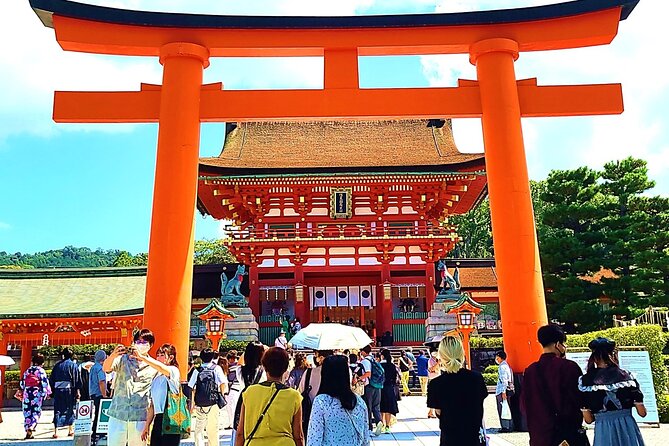
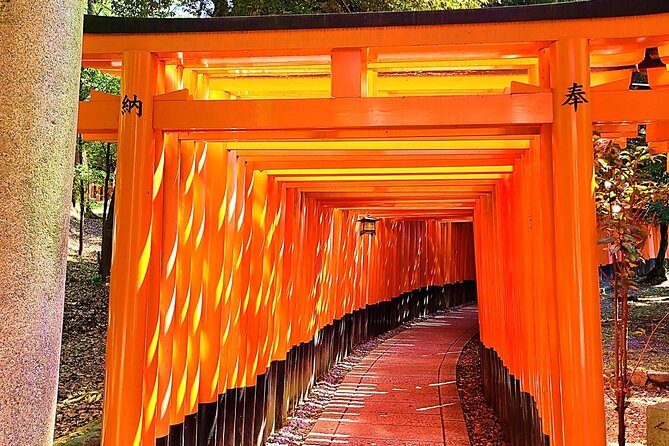
Fushimi Inari-taisha is one of Kyoto’s most dramatic sights. The shrine path is lined with more than 1,000 red torii gates, creating a long tunnel of color that rises into the wooded mountain.
The tour gives you about 30 minutes here. That allows time to enter the shrine area and walk through part of the torii route, but not to climb the full mountain trail. Fushimi Inari is much larger than the section most people see near the entrance, so you should think of this as a strong sample rather than the entire shrine experience.
This stop also shows why comfortable shoes matter. The route includes walking on slopes and uneven approaches, and the day has many more stops afterward. If you want to hike high up Mount Inari, save that for another visit rather than expecting to fit it into this schedule.
Kiyomizu-zaka, Sanneizaka, and the old Kyoto streets
The afternoon moves into the Higashiyama district, where the streets become part of the attraction. Kiyomizu-zaka is lined with souvenir shops and local food stops, making it a good place to see Kyoto’s traditional commercial side.
Sanneizaka adds a handsome pedestrian slope with more shops in old-style streets. These are not simply corridors to the temple. They are places where you can browse sweets, crafts, small gifts, and other Kyoto items, though the short schedule may leave little time for serious shopping.
The slopes are also where the physical demands become clear. You will be walking uphill and downhill after a full morning, often with many other people around. Wear shoes with firm support, keep your bag light, and do not count on stopping at every shop.
Kiyomizu-dera and the wooden stage
Kiyomizu-dera is one of Kyoto’s essential temple visits. Its large wooden stage is built without a single nail, an impressive piece of traditional construction even before you consider the views and temple setting.
You get approximately 30 minutes, with admission extra. That is enough to see the main approach and stage, hear the key explanation, and take photographs. It is not enough to explore all of the temple grounds at a relaxed pace.
The approach through Kiyomizu-zaka and Sanneizaka makes this part of the day feel like one connected experience. You move from shops and food stalls into a major temple complex, then continue toward Yasaka Pagoda and Gion. The route is efficient, but it does not allow much unplanned wandering.
Yasaka Pagoda and the finish in Gion
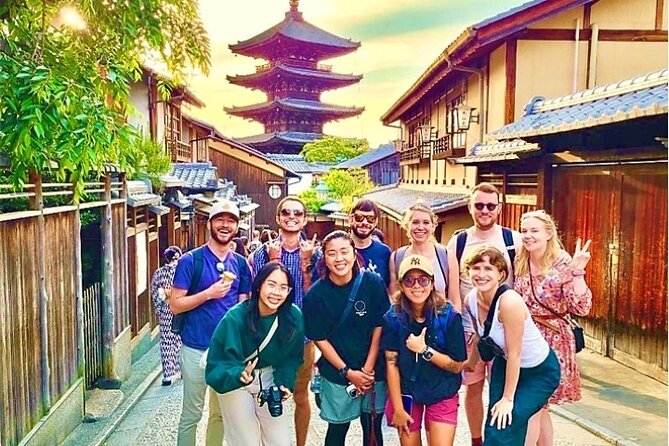
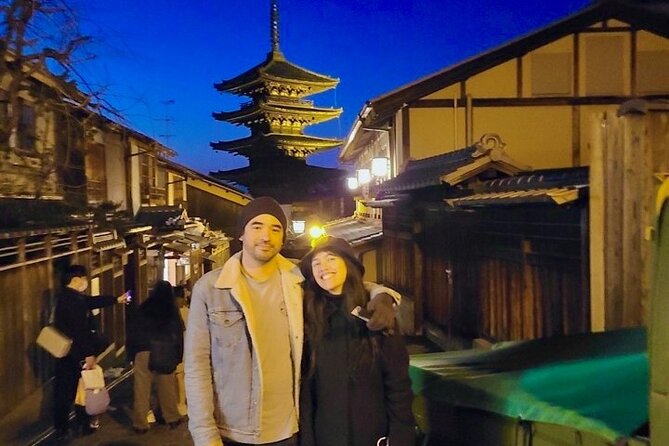
Hokan-ji Temple, better known through its Yasaka Pagoda, is one of Kyoto’s most recognizable urban views. The pagoda rises above the old Higashiyama streets and gives you a classic picture of the district.
The stop is brief and admission is listed as free. You will likely view the pagoda from the surrounding streets rather than make a long interior visit. That is enough to understand its place in the neighborhood and to take in the contrast between the historic structure and the narrow shopping lanes.
The tour ends in Gion, Kyoto’s celebrated historic district, near Gion Shopping Street. This is a fitting finish. After a day of temples, shrines, transit, and steep lanes, you reach an area where traditional streets and old city beauty come together.
The end point is useful if you want to continue exploring on your own. The tour does not provide a separate evening program, but you finish in one of Kyoto’s best-known areas with a better sense of where you are and how to move around.
The real cost is closer to $127 to $134
The advertised tour fee is $98.83 per person. That covers the tour and consumption tax, but not the costs that come with the route.
Plan on roughly:
- $10 for public transportation
- $6.80 to $14 for lunch and drinks
- $11 for entrance fees
That puts the practical total at about $126.63 to $133.83 per person. Carry cash as advised, even though you may also use an IC transit card for transport.
Is that good value? I think it can be, especially if you have one day in Kyoto and would otherwise spend hours working out the route between Arashiyama, northern temples, Fushimi, and Higashiyama. You are paying for planning, local direction, and the ability to see a large number of major sights without managing every transfer yourself.
The value drops if you dislike fast schedules or already know Kyoto’s transport system. In that case, paying for separate admissions and transit while rushing through each stop may not feel worthwhile. The tour is best understood as a time-saving introduction, not a slow cultural tour.
What to bring and how to handle the pace
The most important preparation is physical. Several people who enjoyed the day still described it as intense, with more than 20,000 steps. Comfortable shoes and light clothing are not optional details here.
Bring:
- A charged phone with the mobile ticket available
- A Suica, PASMO, or similar IC transit card
- Cash for transport, food, and temple admissions
- Water and any personal snacks you need
- Comfortable walking shoes
- A small bag that will not become tiring after many hours
You must stay with the host. If you leave the group, the host is not responsible for finding you, and the tour offers no refund in that situation. The same strict policy applies to late arrivals, so do not cut the morning connection close.
There is a small inconsistency in the supplied meeting information: one section gives 8:30 am, while the route notes say to meet at 8:50 and specifically warn that the tour begins at 8:50, not 9:00. Confirm the exact time directly before the day and arrive early. The meeting point is Saga-Arashiyama Station, at 11-1 Sagatenryuji Kurumamichicho, Ukyo Ward.
The tour is limited to 10 people, which should make it easier to hear the guide and stay together than on a large coach outing. Still, a small group does not change the basic nature of the day. You are moving constantly, and the program starts on time.
Who will enjoy this, and who should skip it
I would choose this for a first visit, a short Kyoto stay, or a day when you want someone else to handle the route. It is especially useful if the thought of combining local trains, buses, the Randen tram, and distant temple districts feels like too much work.
It also suits people who like learning practical travel skills. By the end, you will have used Kyoto’s public transport and seen how the main sightseeing districts connect. That can make the following days easier, even if you return to only two or three places.
I would be cautious if you use a wheelchair or have limited stamina. One person booked the tour hoping to see major sights with a parent who used a wheelchair, but found that many of the attractions were not accessible. The tour requires moderate physical fitness, includes slopes and extensive walking, and is not presented as an accessible program.
Families with children under 18 need a guardian. If anyone under 13 is joining, you must request a private tour. The provider also refuses participation for anyone who is unwell or under the influence of alcohol, with no refund.
Should you book this Kyoto tour?
Book it if you want maximum coverage in one day and accept that each sight will be a quick visit. The best reasons are the carefully linked route, the local guides, the small group size, and the practical lesson in using Kyoto’s transport network.
Skip it if you want quiet temple time, serious photography, a relaxed lunch, or a full visit to Fushimi Inari and Kiyomizu-dera. You will get more out of it if you arrive rested, wear proper shoes, carry cash, and treat the day as a fast introduction.
For a first day in Kyoto, I see the appeal. The tour gives you a map in your head, a list of places worth returning to, and a guide who can make a confusing city easier to read. Just know what you are buying: not a gentle stroll, but a demanding and efficient sampler of Kyoto’s greatest hits.
FAQ
How long does the Kyoto Full Course Tour last?
The experience lasts approximately 9 hours and 30 minutes.
Where does the tour begin?
The meeting point is Saga-Arashiyama Station at 11-1 Sagatenryuji Kurumamichicho, Ukyo Ward, Kyoto, 616-8373, Japan.
What time does the tour start?
The information gives both 8:30 am and 8:50 am. The additional instructions specifically state that the start time is 8:50, not 9:00, so confirm the exact time before attending and arrive early.
Where does the tour end?
The tour ends near Gion Shopping Street at 567-6 Gionmachi Minamigawa, Higashiyama Ward, Kyoto, 605-0074, Japan.
What sights are included?
The route includes Arashiyama, the Randen tram line, Ryoan-ji Temple, Kinkaku-ji Temple, Fushimi Inari-taisha Shrine, Kiyomizu-zaka Street, Kiyomizu-dera Temple, Sanneizaka, Hokan-ji Temple and Yasaka Pagoda, and Gion.
Is lunch included in the tour price?
No. Lunch is at a conveyor-belt sushi restaurant, but food and drinks are paid separately. The expected cost is about $6.80 to $14 per person, depending on your order.
Are transportation costs included?
No. Transportation costs are separate and are estimated at about $10 per person. You are advised to prepare an IC card such as Suica or PASMO and carry cash.
How much walking is involved?
The tour requires moderate physical fitness, and the walking may exceed 20,000 steps. Comfortable shoes are strongly recommended.
How many people can join the tour?
The maximum group size is 10 people.
Can children join the tour?
Anyone under 18 must be accompanied by a guardian. If your group includes someone under 13, you must request a private tour.
Just added around Kyoto
- Kyoto: Zen Meditation at a Private Temple with a Monk★ 5.0 · 25 reviews
- Kyoto: Gion Geisha District & Sake-in-Hand Walking Tour★ 5.0 · 37 reviews
- Private Pewter Sake Cup Experience with a Kyoto Artisan★ 5.0 · 31 reviews
- Your Private Vacation Photography Session In Kyoto★ 5.0 · 110 reviews
- Private Guided Traditional Buddhist Cooking in Japan★ 5.0 · 16 reviews
- Kyoto Wagashi(Japanese sweets) Cooking Class near Fushimiinari★ 5.0 · 60 reviews
- Traditional Japanese Music show & Experience Tour in Kyoto★ 5.0 · 57 reviews
- Kyoto:Family-Friendly Kimono & Yukata Experience at WARGO★ 5.0 · 147 reviews
Kyoto Tours, compared.


Fushimi Inari, Kinkakuji, Bamboo Grove 1 Day Bus Tour
Read our review →
Tea Ceremony in a Traditional Tea House in Kiyomizu
Read our review →
Kyoto Geisha Walking Tour: Gion District & Hidden Gems
Read our review →

Gion Magical Night Walking Tour with Geisha Trivia
Read our review →

Gion Geisha District Walking Tour – Stories of Geisha
Read our review →Browse the lists this tour appears in