
Reviewed · KYOTO TOURS
Full Day Biking Tour Exploring the Best of Kyoto
Kyoto is spread out, and its best sights sit far beyond one neat walking route. This full-day bike tour links major temples, shrines, the Imperial Palace grounds, Gion, and quieter residential streets in a single day. You cover roughly 18 to 20 miles, mostly on flat roads, with stops often enough to keep the ride from becoming a race.
I love the way the route mixes famous sights with ordinary Kyoto streets, where traditional homes, rivers, and calm back lanes give you a feel for the city between temple visits. I also like the small-group setup, capped at eight riders, and the guides, including Karl, Jay, Juan, Paul, and Indra, who bring history, humor, and practical help to the day.
The main catch is simple: this is a big physical day. You may ride for hours, walk thousands of steps at the stops, and feel tired by the end. A bike seat can become uncomfortable, and you carry a backpack unless you travel light.
Key points at a glance
- See Kyoto’s major sights in one ride: The route reaches Kinkaku-ji, Fushimi Inari, Gion, the Imperial Palace grounds, and several important temples and shrines.
- Ride mostly flat backstreets: Guides use smaller roads and quieter routes to move through the city with less stress than you might expect.
- Expect about 18 to 20 miles of cycling: The pace is generally manageable, but the distance makes this an active full-day outing.
- Lunch is part of the value: A Japanese meal and bottled water are included, with the food described as a real highlight rather than a token stop.
- Small groups make a difference: The maximum is eight riders, allowing the guide to keep an eye on the group and explain details at each stop.
- Guide quality shapes the day: Karl, Jay, Juan, Paul, Indra, Jamie, and Quinn are all named by riders as engaging guides, but one less positive experience shows how much the day depends on who leads it.
Why a bicycle works so well in Kyoto
Kyoto is not difficult to visit, but it is awkward to cover efficiently. The main sights are scattered across a broad city, and moving from one temple area to another can take time on foot or by public transport. A bicycle gives you a useful middle ground: more range than walking, less separation from the city than a bus.
The route also lets you see the spaces between the headline attractions. You may pass quiet streets, traditional houses, river views, and less visited religious sites on the way to the major stops. That ordinary scenery matters. Kyoto is not only gold leaf, vermilion gates, and carefully arranged gardens. It is also a working city.
The ride is described as generally flat, and the guide handles the route through local streets. That does not mean you can coast all day. The full circuit is long, and you will get on and off the bike repeatedly. One rider reported 20 miles of cycling and 14,000 steps in a day, which gives you a useful sense of the total effort.
I would choose this tour early in a Kyoto visit. It gives you a broad orientation, then shows you places you may want to revisit at a slower pace. It is especially useful if you have limited time and want more than a single temple district.
More bike days around Kyoto:
- Hidden Kyoto E-Biking tour
★ 5.0 · 1,843 reviews - Bike Tour Exploring North Kyoto plus Lunch
★ 5.0 · 1,087 reviews - Arashiyama Bamboo Forest & Hidden Gems Bike Tour (Early Bird)
★ 5.0 · 613 reviews
Starting near Kyoto Station
The day begins at Cycle Kyoto, at 7 Higashikujō Nishisannōchō in Minami Ward. The shop is about one block south of Kyoto Station, making the meeting point practical if you are staying near the station or arriving by train.
You meet the guide and the rest of the group, then get fitted with a high-quality Cannondale bicycle and helmet. The initial setup takes about 15 minutes. Use this moment to adjust the seat and ask questions. A comfortable fit matters more after several hours than it does during the first few minutes.
The standard equipment includes the bicycle, helmet, bottled water, and lunch. One rider noted that the bike has only a small front pouch, so your phone and wallet fit more easily than a larger bag. If you bring a backpack, you should expect to carry it throughout the day.
The tour is for riders aged 13 and older who are comfortable on a bicycle. You should have a moderate level of fitness. This is not a gentle sightseeing trundle with a short spin between stops, though the pace is intended to suit the group.
Nishi Honganji gives the day a strong start
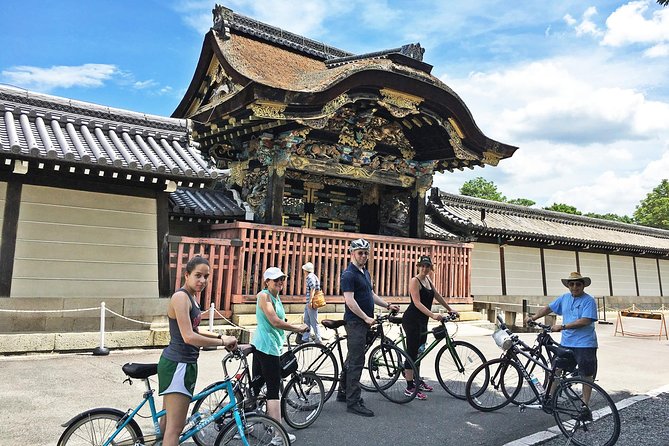
The first temple stop is Nishi Honganji, one of Kyoto’s major Buddhist sites and one of the largest wooden buildings in the world. It is also less visited than some of the city’s headline attractions, which makes it a good early stop.
The short visit lasts about 15 minutes. That is enough to enter the grounds, appreciate the scale of the wooden architecture, and hear why the temple matters. The stop sets the tone for the day: you are not simply collecting photographs, you are getting a quick explanation of what you are seeing.
The limited time can also be a drawback. If you prefer to sit quietly, study architectural details, or explore a temple at length, 15 minutes will feel brief. This tour is built around range and variety, not long stays at every site.
Kitano Tenmangu brings local life into the route
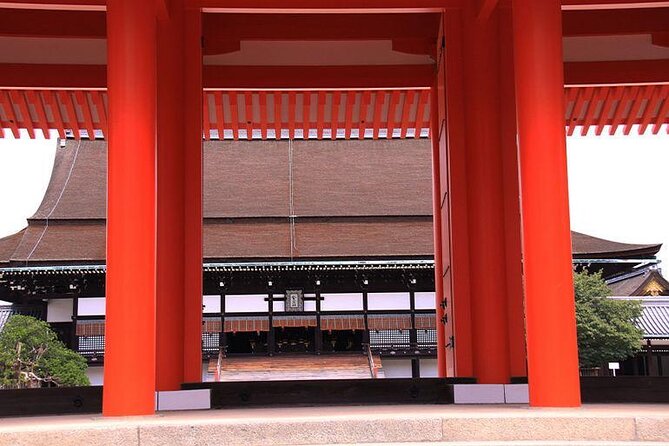
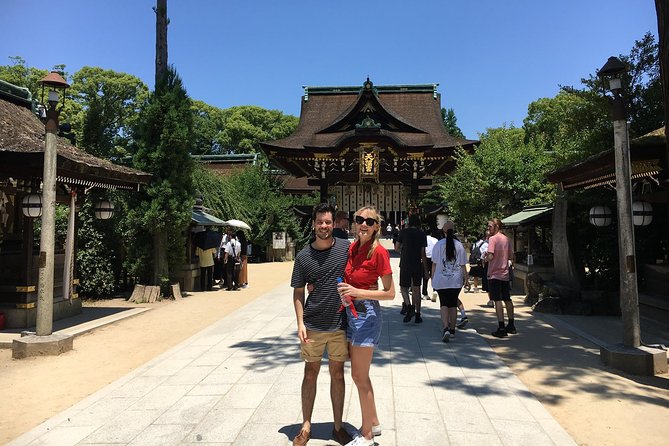
At Kitano Tenmangu Shrine, you have about 20 minutes to look around and see people using the shrine as part of everyday life. That makes the stop feel less like a stage set for sightseeing and more like a functioning religious place.
The guide explains the shrine’s past and points out details you might otherwise pass. The atmosphere here is quieter than at some of Kyoto’s most famous stops, although the exact mood can change with the day and season.
This is one of the route’s useful contrasts. You get a major attraction later, but Kitano Tenmangu gives you time to notice how a shrine fits into local life. The stop is short enough that you will not lose momentum.
A few more Kyoto half-days to weigh up
- 5 Top Highlights of Kyoto Full Day Bike Tour (E-bike option)
★ 5.0 · 511 reviews - Full Day Guided Tour to Kyoto and Nara from Osaka by Van
★ 5.0 · 420 reviews - Nara Park, Osaka & Kobe from Kyoto Full Day tour
★ 5.0 · 207 reviews - Kyoto Private Car Tour – Full Day with Local Guide & Nara Option
★ 5.0 · 169 reviews
Kinkaku-ji is the photograph everyone expects
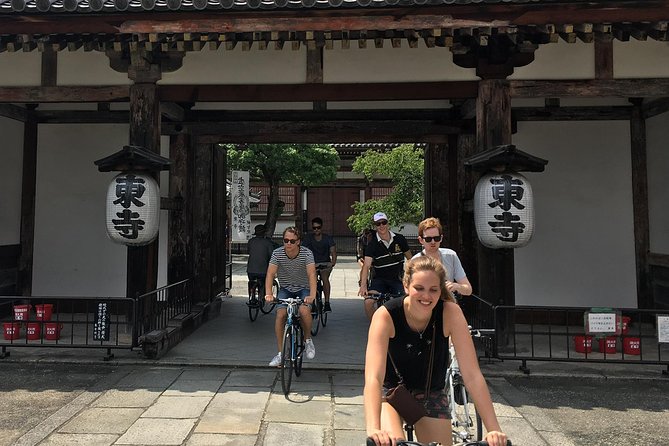
Kinkaku-ji, the Golden Pavilion, is the visual centerpiece of the morning. Its gold-covered exterior reflected in the pond is one of Japan’s most familiar sights, and the setting is every bit as photogenic as you expect.
You have about 30 minutes here, with admission included. The guide provides commentary, then you have time to walk through the grounds, take photographs, and possibly stop for an ice cream.
Kinkaku-ji is also one of Kyoto’s busiest attractions. The tour does not turn it into a private visit, and 30 minutes will not allow a slow inspection of every path. Still, arriving with a guide helps you understand the place instead of simply joining a crowd for a quick picture.
I like the balance here. You see the famous pavilion, but you are not asked to spend half a day in one crowded complex. The bicycle route keeps moving.
The Imperial Palace grounds offer room to breathe
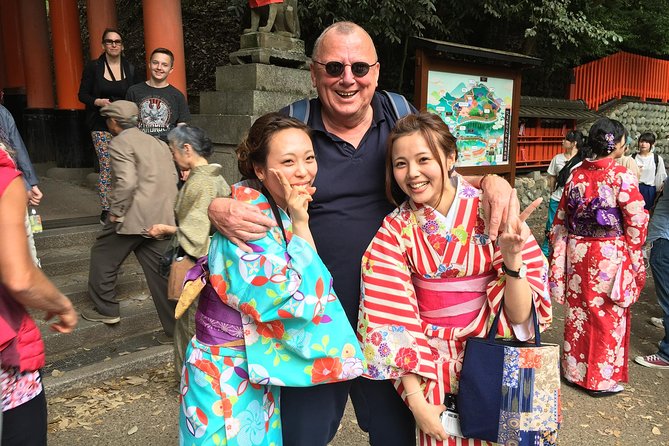
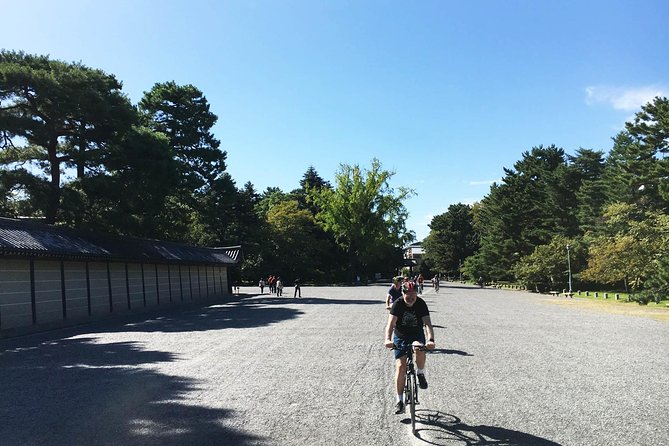
The route continues through the grounds of the former seat of Japan’s imperial family. The supplied schedule does not give this stop a numbered label or a precise duration, but it is an important part of the day.
After compact temple compounds and busy roads, the broad palace grounds give you space. You learn about the site’s role in Japan’s past while riding through an area that feels very different from the Golden Pavilion or Gion.
This is also where the bicycle earns its keep. Large grounds and widely separated districts are easier to understand when you move through them at street level. You get a sense of Kyoto’s scale rather than seeing each sight as an isolated stop.
Gion shows the city’s polished public face
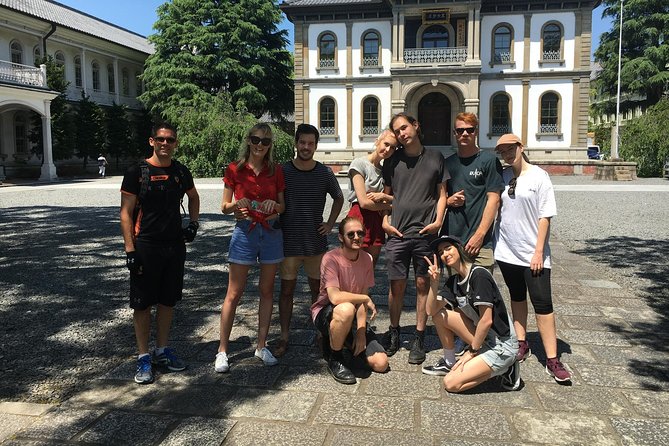
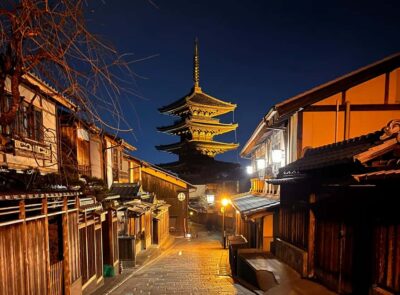
Gion is Kyoto’s famous geisha district, with traditional streets and a carefully preserved old-town feel. The tour allows about 15 minutes here, enough for a brief walk and an introduction to the world of geisha and maiko.
Your guide can explain the difference between the entertainers, the role of the district, and the etiquette required when passing through. You may catch a glimpse of one of these professionals, but that is never something to count on. Treat the area as a neighborhood and cultural setting, not a photo hunt.
The short stop is practical because Gion can be crowded and narrow. You get an orientation, then continue before the day loses pace. If Gion is a top priority for you, return later on foot when you can explore at a slower speed.
One of the strongest parts of the tour is the way guides connect Gion to wider Japanese culture. Guides such as Jay and Jamie are described as mixing historical detail with humor and simple Japanese phrases. That sort of teaching helps the district feel like a living place rather than a costume display.
Lunch is a welcome pause, not an afterthought
Lunch is included, along with bottled water. Several accounts describe the meal as delicious, with one group eating at a traditional noodle house and another at a local family restaurant with mostly local patrons.
The exact restaurant and menu are not specified, so you should not book this expecting one fixed dish. You can expect a hearty Japanese lunch during a day when you will have used plenty of energy.
The meal adds real value to the $119.38 price. A full-day guided ride, bicycle rental, helmet, entry to Kinkaku-ji, water, and lunch would cost more if arranged separately. Just as important, you do not have to lose time choosing a restaurant while keeping track of the route.
Tell Cycle Kyoto about dietary requirements ahead of time. Do not wait until lunch to raise the issue.
Tofuku-ji provides a quick Zen temple stop
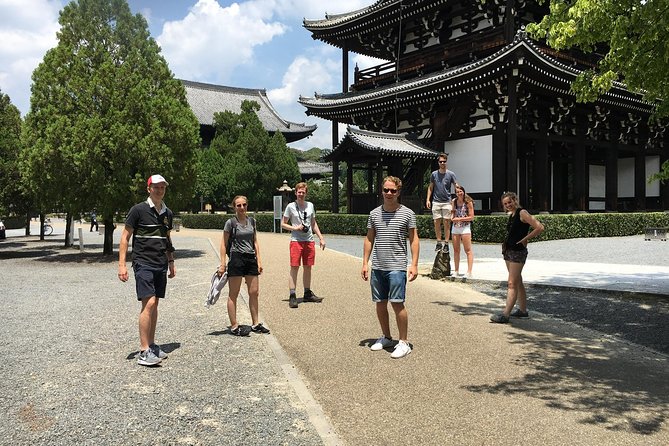
Tofuku-ji is one of Kyoto’s oldest and largest Zen temples. The stop is listed at only five minutes, so think of it as a brief look rather than a full temple visit.
The highlight is the view from the bridge and the spacious setting around the temple. Even a short pause can show you a different kind of religious architecture and garden space from what you saw earlier.
This is a good example of the tour’s tradeoff. You see more of Kyoto, but you sacrifice time at individual sites. If your goal is detailed temple study, a private or slower itinerary would serve you better. If your goal is a citywide overview, the quick stop makes sense.
Fushimi Inari ends the route with a famous flourish
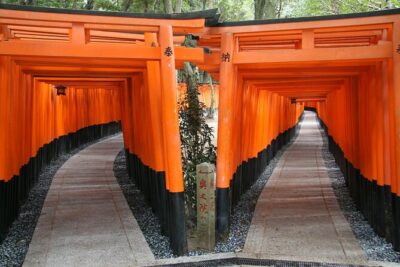
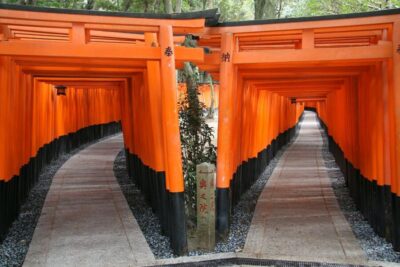
Fushimi Inari-taisha is the final major stop and one of Kyoto’s most visited attractions. Its long corridors of orange torii gates are a defining image of the city.
The tour allows about 20 minutes and uses the guide’s experience to pick a route through the crowds. That is useful because the shrine can feel confusing, especially when you have already spent a full day cycling and walking.
Do not expect to walk the full mountain trail in this time. The stop is designed to give you a strong taste of the shrine and its gates, not a complete hike to every viewpoint. If you want the full Fushimi Inari experience, return early on another day.
Ending here works well. The shrine provides a memorable final image, while the guide can explain the meaning of the torii and the way businesses and individuals donate them. You leave with more than a collection of orange-gate photographs.
The guides can make or break the experience
The tour has earned a 4.9 rating from 498 reviews, with 99 percent recommending it, and the praise focuses heavily on the guides. Karl is repeatedly described as organized, funny, and especially strong on Japanese history. Jay is praised for keeping the day lively, taking group photographs, and choosing a good lunch stop.
Juan receives credit for an engaging style and a comfortable pace. Paul is noted for safe route planning and for making an unexpected street ceremony part of the day. Indra is praised for connecting Kyoto’s temples and shrines with culture, economics, and Japan’s past. Quinn brings long experience living in Japan, while Jamie is described as combining cultural information with light humor and basic Japanese lessons.
That range of guide styles is a plus, but it also points to one fair caution. Your experience depends partly on the person leading your group. Most accounts describe clear explanations and strong personality, but one less positive account found the guide unclear and the educational side weaker. The cycling itself was still enjoyable, yet the difference shows why guide quality matters on a tour built around commentary.
How hard is the ride?
The route is generally flat and described as comfortable by many riders. Guides use smaller roads and local streets, and the ride feels safer and easier than the size of Kyoto might suggest.
Still, do not mistake flat for effortless. The full day can involve 18 to 20 miles of cycling, repeated stops, temple walks, heat, and a backpack on your shoulders. Some riders finished exhausted, especially in warm weather.
You should be comfortable riding in a city and ready to follow the guide’s directions. The tour is not a good match if you rarely cycle, dislike being active for most of a day, or want long, unhurried visits at each temple.
An optional electric bicycle upgrade is mentioned in one account, but the supplied tour details do not confirm its price or availability. Ask Cycle Kyoto directly if that matters to you.
Is $119.38 a fair price?
At $119.38 per person, this is not the cheapest way to see Kyoto. It is also more than a basic bicycle rental because you are paying for route planning, a guide, equipment, lunch, water, and entry to Kinkaku-ji.
The value is strongest if you have one full day and want a well-planned overview. You can reach distant districts without figuring out train connections, bike routes, or restaurant choices. The small group, capped at eight, also gives you more personal attention than a large bus outing.
The value is weaker if you want to linger at the Golden Pavilion, complete the full Fushimi Inari climb, or spend an hour in Gion. In that case, independent visits may give you more control for less money.
For many first-time visitors, I think the price is reasonable because the tour combines transport and sightseeing in one active package. The included lunch is especially useful during such a long day.
Who should book this Kyoto bike tour?
I would recommend it to active first-time visitors, couples, families with teens aged 13 or older, and anyone who wants a broad view of Kyoto in a short stay. It also suits people who like hearing stories while moving through a city rather than reading every sign alone.
It is a strong choice for families if everyone is confident on a bike. A guide such as Karl has handled groups with children, and the route is described as manageable, but the distance still demands stamina.
You should think twice if you have limited cycling experience, mobility concerns, dietary needs that require careful planning, or a strong wish to visit every site slowly. The tour needs good weather, and if poor weather cancels it, you receive the choice of another date or a full refund.
Free cancellation is available up to 24 hours before the start time. Cancellations or changes inside that window are not refunded or accepted, and the tour also requires a minimum number of riders.
Should you book it?
Book this tour if you want to see a large slice of Kyoto without spending your day underground on trains or stuck on a bus. The mix of famous sights, quiet streets, temples, shrines, palace grounds, Gion, lunch, and steady riding gives you a useful first look at the city.
Skip it if your ideal Kyoto day means moving slowly, avoiding exercise, or spending hours at one temple. For everyone else, pack light, bring a water-friendly attitude toward warm weather, and treat the ride as a full day of sightseeing with a workout built in. The route is long, but it gives you a far better sense of Kyoto than a checklist of isolated attractions.
FAQ
How long does the Kyoto biking tour last?
The experience lasts approximately 7 to 8 hours and ends back at the Cycle Kyoto meeting point.
Where does the tour begin and end?
It begins and ends at Cycle Kyoto, 7 Higashikujō Nishisannōchō, Minami Ward, Kyoto, 601-8003, Japan.
How many people are in the group?
The tour has a maximum of eight riders according to the additional information. The overview describes it as a small-group experience.
What is included in the price?
The price includes use of a high-quality Cannondale bicycle, a helmet, bottled water, lunch, and bicycle use. Admission to Kinkaku-ji is also included.
What sights does the route visit?
Stops include Nishi Honganji, Kitano Tenmangu Shrine, Kinkaku-ji, the former Imperial Palace grounds, Gion, Tofuku-ji Temple, and Fushimi Inari-taisha Shrine.
How old must riders be?
Riders must be at least 13 years old and comfortable riding a bicycle.
Do I need a certain level of fitness?
Yes. The tour requires a moderate level of physical fitness. The route is generally flat, but accounts of the day describe roughly 18 to 20 miles of riding plus walking at the sights.
Can I cancel for a refund?
You can cancel at least 24 hours before the experience start time for a full refund. Cancellations or changes made less than 24 hours before the start time are not accepted or refunded. If poor weather or an insufficient number of riders cancels the tour, you are offered another date or a full refund.
Just added around Kyoto
- Kyoto: Zen Meditation at a Private Temple with a Monk★ 5.0 · 25 reviews
- Kyoto: Gion Geisha District & Sake-in-Hand Walking Tour★ 5.0 · 37 reviews
- Private Pewter Sake Cup Experience with a Kyoto Artisan★ 5.0 · 31 reviews
- Your Private Vacation Photography Session In Kyoto★ 5.0 · 110 reviews
- Private Guided Traditional Buddhist Cooking in Japan★ 5.0 · 16 reviews
- Kyoto Wagashi(Japanese sweets) Cooking Class near Fushimiinari★ 5.0 · 60 reviews
- Traditional Japanese Music show & Experience Tour in Kyoto★ 5.0 · 57 reviews
- Kyoto:Family-Friendly Kimono & Yukata Experience at WARGO★ 5.0 · 147 reviews
Kyoto Tours, compared.
Fushimi Inari, Kinkakuji, Bamboo Grove 1 Day Bus Tour
Read our review →
Tea Ceremony in a Traditional Tea House in Kiyomizu
Read our review →
Kyoto Geisha Walking Tour: Gion District & Hidden Gems
Read our review →
Gion Magical Night Walking Tour with Geisha Trivia
Read our review →
Gion Geisha District Walking Tour – Stories of Geisha
Read our review →Browse the lists this tour appears in