
Reviewed · KYOTO TOURS
Private Guided Traditional Buddhist Cooking in Japan
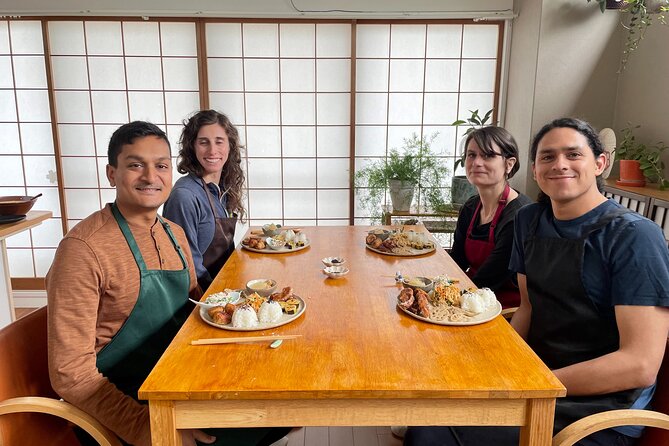
Kyoto’s Buddhist cooking tradition is not just a meal without meat. It is a careful way of cooking that brings out the natural taste of tofu, vegetables, lotus root, seaweed, grains, and fermented foods. In this 2.5-hour class, you prepare seven dishes by hand, then sit down to eat what you made.
I like the hands-on format, since you are not simply watching a chef work. I also like the practical touch of written recipes, which gives you a real chance to repeat the dishes at home. The main consideration is that private transportation is not included, and the class begins at 10:00 a.m. in Kyoto’s Sakyo Ward rather than in the busiest central sightseeing area.
Key points at a glance
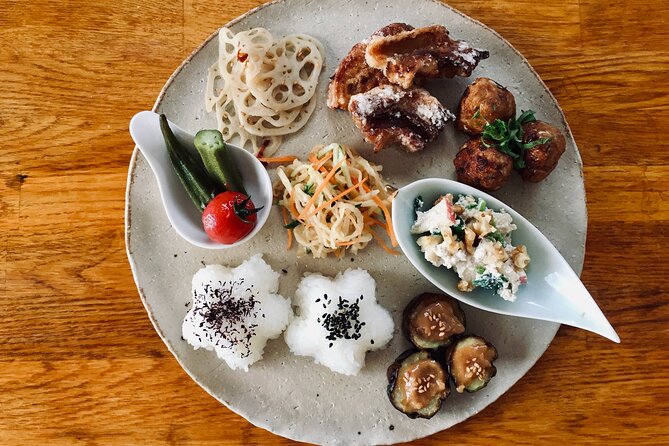
- Seven vegan dishes in one class: Prepare seasonal vegetables, tofu salad, lotus root kinpira, miso-glazed eggplant, spicy teriyaki balls, wheat-gluten fried chicken, and two rice balls.
- A real introduction to Shojin-ryori: Learn why Buddhist cooking avoids animal products and how Japanese cooks build flavor with soybeans, seaweed, grains, and fermented ingredients.
- A personal class with Yukari: The activity is private, so only your group participates. Some host messages also use the name Yuka, so confirm the instructor’s name when booking.
- Useful take-home recipes: You receive the recipes, making this more than a meal you enjoy once and forget.
- Good value at $70.94: Ingredients, drinks, apron, equipment, utility charges, and facility fees are included.
- A flexible dietary option: Gluten-free requests can be accepted if you notify the host in advance.
Why Shojin-ryori makes a good Kyoto cooking class
Shojin-ryori is traditional Buddhist cuisine prepared without animal products. Its roots are tied to temple cooking, where avoiding the killing of animals shaped not only the ingredient list but also the method of preparation.
That does not mean plain food. The class uses tofu, soybeans, seasonal vegetables, seaweed, grains, and fermented products to create variety. Instead of relying on meat or fish for strong flavor, you learn how texture, miso, soy-based seasoning, careful cutting, and gentle cooking bring out the food’s own character.
I like this approach because it gives you a clearer idea of how Japanese meals are built. You are not just learning a recipe for one famous dish. You are learning several small techniques that can be used again and again in your own kitchen.
The cooking also reflects Kyoto’s preference for restraint. A dish may look simple, but the thin slices, balanced seasoning, and neat arrangement matter. That attention to detail is part of the lesson, not merely decoration on the plate.
More cooking classes in Kyoto:
- Ramen Cooking Class at Ramen Factory in Kyoto
★ 5.0 · 1,937 reviews - Kyoto: Ramen Cooking Class at a Ramen Factory with Souvenir
★ 4.9 · 532 reviews - Kyoto: Ramen, Gyoza, and Onigiri Cooking Class
★ 5.0 · 445 reviews
Meeting Yukari in Kyoto’s Sakyo Ward
The class starts at 10:00 a.m. at Fairmont Building, 16 Ichijoji Nodacho, Sakyo Ward, Kyoto, postal code 606-8165. The meeting point is near public transportation, but you must arrange your own way there because private transportation is not included.
This location matters when planning your day. It is away from the most concentrated sightseeing streets around Kyoto Station and Gion, so leave enough time to reach the address. The activity ends back at the meeting point, which makes it easier to continue with your own plans afterward.
Yukari is presented as the main host and teacher. The available feedback repeatedly praises her warmth, patience, detailed explanations, and strong understanding of Japanese food. One especially useful point is that she has written books and articles about Japanese food, so the class is likely to include more cultural context than a basic recipe lesson.
The class is private for your group. That is a major advantage if you want to ask questions, work at your own speed, or cook with children. Families with 11-year-old children have found the format engaging, though the published information does not give a minimum age.
The opening lesson: ingredients, customs, and local flavor
Before cooking, Yukari introduces Shojin-ryori and explains the local ingredients and products used in the class. This opening gives the food a setting. You learn why tofu, seaweed, grains, fermented foods, and seasonal vegetables matter in Japanese cooking.
This is the part I would pay close attention to if you already know how to cook. The value is not only in learning that a dish contains miso or tofu. It is in understanding how these products are used and why a Buddhist meal can feel complete without meat or fish.
The class is designed around the original taste of local ingredients. That suggests a lighter style of seasoning than you might find in heavily sauced restaurant food. You can expect the instructor to focus on preparation and balance rather than simply adding strong flavors.
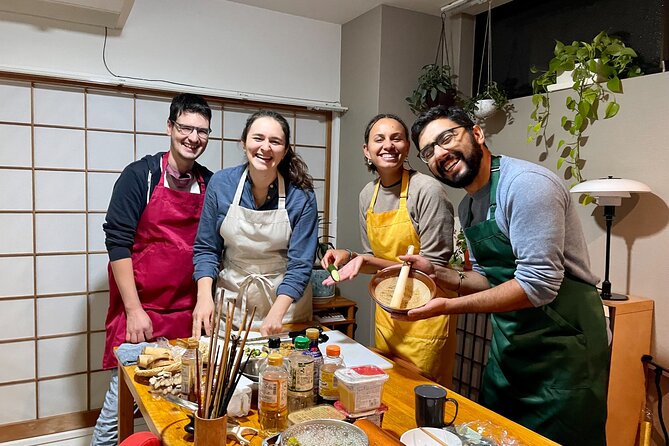
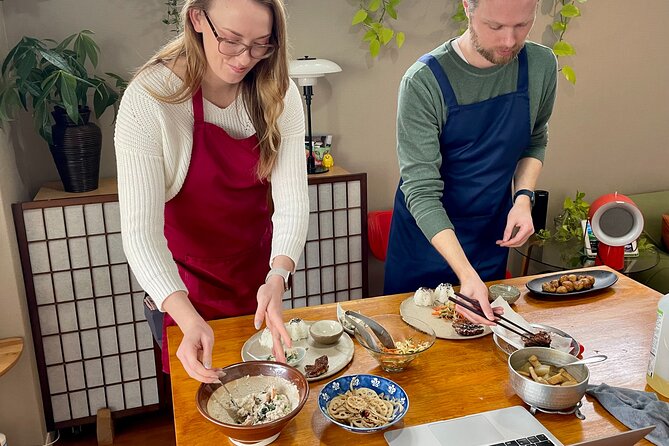
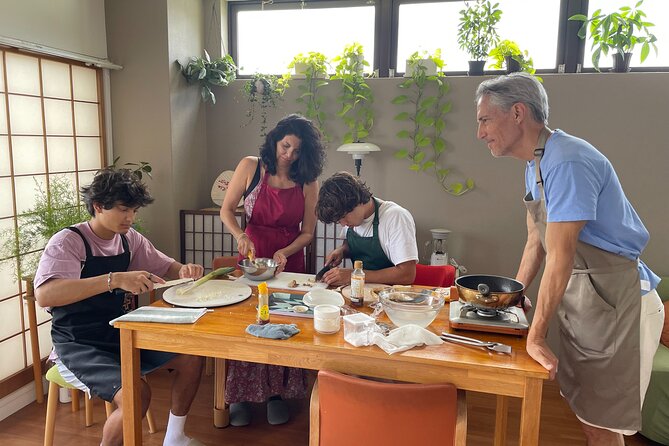
After the introduction, you put on an apron and begin the practical work. All equipment, ingredients, and utility charges are covered, so you do not need to bring cooking tools. Water or tea is also included.
Seven dishes, seven different lessons
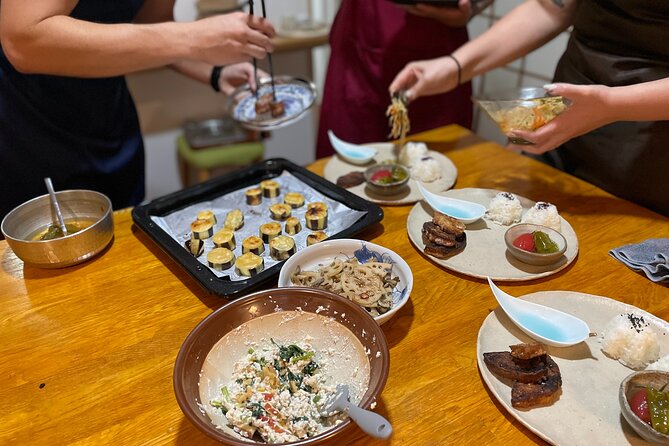
The menu is the heart of the experience. You prepare a group of small dishes rather than one large recipe, giving you a broad look at Japanese home-style and Buddhist cooking.
A few more Kyoto half-days to weigh up
- PERFECT KYOTO 1-Day Bus Tour
★ 5.0 · 13,518 reviews - Kyoto: Fushimi Inari, Kinkakuji, Bamboo Grove 1 Day Bus Tour
★ 4.8 · 4,316 reviews - Kyoto: Tea Ceremony in a Traditional Tea House in Kiyomizu
★ 4.9 · 3,519 reviews - Kyoto Geisha Walking Tour: Gion District & Hidden Gems
★ 4.7 · 3,273 reviews
Seasonal simmered vegetables
Simmered vegetables show how Japanese cooks can make humble produce taste satisfying. Seasonal vegetables are cooked gently so their flavor and texture remain clear.
For you, the useful lesson is flexibility. The exact vegetables may change with the season, but the method can be adapted at home. This is also a good example of why the class is more valuable than a single demonstration. You learn a cooking pattern, not just a fixed shopping list.
Dried daikon salad
Dried strips of daikon add a different texture to the meal. The ingredient is light, slightly chewy, and well suited to a menu built around contrast.
This dish gives you a look at how Japanese cooking uses preserved ingredients. Dried vegetables are not treated as a second-rate substitute for fresh produce. They bring their own flavor and texture to the table.
Lotus root kinpira
Kinpira is a Japanese preparation in which thinly sliced vegetables are braised or sautéed with seasoning. Here, the ingredient is lotus root.
The lotus root’s crisp texture makes this dish different from the softer simmered vegetables. It also shows how careful slicing affects the final result. If you enjoy learning knife work, this should be one of the more useful parts of the menu.
Nasu dengaku
Nasu dengaku is eggplant finished with a miso glaze. Eggplant absorbs flavor well, and the miso adds a savory, fermented note without using animal products.
This is likely to be one of the most immediately appealing dishes for people who are new to vegan Japanese food. It feels familiar enough to enjoy right away, while still showing how much flavor can come from a simple vegetable and a well-made glaze.
Shiraae
Shiraae is a mashed tofu salad. It is a good example of the quiet, balanced side of Shojin-ryori.
Tofu can be mild on its own, but it becomes useful as a creamy base for a seasoned salad. This dish helps you see tofu in a role beyond stir-frying or soup. It also adds softness to a menu that includes crisp lotus root and chewy dried daikon.
Spicy teriyaki balls
The spicy teriyaki balls bring a stronger, more playful flavor to the plate. Their shape and sauce make them feel distinct from the vegetable dishes.
This is a nice modern touch. The class is inspired by traditional Buddhist cooking, but it does not appear locked into a strict temple menu. You get classic ingredients and ideas with some contemporary adjustments.
Vegetarian fried chicken using wheat gluten
Wheat gluten provides the chewy texture for a vegetarian fried-chicken-style dish. It is one of the more unusual ingredients in the menu and may be the dish that gives you the most to talk about afterward.
If you are not used to wheat gluten, this is a useful introduction. It shows how Japanese cooking can create satisfying texture without meat. If you need to avoid gluten, tell the host ahead of time, since this particular dish contains wheat gluten and the class accepts gluten-free requests.
Two rice balls
The meal also includes two rice balls. They give you a familiar Japanese staple in a simple, practical form.
Rice balls are easy to understand, but small details still matter, from shaping the rice to balancing the filling or seasoning. Their inclusion helps turn the seven dishes into a complete plate lunch or dinner rather than a collection of samples.
From the cutting board to the finished plate
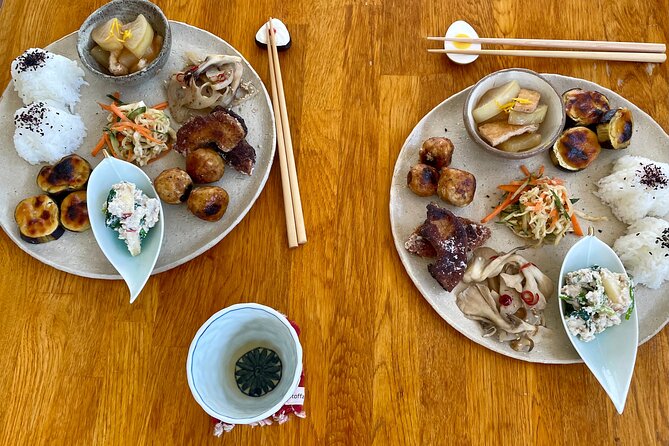
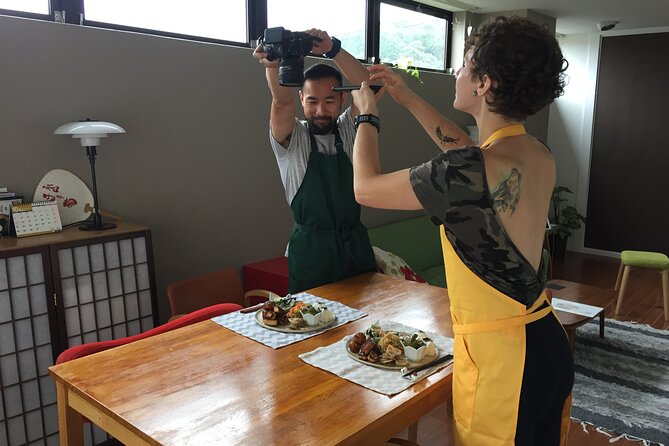
The class ends with a meal made by your own group. You sit down with the finished dishes, a drink, and the satisfaction of seeing how separate ingredients became a balanced plate.
This shared meal is important. You can taste each preparation side by side and notice how the menu moves between crisp, soft, savory, sweet, spicy, and fermented flavors. It also gives you time to ask final questions about the recipes and ingredients.
The setting is not a restaurant meal where someone else does the hard work. You take part in preparing the food, and that changes how you taste it. A miso glaze or tofu salad makes more sense once you have handled the ingredients yourself.
Written recipes are included. That makes the experience practical for the rest of your trip and after you return home. The recipes can help you find substitutes if a particular Japanese ingredient is difficult to buy, though the class information does not specify which substitutions are provided.
Temple names on the itinerary
The listed itinerary includes Enkoji Temple, Shisendo Temple, and Ginkakuji Temple. These names place the experience in Kyoto’s northern Higashiyama and Sakyo Ward area, where temple visits and food traditions fit naturally into the same day.
The supplied details do not say that a guided temple tour is included, nor do they describe entrance tickets or transport between the temples. I would not assume that the cooking class includes a full temple visit. Instead, treat these locations as useful planning clues and confirm the exact role of each stop before booking.
Enkoji Temple is associated with a quieter part of eastern Kyoto. Shisendo Temple is also known for its calm temple setting. Ginkakuji, the Silver Pavilion, is one of Kyoto’s best-known sights and can draw large crowds.
If you plan to visit any of them after cooking, check the timing and admission details separately. The class itself lasts about 2 hours and 30 minutes, begins at 10:00 a.m., and returns to the meeting point. The itinerary names should not be taken as proof that transportation or entry is included.
What $70.94 buys you
At $70.94 per person, this class sits in a useful middle range for a private Kyoto food activity. You are not paying only for a meal. The price includes the ingredients, drink, apron, cooking equipment, utility charges, facility fee, and recipes.
The private format improves the value for couples, families, and small groups who would rather have direct instruction than share a large demonstration. You can ask about ingredients, request clarification, and work through the recipes with the people you came with.
The seven-dish menu also helps justify the cost. You get several techniques and a full meal, not one bowl of noodles or a single specialty dish. The recipes add lasting value if you cook at home.
The cost may feel less attractive if you want a fast meal or have no interest in cooking. It is also not an all-day cultural tour, and private transportation is extra. I would book it for the teaching and the meal, not as a replacement for a temple sightseeing pass.
Who will get the most from this class
This is a strong match for vegetarians and vegans who want more than a meat-free restaurant meal. You can learn the ideas behind Buddhist vegan cooking and taste a broad range of dishes in one sitting.
It also suits omnivores who want to understand Japanese food beyond sushi, ramen, and grilled meat. Shojin-ryori shows you a quieter side of the country’s cooking, built on plants, tofu, grains, seaweed, and fermented foods.
Families can benefit from the private setup. The class has kept 11-year-old children engaged, according to the available comments, and cooking together gives younger participants a job to do instead of asking them to sit through a long lecture.
I would also recommend it to anyone who likes taking recipes home. The instructor’s patient, detailed teaching style and the written recipes make this more useful than a one-off food tasting.
You should think twice if you dislike tofu, vegetables, or hands-on work. The entire meal is built around plant ingredients, and the class is designed for participation. You should also mention gluten-free needs before arrival, since wheat gluten is part of the planned menu.
Timing, cancellation, and small practical details
Confirmation is provided when you book. The activity uses a mobile ticket, so keep the booking information available on your phone.
Service animals are allowed, and the meeting point is near public transportation. The activity ends where it begins, which keeps the final logistics simple.
You can cancel for a full refund up to 24 hours before the 10:00 a.m. start time. Changes or cancellations inside that 24-hour window are not accepted for a refund, and the cut-off follows Kyoto local time.
The class is often booked well ahead, with an average booking lead time of 51 days. If your Kyoto dates are fixed, reserve early, especially if you need a private session or have dietary requests.
Should you book it?
Book this class if you want a personal introduction to Kyoto’s plant-based cooking and like the idea of eating a meal you helped prepare. The strongest reasons are the seven-dish menu, the private instruction, the cultural explanation, and the recipes you can use later.
The main limits are clear: transportation is not included, the class is not a full temple tour, and the food is entirely vegan. At $70.94, I see good value for couples, families, and food-focused visitors who want instruction rather than a quick restaurant stop.
If that sounds like your kind of morning, this is an easy choice. If you mainly want sightseeing or a famous Japanese dish, spend the money elsewhere.
FAQ
Where does the cooking class begin?
It begins at Fairmont Building, 16 Ichijoji Nodacho, Sakyo Ward, Kyoto, postal code 606-8165.
What time does the activity start?
The class starts at 10:00 a.m.
How long does the experience last?
The experience lasts approximately 2 hours and 30 minutes.
Is the class private?
Yes. Only your group participates in this private activity.
What kind of food will I cook?
You will cook Shojin-ryori, traditional Buddhist-inspired food made without animal products. The planned menu includes seven dishes and two rice balls.
Can the class accommodate gluten-free diets?
Yes, gluten-free requests can be accepted. You need to let the host know in advance.
What is included in the price?
The price includes lunch ingredients, water or tea, an apron, all equipment, utility charges, the facility fee, and recipes.
Can I cancel for a full refund?
Yes. You can cancel at least 24 hours before the experience start time for a full refund. Cancellations or changes made less than 24 hours before the start are not refunded or accepted.
Just added around Kyoto
- Kyoto: Zen Meditation at a Private Temple with a Monk★ 5.0 · 25 reviews
- Kyoto: Gion Geisha District & Sake-in-Hand Walking Tour★ 5.0 · 37 reviews
- Private Pewter Sake Cup Experience with a Kyoto Artisan★ 5.0 · 31 reviews
- Your Private Vacation Photography Session In Kyoto★ 5.0 · 110 reviews
- Kyoto Wagashi(Japanese sweets) Cooking Class near Fushimiinari★ 5.0 · 60 reviews
- Traditional Japanese Music show & Experience Tour in Kyoto★ 5.0 · 57 reviews
- Kyoto:Family-Friendly Kimono & Yukata Experience at WARGO★ 5.0 · 147 reviews
- Private Cooking Class Udon in Kyoto Japan★ 5.0 · 23 reviews
Kyoto Tours, compared.


Fushimi Inari, Kinkakuji, Bamboo Grove 1 Day Bus Tour
Read our review →
Tea Ceremony in a Traditional Tea House in Kiyomizu
Read our review →
Kyoto Geisha Walking Tour: Gion District & Hidden Gems
Read our review →

Gion Magical Night Walking Tour with Geisha Trivia
Read our review →

Gion Geisha District Walking Tour – Stories of Geisha
Read our review →Browse the lists this tour appears in