
Reviewed · TOKYO TOURS
Asakusa: 3.5-hour Big-picture History Walk
Asakusa is not simply a temple district. It is a compact lesson in how Japan moved from an inward-looking feudal society to a modern global power. This walk connects the river, Sensō-ji, Shinto shrines, old theaters, working-class pubs, and Edo-style lanes into one clear story.
I like the big-picture approach, and I like the way the guide keeps tying grand history to things you can see in front of you. The small group, capped at eight, also gives the walk a personal feel. The main drawback is that three and a half hours on foot can be tiring, especially in rain or heat, and the route is not designed for people with serious mobility limits.
Key things to know before you book
- Japan’s reopening explained on the street: Learn why Japan isolated itself, why the Netherlands remained its main European trading partner, and how the country later opened to the world.
- Two faiths, one daily life: See how Shinto and Buddhism developed side by side, with the same worshippers moving between both traditions.
- A careful look at Asakusa’s changing identity: The route moves from sacred temple grounds to old entertainment streets and postwar drinking lanes.
- Small group, direct guiding: With no more than eight people, you can ask questions and keep close to the guide. Headsets are supplied for groups of three or more.
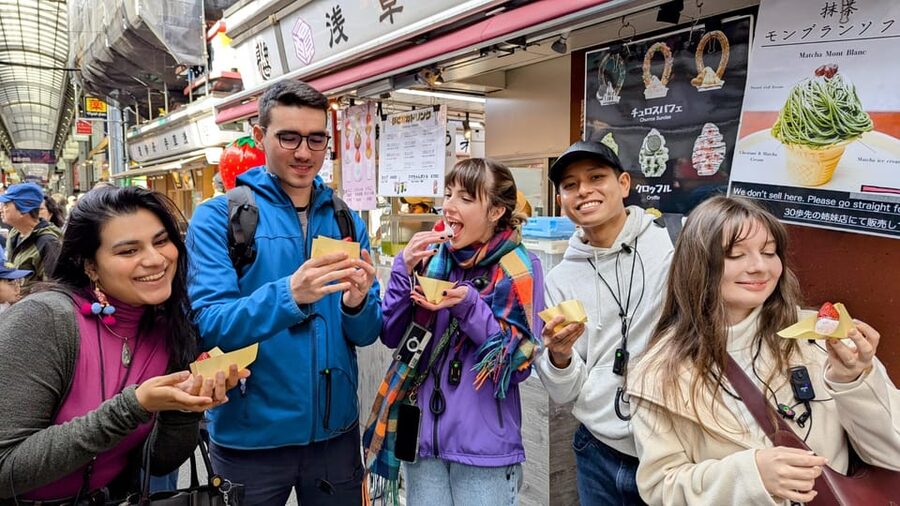
- A taste of Japan along the way: Freshly made traditional snacks and sweets are included, adding a welcome pause to the history lesson.
- Useful for first-time Tokyo visitors: The walk gives you enough context to make better sense of Asakusa, and perhaps the rest of Japan, during the rest of your trip.
Why Asakusa works as a history classroom
The best feature of this walk is its setting. Asakusa puts several versions of Japan within a short distance of one another. You begin near the Sumida River, pass through the grand approach to Sensō-ji, visit a Shinto shrine, and then turn into streets shaped by theater, food, drinking, and popular entertainment.
That physical movement gives the tour a useful rhythm. You are not sitting through a lecture about Japan’s past. You are looking at gates, buildings, symbols, shops, and street layouts while the guide explains how they fit together.
The central theme is Japan’s change from isolation to international contact. You learn why the country closed itself, why the Netherlands was allowed to maintain a trading link, and what happened when Japan began opening in the nineteenth century.
A particularly useful detail is the sign marking the shift from isolation to openness. It gives the story a visible point of reference rather than leaving it as a string of dates. The guide also connects Japan’s nineteenth-century art to France and the Impressionist painters, showing that cultural exchange did not move in only one direction.
That is the kind of context I value in a walking tour. Instead of treating Japan as a collection of exotic sights, the route asks how ideas, images, and customs crossed borders.
More history-led days in Tokyo:
- Tokyo: Imperial Palace and Shogun Historical Walking Tour
★ 5.0 · 2,251 reviews - Tokyo: Imperial Palace Japanese History Walking Tour
★ 4.9 · 987 reviews - Yanaka Walking Tour: Historic and Traditional District of Tokyo
★ 5.0 · 530 reviews
Starting by the Sumida River
Meet in front of the Burger King beside Exit 4 of Asakusa subway station on the Ginza Line, station G19. This is a practical meeting point, but step outside the station at Exit 4 rather than waiting underground.
The first stop is the Tokyo Cruise Asakusa Pier. The guided portion here lasts about 15 minutes. The river helps place Asakusa in the wider story of Tokyo, and it gives you a different angle on the district before you enter the temple area.
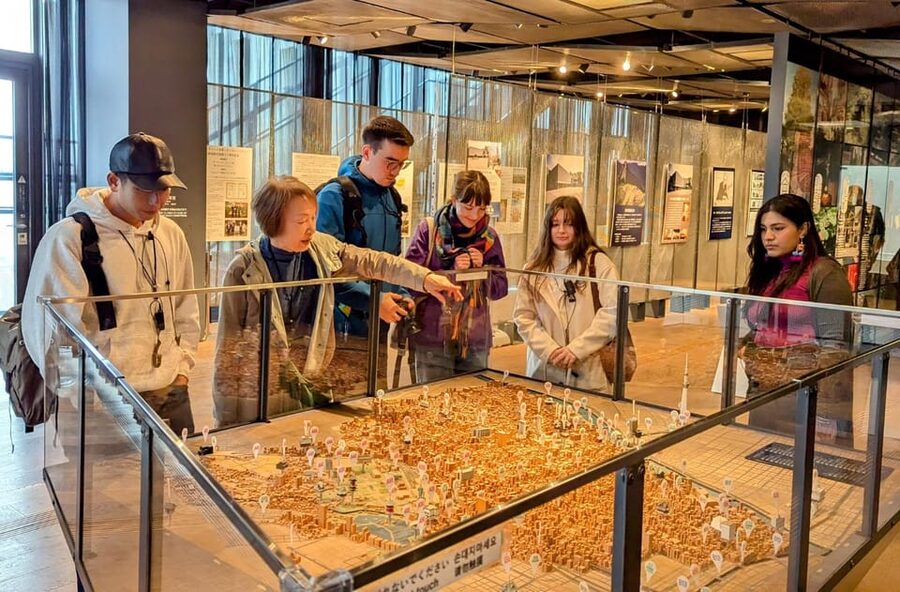
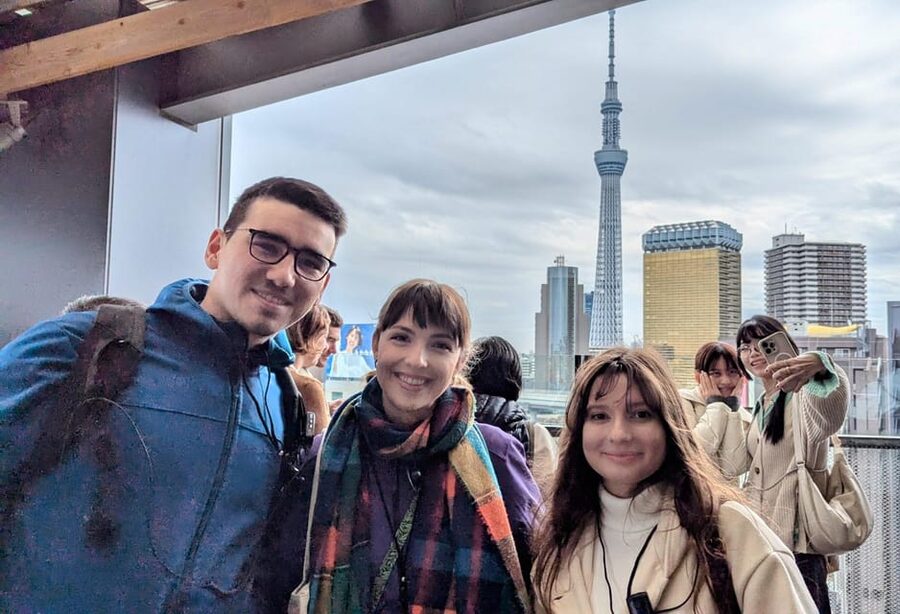
From here, the walk continues to the Asakusa Culture Tourist Information Center. Allow about 30 minutes. The building itself is worth attention, and one of the strongest features of the stop is the view from its upper level.
You can see Tokyo Skytree from this part of the route. One playful detail concerns its height, 634 meters. In Japanese, the numbers can be read as roku-san-yon, a sound pattern that can also suggest the old regional name Musashi. It is a small example of how language and history often overlap in Japan.
The information center also helps you get your bearings. Asakusa can feel crowded and confusing at street level, so starting with an overview makes the later turns more meaningful.
Kaminarimon and Nakamise, the grand approach
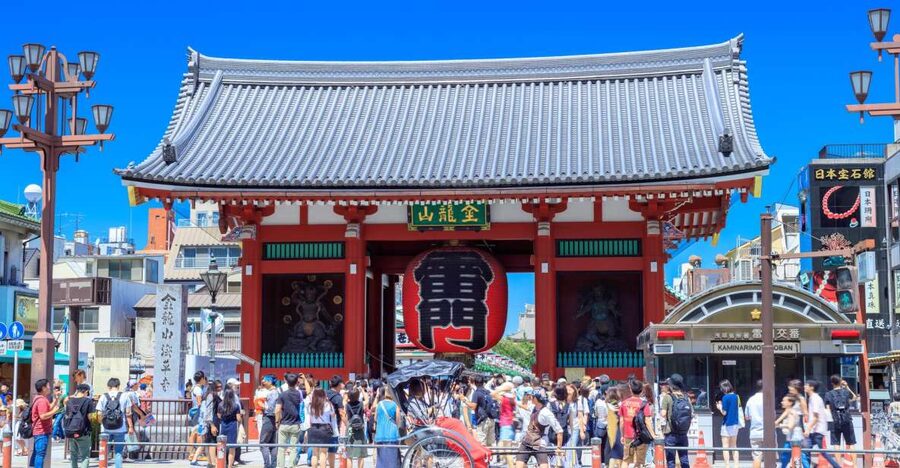
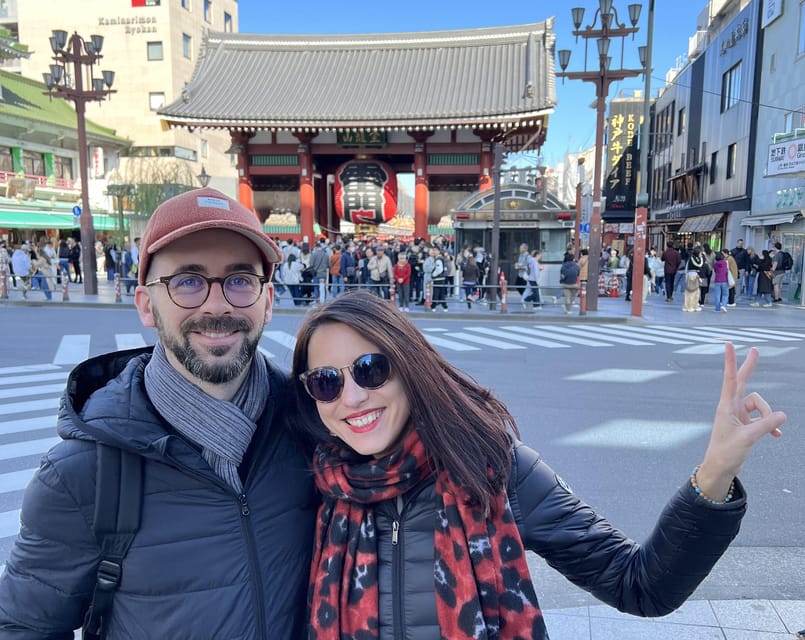
Kaminarimon, or the Thunder Gate, is one of Asakusa’s most recognizable landmarks. The guide spends about 15 minutes explaining the gate and its role as the entrance to the Sensō-ji area.
You will then follow Nakamise Shopping Street for about 30 minutes. This is the busy, commercial approach to the temple, lined with souvenir shops, snacks, and traditional goods. It can be crowded, so keep your group in sight and expect a slower pace.
The value here is not simply shopping. Nakamise shows how a sacred site and a commercial street have long worked together. You can look at the goods, notice the shop fronts, and consider how visitors have been buying food and small keepsakes on the way to worship for generations.
This is also where the included Japanese snacks and sweets make sense. They are not a full meal, but they give the walk a pleasant break and help you experience the food side of the district. If you have dietary restrictions, ask the supplier before booking, since the available snack selection is not specified.
Sensō-ji, where belief becomes visible
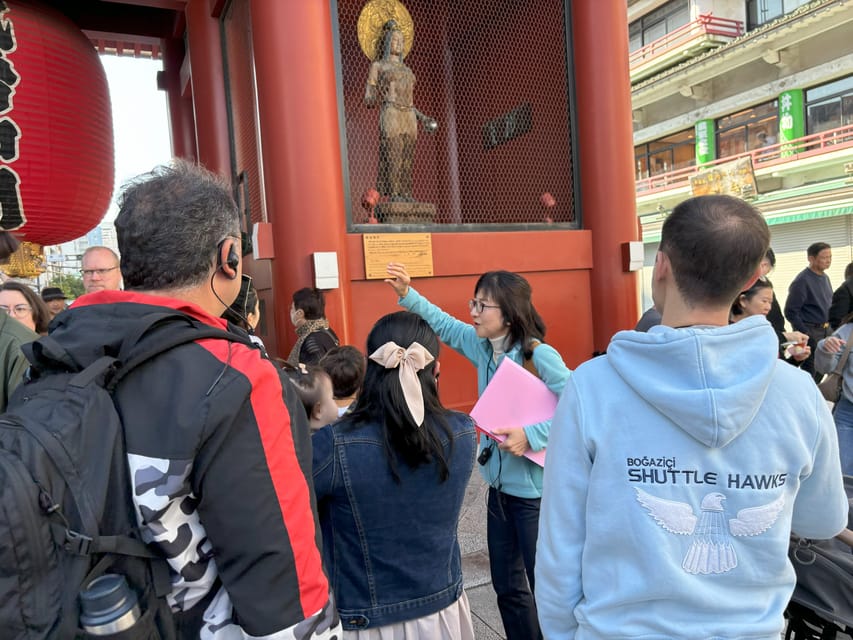
Hōzōmon Gate leads into the main Sensō-ji complex. The guided time at the gate is about 15 minutes, followed by roughly 45 minutes at Sensō-ji itself.
This is the heart of the walk. Sensō-ji is visually powerful, but the guide’s job is to explain what the architecture and rituals mean rather than simply point at them. You will hear how Japan’s two major religious traditions, Buddhism and Shinto, have complemented one another over more than a thousand years.
The useful point is that Japanese religious life does not always fit the Western habit of choosing one faith and leaving the other behind. The same people may take part in Shinto customs and Buddhist ceremonies, with each tradition serving different needs in daily life.
This section also addresses the relationship between the sacred and the ordinary. The temple is a place of worship, but it is surrounded by food, shopping, crowds, photography, and conversation. That is not a flaw to be hidden. It is part of Asakusa’s character.
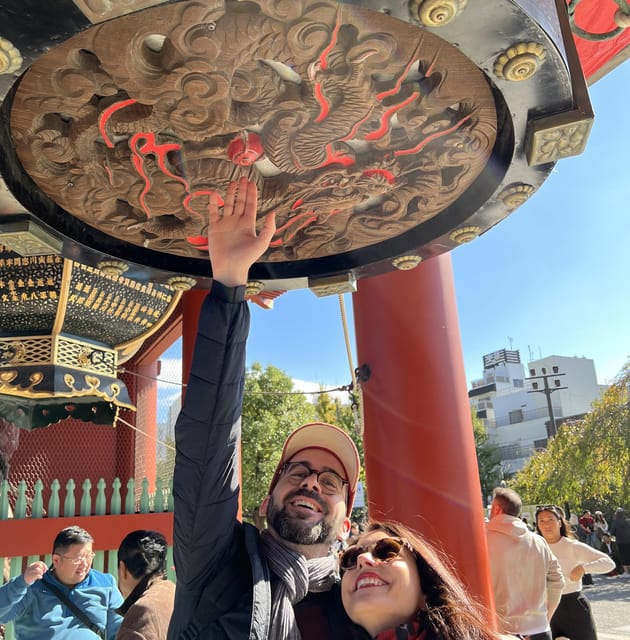
The guide also uses the idea of dragons to compare Japanese and Western cultural attitudes. Dragons do not carry exactly the same role or emotional meaning on both sides of the world. The comparison is a good reminder that familiar symbols can change meaning when they cross cultures.
You should have time to ask questions here. Past guides have included Ai, Yasu, Taka, Jun, Satchi, Yoko, Akiko, and Yoko on different departures, so the exact personality and emphasis will depend on who leads your walk. The consistent requirement is an English-speaking certified guide.
More walking tours in Tokyo:
- Tokyo Tsukiji Fish Market Food and Culture Walking Tour
★ 5.0 · 3,184 reviews - Tokyo: Shinjuku Local Bar and Izakaya Guided Walking Tour
★ 4.9 · 1,794 reviews - Tokyo: Tsukiji Fish Market Food and Walking tour
★ 5.0 · 1,724 reviews - Tokyo: Asakusa Walking Tour with Sensoji Temple Visit
★ 4.8 · 1,583 reviews
Asakusa Shrine and the shared religious world
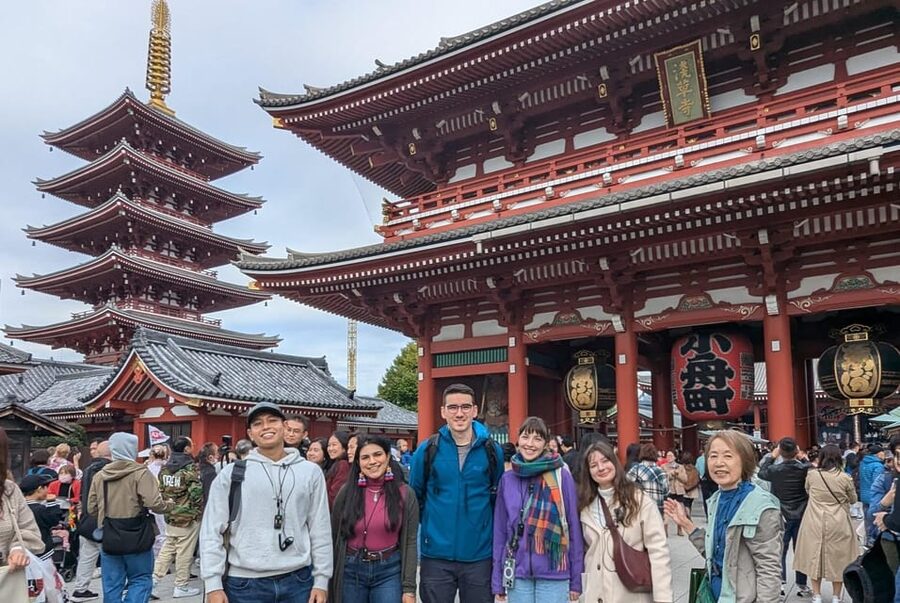
The route continues to Asakusa Shrine for about 15 minutes. After spending time at the Buddhist temple, this stop helps make the relationship between Buddhism and Shinto easier to understand.
The two sites sit close together, but they do not represent the same tradition. The walk uses that closeness to explain how the traditions have coexisted and how people may approach both without seeing a contradiction.
This is one of the most useful parts for first-time visitors to Japan. You may notice shrine gates, temple gates, incense, purification customs, statues, and offerings throughout your trip. Without some basic context, these can blur together. Here, the guide gives you a framework for telling them apart while also explaining why they have shared space.
The pace matters. Fifteen minutes is enough for a focused explanation, but not enough for a long private visit. If you want extensive time for quiet reflection or photography, return later on your own.
Yōgō-dō Pavilion and the turn toward popular culture
Yōgō-dō Pavilion receives about 15 minutes. This continues the religious side of the walk, but the route soon shifts toward Asakusa’s secular history.
That change is deliberate. The tour presents human life as a constant movement between worship, pleasure, work, and entertainment. Asakusa makes that contrast easy to see because the temple district once stood beside a major entertainment area.
Before Shinjuku and Shibuya took the lead in Tokyo’s nightlife, Asakusa was a major center for popular amusement. Cinemas, vaudeville theaters, and performance halls drew people looking for an evening out.
This background adds depth to the streets you are walking through. The area is not only an old temple quarter preserved for visitors. It has also been a place where ordinary people came to eat, drink, watch shows, meet friends, and spend their wages.
Nishi-sandō and the old Asakusa mood
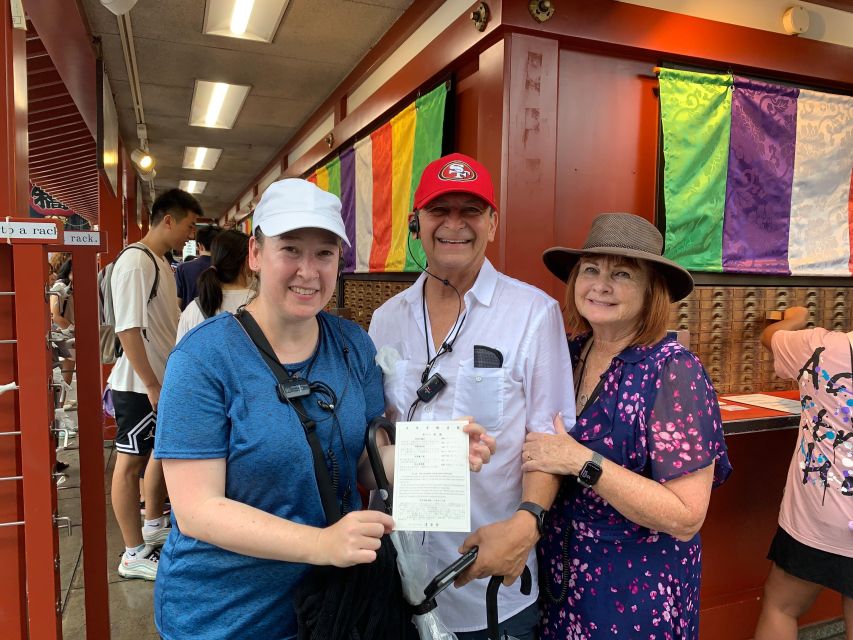
Asakusa Nishi-sandō Shopping Street is a shorter stop, around 15 minutes. It offers a quieter, more nostalgic feel than Nakamise.
That contrast is useful. Nakamise presents the famous public face of Asakusa, while Nishi-sandō gives you a calmer sense of the neighborhood’s older atmosphere. The route is not promising a perfectly preserved Edo town, and you should not expect every building to be historic. Instead, the guide helps you notice the mood and the surviving patterns of local life.
This is also a good place for photography because the pace is less tied to the main temple approach. If shopping is not your priority, the guide can keep the focus on architecture, street life, and history. One past guide, Taka, was especially attentive to guests who preferred gardens, architecture, and history over buying souvenirs.
Asakusa Mokubakan and the entertainment district
Asakusa Mokubakan is another 15-minute stop. The building connects the present street scene with Asakusa’s earlier role as a performance center.
The guide discusses the atmosphere of early twentieth-century Asakusa, when cinemas, variety shows, and theaters made the district a citywide destination. This helps explain why the neighborhood can feel both traditional and pleasure-seeking at the same time.
You will not get a full theater performance as part of the walk, so think of this stop as historical interpretation rather than a show. Its value lies in seeing how entertainment shaped the streets around the temple.
That is an important correction to the usual image of old Japan. Edo-era life was not only samurai, castles, and formal rituals. It also included mass entertainment, jokes, food, theater, and crowds. The tour brings that less solemn side into view.
Hoppy Street and postwar resilience
The final listed stop is Hoppy Street, a narrow lane known for old-style Japanese pubs. Plan on about 15 minutes here.
The street represents the working-class energy of postwar Asakusa. Its small drinking establishments and compact layout create a very different atmosphere from the formal temple grounds nearby.
You are not promised a meal or a pub crawl, so do not book this as a food tour. The point is to see a street where the city’s social life has remained visible in a direct, unpolished way.
I like this ending because it leaves you with a more complete picture of Asakusa. You have seen worship, trade, tourism, theaters, local shopping, and drinking culture within one compact district. The area’s appeal comes from those layers existing next to one another.
What the $88 price buys you
At $88 per person, this is not the cheapest way to see Sensō-ji. You can visit the temple, Kaminarimon, Nakamise, and Asakusa Shrine without paying for a guide.
The value comes from the connections. A self-guided visit may show you the same gates and streets, but it will not automatically explain Japan’s isolation, the Netherlands connection, the country’s reopening, the influence of Japanese art in France, or the relationship between Shinto and Buddhism.
You also receive a small-group format, an English-speaking certified guide, headsets for groups of three or more, and traditional snacks and sweets. A group of eight is small enough for questions without making the cost of a private tour.
I would see this as a history and orientation tour, not a checklist tour. If you want maximum free time for shopping, meals, and photographs, the price may feel high. If you want a clear framework for understanding Japan early in your visit, the cost is easier to justify.
Timing, comfort, and practical details
The walk lasts 210 minutes, or three and a half hours. A moderate amount of walking is involved, with breaks along the way. Comfortable shoes are essential, and you should carry water. Vending machines are available, but bringing your own bottle is sensible.
The tour runs in all weather. Bring suitable clothing for rain, heat, or cold, since much of the experience takes place outdoors. A cold, rainy departure can be uncomfortable, though guides have shown care in adjusting to conditions and looking after the group.
The route is not suitable for people with mobility impairments. If you have a mobility issue that is less severe, contact the supplier in advance. They will do their best to accommodate you, but the walk includes streets, gates, and a moderate amount of time on foot.
Children under six may join free of charge. The subject matter is aimed more at adults, but families are welcome. Older children who enjoy stories about history, religion, and city life should get more from it than very young children.
You can cancel up to 24 hours before the start for a full refund, and you can reserve now and pay later. Those terms are useful when Tokyo plans are still shifting.
Who will get the most from this walk
I would choose this tour during the first few days of a Tokyo visit. It gives you vocabulary and context that can improve later visits to temples, shrines, museums, and historic neighborhoods.
It is especially well suited to you if:
- You want history explained in plain English while you walk.
- You are curious about the difference between Shinto and Buddhism.
- You want more than the main Sensō-ji photo stop.
- You prefer a small group to a large city tour.
- You enjoy linking architecture, religion, art, food, and city life.
- You want a guide who can answer broader questions about Japan.
It may be less suitable if you dislike organized walking tours, want a long shopping session, or have limited stamina. It also will not satisfy you if your main goal is a restaurant crawl or a private itinerary built around your own interests.
Still, the guide can respond to personal interests when time allows. One guide adjusted the emphasis for guests who cared more about architecture, gardening, and history than shopping, and also pointed out toilets before they became urgent. That sort of practical attention matters on a three-and-a-half-hour walk.
Should you book the Asakusa history walk?
Book it if you want Asakusa to make sense rather than simply look impressive. The strongest parts are the links between Japan’s isolation and reopening, the shared role of Shinto and Buddhism, and the sharp shift from temple grounds to theaters and pub lanes.
The experience is best when you value explanation over independence. You can visit the major sights alone for free, but the guide supplies the connections that are easy to miss, including Japan’s art reaching France, the cultural contrast around dragons, and the way Asakusa moved from Edo-era traditions into modern entertainment.
For a first visit, $88 is a fair price for a small group and a three-and-a-half-hour introduction. Wear good shoes, bring water, and leave room in your schedule to stay in Asakusa afterward for dinner or a slower look around.
FAQ
Where does the tour meet?
Meet in front of the Burger King restaurant beside Exit 4 of Asakusa subway station, station G19, on the Ginza Line. Step outside at Exit 4.
How long does the experience last?
The tour lasts 210 minutes, or three and a half hours. Starting times vary, so check availability when booking.
Is the tour conducted in English?
Yes. An English-speaking certified guide leads the walk, and an English audio guide is included.
How large is the group?
The maximum group size is eight participants. Headsets are provided for groups of three or more so you can hear the guide clearly.
Are food and drinks included?
A selection of freshly made traditional Japanese snacks and sweets is included. Bottled water is not included, but vending machines are available.
Can children join the walk?
Children younger than six may join without charge. Families are welcome, though the historical subject matter is recommended mainly for adults.
Just added around Tokyo
- Private Arrival Transfer : Narita International Airport to Central Tokyo City★ 4.5 · 12 reviews
- Narita Airport(NRT): Private Transfer to Tokyo/Yokohama 1-9pax★ 5.0 · 47 reviews
- Private Transfer from Narita Airport to Yokohama Port and City★ 4.5 · 17 reviews
- [Narita Airport Terminals 1, 2] 40-60km Sawara Itako Historic Bike Tour★ 5.0 · 13 reviews
- 3 Day Japan Highlights Tour: Tokyo, Mt.Fuji, Nara, Kyoto, Osaka★ 5.0 · 22 reviews
- Small Town in the Big City: Tasting Tokyo’s Kichijoji★ 5.0 · 195 reviews
- Small Town in the Big City: Tasting Tokyo’s Kichijoji★ 5.0 · 16 reviews
- The 10 Tastings of Tokyo With Locals: Private Street Food Tour★ 5.0 · 48 reviews
Tokyo Tours, compared.

Mt Fuji and Hakone 1-Day Bus Tour Return by Bullet Train
Read our review →
teamLab Planets TOKYO Digital Art Museum Entry Ticket
Read our review →
Mt Fuji & Hakone Cruise, Drum Show Bullet Train 1 Day from Tokyo
Read our review →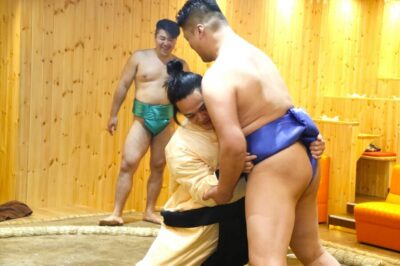
Sumo Show Experience with Chicken Hot Pot and a Photo
Read our review →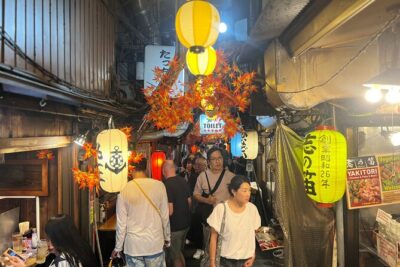
Shinjuku Food Tour (13 Dishes at 4 Local Eateries)
Read our review →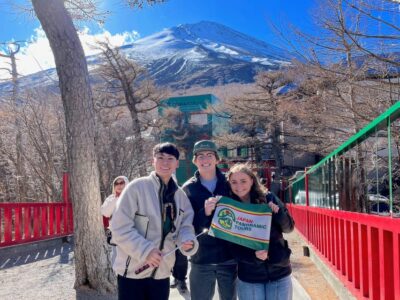
Tokyo Mt Fuji 5th St & Hakone Cruise Bus Tour w/Bullet Train
Read our review →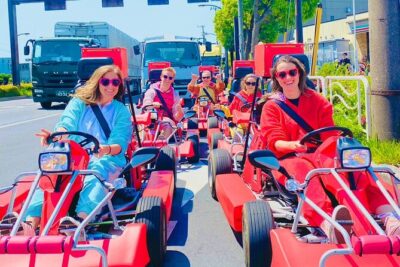
Flagship 2-Hours Official Street Go-Kart Tour – Tokyo Bay Shop
Read our review →Browse the lists this tour appears in