
Reviewed · KYOTO TOURS
Kyoto: Gion & Geisha District Night Time Walking Tour
Gion is most atmospheric after dark, when lanterns glow on wooden teahouses and the narrow lanes feel less like a sightseeing zone and more like a working neighborhood. I like that this walk connects Yasaka Shrine and Ninenzaka instead of treating Gion as one photo stop. The guide gives the streets context, from festival traditions to the demanding training of geiko and maiko.
I also like the small ritual at Yasui-Konpiragu Shrine and the included photos, a real help if you are traveling alone. The main drawback is the pace: two hours covers a lot of ground, and stone lanes, slopes, and standing time make this a poor fit for wheelchair users or anyone wanting a slow temple visit.
Key points at a glance
- Gion after dark: See Kyoto’s old entertainment district under lantern light, usually with fewer daytime crowds.
- A useful route: The walk links Yasaka Shrine, Maruyama Park, Nene no Michi, Ninenzaka, Yasui-Konpiragu Shrine, and Hanamikoji Street.
- Culture beyond costumes: Learn how geiko and maiko train, work, and fit into Kyoto’s traditional arts world.
- Personal guiding: Guides including Majo, Pedro, Wilber, Yuvia, Nay, and Bell have led departures, with questions and photo help part of the experience.
- Good value: At $20 for two hours, the tour costs less than many paid cultural activities and helps you find details you could easily miss alone.
- Plan for walking: Expect traditional paving, slopes, and a route that is not suitable for wheelchair users.
Why Gion works better at night
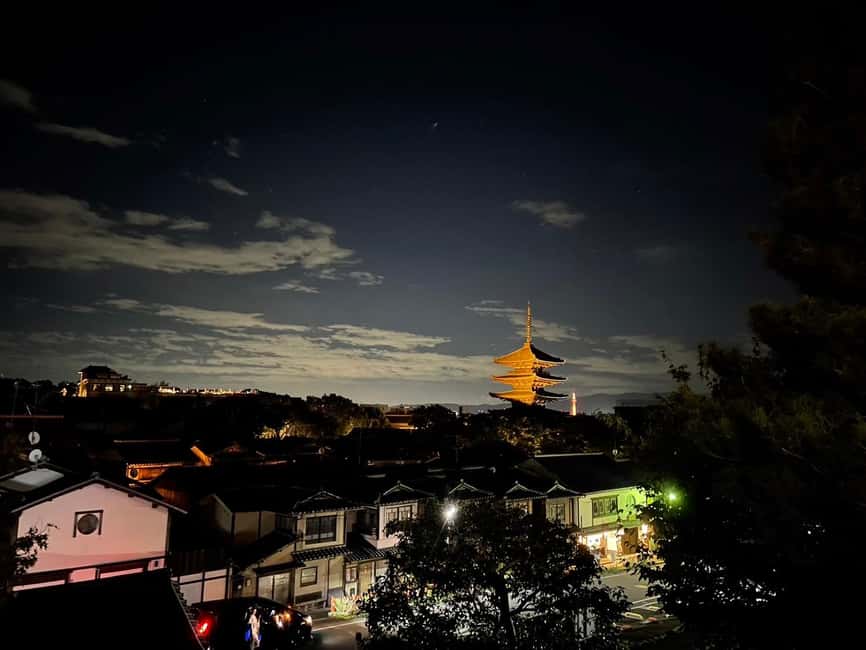
Gion can feel crowded and theatrical in the daytime. At night, the district changes character. Lanterns pick out the timber facades, shop signs soften, and the old lanes become easier to appreciate as part of Kyoto’s living city rather than as a line of photo stops.
This is not a geisha performance. You are not promised a meeting with a geiko or maiko, and you should not treat the district like a stage. The value is in understanding the streets where these artists work, the customs around them, and the careful boundary between public curiosity and private life.
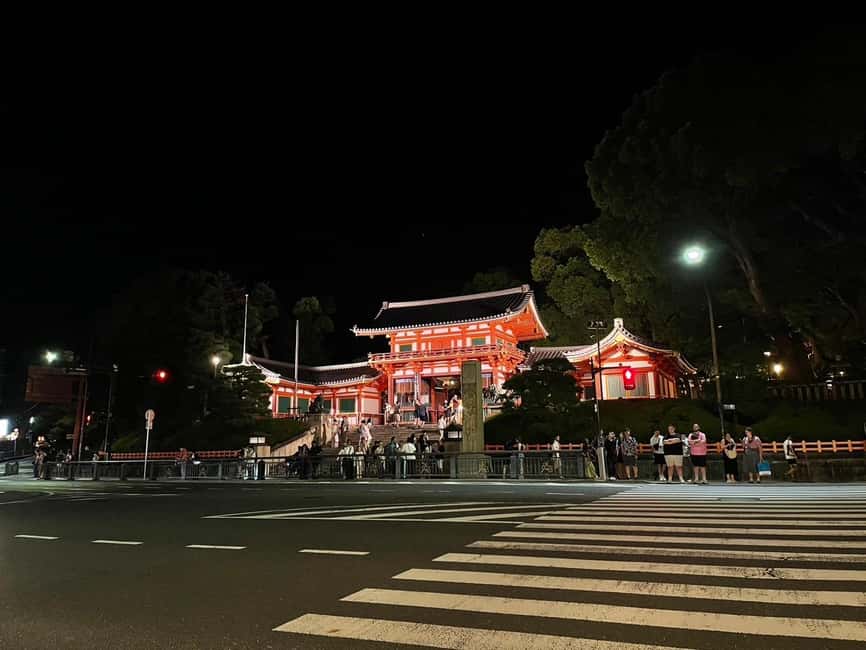
The route begins near Starbucks next to Kyoto Gion Hotel, within walking distance of the Western Tower Gate entrance to Yasaka Shrine. That is a practical meeting point if you are staying in central Kyoto, though you should allow time to find the exact spot. The listed coordinates are 35.0036732, 135.7760837.
Your guide speaks English and leads the group for two hours. Past departures have included Majo, Pedro, Wilber, Yuvia, Nay, Sam, Jason, Bell, Nayeen, and others. Guide assignments can change, but the strongest pattern is clear: the experience depends heavily on an engaging guide who can explain customs in plain English and take questions as the route unfolds.
More geisha-district evenings:
- Kyoto Geisha Walking Tour: Gion District & Hidden Gems
★ 4.7 · 3,273 reviews - Kyoto: Gion Magical Night Walking Tour with Geisha Trivia
★ 4.9 · 2,393 reviews - Kyoto: Gion Geisha District Walking Tour – Stories of Geisha
★ 4.7 · 2,187 reviews
Yasaka Shrine: where the walk begins
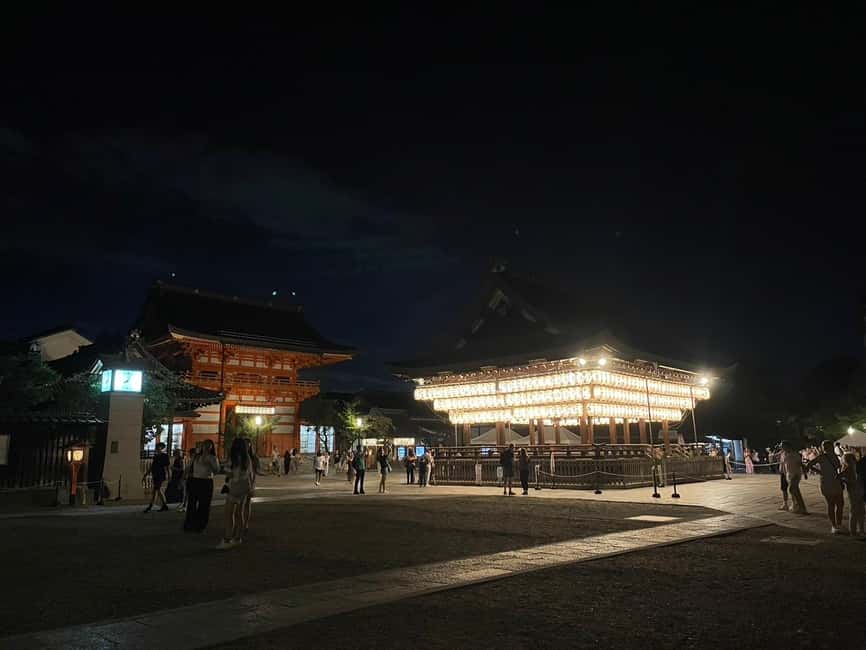
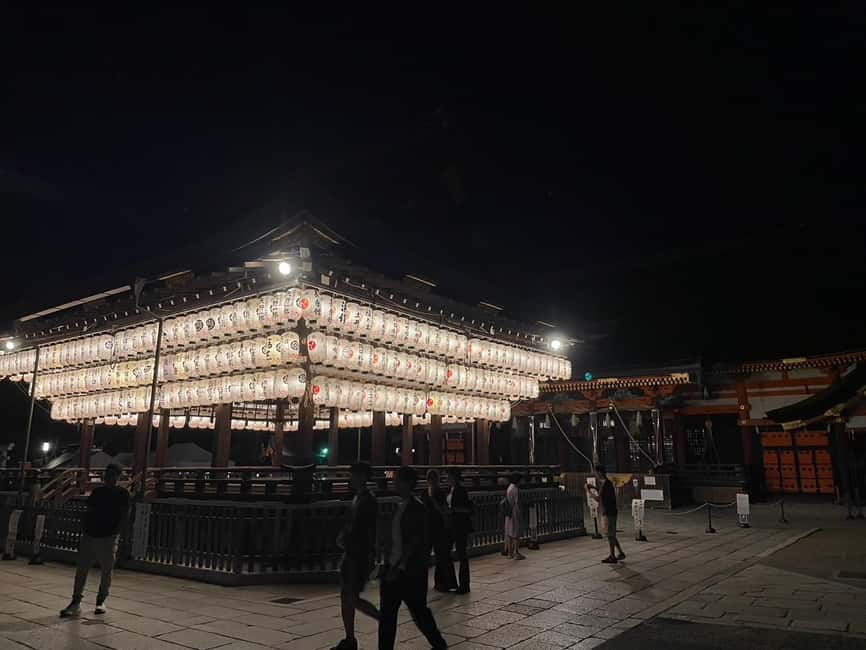
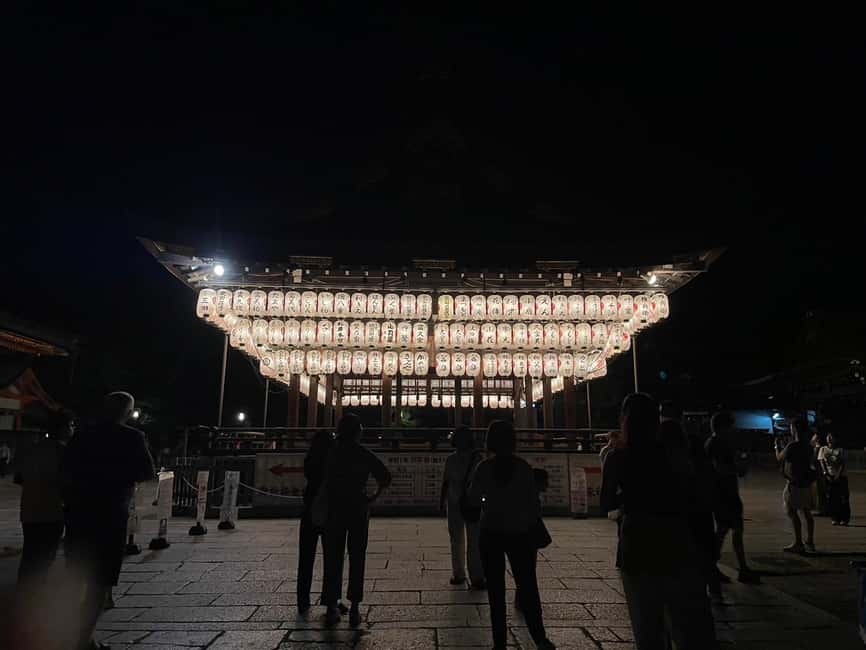
The first major stop is Yasaka Shrine, one of Kyoto’s most important religious sites. You spend about 20 minutes here with an explanation of the shrine’s role in local festivals and its connection to Gion’s traditional culture.
This is a smart opening. Yasaka Shrine is not just an impressive gate and a convenient landmark. It helps explain why this part of Kyoto has such a strong ceremonial identity. The shrine’s links to festivals give you a way to understand the district before you enter its lanes and teahouse streets.
At night, the shrine offers a different kind of sightseeing. You can focus on illuminated gates, ritual spaces, and the movement between open grounds and darker streets. Your guide supplies the background that signs often do not provide, which is especially useful in Kyoto, where many historic places offer little English explanation on site.
Do not expect a long religious lecture or a detailed temple visit. Twenty minutes is enough for orientation and key stories, not every architectural detail. If you want extended time for prayers, photographs, or quiet observation, you may need to return independently.
Gion in 30 minutes: reading the old streets
The first guided section through Gion lasts about half an hour. Here, the guide helps you read the district’s wooden buildings, narrow paths, and traditional entertainment spaces.
The important distinction is between a geiko and a maiko. In Kyoto, geiko are professional artists trained in music, dance, conversation, and formal hospitality. Maiko are apprentices still undergoing that demanding training. The experience explains this world as a cultural profession, not simply as a chance to spot women in elaborate dress.
That distinction matters. You may see a geiko or maiko during the walk, but sightings are not guaranteed. One evening included a brief glimpse of several, which is considered unusual, but you should regard that as luck rather than the purpose of the tour.
Your guide can also help you behave properly if you encounter one. Keep your distance, avoid blocking a doorway, and do not treat a person heading to work as a public attraction. The best guides make this point without turning the walk into a scolding session.
The 30-minute Gion section is also useful for restaurant planning. One guide helped a couple find good food after the tour, and several participants used the guide’s local knowledge to ask about places to eat. Since the tour ends back near the starting point, you can continue into dinner afterward.
Maruyama Park: a pause among the trees
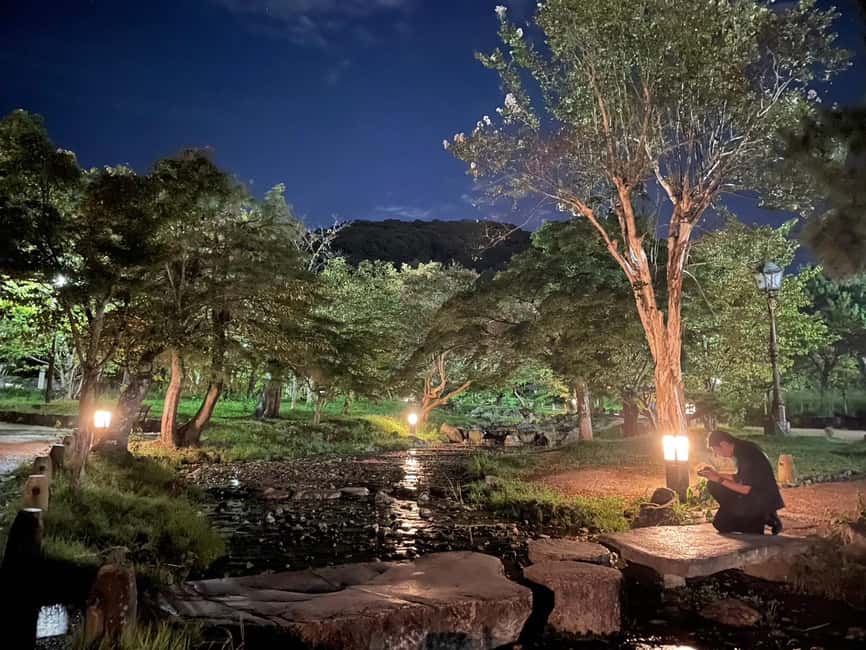
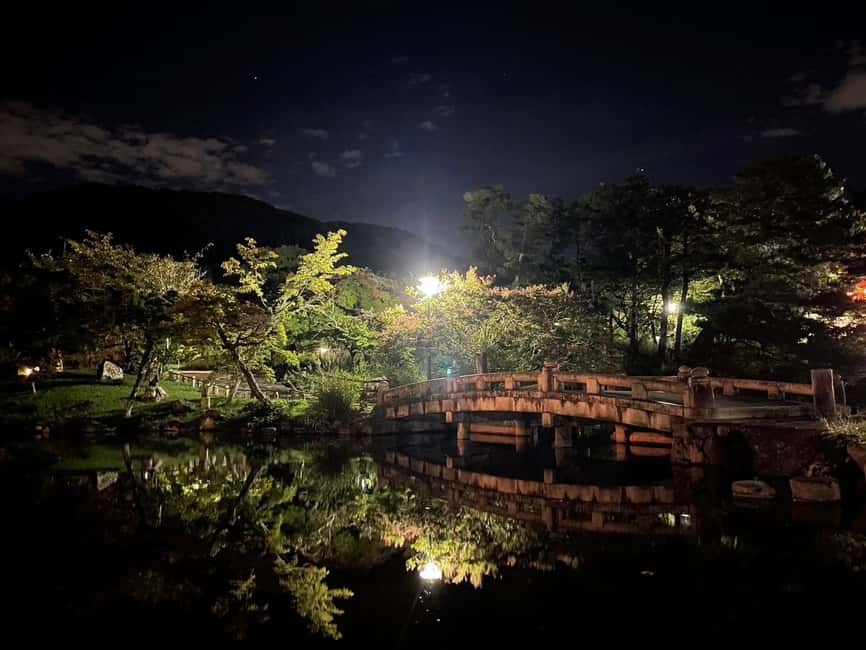
Maruyama Park is Kyoto’s oldest public garden and gives the walk a needed change of pace. After the shrine and built-up streets, the park offers open space and a quieter setting.
The park is not treated as a full garden tour. Instead, it works as a pause where your guide can explain the relationship between nature, seasonal beauty, and Kyoto’s traditional townscape. In spring, the setting is especially appealing, though the tour information does not promise a particular seasonal display.
This stop also keeps the route from becoming a nonstop march through lanes. Still, you should expect a walking tour rather than a leisurely garden visit. If you want time to sit, compose photographs, or explore every path, you will have to come back on your own.
More walking tours in Kyoto:
- Night Walk in Gion: Kyoto’s Geisha District
★ 4.5 · 2,003 reviews - Kyoto Gion Geisha District Walking Tour – The Stories of Geisha
★ 5.0 · 1,441 reviews - Nishiki Market Brunch Walking Tour (7 Tastings + Brunch)
★ 5.0 · 1,355 reviews - Kyoto Arashiyama Walking Tour: Bamboo, Monkeys, Gardens & Secrets
★ 5.0 · 1,216 reviews
Nene no Michi: a stone lane with a personal name
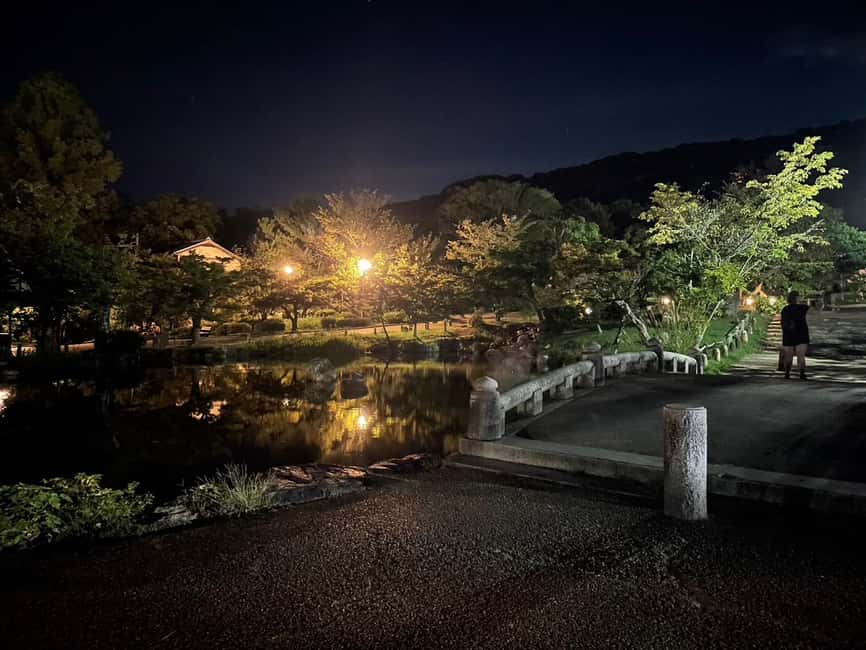
From Maruyama Park, the route continues along Nene no Michi. This attractive stone-paved lane takes its name from Nene, the wife of samurai leader Toyotomi Hideyoshi.
The name gives the street a human connection that a simple date or architectural label cannot. Your guide explains why Nene matters to the area and points out the traditional townhouses, small teahouses, and artisan shops along the way.
This is one of the places where a guide adds real value. You can walk the lane alone and admire its wooden facades, but you may not know which details connect to Kyoto’s social and political past. There are also few information signs, so the stories are easy to miss without explanation.
The paving is part of the charm, but it is also part of the practical warning. Wear shoes that handle uneven surfaces, and do not assume that an evening stroll through old Kyoto means flat pavement. The route includes traditional paths and walkways, with some slopes along the way.
Ninenzaka: beautiful, busy, and worth seeing
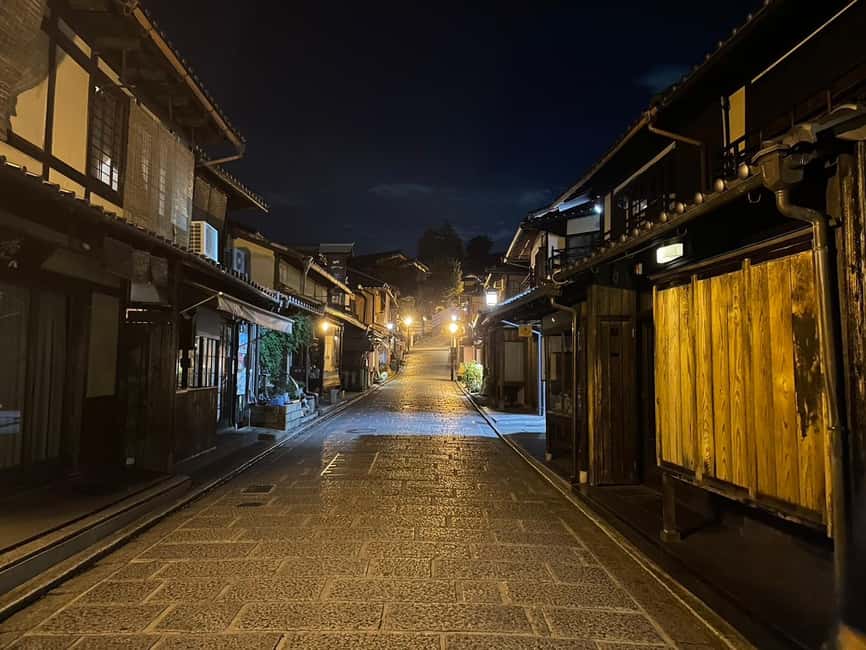
Ninenzaka is one of Kyoto’s best-known historic slopes. Wooden buildings, small storefronts, and carefully preserved facades line the route, creating the old-Kyoto scene many people hope to find.
At night, the lane can be especially photogenic. Warm light picks out the architecture, while fewer daytime crowds may give you more room to notice rooflines, shop fronts, and the slope itself. Several people valued the evening timing because it showed Gion from a quieter angle.
That said, fewer crowds does not mean empty streets. Ninenzaka is popular, and conditions can vary by evening. Your guide helps you move through the area efficiently, but you may not have much time to browse shops or stop for long photographs.
The 20-minute guided section gives you the essentials: why the street looks as it does, how it fits into Higashiyama, and which details deserve a second look. If you want souvenirs or sweets, plan to return during opening hours rather than trying to shop during the group walk.
Yasui-Konpiragu Shrine and the Power Stone
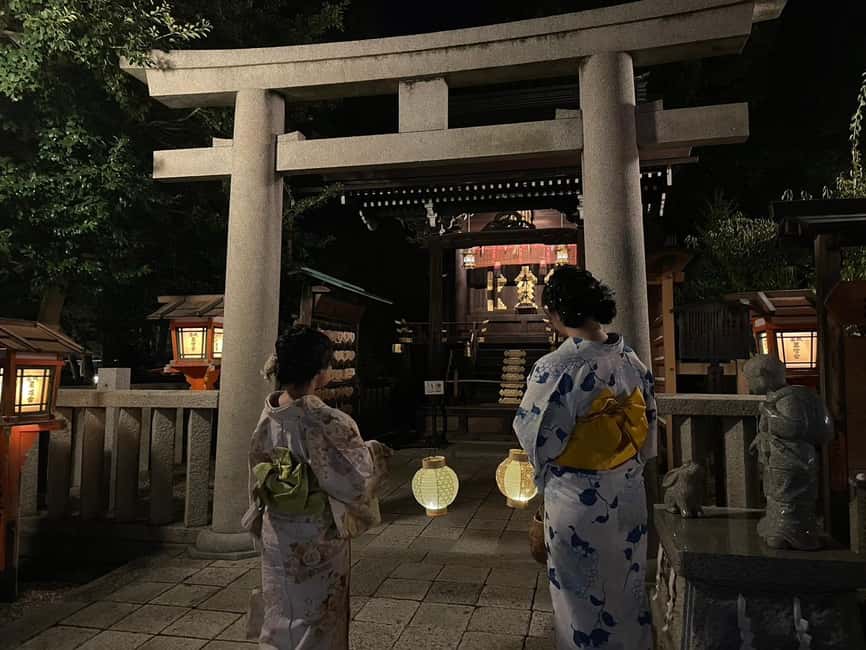
The route includes Yasui-Konpiragu Shrine, known for its symbolic Power Stone archway. Visitors crawl through the opening while praying to strengthen a good relationship or leave an unwanted tie behind.
It is an unusual ritual, and it gives the walk a personal moment after the larger scale of Yasaka Shrine and Ninenzaka. You are not just looking at an old building. You are seeing how a place of worship continues to serve everyday hopes, worries, and decisions.
The ritual may not suit everyone. Crawling through the archway can be awkward, and you may prefer to observe rather than take part. The tour gives you the cultural setting, but participation is your choice.
This stop also shows why the experience is more than a general Gion stroll. Without a guide, you could pass the shrine and never understand why people move through the stone opening. With a short explanation, it becomes one of the evening’s most memorable details.
Hanamikoji Street and the working world of geiko
Hanamikoji Street is the heart of Gion and one of the most important parts of the route. Preserved wooden teahouses line the street, and some still host Kyoto’s geiko.
The guide discusses the training, artistry, and daily work of geiko and maiko. This is the cultural center of the walk, and it is where your earlier stops begin to connect. Yasaka Shrine explains festival tradition. Nene no Michi and Ninenzaka show the historic setting. Hanamikoji reveals the refined performing-arts world that continues within it.
You should keep your expectations realistic. The tour does not include a geiko show, tea ceremony, or private teahouse visit. It offers an explanation of a private world from the public street, which is both more modest and more respectful.
I find that approach useful because it avoids reducing Kyoto’s geiko culture to costumes and photographs. You learn about discipline, training, and artistry, while also learning that access is limited and privacy matters.
The final portion of the route lasts about 30 minutes before returning to the Starbucks meeting point. The itinerary does not identify a separate named stop for this section, so think of it as additional time in the Gion area and a return walk rather than a guaranteed attraction.
What $20 gets you
At $20 per person, this is a strong-value introduction to Gion. You get two hours of walking, an English-speaking guide, historical explanation at Yasaka Shrine, cultural background throughout the route, and photos taken during the experience.
The price is especially fair if you are new to Kyoto. You could walk through these streets independently, but the signs may not explain much, and the most interesting details are often social or historical rather than architectural. A guide turns a pretty evening walk into a lesson in how the district functions.
The value is less obvious if you already know Gion well or plan to spend several nights exploring Higashiyama at your own pace. Independent exploration gives you more time for shopping, photography, and quiet pauses. This tour gives you structure, answers, and a set route.
Group size is not specified. Some departures have been small enough to feel almost private, including one reported experience for only two people. That is not guaranteed, but a small group can make it easier to ask questions, hear the guide, and receive help with photographs.
Practical advice for a smoother evening
Wear comfortable shoes with good grip. Nene no Michi and Ninenzaka are stone-paved, and the route is long enough that poor footwear will distract you.
Bring warm clothing in cool months. An evening in Kyoto can feel cold, especially when you stop outdoors to listen. December participants specifically needed warm layers.
Arrive at the Starbucks beside Kyoto Gion Hotel, not simply at Yasaka Shrine. The meeting point is near the shrine, but the official starting location is the coffee shop. Have the coordinates available if you are unsure of the exact entrance.
Keep your phone ready for the guide’s photos, but do not let photography dominate the walk. The best benefit is the explanation of places you might otherwise pass without noticing.
The tour is not suitable for wheelchair users. The stone lanes, slopes, and walking format also make it a poor choice if you need frequent seated breaks. The duration is two hours, and starting times vary, so check the available departure when you book.
Free cancellation is available up to 24 hours before the start for a full refund. You can also reserve and pay later, which is useful when your Kyoto schedule is still shifting.
Who will enjoy this Gion walk?
I would recommend it to first-time Kyoto visitors who want a clear introduction to Gion without paying for a formal performance. It suits couples, solo visitors, and small groups who enjoy asking questions and walking through historic streets.
Solo visitors may particularly appreciate the included photos. Getting a good picture of yourself in a narrow lane is hard without asking strangers, and the guide can help.
It also works well early in your Kyoto stay. Take the walk near the start of your visit, then return to Ninenzaka or Hanamikoji later with a better understanding of what you are seeing. The guide’s restaurant suggestions may also help you plan dinner afterward.
I would be more cautious about booking if your main goal is guaranteed geiko contact, a show, or a tea ceremony. None of those is included. You should also skip it if uneven paving or a brisk two-hour walk would be uncomfortable.
Should you book it?
Book this tour if you want context for Gion’s streets, a friendly English-speaking guide, and a low-cost way to see several important places in one evening. The strongest guides, including Majo, Pedro, Wilber, Yuvia, Nay, and Bell, have been praised for clear explanations, warmth, good questions, and photo help.
Do not book it expecting an exclusive geisha encounter. The better reason to go is that you will understand Yasaka Shrine, Nene no Michi, Ninenzaka, Yasui-Konpiragu Shrine, and Hanamikoji Street as connected parts of Kyoto’s culture.
At $20, the risk is small. Wear warm clothes, bring sensible shoes, respect the people who work in Gion, and let the guide fill in the stories that the streets do not tell you.
FAQ
Where does the Gion night walking tour meet?
The meeting point is in front of Starbucks located next to Kyoto Gion Hotel. It is within walking distance of the Western Tower Gate entrance to Yasaka Shrine. The coordinates are 35.0036732, 135.7760837.
How long does the tour last?
The walking tour lasts two hours. Starting times vary, so you should check availability for your chosen date.
What language is the tour conducted in?
The tour is conducted in English by a live English-speaking guide.
Is a geiko or maiko sighting guaranteed?
No. The route passes Hanamikoji Street and explains geiko and maiko culture, but an actual sighting is not guaranteed.
Is the tour suitable for wheelchair users?
No. The activity is listed as unsuitable for wheelchair users. The traditional stone paths and slopes also require comfortable walking shoes.
What is included in the price?
The $20 price includes the English-speaking guide, historical insights into Yasaka Shrine, and photos taken during the tour.
More Evenings Out in Kyoto
- Kyoto Night Foodie Tour in Gion (9+ dishes + 6 Sake tastings)
★ 5.0 · 1,762 reviews - Kyoto Gion Night Walk & Geisha District Guided Tour
★ 5.0 · 786 reviews - Kyoto Ghost Tour: Dark Tales, Urban Legends, Bamboo Forest Night
★ 5.0 · 625 reviews - Kyoto Bar Hopping Night Tour
★ 5.0 · 613 reviews
Just added around Kyoto
- Kyoto: Zen Meditation at a Private Temple with a Monk★ 5.0 · 25 reviews
- Kyoto: Gion Geisha District & Sake-in-Hand Walking Tour★ 5.0 · 37 reviews
- Private Pewter Sake Cup Experience with a Kyoto Artisan★ 5.0 · 31 reviews
- Your Private Vacation Photography Session In Kyoto★ 5.0 · 110 reviews
- Private Guided Traditional Buddhist Cooking in Japan★ 5.0 · 16 reviews
- Kyoto Wagashi(Japanese sweets) Cooking Class near Fushimiinari★ 5.0 · 60 reviews
- Traditional Japanese Music show & Experience Tour in Kyoto★ 5.0 · 57 reviews
- Kyoto:Family-Friendly Kimono & Yukata Experience at WARGO★ 5.0 · 147 reviews
Kyoto Tours, compared.


Fushimi Inari, Kinkakuji, Bamboo Grove 1 Day Bus Tour
Read our review →
Tea Ceremony in a Traditional Tea House in Kiyomizu
Read our review →
Kyoto Geisha Walking Tour: Gion District & Hidden Gems
Read our review →

Gion Magical Night Walking Tour with Geisha Trivia
Read our review →

Gion Geisha District Walking Tour – Stories of Geisha
Read our review →Browse the lists this tour appears in