
Reviewed · KYOTO TOURS
Kyoto: Small-Group Authentic Sushi Making Workshop
Kyoto’s original small-group sushi workshop turns lunch into a practical cultural lesson. In a restored townhouse near Kiyomizu-Gojō Station, you season rice, shape nigiri, roll maki, and sit down to eat what you made. Kana’s calm teaching and excellent English keep the class friendly and easy to follow.
I especially like the eight-person limit, which leaves room for hands-on help instead of a crowded demonstration. I also like the fresh fish, local ingredients, and useful gift bag, including a rolling mat, chopsticks, and recipe card. The one drawback is clear: this class is not suitable for vegetarians or wheelchair users.
Key points for your Kyoto itinerary
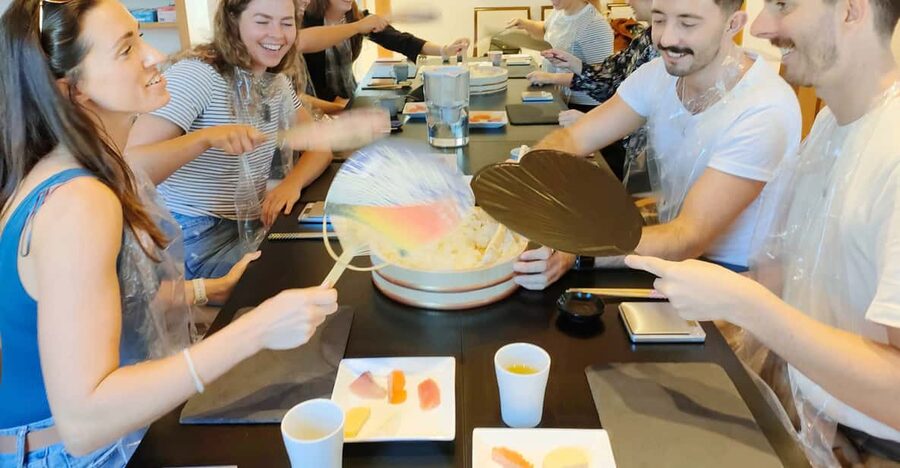
- Small English-speaking class: The workshop is limited to eight people, with personal help from Kana and her team.
- More than basic maki: You learn nigiri and maki, with some sessions also covering gunkan sushi.
- Fresh Kyoto ingredients: Fish is sourced locally, including from Nishiki Market, and the rice has even come from Kana’s family farm.
- A relaxed traditional setting: The class takes place in the restored Kyoto Wand building, a short walk from Kiyomizu-Gojō Station.
- A full lunch included: You eat the sushi you make, along with miso soup, soy sauce, wasabi, and ginger.
- A practical souvenir: The take-home bag gives you tools and a recipe card to try the lesson again at home.
A calm start inside Kyoto Wand
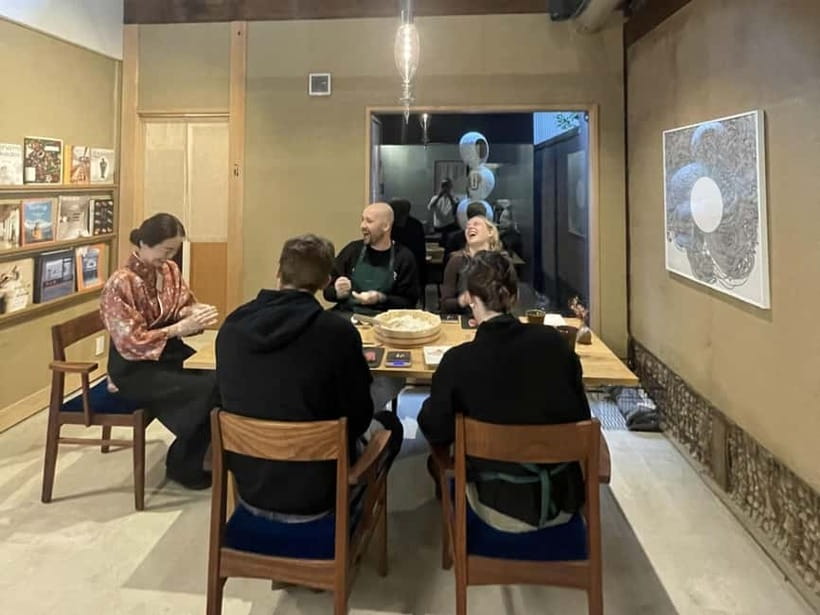
The workshop takes place in the Kyoto Wand building, a beautifully restored Kyoto townhouse a few minutes on foot from Kiyomizu-Gojō Station on the Keihan Main Line. This location matters. You are close to major sights such as Kiyomizu-dera and Gion, but the class itself offers a quiet break from shrine visits, shopping, and long walks.
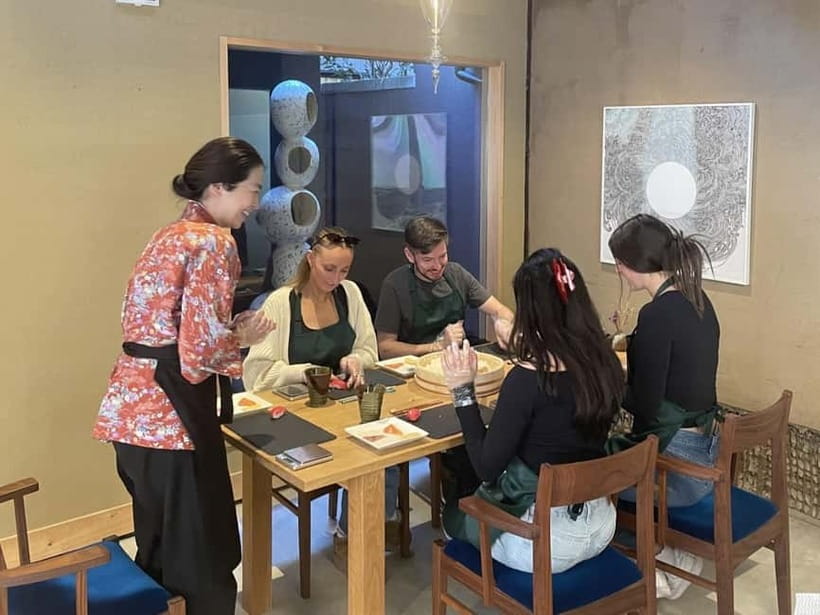
The setting helps shape the mood. Instead of learning in a large cooking school, you sit around a table in a traditional space where the class feels personal. The hosts greet you warmly, and the small format makes it easy to ask questions about sushi, Kyoto, or daily life in Japan.
Kana is the main instructor named most often by participants, and she is joined at times by hosts and assistants such as her husband Karim, Kenneth, Aya, or Ayumi. The exact team can vary, but the teaching style is consistent in the available descriptions: friendly, patient, and attentive.
You receive an apron and disposable gloves before the work begins. The gloves are practical when handling fish and rice, while the apron lets you focus on the lesson without worrying about making a mess. The English instruction is clear, which is important because sushi preparation depends on small movements and careful pressure.
More sushi classes in Kyoto:
- Sushi Making in Kyoto! Same-day bookings welcome!
★ 5.0 · 713 reviews - The Original Small-Group Sushi Making Class in Kyoto
★ 5.0 · 436 reviews - Kyoto: Sushi Making Class with Sushi Chef
★ 4.8 · 64 reviews
Preparing sushi rice the right way
The class begins with the foundation of sushi: properly seasoned rice. This is a useful part of the lesson because sushi is not simply raw fish placed on ordinary rice. The texture, temperature, seasoning, and handling all affect the final result.
You learn how to season the cooked rice and prepare it for shaping. The instruction is designed for beginners, so you are shown each step rather than expected to know Japanese cooking terms or professional methods in advance.
The rice has a strong local connection. One family group was told that the rice came from Kana’s family, which adds a personal touch to an ingredient that can otherwise seem anonymous. You also gain a better sense of why rice quality matters so much in Japanese cooking.
The class moves at an unhurried pace. You can watch a demonstration, try the technique yourself, and receive corrections as you work. That is much more useful than simply watching a chef make perfect sushi while you stand at a distance.
Shaping nigiri with fresh fish
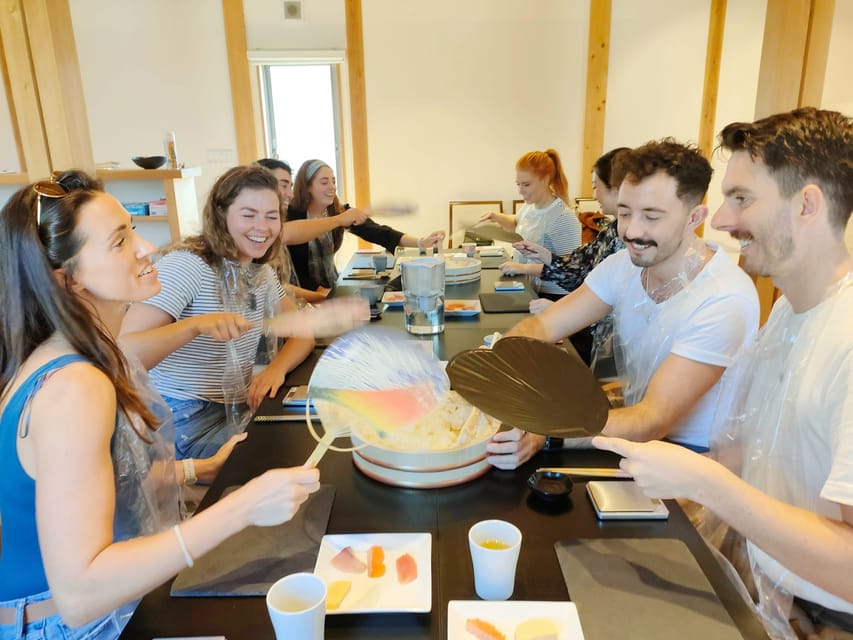
Nigiri is the part of the class that most clearly shows the value of direct instruction. You form a small portion of rice, apply the right amount of pressure, and place fish on top without crushing either ingredient.
The fish selection can include salmon, tuna, squid, yellowtail, and egg omelette. Depending on the session, you might also prepare gunkan sushi with fillings such as corn or tuna salad. These examples show that the lesson is not limited to one familiar supermarket-style roll.
Freshness is one of the strongest features of the meal. The fish is described as coming from local Kyoto sources, including Nishiki Market, and the quality is repeatedly praised in the supplied material. That gives you a better introduction to raw fish than a class built around low-cost, prepackaged ingredients.
If you are nervous about raw seafood, the class may help you feel more at ease, but you should still consider your own dietary needs before booking. Fish is central to the workshop, and the activity is specifically listed as unsuitable for vegetarians.
You do not cut the fish yourself. The pieces are prepared in advance, which keeps the 90-minute session focused on rice preparation and sushi shaping. If your goal is to learn fish butchery, this is not the right class. If your goal is to learn how to assemble attractive sushi at home, the format makes sense.
Rolling maki and trying gunkan sushi
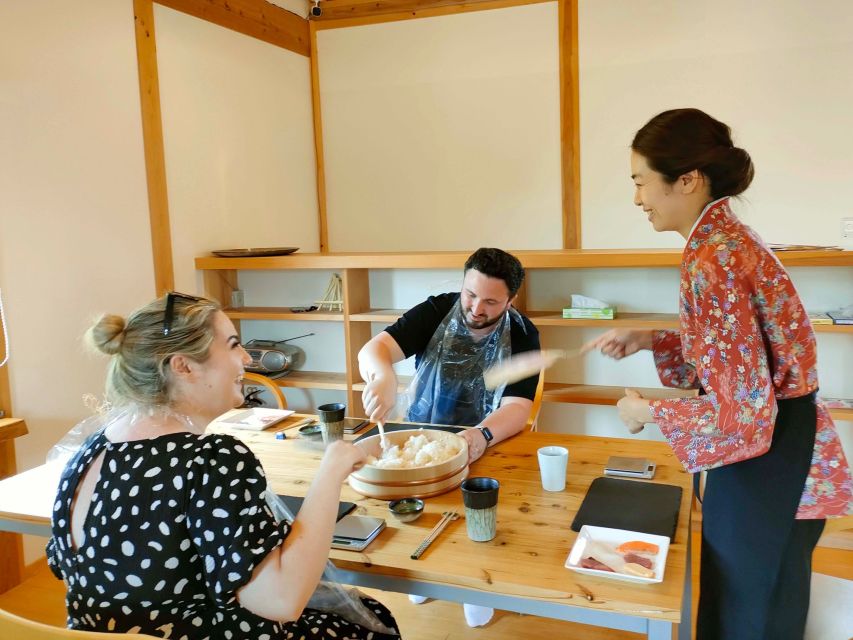
The maki section gives you a different skill to practice. You spread rice across a sheet of nori, add the filling, and use the bamboo mat to form a neat roll. This is where the included rolling mat becomes more than a souvenir. You can use the same basic tool after returning home.
Maki is often the easiest sushi style for beginners to recognize, but getting a firm, even roll still takes practice. The teachers guide your hand position and show you how much rice to use. Too much filling or rice can make the roll difficult to close, so the demonstration has practical value.
Some sessions include gunkan sushi, a small hand-formed piece wrapped with nori and topped with a softer filling. Learning several styles in one class keeps the lesson interesting and gives you more options for recreating the meal later.
The recipes and techniques are simple enough to remember, but you should not expect professional sushi-chef training in 90 minutes. This is an introductory home-cooking class. You leave with useful fundamentals, not certification or advanced knife skills.
More hands-on workshops in Kyoto:
- Kyoto: 45-Minute Tea Ceremony Lesson Experience
★ 4.3 · 2,378 reviews - Ramen Cooking Class at Ramen Factory in Kyoto
★ 5.0 · 1,937 reviews - Kyoto : Chopsticks Making Workshop in Gion with Engraving Option
★ 5.0 · 958 reviews - Kyoto: Samurai Sword Class by Experts in Traditional Arts
★ 4.9 · 657 reviews
Eating the lunch you made yourself
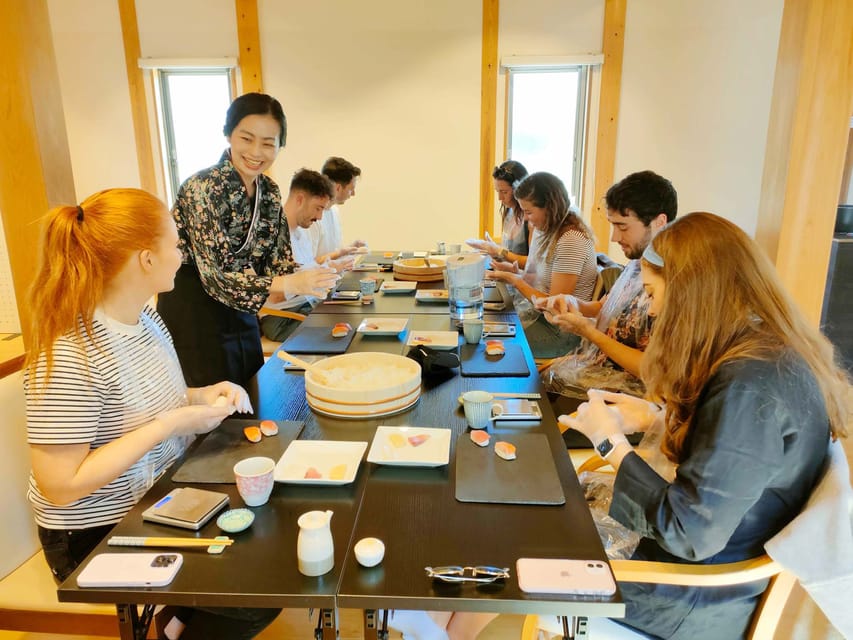
After the preparation, you sit down and eat your sushi with miso soup. Soy sauce, wasabi, and ginger are also available with the meal. The best part is the direct reward for your work: you are not making sample pieces for someone else to serve. Your lunch is the sushi you shaped at the table.
The portions sound generous. Several participants describe making more sushi than expected, and one family of two ate 32 pieces between them. Plan to arrive hungry, especially if you have a full day of sightseeing afterward.
Eating in the same peaceful townhouse keeps the class from feeling like a quick demonstration followed by a rushed exit. It also lets you compare your pieces with those made by other people in the group. That shared table setting is a good fit for families, couples, and solo visitors who enjoy meeting people during a trip.
The class is suitable for curious beginners and enthusiastic food fans. It has also worked well for families with children and grandparents attending together. A 10-year-old joined one session with a parent, and a seven-person family spanning several generations enjoyed the hands-on format.
Conversation, culture, and the personal touch
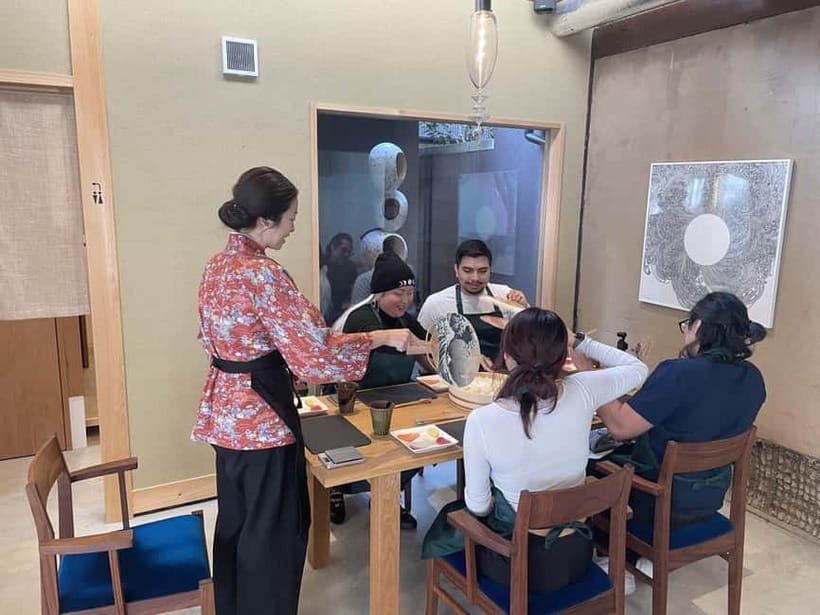
The food is the main attraction, but the conversation adds a second layer. Kana has shared stories about growing up in Osaka, moving to Kyoto, Japanese history, local culture, and places to eat or visit. You can ask questions while working, so the cultural discussion feels connected to the meal rather than added as a formal lecture.
This is especially useful if you want more than a recipe. You might learn why rice is handled in a certain way, hear about local food traditions, or get practical ideas for the rest of your Kyoto stay. The hosts are also happy to discuss Japan more broadly.
The atmosphere appears to be one of the workshop’s most consistent strengths. The class can feel almost like lunch in a friend’s home, while still offering clear instruction and clean, organized work areas. On quieter dates, the group may be only two or three people, giving you even more individual attention.
The small-group promise is important here. With a maximum of eight participants, you are not lost at the back of a room. You can ask for another demonstration, show the instructor your technique, and take your time before moving to the next step.
What the $60 price includes
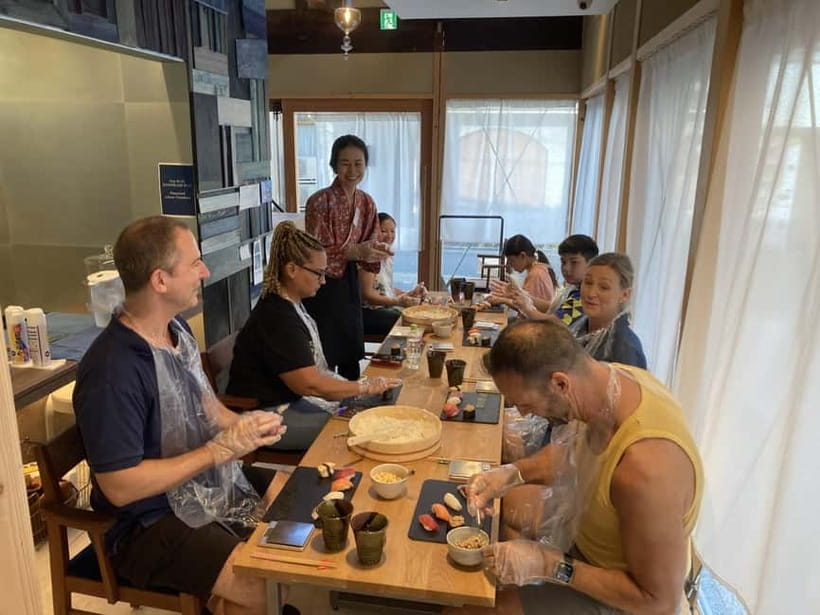
At $60 per person, the workshop is priced above a simple meal but below many lengthy food tours or private cooking lessons. The value depends on what you want from it.
You receive 90 minutes of instruction, the sushi you prepare for lunch, miso soup, apron and glove use, English-speaking guidance, and the gift bag. The bag includes a sushi rolling mat, chopsticks, and a recipe card, so part of the fee continues to pay off after your holiday.
The ingredients also matter. Fresh fish and carefully selected local products cost more than basic classroom substitutes. You are paying for food, teaching, a traditional setting, and the chance to practice rather than just observe.
I would call the price fair for a visitor who wants a focused food activity with lunch included. It is less compelling if you only want to eat sushi, since Kyoto has many restaurants for that. The value comes from learning the process and taking the skills home.
Hotel pickup and drop-off are not included. The venue is centrally located and within walking distance of Gion and Kiyomizu-dera, with Kiyomizu-Gojō Station nearby, so you should plan to make your own way there and combine the class with sightseeing.
Who should book this sushi class
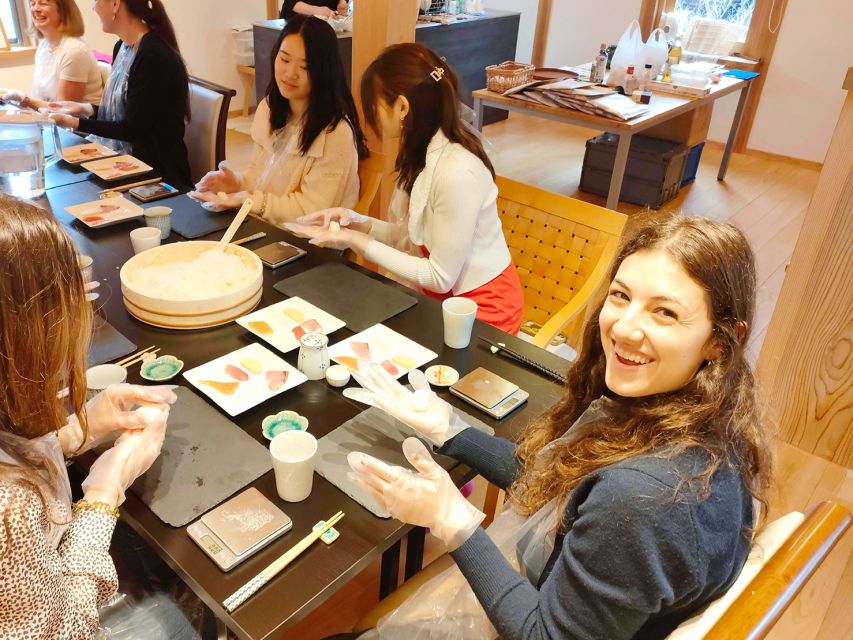
I would choose this workshop if you want a hands-on Kyoto activity that does not consume half a day. Ninety minutes is long enough to learn several techniques, eat a filling lunch, and still leave time for temples, shopping, or an evening meal.
It is a strong choice for families because everyone has a job at the table. Children can take part in shaping and rolling with adult help, while older family members can enjoy the food and conversation without needing to keep up with a walking tour.
Couples and solo visitors also fit the format well. The intimate group gives you a chance to talk with other people, and the instructors make an effort to include each person. If you are traveling alone, this is an easy way to share a meal without committing to a long group excursion.
You should think twice if you dislike raw fish, need wheelchair access, or follow a vegetarian diet. Dietary restrictions should be provided when booking, but the activity is explicitly not suitable for vegetarians, and wheelchair users cannot take part.
Practical planning for your visit
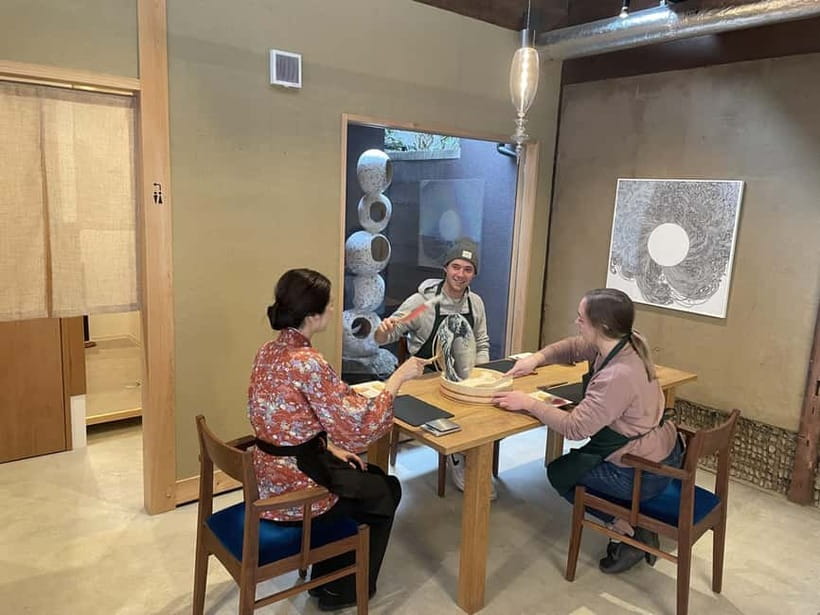
Check the available start times before building the rest of your day around the class. The location is near Kiyomizu-Gojō Station and within walking distance of major Kyoto districts, but Kyoto sightseeing can take longer than expected, especially around Kiyomizu-dera and Gion.
Use the Google Plus Code XQVC+J7 Kyoto if you have trouble locating the Kyoto Wand building. Allow enough time to arrive calmly. The class works best when you are ready to listen, handle food, and ask questions from the start.
The activity offers free cancellation up to 24 hours before the scheduled time, with a full refund. You can also reserve now and pay later, which helps if your Kyoto plans are still changing.
Should you book the Atelier SUSHI workshop?
Book it if you want to learn a real skill, eat a generous lunch, and spend time with warm English-speaking hosts in a traditional Kyoto setting. The combination of fresh local fish, small-group teaching, cultural conversation, and a useful take-home kit gives the $60 price solid value.
Skip it if you want advanced fish preparation, a long culinary course, or a vegetarian menu. For most beginners, families, and food-focused visitors, this is a smart 90-minute pause in a busy Kyoto itinerary, with enough substance to remember after the last piece of sushi is gone.
FAQ
How long does the Kyoto sushi-making workshop last?
The workshop lasts 90 minutes. You learn to prepare sushi and then eat the sushi you made with miso soup.
Where does the sushi class take place?
The class takes place in the Kyoto Wand building, a restored Kyoto townhouse near Kiyomizu-Gojō Station on the Keihan Main Line. It is also within walking distance of Gion and Kiyomizu-dera.
Is the class taught in English?
Yes. The workshop includes an English-speaking host and English instruction.
What types of sushi will I learn to make?
You will learn to prepare nigiri and maki rolls. Some sessions also include gunkan sushi, with examples such as salmon, tuna, squid, yellowtail, egg omelette, corn, and tuna salad.
Is lunch included?
Yes. You eat the sushi you make yourself, and miso soup is included. Soy sauce, wasabi, and ginger are also used with the meal.
Is the workshop suitable for vegetarians or wheelchair users?
No. The activity is listed as unsuitable for vegetarians and wheelchair users. You should advise the provider of any dietary restrictions when booking.
Just added around Kyoto
- Kyoto: Zen Meditation at a Private Temple with a Monk★ 5.0 · 25 reviews
- Kyoto: Gion Geisha District & Sake-in-Hand Walking Tour★ 5.0 · 37 reviews
- Private Pewter Sake Cup Experience with a Kyoto Artisan★ 5.0 · 31 reviews
- Your Private Vacation Photography Session In Kyoto★ 5.0 · 110 reviews
- Private Guided Traditional Buddhist Cooking in Japan★ 5.0 · 16 reviews
- Kyoto Wagashi(Japanese sweets) Cooking Class near Fushimiinari★ 5.0 · 60 reviews
- Traditional Japanese Music show & Experience Tour in Kyoto★ 5.0 · 57 reviews
- Kyoto:Family-Friendly Kimono & Yukata Experience at WARGO★ 5.0 · 147 reviews
Kyoto Tours, compared.


Fushimi Inari, Kinkakuji, Bamboo Grove 1 Day Bus Tour
Read our review →
Tea Ceremony in a Traditional Tea House in Kiyomizu
Read our review →
Kyoto Geisha Walking Tour: Gion District & Hidden Gems
Read our review →

Gion Magical Night Walking Tour with Geisha Trivia
Read our review →

Gion Geisha District Walking Tour – Stories of Geisha
Read our review →Browse the lists this tour appears in