
Reviewed · KYOTO TOURS
Kyoto: Historic Higashiyama Walking Tour
The red torii gates at Fushimi Inari Taisha are the grand opening act here, but the real strength of this tour is the way it links several Kyoto icons into one walk. You move from Shinto worship to Gion’s traditional entertainment streets, then into the temples and lanes of Higashiyama.
I like the efficient route and the small group limit of 10. I also like that Kodaiji and Kiyomizu-dera admissions are covered, while the short train ride from Fushimi Inari to Gion saves your legs for the hills ahead. The tradeoff is simple: four hours of steps, slopes, and busy sightseeing streets is not a good fit if you have mobility limits or dislike walking.
Key points at a glance
- Begin beneath thousands of vermilion gates: Spend about an hour at Fushimi Inari and see the famous Senbon Torii.
- Use the train where it helps: The ride from Fushimi Inari to Gion breaks up the route and is included in the price.
- See Gion as a living district: Your guide explains its connection to geisha culture and its role in Kyoto’s evening entertainment.
- Find calm at Kodaiji: The temple’s gardens and bamboo grove offer a quieter counterpoint to the famous streets.
- Walk the Sannenzaka approach: Shops, snacks, souvenirs, steps, and old wooden streets lead toward Kiyomizu-dera.
- Finish with Kyoto from above: Kiyomizu-dera includes admission and gives you a fine view over the city.
A smart four-hour route through eastern Kyoto
Higashiyama means East Mountain. That name tells you what to expect: the route follows the foothills along Kyoto’s eastern edge, where shrines, temples, old lanes, and entertainment districts sit close together.
This is not a leisurely wander with long pauses. The tour covers a lot in four hours. Your guide keeps the route moving, explains what you are seeing, and handles the transition between distant points. That makes it useful early in a Kyoto stay, when you want a clear sense of how the city’s major sights fit together.
The group is limited to 10 people, and it may be smaller. One booking was guided privately for just two people, which allowed plenty of room for questions and adjustments. The small size matters in narrow lanes and crowded temple approaches. You are less likely to lose sight of the guide, and the guide can respond to your pace more easily.
The activity costs $106 per person. That is not a bargain walking tour, but the price includes entry to Kodaiji and Kiyomizu-dera, plus the train ticket to Gion. You are also paying for four hours of guiding across several major areas rather than a single-site introduction. Food, drinks, and personal purchases are extra.
More history-led days in Kyoto:
- Kyoto Gion: 2-Hour Geisha Culture & History Walking Tour
★ 5.0 · 1,186 reviews - Kyoto Gion Historical Walking Tour
★ 5.0 · 188 reviews - Historical Kyoto E-Bike Tour
★ 5.0 · 181 reviews
Meeting at JR Inari Station
The tour begins just outside the fare gates at JR Inari Station. That is a practical starting point because Fushimi Inari is right by the station, so you do not spend your first sightseeing minutes walking across town.
Check your route carefully before leaving your hotel. Depending on where you are staying, the Keihan line may be convenient, followed by a short walk to the JR station. The meeting point is outside the gates, not at a distant landmark inside the shrine complex.
Arrive ready to walk. Large bags and luggage are not allowed on the activity, and comfortable shoes are essential. You will encounter uphill walking, temple steps, and uneven streets, though the route is described as moderately demanding rather than exceptionally steep.
Fushimi Inari and the Senbon Torii
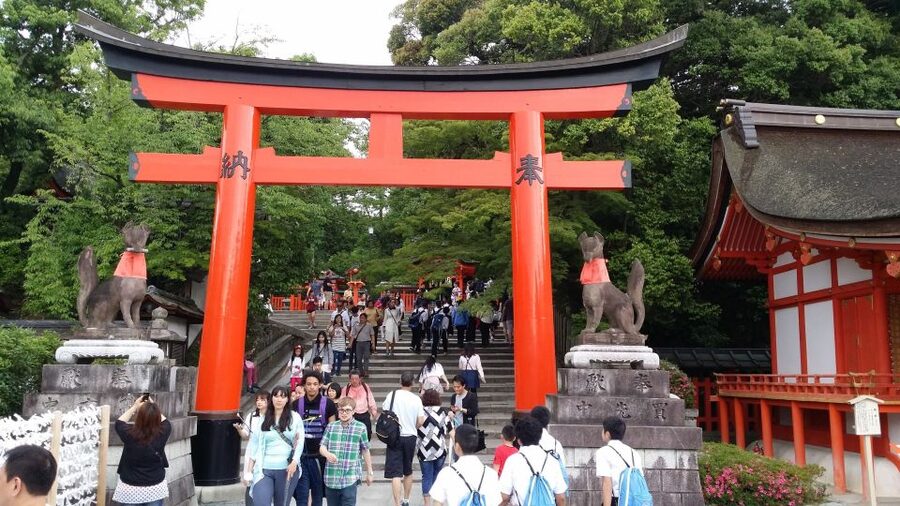
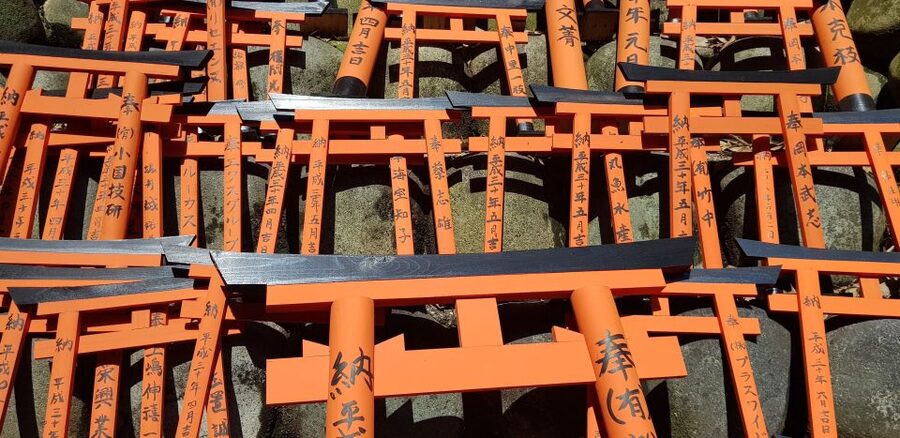
Fushimi Inari Taisha is devoted to Inari, a Shinto deity associated with rice, prosperity, and business. The shrine is best known for its long tunnel of orange-red torii gates, donated over many years by individuals and companies.
The first gates create the classic Kyoto photograph, but your guide can give the scene more meaning than a quick camera stop. You will hear about Shinto customs and the role of the shrine, then walk through the Senbon Torii, the famous thousand-gate passage that climbs the mountain.
The scheduled guided visit lasts about an hour. That is enough time to see the main shrine area and enter the torii-lined path without trying to cover every corner of the mountain. Fushimi Inari extends well beyond the most photographed section, so the tour gives you a strong introduction rather than a full mountain hike.
Expect crowds near the lower gates, especially around the popular photo spots. The farther you go, the atmosphere can become quieter, but the path also becomes more demanding. Your guide can help you focus on the most worthwhile section within the time available.
This opening stop is especially useful if you are new to Japanese religious sites. Shrines and Buddhist temples can look similar at first, yet their customs and symbols differ. A good guide helps you notice those differences before the rest of the day.
Guides named in the feedback include Damien, Ferdinand, Lito, and Hugo. Damien was praised for explaining Japanese customs and history, while Lito engaged children with stories about temple rituals, luck, and making wishes. Those details matter here because Fushimi Inari is much more interesting when you understand what people are doing, not just where to stand for a photo.
The train to Gion and a change of mood
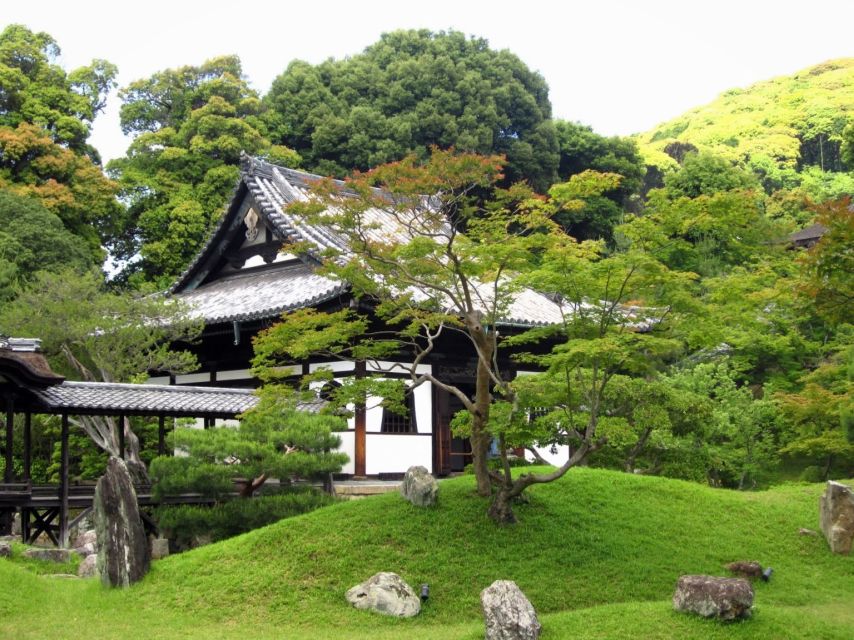
After Fushimi Inari, you take a short train ride to Gion. The ticket is included, which is a small but useful benefit. More important, the train prevents the route from becoming one long walk along ordinary city streets.
Gion has a different feel from Fushimi Inari. Here, your guide discusses Kyoto’s geisha culture, traditional entertainment, and the district’s continuing role in modern life. The guided portion lasts about 30 minutes, so do not expect a long, detailed tour of every lane.
Gion is often reduced to a hunt for a glimpse of geisha, but that misses much of the point. It is a working district with restaurants, entertainment venues, traditional architecture, and evening activity. Your guide can help you look beyond the postcard image and understand why the area remains important.
Treat the streets with respect. This is not a theme park, and the people working in the district are not there for photographs. A short introduction with a guide is a sensible way to learn the basics without turning the visit into a spectacle.
More walking tours in Kyoto:
- Kyoto Geisha Walking Tour: Gion District & Hidden Gems
★ 4.7 · 3,273 reviews - Kyoto: Gion Magical Night Walking Tour with Geisha Trivia
★ 4.9 · 2,393 reviews - Kyoto: Gion Geisha District Walking Tour – Stories of Geisha
★ 4.7 · 2,187 reviews - Night Walk in Gion: Kyoto’s Geisha District
★ 4.5 · 2,003 reviews
Kodaiji’s gardens and bamboo grove
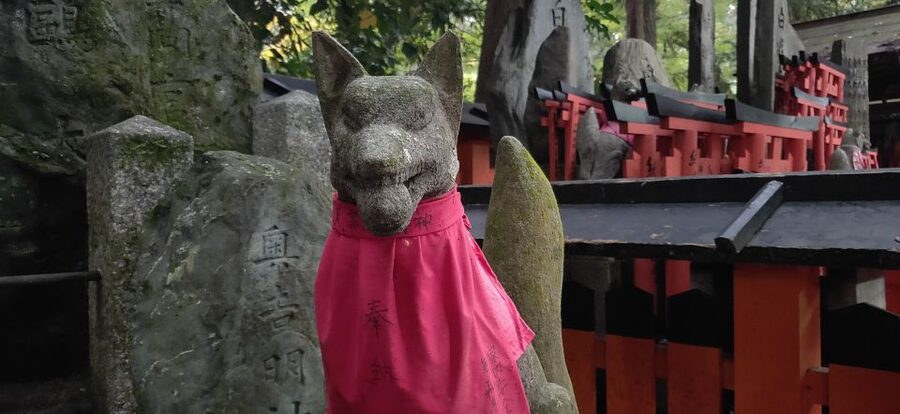
The route then moves into Higashiyama and Kodaiji Temple. Admission is included, and the guided visit lasts about 40 minutes.
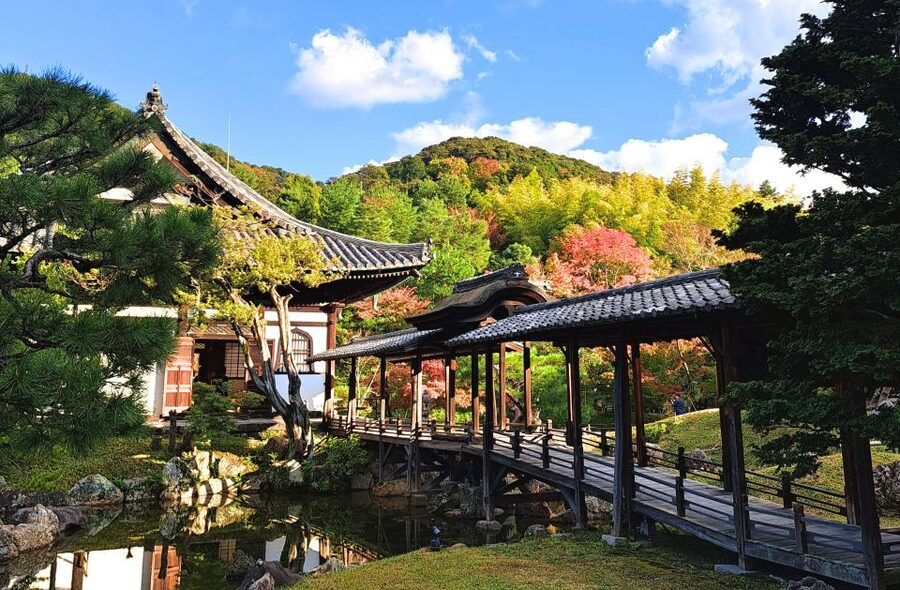
Kodaiji dates from the early 17th century and is known for its temple buildings, gardens, and bamboo grove. The setting offers a welcome pause after Fushimi Inari and Gion. Instead of a dense line of gates or a busy entertainment street, you get carefully arranged garden spaces and a more reflective atmosphere.
This is one of the tour’s best balance points. Fushimi Inari gives you scale and movement. Gion gives you urban culture. Kodaiji gives you quiet.
The bamboo grove is not the huge Arashiyama grove, and you should not expect an entire morning here. Still, the smaller setting fits well into this walking route. The garden and temple complex give you a chance to slow down, listen, and ask questions.
The guide’s role is useful inside a temple. Without context, you may simply notice roofs, gardens, and statues. With an explanation of Buddhist practice, temple design, and local traditions, the visit becomes easier to read. Damien was described as combining enthusiasm for Japan with strong knowledge of history and customs, while Ferdinand was praised for answering questions about Kyoto, temples, religion, and Japan more broadly.
Sannenzaka, snacks, and the walk uphill
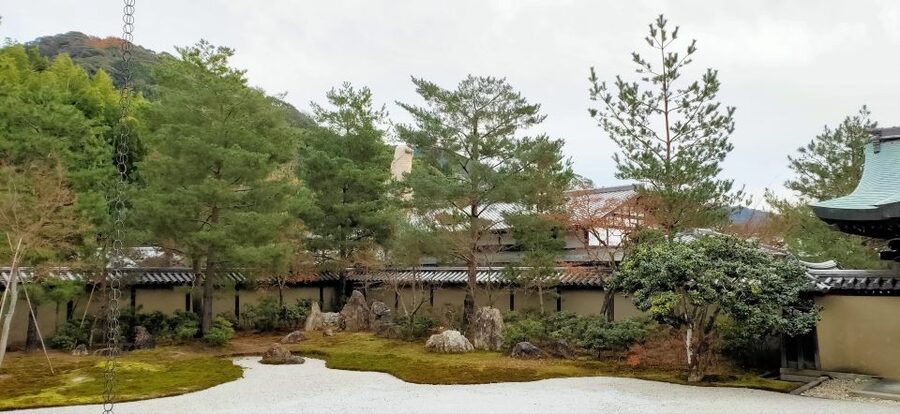
From Kodaiji, you continue through Higashiyama’s backstreets toward Sannenzaka. This is where the tour becomes part sightseeing route and part practical orientation.
Sannenzaka is lined with traditional-style buildings, snack shops, tea-related goods, souvenirs, and small stores. You can browse as you walk, but the schedule does not leave much time for serious shopping. If you see something you truly want, ask your guide about the time available rather than assuming you can return later.
The approach to Kiyomizu-dera includes steps and uphill sections. The climb is manageable for many people, but heat and humidity can change the experience quickly. One guide adjusted the pace and route when a participant became tired in hot weather, which points to an important advantage of a small group: the day does not have to run at exactly one rigid speed.
Bring water and wear shoes with good support. Food and drinks are not included, but the Sannenzaka area gives you opportunities to buy snacks. Keep your bag light, since large bags are not permitted and the route is easier with free hands.
The old lanes are part of the appeal, but they can also be crowded. A guide who knows side streets may help you avoid the worst congestion. Lito was specifically praised for leading the group toward less obvious shrines and helping it find good photo spots away from the main crush.
Kiyomizu-dera and the Otowa Waterfall
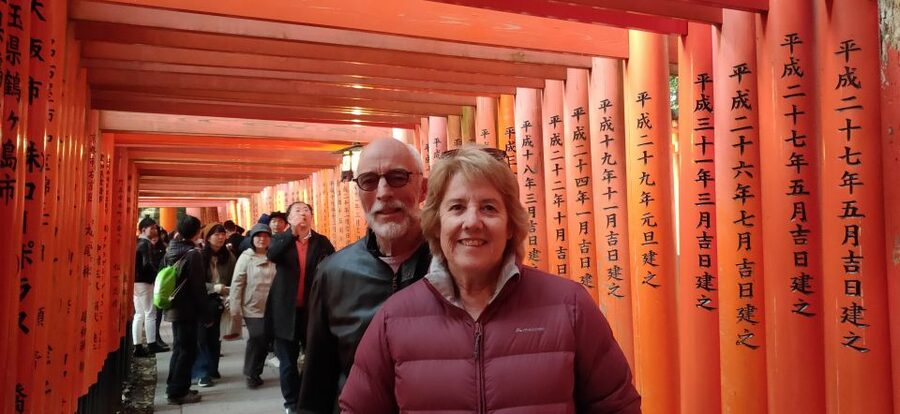
The final major stop is Kiyomizu-dera, one of Kyoto’s best-known temples. Admission is included, and the guided portion lasts about 30 minutes.
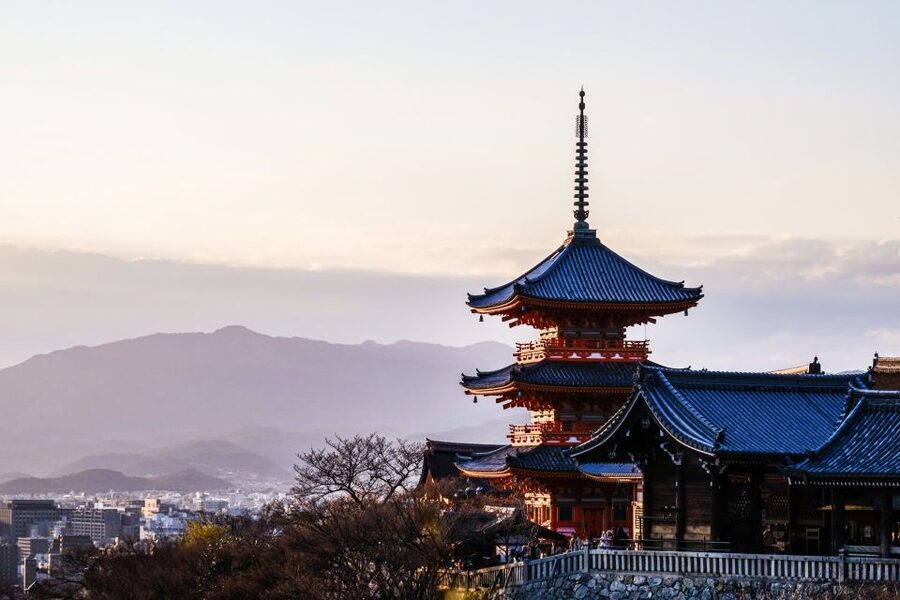
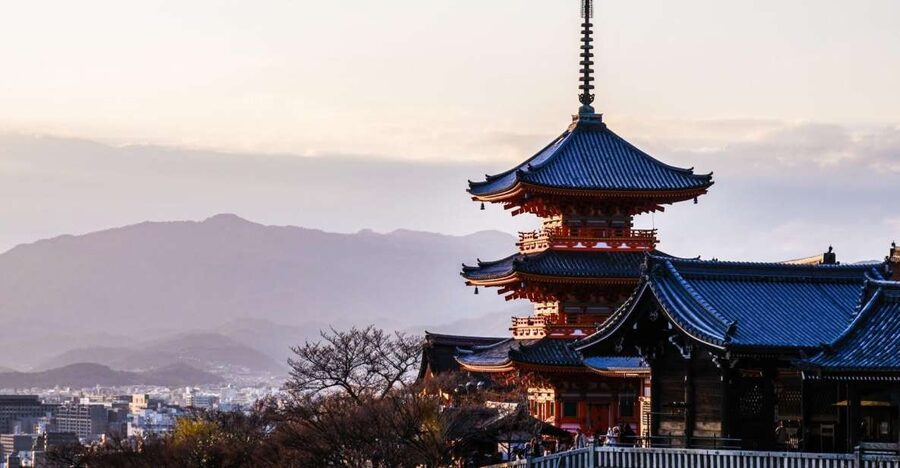
The temple is famous for its large wooden stage and its position above the surrounding city. From the grounds, you get a broad view toward Kyoto, making this a strong finish to a route that began at the mountain gates of Fushimi Inari.
Kiyomizu-dera is also linked with the Otowa Waterfall, where water flows into three streams. The traditional belief assigns different benefits to the streams, such as health, wealth, and happiness. The warning is part of the fun: choosing all three is considered greedy, and none of the wishes will come true.
Your guide can explain the ritual before you try it, which keeps the moment from becoming just another queue. As with many popular temples, the site can be crowded and the approach is full of shops. The tour gets you inside and oriented, but you may want extra time afterward to explore the temple grounds and nearby lanes on your own.
That freedom is built into the ending. Once the guided visit finishes, you can remain in the Kiyomizu area rather than returning to the starting point with the group. This is valuable because Kiyomizu-dera and Higashiyama deserve more than a hurried exit. You can continue sightseeing, shop, eat, or make your own way back.
What the guides add
The guide is the main reason to choose this experience instead of simply following a map. Several guide names appear in the supplied feedback, including Hugo, Damien, Ferdinand, and Lito, and the activity is offered in English, French, Spanish, and Hebrew.
The strongest praise centers on explanations of Japanese history, religion, customs, and everyday culture. That mix is more useful than a string of dates. At Fushimi Inari, it helps you understand Shinto. At Kodaiji and Kiyomizu-dera, it gives Buddhist spaces a clearer frame. In Gion, it prevents the district from being treated as a collection of pretty streets.
Guides also provide practical help. Lito shared food suggestions and other useful Kyoto information. Hugo adapted to changes in a group’s needs, and Damien adjusted the pace during hot and humid conditions. Those are small actions, but they can make a long walk much easier.
The tour is not designed as a private custom itinerary. Still, a maximum of 10 people gives you a better chance to ask questions and receive help than a large coach group. If you have special needs, note that the activity is not suitable for people with mobility impairments.
Who should book this walk?
I would choose this tour if you have limited time in Kyoto and want to connect several major sights without planning the route yourself. It works particularly well as a first look at Higashiyama, because you see the religious sites, traditional streets, Gion, and city views in one morning or afternoon.
Families can also benefit from the storytelling. Lito’s approach kept children aged 11 and 18 engaged with stories about wishes, luck, and temple rituals. That sort of explanation can hold attention better than simply asking young people to admire another roof.
It is less suitable if your priority is slow photography, extensive shopping, or a long climb at Fushimi Inari. The four-hour schedule gives you an overview, not unlimited time at each place. You should also think twice if heat, hills, or many steps are a serious concern.
The $106 price makes the most sense for visitors who value a guide and want admissions and transport handled. If you are comfortable researching Shinto and Buddhist sites on your own, you can spend less independently. You will give up the route planning, local explanations, language support, and small-group flexibility.
Practical details before you go
The tour lasts four hours, with starting times based on availability. Free cancellation is allowed up to 24 hours before the activity for a full refund, and you can reserve now and pay later.
Bring comfortable shoes and keep your belongings compact. Large bags and luggage are not allowed. Plan for uphill walking, steps, warm weather, and crowded areas, even though the route is not described as exceptionally steep.
The activity ends at Kiyomizu-dera, not back at JR Inari Station. That is convenient if you want to keep exploring Higashiyama, but you should plan your next move from Kiyomizu rather than expecting a return transfer.
Should you book the Historic Higashiyama Walking Tour?
Book it if you want a well-organized introduction to eastern Kyoto, especially if this is your first visit or your schedule is tight. The route is strong, the included admissions and train ticket add useful value, and the small group gives the guide room to adjust the pace.
Skip it if you want to linger at one temple, avoid hills, or explore entirely on your own. For most active visitors, though, this is an efficient way to see Fushimi Inari, Gion, Kodaiji, Sannenzaka, and Kiyomizu-dera while learning what makes each place different.
FAQ
Where does the tour begin?
It begins just outside the fare gates of JR Inari Station.
Does the tour visit Fushimi Inari Taisha?
Yes. The tour includes a guided visit of about one hour, including the Senbon Torii area.
Is transportation included?
The train ticket from Fushimi Inari to Gion is included.
Are temple admission fees included?
Admission to Kodaiji Temple and Kiyomizu-dera is included.
Is food included?
No. Food and drinks are not included, though you can buy snacks along the Sannenzaka streets.
How large is the group?
The group is limited to 10 participants. It may be smaller, depending on bookings.
Which languages are available?
The tour is offered in French, Hebrew, Spanish, and English.
Is the tour suitable for people with mobility impairments?
No. The route includes uphill walking and steps and is not suitable for people with mobility impairments. Comfortable shoes are recommended.
Just added around Kyoto
- Kyoto: Zen Meditation at a Private Temple with a Monk★ 5.0 · 25 reviews
- Kyoto: Gion Geisha District & Sake-in-Hand Walking Tour★ 5.0 · 37 reviews
- Private Pewter Sake Cup Experience with a Kyoto Artisan★ 5.0 · 31 reviews
- Your Private Vacation Photography Session In Kyoto★ 5.0 · 110 reviews
- Private Guided Traditional Buddhist Cooking in Japan★ 5.0 · 16 reviews
- Kyoto Wagashi(Japanese sweets) Cooking Class near Fushimiinari★ 5.0 · 60 reviews
- Traditional Japanese Music show & Experience Tour in Kyoto★ 5.0 · 57 reviews
- Kyoto:Family-Friendly Kimono & Yukata Experience at WARGO★ 5.0 · 147 reviews
Kyoto Tours, compared.


Fushimi Inari, Kinkakuji, Bamboo Grove 1 Day Bus Tour
Read our review →
Tea Ceremony in a Traditional Tea House in Kiyomizu
Read our review →
Kyoto Geisha Walking Tour: Gion District & Hidden Gems
Read our review →

Gion Magical Night Walking Tour with Geisha Trivia
Read our review →

Gion Geisha District Walking Tour – Stories of Geisha
Read our review →Browse the lists this tour appears in