
Reviewed · KYOTO TOURS
A Unique Antique Kimono and Tea ceremony Experience in English
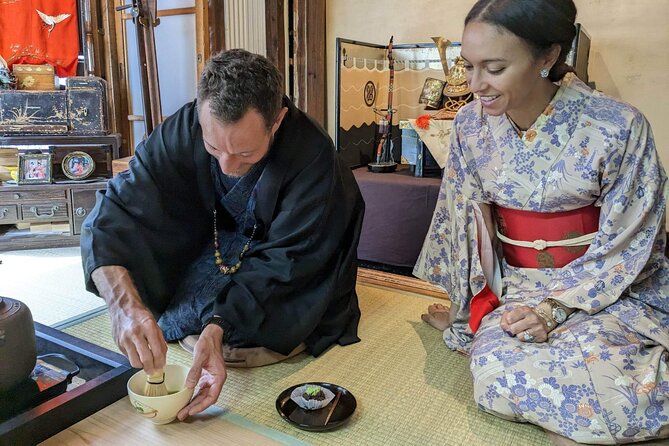
The rare treat here is wearing an 80-year-old-plus antique kimono while learning tea ceremony manners in a 100-year-old house near Katsura Imperial Villa. Toku Miyagawa, a kimono fitter with more than 20 years of tea ceremony experience, leads the session in clear English and explains the meaning behind each movement.
I like the small six-person limit, which keeps the lesson personal rather than turning it into a staged group show. I also like the family welcome, the help choosing an obi and accessories, and the calm residential setting far from central Kyoto’s crowds.
The main consideration is the setting. This is a traditional private home and kimono shop, not a grand temple with a garden. If you want a polished sightseeing backdrop, it may feel modest. If you want time with a family sharing its craft, the simplicity is part of the appeal.
Key points to know before booking
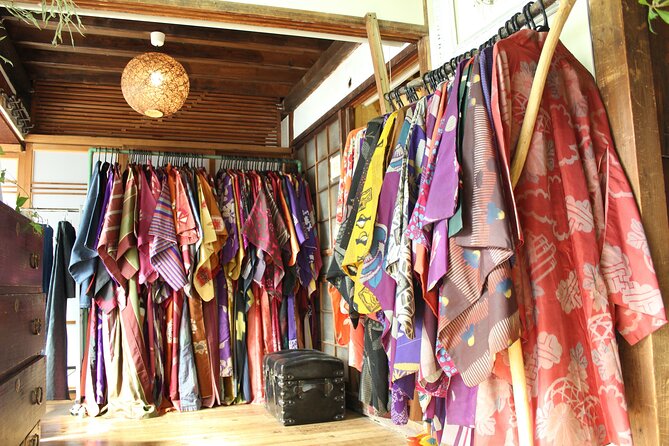
- Antique kimono included: Choose from a large collection of genuine older kimonos, with help selecting coordinating obi and accessories.
- Toku Miyagawa leads in English: He explains tea etiquette, matcha preparation, kimono fitting, and the connection between samurai culture and tea.
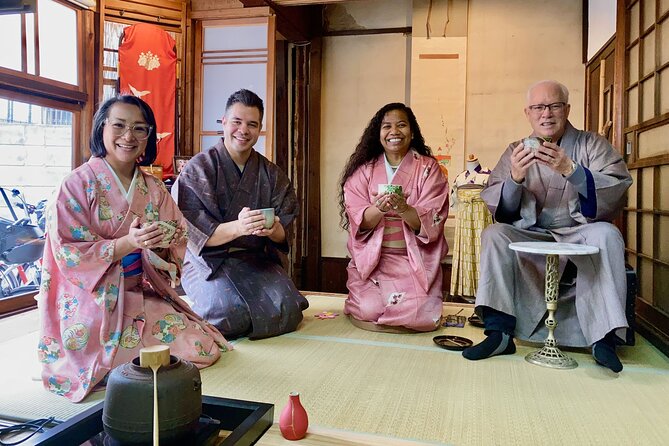
- Small group, maximum six: The limited size allows questions, photographs, and adjustments for individual needs.
- A quiet Kyoto setting: The session takes place at Miyagawa Tokusaburo Shoten, a 100-year-old house near Katsura Imperial Villa.
- About 90 minutes: The experience combines dressing, cultural explanation, tea preparation, sweets, and the ceremony itself.
- Good for families: Children have been welcomed, and the ceremony can be adapted for someone who cannot kneel comfortably.
A traditional Kyoto experience without the temple crowds
Kyoto offers many tea ceremonies, but they are not all alike. Some take place in busy shopping districts or formal cultural venues, with a steady stream of groups moving through. This one is held at Miyagawa Tokusaburo Shoten, a family-run shop and home in the Katsura area of western Kyoto.
That location changes the mood. You are not simply watching a demonstration before being sent on your way. You enter an old private house, meet the people who run it, and spend time learning how tea, clothing, manners, and hospitality fit together.
The activity is conducted in English, which matters here. Tea ceremony has many quiet gestures and rules that can be easy to miss. Toku explains what you are doing, why you are doing it, and how the customs developed. His background as a kimono fitter gives the clothing portion more substance than a simple costume rental.
You should also expect a slower pace. The ceremony is not designed as a rapid photo stop. It gives you room to look closely, ask questions, and take in the setting.
More Kimono Experiences in Kyoto
- Kimono Tea Ceremony at Kyoto Maikoya, NISHIKI
★ 5.0 · 911 reviews - Kyoto: Kimono Rental with Hairstyling and Accessories
★ 4.8 · 653 reviews - Kyoto: Kimono Tea Ceremony at Orizuruya Gion
★ 4.9 · 618 reviews
Choosing an antique kimono with Toku and his family
The session begins with the kimono selection. You can choose from a substantial collection of antique garments, and Toku helps match the kimono with an obi and accessories. This is one of the most personal parts of the experience because you are not handed a standard outfit selected in advance.
The word antique is important. These are not just modern rental costumes made to look traditional. The garments are described as more than 80 years old, and their age gives the clothing a sense of connection to earlier generations. You may see delicate fabric, older patterns, or details that are difficult to find in ordinary rental shops.
Toku’s skill as a fitter is a major benefit. A kimono is not clothing you simply pull on like a jacket. The layers, ties, and obi need to be arranged correctly, and the fit affects how comfortably you can sit and move.
The fitting can feel snug. That is normal for formal kimono dressing, but you should not expect the loose comfort of everyday clothes. Wear something sensible underneath and avoid planning a large meal immediately before the activity. Lunch and dinner are not included, and the session itself includes tea and Japanese sweets rather than a full meal.
Some participants have also had help with hair and hair ornaments. The available information does not promise a full hairstyling service for every booking, so treat that as a possible extra touch rather than a guaranteed part of the program. Still, the family makes time for photographs, and the outfit is clearly meant to be enjoyed, not rushed through.
There is also room for personal taste. You might prefer a quiet, elegant pattern, while another person may want something bright and decorative. Toku and his family help you make the choice without turning it into a fashion test.
Inside the 100-year-old house near Katsura Imperial Villa
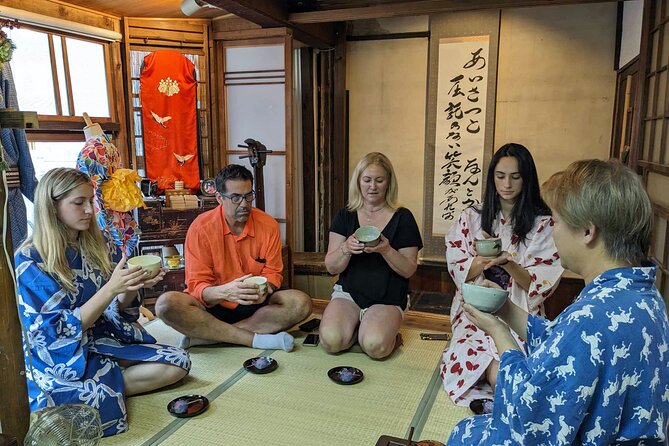
After dressing, you continue into the old house for the tea lesson. The building is part of the experience. It provides a domestic setting that feels different from a large public attraction, and the residential neighborhood keeps the atmosphere quiet.
This is both a strength and a possible weakness. I like the chance to see a traditional house used by a real family, rather than a venue designed only for tourists. You get a closer sense of everyday hospitality and family tradition.
On the other hand, the surroundings are not a postcard-perfect temple garden. One disappointed participant expected a more exotic setting and found the ordinary residential location less impressive than Kyoto’s famous tea venues. That is a fair warning. Book this for the people, the teaching, and the old house, not for sweeping views or elaborate grounds.
The location near Katsura Imperial Villa is useful if you are already visiting that part of Kyoto. It also places you away from the central crowds. The meeting point is 32-4 Katsuranozatocho, Nishikyo Ward, Kyoto, 615-8073, Japan, and the activity ends back there.
The experience is near public transportation, though the exact route and travel time depend on where you start. One particularly practical note is that a taxi ride from central Kyoto has been described as an easy trip of about 15 minutes. Check your own route before booking and allow enough time to arrive promptly, since this is a small appointment rather than a large tour with spare capacity.
Learning matcha, etiquette, and the meaning of each gesture
The tea portion is more than drinking a cup of green tea. Toku explains the order of the ceremony, the manners involved, and the reasons behind the small actions. You learn how matcha is prepared and take part in the process under guidance.
Tea ceremony can seem mysterious if you only watch from a distance. When you understand how the bowl is handled, how the tea is offered, and how the guest responds, the ceremony becomes easier to follow. The lesson gives you a framework for noticing details in other tea houses or cultural demonstrations during your time in Japan.
The host also discusses the relationship between samurai and tea ceremony. That connection adds useful context. Tea was not merely a casual drink, and its rituals developed alongside ideas about discipline, hospitality, status, and attention to the present moment.
The pace is deliberate. Each step is explained rather than performed at high speed. You are encouraged to participate, and the ceremony can be adjusted when someone cannot kneel. That flexibility is important because sitting in the traditional position can be difficult for many people, especially during a 90-minute activity.
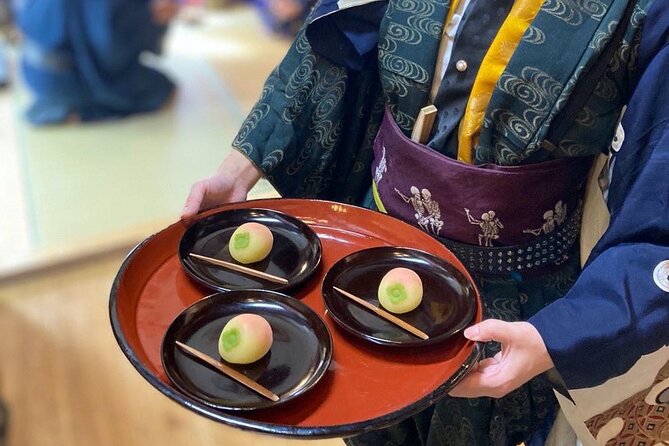
Green tea and Japanese sweets are included. Do not expect a tasting menu or several unusual teas. One critical assessment found the experience shorter and simpler than expected, particularly for someone hoping to study many types of tea or spend more time on the process of making it.
That is the clearest limit of the program. Its focus is a guided introduction to tea ceremony, not an advanced tea course. The value comes from the combination of clothing, cultural explanation, family contact, and participation.
More Tea Ceremonies in Kyoto
- Kyoto: Tea Ceremony in a Traditional Tea House in Kiyomizu
★ 4.9 · 3,519 reviews - Kyoto: Tea Ceremony Ju-An at Jotokuji Temple
★ 4.9 · 3,207 reviews - Kyoto: 45-Minute Tea Ceremony Lesson Experience
★ 4.3 · 2,378 reviews - Kyoto: Table-Style Tea Ceremony at a Kyo-Machiya
★ 4.9 · 1,211 reviews
Why the family atmosphere matters
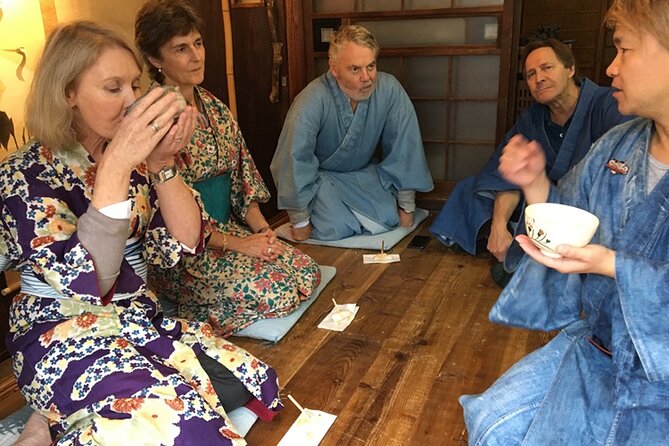
Toku and his wife run the experience with help from an assistant. The family setting is repeatedly reflected in the way the activity is presented: guests are welcomed into their home and shop, helped with clothing, guided through the ceremony, and photographed during the visit.
That warmth is not a small detail. Tea ceremony is built around hospitality, and the attitude of the hosts shapes how comfortable you feel making mistakes. You do not need to know how to sit, bow, turn a bowl, or drink matcha before arriving. The point is to learn.
The family also makes the experience workable for children. Young children have been included, and a two-and-a-half-year-old was accommodated during one session. That does not mean every child will sit quietly for the entire ceremony, but it does suggest a more patient approach than you may find in a formal, silent venue.
Families can also share the activity without every person having the same level of interest. One person may focus on the kimono, another on the tea, and someone else on photographs. The 90-minute format gives enough variety to hold attention better than a ceremony that consists only of sitting and watching.
Photography is welcome, and the hosts take pictures for you. This is especially useful once you are dressed, since taking a good full-length photo in a kimono is not easy when you are also trying to manage the garment. You should still be respectful of the ceremony and follow the host’s instructions about when to take pictures.
Is $99.10 a fair price?
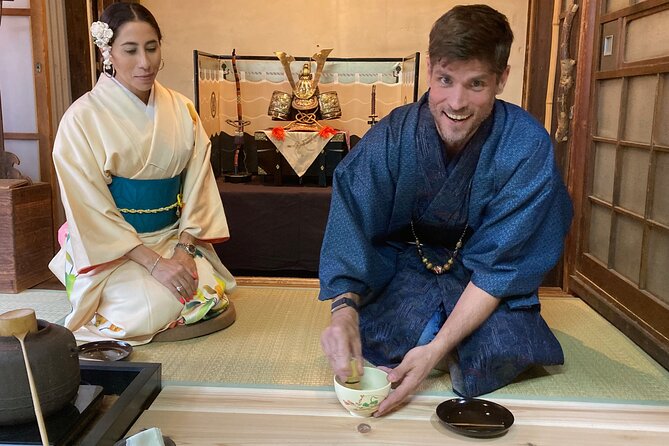
At $99.10 per person, this is not the cheapest way to drink matcha in Kyoto. You can find simpler tea experiences for less, particularly if you only want a bowl of tea and a sweet.
The price makes more sense when you count what is bundled together. You receive the antique kimono rental, fitting assistance, the tea ceremony, green tea, Japanese sweets, English instruction, and a small-group format capped at six people. You are also paying for Toku’s experience with both kimono fitting and tea ceremony.
The clothing is the part that gives this activity its strongest value. A standard rental often involves a short wear period and a busy shop environment. Here, the kimono is part of a broader lesson, and you have time to appreciate the outfit in the old house and during the ceremony.
I would consider it good value if you want a personal cultural activity and would otherwise pay separately for kimono dressing and a tea ceremony. I would consider it less appealing if your priority is simply tasting matcha, seeing a famous garden, or sampling several types of tea.
The very high rating, 4.9 out of 5 from 109 ratings, and 97 percent recommendation rate point to a consistently strong experience. Still, ratings cannot remove the basic tradeoff: you are choosing intimacy and instruction over grand scenery and a formal venue.
Who will enjoy this most
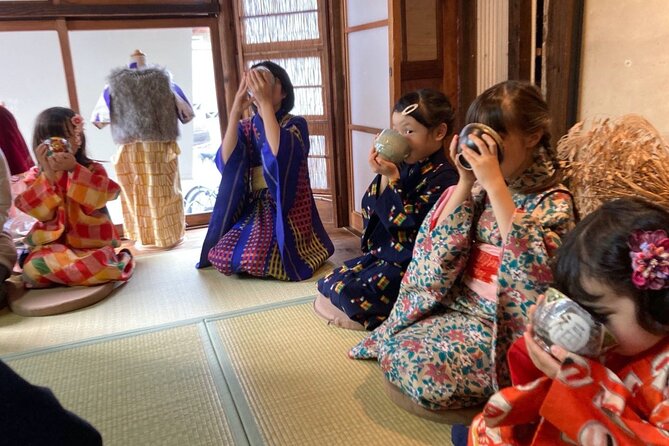
This experience suits you best if you want to meet local hosts and learn by taking part. It is especially good for:
- Couples who want coordinated photographs and a calm cultural activity
- Families with children who benefit from a patient, flexible host
- First-time visitors who want tea ceremony etiquette explained in English
- Anyone interested in antique clothing and Japanese craftsmanship
- People who prefer a small home setting to a crowded tourist attraction
- Visitors spending time near Katsura Imperial Villa or western Kyoto
You may want to choose another tea experience if you need step-free details, a large garden setting, a formal temple atmosphere, or an in-depth study of tea varieties. Service animals are allowed, but the available information does not describe the exact layout of the home or its accessibility features, so contact the provider if those details affect your decision.
The ceremony includes sitting, though an adjustment was made for someone unable to kneel. Tell the hosts about physical needs when you book so they can plan appropriately.
Timing, cancellation, and practical planning
The activity lasts about one hour and 30 minutes and ends at the meeting point. Since the group is limited to six, late arrival can have a bigger effect here than on a large bus tour. Plan your transport carefully, especially if you are coming from central Kyoto.
A mobile ticket is provided, and confirmation is normally received when you book. If you book within one day of the activity, confirmation comes as soon as possible and depends on availability.
Free cancellation is available up to 24 hours before the start time for a full refund. Cancellations or changes made less than 24 hours before the start are not accepted for a refund. The cut-off follows local Kyoto time.
Bring a relaxed attitude. The most rewarding part is not mastering every movement immediately. It is noticing how clothing, tea, posture, and hospitality work together in one carefully paced encounter.
Should you book this Kyoto tea ceremony?
I would book it if you want an intimate, family-run experience with real antique kimono, clear English teaching, and time to ask questions. Toku Miyagawa’s combination of kimono fitting and tea ceremony gives the session more depth than a quick dress-up photo stop.
I would skip it if your ideal tea ceremony requires a grand garden, a temple interior, or a long tasting of different teas. The house is simple, the neighborhood is residential, and the program is an introduction rather than a specialist course.
For most people who value personal contact over scenery, the $99.10 price is reasonable. You get a memorable outfit, a calm ceremony, photographs, tea, sweets, and a chance to slow down with a family that clearly takes its traditions seriously.
FAQ
Where does the tea ceremony take place?
It takes place at Miyagawa Tokusaburo Shoten, 32-4 Katsuranozatocho, Nishikyo Ward, Kyoto, 615-8073, Japan, near Katsura Imperial Villa.
How long is the experience?
The activity lasts approximately one hour and 30 minutes.
Is the experience available in English?
Yes. The tea ceremony and cultural explanations are available in English.
How many people can join?
The group is limited to a maximum of six participants.
Is the antique kimono rental included?
Yes. The antique kimono rental fee is included in the activity price.
What else is included?
The tea ceremony fee, green tea, and Japanese sweets are included. Lunch and dinner are not included.
Can children join?
Yes. Children have been included in the experience, and young children have been accommodated by the hosts.
What is the cancellation policy?
You can cancel up to 24 hours before the start time for a full refund. Cancellations or changes made less than 24 hours before the start time are not accepted for a refund.
Just added around Kyoto
- Kyoto: Zen Meditation at a Private Temple with a Monk★ 5.0 · 25 reviews
- Your Private Vacation Photography Session In Kyoto★ 5.0 · 110 reviews
- Kyoto: Gion Geisha District & Sake-in-Hand Walking Tour★ 5.0 · 37 reviews
- Private Pewter Sake Cup Experience with a Kyoto Artisan★ 5.0 · 31 reviews
- Private Guided Traditional Buddhist Cooking in Japan★ 5.0 · 16 reviews
- Kyoto Wagashi(Japanese sweets) Cooking Class near Fushimiinari★ 5.0 · 60 reviews
- Traditional Japanese Music show & Experience Tour in Kyoto★ 5.0 · 57 reviews
- Kyoto:Family-Friendly Kimono & Yukata Experience at WARGO★ 5.0 · 147 reviews
Kyoto Tours, compared.


Fushimi Inari, Kinkakuji, Bamboo Grove 1 Day Bus Tour
Read our review →
Tea Ceremony in a Traditional Tea House in Kiyomizu
Read our review →
Kyoto Geisha Walking Tour: Gion District & Hidden Gems
Read our review →

Gion Magical Night Walking Tour with Geisha Trivia
Read our review →

Gion Geisha District Walking Tour – Stories of Geisha
Read our review →Browse the lists this tour appears in