
Reviewed · KYOTO TOURS
Dinner with Maiko in a Traditional Kyoto Style Restaurant Tour
A maiko performance over dinner is the heart of this Kyoto evening, but the real pleasure is the chance to ask questions and learn how this demanding traditional art form works. I like the small group of seven or fewer, and I like that guides such as Hikari, Josh, and Peco help turn a formal encounter into a friendly one.
The walk through Gion’s machiya-lined streets gives the evening some context before you sit down. The main caution is the price, $299.95 per person, and the fact that the meal and performance may be more appealing to culture-minded adults than to anyone seeking a casual night out.
Key points to know
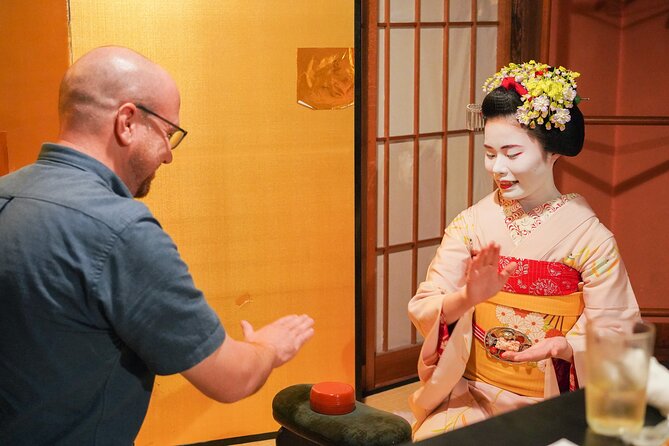
- A rare maiko encounter: Spend substantial time speaking with a maiko through your guide’s translation, then watch traditional dance and take part in games.
- Gion before dinner: Walk for about 40 minutes through Kyoto’s historic geisha district, with local details that are easy to miss on your own.
- Traditional restaurant setting: Dinner takes place in a private room or small teahouse-style setting, giving the evening a formal but personal feel.
- About nine small dishes: The meal can include a sequence of typical Japanese dishes, with alcoholic and nonalcoholic drinks available.
- Maximum seven people: The limited group size makes it easier to see, hear, and ask questions, though seating can still affect your view of the dance.
- Plan for a full evening: The experience lasts about three and a half hours and includes walking, dining, conversation, and a performance.
A rare evening in Kyoto’s Gion
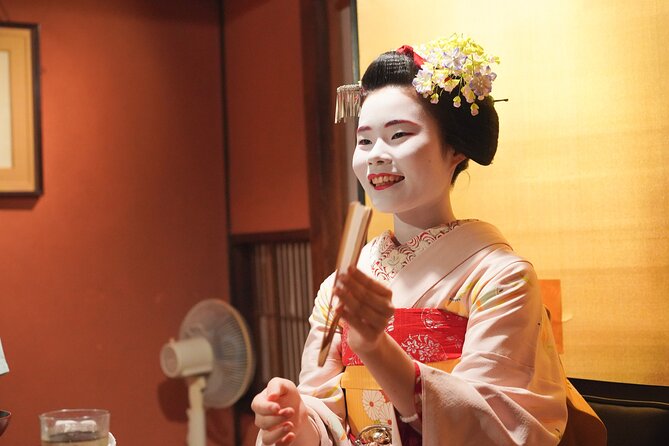
Kyoto’s geisha districts are easy to admire from the outside and harder to understand from the inside. Gion’s narrow lanes, wooden machiya houses, and discreet teahouses create an atmosphere unlike the open-air sights of temples and gardens. Yet it can be difficult to know where to walk, what you are looking at, or how to behave around the women who work in this traditional entertainment world.
This experience gives you a guide and a clear purpose. You begin near the Statue of Izumo-no-Okuni in Kawabatacho, then spend about 40 minutes walking through Gion before sitting down for dinner. The walking portion is not a major sightseeing tour, but it helps you read the district with more care.
You may hear about small local details that would be easy to miss. One guide pointed out a school timetable posted in the area, an ordinary object that became interesting because of the setting and the explanation around it. That is the kind of detail that makes the walk useful rather than simply a way to fill time.
The main event follows: dinner in a traditional restaurant with a maiko, the apprentice rank in Kyoto’s geisha tradition. In some cases, a geiko, the term used for a fully trained geisha in Kyoto, may attend instead. That possibility is not guaranteed, but it can make the evening different from what you expected.
More geisha-district evenings:
- Kyoto Geisha Walking Tour: Gion District & Hidden Gems
★ 4.7 · 3,273 reviews - Kyoto: Gion Magical Night Walking Tour with Geisha Trivia
★ 4.9 · 2,393 reviews - Kyoto: Gion Geisha District Walking Tour – Stories of Geisha
★ 4.7 · 2,187 reviews
What the 40-minute Gion walk adds
The first stop lasts about 40 minutes and has no separate admission charge. You walk through Gion’s preserved streets while your guide explains the district and points out features connected to its traditional culture.
This is a good use of time because the evening needs a setting. Meeting a maiko in a restaurant without any background could feel like a staged show. Starting in Gion gives you a sense of place and helps explain why the district remains associated with music, dance, hospitality, and tea-house culture.
The walk also lets you settle into the group. With no more than seven people, it should be easier to hear your guide and ask a quick question than on a large city tour. Guides named Hikari, Josh, and Peco have each been singled out for their warmth, energy, and ability to explain the culture in English.
Do not expect a long architectural tour. The walk is short, and the focus is on atmosphere and orientation. If you have mobility concerns, take the warning seriously. The tour involves walking and is not recommended for people who have difficulty getting around. A private tour is suggested for those who need a slower or more flexible pace.
Dinner in a private Kyoto-style room
The dinner portion lasts about two hours and 40 minutes, making it the clear center of the evening. You sit in a private room or small teahouse-style setting reserved for the group. This is not a quick meal with a short stage performance added at the end.
The food can arrive as a series of small traditional dishes, with one account describing nine typical courses. That format gives you a chance to try several preparations without committing to one large plate. It can also make the meal feel more formal and distinctly Japanese than an ordinary restaurant dinner.
The food receives especially strong praise overall, though expectations should stay sensible. One account found the meal only okay, while others described it as top notch or delicious. Food quality can vary with the restaurant and the menu, so I would book this for the full cultural experience, not solely for a fine-dining meal.
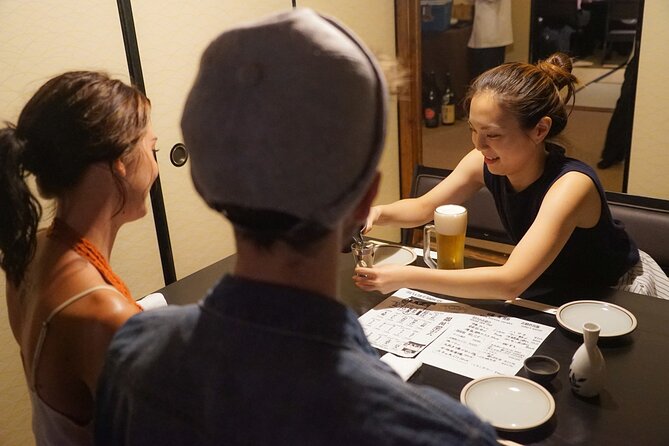
Drinks may include wine, sake, plum wine, beer, tea, and nonalcoholic choices. Several drinks are described as free-flowing, which adds value to the fixed price. Still, check the exact inclusions when booking, since the supplied details do not provide a complete drink list or menu for every departure.
Dietary planning matters here. Tell the operator about allergies or dietary requests at least one day before the tour. The kitchen does not belong to the tour company, so allergy-free meals, substitutions, and strict dietary accommodations cannot be guaranteed. Requests made on the day are not accepted.
Meeting the maiko and understanding her work
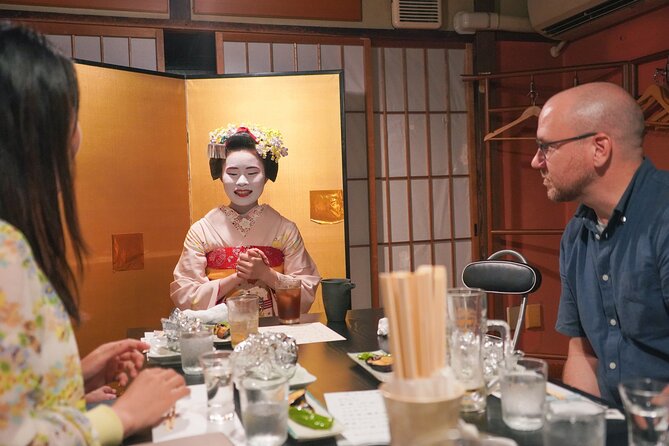
The conversation with the maiko is what separates this from a standard cultural performance. Your guide translates, allowing you to ask about her life, training, work, and reasons for choosing this path. The strongest part of the format is the human exchange, not just the costume and dance.
You should also understand the limits of the interaction. This is not a private interview with unlimited one-to-one time. The format centers on conversation, traditional games, and performance, with the guide helping the group communicate. Some people find the talk warm and open, while others may find it less like a free-flowing conversation than they hoped.
That difference matters. If you want a relaxed chance to ask questions about daily life and ambitions, this tour is well suited to you. If you expect a long, spontaneous discussion about every part of geisha culture, you may find the exchange more structured.
The maiko is described as young, charming, funny, and willing to answer questions. That can make the meeting approachable, especially if you arrive unsure what to say. Your guide’s role is important here. Hikari, in particular, is praised for translating clearly and making people comfortable enough to ask questions.
The experience also helps you avoid treating the maiko as a photo prop. You meet her in a setting built around conversation and artistic skill. The better approach is to listen, ask respectful questions, and let the guide explain etiquette.
More dinners out in Kyoto:
- Kyoto Gion Cultural Walk & Geisha Show with Dining Options
★ 5.0 · 518 reviews - Kyoto Gion Cultural Walk & Geisha Show with Dining Options
★ 5.0 · 483 reviews - Kyoto: Geisha Dinner & Gion Cultural Walk
★ 5.0 · 73 reviews - Private Dinner with a Geisha
★ 5.0 · 65 reviews
Dance, games, and the view from your seat

The maiko performs traditional dances and entertains the group with games. The dance is elegant and formal, offering a short look at skills that take years of training. The games make the mood less stiff and give you another way to interact with her.
Seating deserves attention. One person found that those at the far end of the room had only a partial view because other people were seated between them and the performer. This was especially difficult for a member of the group who was deaf and relied on a clear view.
A small group helps, but it does not guarantee a perfect sightline. If seeing the dance clearly is essential for you, contact the operator before booking and explain the need. Arrive on time, follow seating instructions, and, if possible, mention accessibility needs in advance.
The performance is best understood as one part of the evening. You are not buying a theater ticket with a guaranteed front-row seat. You are paying for a meal, conversation, translation, games, and a traditional performance in a small setting.
Why the guide can make or break the evening
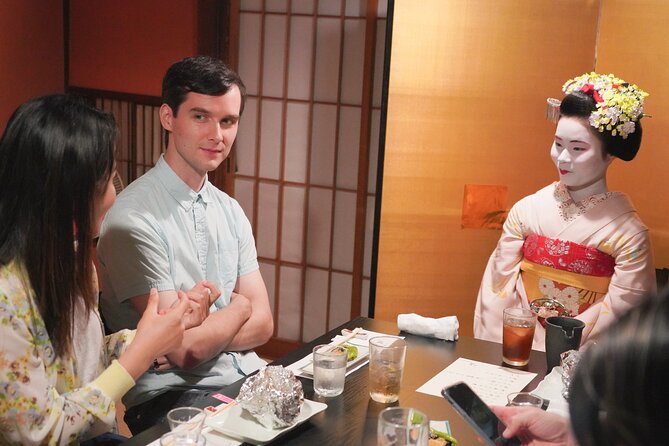
The guide is more than someone who leads you from the meeting point to the restaurant. The guide explains Gion, translates the maiko’s answers, clarifies unfamiliar customs, and keeps the conversation moving.
That role is particularly important because most visitors cannot communicate directly in Japanese. A good interpreter does not simply translate words. The guide also supplies context and helps you understand the meaning behind the performance and the maiko’s work.
The named guides connected with especially warm feedback include Hikari, Josh, and Peco. Hikari is described as positive and encouraging, including during heavy rain. Josh is praised for leading the Gion walk and making the dinner feel special. Peco is noted for her energy and clear enjoyment of the work.
Guide assignments can change, so do not assume you will receive a particular person. The useful point is that the experience depends heavily on having an active interpreter. If your guide explains well, the evening feels personal and informative. If translation is brief, the maiko encounter may feel more distant.
Is $299.95 a fair price?
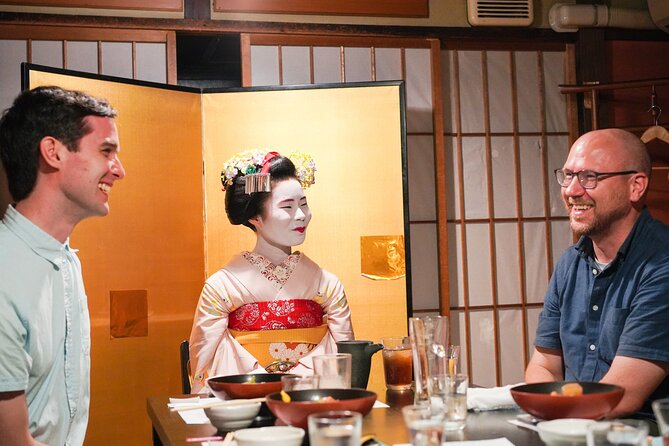
At $299.95 per person, this is expensive for a three-and-a-half-hour evening. You can eat in Kyoto for far less, and a normal Gion walk costs little or nothing. The value comes from combining several elements that are difficult to arrange independently: a small group, a traditional restaurant, a translator, dinner, drinks, and access to a maiko or possibly a geiko.
I would compare it with the cost of a private cultural experience rather than with the price of a restaurant meal. You are paying for access and organization as much as for food. The maximum group size of seven is important because a large crowd would make the conversation and dance much less personal.
The price makes the most sense if you have a real interest in Kyoto’s traditional arts. It is also a strong choice for a special occasion, a first visit to Japan, or a family group with older teenagers. One family found that children aged 14, 19, and 21 all considered it the best part of their holiday, though the official age limit is 15, so a 14-year-old would not be eligible.
The value is weaker if you mainly want a luxurious dinner. The food is well regarded overall, but the menu is not presented as a high-end tasting menu with a published course list. The cultural access is the reason to book.
Timing, weather, and practical planning
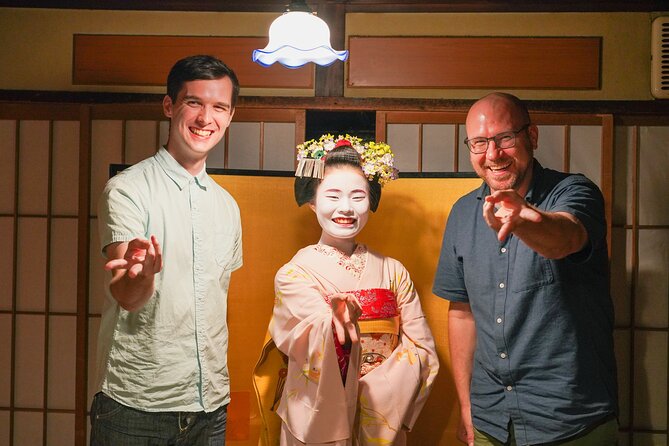
The meeting point is the Statue of Izumo-no-Okuni in Kawabatacho, in Kyoto’s Higashiyama Ward. The tour ends at the restaurant in Gion, not back at the original meeting point. Plan your onward route from the restaurant rather than assuming you will be escorted back across the district.
The tour starts on time. That matters because the walk, restaurant reservation, meal, and maiko appearance are linked together. Arriving late could mean joining after the group has started or missing part of the experience.
Kyoto’s weather can be severe. Summer temperatures may reach 40°C, while winter temperatures may fall to -5°C. Choose shoes for walking and dress for the season, especially because the evening begins outside. The tour may be canceled if weather conditions become unsafe.
The activity is available by mobile ticket and is near public transportation. Confirmation arrives when you book. Participants must be at least 15 years old, and small children and babies are not permitted. Families with younger children are advised to arrange a private tour instead.
Cancellation terms need a careful check. The general information says free cancellation or rescheduling is available up to seven days before the start, while the stated cancellation policy allows a full refund when you cancel at least 24 hours in advance. Since those terms do not match, confirm the rule shown for your exact booking before you rely on it.
Who should book this Gion evening?
I would choose this experience if you want a structured introduction to Kyoto’s geisha culture and prefer learning through conversation rather than watching a short show from a distance. The guide, translator, and small group remove much of the uncertainty around etiquette.
It suits couples, adult families, and older teenagers who are curious about Japanese arts. It also works well for a first Kyoto visit because the walk introduces Gion before dinner, giving the neighborhood more meaning when you return to explore it later.
I would think twice if you dislike set meals, have serious food allergies, need a guaranteed accessible seat, or have limited walking ability. The operator cannot promise allergy-free food, the seating may not provide a perfect view for everyone, and the experience is not recommended for people with mobility issues.
You should also keep your expectations in check. The maiko is there to perform, play traditional games, and speak with the group. The interaction can be enjoyable and revealing, but it is not the same as spending an entire evening in an unstructured private conversation.
Should you book Dinner with Maiko in Gion?
Book it if meeting a maiko, asking respectful questions, and seeing traditional dance are high on your Kyoto wish list. The combination of Gion streets, a private dining room, translated conversation, games, and a multi-course meal gives you more than a performance alone.
Skip it if the $299.95 price feels too high for a meal with cultural entertainment, or if your main goal is a long, intimate conversation. For the right audience, this can be a major highlight of a Japan trip. For everyone else, Kyoto offers less expensive ways to enjoy dinner and traditional neighborhoods.
FAQ
How long does the Dinner with Maiko tour last?
The experience lasts approximately three hours and 30 minutes. About 40 minutes are spent walking through Gion, about two hours and 40 minutes at the dinner and maiko encounter, and about 10 minutes continuing through Kyoto afterward.
Where does the tour start and end?
The tour starts at the Statue of Izumo-no-Okuni in Kawabatacho, Higashiyama Ward, Kyoto. It ends at the restaurant in Gion, so you should plan your return journey from the restaurant.
How many people can join the tour?
The tour has a maximum of seven participants. This small group is intended to make the walk, dinner, questions, and performance more personal.
What is the minimum age?
Participants must be at least 15 years old. Small children and babies are not allowed, even with parents. Families with younger children should book a private tour if they want to take part.
Can I request a special diet or report an allergy?
You must report dietary requests or allergies at least one day before the tour. The operator cannot guarantee allergy-free meals, dietary accommodations, or substitutions because the food is prepared in a kitchen that does not belong to the tour company.
Is the tour suitable for people with mobility issues?
The tour is not recommended for people with mobility issues because it includes walking. A private tour is recommended if you need a slower pace or additional flexibility.
Can I cancel for a full refund?
The cancellation policy states that you can receive a full refund if you cancel at least 24 hours before the start time. Other tour information refers to cancellation or rescheduling up to seven days before departure, so confirm the exact terms attached to your booking.
More Places to Eat in Kyoto
- Kyoto Evening Gion Food Tour Including Kaiseki Dinner
★ 5.0 · 62 reviews - Kyoto: Maiko Dinner in Traditional Restaurant and Tour
★ 4.8 · 55 reviews - Kyoto: Lunch or Dinner with Maiko
★ 4.2 · 52 reviews - Private Dinner with Maiko and Geiko in Kyoto
★ 5.0 · 28 reviews
Just added around Kyoto
- Kyoto: Zen Meditation at a Private Temple with a Monk★ 5.0 · 25 reviews
- Kyoto: Gion Geisha District & Sake-in-Hand Walking Tour★ 5.0 · 37 reviews
- Private Pewter Sake Cup Experience with a Kyoto Artisan★ 5.0 · 31 reviews
- Your Private Vacation Photography Session In Kyoto★ 5.0 · 110 reviews
- Private Guided Traditional Buddhist Cooking in Japan★ 5.0 · 16 reviews
- Kyoto Wagashi(Japanese sweets) Cooking Class near Fushimiinari★ 5.0 · 60 reviews
- Traditional Japanese Music show & Experience Tour in Kyoto★ 5.0 · 57 reviews
- Kyoto:Family-Friendly Kimono & Yukata Experience at WARGO★ 5.0 · 147 reviews
Kyoto Tours, compared.


Fushimi Inari, Kinkakuji, Bamboo Grove 1 Day Bus Tour
Read our review →
Tea Ceremony in a Traditional Tea House in Kiyomizu
Read our review →
Kyoto Geisha Walking Tour: Gion District & Hidden Gems
Read our review →

Gion Magical Night Walking Tour with Geisha Trivia
Read our review →

Gion Geisha District Walking Tour – Stories of Geisha
Read our review →Browse the lists this tour appears in