
Reviewed · KYOTO TOURS
Kyoto: Lunch or Dinner with Maiko
Kyoto’s Maiko lunch or dinner gives you something most sightseeing days cannot: a direct look at a young woman keeping an old entertainment tradition alive. You’ll watch a tea ceremony, hear about her daily life, see two elegant dances, and join in a simple game before taking a photo together.
I like the close contact and the easy questions-and-answers session. I also like the small Senjafuda paper charm presented at the end, a personal keepsake rather than another generic souvenir. The main drawback is the setting and meal: this is a room in a modern building, not an ochaya, and the food may feel plain or underwhelming if you expect a polished restaurant dinner.
Key points to know before booking
- Two dances give the program its heart: Watch traditional movements linked to seasons, love stories, and daily life.
- The question session is genuinely useful: Ask about Maiko routines, kimono, hairstyles, training, and etiquette.
- You can take a photo beside the performer: Your Senjafuda charm is included as a small parting gift.
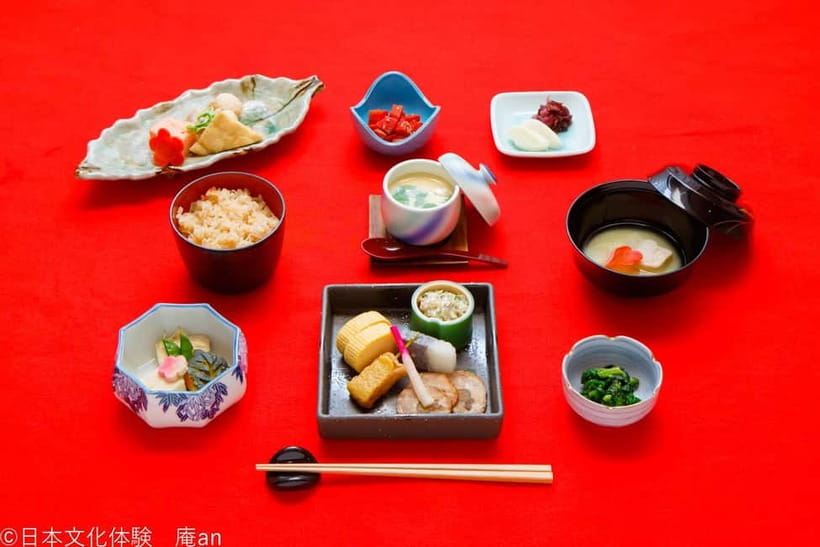
- The meal is traditional Kyoto fare: Dashi, the stock used in much Japanese cooking, plays an important role, and shidashi-style food is part of Kyoto’s dining culture.
- The room is practical, not theatrical: It is in a building near Gojo Station, with a relaxed atmosphere but no traditional-house setting.
- Optional extras change the price: Tea making costs 1,600 yen, while front-row seating costs from 1,100 to 3,300 yen.
Meeting a Maiko in central Kyoto
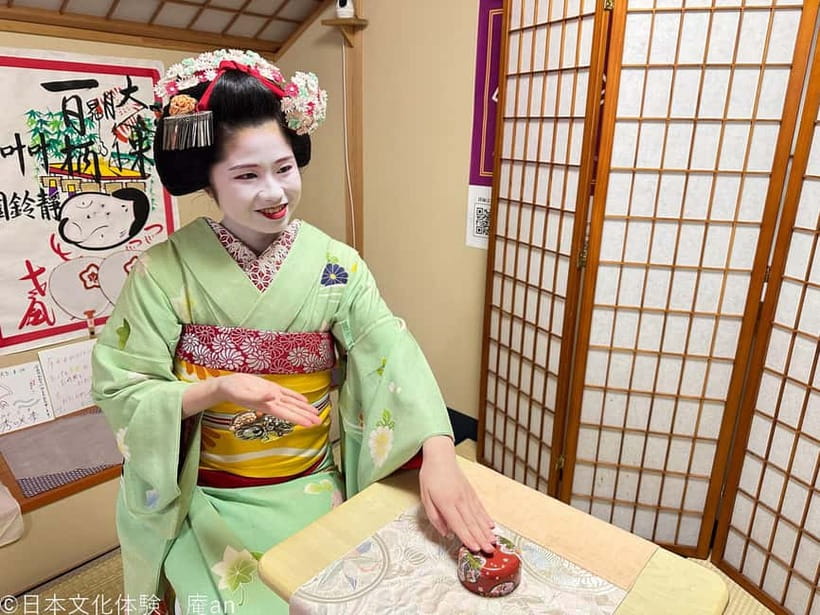
Maiko are apprentice entertainers in Kyoto’s traditional geisha districts. Their work includes dance, music, tea service, conversation, and careful hospitality. Their elaborate kimono, seasonal hair ornaments, and distinctive hairstyles are not stage costumes in the usual sense. They form part of a demanding way of life that still exists today.
That context makes this program more than a short dance show. You are not simply watching a performer from a distance. The format gives you time to ask questions and see small details of her manners, clothing, and movements up close.
The activity takes place about one minute from Exit 1 of Gojo Station on the Subway Karasuma Line. Look for the entrance facing Gojo-dori. That location is handy if you are staying in central Kyoto, and it avoids a long ride out to one of the traditional entertainment districts.
Do not expect a tiny wooden teahouse. The venue occupies rooms in a building, and you will need to use stairs because there is no elevator. The room has a relaxed, friendly feel, but it can look more like a plain event room than an old Kyoto salon. One particularly harsh account described basement-style lighting and classroom-like furniture, while another noted the lack of decorative screens. If atmosphere matters as much as the performer, keep this limitation in mind.
More geisha-district evenings:
- Kyoto Geisha Walking Tour: Gion District & Hidden Gems
★ 4.7 · 3,273 reviews - Kyoto: Gion Magical Night Walking Tour with Geisha Trivia
★ 4.9 · 2,393 reviews - Kyoto: Gion Geisha District Walking Tour – Stories of Geisha
★ 4.7 · 2,187 reviews
The 90-minute program, from tea to farewell
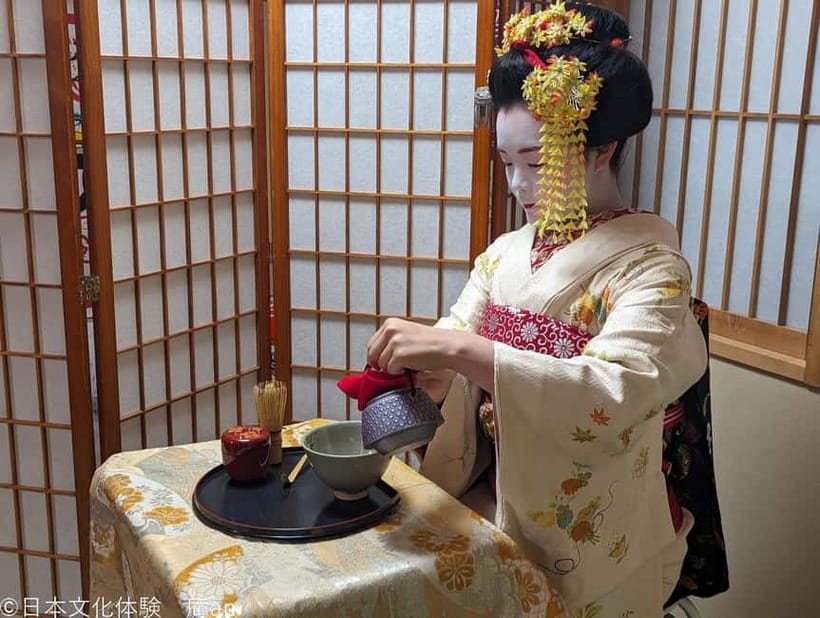
The activity begins with a demonstration of the tea ceremony. Watch the Maiko handle the utensils, prepare the tea, and move through the set order of gestures. This is a quiet opening that lets you notice the care put into posture, timing, and courtesy.
You may add a tea-making option for 1,600 yen when booking. The standard program only includes the demonstration, so do not assume you will prepare your own bowl unless you request and pay for the extra.
After the tea segment, you receive a traditional Kyoto meal prepared by a long-established restaurant. Kyoto cooking often depends on dashi, a savory stock that gives soup, simmered dishes, and other preparations their basic flavor. The meal also reflects shidashi, a local tradition of having prepared food delivered for an occasion.
The menu details are not fixed in the information provided, so you should not book this as a way to choose a particular dish. The food is intended to represent Kyoto-style cooking, but it may not suit every palate. One account found the meal bland and described the tray as barely thawed, while another called it typical but lacking much aroma. That is important value information: the Maiko program is the main attraction, and the meal is best viewed as part of the cultural setting rather than the reason to come.
The dining portion may also take place alongside people doing different versions of the program. Some participants may have added tea preparation while others are eating. That mixed format can make the room feel less focused, though it also helps keep the event accessible to several types of bookings at once.
Asking direct questions about Maiko life
The question session is likely to be the most rewarding part for curious visitors. You can ask about her daily routine, training, clothing, hairstyle, work, and the customs surrounding Maiko life. The program aims to let you see the person behind the formal appearance.
This is where the experience earns its cultural value. A dance performance can show you polished movement, but a direct answer can explain why the movements, clothing, or manners matter. Keep your questions respectful and practical. The session is not a private interview, and the timing is shared with the rest of the room, but it gives you a chance to move beyond the usual tourist photograph.
The listed instruction language is Japanese. English translation will be provided as much as possible if you request it, but it is not presented as a guaranteed full English-language program. Contact the organizer before booking if translation is important to you. That simple step can make a large difference to how much you take from the question period.
The photo, Senjafuda, and two traditional dances
The photo opportunity comes before the dance performance. You can take a commemorative picture beside the Maiko, which gives you a close view of the kimono, hair ornaments, and formal styling. Bring your camera or phone ready, since the event cannot be held for late arrivals.
You also receive a Senjafuda. These small paper name plaques are traditionally associated with visits to temples, shrines, and entertainment establishments. Here, it works as a lucky charm and a more personal reminder of the meeting.
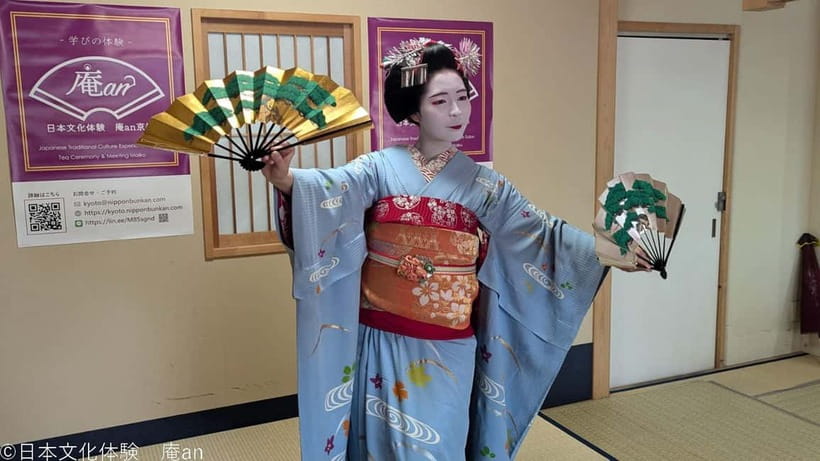
The program then presents two traditional dances. Their themes may express the seasons, romantic stories, or ordinary life. You will notice controlled steps, small turns, deliberate hand gestures, and an economy of movement that contrasts with the more energetic entertainment often offered in tourist shows.
The two-dance format is a good balance. One dance might leave you wanting more, while a long stage production could feel formal and distant. Here, the dances are short enough to hold your attention and substantial enough to show a range of expression.
A Geiko may appear instead of a Maiko, depending on the schedule. Geiko are fully trained entertainers, while Maiko are still in apprenticeship. That substitution changes the nature of the meeting, but it remains within Kyoto’s traditional performance culture. If you book specifically to meet a Maiko, understand that the performer is not guaranteed.
More lunch stops in Kyoto:
- Bike Tour Exploring North Kyoto plus Lunch
★ 5.0 · 1,087 reviews - Osaka/Kyoto: Arashiyama, Nara & Fushimi Inari Shrine w/Lunch
★ 4.4 · 754 reviews - Kyoto Zen Meditation & Garden Tour at a Zen Temple with Lunch
★ 5.0 · 441 reviews - 4.5-Hour Kyoto Bike Tour with Lunch and UNESCO Zen Temples
★ 5.0 · 122 reviews
A simple game brings the room to life
After the dances, the Maiko leads an interactive game. Volunteers can join, while everyone else can watch, clap, and cheer. The games are described as simple but lively, with the Maiko often proving a difficult opponent.
This section keeps the program from becoming a one-way performance. You are not required to take part, which is helpful if you prefer to observe, but willing volunteers can add a burst of humor to the room. It also gives you a glimpse of the playful side of Maiko hospitality, not just the formal side shown in the tea ceremony and dances.
At about 75 minutes, the Maiko leaves. The remaining 15 minutes are set aside for chatting before you depart the room at the 90-minute mark. That final period may feel brief, but it gives you a little breathing room after the scheduled show.
What the seating upgrades really buy you
The base price is $63 per person and includes the meal with the Maiko. For a 90-minute program with a live cultural performance, direct questions, a photo, and a keepsake, that can be fair value in Kyoto, especially if you care more about access than luxury surroundings.
The seating options are separate:
- SS seat, first row: 3,300 yen
- S2 seat, second row: 2,200 yen
- S3 seat, third row: 1,100 yen
The information does not explain every difference between the seating categories, but the labels make the main benefit clear: you pay for a closer position. I would consider the upgrade if seeing footwork and hand gestures matters to you, or if you want better photos during the dance. The standard seat may be enough if you mainly want the question session and the chance to meet the performer.
The tea-making add-on costs 1,600 yen. It makes sense for visitors who want to do more than watch, particularly if you have never prepared matcha. If your schedule is tight, the demonstration still gives you a useful look at the etiquette without adding another activity.
Children under two can attend free when sitting on a parent’s lap. If a child under two needs a seat or meal, the adult fee applies. Anyone who is not taking part cannot enter the program, so do not book a place for a nonparticipant simply to accompany the group.
Who will enjoy this, and who may not
I would recommend this for first-time visitors who want a clear introduction to Maiko culture without committing to a costly private dinner. It also suits families, couples, and solo visitors who like a mix of performance and conversation.
It is especially useful if you have already seen temples and gardens and want an evening activity with a different focus. The 90-minute length fits neatly before or after other plans, and Gojo Station makes the journey simple.
You may be less pleased if you are looking for an atmospheric old Kyoto building, a highly polished meal, or a private meeting. The room can feel plain, and people taking different program options may share the space. The food has also received mixed impressions, so diners with strict dietary expectations should ask for details before booking.
This is not a formal geisha dinner in an ochaya. It is a structured cultural presentation designed to make a rare tradition understandable and approachable. That distinction matters. You are paying for access to a performance and conversation, not for an exclusive night of entertainment in a historic townhouse.
Timing, language, and cancellation details
The operating office handles reservations from 10:00 to 17:00. Requests received after 17:00 are processed the next day, so do not expect an immediate answer in the evening.
Arrive early. The event will not be held for delayed participants, regardless of the reason for the delay, and travel costs are not reimbursed if you miss it. The meeting point is near Gojo Station, but finding the entrance on a busy street can still take a few minutes.
Free cancellation is available up to eight days in advance. After that point, a cancellation fee applies, and changing the date or time after the fee has been triggered can create another specified charge. Check the exact terms before you commit, especially if your Kyoto schedule is still changing.
The program is conducted in Japanese, with English translation provided as much as possible when requested. Contact the organizer ahead of time rather than waiting until you arrive.
My verdict on the Maiko lunch or dinner
Book this experience if you want a direct, compact introduction to Kyoto’s Maiko tradition and you are willing to accept a plain venue and an uneven meal. The dances, question session, photo, and game create a varied 90 minutes, and the Senjafuda charm is a thoughtful extra.
Skip it if the setting and food are central to your idea of a special night. In that case, look for a more elaborate dinner setting, but expect to pay more and possibly receive less direct explanation.
At $63, the value rests on the performer, not the room or cuisine. Choose a front seat if you want the best view, request English help in advance, and arrive early from Gojo Station. With those expectations in place, this is a practical way to meet a living Kyoto tradition without pretending you are entering an ochaya.
FAQ
Where does the Maiko experience take place?
It is held about one minute from Exit 1 of Gojo Station on Kyoto’s Subway Karasuma Line. The entrance faces Gojo-dori.
How long does the program last?
The full program lasts 90 minutes. The Maiko portion ends at about 75 minutes, followed by chatting time before you leave.
Is dinner included in the price?
Yes. The $63 base price includes dinner with the Maiko. The food is traditional Kyoto cuisine prepared by a long-established restaurant.
Can I make tea myself?
Yes, but tea making is an optional extra. It costs 1,600 yen and must be selected when you apply.
Is the event held in a traditional Japanese house?
No. The venue is in a building rather than an ochaya or traditional Japanese house. There is no elevator, so you need to use stairs.
Is English available?
The listed language is Japanese. English translation will be provided as much as possible if you request it, so contact the organizer before the activity.
Will a Maiko always attend?
A Geiko may be invited instead of a Maiko, depending on the situation. The program includes traditional performance and conversation with the attending entertainer.
Are seating upgrades available?
Yes. First-row SS seating costs 3,300 yen, second-row S2 seating costs 2,200 yen, and third-row S3 seating costs 1,100 yen.
Can children under two attend for free?
Children under two can attend free when sitting on a parent’s lap. If they need their own seat or meal, the same fee as one person applies.
More Places to Eat in Kyoto
- Private Dinner with a Geisha
★ 5.0 · 65 reviews - Kyoto Evening Gion Food Tour Including Kaiseki Dinner
★ 5.0 · 62 reviews - Kyoto: Maiko Dinner in Traditional Restaurant and Tour
★ 4.8 · 55 reviews - Private Dinner with Maiko and Geiko in Kyoto
★ 5.0 · 28 reviews
More Dinners Out in Kyoto
- Kyoto Gion Cultural Walk & Geisha Show with Dining Options
★ 5.0 · 518 reviews - Kyoto Gion Cultural Walk & Geisha Show with Dining Options
★ 5.0 · 483 reviews - Dinner with Maiko in a Traditional Kyoto Style Restaurant Tour
★ 5.0 · 175 reviews - Kyoto: Geisha Dinner & Gion Cultural Walk
★ 5.0 · 73 reviews
Just added around Kyoto
- Kyoto: Zen Meditation at a Private Temple with a Monk★ 5.0 · 25 reviews
- Kyoto: Gion Geisha District & Sake-in-Hand Walking Tour★ 5.0 · 37 reviews
- Private Pewter Sake Cup Experience with a Kyoto Artisan★ 5.0 · 31 reviews
- Your Private Vacation Photography Session In Kyoto★ 5.0 · 110 reviews
- Private Guided Traditional Buddhist Cooking in Japan★ 5.0 · 16 reviews
- Kyoto Wagashi(Japanese sweets) Cooking Class near Fushimiinari★ 5.0 · 60 reviews
- Traditional Japanese Music show & Experience Tour in Kyoto★ 5.0 · 57 reviews
- Kyoto:Family-Friendly Kimono & Yukata Experience at WARGO★ 5.0 · 147 reviews
Kyoto Tours, compared.


Fushimi Inari, Kinkakuji, Bamboo Grove 1 Day Bus Tour
Read our review →
Tea Ceremony in a Traditional Tea House in Kiyomizu
Read our review →
Kyoto Geisha Walking Tour: Gion District & Hidden Gems
Read our review →

Gion Magical Night Walking Tour with Geisha Trivia
Read our review →

Gion Geisha District Walking Tour – Stories of Geisha
Read our review →Browse the lists this tour appears in