
Reviewed · TOKYO TOURS
Japanese Traditional Sweets making and Tea Ceremony
The best part of this 95-minute experience is that you do not simply watch a tea ceremony. You make the sweets that accompany it, starting with plain white bean paste and turning it into seasonal flowers or fruit. I like the use of Kyoto-made white and red bean paste, and I like that you prepare your own Matcha from a single-origin Uji tea. The result is a hands-on look at two Japanese food traditions for $18.
The main thing to consider is the language and group setup. The instructor teaches in Japanese, with English translation provided as much as possible. A recent participant found that demonstrations made the class easy enough to follow, but another reported that a crowded session made it hard to hear and that the instructor continued without waiting. Arrive early, and do not count on the class holding its schedule for late arrivals.
Key points at a glance
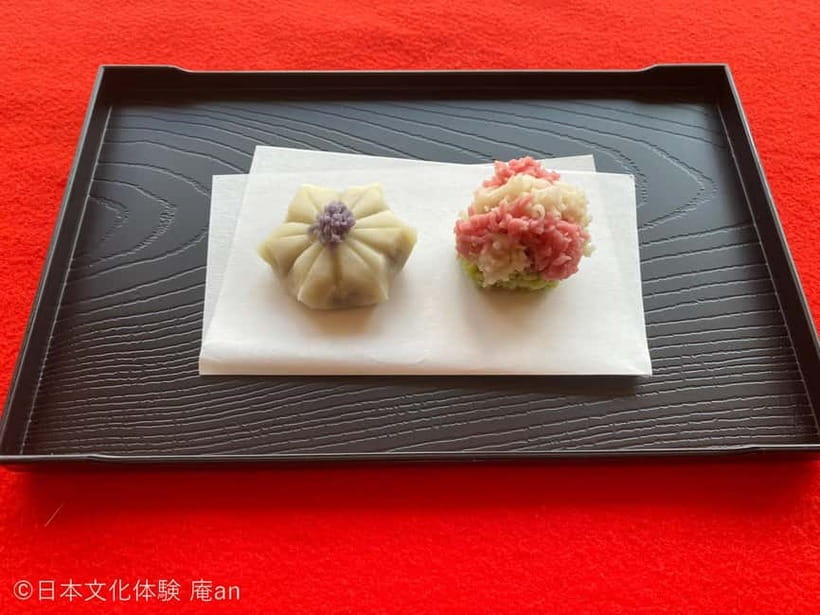
- Two seasonal nerikiri sweets: Make a flower-shaped sweet and a Kinton-style sweet from colored bean paste.
- Kyoto ingredients: The white and red bean paste comes from long-established Kyoto shops.
- Uji Matcha preparation: Watch a Matcha grinding demonstration, then prepare your own tea.
- A real tasting at the end: Eat the sweets you made with the Matcha you prepared.
- Short, affordable format: The 95-minute class costs $18 per person, with optional extras available.
- Japanese-led instruction: Clear demonstrations help, but English support is limited and group size can affect how well you hear.
Making nerikiri from bean paste
Nerikiri is a refined Japanese sweet made from white bean paste shaped into seasonal designs. It is not the kind of snack you unwrap and eat without a thought. Its color, shape, and delicate form are part of the experience, and this class lets you see how much handwork goes into a small sweet.
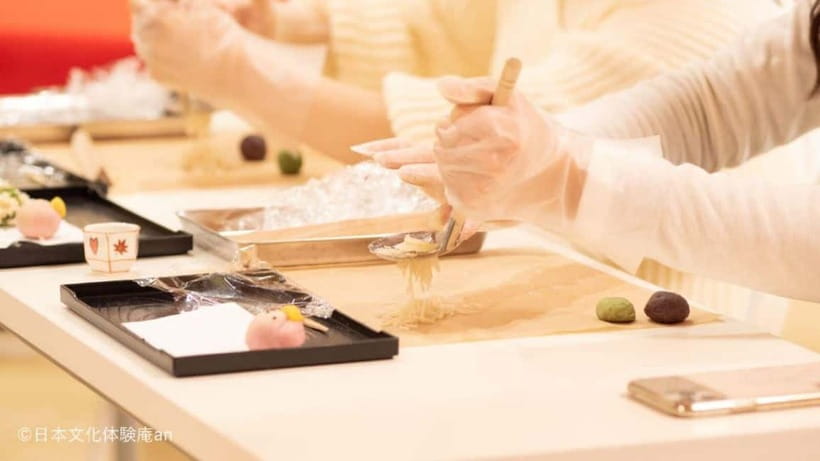
You begin with the coloring process. The white bean paste is changed into the shades needed for the day’s designs, then formed and shaped by hand. This is a good point to slow down. You are not aiming for factory-perfect results. You are learning how a simple paste can suggest a flower, fruit, or another seasonal image with a few careful movements.
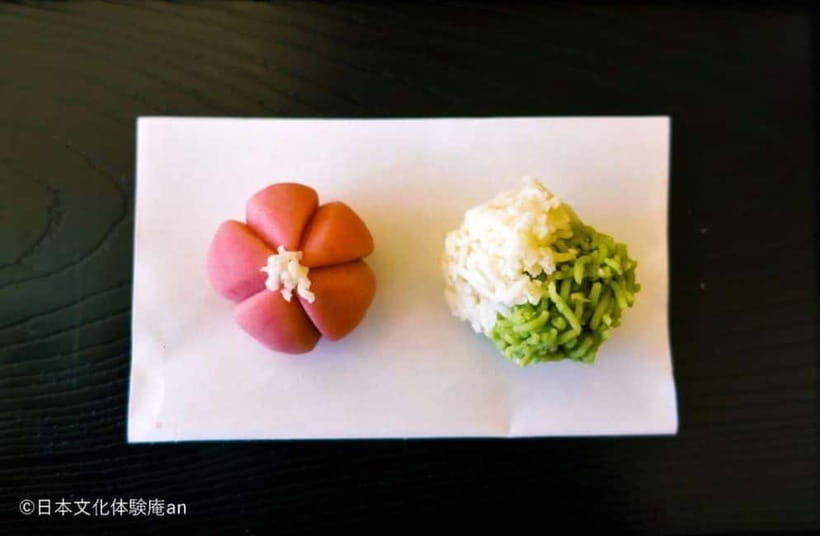
The first sweet is a flower-shaped nerikiri. The supplied program describes it as a seasonal design, so the exact appearance may vary with the time of year. That seasonal link matters in Japanese sweets. The sweet is meant to look appropriate to the season, not simply decorative.
Next comes Kinton nerikiri. This style has a different look and texture from the flower design, giving you a second chance to work with the paste rather than repeating the same task. Making two forms is a smart choice. One sweet alone could feel like a short craft demonstration, while two give you a better sense of the technique.
The paste comes from long-established Kyoto shops, using both white and red bean varieties. That detail adds value to a low-cost activity. You are not just handling generic confectionery ingredients. You are working with the base used in an important part of Kyoto’s wagashi tradition, even though the class itself takes place at the AN TOKYO Japanese Culture Experience meeting point in Honshu.
More Tea Ceremonies in Tokyo
- Tokyo: Traditional Tea Ceremony with a Tea Master
★ 5.0 · 528 reviews - Tea Ceremony Workshop in Tokyo by the Experienced Instrucor
★ 5.0 · 189 reviews - Tokyo: Asakusa Kimono Dressing and Matcha Experience
★ 4.9 · 173 reviews
Why the sweets matter with Matcha
The sweetness of nerikiri is meant to work with the bitterness of Matcha. You eat the sweet alongside the tea, rather than treating the two as unrelated parts of the class. The bean paste provides a soft, sugary counterpoint to the stronger tea.
This pairing is one of the most useful things to understand here. If you have tried Matcha and found it too bitter on its own, the sweet changes the balance. If you prefer very sweet desserts, the tea keeps the experience from becoming one-note. The class gives you a direct taste of why traditional Japanese tea settings serve confectionery before or with Matcha.
The sweets are also small, which is fitting. Nerikiri is made for careful appreciation, not for filling a plate. You will get two pieces that you shape yourself, then eat during the final part of the program. If you want to carry them away instead, a take-out box costs 100 JPY. The information provided does not specify how long the sweets remain in good condition, so ask at the venue if you plan to transport them.
The 55-minute pause before tea
The schedule places a break at about the 55-minute mark, after the two sweets are finished. This creates a natural change of pace. The first half asks you to work with your hands and focus on color and form. The second half turns to tea preparation and ceremony.
The break may also help you reset before the more formal portion. You will have completed the creative task, and the class can move from making food to learning how it is served. The exact details of the break are not specified, so do not assume it is a full meal period or that additional food is included.
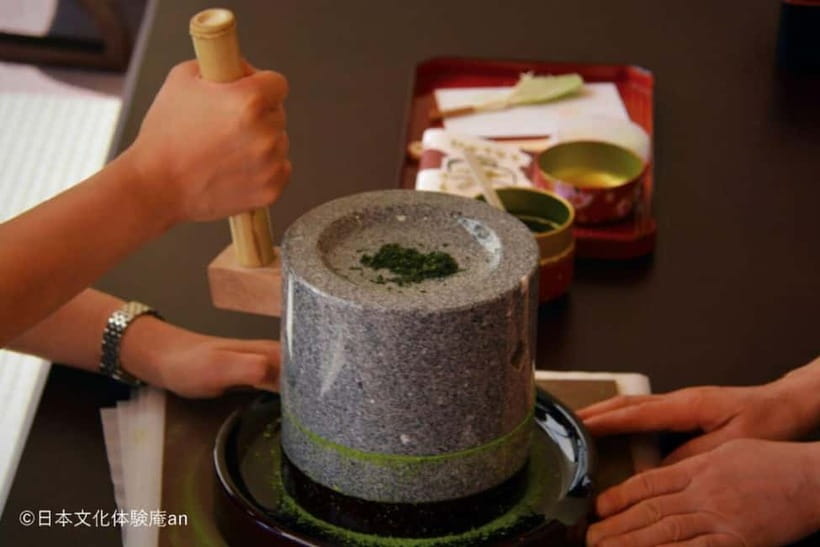
At about 65 minutes, the instructor explains the tea ceremony. You then see a demonstration of Matcha grinding before preparing your own tea. The tea used is special single-origin Matcha from Uji, an area long associated with Japanese tea production. You are not only handed a prepared cup. You take part in the preparation yourself.
That hands-on step gives the class a clear rhythm: make the sweets, watch the tea preparation, prepare your own Matcha, then taste both together. It is a compact lesson, but the sequence makes sense.
Preparing Uji Matcha yourself
The tea portion is not described as a full formal ceremony lasting hours, and it should not be booked with that expectation. It is a practical introduction. You receive an explanation, see Matcha grinding, and take part in the tea-ceremony experience.
The instructor is Japanese, and the main language is Japanese. English translation is offered as much as possible if you contact the provider. One participant found that the instructor’s demonstrations communicated the techniques even when English was difficult. That is encouraging, but you should still be ready to watch closely and follow visual cues.
This is where group size becomes important. A crowded class can make it hard to hear spoken instructions, especially if the instructor continues while people are still trying to follow. The activity is likely a better fit for you if you are comfortable learning through demonstration and asking for clarification when needed.
If Marie leads your session, her presentation style has been praised for making the subject easy to understand. The booking information does not promise a particular instructor, so treat Marie as a possible guide rather than a guaranteed one.
Same base, a completely different sort of day:
- Mt Fuji and Hakone 1-Day Bus Tour Return by Bullet Train
★ 5.0 · 26,383 reviews - 1-Day Tokyo Bus Tour
★ 5.0 · 14,250 reviews - Tokyo: TOKYO SKYTREE® Admission ticket
★ 4.5 · 11,192 reviews - Tokyo: teamLab Planets TOKYO Digital Art Museum Entry Ticket
★ 4.6 · 9,779 reviews
The final tasting and picture time
After the tea-ceremony portion, there is picture time at about 85 minutes. This is your chance to photograph the sweets you made and the tea before eating and drinking them. Since the designs are seasonal and handmade, a photo is useful if you want a record of the activity.
The official end of the experience is listed at 85 minutes, followed by eating and drinking time until the 95-minute room departure. That last ten minutes matters. You are not expected to rush out the moment the demonstration finishes. You can enjoy the sweets with the Matcha and take in the result of your work.
The experience does not include a completion certificate. You can purchase one for 300 JPY. A nominative certificate requires your names in advance. Otherwise, the provider will leave the name space blank. This is an optional keepsake, not a core part of the class.
Is $18 good value?
At $18 per person, this is a strong value if you want a short cultural activity with ingredients, instruction, and tasting included. You make two sweets, handle Kyoto-produced bean paste, prepare Uji Matcha, and take part in a tea ceremony within 95 minutes. Many cultural classes charge more for a similar mix of demonstration and participation.
The price is especially fair because the activity is not just a tea tasting. You get a creative task first, which makes the tea portion easier to appreciate. You can see how the food and drink relate instead of receiving a finished sweet and a cup without context.
There are two small extra costs. A take-out box is 100 JPY, and a completion certificate is 300 JPY. Neither is necessary. I would pay for the box only if you want to save the sweets for later and the venue confirms they will travel well. The certificate makes sense for a child, a first cultural class, or a special occasion, but most people can skip it.
The low price does come with limits. This is not presented as a private lesson, and the language support may be basic. If a large group is scheduled, the class may feel less personal. You are paying for a focused introduction, not extended one-on-one coaching.
Who will enjoy this class most?
I would recommend it to you if you want an approachable first step into wagashi and Japanese tea culture. You do not need to know the names of the techniques in advance. The class teaches through the process, and you leave knowing what nerikiri is and how it is made.
It is also a good choice for families with older children who can follow a demonstration and handle the shaping work. Children under two who sit on a parent’s lap are free. The information does not list other child policies, so check before booking for children who need special arrangements.
Food-focused visitors will get plenty from the class, but you should come for culture as much as dessert. The sweets are only one part of the lesson. The seasonal designs, bean paste, tea preparation, and pairing all explain how Japanese confectionery works in a tea setting.
You may want to choose another activity if you need detailed English instruction, a very quiet room, or a private format. The language is Japanese, and one crowded session was difficult to hear. Contact the provider in advance if English explanation is important to you.
Timing, meeting point, and useful planning advice
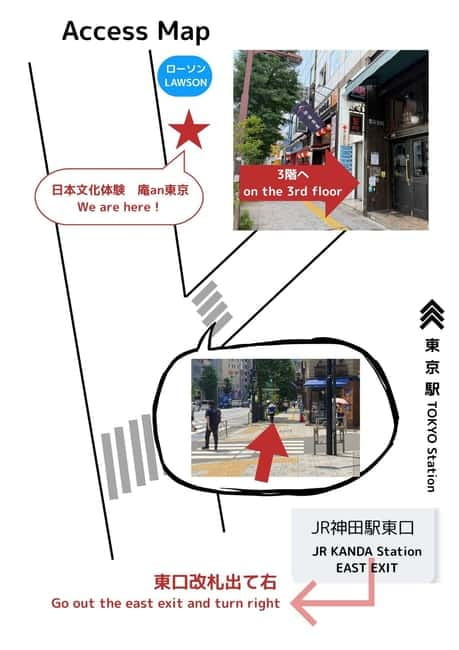
The meeting point is AN TOKYO Japanese Culture Experience at coordinates 35.6916541, 139.7715022. The supplied information does not give a street address, so use the coordinates and confirm the exact arrival instructions before setting out.
The activity runs between 10:00 and 17:00, with starting times available during those operating hours. Reservations received after 17:00 are handled the next day. That cutoff matters if you are booking late in the evening.
Plan to arrive with enough time to find the room. The provider will not hold the event for delays, and missed travel connections or other transport costs are not compensated. This is a timed class, so arriving at the last minute could mean missing the coloring explanation, which is the foundation for the first sweet.
The full activity lasts 95 minutes. Allow extra time before the start for finding the meeting point, and do not schedule an immediate appointment afterward. The class ends with eating, drinking, and room departure, so the posted 95 minutes is the useful planning figure.
Free cancellation is available up to 24 hours in advance for a full refund. After that point, cancellation fees apply, and changing the date or time after a fee has been incurred can bring another specified charge. Read the policy carefully before making a change.
What the class teaches well, and where it falls short
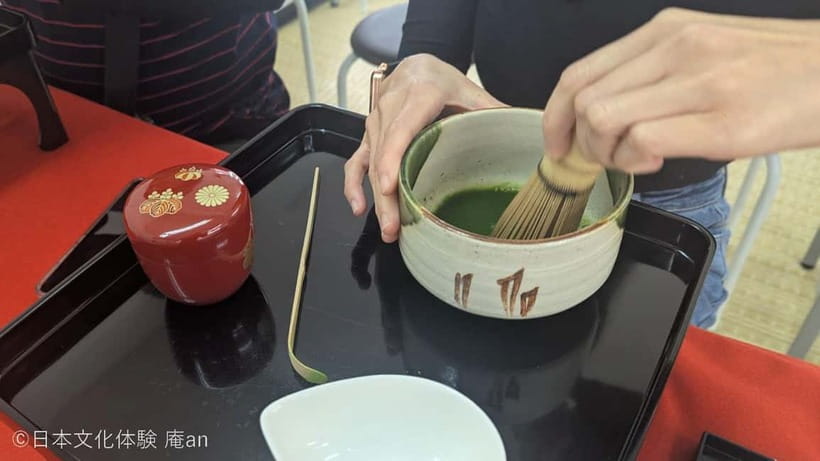
The strongest part is the connection between making and tasting. You color the paste, shape two sweets, prepare Matcha, and then try the finished pair together. That gives you a better grasp of the food than a simple demonstration would.
The use of Kyoto bean paste and single-origin Uji Matcha also gives the short class some substance. You are learning with ingredients linked to established Japanese food traditions, not simply copying a decorative craft.
The main weakness is communication in a busy room. Japanese instruction with limited English translation can work well when the teacher demonstrates each motion clearly. It works less well if you cannot hear or if the pace continues before everyone has finished.
For the best experience, watch the instructor’s hands, keep your materials in view, and ask for help as soon as you lose track. Contact the provider ahead of time if you want additional English support. Do not assume every technical term will be explained in English. The activity description itself does not name the technique, so it is worth asking the instructor to write down the names of the two sweets if you want to remember them.
Should you book the nerikiri and tea ceremony?
Book it if you want a low-cost, hands-on introduction to Japanese sweets and tea, especially if you enjoy making something rather than only watching. The two seasonal nerikiri designs, Kyoto bean paste, Uji Matcha, and final tasting give this short class a clear sense of purpose.
Think twice if you need a quiet private lesson or polished English narration. Group size and Japanese-first instruction can affect how much detail you catch. For most flexible visitors who arrive on time and are happy to learn by demonstration, $18 is an easy price to justify.
FAQ
How long does the Japanese sweets and tea ceremony experience last?
The activity lasts 95 minutes. The listed schedule includes making sweets, a break, tea instruction, Matcha preparation, picture time, and final eating and drinking time.
How much does the experience cost?
The price is $18 per person.
Where does the experience take place?
It takes place at AN TOKYO Japanese Culture Experience in Honshu, Japan. The supplied meeting coordinates are 35.6916541, 139.7715022.
What sweets will I make?
You will make two seasonal Japanese sweets. The program identifies them as a flower-shaped nerikiri and a Kinton nerikiri.
What is nerikiri?
Nerikiri is a high-grade Japanese sweet made from colored white bean paste shaped into seasonal flowers, fruits, or similar designs.
What ingredients are used?
The activity uses white and red bean paste produced by long-established Kyoto shops. It also uses single-origin Uji Matcha.
Do I prepare the Matcha myself?
Yes. You will see a Matcha grinding demonstration and then prepare your own Matcha as part of the tea-ceremony experience.
Is the class taught in English?
The instructor language is Japanese. English translation is provided as much as possible, and you can contact the provider if you would like additional English support.
Are any extras available?
A sweets take-out box costs 100 JPY. An experience completion certificate costs 300 JPY. Nominative certificates require your names in advance.
Can I cancel for a full refund?
You can cancel up to 24 hours in advance for a full refund. Cancellation fees apply after that point, and the provider does not hold the activity for late arrivals.
More Dessert Tours in Tokyo
- Matcha Making Class in Tokyo with Authentic Japanese Sweets Set
★ 5.0 · 744 reviews - Tokyo: Matcha Making Experience with Mochi Sweets in Asakusa
★ 4.9 · 388 reviews - Tokyo: Two Types of Japanese Sweets Making and Tea Ceremony
★ 4.6 · 26 reviews - Tokyo: Tea Ceremony & Japanese Traditional Sweets
★ 4.9 · 21 reviews
Just added around Tokyo
- Private Arrival Transfer : Narita International Airport to Central Tokyo City★ 4.5 · 12 reviews
- Narita Airport(NRT): Private Transfer to Tokyo/Yokohama 1-9pax★ 5.0 · 47 reviews
- Private Transfer from Narita Airport to Yokohama Port and City★ 4.5 · 17 reviews
- [Narita Airport Terminals 1, 2] 40-60km Sawara Itako Historic Bike Tour★ 5.0 · 13 reviews
- 3 Day Japan Highlights Tour: Tokyo, Mt.Fuji, Nara, Kyoto, Osaka★ 5.0 · 22 reviews
- Small Town in the Big City: Tasting Tokyo’s Kichijoji★ 5.0 · 195 reviews
- Small Town in the Big City: Tasting Tokyo’s Kichijoji★ 5.0 · 16 reviews
- The 10 Tastings of Tokyo With Locals: Private Street Food Tour★ 5.0 · 48 reviews
Tokyo Tours, compared.

Mt Fuji and Hakone 1-Day Bus Tour Return by Bullet Train
Read our review →

teamLab Planets TOKYO Digital Art Museum Entry Ticket
Read our review →
Mt Fuji & Hakone Cruise, Drum Show Bullet Train 1 Day from Tokyo
Read our review →
Sumo Show Experience with Chicken Hot Pot and a Photo
Read our review →
Shinjuku Food Tour (13 Dishes at 4 Local Eateries)
Read our review →
Tokyo Mt Fuji 5th St & Hakone Cruise Bus Tour w/Bullet Train
Read our review →
Flagship 2-Hours Official Street Go-Kart Tour – Tokyo Bay Shop
Read our review →Browse the lists this tour appears in