
Reviewed · TOKYO TOURS
Tokyo: Two Types of Japanese Sweets Making and Tea Ceremony
The clever part of this Tokyo experience is that you get three Japanese traditions in 125 minutes: pressed wasanbon sweets, two seasonal nerikiri designs, and matcha prepared in a casual tea setting. It is a tidy introduction to Japanese food culture, with ingredients supplied by long-established Kyoto shops and a single-origin matcha.
I especially like the seasonal angle and the chance to make the sweets yourself rather than simply watch. I also like the price, $28 per person, which gives you a full workshop rather than a quick tasting. The main consideration is that nerikiri takes a light touch, and English help is provided as much as possible, not promised as the main language.
Key points at a glance
- Three activities in one session: Make ohigashi, two seasonal nerikiri sweets, and matcha.
- Kyoto-sourced bean paste: The white and red bean paste comes from long-established Kyoto shops.
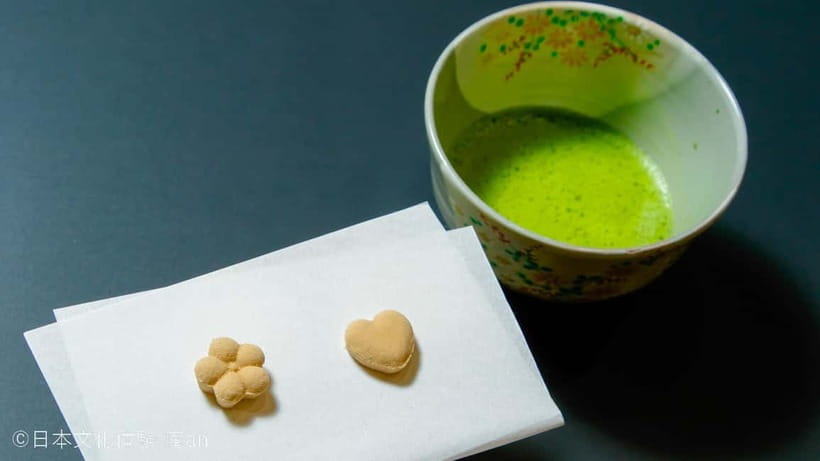
- Traditional wasanbon sugar: The dried sweets use fine Japanese sugar with a long place in confectionery making.
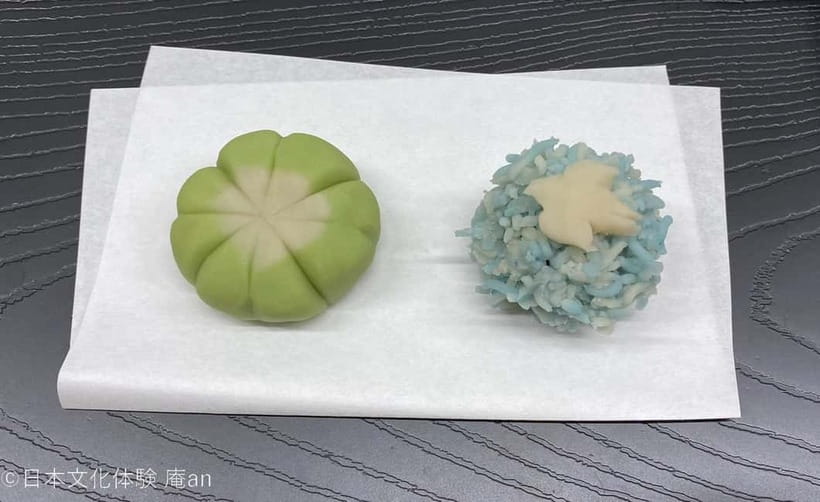
- Two different nerikiri styles: Shape one flower-style sweet and one kinton nerikiri.
- Matcha grinding demonstration: See how matcha is prepared before making your own cup.
- Good-value price: At $28, the session offers 125 minutes of hands-on culture, tasting, and instruction.
Three Japanese sweets traditions in one Tokyo class
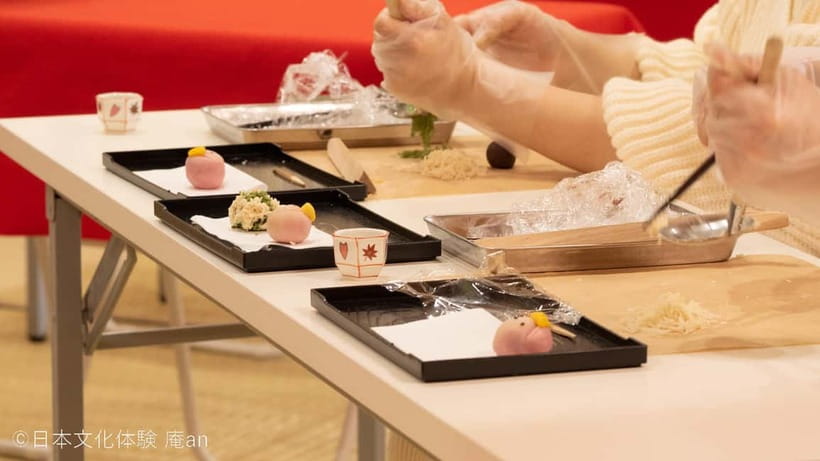
Many food activities give you one recipe, one sample, and a quick photograph. This workshop gives you a broader look at Japanese confectionery. You move from a firm, dry sweet to soft bean-paste shaping, then finish with matcha.
That order makes sense. Ohigashi is the simplest starting point because you work with wasanbon, a traditional Japanese sugar. Nerikiri needs more care, since the paste must be shaped and finished with some precision. Matcha then brings the session to a calm close.
The experience takes place at AN TOKYO Japanese Culture Experience in Tokyo. The supplied information identifies the instructor as Japanese, with English translation provided as much as possible. One recent participant specifically noted that the instructor gave instructions in English and explained the difference between green tea and matcha. Still, if you need detailed English instruction for every step, keep the language note in mind.
The rating is 4.6 from 26 ratings, and the strongest praise centers on the friendly instruction, the clear effort to explain Japanese sweets, and the fact that all three parts feel worthwhile. That matches the structure of the class: you are not paying for one narrow demonstration.
More Tea Ceremonies in Tokyo
- Tokyo: Traditional Tea Ceremony with a Tea Master
★ 5.0 · 528 reviews - Tea Ceremony Workshop in Tokyo by the Experienced Instrucor
★ 5.0 · 189 reviews - Tokyo: Asakusa Kimono Dressing and Matcha Experience
★ 4.9 · 173 reviews
Ohigashi and the quiet craft of wasanbon
The first hands-on activity is ohigashi, a dried Japanese sweet made with wasanbon. This traditional sugar is pressed into shapes, producing a delicate confection with a dry texture and refined sweetness.
The activity is described as easy, which makes it a good opening task. You can learn the basic method without first tackling the softer and more delicate bean paste used for nerikiri. It also gives you an early taste of how Japanese sweets often value form and restraint as much as sweetness.
The use of wasanbon matters. This is not simply ordinary granulated sugar molded for a class. The ingredient has a traditional role in Japanese confectionery, and the workshop lets you handle it as part of the making process.
Ohigashi is also a useful contrast to nerikiri. The two sweets may sit side by side, but they behave differently. One is dry and pressed. The other is soft, pliable, and shaped by hand. That contrast helps you understand why Japanese confectionery is not one single style.
You will have time to make the ohigashi before a short break at about the 20-minute mark. The schedule is brisk, but the first activity should not demand the same fine control as the next one.
Seasonal nerikiri, from flower shapes to kinton
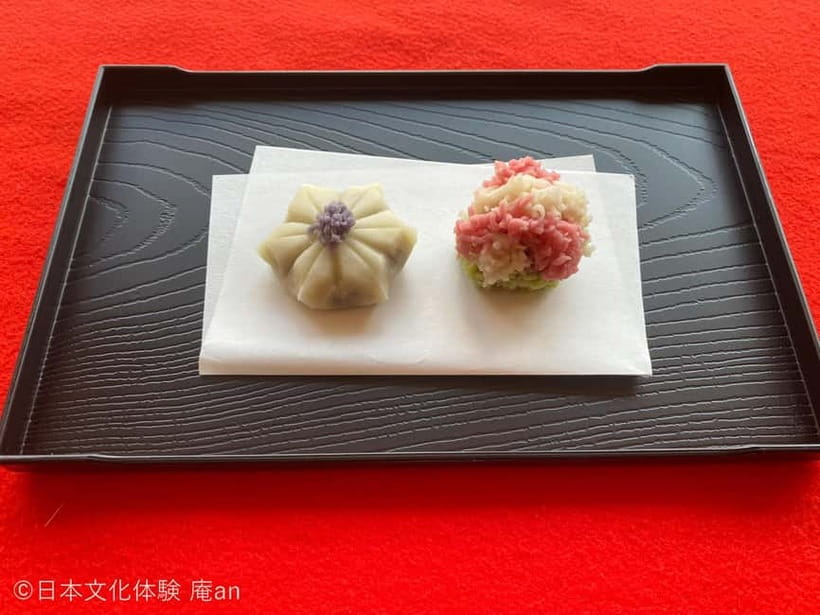
After the first break, the workshop turns to nerikiri. You make two seasonal Japanese sweets from white and red bean paste supplied by long-established shops in Kyoto.
The first is a flower-shaped nerikiri. The second is a kinton nerikiri, a style known for a looser, thread-like appearance. The two designs give you different shaping tasks and keep the session from feeling repetitive.
This is the most hands-on part of the class. The bean paste is soft, and the shape depends on gentle pressure and careful handling. One participant found this stage more difficult than making ohigashi and noted that it required some sensitivity. That is useful advice: do not rush this section, and do not expect your first piece to look exactly like the instructor’s.
The point is not flawless pastry work. You get to see how a few basic movements turn bean paste into a seasonal image. The finished sweets are also meant to be eaten, so the activity connects appearance, texture, and taste.
The seasonal design gives the class a Japanese sense of time. The exact motifs can change with the season, so the sweets are not just generic cakes with decorative colors. They reflect the custom of using nature and seasonal change as inspiration for food.
The class allows adding color for an extra 200 JPY. Since the main price does not include that option, ask about it before you begin if color is important to you. A take-out box is also available for 100 JPY, which is worth considering if you want to save one of your creations rather than eat everything during the session.
A useful lesson in Japanese sweets
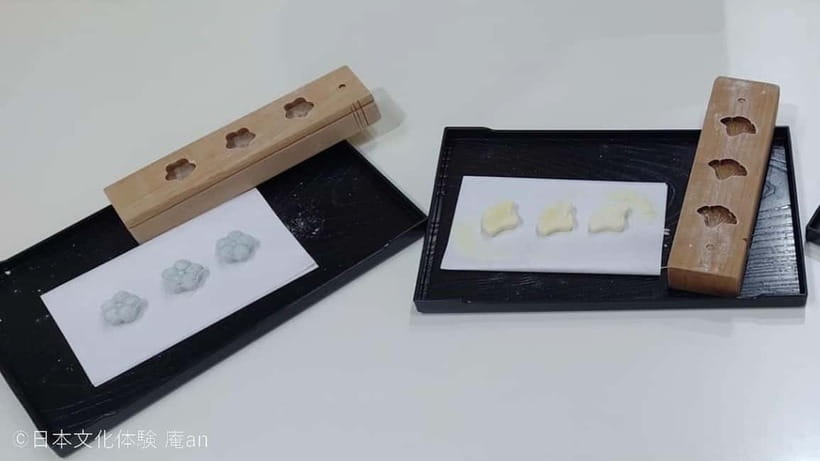
The instructor does more than guide your hands. The session includes an explanation of Japanese traditional sweets and the difference between types of o-kashi. One participant also found the explanation of the difference between green tea and matcha useful.
That background gives the food more meaning. You learn that ohigashi and nerikiri are not simply two cute snacks. They represent different textures, ingredients, and methods. You also see that matcha is not just a green version of ordinary tea.
This is where the experience earns its cultural value. You are not asked to memorize a long lecture. Instead, the information arrives while you are working with sugar, bean paste, and tea. For many people, that is easier to remember than a formal talk.
The class is also a good fit if you enjoy food but do not want a full cooking course. You are making recognizable Japanese sweets, yet the time commitment remains just over two hours.
Same base, a completely different sort of day:
- Mt Fuji and Hakone 1-Day Bus Tour Return by Bullet Train
★ 5.0 · 26,383 reviews - 1-Day Tokyo Bus Tour
★ 5.0 · 14,250 reviews - Tokyo: TOKYO SKYTREE® Admission ticket
★ 4.5 · 11,192 reviews - Tokyo: teamLab Planets TOKYO Digital Art Museum Entry Ticket
★ 4.6 · 9,779 reviews
The matcha section and casual tea ceremony
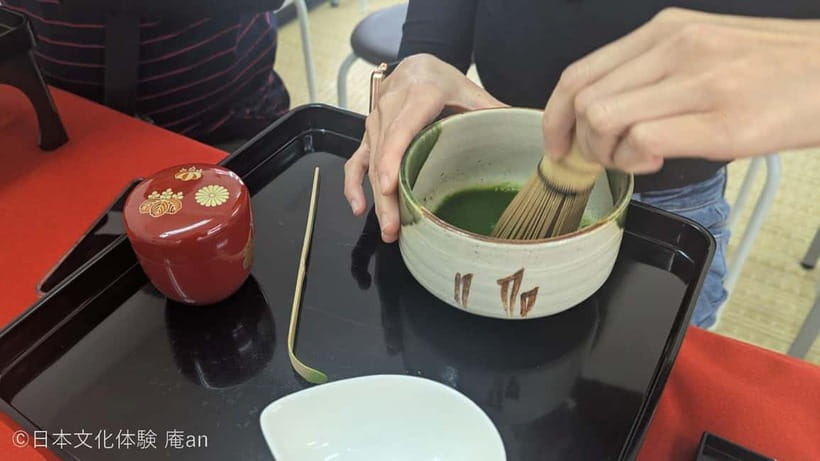
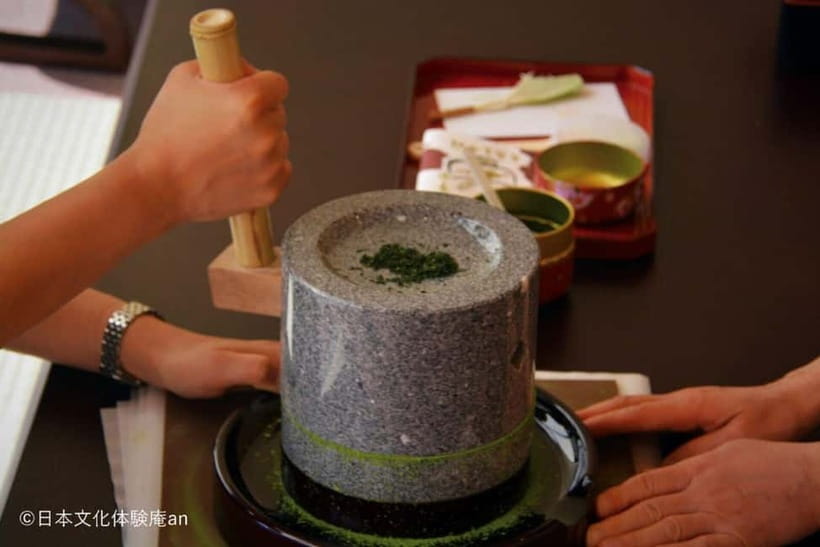
At about 95 minutes, the class changes pace. You receive an explanation about tea, watch a matcha grinding demonstration, and then take part in a casual tea ceremony.
The matcha is described as single-origin special matcha. That gives the final section a more focused character than simply mixing powdered green tea into hot water. You will see the preparation before making your own cup.
The schedule says that whisking the tea is easy. That is welcome after the more delicate nerikiri work. You can concentrate on the movement, the foam, and the taste without feeling that the final activity is another test of precision.
The ceremony is casual, so this is not presented as a strict formal tea school lesson. That makes it approachable if you have never taken part in a tea ceremony. You get a taste of the manners and preparation without needing prior knowledge.
The distinction between green tea and matcha is worth hearing. Matcha is prepared differently, and the experience gives you a chance to connect that difference with what you are drinking. The grinding demonstration also shows part of the process behind the powder in your bowl.
After the tea ceremony, there is picture time, followed by eating and drinking time. The planned end of the main experience is around 115 minutes, with room departure at 125 minutes.
How the 125-minute schedule feels
The timetable is carefully divided:
- At the start, you hear an explanation of traditional sweets.
- Around 20 minutes, you have a break after making ohigashi.
- At about 30 minutes, you begin the flower-shaped nerikiri.
- Next comes the kinton nerikiri.
- Around 85 minutes, there is another break.
- At 95 minutes, the tea explanation and matcha section begin.
- At 115 minutes, the formal experience ends.
- The final ten minutes are for eating and drinking before departure.
That structure gives you several changes of pace. You are not sitting for two hours, and you are not making sweets without pause. Breaks also help because the nerikiri section requires attention.
The schedule leaves little room for late arrival. The provider says the event cannot be held for delayed participants. Plan to reach the meeting point on time, and do not assume the session can wait for a late train or a long taxi ride.
The operating hours are 10:00 to 17:00. Reservations received after 17:00 are processed the next day, so same-day questions late in the afternoon may not receive an immediate response.
What the $28 price includes
At $28 per person, the price is reasonable for a 125-minute activity with three separate parts. You are not only tasting sweets. You are handling ingredients, shaping two types of nerikiri, preparing matcha, watching the grinding demonstration, and learning about the food.
The price also includes the set experience for the two types of sweet making and tea ceremony. You should budget a little extra only if you want optional items: a take-out box costs 100 JPY, adding color costs 200 JPY, and an experience completion certificate costs 300 JPY.
The optional box is the most practical extra. Nerikiri is made for eating, but you may prefer to carry one piece away, especially if you are already full from other Japanese food. The certificate is a souvenir choice rather than a necessary part of the class.
For a couple or family, the total rises quickly, but the session still offers more activity than a short tea tasting. It also works well when you want a cultural stop that does not take an entire day.
Language, timing, and small practical matters
The instructor is Japanese, and English translation is provided as much as possible. A recent session included English instructions, so you may receive useful guidance in English, but the published language information remains Japanese. If a particular step is unclear, watch the demonstration closely and ask for help.
Only people taking part in the experience may enter. This means a non-participating companion cannot simply come inside to wait. Children under two who sit on a parent’s lap are free, while the supplied information does not provide broader child-pricing details.
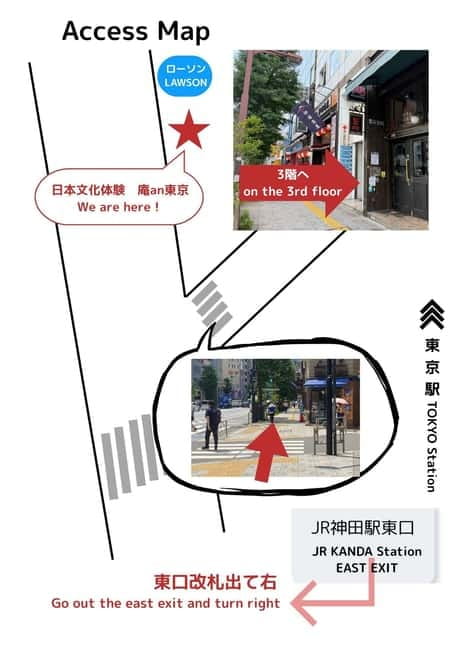
The meeting point is AN TOKYO Japanese Culture Experience. You should contact the provider if you want to reserve the property, as requested in the practical information.
Free cancellation is available up to 24 hours before the start for a full refund. You can also reserve now and pay later, which helps if your Tokyo schedule is still moving around. Be aware that if you cancel, the provider will not cover your transport costs to the venue.
Who will enjoy this Japanese sweets workshop
I would choose this experience for you if you want an activity with your hands busy and your mind learning. It suits first-time visitors who want a compact introduction to Japanese food traditions, as well as repeat visitors looking for something beyond temples, shopping, and city views.
It is particularly good for:
- People curious about Japanese sweets and tea
- Couples looking for a shared activity
- Families with very young children, within the stated lap-child policy
- Food-focused visitors who want to taste what they make
- Anyone interested in seasonal design and careful presentation
- Visitors who prefer a casual tea ceremony to a formal, lengthy ritual
You should be comfortable with a little uncertainty in the nerikiri section. The sweets may not look perfect, and that is part of the fun. If you want a polished pastry class with fully detailed English instruction, this may not be the right match.
The workshop is also not ideal for someone who only wants to sample finished sweets. Much of the value comes from making them yourself, so passive tasting is not the main purpose.
Is this Tokyo experience worth booking?
I think this is a strong buy at $28 if you want three linked activities in one short session. The best reasons are the Kyoto bean paste, traditional wasanbon, seasonal nerikiri, single-origin matcha, and an instructor who makes an effort to explain the cultural background.
Book it if you like food activities that are structured but not exhausting. Add the 100 JPY take-out box if you want to carry a sweet with you, and arrive early enough that a delayed train does not ruin the session.
Skip it if you need guaranteed full English instruction, cannot arrive on time, or would rather spend your budget on a simple tea tasting. For everyone else, this is a practical and personable way to spend two hours in Tokyo, with something to eat at the end and a better sense of how Japanese sweets and matcha fit together.
FAQ
Where does the Japanese sweets and tea experience take place?
It takes place at AN TOKYO Japanese Culture Experience in Tokyo, on Honshu, Japan.
How long does the activity last?
The full experience lasts 125 minutes. The main scheduled activities finish around 115 minutes, followed by eating and drinking time before departure.
How much does the experience cost?
The listed price is $28 per person.
What sweets will I make?
You will make traditional dried ohigashi using wasanbon sugar, then make two seasonal nerikiri sweets. The nerikiri designs include a flower-shaped sweet and a kinton nerikiri.
What ingredients are used for the nerikiri?
The white and red bean paste comes from long-established shops in Kyoto.
Is tea included?
Yes. You will learn about tea, watch a matcha grinding demonstration, make your own matcha, and take part in a casual tea ceremony.
What language is the experience offered in?
The instructor is Japanese. English translation is provided as much as possible, but the listed language is Japanese.
Are any extras available for an additional fee?
Yes. A sweets take-out box costs 100 JPY, adding color costs 200 JPY, and an experience completion certificate costs 300 JPY.
Can I cancel the booking?
You can cancel up to 24 hours in advance for a full refund. You can also reserve now and pay later. The event cannot be held for late arrivals, and transport expenses are not compensated if the booking is canceled.
More Dessert Tours in Tokyo
- Matcha Making Class in Tokyo with Authentic Japanese Sweets Set
★ 5.0 · 744 reviews - Tokyo: Matcha Making Experience with Mochi Sweets in Asakusa
★ 4.9 · 388 reviews - Japanese Traditional Sweets making and Tea Ceremony
★ 4.7 · 50 reviews - Tokyo: Tea Ceremony & Japanese Traditional Sweets
★ 4.9 · 21 reviews
Just added around Tokyo
- Private Arrival Transfer : Narita International Airport to Central Tokyo City★ 4.5 · 12 reviews
- Narita Airport(NRT): Private Transfer to Tokyo/Yokohama 1-9pax★ 5.0 · 47 reviews
- Private Transfer from Narita Airport to Yokohama Port and City★ 4.5 · 17 reviews
- 3 Day Japan Highlights Tour: Tokyo, Mt.Fuji, Nara, Kyoto, Osaka★ 5.0 · 22 reviews
- [Narita Airport Terminals 1, 2] 40-60km Sawara Itako Historic Bike Tour★ 5.0 · 13 reviews
- Small Town in the Big City: Tasting Tokyo’s Kichijoji★ 5.0 · 195 reviews
- Small Town in the Big City: Tasting Tokyo’s Kichijoji★ 5.0 · 16 reviews
- The 10 Tastings of Tokyo With Locals: Private Street Food Tour★ 5.0 · 48 reviews
Tokyo Tours, compared.

Mt Fuji and Hakone 1-Day Bus Tour Return by Bullet Train
Read our review →

teamLab Planets TOKYO Digital Art Museum Entry Ticket
Read our review →
Mt Fuji & Hakone Cruise, Drum Show Bullet Train 1 Day from Tokyo
Read our review →
Sumo Show Experience with Chicken Hot Pot and a Photo
Read our review →
Shinjuku Food Tour (13 Dishes at 4 Local Eateries)
Read our review →
Tokyo Mt Fuji 5th St & Hakone Cruise Bus Tour w/Bullet Train
Read our review →
Flagship 2-Hours Official Street Go-Kart Tour – Tokyo Bay Shop
Read our review →Browse the lists this tour appears in