
Reviewed · KYOTO TOURS
KIYOTO’s Kyoto Private Tour: Highlights & Hidden Gems
Kyoto’s big sights are spread across the city, and this private tour tries to connect many of them in one day. You can move from the vermilion gates of Fushimi Inari to Kiyomizu-dera, Gion, Nishiki Market, the Golden Pavilion, and Arashiyama without spending your day decoding bus maps.
I like the private format, since you can ask questions, slow down for photos, or adjust the plan. I also like the mix of famous places and smaller stops such as Tatsumi Bridge and the Arashiyama Kimono Forest. The main consideration is pace: fitting all 14 stops into 4 to 8 hours is ambitious, and entry fees, food, drinks, and transport cost extra.
Key points to know before booking
- A private guide keeps the day flexible, with only your group taking part.
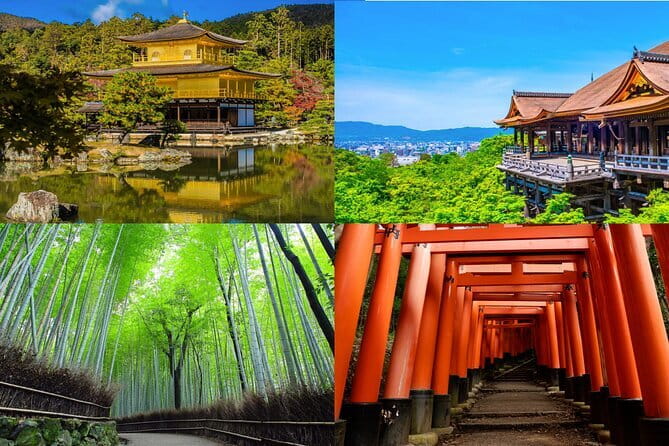
- The route covers both eastern and western Kyoto, from Fushimi Inari and Kiyomizu-dera to Kinkaku-ji and Arashiyama.
- Photo help is part of the service, a useful touch for couples and families who want more than quick selfies.
- The day can be tailored, with guides such as Akiyo and Yuhey praised for adjusting plans to suit individual interests.
- The price is $177.90 per person, before attraction tickets, meals, and transportation costs.
- The 14-stop list is a menu, not a promise of leisurely sightseeing, especially on the shorter four-hour version.
A private way to get your Kyoto bearings
This experience begins at the Kyoto Tourist Information Center, Kyo-Navi, on the second floor of Kyoto Station. That is a practical meeting point, especially if you are arriving by train or staying near the station. The tour ends back at the same meeting point, so you do not have to work out a return route from an unfamiliar part of town.
The biggest advantage is having one person help you make sense of Kyoto’s layout. The city’s temples, shrines, markets, and old districts are not arranged in one neat sightseeing zone. A guide can explain what you are seeing while helping you move between areas, though transportation is not included and public transit may be used at an added cost.
The tour is private, so your group has the guide’s attention. That matters if you have children, limited time, particular food interests, or a strong preference for temples over shopping streets. It also gives you room to ask basic questions without holding up a large group.
Several named guides appear in the available feedback. Yuhey is praised for a relaxed manner, broad subject knowledge, planning, photographs, and even a short video from each tour. Akiyo is noted for balancing popular sights with less familiar places and arranging an encounter with a master potter. Paren guided a family on a rainy afternoon and kept the outing casual and flexible. These examples suggest a friendly team, but the exact guide is not guaranteed unless confirmed for your booking.
More Hidden Gems Walks in Kyoto
- Kyoto Geisha Walking Tour: Gion District & Hidden Gems
★ 4.7 · 3,273 reviews - Private Kyoto Tour with a Local, Highlights & Hidden Gems, Personalised
★ 5.0 · 1,543 reviews - Arashiyama Bamboo Forest & Hidden Gems Bike Tour (Early Bird)
★ 5.0 · 613 reviews
Pontocho and Fushimi Inari set the tone
The first stop is Pontocho, a narrow lane beside the Kamo River between Sanjo and Shijo streets. It is one of Kyoto’s five geisha districts, with traditional buildings, restaurants, and tea houses packed into a very small space.
Ten minutes here is enough for an introduction and a few photographs, but not for a full meal or a long look at the district. I see this as a scene-setter rather than a major visit. Your guide can explain how Pontocho fits into Kyoto’s dining and entertainment culture before the day moves on.
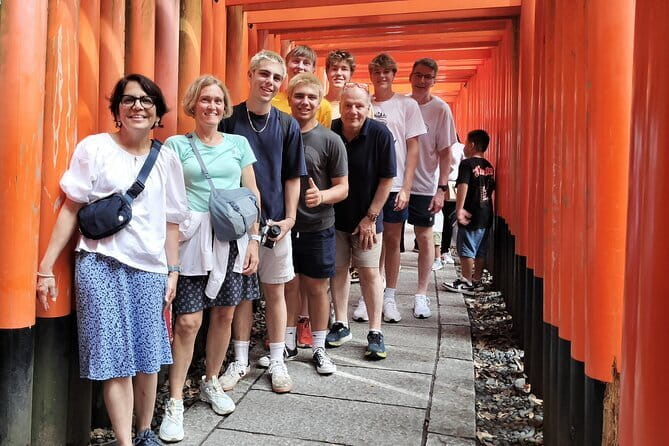
Fushimi Inari-taisha is a far bigger experience. The shrine is famous for its Senbon Torii, the long passage of orange-red gates that climbs into the wooded hills. Each gate has been donated by an individual or business, and the repeated forms create one of Kyoto’s most striking walks.
The listed stop allows about an hour. That gives you time to enter the shrine grounds and walk through part of the gates, but not enough for a full climb if you stop often. Wear shoes suited to slopes and steps. Your guide can help you decide how far to go based on your energy and the rest of the day.
Kiyomizu-dera, old lanes, and a clever coffee stop
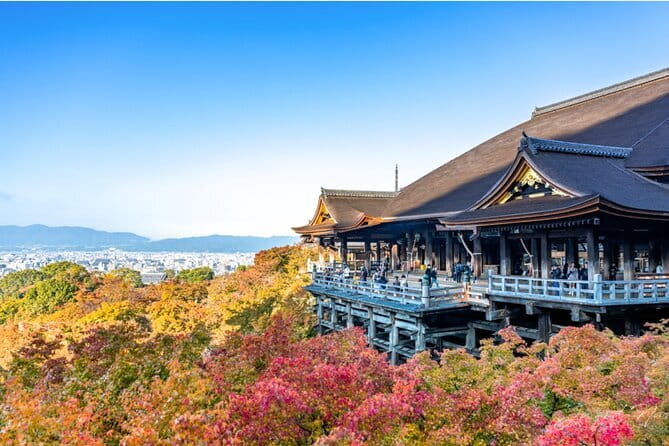
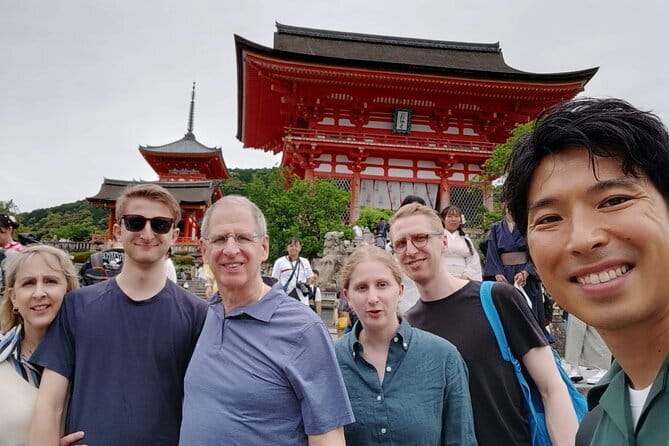
Kiyomizu-dera sits on the wooded slopes of Mount Otowa and is one of Kyoto’s essential temple visits. Its famous wooden stage gives the temple its visual punch, with broad views over the city and surrounding hills. The setting is as important as the architecture here.
The temple entrance fee is not included. Allow an hour for the main grounds, photographs, and the approach through the busy streets. The surrounding area can take longer than expected because the climb toward the temple passes shops, food counters, and old-style buildings.
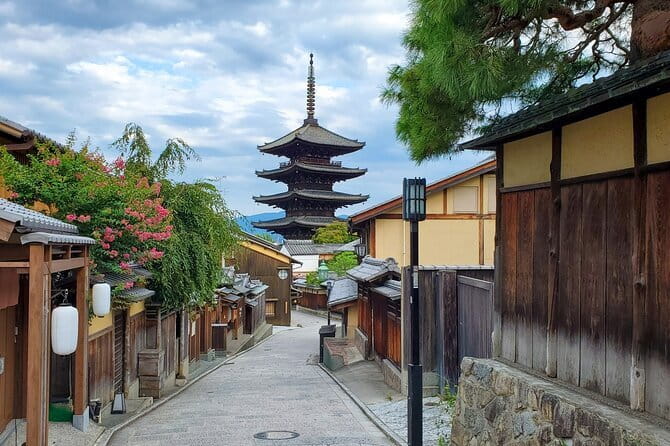
Sannenzaka and Ninenzaka lead toward Kiyomizu-dera on stone-paved slopes lined with traditional buildings. This is one of the best places on the tour for the feeling of old Kyoto, though it can be crowded and the sloping pavement may be tiring.
The five-minute stop at Starbucks Kyoto Nineizaka Yasaka Chaya is unusual. The café occupies a traditional machiya townhouse, so you can briefly see how a modern brand has adapted to an old Kyoto building. You are free to leave the tour if you want to stay, but five minutes is really an orientation stop, not a coffee break.
Nearby, Yasaka Pagoda, part of Hokan-ji Temple, provides one of the district’s most recognizable views. The five-minute visit is mainly for photographs. The time is enough to see the pagoda from the street, but not for a full temple visit.
Gion and Nishiki Market bring Kyoto to life
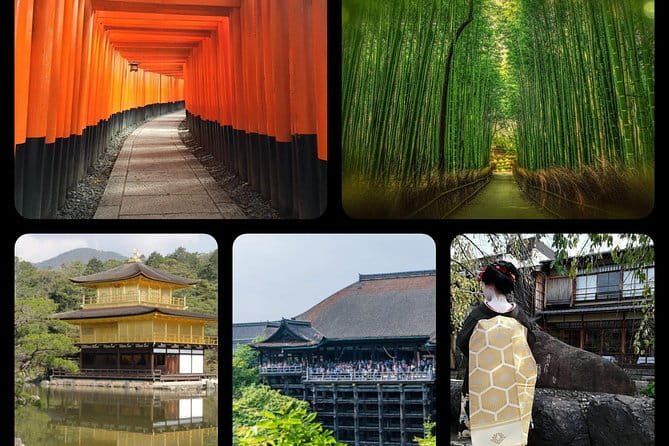
Hanamikoji Street runs through Gion, Kyoto’s best-known geisha district. Its stone paving and traditional façades make it a natural place for a short walk, but the five-minute allowance is brief. Treat it as a quick look at the district’s character, not a chance to explore every lane.
Tatsumi Bridge is another short stop, this time beside the Shirakawa River. The small wooden bridge and narrow waterway offer a quieter scene than the main Gion streets. Ten minutes should give you a photograph and a quick explanation of the area.
Nishiki Market gets a full hour, which is more useful. Known as Kyoto’s Kitchen, it is packed into a covered shopping street with foods, ingredients, and local specialties. You can use this part of the tour to ask what you are looking at instead of guessing from signs.
Food is not included, so budget separately for anything you want to taste. Also remember that a market is not just a snack stop. It is a working shopping street, and your guide can help you understand how food fits into everyday Kyoto culture. One hour gives you a chance to browse, but a serious tasting session may require more time.
More off-the-list walks in Kyoto:
- Kyoto: Hidden Gems E-Bike Tour with Local Japanese Guide
★ 4.9 · 189 reviews - Kyoto: Gion Hidden Gems & Geisha Culture Tour
★ 4.9 · 126 reviews - Highlights & Hidden Gems With Locals: Best of Kyoto Private Tour
★ 5.0 · 121 reviews - Kyoto: Hidden Gems E-Bike Tour Through Backstreets & Temples
★ 4.9 · 54 reviews
Kinkaku-ji is spectacular, but timing matters
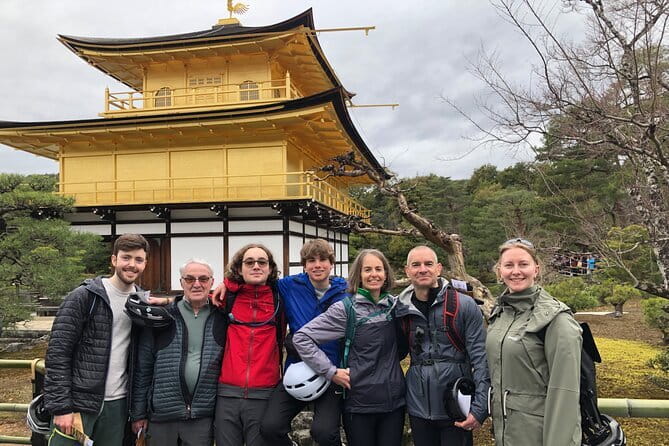
Kinkaku-ji, the Golden Pavilion, is one of Kyoto’s most photographed sights. The three-story pavilion gleams beside its pond, and the contrast between gold, water, and garden is the reason it attracts such attention.
The temple admission fee is extra, and the listed visit lasts about an hour. That is enough to follow the viewing route and take photographs. You should expect a set path rather than a quiet, open-ended temple visit.
Kinkaku-ji is in northern Kyoto, while Arashiyama is farther west. Placing both in the same outing can work only with efficient transport and a firm sense of priorities. Since transportation is not included, ask before booking how your guide expects to connect the stops and how much time will be spent in transit.
This is also where the tour’s flexible length matters. On a four-hour booking, you should not expect to see every listed site properly. If Kinkaku-ji and Arashiyama are priorities, tell the guide early and accept that some eastern Kyoto stops may become brief photo visits.
Arashiyama offers three very different sights
Tenryuji is a major Zen temple in Arashiyama, founded in 1339 by Ashikaga Takauji on the site of a former imperial villa. Its grounds connect religious history with gardens and mountain views. The suggested visit is 30 minutes, and admission is extra.
That half hour works for a focused visit, especially if you want the temple grounds and a short explanation. It is less suitable if you want to linger over every garden detail or add a longer temple walk.
The Arashiyama Bamboo Forest follows. The path runs for roughly 400 meters and is one of Kyoto’s most familiar images. The tall bamboo creates a cool, enclosed corridor, but the path is short and the stop lasts about 30 minutes. I would keep expectations realistic: this is a striking walk, not a full-day woodland outing.
The Arashiyama Kimono Forest is a different sort of sight. Near Randen Arashiyama Station, about 600 cylindrical pillars display kimono-pattern designs, each around two meters tall. Ten minutes is enough to see the installation and take photographs. It adds a modern art note to a day otherwise filled with temples and old streets.
Togetsukyo Bridge crosses the Oi River for 155 meters. Its name means Moon-Crossing Bridge, and the surrounding river views make it a calm final stop. Ten minutes gives you a look from the bridge and a few pictures, while a longer pause would be better if you want to sit by the water.
What $177.90 per person really buys
At $177.90 per person, this is not a cheap way to hire a walking guide. The value comes from privacy, planning, language support, local explanations, and the ability to change the pace for your own group.
The price makes more sense for two or more people who want personal attention and a planned day. It is also useful if Kyoto is your first visit and you want help choosing what deserves your limited time. A private guide can save you from spending half a morning on a wrong train or missing a major sight because you misunderstood the route.
You must add attraction tickets, food, drinks, and transportation. The guide’s related costs are also to be covered by the group. Kiyomizu-dera, Kinkaku-ji, and Tenryuji all list admission as extra, so the final cost will be higher than the headline price.
The tour includes a passionate guide who can take photographs and aims to provide omotenashi, the Japanese idea of warm, attentive hospitality. The photo service may be especially valuable for couples or families. Yuhey’s reported use of photographs and short videos shows how this part of the service can become more than a quick snapshot.
Who will get the most from this tour
I would choose this experience if you want a private introduction to Kyoto and do not want to build your own transport plan. It suits first-time visitors, families, couples, and small groups with mixed interests.
It is also a good fit if you want to combine major sights with less obvious corners. Akiyo’s pottery connection shows the potential for a customized day, though you should request special interests in advance rather than assume a craft visit is included.
The tour may be less suitable if you prefer slow temple visits, long meals, or extended time in one neighborhood. Fourteen stops create a broad overview, but the shorter version will feel rushed. Even the eight-hour version needs sensible choices, especially if it includes both Kinkaku-ji and Arashiyama.
Most people can participate, and service animals are allowed. The experience is near public transportation, but it is primarily a walking day with slopes, temple approaches, and repeated movement between sights. If walking is a concern, discuss the plan before you book.
Practical details that shape the day
Confirmation arrives at booking, and free cancellation is available up to 24 hours before the start time. Changes or cancellations inside that window are not accepted for a refund.
The activity is booked about 31 days ahead on average, so reserve early if you need a particular date or hope for a named guide. You should also confirm the starting time, preferred sights, walking ability, and transport plan with the provider, Tasty Tours Japan.
Rain does not have to cancel the experience. Paren handled a rainy family outing with a casual approach, but wet weather can make stone slopes and long outdoor walks less comfortable. A flexible plan and suitable shoes will help.
Should you book KIYOTO’s Kyoto Private Tour?
Book it if you want a friendly private guide, good photo help, and a broad first look at Kyoto. The strongest part is the ability to shape the day around your group, with famous temples, food streets, Gion scenes, and Arashiyama all available within one plan.
Before paying, decide which three or four places matter most. Ask how the guide will handle the long distance between eastern Kyoto, Kinkaku-ji, and Arashiyama, and remember that entry fees and transport are extra.
For a relaxed day, request fewer stops. For a fast, wide-ranging introduction, keep the full route and accept short visits. At 4.9 out of 5 with a 97 percent recommendation rate, the experience has a strong record, but the mixed account about a newer guide is a useful reminder to confirm your expectations. The right guide and a realistic pace can make this a very effective first day in Kyoto.
FAQ
Where does the Kyoto private tour start?
It starts at the Kyoto Tourist Information Center, Kyo-Navi, on the second floor of Kyoto Station, in Shimogyo Ward, Kyoto 600-8216.
Where does the tour end?
The activity ends back at the meeting point at Kyoto Station.
How long does the experience last?
The tour lasts approximately 4 to 8 hours.
Is this a private tour?
Yes. Only your group participates in the activity.
What sights may be included?
The planned stops include Pontocho, Fushimi Inari-taisha Shrine, Kiyomizu-dera Temple, Sannenzaka and Ninenzaka, Yasaka Pagoda, Hanamikoji Street, Tatsumi Bridge, Nishiki Market, Kinkaku-ji Temple, Tenryuji Temple, the Arashiyama Bamboo Forest, the Arashiyama Kimono Forest, and Togetsukyo Bridge.
Are entrance tickets included?
No. Food, drinks, and attraction tickets are not included. Kiyomizu-dera, Kinkaku-ji, and Tenryuji list admission as extra.
Is transportation included?
No. The experience is primarily a walking tour. Public transportation may be used at an additional cost, and the group is asked to cover transportation costs for the guide as well as for themselves.
Are service animals allowed?
Yes, service animals are allowed.
What is the cancellation policy?
You can cancel up to 24 hours before the experience start time for a full refund. Cancellations or changes made less than 24 hours before the start time are not accepted for a refund.
Just added around Kyoto
- Kyoto: Zen Meditation at a Private Temple with a Monk★ 5.0 · 25 reviews
- Kyoto: Gion Geisha District & Sake-in-Hand Walking Tour★ 5.0 · 37 reviews
- Private Pewter Sake Cup Experience with a Kyoto Artisan★ 5.0 · 31 reviews
- Your Private Vacation Photography Session In Kyoto★ 5.0 · 110 reviews
- Private Guided Traditional Buddhist Cooking in Japan★ 5.0 · 16 reviews
- Kyoto Wagashi(Japanese sweets) Cooking Class near Fushimiinari★ 5.0 · 60 reviews
- Traditional Japanese Music show & Experience Tour in Kyoto★ 5.0 · 57 reviews
- Kyoto:Family-Friendly Kimono & Yukata Experience at WARGO★ 5.0 · 147 reviews
Kyoto Tours, compared.


Fushimi Inari, Kinkakuji, Bamboo Grove 1 Day Bus Tour
Read our review →
Tea Ceremony in a Traditional Tea House in Kiyomizu
Read our review →
Kyoto Geisha Walking Tour: Gion District & Hidden Gems
Read our review →

Gion Magical Night Walking Tour with Geisha Trivia
Read our review →

Gion Geisha District Walking Tour – Stories of Geisha
Read our review →Browse the lists this tour appears in