
Reviewed · BAMBOO GROVE TOURS
Kyoto: Arashiyama Customized Rickshaw Tour & Bamboo Forest
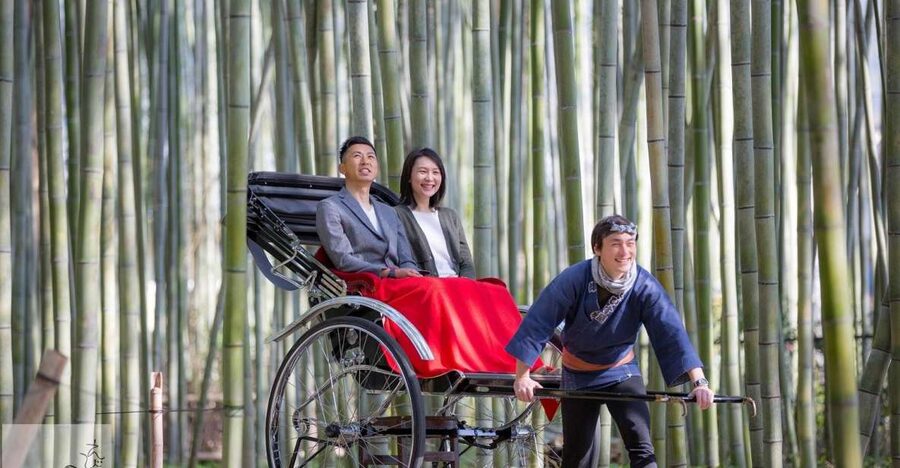
Arashiyama’s bamboo grove is beautiful, but the ordinary pedestrian route can feel crowded and hurried. This private rickshaw tour gives you a calmer way through the bamboo, with your guide pulling you along a rickshaw-only path and stopping for photos at the best-looking spots. I especially like the combination of quiet neighborhood lanes and famous sights, plus the chance to shape the longer tours around your interests.
I also like how much personality the guides bring. Names such as Aki, Koki, Shin, Yoshi, Lucas, and Yuya appear again and again in the experience, with strong English, local advice, and a knack for taking good couple and family photos. The main drawback is the narrow rickshaw, just 74 centimeters wide, and the physical demands on the driver, especially on longer or uphill rides.
Key points at a glance
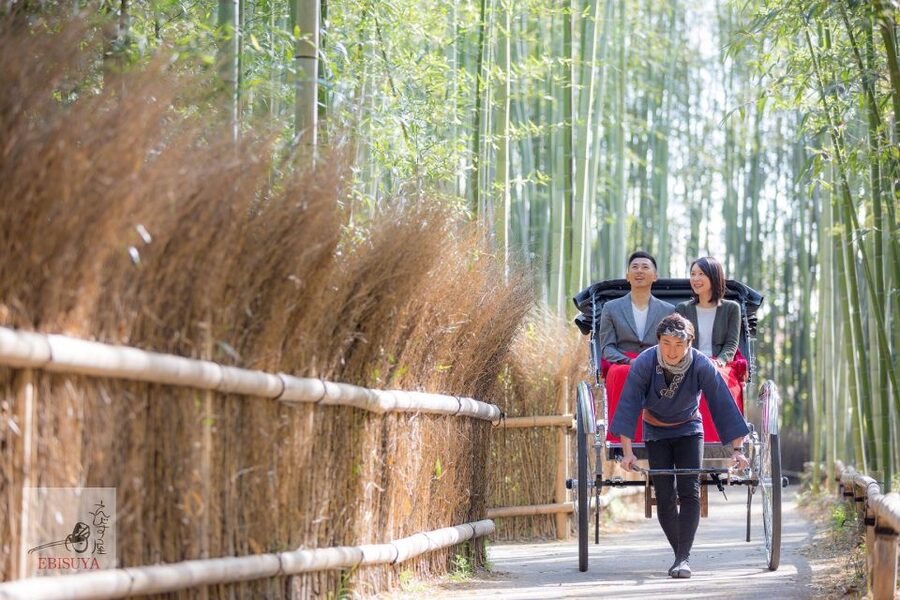
- A private ride through the bamboo: Your rickshaw can use a special path through the forest that is quieter than the main walking route.
- Four tour lengths: Choose 45, 70, 130, or 190 minutes, depending on whether you want a quick introduction or a fuller Arashiyama visit.
- More than the famous grove: Longer options can include Nonomiya Shrine, Rakushisya cottage, Nison-in, other temples, shrines, gardens, and quiet local streets.
- Personal guide and photographer: English and Japanese-speaking guides explain local culture, answer questions, and take photos at scenic stops.
- A smart choice in bad weather: Blankets, leg covers, and rain protection can make the ride comfortable in cold, wet conditions.
- Small-space seating: Each rickshaw carries up to two adults, with limited room for children on adult laps.
Starting at Togetsu-kyo Bridge
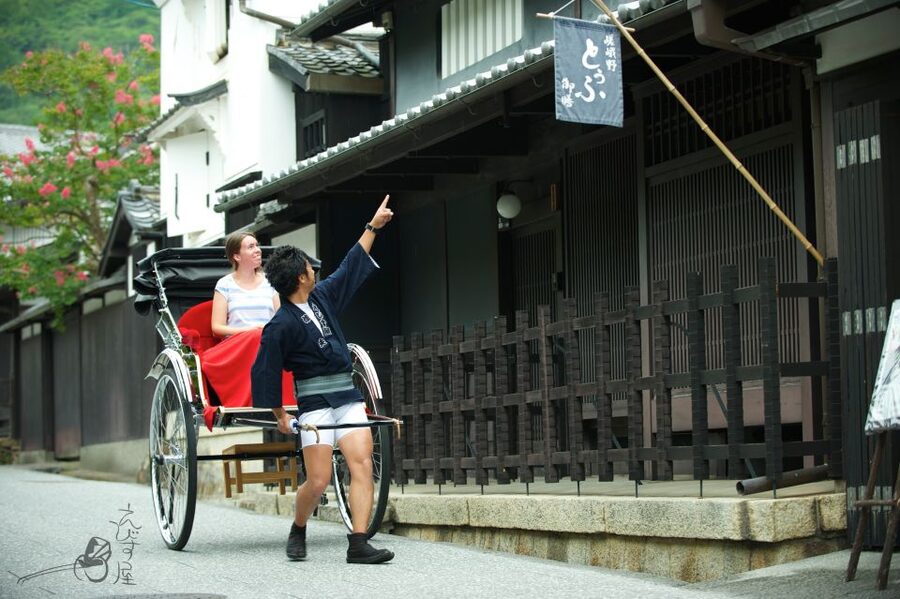
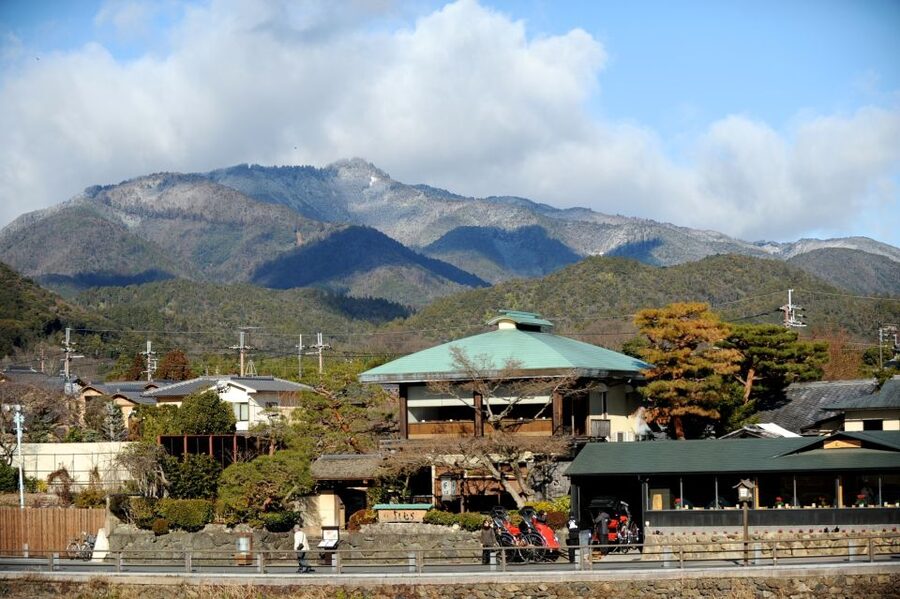
Your meeting point is at or near Togetsu-kyo Bridge, depending on the option you book. This is a useful place to begin because the bridge is one of Arashiyama’s key landmarks and an easy visual marker in a district filled with small lanes and busy pedestrian routes.
The bridge crosses the Katsura River on Kyoto’s western edge. From here, the tour quickly shifts from open river views to the wooded hills, temple grounds, and traditional streets that make Arashiyama so appealing.
Your guide and rickshaw are waiting at the agreed meeting point. The tour is private, so you are not sharing the ride with a large group or following a fixed script. Before setting off, the guide can ask what you most want to see. On longer tours, that flexibility matters. You can place more weight on bamboo, temples, gardens, local streets, or photo stops.
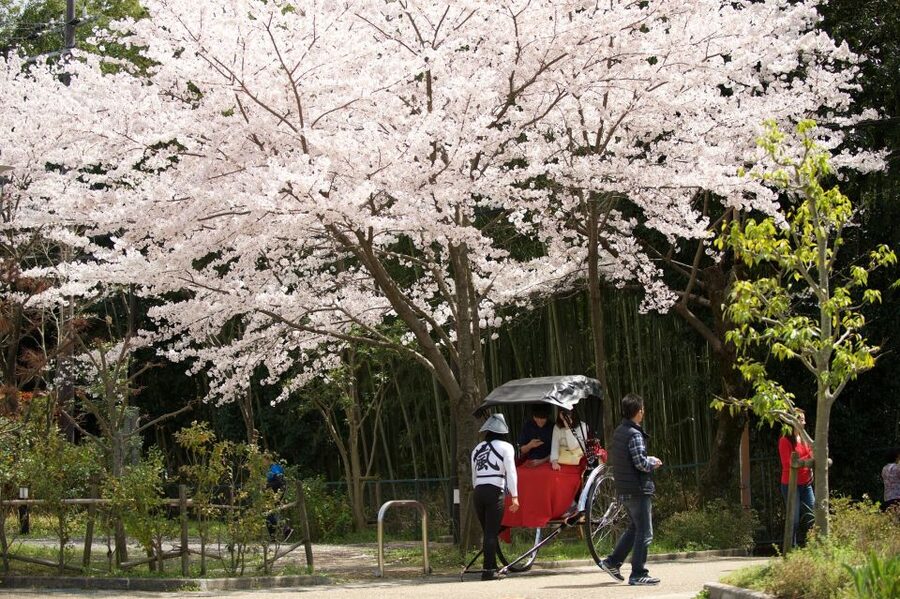
The rickshaw itself is traditional and open-sided, with a padded seat and a raised view over much of the surrounding area. It is not a roomy carriage. Two adults fit, but the width is only 29.1 inches. If you are broad-shouldered, carrying bulky bags, or simply prefer personal space, booking separate rickshaws may be more comfortable.
More Arashiyama and bamboo walks:
- Kyoto: Fushimi Inari, Kinkakuji, Bamboo Grove 1 Day Bus Tour
★ 4.8 · 4,316 reviews - Osaka/Kyoto:Kinkakuji,Arashiyama,FushimiInariShrine,NaraPark
★ 4.1 · 1,596 reviews - Kyoto/Osaka: Nara, Fushimi Inari Taisha, Arashiyama Bus Tour
★ 4.7 · 1,275 reviews
Entering Arashiyama’s bamboo forest
The bamboo grove is the emotional center of the short tour. Tall green stalks rise on both sides of the path, filtering the light and creating a setting that feels far removed from central Kyoto. The grove is a good place to appreciate the Japanese fondness for carefully tended natural spaces, where the forest feels both wild and managed.
The important detail is the route. A walking path through the bamboo is open to the public, and it can become crowded. The rickshaw has access to a separate path, allowing the driver to take you through a quieter section with fewer people around. This does not turn the grove into a private forest, but it can make a major difference to the mood.
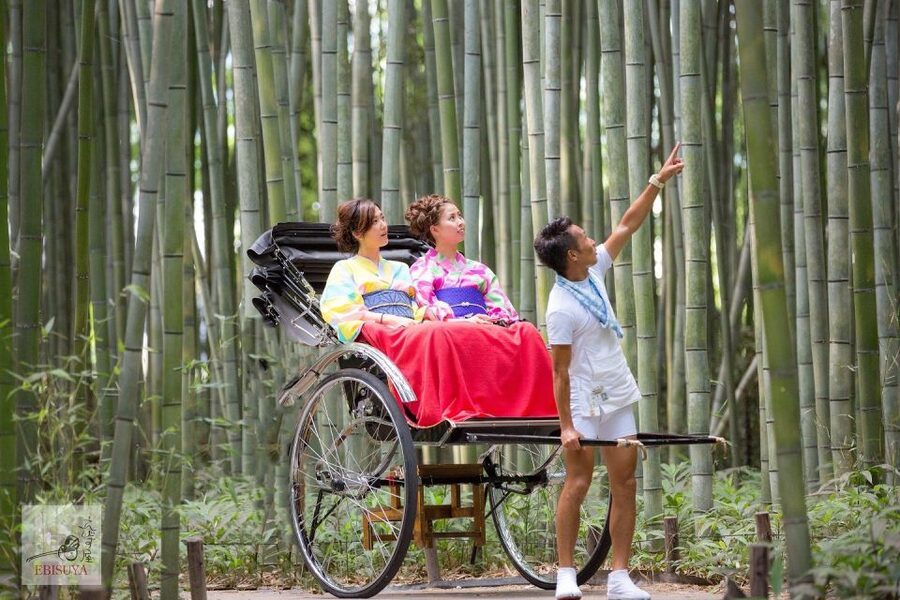
Your guide will usually pause for photographs. This is one of the tour’s most praised features. Guides such as Koki, Aki, Shin, Yoshi, and Lucas are repeatedly singled out for finding good angles and taking polished pictures of couples and families. You do not need to spend the whole ride trying to photograph yourself with a phone held at arm’s length.
Selfie sticks are not allowed, so plan to rely on your guide for pictures. A phone or camera is still useful for your own shots, but the included photo stops are a real part of the value here, not a small extra.
The bamboo route is also a practical solution if walking is difficult or if you want to save your energy for temples and gardens. You remain seated while the driver handles the route, though the ride is not recommended for people with back problems. The rickshaw moves along paths and roads, so it is not a motionless viewing platform.
Nonomiya Shrine and the first tour decision
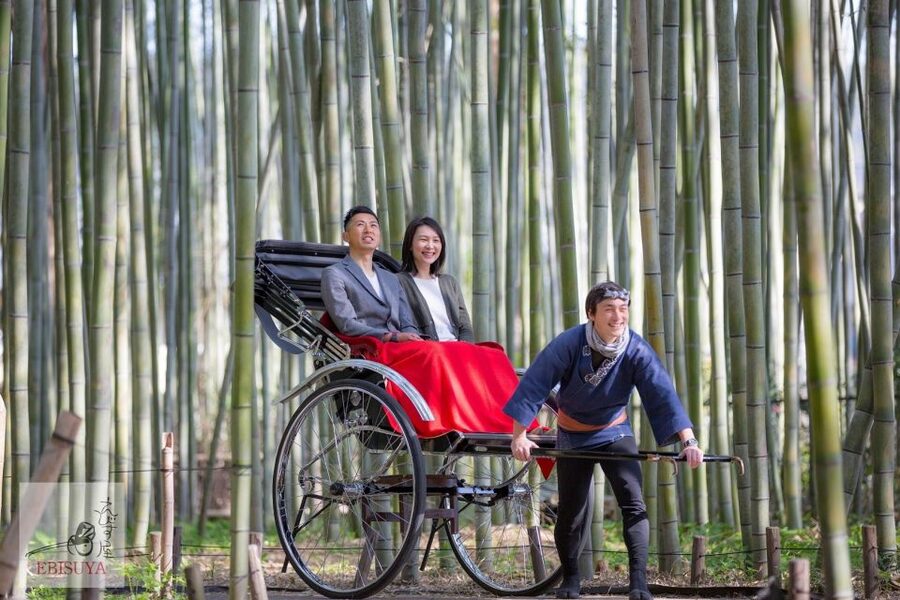
The short 45-minute option continues to Nonomiya Shrine, a Shinto site closely associated with Arashiyama’s cultural sights. Its setting adds a religious and historical layer to the bamboo visit without turning a quick outing into a half-day program.
Nonomiya is the point where the shortest tour returns toward Togetsu-kyo Bridge. If you have limited time in Kyoto, this route gives you the essential Arashiyama picture: river area, bamboo grove, a shrine, a few scenic pauses, and an introduction to the district’s back lanes.
The 45-minute tour is also a sensible choice for families, first-time rickshaw riders, and anyone unsure about the format. You get the signature bamboo experience without committing to a long ride. It is short, though, and you should not expect a full tour of Arashiyama’s temples.
The 70-minute option gives you more breathing room. It remains fairly compact, but the extra time can allow for additional views, photo stops, or more conversation with your guide. For many visitors, this is the middle ground between a quick photo ride and a major sightseeing commitment.
Rakushisya cottage and Arashiyama’s quieter side
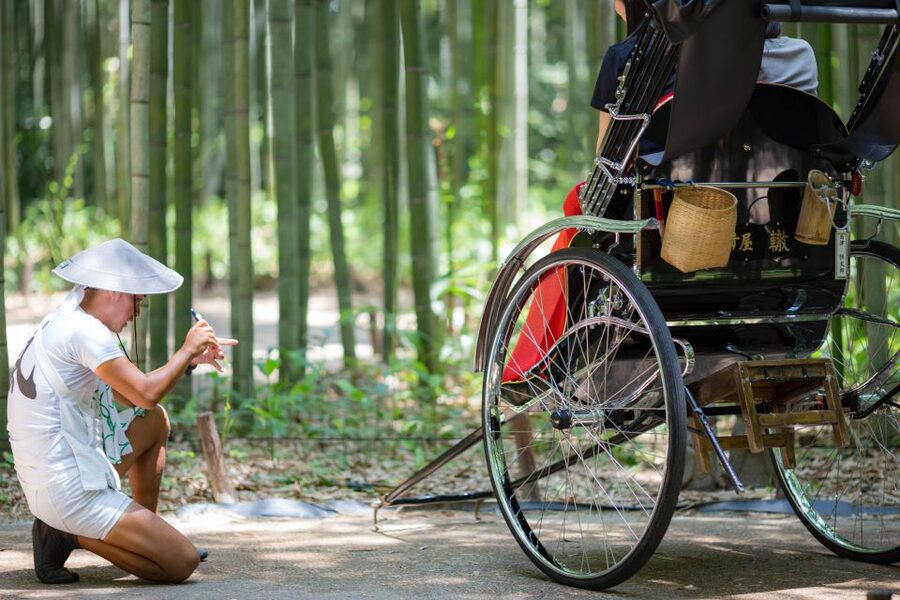
The 130-minute and 190-minute tours continue beyond the bamboo and Nonomiya Shrine. One possible stop is Rakushisya, a simple thatched cottage associated with one of Japan’s respected poets and haiku masters.
The cottage offers a different experience from the grand temple approach. Instead of monumental gates and sweeping religious compounds, you get a modest home tied to literary life and rural Arashiyama. That contrast is useful. It shows that the district is not only a collection of famous photo locations.
Longer rides can also pass through streets that many people miss when they arrive, walk to the bamboo grove, and leave again. Your guide may take you through less familiar corners, with access to certain locations by routes that are not obvious from the main pedestrian streets.
This is where customization earns its keep. You can ask for a slower pace, more photo time, more temple viewing, or more local scenery. The exact route can vary, so you should treat the listed places as likely possibilities rather than a guaranteed checklist for every long tour.
A few more Kyoto half-days to weigh up
- PERFECT KYOTO 1-Day Bus Tour
★ 5.0 · 13,518 reviews - Kyoto: Tea Ceremony in a Traditional Tea House in Kiyomizu
★ 4.9 · 3,519 reviews - Kyoto Geisha Walking Tour: Gion District & Hidden Gems
★ 4.7 · 3,273 reviews - Kyoto: Tea Ceremony Ju-An at Jotokuji Temple
★ 4.9 · 3,207 reviews
Temples, shrines, and gardens beyond the grove
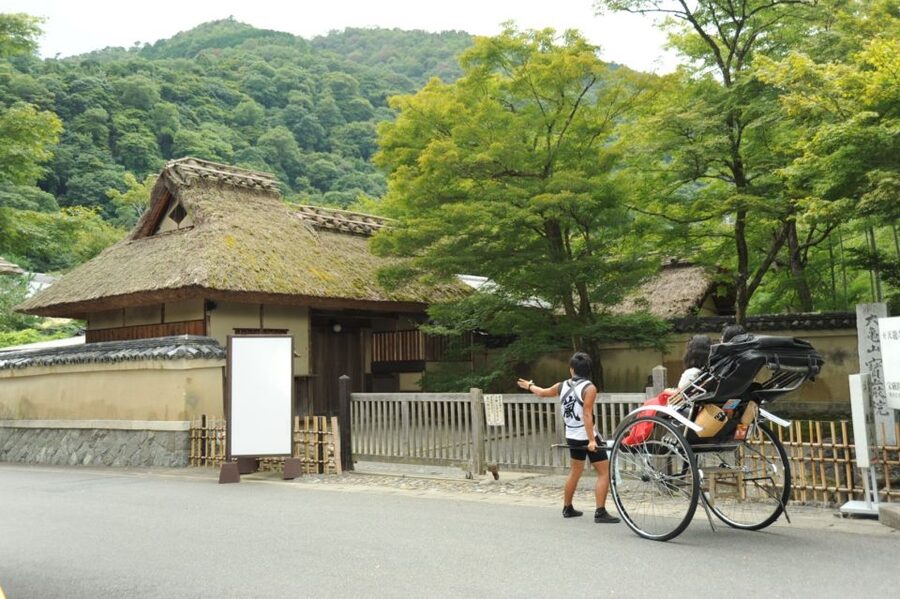
The longer options may include more ancient temples and Shinto shrines, along with the Buddhist temple Nison-in. These sites help you see Arashiyama as a religious and cultural district rather than simply a bamboo forest.
Nison-in is especially suited to a longer route because the setting adds gardens, wooded paths, and a quieter temple atmosphere to the ride. The appeal is less about ticking off another name and more about seeing how Kyoto’s religious spaces fit into the surrounding hills and residential lanes.
The guides are useful here because a temple gate can look like just another attractive entrance if you do not know what you are seeing. Guides such as Shin, Yuta, Yoshi, and Yuji are praised for explaining the meaning of shrines, temple customs, local history, and the area’s culture in clear English.
You should still keep your expectations measured. A rickshaw tour is a moving visit, not a detailed temple study. Depending on the route and timing, you may stop at a site, view it from the rickshaw, or have a short walk-around opportunity. If your priority is extensive time inside temple buildings and gardens, you will need to schedule those visits separately.
Why the guide matters so much
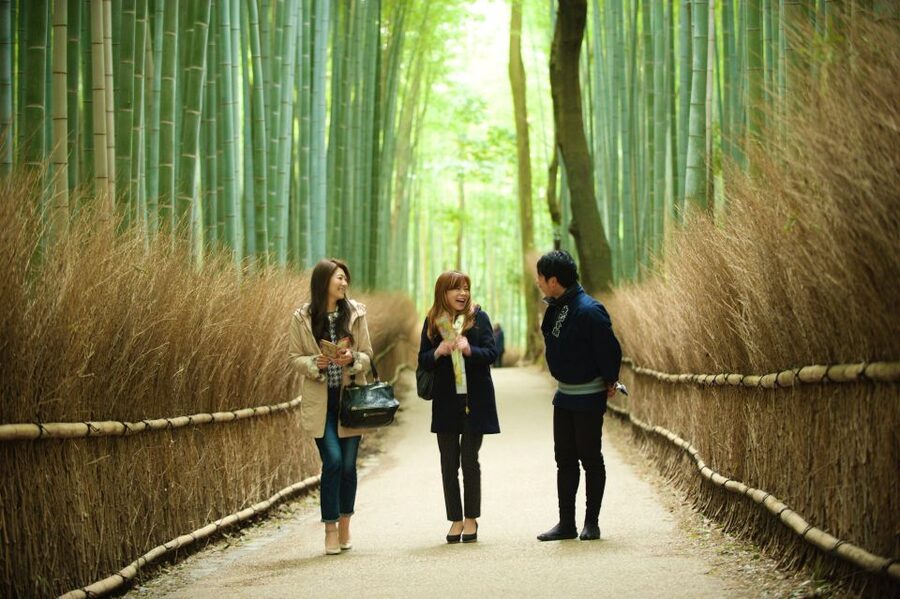
The driver is not only providing transport. He or she is pulling the rickshaw, explaining the area, helping you navigate crowded sections, suggesting food or shopping stops, and taking photos. That combination explains why the guide can shape the entire outing.
The guides named in the supplied feedback include Aki, Koki, Shin, Yoshi, Lucas, Yuya, Kawai, Shota, Ren, Toru, Kei, Shuji, Shogo, Yuta, Ocean, and others. English ability will vary by person, but the tour is offered in English and Japanese, and many guides are praised for comfortable conversation and clear explanations.
The photo service is unusually useful for couples. You can finish the ride with photos of both people together rather than a set of pictures where one person is always missing. Guides also know the bamboo paths and surrounding area, so they can choose backgrounds that are less cluttered.
I would tell you to arrive ready to talk. The private format lets you ask about Japanese customs, Arashiyama, Kyoto food, matcha, local life, or the history of the rickshaw itself. Some guides have also recommended nearby coffee shops, local food, and places to buy matcha, which makes the tour a useful first stop in the district.
Weather, comfort, and the physical side
This is an outdoor ride, so weather matters. The experience can still work in rain, cold, or even snow, but you should dress for the conditions. Several outings have included blankets and covers over the legs, helping riders stay warm and reasonably dry.
That comfort is a strong point, especially in winter. The rickshaw’s open design means you are exposed to the air, but the blankets can make the ride far more pleasant than walking slowly through cold rain. In hot weather, the driver is doing the hard work, while you remain seated, so bring water and consider the time of day carefully.
The ride is not suitable for pregnant women, and it is not recommended for people with back problems. The supplied information also advises against participation during the first 16 weeks of pregnancy. The driver may pull you uphill and through traffic, so anyone with mobility or comfort concerns should consider the narrow seat and ride position before booking.
Wheelchairs and strollers are accepted, which is helpful, but the rickshaw’s small dimensions still matter. Ask about the specific arrangement when booking if you need space for equipment.
Children age six and older pay the adult price. Up to two children age five and under may ride with two adults on adult laps. If a five-year-old uses one of the two seats, that child must be booked as a full-fare adult.
Choosing between 45 and 190 minutes
The price begins at $51 per person, while the exact cost can depend on the option and date. For the short ride, that is not cheap transportation. You are paying for a private guide, a traditional experience, access to the rickshaw route through the bamboo, local interpretation, and photo stops.
The value improves if you are a couple or small family. A standard sightseeing bus cannot give you the same personal attention, and a self-guided walk will not provide a driver who knows the quieter paths or takes photos of you together.
Choose 45 minutes if you want the bamboo grove and Nonomiya Shrine, or if your Kyoto schedule is tight. Choose 70 minutes if you want a little more time without giving up most of your day.
The 130-minute tour is my pick for a fuller first visit. It gives the guide enough time to show you the bamboo, local streets, religious sites, and less obvious corners without making the outing feel like an all-day commitment.
The 190-minute option suits you if Arashiyama is a major part of your Kyoto plans. You have more time for Rakushisya, Nison-in, additional temples and shrines, longer conversations, and unhurried photos. The tradeoff is cost, exposure to the weather, and the fact that a long ride can feel physically demanding even when you are seated.
Planning the rest of your Arashiyama day
Do not treat the rickshaw ride as your entire Arashiyama visit. The surrounding village area deserves extra time before or after the tour, particularly if you want to browse, eat, visit temples on foot, or enjoy the river setting around Togetsu-kyo Bridge.
Hotel pickup is not included, so allow time to reach the meeting point. The exact meeting location can vary by option, so check your booking details instead of assuming every ride begins at the same spot.
The tour is private, and cancellation is free up to 24 hours before departure for a full refund. You can also reserve now and pay later, which helps if your Kyoto schedule is still changing. Starting times vary, so check availability for the date you want.
I would book an early start if your main goal is a quieter bamboo experience. The special rickshaw path helps, but the grove and surrounding district remain popular. A morning ride also leaves the rest of the day open for temples, lunch, and the wider Arashiyama area.
Who should book this rickshaw ride?
I recommend it most strongly to couples, families, first-time visitors to Kyoto, and anyone who wants the bamboo forest without walking the entire route. It is also a good fit if you want a local guide but dislike large group tours.
The experience works especially well for people who care about photographs. Guides take an active role in creating memorable pictures, and the private format means you can stop without waiting for a large group.
You should think twice if you dislike being seated in a narrow carriage, want a very quiet or fully private forest setting, have back problems, or are pregnant. The driver’s effort is part of the traditional experience, but some people may feel uncomfortable being pulled uphill or through busy areas.
Should you book the Arashiyama rickshaw tour?
Book it if you want more than a quick walk through the bamboo grove. The exclusive path, private guide, flexible route, temple and shrine options, and included photos give you things a self-guided visit cannot easily match.
For most people, I would choose the 70-minute or 130-minute option. The 45-minute ride covers the essential sights and works well on a tight schedule, while the 190-minute version is best when Arashiyama is one of the main purposes of your day.
At $51 per person, the ride is an experience purchase rather than a cheap way to get around. If you value personal attention, local explanations, good couple photos, and access to quieter routes, it offers solid value. If you only want to see the bamboo quickly, save the money and walk it yourself.
FAQ
Where does the Arashiyama rickshaw tour start?
The guide and rickshaw meet you at Kyoto’s Togetsu-kyo Bridge area, though the exact meeting point may vary depending on the option you book.
How long does the tour last?
You can choose from four durations: 45 minutes, 1 hour and 10 minutes, 2 hours and 10 minutes, or 3 hours and 10 minutes.
What language is the tour offered in?
The tour is available with a live guide speaking English or Japanese.
Is the rickshaw tour private?
Yes. The activity is arranged as a private group experience, so you do not share the rickshaw tour with a large public group.
Does the rickshaw enter the bamboo forest?
Yes. The rickshaw has access to an exclusive path through the bamboo forest that is quieter than the main pedestrian route.
What sights can I see on the tour?
The route can include the bamboo forest, Nonomiya Shrine, Rakushisya cottage, Nison-in, other temples and Shinto shrines, gardens, and quiet Arashiyama neighborhood streets. The longer tours allow more customization.
How many people fit in one rickshaw?
One rickshaw can carry up to two adults. Up to two children age five and under may ride with two adults on adult laps.
Is the tour suitable for pregnant people or anyone with back problems?
The tour is not suitable for pregnant women and is not recommended for people with back problems. It is specifically not recommended during the first 16 weeks of pregnancy.
Can I cancel the booking?
You can cancel up to 24 hours in advance for a full refund. The activity also offers a reserve-now, pay-later option.
Just added around Kyoto
- Kyoto: Zen Meditation at a Private Temple with a Monk★ 5.0 · 25 reviews
- Kyoto: Gion Geisha District & Sake-in-Hand Walking Tour★ 5.0 · 37 reviews
- Private Pewter Sake Cup Experience with a Kyoto Artisan★ 5.0 · 31 reviews
- Your Private Vacation Photography Session In Kyoto★ 5.0 · 110 reviews
- Private Guided Traditional Buddhist Cooking in Japan★ 5.0 · 16 reviews
- Kyoto Wagashi(Japanese sweets) Cooking Class near Fushimiinari★ 5.0 · 60 reviews
- Traditional Japanese Music show & Experience Tour in Kyoto★ 5.0 · 57 reviews
- Kyoto:Family-Friendly Kimono & Yukata Experience at WARGO★ 5.0 · 147 reviews
Bamboo Grove Tours, compared.
Fushimi Inari, Kinkakuji, Bamboo Grove 1 Day Bus Tour
Read our review →
Osaka/Kyoto:Kinkakuji,Arashiyama,FushimiInariShrine,NaraPark
Read our review →
Kyoto/Osaka: Nara, Fushimi Inari Taisha, Arashiyama Bus Tour
Read our review →
Kyoto Arashiyama Walking Tour: Bamboo, Monkeys, Gardens & Secrets
Read our review →
Arashiyama Bamboo, Temple, Monkeys, or Secret Sake Brewery
Read our review →
Arashiyama Bamboo Forest, Monkeys, Matcha & Temple Tour
Read our review →
Osaka/Kyoto: Arashiyama, Nara & Fushimi Inari Shrine w/Lunch
Read our review →
Nijo, Kinkaku-ji, Arashiyama, Kiyomizu & Fushimi Inari
Read our review →Browse the lists this tour appears in