
Reviewed · KYOTO TOURS
Kyoto: Early Bird E-Bike Tour with Lunch
Fushimi Inari before the crowds arrive is the smart move here. You get an early look at its famous vermilion torii gates, then ride through Kyoto to temples, canals, river paths, and Gion without spending the day on packed buses. The e-bike makes the distance manageable, while the small group keeps the day personal.
I like the local coffee stop and proper sit-down lunch, since they break up seven hours in the saddle. I also like the mix of headline sights and quieter riding along the Kamo River and Shirakawa Canal. The tradeoff is simple: this is a long day with plenty of cycling, and it is not suitable if you cannot ride a bike, are pregnant, or have back problems.
Key points to know before you book
- Fushimi Inari comes early: Reach the shrine before the busiest part of the day, a major reason to choose this tour.
- An e-bike covers a lot: The route links south and east Kyoto, including Tofukuji, Ginkakuji, Nanzenji, Gion, and Higashi Honganji.
- Coffee and lunch are included: You stop at a guide’s favorite local café and later sit down for a meal.
- The group is capped at eight: That gives the English-speaking guide room to adjust stops and answer questions.
- It is a full seven-hour outing: Bring suitable clothes, sunscreen, water, and enough energy for a substantial ride.
- Guides add personality: Julian, Indra, Karl, and Carl have been praised for lively explanations, local facts, and a flexible approach.
Why an early e-bike is a good Kyoto plan
Kyoto’s famous sights are spread farther apart than a first-time map may suggest. Fushimi Inari is in the south, Ginkakuji and the Path of Philosophy are in the east, and Gion sits between several major temple districts. Walking all of this would take far too long, while buses can be slow and crowded.
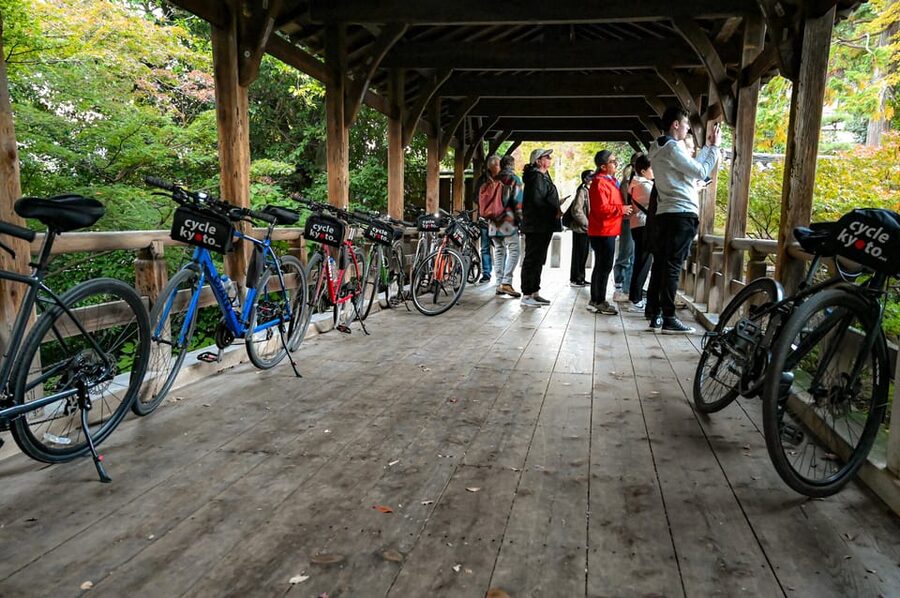
This tour uses an electric bicycle to link the pieces. You still pedal, but the motor helps on inclines and makes a long day less punishing. One useful tip from the tour experience is to choose the e-bike option for the hills. You will ride up toward Ginkakuji and through parts of Kyoto where a standard bicycle could feel tiring.
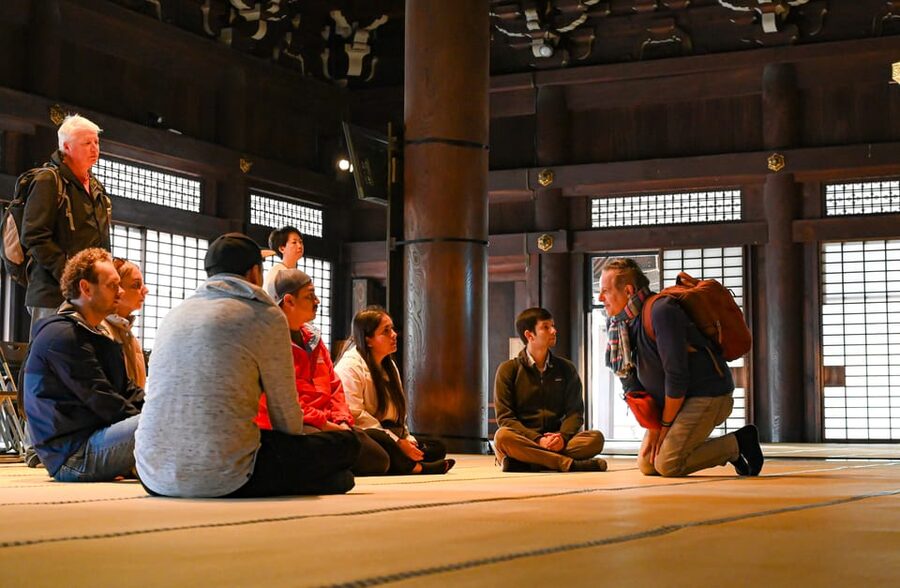
The small-group size matters. With no more than eight people, the guide can keep the pace together and pause for questions or photographs. Karl has been singled out for adjusting the timing to suit the group, while guides including Julian, Indra, and Carl have been praised for adding facts beyond the basic information found in guidebooks.
You meet at Cycle Kyoto near JR Kyoto Station. From the station, walk past Avanti, cross at the traffic lights, pass the Daily Yamazaki convenience store, and take the next left. Arrive 15 minutes early for the briefing, bike setup, and a short safety orientation.
More bike days around Kyoto:
- Hidden Kyoto E-Biking tour
★ 5.0 · 1,843 reviews - Bike Tour Exploring North Kyoto plus Lunch
★ 5.0 · 1,087 reviews - Arashiyama Bamboo Forest & Hidden Gems Bike Tour (Early Bird)
★ 5.0 · 613 reviews
Fushimi Inari before the morning rush
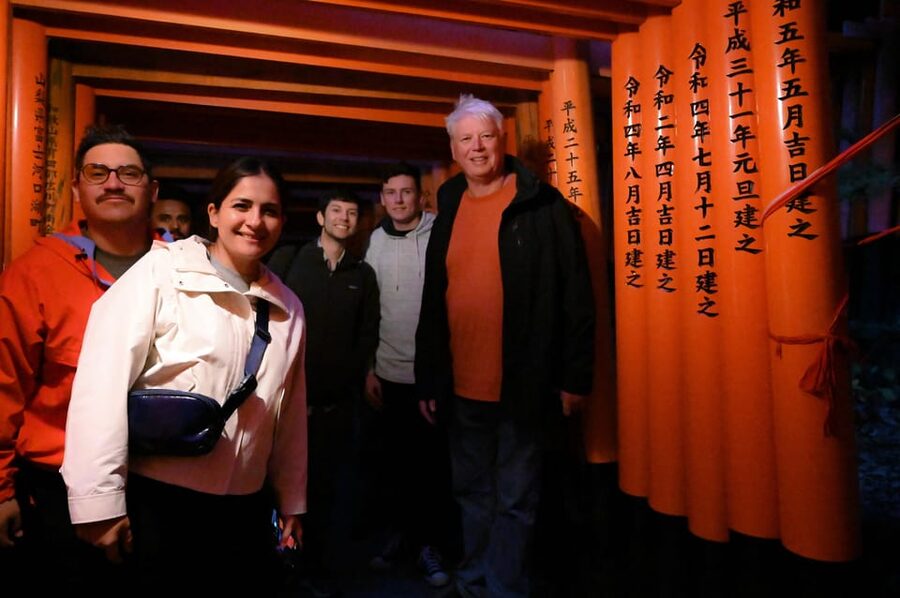
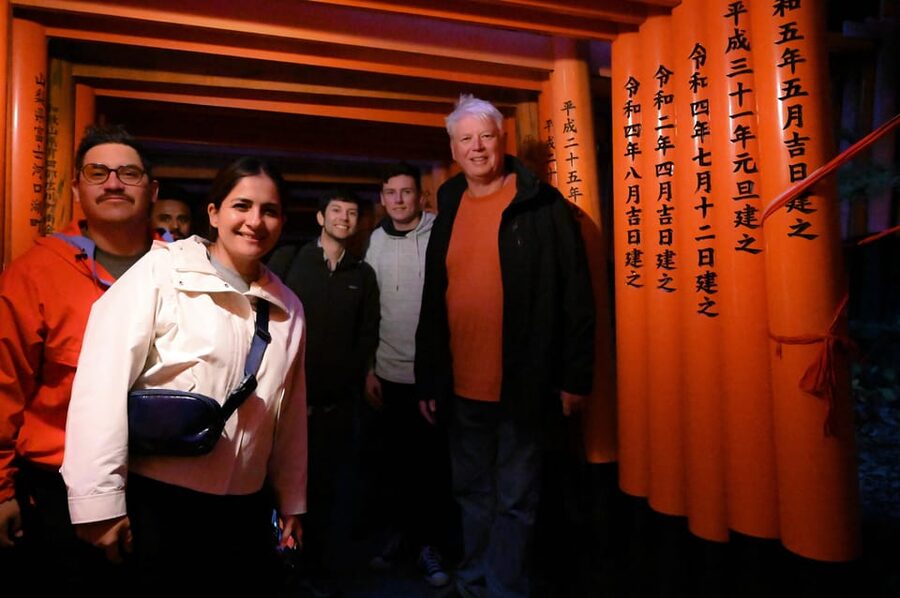
The first major stop is Fushimi Inari Taisha, one of Kyoto’s most recognizable Shinto shrines. Its orange-red torii gates climb into the wooded hills behind the shrine, creating the repeated corridors that appear in so many photographs.
The timing is the real advantage. Reaching Fushimi Inari early gives you a better chance to appreciate the gates before the busiest crowds fill the lower approach. Your guide leads a 45-minute visit, providing context as you move through the shrine grounds.
You should still expect some walking here. The bicycle gets you to the area, but the shrine itself is explored on foot. Wear shoes that can handle both cycling and temple paths, and bring a camera if you want photographs of the gates and shrine buildings.
The stop is not designed as a long hike to the upper mountain. The value is seeing the main shrine area and its torii-lined route as part of a wider Kyoto day, rather than spending all morning at one site.
Tofukuji and the ride beside the Kamo River
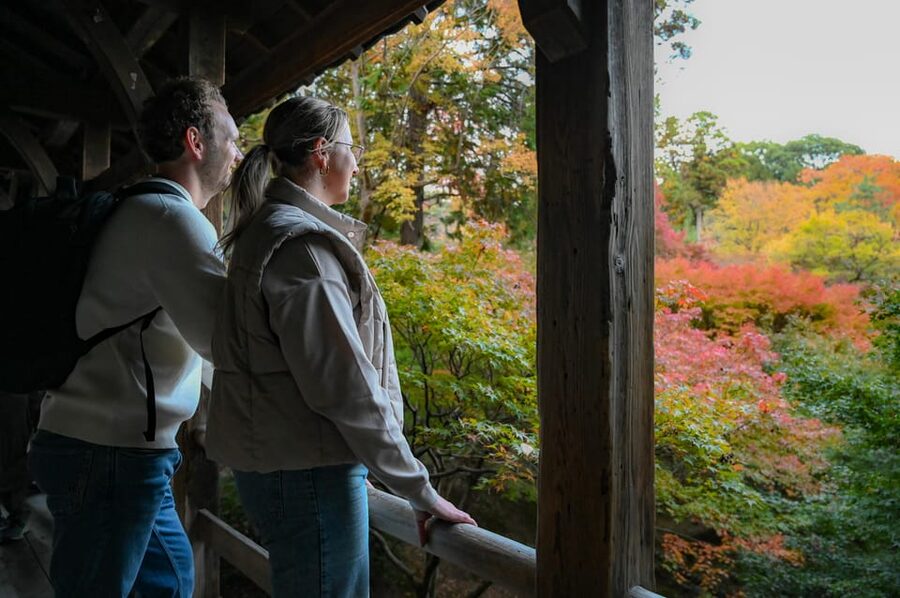
After Fushimi Inari, the route takes in Tofukuji Temple. This large Zen temple complex is known for its religious buildings and traditional grounds, and it adds a quieter temple stop after the visually dramatic torii gates.
The exact time at Tofukuji is not listed as a separate timed stop, so you should think of it as part of the morning’s flowing route rather than a long, independent temple visit. That is typical of a cycling tour covering many districts: you see more of Kyoto, but you do not linger everywhere.
The route then reaches the Kamo River for about 40 minutes. This is one of the pleasant changes of pace in the day. Instead of moving from one enclosed temple ground to another, you ride beside open water and get a better sense of how Kyoto’s districts fit together.
I like this section because it shows the city as a place where daily life and historic sites sit close together. The river ride also gives you a physical break from formal sightseeing. Keep your attention on the route and other riders, since this remains a bike tour rather than a scenic bus ride.
A local coffee break before Ginkakuji
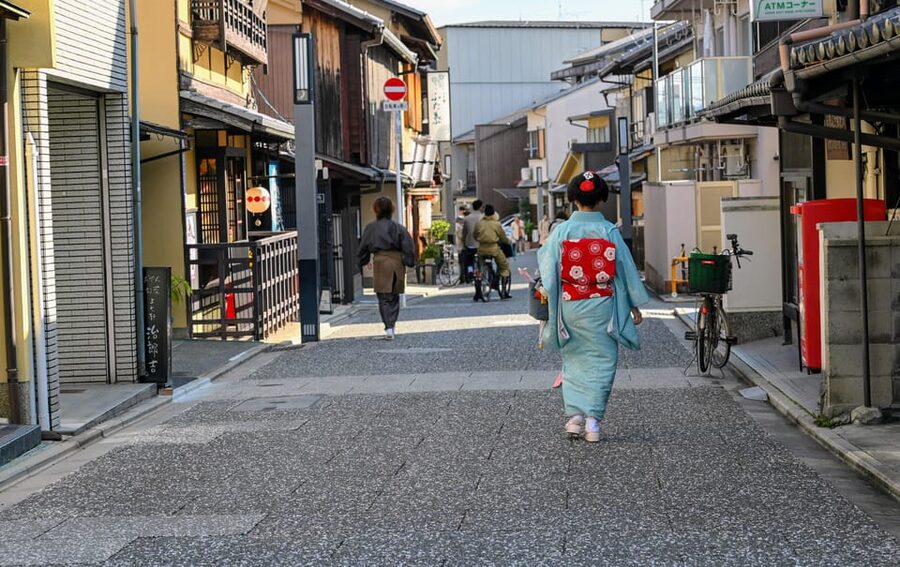
The café stop lasts about 20 minutes and includes morning coffee. It is described as one of the guide’s favorite local haunts, which gives the break a more personal feel than a quick drink from a station vending machine.
This is a small but useful part of the schedule. Seven hours of cycling and sightseeing can blur together without pauses, so the coffee gives you time to sit, ask your guide questions, and reset before the next major temple.
The café stop is not a full breakfast. Snacks and extra drinks are not included, so eat beforehand if you need a substantial morning meal. Carrying water is also sensible, particularly on a sunny day.
More e-bike rides in Kyoto:
- 5 Top Highlights of Kyoto Full Day Bike Tour (E-bike option)
★ 5.0 · 511 reviews - E-Bike Tours of the highlights of Kyoto!!!
★ 5.0 · 291 reviews - Kyoto: City Secrets eBike Tour
★ 4.9 · 196 reviews - Pedal Adventure Kyoto’s iconic landmarks on an e-bike tour
★ 5.0 · 189 reviews
Ginkakuji and the Path of Philosophy
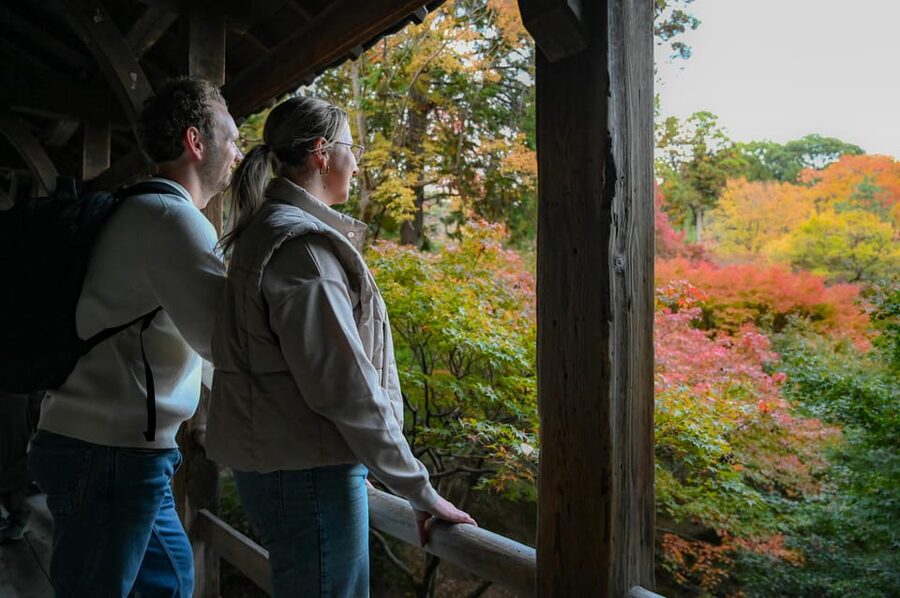
Ginkakuji, formally the Silver Pavilion, is one of eastern Kyoto’s essential sights. The temple grounds combine a refined garden setting with the pavilion itself, and the visit gives you the calm, careful design associated with Kyoto’s major Zen sites.
The guided stop lasts about an hour, making it one of the longer visits on the route. That is enough time to walk through the grounds at a useful pace and hear more than a quick identification of the buildings.
After Ginkakuji, you ride slowly down the Path of Philosophy. This famous route follows a canal and connects the northern Higashiyama temple area with Nanzenji. The ride is not a race. Its appeal is the steady movement through one of Kyoto’s most recognizable sightseeing corridors.
Conditions can vary by season, but you should expect other pedestrians and a slower pace around the path. That is part of the charm, though it means you may need to walk the bicycle briefly or follow your guide carefully. The e-bike is especially helpful before and after this gentle section, when the route continues across a large part of the city.
Nanzenji, gardens, and the red brick aqueduct
Nanzenji brings another strong change in mood. The temple grounds include traditional gardens, ornate religious buildings, and the striking red brick aqueduct that crosses part of the complex.
The aqueduct is an unusual sight in a city better known for wooden temples and tiled roofs. Its brick arches recall a different chapter of Kyoto’s development and make this stop visually distinct from Ginkakuji and Fushimi Inari.
The guided visit lasts about 35 minutes. That gives you time to see the main grounds and hear the guide explain what you are looking at, but it may not allow a slow visit to every garden or building. If you prefer to spend a full morning at one temple, this itinerary may feel fast. If you want a broad introduction to Kyoto, the shorter stop is a fair trade.
Lunch, Heian Shrine, and the middle of the day
A sit-down lunch is included and lasts about 40 minutes. That matters more than it may sound. A proper meal gives you a chance to rest your legs and eat without trying to balance food while walking or riding.
The exact restaurant and menu are not specified, so do not book this expecting a particular dish. The key benefit is the seated break, not a promised culinary program. Extra drinks and snacks are at your own cost.
Heian Shrine follows with a 30-minute visit. Its large scale and bright architectural details offer another contrast with the more intimate temple gardens. This is a useful stop for seeing a different side of Kyoto’s religious architecture without adding another long hike.
By this point, you have already covered Fushimi Inari, Tofukuji, the river, Ginkakuji, the Path of Philosophy, and Nanzenji. The lunch break and Heian Shrine visit keep the second half from becoming a simple ride back to the starting point.
Shirakawa Canal and the streets of Gion
The final stretch follows the Shirakawa Canal and continues through Gion. This is one of the most atmospheric riding sections, with narrow streets, traditional architecture, and water running through the district.
Gion is best appreciated at a measured pace. The 50-minute guided visit gives you time to take in the streets and hear about the area without treating it as a quick photograph stop. Be respectful with photography and follow local signs and your guide’s instructions.
Cycling through Gion also explains why a small group is useful. Streets can be tight, and the guide needs to keep riders together without blocking pedestrians. The route gives you a view of the district as a lived-in neighborhood, not only as a backdrop for a short visit.
Higashi Honganji and the return to Cycle Kyoto
The last major stop is Higashi Honganji Temple, followed by the return to Cycle Kyoto. The temple is near Kyoto Station, so the route ends in a practical part of town rather than leaving you at a distant sightseeing district.
The 50-minute guided visit makes Higashi Honganji a substantial final stop. Its large temple grounds provide a fitting contrast to the smaller lanes of Gion and the canal ride that comes before it.
Ending back at the original base is convenient if you plan to continue sightseeing near Kyoto Station. It also means you do not need to arrange a separate return transfer. Hotel pickup and drop-off are not included, so you are responsible for reaching the meeting point and making your own way afterward.
What the $135 price really covers
At $135 per person, this is not the cheapest way to see Kyoto. You can visit many temples independently for less, especially if you are happy to use public transport and plan your own route.
The value comes from what is bundled into one day: the e-bike, helmet, English-speaking guide, coffee, water, and sit-down lunch. You also avoid having to work out how to connect southern Kyoto with the eastern temple district and Gion.
For a first visit, I see the price as reasonable if you want orientation and efficiency. The route covers a lot of ground, and the guides add explanations that help you understand why the sites matter. One rider described the day as worthwhile precisely because it offered more context than a short stay in Kyoto would have allowed.
The value is weaker if you already know Kyoto well, dislike group schedules, or want long, quiet visits at only one or two temples. Seven hours is a large commitment, and the tour’s strength is its range rather than deep time at each individual site.
Who will enjoy this tour most
This suits you if you want to see many of Kyoto’s major sights in one day and are comfortable riding a bicycle for several hours. It is especially useful for a first visit, a short stay, or a day when you want a guide to handle the route and explain the places along it.
You should be reasonably comfortable on a bike before booking. The route includes city streets, riverside sections, temple districts, and some uphill riding. The electric motor helps, but it does not remove the need to pedal, balance, and pay attention.
Pack comfortable clothes, shoes, a hat, sunscreen, and gloves if the weather is cool. Warm clothing is listed as a useful item, and conditions can change during a long morning and afternoon outside. Smoking, alcohol, and drugs are not allowed.
The tour is not suitable for pregnant people, people with back problems, or anyone who cannot ride a bike. The available language is English, and the group size is limited to eight participants.
Should you book the Kyoto early-bird e-bike tour?
Book it if your ideal Kyoto day includes famous temples, early sightseeing, local coffee, a real lunch, and a guide who can connect the dots between districts. The early start at Fushimi Inari and the e-bike route are the two strongest reasons to choose it.
Skip it if you want a slow temple day, have limited cycling ability, or prefer complete control over meal choices and visit times. For most active first-time visitors, though, the $135 cost buys a useful mix of transport, meals, local explanation, and access to a lot of Kyoto in one organized day.
FAQ
Where does the Kyoto e-bike tour meet?
The meeting point is Cycle Kyoto. From JR Kyoto Station, walk past Avanti, cross at the traffic lights, pass the Daily Yamazaki convenience store, and take the next left.
How early should I arrive?
Arrive 15 minutes before the tour starts. The tour begins with a 15-minute safety briefing and orientation.
How long does the tour last?
The tour lasts seven hours. Starting times vary, so check availability when booking.
Is the tour conducted in English?
Yes. The live tour guide speaks English.
What is included in the price?
The price includes the e-bike, helmet, morning coffee, sit-down lunch, live guide, and water.
Is hotel pickup included?
No. Hotel pickup and drop-off are not included. You need to reach Cycle Kyoto on your own.
Can I cancel for a full refund?
Yes. You can cancel up to 24 hours in advance for a full refund. A reserve-now, pay-later option is also available.
More Lunch Stops in Kyoto
- Osaka/Kyoto: Arashiyama, Nara & Fushimi Inari Shrine w/Lunch
★ 4.4 · 754 reviews - Kyoto Zen Meditation & Garden Tour at a Zen Temple with Lunch
★ 5.0 · 441 reviews - 4.5-Hour Kyoto Bike Tour with Lunch and UNESCO Zen Temples
★ 5.0 · 122 reviews - From Kyoto: Nara History Guided Half Day Bus Tour with Lunch
★ 4.8 · 114 reviews
Just added around Kyoto
- Kyoto: Zen Meditation at a Private Temple with a Monk★ 5.0 · 25 reviews
- Kyoto: Gion Geisha District & Sake-in-Hand Walking Tour★ 5.0 · 37 reviews
- Private Pewter Sake Cup Experience with a Kyoto Artisan★ 5.0 · 31 reviews
- Your Private Vacation Photography Session In Kyoto★ 5.0 · 110 reviews
- Private Guided Traditional Buddhist Cooking in Japan★ 5.0 · 16 reviews
- Kyoto Wagashi(Japanese sweets) Cooking Class near Fushimiinari★ 5.0 · 60 reviews
- Traditional Japanese Music show & Experience Tour in Kyoto★ 5.0 · 57 reviews
- Kyoto:Family-Friendly Kimono & Yukata Experience at WARGO★ 5.0 · 147 reviews
Kyoto Tours, compared.


Fushimi Inari, Kinkakuji, Bamboo Grove 1 Day Bus Tour
Read our review →
Tea Ceremony in a Traditional Tea House in Kiyomizu
Read our review →
Kyoto Geisha Walking Tour: Gion District & Hidden Gems
Read our review →

Gion Magical Night Walking Tour with Geisha Trivia
Read our review →

Gion Geisha District Walking Tour – Stories of Geisha
Read our review →Browse the lists this tour appears in