
Reviewed · KYOTO TOURS
Kyoto Geisha Show Cultural Hour with an apprentice geisha, Maiko
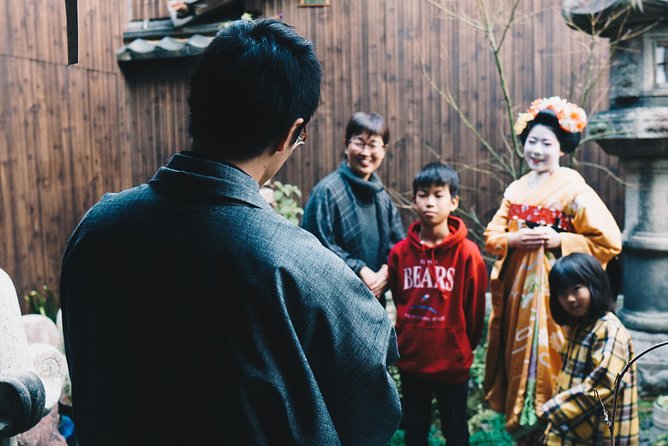
Kyoto’s geisha culture is usually seen from a distance, if you see it at all. This experience gives you a guaranteed meeting with a maiko, an apprentice geisha, along with traditional dance, conversation, and a guide who translates the exchange. It is a much more useful introduction than hoping to spot someone hurrying between appointments in Gion.
I like two things here. First, you get access to information that is hard to gather on your own, including training, work routines, customs, and the difference between a maiko and a fully trained geiko. Second, the small group, capped at 14, leaves room for real questions. Guides such as Ken and Saya are praised for making the setting respectful but comfortable.
The main consideration is price. At $105.42 per person, this is not a cheap hour and a half, and tea or coffee is not included. You are paying for personal access, translation, and a live cultural encounter rather than a long sightseeing tour.
Key points to know before booking
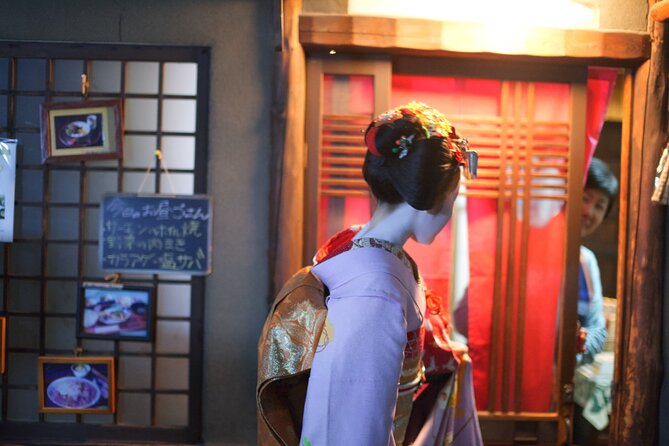
- Meet a real maiko in a controlled setting: You are guaranteed a live performance and a chance to speak with an apprentice geisha.
- Ken and Saya add useful context: The guides explain geisha districts, training, customs, and the meaning behind the visit.
- Expect one or two traditional dances: The performance is short, but it forms the heart of the experience.
- Translation removes the language barrier: You can ask questions about daily life, work, and training through the English-speaking guide.
- The group is limited to 14 people: This is small enough for a more personal Q&A than a large theater show.
- Plan for roughly 90 minutes: The meeting, discussion, performance, and related explanations fit into one compact cultural stop.
Why meeting a maiko is different from spotting one on the street
Kyoto’s maiko are not performers waiting around for photographs. They are working professionals in training, and their public appearances can be brief and difficult to understand from the outside. A street sighting tells you almost nothing about their education, schedule, or customs.
This experience gives you a set time and place to meet one. That simple guarantee matters. You do not spend an evening watching a district entrance, hoping to glimpse a painted face and elaborate kimono before the maiko disappears inside.
The format also encourages a more thoughtful encounter. The maiko performs, answers questions, and shares aspects of her work through translation. You can learn about skills and routines instead of treating the meeting as a photo opportunity.
The experience is described as taking place near a shrine, followed by a short walk through a geisha area and into a tea-house or small theater setting. The exact route and performer may vary, but the point is clear: you receive cultural background before the meeting, not just a stage show with no explanation.
More geisha-district evenings:
- Kyoto Geisha Walking Tour: Gion District & Hidden Gems
★ 4.7 · 3,273 reviews - Kyoto: Gion Magical Night Walking Tour with Geisha Trivia
★ 4.9 · 2,393 reviews - Kyoto: Gion Geisha District Walking Tour – Stories of Geisha
★ 4.7 · 2,187 reviews
Starting near a shrine and geisha district
The meeting point is 5-chōme-182 Honmachi in Kyoto. The experience begins with an English-speaking guide, who may be Ken, Saya, or another member of the team. Some sessions begin near a shrine, where the guide explains the nearby geisha district and points out the exterior of theaters, agencies, and houses connected with the tradition.
That introduction is important because geisha culture can be easy to misunderstand. The guide can explain terms such as maiko and geiko, discuss the training process, and place the performance within Kyoto’s traditional entertainment world.
You should pay attention during this walking introduction. It is not a long city tour, but it gives the later meeting a clear setting. The buildings and streets are not simply picturesque backdrops. They are part of a working system that includes performance spaces, agencies, houses, lessons, and formal customs.
A small practical point: check the meeting instructions carefully before setting out. One person had trouble with the address and needed help finding the group. The guide assisted by texting and searching for the correct location, but you will have a calmer start if you arrive with the meeting point ready on your phone.
Entering the small theater or tea-house setting
After the introduction, the group walks a short distance to the venue. Descriptions of the visit refer to a pretty tea-house or cozy theater, rather than a large public auditorium. That makes the experience feel more like a personal cultural appointment than a standard stage production.
The intimate room is one of the strongest parts of the format. With no more than 14 people, you are close enough to see the costume, makeup, gestures, and movement clearly. You also have a better chance to ask a question instead of sitting in the back of a packed hall.
Do not expect a full evening of entertainment. The advertised performance includes one or two songs or traditional dances, and the complete activity lasts about 1 hour 30 minutes. The performance is paired with conversation, explanation, and questions, so the value comes from the combination.
Tea or coffee is not included. The setting may involve a tea-house atmosphere, but you should not book this expecting a food or beverage tasting. The focus is the meeting, the translation, and the performance.
The translated Q&A with an apprentice geisha

The Q&A is where this experience earns much of its price. The maiko can discuss her daily life, work, skills, training, and customs, while the English-speaking guide translates. This gives you access to personal and practical details that are rarely explained during a casual visit to a Kyoto neighborhood.
The translation also helps the exchange feel natural. You are not limited to memorized facts on a sign or a short speech from a guide. You can ask questions and hear answers connected to the maiko’s own experience.
Several subjects are especially useful to explore:
- The difference between a maiko and a geiko
- The training and skills expected during the apprentice period
- Daily routines and work demands
- Traditional customs and performance etiquette
- The way geisha entertainment settings operate
- The kinds of songs, dances, and games connected with the meeting
The guides are a big part of this. Ken is repeatedly praised for his clear explanations and friendly manner, while Saya is described as warm, gentle, and an effective interpreter. The best guide behavior here is a delicate balance: formal enough to respect the maiko, relaxed enough to help you ask honest questions.
That balance matters. The experience is not a comedy act or a chance to put the performer on the spot. You are entering a formal culture with its own rules. A good guide helps you understand how to participate politely.
More shows in Kyoto:
- Kyoto Gion Cultural Walk & Geisha Show with Dining Options
★ 5.0 · 518 reviews - Kyoto Gion Cultural Walk & Geisha Show with Dining Options
★ 5.0 · 483 reviews - 1 Hour Geisha Show in Kyoto
★ 5.0 · 452 reviews - Kyoto: Samurai Kenbu Traditional Sword Dancing Show
★ 4.5 · 426 reviews
Watching one or two traditional dances
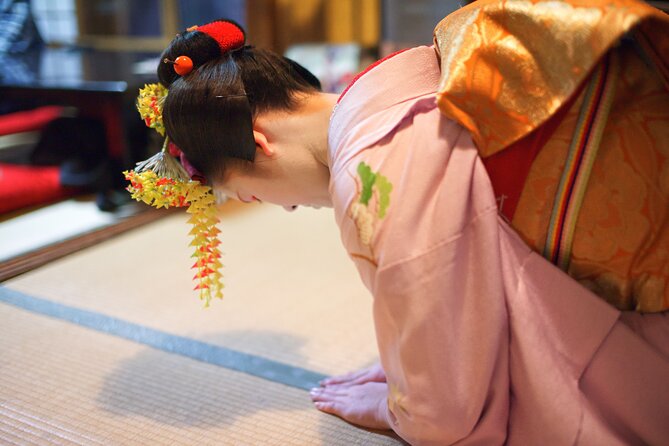
The maiko performs one or two traditional dances, depending on the session. The dances are short, but they are not a token add-on. They show the control, posture, costume handling, and precise gestures that the earlier discussion helps you appreciate.
Expect a performance built around restraint rather than speed. Small movements can carry meaning, and the elaborate clothing changes the way the dancer moves. You may notice the careful handling of sleeves, the controlled steps, and the strong visual effect of the makeup and hairstyle.
Photography is part of the experience at the end, with time for photos alongside the maiko. Follow the guide’s instructions and keep your attention on the performance first. The most memorable part is likely to be seeing the dance at close range, not collecting a large number of pictures.
One or two dances will not satisfy someone seeking a full theatrical program. If your priority is a long performance with several acts, this may feel brief. If you want context and conversation paired with a live demonstration, the length is sensible.
A party game and the human side of the visit
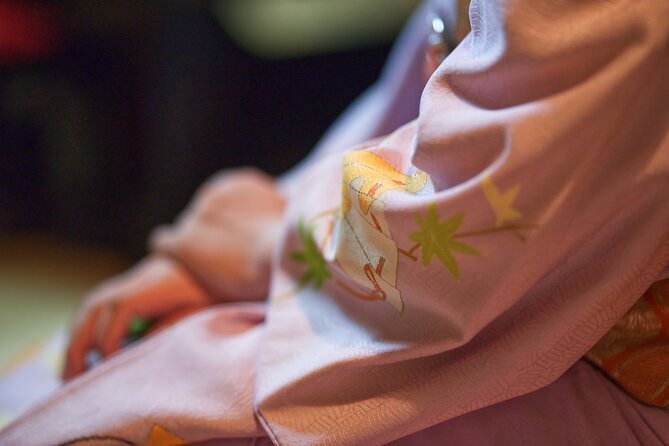
The meeting may include a traditional party game taught by the maiko. This gives the session a lighter turn after the more formal questions and dance. It also shows how the experience is designed to encourage interaction, rather than keeping you silent in an audience.
The game is not the main reason to book, but it can make the meeting feel less stiff. You are given a small way to participate in the culture instead of only watching it.
This is also where the guide’s role matters again. A translated conversation can sometimes feel distant, especially when formal customs are involved. A friendly guide can explain what is happening, help with timing, and keep the group comfortable without taking attention away from the maiko.
What the $105.42 price buys you
At $105.42 per person, this is a premium short activity. You are not paying for hours of sightseeing, a meal, or a large performance. You are paying for a small-group meeting with a maiko, an English-speaking guide, translation, cultural explanation, and live dance.
I would compare it with the cost of spending an evening trying to see geisha activity on your own. There is no guarantee you will spot a maiko, understand what you are seeing, or have a respectful chance to ask questions. Here, the access and structure are the product.
The price makes the most sense for:
- A first visit to Kyoto
- People with a strong interest in Japanese arts and customs
- Couples seeking a memorable cultural activity
- Families who want an educational experience with a live element
- Anyone who values conversation as much as performance
It is less suitable if you want a budget activity, a long theater program, or a meal-centered evening. It is also not ideal for someone who wants only a quick photo.
Group discounts may be available, which can improve the value for families or larger parties. The maximum group size is 14, so the experience remains fairly small even when booked as a shared activity.
Who will get the most from this Kyoto experience
I would recommend this to curious visitors who want to understand what they are seeing in Kyoto, not simply collect another attraction. The combination of a short district introduction, translated Q&A, dance, game, and photographs gives you several ways to connect with the subject.
Families can benefit from the question period because children often notice details adults overlook. The guide can help turn those questions into a respectful conversation. Couples may appreciate the intimate setting and the sense that the experience is tied to Kyoto rather than a generic cultural show.
It is also useful for people worried about language barriers. The guide handles the translation, so you do not need Japanese-language skills to take part. The experience is open to most people, and it is near public transportation.
The activity requires good weather, and it also requires a minimum number of bookings. If weather or low demand causes cancellation, you are offered another date or a full refund. Otherwise, the booking is non-refundable and cannot be changed, so choose your date carefully.
How to prepare for a respectful visit
Read a little about maiko and geiko before you arrive, but do not worry about mastering the subject. The guide provides the key background. A better preparation is to think of a few genuine questions about training, work, performance, and daily routines.
Dress comfortably for the short walk between the meeting point and venue. Keep your phone ready for directions, especially since the starting point can be easy to miss. Arrive with enough time to find the guide without rushing into a formal meeting.
During the Q&A, ask clear questions and listen to the translated answers. Avoid treating the maiko as a costume display. The experience is strongest when you see the person, training, and discipline behind the makeup and clothing.
You should also keep your expectations realistic. This is an introduction lasting about 90 minutes. It gives you unusual access and useful context, but it does not present every part of geisha culture or replace a longer study of Kyoto’s performing arts.
Should you book the Kyoto Geisha Cultural Hour?
Book it if you want a rare, structured meeting with a maiko and value direct explanation as much as the dance. Ken, Saya, and the other guides add the background and translation that make the encounter easier to understand, while the small group leaves space for questions.
Skip it if $105.42 feels too high for a short activity, or if your priority is a full-length performance, included refreshments, or a broad city tour. For everyone else, this is one of the more focused ways to approach Kyoto’s geisha culture without relying on chance street sightings.
FAQ
How long does the Kyoto Geisha Cultural Hour last?
The experience lasts approximately 1 hour 30 minutes.
How many people can join the experience?
The group has a maximum of 14 participants.
Will I meet a real maiko?
Yes. The activity includes a meeting with an apprentice geisha, known as a maiko, along with a Q&A and performance.
Is the experience conducted in English?
An English-speaking guide is included and translates the conversation with the maiko.
What does the performance include?
The experience includes one or two traditional songs or dances performed by the maiko.
Is tea or coffee included?
No. Coffee and tea are not included in the price.
Where does the experience take place?
The meeting point is 5-chōme-182 Honmachi, Kyoto. The experience takes place near public transportation and may include a short walk from a shrine or nearby meeting point to the venue.
Can I cancel or change my booking?
The experience is non-refundable and cannot normally be changed. If it is canceled because of poor weather or because the minimum number of participants is not reached, you are offered another date or a full refund.
Just added around Kyoto
- Kyoto: Zen Meditation at a Private Temple with a Monk★ 5.0 · 25 reviews
- Kyoto: Gion Geisha District & Sake-in-Hand Walking Tour★ 5.0 · 37 reviews
- Private Pewter Sake Cup Experience with a Kyoto Artisan★ 5.0 · 31 reviews
- Your Private Vacation Photography Session In Kyoto★ 5.0 · 110 reviews
- Private Guided Traditional Buddhist Cooking in Japan★ 5.0 · 16 reviews
- Kyoto Wagashi(Japanese sweets) Cooking Class near Fushimiinari★ 5.0 · 60 reviews
- Traditional Japanese Music show & Experience Tour in Kyoto★ 5.0 · 57 reviews
- Kyoto:Family-Friendly Kimono & Yukata Experience at WARGO★ 5.0 · 147 reviews
Kyoto Tours, compared.


Fushimi Inari, Kinkakuji, Bamboo Grove 1 Day Bus Tour
Read our review →
Tea Ceremony in a Traditional Tea House in Kiyomizu
Read our review →
Kyoto Geisha Walking Tour: Gion District & Hidden Gems
Read our review →

Gion Magical Night Walking Tour with Geisha Trivia
Read our review →

Gion Geisha District Walking Tour – Stories of Geisha
Read our review →Browse the lists this tour appears in