
Reviewed · KYOTO TOURS
Kyoto: Meet-and-Greet, Maiko Show and Experience
Kyoto’s maiko tradition can be difficult to understand from a distance. This 45-minute meet-and-greet gives you a respectful look at it up close: two traditional dances, an explanation of the costume and training, direct questions, and a group photo with the maiko. The performance itself lasts only about 8 to 10 minutes, so the real strength is the conversation that follows.
I like the small capacity of 30 people, which keeps the room personal and gives everyone a fair chance to ask something. I also like the English interpretation, especially when Mina or another host explains customs and translates the maiko’s replies. The main drawback is simple: if you want a long theatrical show, this is not it. Part of the 45 minutes is used for introductions, questions, and photographs, and the meeting room feels more practical than atmospheric.
Key points at a glance
- Two traditional dances: The performance lasts about 8 to 10 minutes in total, with the maiko’s controlled gestures and formal movements close enough to see clearly.
- A real question period: Ask about training, daily work, becoming a geiko, clothing, or life as a maiko through the English-speaking host.
- Small 30-person group: Everyone is seated, and the compact size helps the Q&A feel more personal.
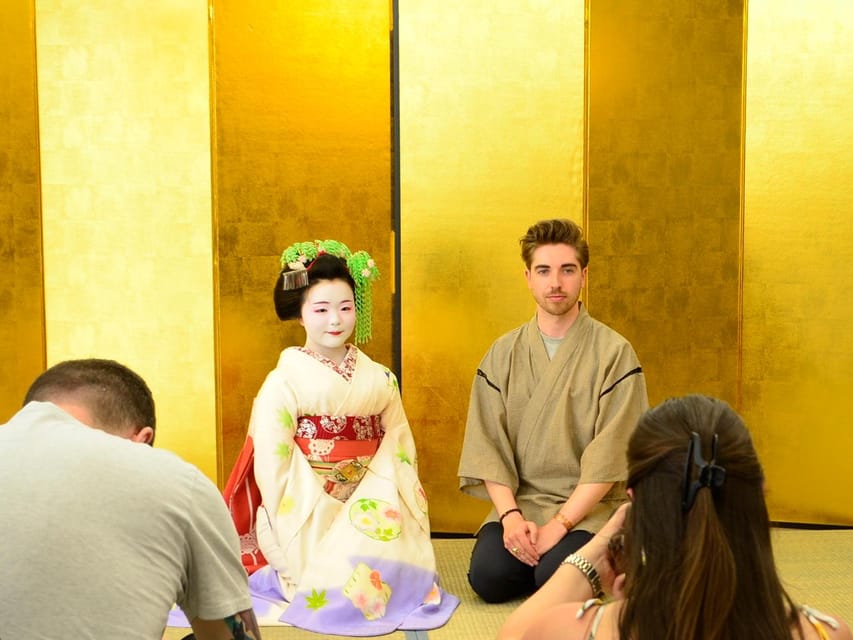
- Photo with the maiko: Bring your own smartphone or camera. A photographer is not included.
- Kyoto Handicraft Center setting: Browse Japanese crafts and gifts before or after the show, including museum-level pieces in display cases.
- Good short cultural stop: At $44 per person, it offers a focused introduction without taking half a day from your Kyoto plans.
What a maiko is, and why this meeting matters
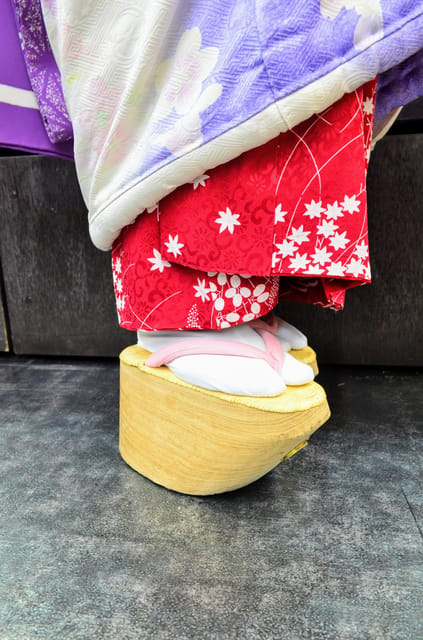
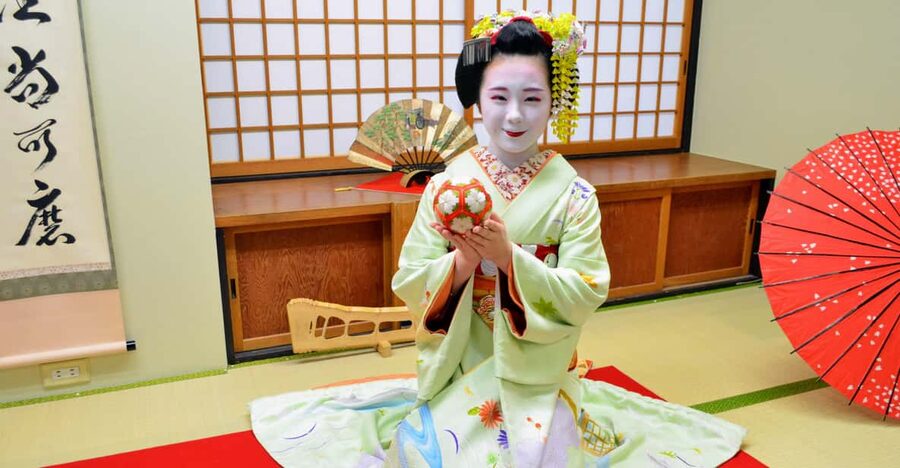
A maiko is a young apprentice geiko, the Kyoto term often used for a geisha. She trains in traditional dance, music, tea ceremony, conversation, manners, and hospitality before becoming a geiko. Her appearance is part of that training and presentation: a carefully arranged kimono, ornate hair ornaments, and white makeup with red and black details.
That short definition helps, but seeing the person behind the costume helps more. The event gives you a chance to hear about the work directly, rather than treating maiko culture as a costume display. The maiko answers questions through the interpreter, offering a human connection to a demanding artistic path.
The experience is also a useful alternative to wandering around Kyoto hoping to spot a maiko in Gion. You may see one there, but you cannot count on it, and approaching someone working with clients would not be appropriate. Here, the meeting is arranged in advance, and the maiko is there specifically to perform and speak with the audience.
That makes the encounter feel more comfortable for everyone. You are not intruding on a private evening, and the maiko has a clear role within the program.
More geisha-district evenings:
- Kyoto Geisha Walking Tour: Gion District & Hidden Gems
★ 4.7 · 3,273 reviews - Kyoto: Gion Magical Night Walking Tour with Geisha Trivia
★ 4.9 · 2,393 reviews - Kyoto: Gion Geisha District Walking Tour – Stories of Geisha
★ 4.7 · 2,187 reviews
Finding the show inside the Handicraft Center
The meeting point is the Kyoto Handicraft Center’s West Building. Enter on the first floor, take the elevator to the second floor, and look for the MEET MAIKO welcome sign.
The building itself is part of the visit. It contains Japanese-made paintings, dolls, crafts, and souvenirs, giving you something to browse before the show or after you leave. One useful tip is to look at the cabinets with pieces marked as not for sale. These museum-level objects provide a better sense of Japanese craft than the ordinary shopping displays alone.
The setting has two sides. It is convenient and easy to find once you reach the correct building, and the shop gives you a pleasant way to fill spare time. But it is not a traditional teahouse or an old Kyoto theater. The meeting room can feel corporate or sterile, and people hoping for candlelight or a more old-fashioned setting may find the surroundings plain.
Reception opens 30 minutes before the scheduled start. I would arrive at least 10 minutes early, and earlier if you want time to find the West Building and browse. Kyoto taxis can be hard to catch during busy seasons, while city buses can be crowded, so allow extra time rather than planning to arrive at the last second.
The opening introduction and entrance
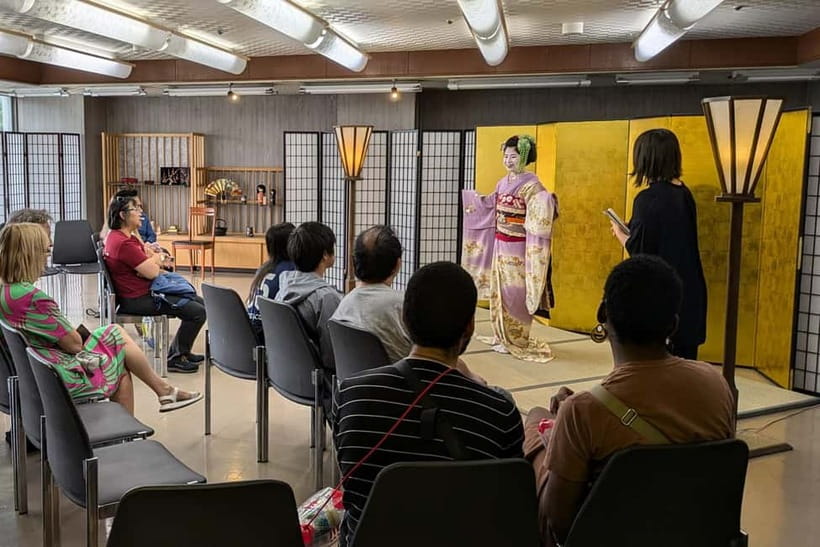
The show begins with an introduction from the English-speaking staff, followed by the maiko’s entrance onto the stage. The host sets the tone and gives you basic context before the dancing begins.
This opening is important because the clothing and makeup can otherwise seem like a collection of striking visual details without much meaning. The explanation covers the maiko’s attire and places it within her training. You learn that the presentation is not simply a tourist costume, but part of a traditional profession that requires years of practice.
The host also bridges the language gap throughout the program. Several comments describe the interpretation as clear and thoughtful, and Mina is specifically praised for explaining the maiko’s life and translating questions well. The exact host may vary, but English support is part of the activity.
Because the program is conducted in English, you do not need Japanese language skills to follow it. The host also helps keep questions moving, which is useful in a group setting.
Two dances in close view
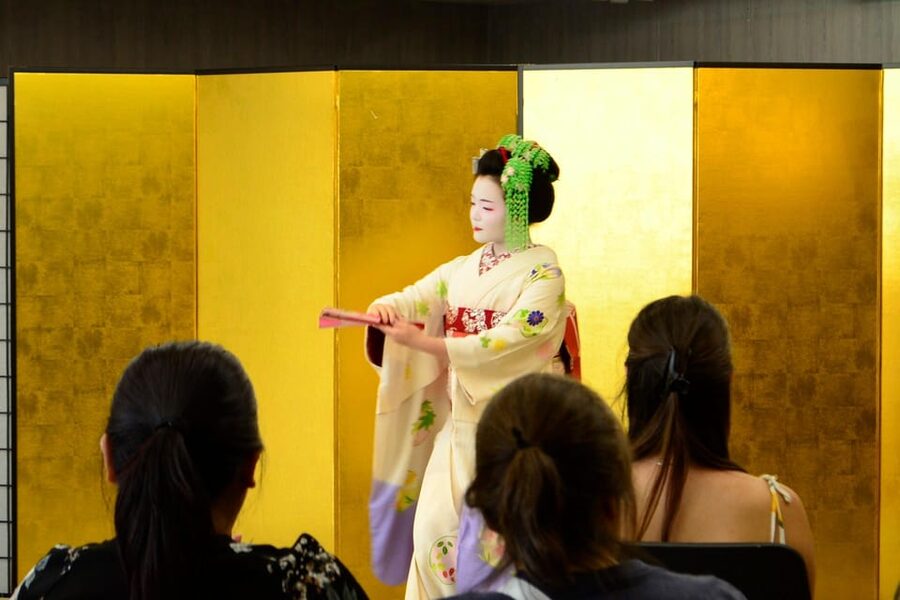
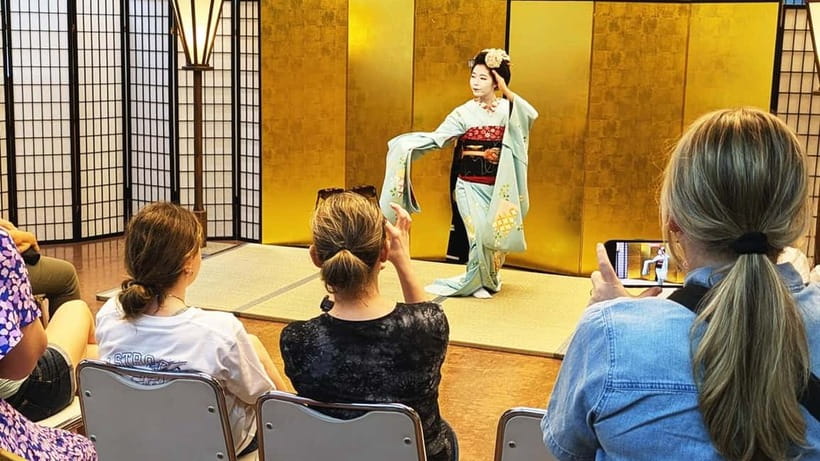
You then watch two traditional dances, lasting around 8 to 10 minutes altogether. This is the visual heart of the experience, and the relatively small room lets you see details that could disappear in a large theater.
The movements are deliberate and restrained. A turn of the head, the handling of a fan, a pause, and the position of the hands all carry weight. The ornate kimono and hair ornaments add to the effect, but the performance is not only about decoration. The control needed to make slow movements look natural is part of what you are seeing.
The dances are short. That is the most common limitation for people who expected a fuller stage production. If your main interest is traditional dance, you may wish the performance lasted longer. The program gives more time to explanation and conversation than to choreography.
Still, the short format works well as a first introduction. You get a concentrated look at the art without committing to a long evening performance, and you remain close enough to notice the maiko’s expression and technique. Photography is allowed during the event, so you can take pictures from your seat, subject to the event’s directions.
More shows in Kyoto:
- Kyoto Gion Cultural Walk & Geisha Show with Dining Options
★ 5.0 · 518 reviews - Kyoto Gion Cultural Walk & Geisha Show with Dining Options
★ 5.0 · 483 reviews - 1 Hour Geisha Show in Kyoto
★ 5.0 · 452 reviews - Kyoto: Samurai Kenbu Traditional Sword Dancing Show
★ 4.5 · 426 reviews
The Q&A is the heart of the experience
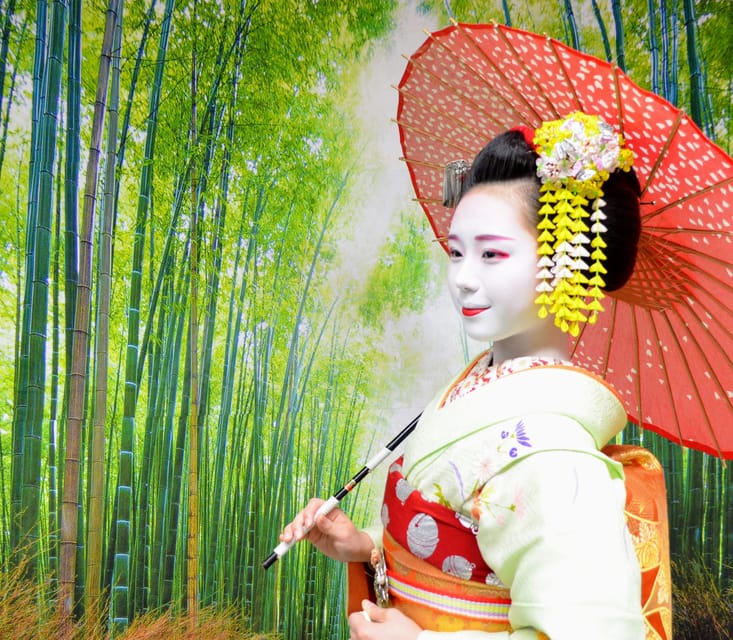
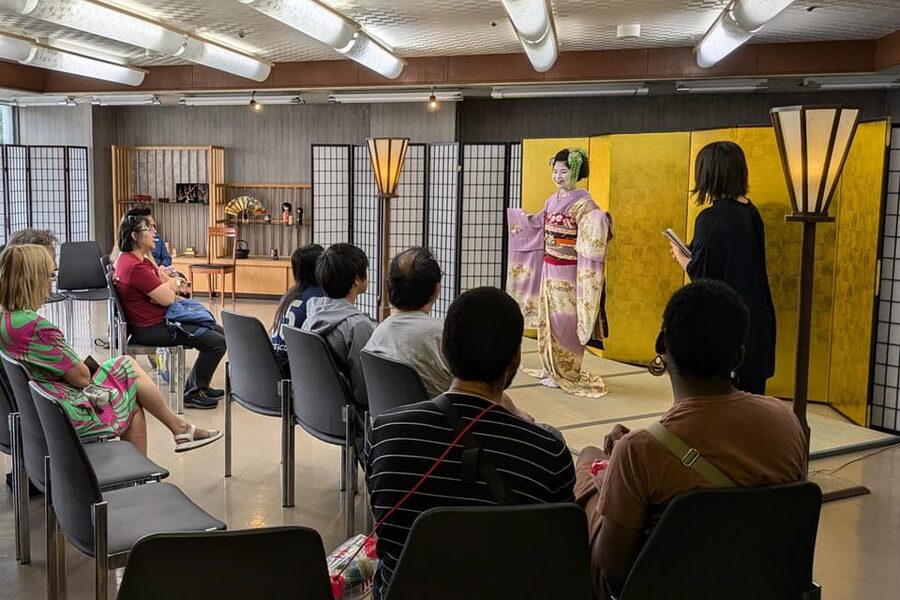
After the dances, the host explains more about the maiko’s background and translates questions from the audience. This is where the activity becomes more than a photo opportunity.
You can ask about training, the transition from maiko to geiko, the meaning of the clothing, and the work involved in performing and entertaining. Questions about modern life also fit naturally here. The conversation offers a more rounded picture than a scripted presentation because you hear the maiko respond directly.
The audience has described this portion as informative and touching. That makes sense: you are meeting a young performer who has committed herself to a highly specialized tradition. The age of the maiko can also prompt serious questions about choice, training, and responsibility. The host’s role is important here, helping the exchange remain clear and respectful.
The group format has both benefits and limits. With a maximum of 30 people and seats for all participants, the room stays manageable. You are not left standing at the back, and the smaller crowd gives more people a chance to speak.
On the other hand, the clock matters. The show lasts 45 minutes, and a long question from one person can reduce time for others. One useful approach is to prepare one or two focused questions in advance. Ask something specific rather than trying to cover the entire subject in one turn.
Some children attend, and children aged 0 to 2 can join free if they do not need their own seat. Most families should find the format accessible, but a quiet performance depends on everyone being considerate. If you are seeking a very hushed, formal atmosphere, keep the family-friendly setup in mind.
The photograph and small gift
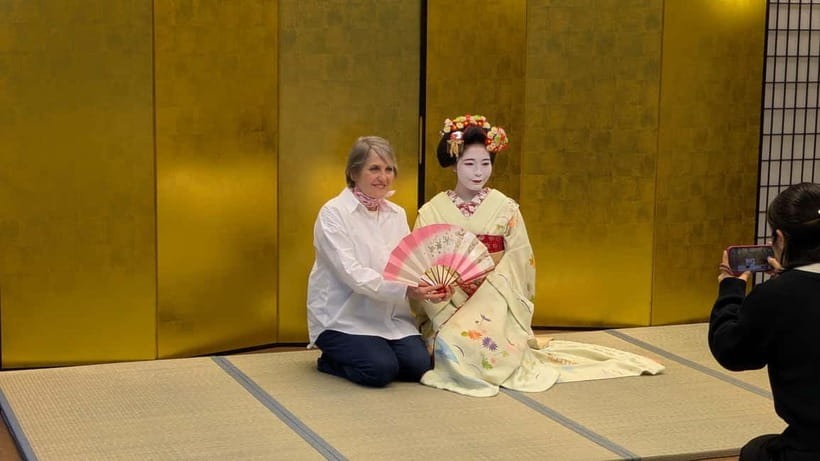
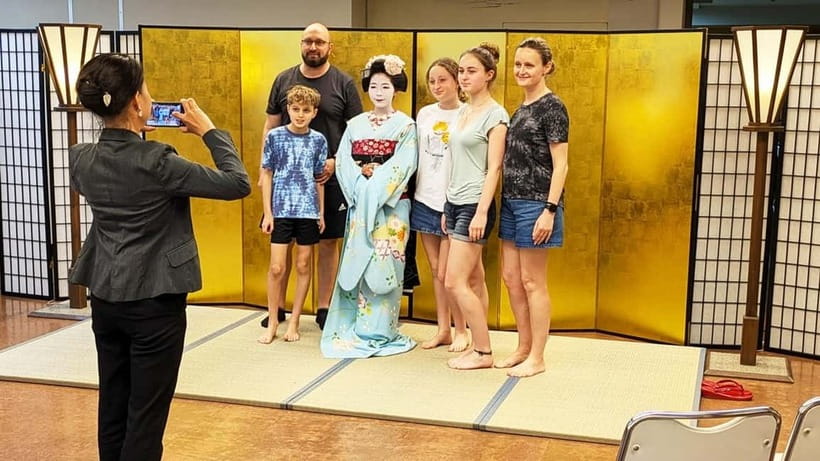
The final 10 to 15 minutes are set aside for photographs with the maiko. You use your own smartphone or camera, and the staff helps organize the picture.
This is a group activity, not a private portrait session. You should expect a commemorative photo rather than a long personal photo shoot. A professional photographer is not included, so check your phone battery and clear enough storage before the show.
The photo is a practical souvenir because it records the meeting without requiring you to buy a costume package or arrange a separate studio session. It also gives the program a clear ending. After the photos, you receive a small gift as you depart.
If you prefer another dance to a photo session, this part may feel less valuable. One person specifically wished the time had been used for more performance. For many people, though, the photograph is part of the appeal, especially for families and first-time visitors who want a physical reminder of the meeting.
Is $44 a fair price?
At $44 per person, this is not the cheapest 45-minute activity in Kyoto. You are paying for a scheduled cultural presentation, a maiko appearance, English interpretation, the Q&A, a photo opportunity, and a small souvenir.
The value depends on what you want. If you are mainly shopping for crafts, you can visit the Handicraft Center without booking this program. If you want a long dance performance in a historic setting, this will feel limited. The dances are brief, and the venue is functional rather than romantic.
I think the price is reasonable for a visitor who wants a reliable and respectful introduction to maiko culture. You avoid spending hours hoping to see a maiko in Gion, and you get direct access to a performer in a controlled setting. The Q&A adds real value because it explains the work and training behind the appearance.
The small group also matters. A larger stage show could offer more dancing, but this format gives you a closer view and a chance to ask questions. For a first visit to Kyoto, that balance may be more useful than a purely visual performance.
Who should book this experience?
I would recommend it to first-time Kyoto visitors, families, and anyone curious about the difference between a maiko and a geiko. It suits people who want cultural context in English and prefer a short scheduled activity that fits between other sightseeing plans.
It is also a good choice if you have tried to plan a Gion evening but do not want to intrude on working performers. The event creates a proper setting for questions and photographs.
You may want to skip it if you have already attended a longer maiko or geiko performance and mainly want more dance. It may also disappoint you if the setting matters as much as the subject. The Handicraft Center is useful and full of attractive Japanese goods, but the show does not take place in a candlelit teahouse.
For the best experience, arrive early, browse the craft displays, sit where you can see the stage clearly, and prepare a thoughtful question. Treat the maiko as an artist in training, not as a character for an exotic photo. That approach makes the meeting more rewarding.
Practical details before you reserve
The event is wheelchair accessible, and all participants can be seated. It is not private, and the maximum capacity is 30 people.
The stated duration is 45 minutes, though some people have found the full experience closer to an hour. Allow extra time for reception, finding the room, and browsing the Handicraft Center afterward.
You can cancel up to 24 hours before the activity for a full refund, and you can reserve now and pay later. Starting times vary, so check availability for your date.
The activity is conducted in English. Transportation, a shuttle, a local guide, meals, drinks, and a professional photographer are not included.
Should you book the Kyoto maiko meeting?
Book it if you want a short, organized, and personal introduction to one of Kyoto’s most distinctive traditions. The dances are beautiful but brief. The strongest part is the chance to ask questions and hear explanations that make the clothing, training, and profession easier to understand.
The $44 price is easiest to justify when you value the conversation, the small group, and the respectful arrangement. If you need a grand theater production, choose something longer. If you want to meet a maiko without chasing one through Gion, this is a sensible and memorable choice.
FAQ
How long does the maiko experience last?
The scheduled duration is 45 minutes. The program includes an introduction, two dances lasting about 8 to 10 minutes in total, an explanation of the maiko’s attire and background, a Q&A, and a 10 to 15 minute photo session.
How much does the activity cost?
The listed price is $44 per person.
Where does the activity meet?
Meet at the Kyoto Handicraft Center, West Building. On the first floor, take the elevator to the second floor and look for the MEET MAIKO welcome sign.
Is the event conducted in English?
Yes. English-speaking staff host the event and translate the questions and answers.
How many people can join the show?
The activity has a maximum capacity of 30 people. It is a shared group experience, not a private booking.
Can I take photographs?
Yes. Photography is allowed during the event, and you can take a commemorative photograph with the maiko using your own camera or smartphone.
Is a photographer included?
No. A professional photographer is not included, so bring your own camera or phone for the commemorative picture.
Are children allowed to attend?
Yes. Children aged 0 to 2 can join free of charge if they do not occupy a separate seat. All participants can be seated.
What happens if I arrive late?
Late arrivals can still enter during the event. However, you should arrive at least 10 minutes before the start, since Kyoto taxis can be difficult to catch and city buses may be crowded during high season.
Just added around Kyoto
- Kyoto: Zen Meditation at a Private Temple with a Monk★ 5.0 · 25 reviews
- Kyoto: Gion Geisha District & Sake-in-Hand Walking Tour★ 5.0 · 37 reviews
- Private Pewter Sake Cup Experience with a Kyoto Artisan★ 5.0 · 31 reviews
- Your Private Vacation Photography Session In Kyoto★ 5.0 · 110 reviews
- Private Guided Traditional Buddhist Cooking in Japan★ 5.0 · 16 reviews
- Kyoto Wagashi(Japanese sweets) Cooking Class near Fushimiinari★ 5.0 · 60 reviews
- Traditional Japanese Music show & Experience Tour in Kyoto★ 5.0 · 57 reviews
- Kyoto:Family-Friendly Kimono & Yukata Experience at WARGO★ 5.0 · 147 reviews
Kyoto Tours, compared.
Fushimi Inari, Kinkakuji, Bamboo Grove 1 Day Bus Tour
Read our review →
Tea Ceremony in a Traditional Tea House in Kiyomizu
Read our review →
Kyoto Geisha Walking Tour: Gion District & Hidden Gems
Read our review →
Gion Magical Night Walking Tour with Geisha Trivia
Read our review →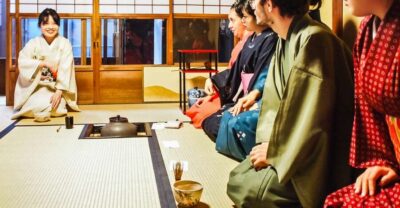
Gion Geisha District Walking Tour – Stories of Geisha
Read our review →Browse the lists this tour appears in