
Reviewed · BAMBOO GROVE TOURS
Osaka/Kyoto: Katsuoji, Kinkakuji, Arashiyama 1-Day Bus Tour
Katsuoji’s little red Daruma dolls give this day its most unusual start. You can make a wish for luck or success, then move on to Kinkakuji’s gold-covered pavilion and Arashiyama’s bamboo paths. I like the mix of prayer, classic Kyoto sights, and easy bus transport. I also like that you get free time rather than being marched from photo stop to photo stop.
The tradeoff is a tight schedule. Arashiyama has enough sights for a full day by itself, and Katsuoji can take longer than the allotted hour if lines are slow. The tour is best for visitors who want a broad first look, not for anyone hoping to study every temple corner at leisure.
Key points to know before booking
- Katsuoji begins the day with a Daruma wish ritual, a playful and meaningful stop that feels different from Kyoto’s better-known temples.
- Arashiyama gives you about two and a half hours, enough for the bamboo grove, Togetsukyo Bridge, Kimono Forest, and Nonomiya Shrine if you keep moving.
- Kinkakuji is a short final stop, with about 40 minutes to see the Golden Pavilion and its pond setting.
- Guides help with timing and directions, with English and Chinese service and guides including Willa, Theodore, Steven, and Amanda.
- The $56 price mainly buys transport and convenience, since temple admission, food, drinks, and personal costs are extra.
- Comfortable shoes matter, and the tour is not suitable for wheelchair users or people with mobility impairments.
Why Katsuoji makes a memorable first stop
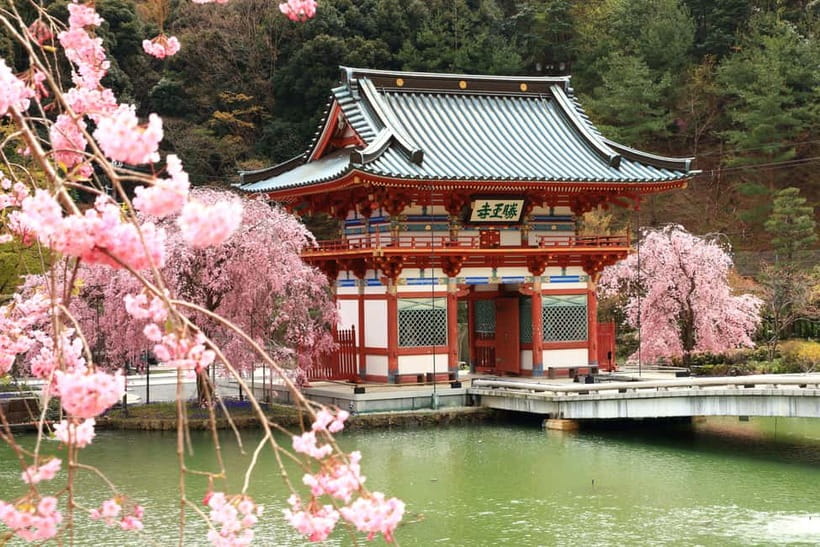
Katsuoji Temple, more than 1,300 years old, is known as the Temple of Victory. That does not mean victory only in a sporting sense. People come to ask for success, good luck, and progress in their own lives.
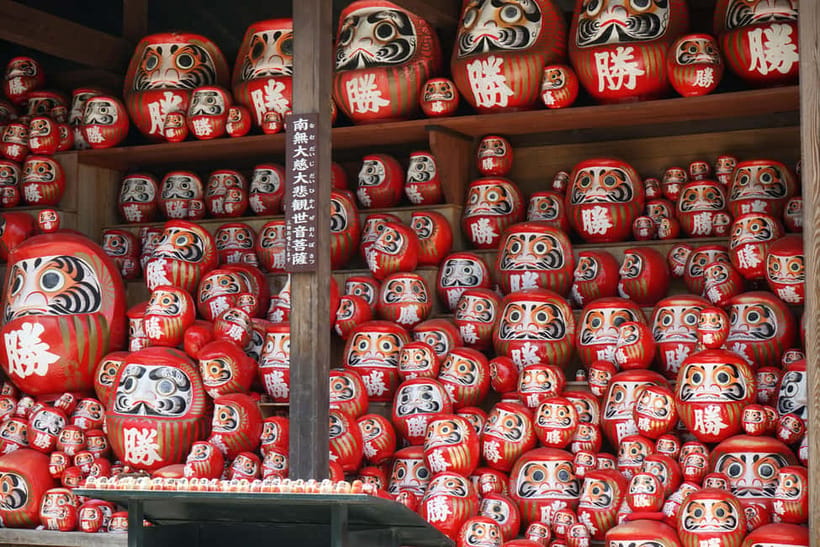
The Daruma dolls are the visual hook. You will see them placed around the grounds, often in bright red, with their round bodies and determined expressions. The custom is to draw the left eye when making a wish, then fill in the right eye after the wish comes true. It gives the visit a simple action and a clear purpose.
At the temple, you can buy or use a Daruma and take part in this tradition yourself. Even if you are not religious, the ritual offers a useful pause. Instead of only photographing a building, you are asked to think about something you hope to accomplish.
The scheduled sightseeing time is one hour. That is enough for a focused visit, but it may feel short if you want to examine every part of the grounds or encounter a long line. One useful piece of advice is to decide early whether your priority is the temple atmosphere, the Daruma ritual, or photographs. You probably cannot do everything slowly.
More Arashiyama and bamboo walks:
- Kyoto: Fushimi Inari, Kinkakuji, Bamboo Grove 1 Day Bus Tour
★ 4.8 · 4,316 reviews - Osaka/Kyoto:Kinkakuji,Arashiyama,FushimiInariShrine,NaraPark
★ 4.1 · 1,596 reviews - Kyoto/Osaka: Nara, Fushimi Inari Taisha, Arashiyama Bus Tour
★ 4.7 · 1,275 reviews
Arashiyama brings several Kyoto icons together
The tour gives you about two and a half hours in Arashiyama. That sounds generous until you count the bamboo grove, Togetsukyo Bridge, Kimono Forest, and Nonomiya Shrine. You will need to keep an eye on your meeting time.
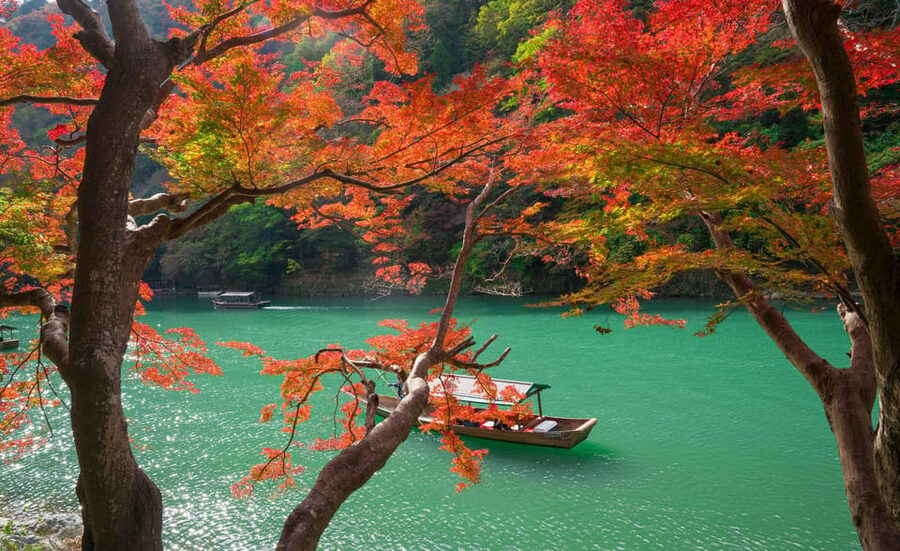
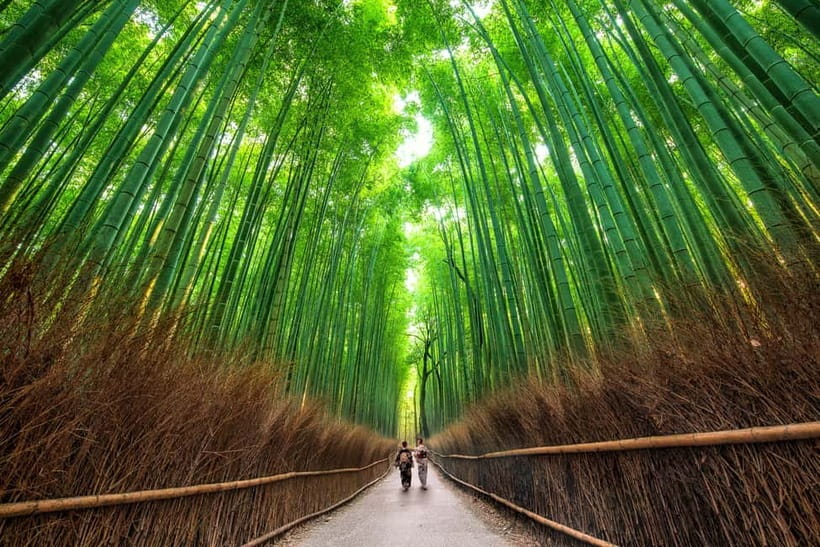
Arashiyama is known for the contrast between water, wooded hills, and the famous bamboo paths. The bamboo grove is not a large wilderness trek. It is a well-known walking route, and the experience depends on taking your time for a few minutes rather than rushing through with your camera raised.
The tall bamboo filters the light and softens the sounds around you. When the leaves move in the breeze, the path takes on a quiet, almost sheltered mood. I like this part of the tour because it gives your day a change of pace after the bus ride and temple visit.
Still, the stop works best when you set realistic expectations. The tour does not give you a whole afternoon in Arashiyama. You may need to choose between lingering in the bamboo grove, taking photos at the bridge, and visiting the smaller cultural sights nearby.
Togetsukyo Bridge and the old Kyoto view
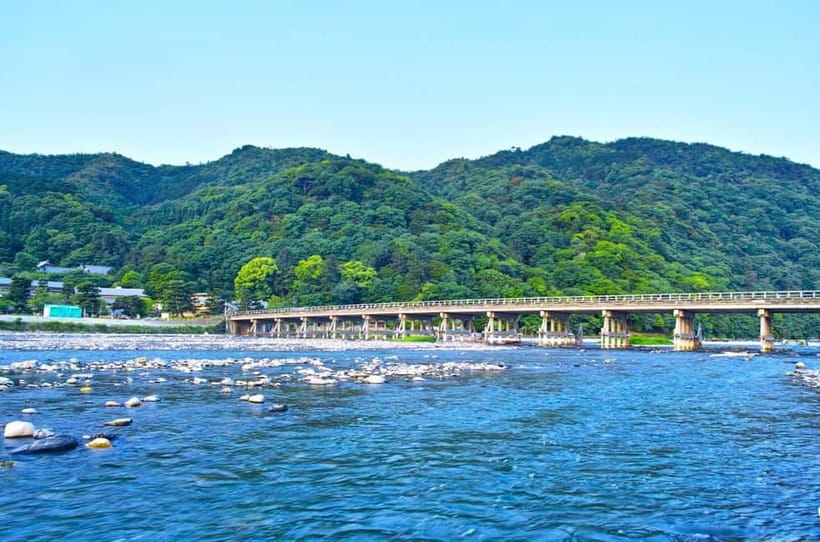
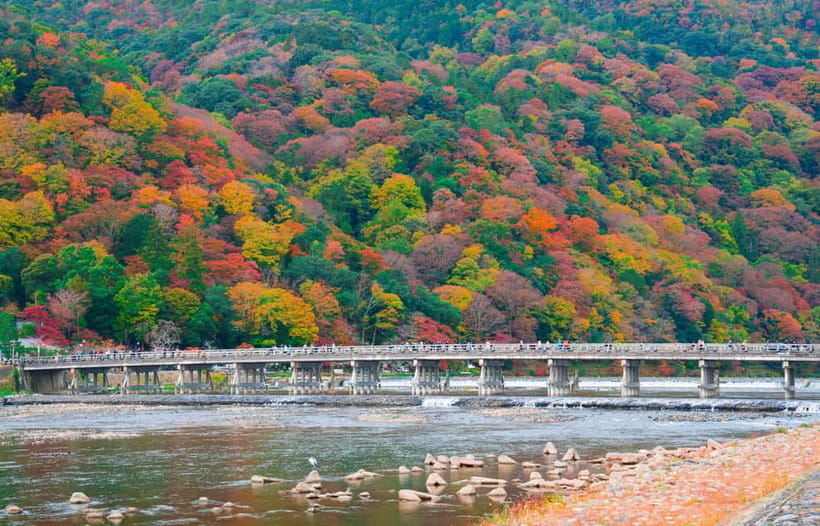
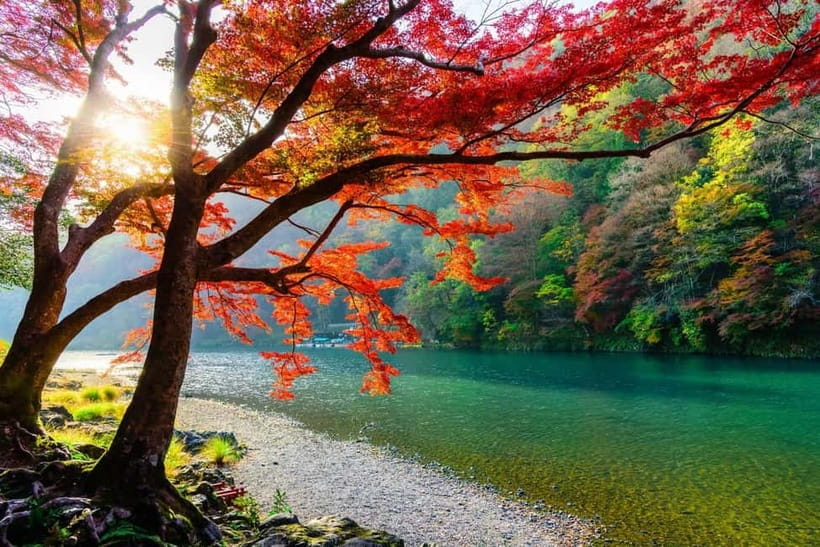
Togetsukyo Bridge crosses the Oi River, with hills rising beyond the water. The view is one of Arashiyama’s familiar images, but it earns its place on the route because it connects the natural setting with Kyoto’s older visual character.
From the bridge, you can look along the river and toward the surrounding mountains. The scene changes with the season, although the tour information does not promise any particular colors or weather. Bring your camera, but also give yourself a moment to watch the water and the passing scenery.
This is a good stop for couples, families, and solo visitors because it does not require a long walk or a special activity. The drawback is that bridge time is part of the same short Arashiyama window. If you spend too long taking photos, you may have to shorten your visit to another stop.
Kimono Forest is a quick cultural pause
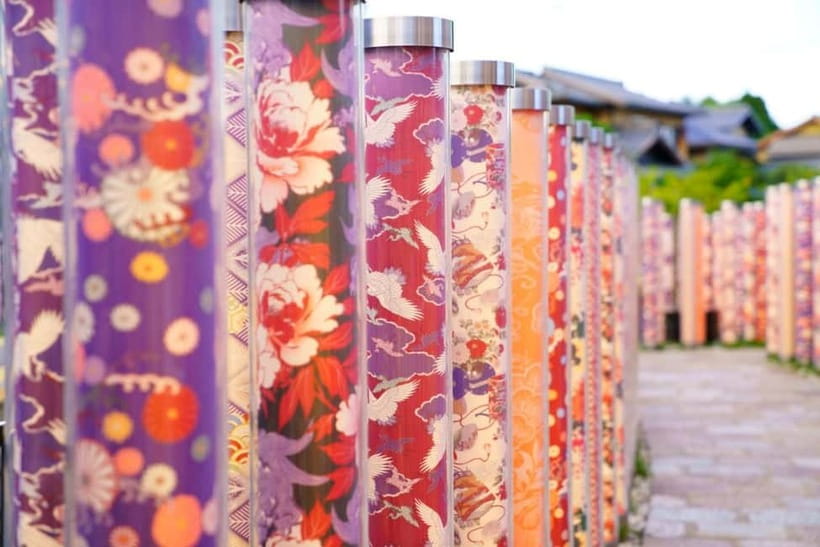
Near the Arashiyama transport area, Kimono Forest is made from hundreds of transparent columns displaying colorful kimono textiles. The cylinders form a bright corridor that looks more like an outdoor art display than a conventional museum.
The attraction is mainly visual. Light passes through the fabric patterns, revealing the colors and designs associated with traditional Japanese clothing. It is an easy place to stop between larger sights, and you do not need a long visit to understand its appeal.
For me, Kimono Forest adds variety to the day. The bamboo grove is restrained and natural; the kimono columns are decorative and modern in presentation. Together, they show two different ways Japanese design uses color, pattern, and repetition.
You should treat this as a short sightseeing stop rather than a full cultural lesson. No extended workshop or kimono dressing experience is included.
A few more Kyoto half-days to weigh up
- PERFECT KYOTO 1-Day Bus Tour
★ 5.0 · 13,518 reviews - 10 Must-see Spots in Kyoto One Day Private Tour (up to 7 people)
★ 5.0 · 1,108 reviews - Kyoto 1 Day Tour from Kyoto
★ 4.0 · 582 reviews - Kyoto and Nara Day Trip from Kyoto
★ 4.5 · 445 reviews
Nonomiya Shrine offers a personal moment
Nonomiya Shrine is associated with prayers for love, health, and happiness. You can write a wish, hang a painted wooden plaque, and spend a little time considering what you want from the year ahead.
It is a smaller, more personal stop than Kinkakuji or Katsuoji. That can be valuable during a day filled with famous sights. You get a chance to move from grand architecture to a modest shrine with a clear connection to everyday hopes.
The visit is included within the Arashiyama time, so do not expect a long guided ceremony. It is better understood as a brief cultural encounter along the walking route. If your main goal is romance or good fortune, this stop may feel especially fitting. If you prefer architecture alone, you may give it less time.
Kinkakuji closes the day in gold
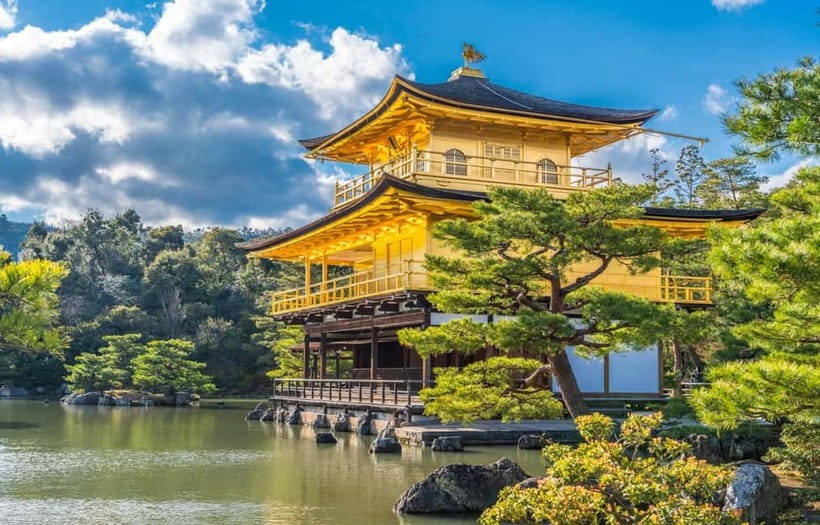
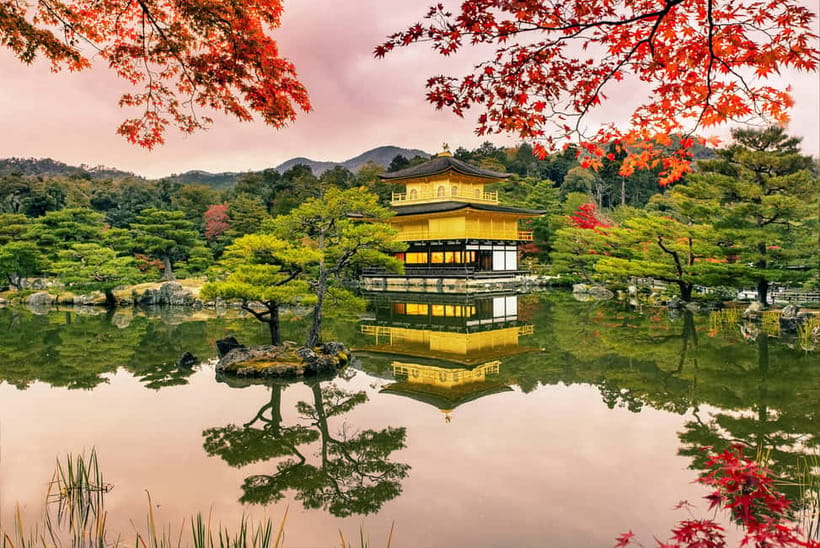
Kinkakuji, the Golden Pavilion, is the most instantly recognizable stop on this route. Its upper levels are covered in gold leaf, and the building is reflected in the pond in front of it. The effect is striking, especially when the water is calm.
You do not simply walk into the pavilion. The usual visit centers on viewing the exterior from the grounds and following the path around the pond and garden area. The tour allows about 40 minutes, which is enough for the main view and a short walk, but not for a slow study of every detail.
That limited time is important. Kinkakuji can be crowded, and stopping for photographs may take several minutes. Keep moving when needed, and remember where the bus meeting point is. The temple is a strong final image for the day, but the short visit means you should not book this tour if Kinkakuji is the sole reason for your Kyoto trip.
Admission to Kinkakuji is not included in the $56 price. Katsuoji admission is also extra. These additional fees are not part of the bus fare, so include them in your daily budget.
What the $56 price really buys
At $56 per person, this is a transport-focused day tour. The price includes round-trip transfers from one of two starting points, tolls, parking, fuel, and an English or Chinese-speaking guide. You are paying to connect several places that would otherwise require planning across Osaka and Kyoto.
That convenience has real value. Katsuoji, Arashiyama, and Kinkakuji do not form a simple short walking circuit. A private car or several train and bus connections could take more time and mental effort. Here, you can sit between stops and let the driver handle the roads.
The price does not include temple admission, meals, beverages, insurance, or personal spending. Japanese law also means you cannot eat on the bus, so bring water and plan to eat during a suitable break in the day. The itinerary does not list a meal stop, so do not count on a full restaurant visit.
Transport quality has generally been a strong part of the experience. The bus is described as clean and comfortable, with a polite, presentable driver. One direct note flags an older vehicle with visible wear around the seats and seatbelts. That is worth keeping in mind if you expect a new coach.
The guide can make or break the schedule
This is not a nonstop lecture tour. Much of the day is self-guided sightseeing, with the guide helping you reach each place, explaining the highlights, answering questions, and making sure you return to the bus on time.
That format suits you if you like independence but do not want to manage transport. Guides named in the tour feedback include Willa, Theodore, Steven, Amanda, Eve, and Lee. Specific praise centers on clear directions, good communication, history explanations, humor, and help making the most of limited time.
Willa is noted for sending clear information before the trip and helping people understand where to go. Theodore is described as lively and engaging, with jokes and history along the way. Steven and Amanda also received praise for keeping the day pleasant and explaining things clearly.
Guide assignments can vary, so you should not book with the expectation of getting one particular person. The useful point is the role itself: a good guide keeps a large, busy day from becoming confusing. You still have freedom at each attraction, but you must follow the return instructions carefully.
The company sends guide and vehicle details by email before 21:00 on the night before departure. Check your inbox, including spam folders, and make sure you know which of the two meeting points applies to your booking.
Starting points, transfers, and timing
You can start at Harimaya Nippombashi 1-chome or at the sunken garden in front of Kyoto Station’s Hachijo Entrance. The same two locations are used for drop-off.
This setup makes the tour workable for people staying in either Osaka or Kyoto, but you must choose the correct meeting point and arrive ready for a long day. The total duration is about nine to ten hours, depending on the start time and road conditions.
Traffic can affect the schedule. If congestion causes the driver and guide to work overtime, the company covers that extra cost, but the day may still run late. Do not schedule a tight dinner reservation, theater performance, or evening train immediately after the stated return time.
The tour also asks you to mention luggage or children under three when booking. That is practical information, especially if you are moving between hotels or traveling with a young child. The activity is not suitable for wheelchair users or people with mobility impairments, and the walking between sights makes comfortable shoes essential.
Who will get the most from this tour
I would choose this outing if you have one free day and want to see several major Kyoto-area sights without building your own transport plan. It is especially useful for first-time visitors staying in Osaka, since the bus removes much of the friction of crossing between cities and outlying temple areas.
You will probably like it if you value:
- Several famous sights in one day
- Free time instead of a fully scripted walk
- English or Chinese support
- Temple traditions, scenic walks, and photography
- A fixed route with round-trip transport
I would be more cautious if you want long visits at each site. Arashiyama alone can absorb hours, and Katsuoji’s grounds may take longer than one hour. The route is broad rather than slow.
Families should also consider the walking, the long day, and the no-food-on-the-bus rule. The tour can work well for older children who enjoy temples and scenery, but the schedule offers little room for wandering at a child’s pace.
Practical tips for a smoother day
Wear shoes that are comfortable for walking and standing. Bring water, sunscreen, and a camera, and avoid smoking, which is not permitted on the bus.
Keep your phone available for the guide and vehicle information sent the evening before. At every stop, note the exact return time and meeting place before walking away from the group.
At Katsuoji, decide early if you want to take part in the Daruma wish custom. At Arashiyama, visit the bamboo grove first if that is your top priority, then fit in the bridge, Kimono Forest, and Nonomiya Shrine. At Kinkakuji, take your main photo promptly so you have time to follow the path and return to the bus.
The free-cancellation policy allows a full refund when you cancel at least 24 hours ahead, and you can reserve now while paying later. Those terms help if your Kyoto plans are still shifting, though traffic and weather can still affect the day itself.
Should you book the Katsuoji, Kinkakuji, and Arashiyama tour?
Book it if your priority is efficient sightseeing with transport handled for you. For $56, the combination of bus transfers, fuel, parking, tolls, and a live guide is a fair deal, provided you budget separately for temple entry and food.
The strongest parts are the unusual Daruma experience at Katsuoji, the concentration of Arashiyama sights, and the reliable structure supplied by guides such as Willa, Theodore, Steven, and Amanda. The main weakness is time. You will see a lot, but you will not linger everywhere.
If you have only one day for Kyoto highlights, this is a practical choice. If you already know Kyoto well, or if you want quiet, detailed visits at each temple, use your day more slowly and arrange fewer stops.
FAQ
How long does the tour last?
The tour lasts about 9 to 10 hours. The exact starting time depends on availability and the option you book.
Where can I start and finish the tour?
You can start and finish at Harimaya Nippombashi 1-chome or at the sunken garden at Kyoto Station’s Hachijo Entrance. The meeting point depends on your booking option.
Is admission to Katsuoji and Kinkakuji included?
No. Admission to both Katsuoji Temple and Kinkakuji Temple is not included in the tour price.
Are meals and drinks included?
No. Meals and beverages are not included. Japanese law does not allow eating on the bus, so plan food and drinks around the sightseeing stops.
What languages does the guide speak?
Live guides are available in English and Chinese. The assigned guide can vary, with guides including Willa, Theodore, Steven, Amanda, Eve, and Lee.
Is the tour suitable for wheelchair users?
No. The tour is not suitable for wheelchair users or people with mobility impairments. Comfortable shoes are recommended.
Just added around Kyoto
- Kyoto: Zen Meditation at a Private Temple with a Monk★ 5.0 · 25 reviews
- Kyoto: Gion Geisha District & Sake-in-Hand Walking Tour★ 5.0 · 37 reviews
- Private Pewter Sake Cup Experience with a Kyoto Artisan★ 5.0 · 31 reviews
- Your Private Vacation Photography Session In Kyoto★ 5.0 · 110 reviews
- Private Guided Traditional Buddhist Cooking in Japan★ 5.0 · 16 reviews
- Kyoto Wagashi(Japanese sweets) Cooking Class near Fushimiinari★ 5.0 · 60 reviews
- Kyoto:Family-Friendly Kimono & Yukata Experience at WARGO★ 5.0 · 147 reviews
- Private Cooking Class Udon in Kyoto Japan★ 5.0 · 23 reviews
Bamboo Grove Tours, compared.

Fushimi Inari, Kinkakuji, Bamboo Grove 1 Day Bus Tour
Read our review →
Osaka/Kyoto:Kinkakuji,Arashiyama,FushimiInariShrine,NaraPark
Read our review →
Kyoto/Osaka: Nara, Fushimi Inari Taisha, Arashiyama Bus Tour
Read our review →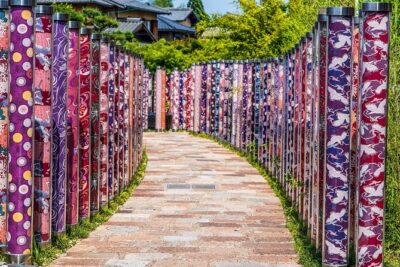
Kyoto Arashiyama Walking Tour: Bamboo, Monkeys, Gardens & Secrets
Read our review →
Arashiyama Bamboo, Temple, Monkeys, or Secret Sake Brewery
Read our review →
Arashiyama Bamboo Forest, Monkeys, Matcha & Temple Tour
Read our review →
Osaka/Kyoto: Arashiyama, Nara & Fushimi Inari Shrine w/Lunch
Read our review →
Nijo, Kinkaku-ji, Arashiyama, Kiyomizu & Fushimi Inari
Read our review →Browse the lists this tour appears in